REVIEW · EDINBURGH
Edinburgh Castle: 120-Minute In-Depth Tour with Expert Guide
Book on GetYourGuide →Operated by EDI Tours · Bookable on GetYourGuide
Edinburgh Castle feels different when someone explains it. This 120-minute guided walk turns the fortress from a postcard into a story you can follow, including the Scottish Crown Jewels (when the Crown Room is open), St Margaret’s Chapel, and major military stops. I really like that the ticket is included, so you’re not forced to rush out the moment the tour ends.
You’ll also love the pacing. Two hours gives enough time to hit the big names plus the less obvious corners like Hospital Square and viewpoints such as the Western Panorama. One consideration: the tour is not great for mobility limits, since it’s a lot of outdoor walking and it’s described as not suitable for wheelchair users.
In This Review
- What makes this 120-minute castle tour work
- Meeting by the High Court: start where locals actually orient
- Castlehill and the Esplanade: how the fortress controls the city
- Gatehouse and heavy artillery stops: the war machine is real
- One o’Clock Gun and ramparts: views plus tradition
- St Margaret’s Chapel and Royal Palace: royal power with a human scale
- Great Hall and the royal-civic core: where events happened
- Lesser-known spaces like Hospital Square: why they’re worth the extra minutes
- After the guided portion: how to use your included ticket smartly
- Price and value: where $49 actually earns its keep
- Important planning note: Crown Room closure and the Crown Jewels display
- Who this tour suits best (and who should reconsider)
- Should you book this 120-minute Edinburgh Castle tour?
- FAQ
- Where is the meeting point for the tour?
- Does the tour include Edinburgh Castle admission?
- How long is the tour, and is it in English?
- What are the main highlights you’ll see?
- Is the Crown Room open year-round?
- Is the experience mostly outdoors?
- What should I wear or bring?
- Are there items you can’t bring?
- Is it suitable for wheelchair users or people with mobility impairments?
What makes this 120-minute castle tour work

- 120 minutes of guided time so you get both the highlights and the why behind them
- Skip the ticket line, plus your entry is included so you can keep exploring after
- Expert storytelling with strong emphasis on royals, war, and military figures
- Rooftop-and-rampart viewpoints like the Western Panorama for a real sense of Edinburgh
- St Margaret’s Chapel and the Royal Palace for the royal-and-religious side of the fortress
- Outdoor-focused experience, which means dress for Scottish weather and plan for stairs and uneven paths
Meeting by the High Court: start where locals actually orient

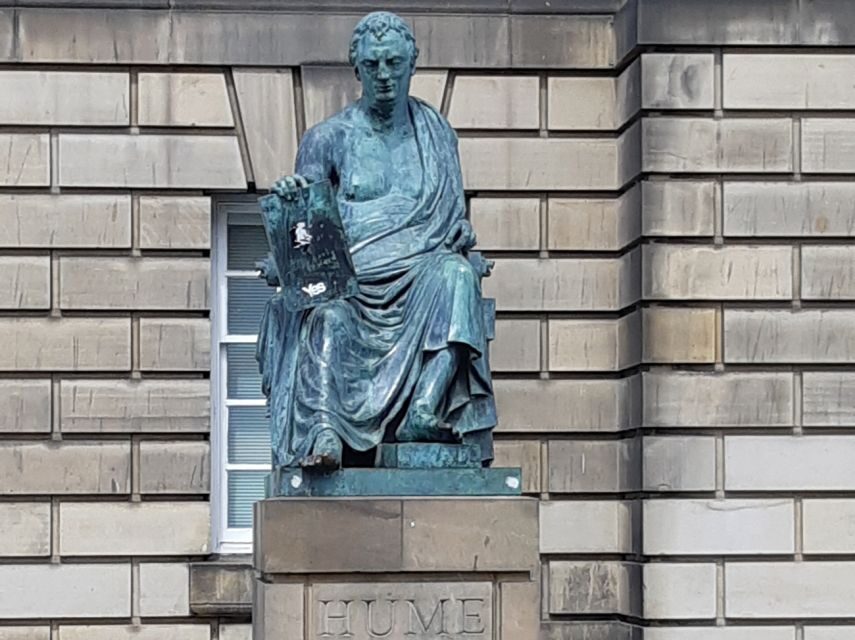
This tour doesn’t start at the castle entrance. You meet your guide in front of the High Court, next to the statue of David Hume, and the guide carries a black-and-white umbrella with the EDI Tours logo.
That choice matters more than you might think. The area around Castlehill and the approach up to the fortress sets the tone for what you’ll see inside. In other words, you’re not just walking through a queue; you’re stepping onto the same routes that have led people toward this stronghold for centuries.
Practical tip: wear comfortable shoes right from the start. Even before you’re fully on castle ground, the approach is part of the experience.
You can also read our reviews of more guided tours in Edinburgh


Castlehill and the Esplanade: how the fortress controls the city
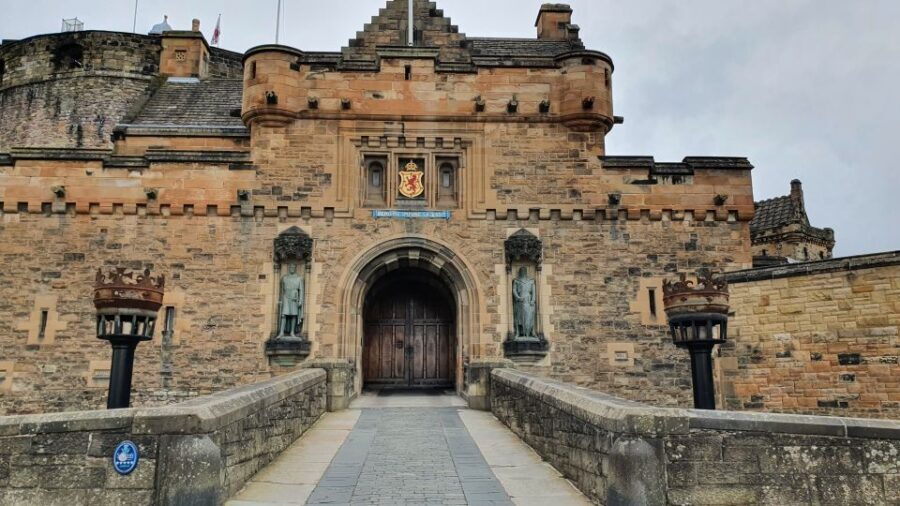
The first stretch is a guided walk along Castlehill, then out onto the Esplanade. These early stops help you understand the castle’s layout before you start chasing individual sights.
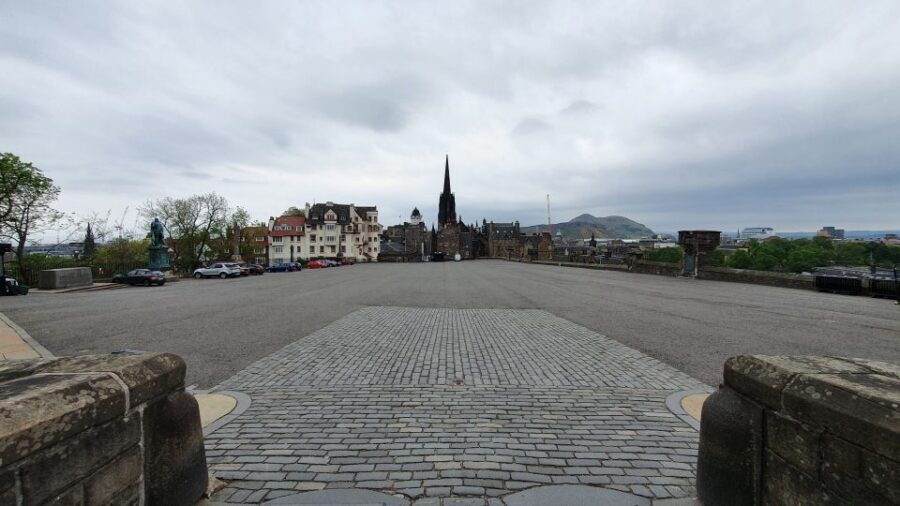
On the Esplanade, you’ll get your bearings and start seeing how the terrain and buildings were used as defenses. It’s also where the views start to make sense. Edinburgh doesn’t sit politely next to its monument; the castle dominates the skyline, and you’ll feel that in your legs and your eyes as you move around.
From here, your guide shifts from location to meaning: who used these spaces, how the castle changed over time, and why certain buildings became central during key political moments.
Gatehouse and heavy artillery stops: the war machine is real

Next you’ll move through the area around the Gatehouse and toward the gun positions, including stops around Mill’s Mount Battery and Mons Meg. If you’ve ever seen a cannon in a museum, you know it’s one thing. Here, the weight and placement are part of the story.
This is where the tour does something valuable: it connects weaponry to decisions. You’ll hear how military needs shaped what people built, where they stood, and what they watched. That gives you a clearer picture of why certain areas mattered during sieges and conflicts.
One bonus from the way the tour is structured: you also see the National War Museum area and military-focused regimental museum space in the same overall flow. Instead of treating each collection as a separate stop, it becomes one big theme.
Where people often get the most out of this section: if you like asking questions, this is the part that invites them. The guide’s stories about conflict and the people involved tend to land best when you can look at the setting where it all happened.
One o’Clock Gun and ramparts: views plus tradition

You’ll also pass by and learn about the famous One o’Clock Gun, plus you’ll spend time on the areas that connect the castle grounds to sweeping sightlines—especially around the Western Panorama. Even if you’ve seen photos of the skyline, it hits differently when you’re standing where the city is framed by stone.
This portion is also a good moment to slow down. The tour keeps moving, but you’ll have time to take in the way Edinburgh spreads out below you. And because the guide ties the timing tradition back to the castle’s role, it’s not just a photo stop.
Weather note: ramparts and open areas can be windy. Bring layers. Warm gloves can turn a miserable day into an enjoyable one.
St Margaret’s Chapel and Royal Palace: royal power with a human scale

Now comes the softer side of the fortress: St Margaret’s Chapel and the nearby royal areas, including time around the Royal Palace.
St Margaret’s Chapel is described as 900 years old, and that age can feel abstract until you’re standing in the space. The tour’s framing helps you connect the chapel to the royal world that surrounded it—religion wasn’t a separate chapter from politics here; it was braided into authority.
The royal palace area then shifts the tone again. You’ll hear about the people who lived and ruled here, including Mary, Queen of Scots’ birthing chamber. Whether you’re a serious history person or just curious, the guide’s storytelling approach makes these stories easier to hold onto because they’re tied to specific rooms and locations rather than just dates.
If you want a quick takeaway: in this section, the castle stops being only a fortress. It becomes a place where life happened—ceremony, childbirth, worship, and decisions that shaped the country.




Great Hall and the royal-civic core: where events happened
The tour wraps by returning toward the Great Hall, which is also where the tour finishes.
The Great Hall matters because it’s the space associated with ceremonial power. You’ll see why this place would have drawn both respect and fear. It’s not only architecture; it’s staging. The guide’s stories help you imagine what it meant to gather here—who sat where, what the moment signaled, and why it mattered.
You’ll also cover key major highlights along the way, including stops tied to major memorials such as the Scottish National War Memorial area and the Royal Scots Dragoon Guards Regimental Museum.
Practical note: this part of the walk tends to be emotionally heavy if you stop to think about it. If that’s your style, great—stay with it. If you’d rather keep things lighter, your best strategy is to take brief pauses for the views between the stories.
Lesser-known spaces like Hospital Square: why they’re worth the extra minutes
The tour also aims beyond only the headline sites by pointing you toward areas such as Hospital Square and the Western Panorama.
Why this is worth your time: the castle can feel like a checklist if you only chase the biggest names. Lesser-known spots help you understand that Edinburgh Castle wasn’t just a royal stage or a military post. It was a functioning complex where different roles overlapped across centuries.
This is also one reason the 120-minute format works. Shorter tours often squeeze everything so tightly that you barely register how the castle fits together. Here, you get more chance to connect the dots.
After the guided portion: how to use your included ticket smartly
Your entry includes Edinburgh Castle admission, and the tour description notes that you’ll want to set aside time after for further exploration in museums and exhibitions that aren’t accessible during the guided portion.
What I like about this structure is flexibility. The guide gives you the map and the story arc, and then you can choose what to linger on. If you’re more interested in royal rooms, you can spend longer there. If you’re more into military artifacts and displays, you’ll have time to follow that thread too.
Simple strategy: after the tour ends, go back first to the section you found hardest to picture during the walk. That’s usually where museums add the most value.
Price and value: where $49 actually earns its keep
At $49 per person for a 120-minute guided experience, the value comes from three practical elements tied to your time.
First, you get the guide for a full two hours. That’s long enough to build context without feeling like you’re speed-running history. Second, your castle entry ticket is included, and the tour also says you skip the ticket line. That reduces wasted time and helps you keep momentum on site. Third, you get a castle map, which makes your post-tour wandering more productive.
If you’re the type who likes understanding what you’re looking at—rather than only snapping photos—this format is a strong match. If you only want a quick overview and you hate guided groups, you might prefer a self-paced visit. But for most people, paying for structure at Edinburgh Castle is how you avoid seeing the whole thing and remembering very little.
Important planning note: Crown Room closure and the Crown Jewels display
Between January 12, 2026 and April 2026, the Crown Room of Edinburgh Castle is closed for refurbishment, and the Crown Jewels will not be on public display.
This matters because the tour highlights the Crown Jewels as a key treasure. If your travel dates fall in that window, adjust expectations. You’ll still get major castle highlights like St Margaret’s Chapel and the royal-military storylines, but the jewel display itself won’t be there to anchor that part of the visit.
What to do: if the Crown Jewels are your top priority, check your travel timing and plan at least one extra hour for other exhibitions once you arrive.
Who this tour suits best (and who should reconsider)
This tour is a strong fit if you want a guided introduction that connects major sights like the St Margaret’s Chapel, royal palace areas, war memorials, and artillery positions into one coherent picture of the castle.
It’s described as completely outdoor and not suitable for people with mobility impairments or wheelchair users. That’s a big deal for Edinburgh Castle because uneven ground, stairs, and wind are common. If you need step-free routes, you’ll want to choose a different style of visit.
Best match: people who enjoy short storytelling, clear direction, and a paced walk with enough time to see the views without treating it like an obstacle course.
Should you book this 120-minute Edinburgh Castle tour?
I’d book this tour if you want to see Edinburgh Castle and also understand what you’re seeing, without getting trapped inside a strict timetable. The combination of expert-led structure, included ticket, and a finish back near the Great Hall makes it easier to turn the visit into a fuller day on your terms.
Skip it (or consider a self-guided option) if you only want the highlights quickly, hate walking outdoors, or need accessible routes that aren’t described here.
If you go in expecting a story-led walk across the castle grounds, you’ll leave with a much clearer mental map of how royals and soldiers shaped this fortress.
FAQ
Where is the meeting point for the tour?
You meet your guide in front of the High Court next to the statue of David Hume. The guide will be holding a black and white umbrella with the EDI Tours logo.
Does the tour include Edinburgh Castle admission?
Yes. The Edinburgh Castle entry ticket is included, and you can use it to continue exploring after the guided portion.
How long is the tour, and is it in English?
The tour lasts 2 hours and the guided tour is in English only.
What are the main highlights you’ll see?
You’ll see major areas including the Scottish Crown Jewels (when the Crown Room is open), St Margaret’s Chapel, Mary, Queen of Scots’ birthing chamber, and key sites such as the One o’Clock Gun, Mons Meg, and the Great Hall.
Is the Crown Room open year-round?
No. Between January 12, 2026 and April 2026, the Crown Room will be closed for refurbishment, and the Crown Jewels will not be on public display.
Is the experience mostly outdoors?
Yes. This is described as a completely outdoor experience across the castle complex, so you should dress for the weather.
What should I wear or bring?
Wear comfortable shoes and bring weather-appropriate clothing. Warm clothing is recommended, especially for colder months.
Are there items you can’t bring?
No smoking, vaping, drones, or pets are allowed (assistance dogs are allowed). Luggage over 30L and suitcases are not permitted, and there are no left luggage facilities nearby.
Is it suitable for wheelchair users or people with mobility impairments?
No. The tour is listed as not suitable for people with mobility impairments and wheelchair users.