REVIEW · PERTH SCOTLAND
Perth: The Black Watch Castle and Museum Entry Ticket
Book on GetYourGuide →Operated by The Black Watch Castle and Museum · Bookable on GetYourGuide
Highland regiment history hits close range. The Black Watch Castle and Museum in Perth turns 300 years of service into 12 galleries of real objects, real stories, and hands-on displays.
I love how the museum gives you a full sweep—from the regiment’s start in 1739 through its amalgamation in 2006—without sending you hunting for meaning. It’s one clear theme, but it keeps shifting scenes from early campaigns to later conflicts around the world.
I also like the simple visit flow. Tickets are set up for quick checking at the Gift Shop Ticket Desk inside the castle, and once you’re in, the museum feels organized rather than chaotic. Then there’s the mix of rare artefacts and interactive exhibits, including uniforms, medals, weaponry, and personal items, which makes the history feel specific instead of abstract.
One possible drawback: this is a rules-heavy museum. You’ll want to keep bags small and follow the no food or drinks policy inside, then plan to use the onsite bistro afterward.
In This Review
- Key things that make this ticket worth it
- Entering The Black Watch Castle and Museum in Perth
- Getting oriented fast: ticket desk, parking, and the self-guided map
- Your walk through the 12 galleries: history from formation to amalgamation
- Artefacts and personal stories: uniforms, medals, weaponry, and items you can’t ignore
- The regiment’s battles and worldwide role: from Napoleonic Wars to peacekeeping
- Balhousie Castle grounds: monument garden and memorials for a slower ending
- Rules that affect your day: what you can bring, wear, and do
- Price and value: is $17 good for a 1-day museum visit?
- Who this museum ticket is best for
- Should you book The Black Watch Castle and Museum entry ticket?
- FAQ
- How long is The Black Watch Castle and Museum experience?
- What is included with the entry ticket?
- Where do I check in when I arrive?
- Are guided tours included?
- Is flash photography allowed?
- Can I bring food, drinks, or large bags?
Key things that make this ticket worth it

- 12 galleries covering 1739 to 2006 in one self-guided route
- Real uniforms, medals, weaponry, and personal items tied to individual stories
- Interactive, hands-on exhibits that keep the visit moving
- Onsite guides available to answer questions while you wander
- Balhousie Castle grounds with a monument garden and memorials for a calmer finish
- Free parking and free Wi‑Fi to make the day easier
Entering The Black Watch Castle and Museum in Perth
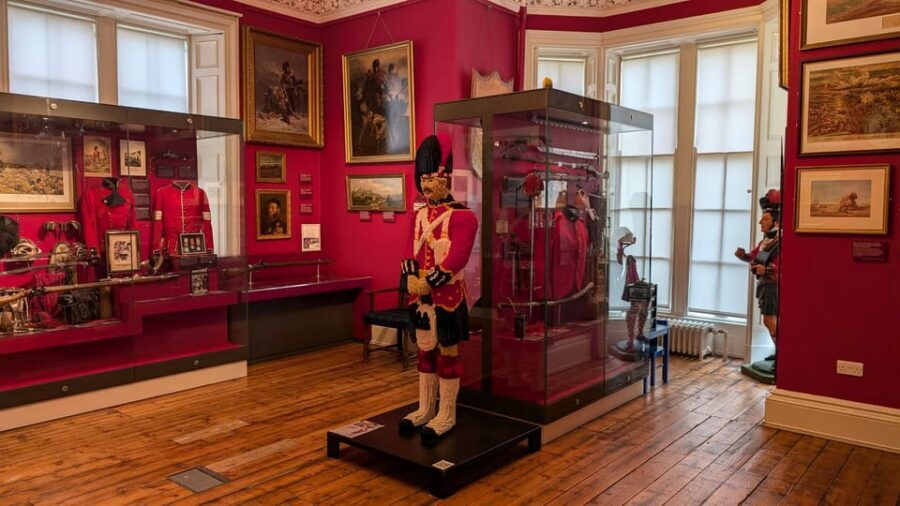
If you’re into Scottish history, this place is a focused fix. The Black Watch Castle and Museum is all about one unit: Scotland’s oldest Highland regiment, The Black Watch. That focus matters. When a museum is centered on a single story, you spend less time trying to connect dots and more time absorbing the details that make the story real.
The setting also helps. The museum’s home base at Balhousie Castle gives the visit a sense of place, not just a display room. Even if you’re not a hardcore military-history nerd, you’ll find yourself reading labels longer than you planned, because the exhibits are built around objects and the people connected to them.
And yes—expect a lot of history. The experience spans roughly 300 years, from the regiment’s formation in 1739 to its amalgamation in 2006. The layout nudges you forward through time, with each gallery adding a new chapter.
You can also read our reviews of more tours and experiences in Perth Scotland.

Getting oriented fast: ticket desk, parking, and the self-guided map

You meet the experience at the Gift Shop Ticket Desk inside The Black Watch Castle and Museum. That’s a small detail, but it’s the difference between a smooth arrival and a slow one. Go in, check in, and you’re ready to start.
You also get a complimentary self-guided tour map. I like self-guided options when they’re actually useful, and this one is included with admission. It helps you structure your time without needing to book a paid guided tour.
Practical perks are built in: free parking onsite and free Wi‑Fi throughout the museum. That matters if you’re traveling from out of town and you want one less stress point on the day. It also helps if you use your phone for translations, maps, or quick reference as you move between galleries.
If you want extra depth, guided tours are available at an additional cost. You don’t need them to enjoy the museum, but they can be helpful if you want someone to connect the dots across battles and time periods as you go.
Your walk through the 12 galleries: history from formation to amalgamation
The museum experience is structured around 12 galleries. That number gives you a clear expectation: you’re not seeing a small show and leaving. You’re going through a full sequence.
Here’s what the route is designed to cover, at a high level:
- The regiment’s formation in 1739
- The evolving role of The Black Watch across conflicts
- Key battles and how the unit operated in Scotland’s wider military story
- Later chapters leading up to its amalgamation in 2006
Each gallery contains a mix of artefacts—like uniforms, medals, and personal items—plus story-based context. You’ll also see weaponry and other period objects described through the lens of the regiment’s service. The result is a timeline you can actually feel, rather than a long wall of dates.
The museum also includes access to all galleries, including permanent and temporary exhibits. So if you’re the type who likes to take in both the core story and the special displays, you have that option built into the same ticket.
Artefacts and personal stories: uniforms, medals, weaponry, and items you can’t ignore
What makes The Black Watch Castle and Museum genuinely effective is how often it anchors the story in items you can point to.
You’ll come across:
- uniforms and clothing connected to soldiers
- medals and military awards
- weaponry and related objects
- personal items tied to individual service
That’s more than display content. It changes the way you read history. Instead of thinking about big campaigns as distant events, you start seeing the human scale—what people wore, what they were recognized for, and what they carried.
One helpful rule: you can look closely, but you can’t touch exhibits. That keeps the artefacts protected, but it also means you should slow down for reading and observation. The museum’s “hands-on” angle comes through interactive exhibits, not physical handling. So if you’re traveling with kids or you just like participation, still plan on being engaged through visuals, prompts, and interactive features rather than hands-on touching.
Guides are on hand, too. If something in a gallery puzzles you—like why a particular battle mattered to the regiment’s reputation—ask. The museum is built so you don’t feel stuck alone with the labels.
The regiment’s battles and worldwide role: from Napoleonic Wars to peacekeeping
This is one place where military history stays grounded in what the unit actually did. The museum doesn’t limit itself to Scotland. It tracks the regiment’s involvement across conflicts from the Napoleonic Wars to modern-day peacekeeping missions.
Why that range matters for you: it shows how the same identity can adapt over centuries. The Black Watch isn’t presented as a single-era costume club. It’s presented as a regiment whose role changes as wars and politics change.
As you move from gallery to gallery, you’ll learn about key battles and the regiment’s role in Scotland’s military history, then see how those responsibilities connect to broader events outside the UK. That structure helps you avoid a common problem with history museums: getting stuck at one time period and leaving with only a partial sense of the story.
If you’re the kind of visitor who likes to understand context, you’ll appreciate that the exhibits aren’t only about the fighting. They tie actions to the regiment’s identity and long-term evolution, from formation to amalgamation.
Balhousie Castle grounds: monument garden and memorials for a slower ending
A good museum visit doesn’t have to sprint to the finish. One reason I like this ticket is that it includes access beyond the gallery rooms: you can also visit the castle grounds.
Onsite grounds include:
- a monument garden
- memorials that invite a calmer pause
This part of the experience is especially useful if you get a bit “overloaded” by military objects and dates. Standing in a quiet memorial area gives your brain a moment to reset. It’s also where the visit feels less like a history class and more like a personal reflective stop.
After that, you can relax at the onsite bistro. It’s not included as part of the ticket price, but it’s there for the practical reason that you’ll likely work up an appetite after walking through 12 galleries and reading for a while.
Rules that affect your day: what you can bring, wear, and do

Museums often have rules, but here’s how they translate into real-life planning.
Not allowed:
- weapons or sharp objects
- smoking
- food and drinks (inside the museum)
- luggage or large bags
- pets (assistance dogs allowed)
- intoxication
- vaping
- flash photography
- sprays or aerosols
- littering
- touching the exhibits
- unaccompanied minors
- other common restricted items like flash and certain carry-ons
So here’s my practical advice: keep your day bag simple. Wear comfortable shoes. If you’re traveling with a bigger bag, plan ahead because luggage or large bags aren’t allowed. Also, treat the bistro as your food stop, not your picnic plan inside the museum spaces.
Photography is another planning point. Regular photos are fine in many museums, but flash photography is not allowed. If you rely on flash for low light, you’ll need to adjust.
If you’re bringing a family group, make sure you’re clear on the rule about unaccompanied minors. That’s a museum policy detail you’ll want to respect so everyone can move smoothly.
Price and value: is $17 good for a 1-day museum visit?
At about $17 per person for a 1-day entry ticket, this isn’t just a quick stop. It’s priced like a serious museum visit where you’re paying for time, access, and content.
Here’s what you actually get for that price:
- entry to The Black Watch Castle and Museum
- access to all museum galleries (including permanent and temporary exhibits)
- interactive exhibits
- a complimentary self-guided tour map
- free parking onsite
- free Wi‑Fi access
Guided tours exist, but they cost extra. That setup often signals value: you can choose to go self-guided (included) and only pay more if you want a structured explanation.
So when does this feel like a good deal?
- If you’re planning to spend real time in one place (12 galleries is a half-day to full-day commitment for most people).
- If you like artefact-based museums, where objects drive the story.
- If you want history that links Scotland to wider conflicts rather than staying only in local accounts.
If you only have one hour and you’re trying to check a box, you might feel rushed. But if you’re giving it a full visit, the price lines up with the amount of material.
Who this museum ticket is best for
This ticket is a strong match if you:
- care about Scottish military history and Highland regiments
- enjoy museums that use uniforms, medals, and personal items to tell a story
- like interactive exhibits that keep your attention moving
- want a day stop in Perth that’s easy to plan and simple to enter
It’s also a good choice for families, as long as you’re comfortable with the rules about touching exhibits and the restrictions on food inside.
If you’re sensitive to war-related themes, you’ll still find this museum thoughtful rather than sensational. The key thing is that the exhibits focus on The Black Watch as a unit and its evolution—formation, service, key battles, and later missions—rather than turning it into shock value.
Should you book The Black Watch Castle and Museum entry ticket?
Book it if you want a museum visit that’s organized around one clear story and backed by real objects. The combination of 12 galleries, interactive elements, and guided support on request makes it easier to spend time here without feeling lost.
Skip it—or reconsider the timing—if your ideal museum is purely visual and you hate reading. This place leans on exhibits plus interpretation. You’ll get the most out of it by slowing down, reading the details, and asking questions when something clicks or doesn’t.
Final tip: plan your day so you can finish with the grounds and memorials. It gives your visit a natural emotional rhythm—history inside, reflection outside—then food at the bistro when you’re ready.
FAQ
How long is The Black Watch Castle and Museum experience?
The ticket is valid for 1 day, so you can set your own pace inside the museum and also visit the grounds.
What is included with the entry ticket?
Your ticket includes entry to The Black Watch Castle and Museum, access to all museum galleries (permanent and temporary exhibits), interactive exhibits, a complimentary self-guided tour map, free onsite parking, and free Wi‑Fi.
Where do I check in when I arrive?
Check in at the Gift Shop Ticket Desk inside The Black Watch Castle and Museum.
Are guided tours included?
No. Guided tours are available for an additional cost.
Is flash photography allowed?
No, flash photography is not allowed.
Can I bring food, drinks, or large bags?
Food and drinks are not allowed, and luggage or large bags are also not allowed. The onsite bistro is available for food and beverages.