REVIEW · ROCHESTER UK
Rochester, Kent: Costumed Guided Tour
Book on GetYourGuide →Operated by Medway Arts Tours · Bookable on GetYourGuide
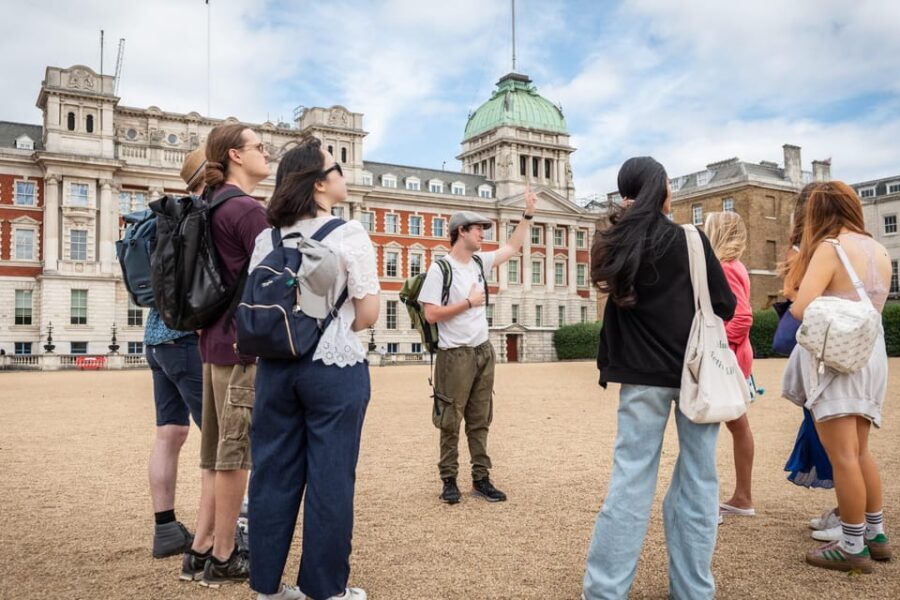
Rochester gets a theatrical makeover on foot. I especially love the costumed guides who stay in character as you walk, and the dramatic readings where Dickens’ words land right where they belong. It’s history with stage energy, not a lecture.
One thing to think about: this is a real walking tour (about 90 minutes). If you’re not steady on your feet, plan for breaks and wear comfortable shoes.
In This Review
- Key Points You’ll Care About
- Rochester on Stage: When Dickens Talks Back
- Finding the Meet Point by Rochester Station (48 Corporation St)
- How the Characters Change the Walk (Mrs Dickens, Sir Joseph, and Friends)
- From the French Hospital Into the High Street
- Almshouses and Dean’s Gate: The City as a Meeting Place
- Jasper’s Gate, Two Post Alley, and George Vaults: Small Spaces, Big Stories
- Civic Rochester: Guildhall, Bull Hotel, and the Royal Crown
- Rochester Bridge Trust and the River Medway Views
- Rochester Castle Under Siege: The Medieval Turning Point
- Baker’s Walk, Satis House, Longley House, and Boley Hill
- The Vines, Restoration House, and the Dickens Sighting Memorial
- Eastgate House, the Swiss Chalet, and Six Poor Travellers
- Ending Back at Corporation Street: What the Whole 90 Minutes Delivers
- Price and Value: Why $20 Feels Fair Here
- Practical Tips Before You Go (So It Stays Fun)
- Who Should Book This Costumed Rochester Walk
- Should You Book the Costumed Rochester Tour?
- FAQ
- How long is the Rochester costumed guided tour?
- Where do I meet the guide?
- Is the tour wheelchair accessible?
- What languages are available?
- Do I need to buy entry tickets?
- What should I bring?
- Is food or drink included?
Key Points You’ll Care About
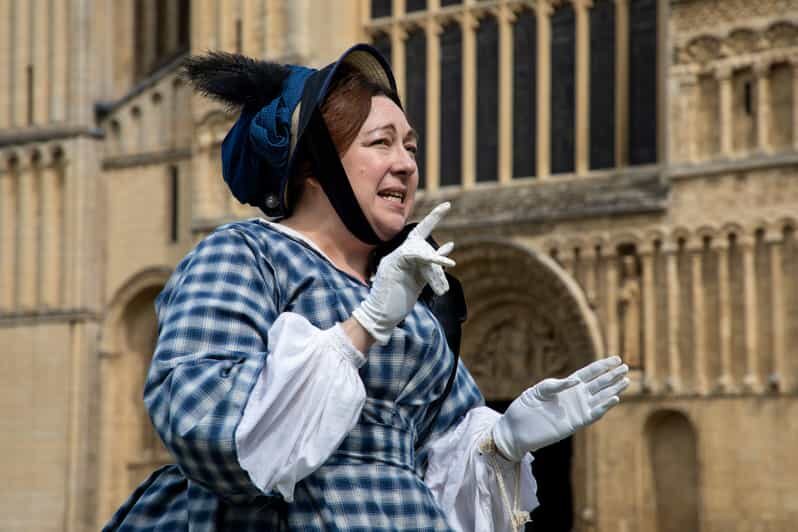
- A cast of characters, not one lecture: you’ll be shown the city through different Victorian roles, with Dickens links front and center.
- 22 stops in a tight loop: close-up sights, city gate points, and little corners you’d miss on your own.
- Medieval siege energy near the castle: you’ll watch the story of a castle change under pressure, then look out at the Medway.
- Dickens’ lines become your directions: you hear words that describe what you’re standing in front of.
- Social history that goes beyond postcards: you’ll hear about pilgrims, refugees, soldiers, sailors, and prisoners seeking release and sanctuary.
Rochester on Stage: When Dickens Talks Back
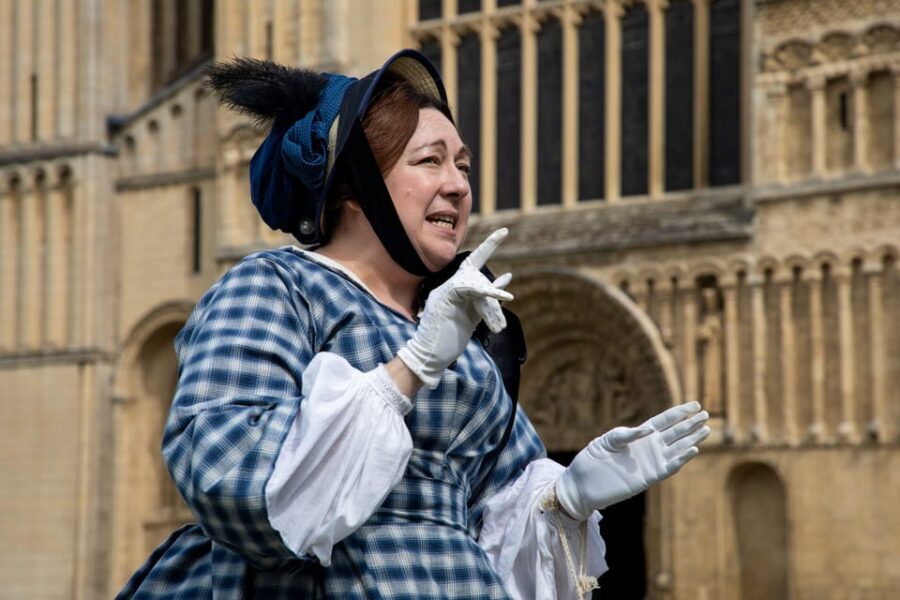
This tour works because it treats Rochester like a living script. You’re not just moving between landmarks—you’re standing in the same kind of street space that shaped Charles Dickens’ imagination, then listening as characters interpret it in real time.
The format matters. You get live costumed guidance, dramatic readings, and social history stories that connect the city’s big moments (cathedral and castle) to everyday human stories (people passing through, struggling, surviving). It’s a smart way to make a compact historic city feel bigger than it is.
And the best part? The experience is flexible. You may be shown different time periods and different personalities—whether that means meeting a character tied to Dickens’ family life, encountering a local figure connected to creative work, or stepping into a Regency scene with a Napoleonic officer feel. That choice keeps you engaged, even if you’ve visited Rochester before.
You can also read our reviews of more guided tours in Rochester Uk

Finding the Meet Point by Rochester Station (48 Corporation St)
Start at 48 Corporation St, across Corporation Street from Rochester station’s main exit. Look for the coach parking bays by the gate to the back entrance of the Huguenot Museum—above it, you’ll see the words Welcome to Historic Rochester. Your guide stands on the ramp beside the gates.
Why this matters: you can actually get your bearings fast. You’re meeting right near the station, so you’re not spending your limited tour time hunting for signage in side streets.
You’ll want to arrive a little early, since the tour begins as a group and it helps if everyone starts together.
How the Characters Change the Walk (Mrs Dickens, Sir Joseph, and Friends)
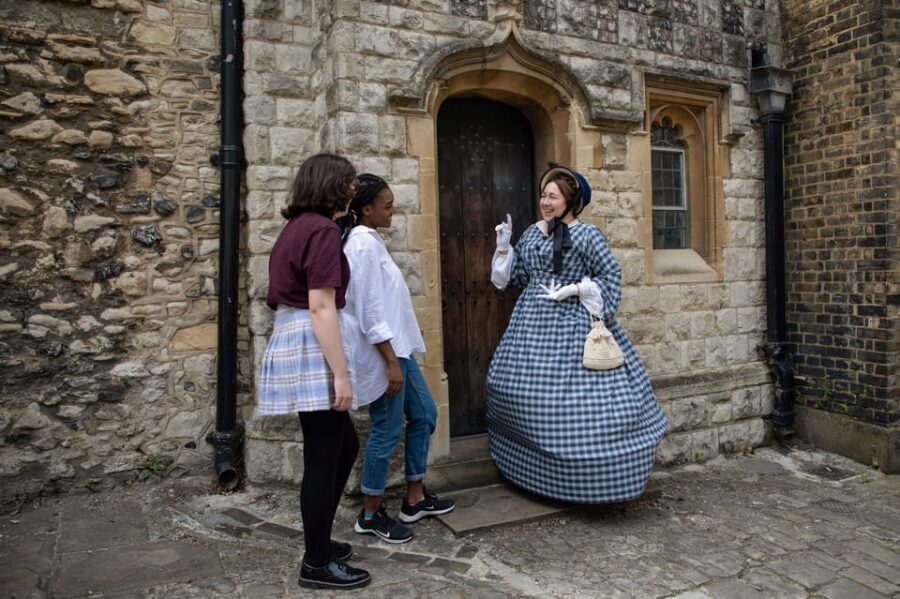
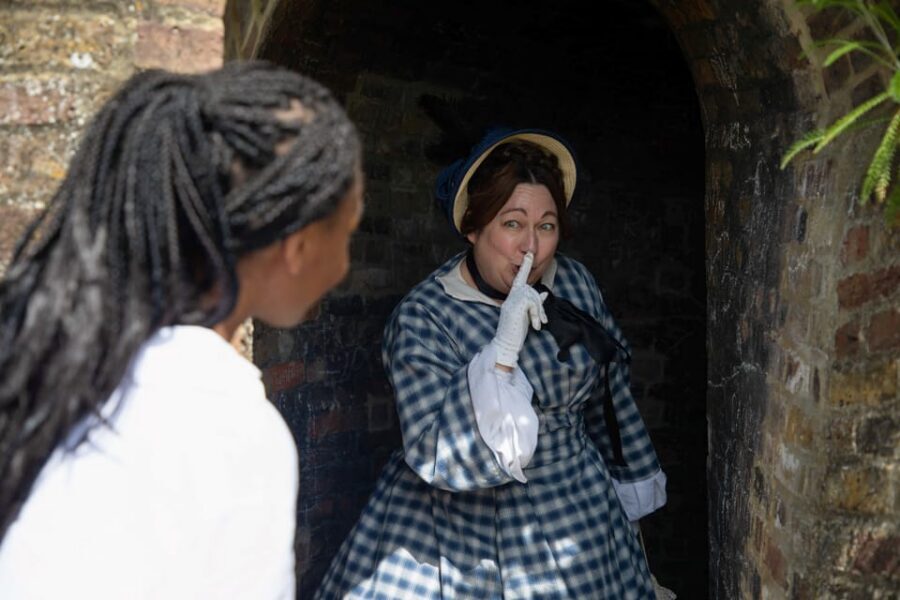
Instead of a single narrator, the tour shifts through different “eyes.” Depending on the period you choose, you’ll experience Rochester through a Victorian character tied to Dickens’ personal world, a botanical illustrator connection, a local inventor, or a Regency Rochester pairing that includes a French Napoleonic officer. There’s also a spotlight on Mrs Sarah Baker, described as the Georgian Governess General of Kentish Theatre, with links connected to Queen Charlotte and Jane Austen.
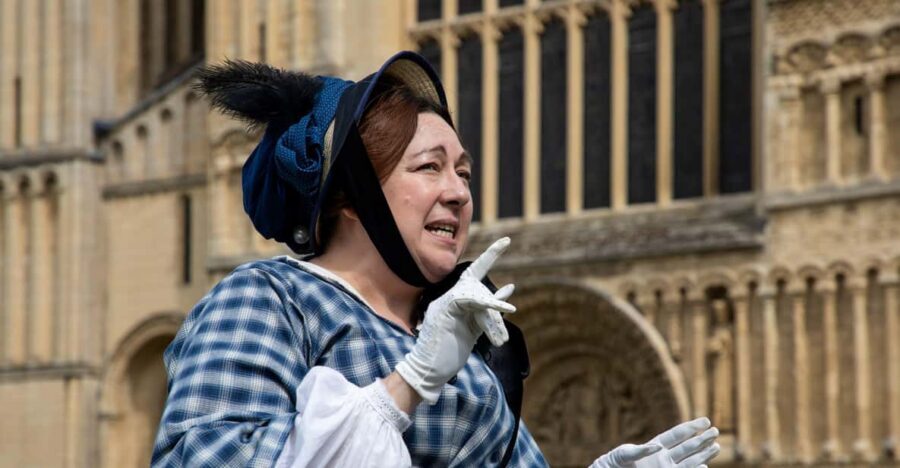
Sometimes that pairing feeling is part of the fun. One guide combination that stands out is Mrs Dickens with Sir Joseph Williamson, and the tone tends to match: witty, dramatic, and very focused on the place in front of you.
For you, this means the tour doesn’t become the same “history facts” each time. It’s closer to seeing Rochester as a set of scenes, where different characters highlight different layers—especially where Dickens would have looked.
From the French Hospital Into the High Street
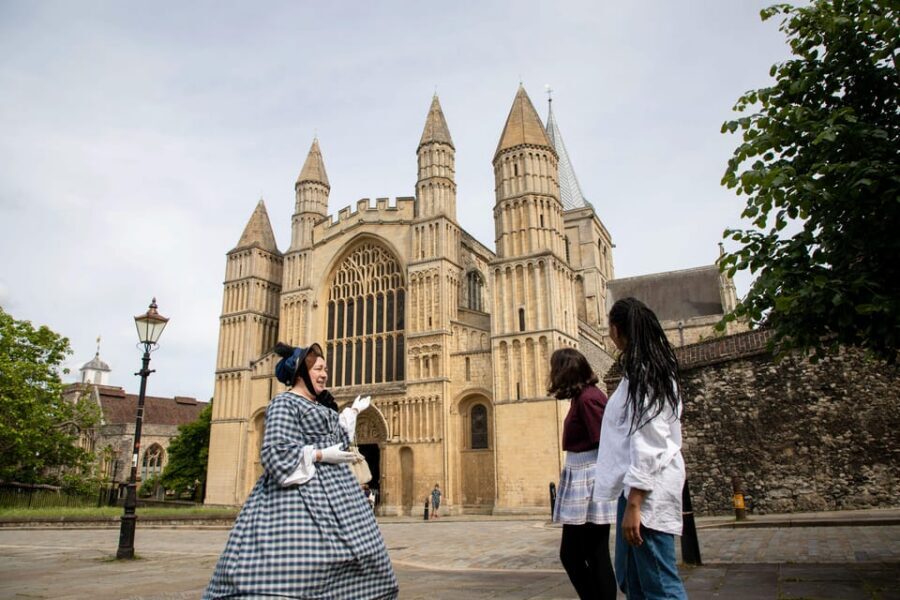
Your walk starts on Corporation Street and then works you toward the High Street through a discreet entrance via the French Hospital. That’s a good early setup. It feels like you’re slipping into the old city rather than marching through it.
From there, the guide starts building the city’s timeline in a very practical way: pointing out what you can see, plus what’s harder to spot but still shapes the streets today. Rochester stretches back over 1,000 years, and the tour structure helps you understand the city’s growth without needing a history degree.
You also begin a recurring theme: the city as a crossroads. The guide brings in stories of pilgrims, refugees, agitators, soldiers, sailors, and prisoners from around the world seeking release and sanctuary. That keeps the tour from feeling like it’s only about castles and kings.
Almshouses and Dean’s Gate: The City as a Meeting Place
Next you pass through stops that anchor the city’s daily life and movement. You’ll see almshouses and move toward Dean’s Gate, both used to explain how Rochester functioned as a place where people arrived, waited, lived, and—when life got rough—found what support they could.
Dean’s Gate is one of those points where the city’s past becomes visible in shape and position. Even if you don’t know the backstory, the guide shows you how these gate areas matter: they were transitions, and today they still frame how you walk the streets.
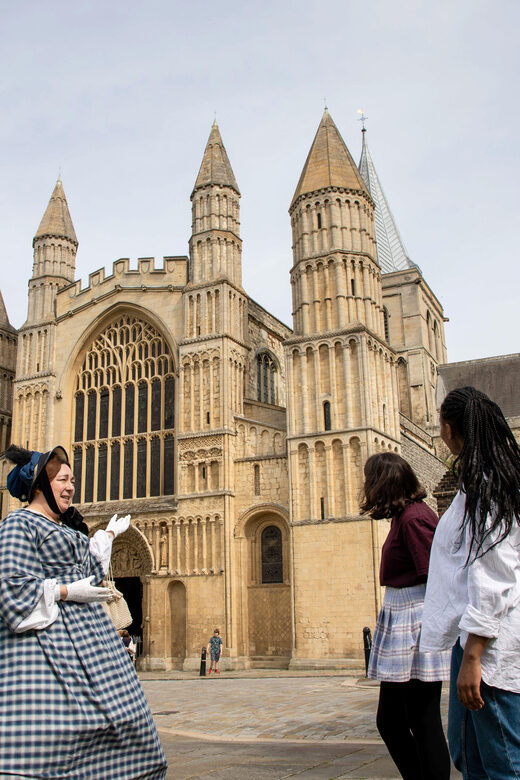
At Rochester Cathedral, the pace shifts into big stone and bigger meaning. The tour uses the cathedral-city idea to explain how Rochester evolved, including the role of wealth tied to the river and the dockyard at Chatham.
Then you pause at the church of St. Nicholas, adding another layer to the religious and civic story of a cathedral city—how it served the community and shaped the city’s identity over time.
Jasper’s Gate, Two Post Alley, and George Vaults: Small Spaces, Big Stories
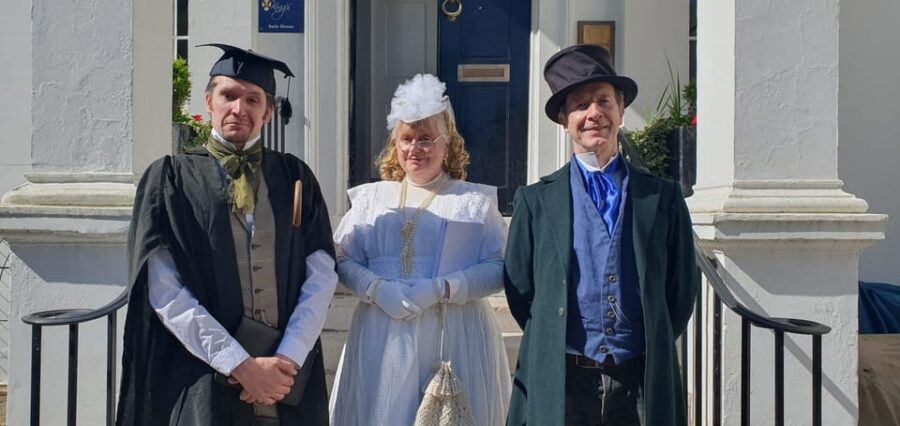
If the tour has a secret weapon, it’s places like narrow passages and tucked-in stops. You’ll move past Jasper’s Gate, then through Two Post Alley—exactly the kind of spot you’d normally walk past without noticing.
These tight areas are where the “invisible remains” idea starts to feel real. The guide points out how centuries of movement leave fingerprints on street layout, sightlines, and building relationships, even when nothing is labeled for you.
Then comes George Vaults, another stop that helps the tour’s social history land. Vault-like spaces are perfect for stories about people hiding, waiting, or being held—because the architecture itself suggests enclosure. In this tour, those spaces get used to talk about pilgrims, prisoners, and the need for sanctuary.
It’s also a great stretch for photos, since you’re switching between street-level views and more sheltered-feeling spots.
Civic Rochester: Guildhall, Bull Hotel, and the Royal Crown
The walk continues through civic and visitor-facing stops like the Guildhall, The Bull Hotel, and Royal Crown. These aren’t random names dropped for flavor. They help you understand Rochester as a working city, not just a set of monuments.
This is where you start seeing the bridge between commerce and drama. The tour keeps returning to the idea that the river and trade mattered—so the guide uses these stops to connect people, goods, and the kinds of travelers Rochester welcomed.
If you like a city tour that explains how the place actually ran, this stretch is for you.
Rochester Bridge Trust and the River Medway Views
After you’ve been inside streets and gate points, you get a more open feeling again with Rochester Bridge Trust and then Castle Gardens. This is one of the tour’s visual payoff moments, because the route sets you up for views of the River Medway.
That river view isn’t just scenery. The guide uses it to reinforce why Rochester’s power and growth happened where it did. When you look out toward the water, the city’s layout stops feeling like trivia and starts feeling like cause and effect.
It’s also a nice mental reset if you’ve been reading your way through alleyways and gates.
Rochester Castle Under Siege: The Medieval Turning Point
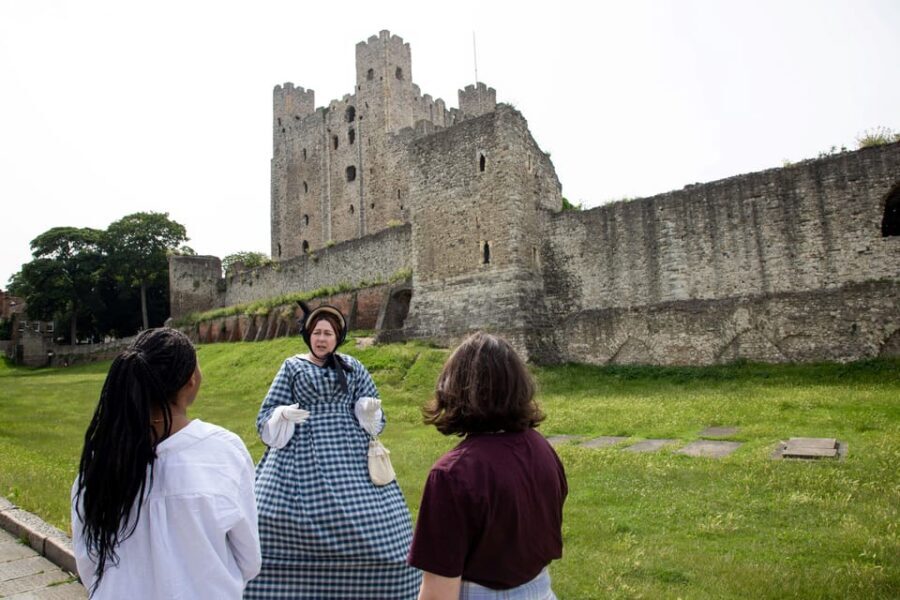
Then the tour hits one of its biggest highlights: Rochester Castle and the story of changes to a castle under a bloody, medieval siege. The guide uses the physical closeness of the castle grounds to make the conflict feel immediate—what you see now is tied to what happened then.
This is also where “history + theatre” really shows. The tour doesn’t just say what a siege was. It positions you so the castle’s shape and location help you understand why defenders and attackers fought where they fought.
If you’re the type who learns best by seeing, not reading, you’ll like this part. You’re not stuck imagining; the guide points, and your eyes follow.
Baker’s Walk, Satis House, Longley House, and Boley Hill
After the castle, the walk turns more scenic and more varied. You’ll cover Baker’s Walk, a natural place for river-adjacent views, then continue to Satis House and Longley House. The stops keep the tour from becoming one-note by mixing dramatic points with residential or architectural variety.
You’ll also head up toward Boley Hill and then through Minor Canons Row. These areas help you feel how Rochester moves across its terrain. Even without getting technical, the route makes the city’s shape visible through your legs and your changing sightlines.
In other words, you don’t just learn where things are. You experience how the city is built.
The Vines, Restoration House, and the Dickens Sighting Memorial
As you move through The Vines and Restoration House, the tour stays rooted in the theme of visible and invisible influence on modern Medway. This is where the guide often ties the narrative back to what Dickens would have recognized: the city’s rhythms, the architecture, and the human scale of the streets.
Then you reach the memorial to the last known sighting of Dickens. It’s brief, but it lands. A memorial like that works as a direct handshake between literature and place: you’re not only hearing about Dickens, you’re stopping at a marker that says he belonged here in a real way.
For a book-club group, this is a standout. Even if you’re not obsessed with dates, it gives you a tangible moment to anchor discussion later.
Eastgate House, the Swiss Chalet, and Six Poor Travellers
Near the end of the route you’ll pass Eastgate House, then the Swiss Chalet, and finally Six Poor Travellers. These feel like the tour’s “why is that here?” moments—and that’s good. They prevent the final stretch from becoming repetitive.
The Swiss Chalet adds whimsy to the walking rhythm. It’s the kind of sight that makes you slow down and look twice.
Then Six Poor Travellers brings the social-history thread home again, connecting Rochester’s links to relief and sanctuary themes. By this point, you’ve heard enough human stories that the stop feels less like a name and more like a closing note: the city’s identity isn’t only built from famous buildings. It’s also built from how people cared for vulnerable strangers and travelers.
Ending Back at Corporation Street: What the Whole 90 Minutes Delivers
The tour loops back to the start at 48 Corporation St. Along the way you’ll see close-up views of the castle and cathedral, hear Dickens’ words describing where you’re standing, and hit 22 sites plus multiple city gate points.
That’s the core value: 90 minutes can feel long when you’re doing a city walk. Here, it doesn’t drag because the guide keeps changing the lens—character, period, story, then place—so your brain stays busy.
The dramatic readings also help. Instead of just listening to facts, you’re hearing language used to describe streets, views, and mood. That turns the route into a story you can picture afterward.
Price and Value: Why $20 Feels Fair Here
At about $20 per person for roughly 1.5 hours, this tour is priced like an activity that includes more than just walking. You’re paying for a live costumed guide, dramatic readings, and a route that covers a lot of named stops, including major anchors like the cathedral and castle.
What you don’t pay extra for: entry tickets aren’t included, but you’re not being asked to buy separate attractions to get the main experience. You’re paying for interpretation—someone guiding you through social history and architecture while staying in character.
If you normally spend money on paid museum audio guides, this is the better deal. You get performance and context, not just descriptions.
Practical Tips Before You Go (So It Stays Fun)
Wear comfortable shoes. This is a walking itinerary through streets that can include narrow alleys and uneven historic ground.
The tour also has clear boundaries: no alcohol and drugs. That keeps the focus on the performance and keeps the group experience smooth.
Weather matters less than you’d think, but be prepared to keep going in wind or rain. The good news is that the pacing is already built around short stops and storytelling moments, so even a gray day can work.
For planning: tours are English, and there’s also a version available in French. If you’re traveling with a book club or a group who likes Dickens, this format tends to land well.
Who Should Book This Costumed Rochester Walk
This is a great match if you want a historical tour that feels like theatre and you’re interested in Dickens’ Rochester connections. It’s also strong for visitors who learn best with stories tied to place—especially when you want to see both the castle/cathedral scale and the smaller street corners.
I’d also recommend it to locals looking for something different on a weekend. The cast-of-characters approach means you don’t just re-run old facts.
If you’re a strict museum-only person, you might prefer a ticketed attraction day. This is about streets, voices, and walking—not about museum exhibits.
Should You Book the Costumed Rochester Tour?
I’d book it if you want an energetic 90-minute way to understand Rochester through Dickens, drama, and social history. It’s good value for the amount of ground covered, and the costumed guide format keeps the whole walk from feeling like a checklist.
Only skip it if you’re not comfortable with walking for about an hour and a half. Otherwise, plan your day around it. Then let the city play its part.
FAQ
How long is the Rochester costumed guided tour?
It runs for about 1.5 hours, which is roughly 90 minutes.
Where do I meet the guide?
Meet at 48 Corporation St, across from Rochester station’s main exit. Look for the coach parking bays by the gate to the back entrance of the Huguenot Museum, marked with Welcome to Historic Rochester above it, and find your guide standing on the ramp beside the gates.
Is the tour wheelchair accessible?
Yes. The tour is described as wheelchair accessible, and the route can be amended for mobility issues.
What languages are available?
The tour is available in English, and there is also an option available in French.
Do I need to buy entry tickets?
No. Entry tickets to attractions are not included.
What should I bring?
Bring comfortable shoes for a walking tour.
Is food or drink included?
No. Food or drink is not included.