REVIEW · SHEPTON MALLET
Shepton Mallet Prison: Guided Tour
Book on GetYourGuide →Operated by Cove Attractions Ltd · Bookable on GetYourGuide
Shepton Mallet Prison isn’t a gentle museum stop. It’s a real, working-style walkthrough of a historic prison where the stories are blunt, specific, and tied to places you can actually stand inside. I especially love how the tour balances detail about daily routines with the heavier stuff, including the path from condemned cell to execution room.
What makes it click is the live guide: guides like Jason, Esther, and Cameron bring facts to life with storytelling that feels grounded, not theatrical. The built-in self-guided time is another win, because a 90-minute guided tour still leaves you enough space to linger and look around at your own pace. One consideration: it can be a little easy to miss the visitor centre at first, so go in far enough through the gate and watch for clear signage.
In This Review
- Key points
- Entering Shepton Mallet Prison in 90 minutes
- Victorian Wings B and C: overcrowding and a purpose-built area
- Officer landings and steel doors: the 400-year feel of routine
- Hard Labour Yard and the tread wheel building
- Gate Lodge and Governor’s Office: oldest parts and an original cell
- The exercise yard and Governor’s House
- The execution room: condemned cell, Albert Pierrepoint, and real cases
- Self-guided time after the tour: how to use it well
- Price and value: $33 for a guided + real prison experience
- When to go: tour times that help you plan a day
- Practical tips for a respectful, effective visit
- Should you book the Shepton Mallet Prison guided tour?
- FAQ
- How long is the Shepton Mallet Prison guided tour?
- What’s included in the ticket price?
- What areas of the prison will the guided tour cover?
- Will I see the execution room and condemned cell?
- How many men were executed on the prison grounds between 1889 and 1945?
- Is there a cafe on site?
- What language are the tours in?
- When do guided tours run?
Key points
- Two Victorian wings (B and C) show how the prison changed for different kinds of prisoners
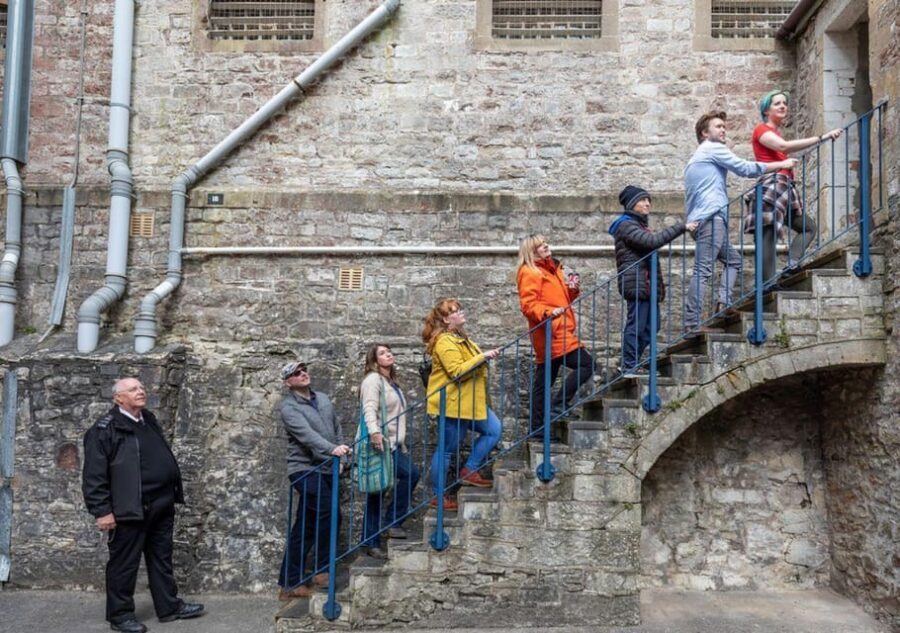
- Hard Labour Yard explains punishments designed to keep inmates busy, including the tread wheel building you can see
- Gate Lodge and Governor’s Office include some of the oldest fabric of the site
- Execution room visit follows the condemned man’s route, with context on Albert Pierrepoint and real cases
- Self-guided tour included so you can circle back to the bits that grab you
Entering Shepton Mallet Prison in 90 minutes
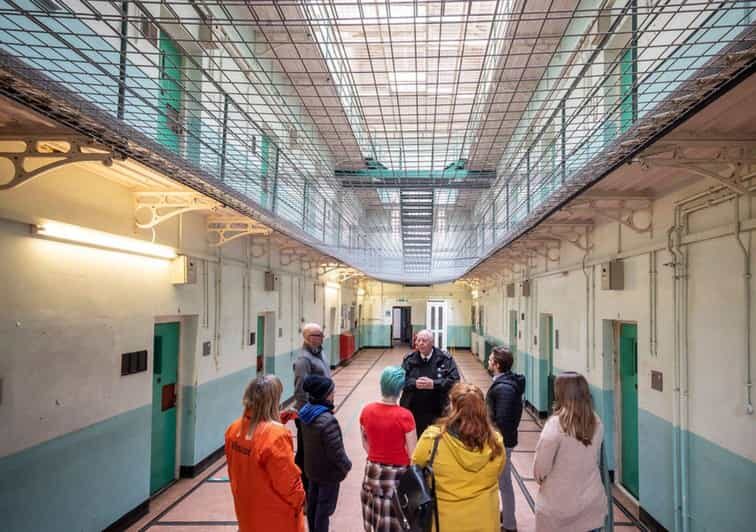
Plan for a guided tour that lasts about 1.5 hours. That time matters here. It’s long enough for a real sense of space—steel doors, landings, yards, and buildings—but short enough that you’re not stuck moving slowly while the emotional weight builds and builds.
This is also one of those experiences where the guide changes everything. A self-guided visit can show you the rooms, but a strong guide helps you understand the rules, the routine, and the contradictions: how a place built to contain people also tried to control their bodies, their time, and their hope. On this tour, your guide brings an encyclopaedic command of the prison’s history and uses on-site details to make the past feel tangible.
And yes, it’s no-holds-barred. You’ll hear what it was like for prisoners, officers, and visitors. You should expect moments that feel harrowing, not just spooky.
You can also read our reviews of more guided tours in Shepton Mallet


Victorian Wings B and C: overcrowding and a purpose-built area
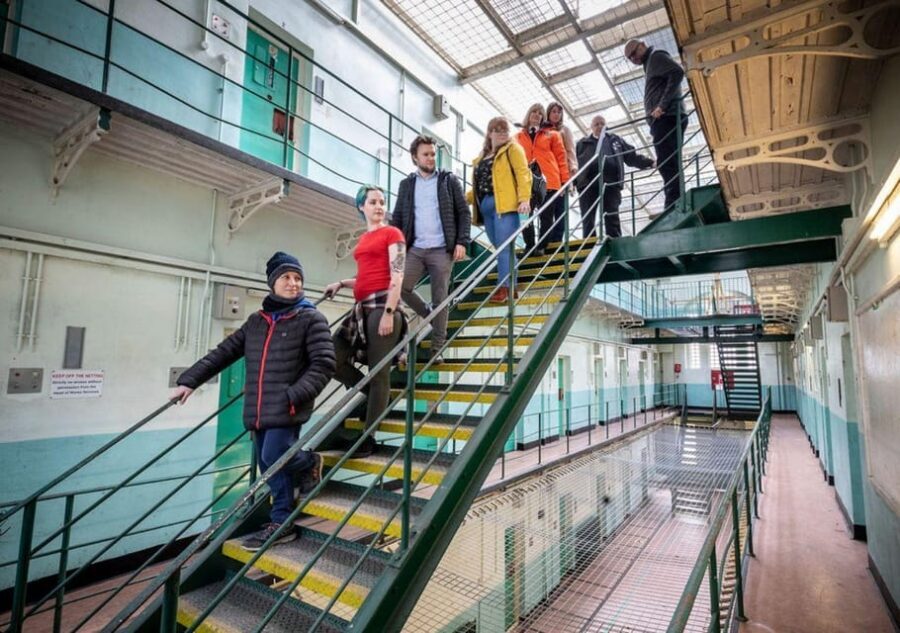
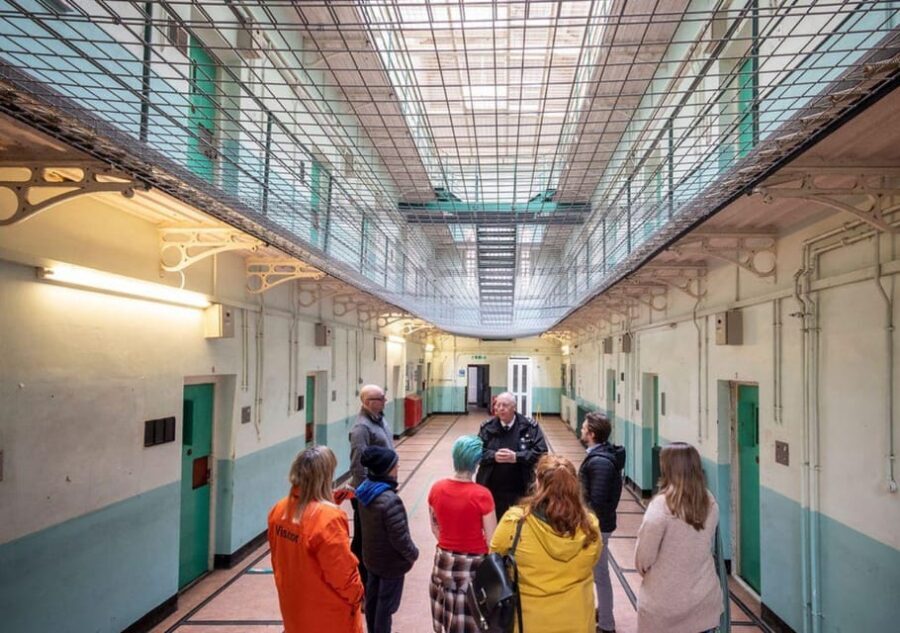
The tour starts by bringing you into the traditional Victorian prison layout. You’ll visit two wings, B Wing and C Wing, and they explain the prison’s timeline in a way that just walking around can’t.
B Wing is the largest wing and, as of 2001, had capacity for 94 prisoners. The key detail is that overcrowding was a recurring problem in the years before. That’s not trivia. It changes how you picture the space: a wing designed for a certain number of people becomes a cramped system when the prison population doesn’t match the plan.
Then comes C Wing, which was purpose built in 1848 to hold women and children into the early 1900s. The tour doesn’t treat this as a side note—it connects the wing to a later WWII story, described as a top-secret role. Even if you don’t know the wider wartime context going in, the wing helps you grasp how the prison was adapted for very different needs over time.
The practical takeaway: this section gives you the prison’s “who was here” and “how the building worked for them” story. It’s the backbone of the tour.
Officer landings and steel doors: the 400-year feel of routine
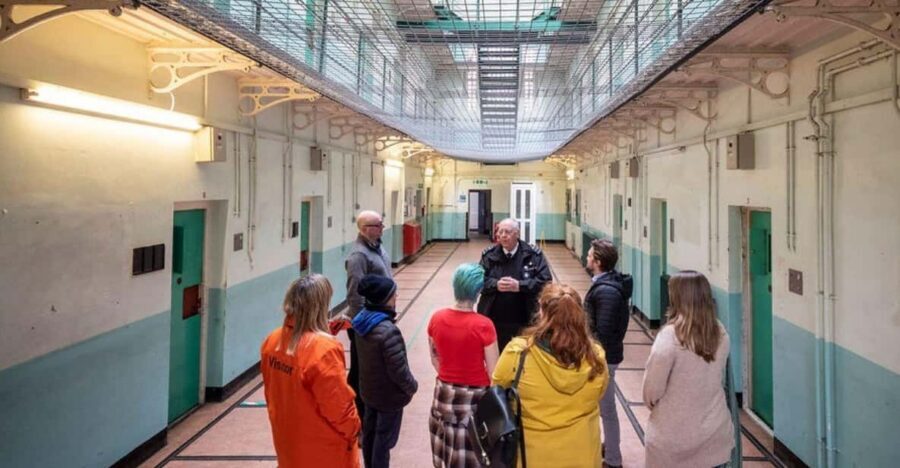
Next, you move through the landing area officers would have used for about 400 years. That’s one of those numbers that sounds big until you’re standing where the movement happened—stairs, corridors, thresholds. You begin to understand how the prison’s design enforced routine.
The tour also leans into the physical reality of restraint, including what it’s like to be locked behind steel doors. That matters because prisons aren’t only about danger. They’re about access: who gets in, who gets out, and how long doors stay closed.
I like that the guide frames these spaces as lived systems, not as film-set props. A good guide will point out how the architecture itself shapes behavior—where sightlines are, where people waited, and how movement was controlled.
Hard Labour Yard and the tread wheel building
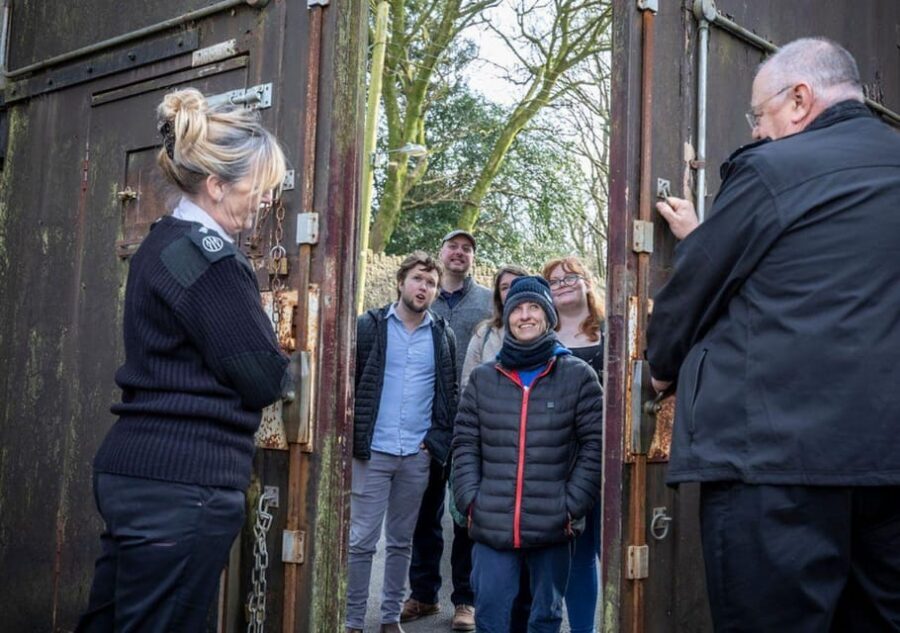
The tour then heads to the Hard Labour Yard, where you learn about hard labour forms used in the 1800s. The emphasis here isn’t on “interesting old machines.” It’s on why the labour was used at all: hard, often pointless tasks meant to stop idleness.
This is where you start seeing punishment as management. The idea wasn’t simply to harm people. It was to keep them occupied in ways that drained energy and disrupted normal rhythms.
From this yard, you can also see the Tread Wheel building. That’s one of the more physically demanding Victorian hard labour set-ups, and it becomes easier to understand why after you’ve walked the surrounding spaces. You get a sense of how the prison tried to control the body—time spent turning, endurance tested, day after day.
If you’re sensitive to physical suffering topics, pace yourself here. It’s not graphic in the tour description, but the meaning is clear.
Gate Lodge and Governor’s Office: oldest parts and an original cell
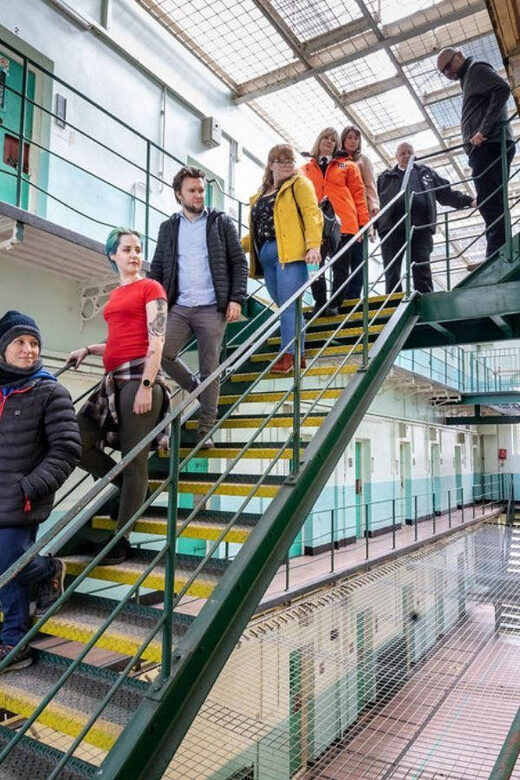
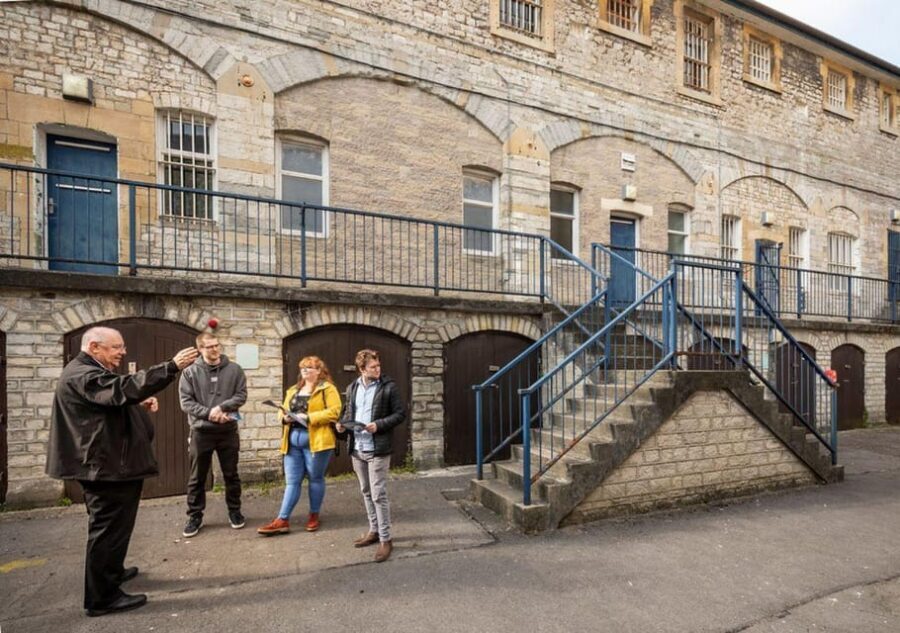
One of the strongest sections of the tour is the walk around the Gate Lodge and the Governor’s Office. This is where you can feel how the prison evolved. From the 1600s until the 1990s, this side served as the main entrance, which means it’s seen development across centuries rather than a single era.
You’ll also hear about original details that still survive. One example of an original cell has recently been uncovered. The description is honest about what exploring it involves: you may need to get on your hands and knees to view it.
That’s a moment where I’d tell you to go in mentally prepared. If crawling-style viewing isn’t your thing, treat it as optional and focus on the other rooms and walkways nearby. But if you enjoy physical, hands-on historical details, this is the kind of stop you’ll remember.
This area also tends to help you understand the prison as a place of administration and control, not just confinement. The Governor’s Office adds context to how decisions were made and how the site functioned day to day.
The exercise yard and Governor’s House
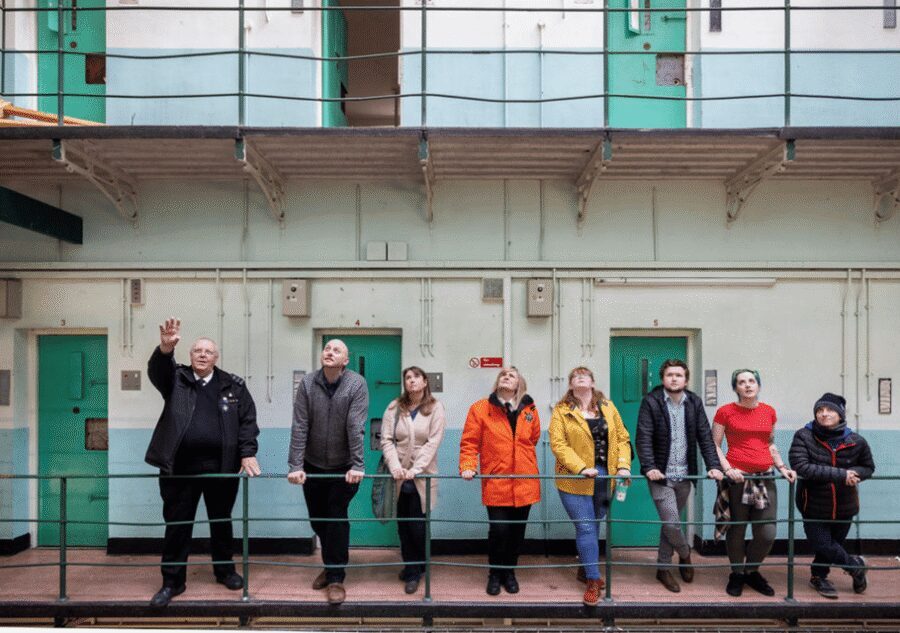
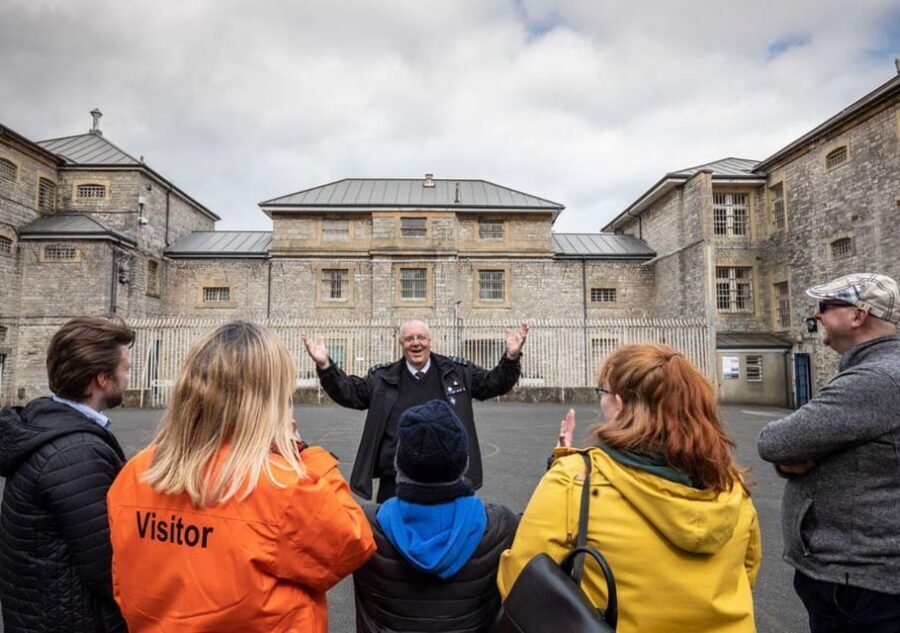
After the oldest entrance-area buildings, you step into the large exercise yard overlooked by three wings and the old Governor’s House. This is a key shift: you go from corridors and enclosed spaces to something open-air, but still controlled.
That contrast is exactly the point. Even in the yard—where you might imagine freedom—people were still boxed into schedules and locations. When you look up at the wings from this yard, it makes the prison’s design feel like a system, not a set of random rooms.
If you like architecture that tells a story, this is a good place to slow down. The layout helps you connect what you just learned about wings and movement with how prisoners spent structured time.
The execution room: condemned cell, Albert Pierrepoint, and real cases
This is the emotionally heavy part of the guided tour. You’ll follow the footsteps of men taken from the condemned cell to the execution room. The condemned man’s cell is where a prisoner would spend his last days before execution.
The tour includes specific historical details: a total of 25 men were executed within the prison grounds between 1889 and 1945, with many taking place in this room under the supervision of Albert Pierrepoint. The guide also discusses the men’s crimes and the controversies surrounding their convictions.
That combination matters. It prevents the experience from turning into pure shock. Instead, you’re shown how justice, punishment, and evidence were handled in that era—and how even then, convictions could be questioned. The result is intense, but also more thoughtful than a simple horror walk.
You can also visit two related sites on the grounds: the final resting place of seven executed men, plus the site of two military firing squad executions.
If your goal is to understand history rather than just feel unsettled, this part will likely stay with you. If you’re going for a light day trip, this might be too much.
Self-guided time after the tour: how to use it well
One of the best value features here is that the self-guided tour is included. That’s not just a free extra. It’s your chance to decide what you want to look at twice.
The guided portion gives you the “why” and “how.” The self-guided time is where you can sharpen your attention: revisit a wing, linger around the yard layout, or spend longer with display areas that you didn’t have time to fully absorb during the live commentary.
My practical advice is simple: don’t try to see everything at full speed. Pick one or two areas that hit hardest and give them your time. The prison is large enough that rushing can turn it into a blur of doors and corridors.
Also, a note from what’s available on-site: there’s a cafe offering barista-style coffee, hot drinks, and snacks, plus a gift shop. It’s the right place to pause after the execution-room section.
Price and value: $33 for a guided + real prison experience
The price is about $33 per person, with a duration of roughly 1.5 hours. On paper, a guided tour can seem pricey—until you factor in what you’re paying for: access to a real Victorian prison experience plus a guided explanation that keeps you oriented and gives meaning to what you’re seeing.
In other words, this isn’t you paying extra for someone to point and talk. It’s you paying for interpretation in a place where context is everything. The self-guided component further boosts the value because you’re not limited to the guide’s pace.
If you’re the type who reads and asks questions, a guided tour is the best way to get value here. If you prefer quiet, slow wandering, you can still benefit, but this prison layout becomes far more understandable when someone walks you through the system.
When to go: tour times that help you plan a day
Guided tours are scheduled at 2pm Monday to Friday, and 11am and 2pm during weekends and school holidays. That makes planning easier if you’re building a small Somerset itinerary.
Because the tour is only 1.5 hours, it fits well with a broader day. But keep a little room for extra time afterward. The execution-room section and the overall “no-holds-barred” theme can affect your energy level more than you expect.
Practical tips for a respectful, effective visit
This is one of those places where how you show up matters.
- Expect emotional intensity. The tour covers executions, condemned cells, and controversies around convictions, so don’t treat it as light entertainment.
- Wear comfortable footwear. You’ll move through historic areas and yards; pick something that won’t slow you down.
- Be ready for tight viewing moments. One original cell exploration may require getting on your hands and knees.
- Arrive with a simple plan. If you want the best guided experience, show up before your start time so you’re not rushed or flustered.
- Use the visitor centre correctly. One practical hiccup that comes up is finding the visitor centre if you don’t go in far enough through the gate. Give yourself a buffer and look for the signage.
A final note: the tone of the tour is serious, but guides don’t just unload facts. Some of the strongest moments come from how the guide speaks about former inmates with care—without sanitizing what happened.
Should you book the Shepton Mallet Prison guided tour?
Book it if you want a real prison visit with historical context, not just a self-guided walk through rooms. The guided portion is the difference-maker, especially if you care about understanding the prison system—from overcrowding in B Wing to women and children in C Wing, from hard labour designed to drain time, to the execution room and the Albert Pierrepoint connection.
Skip or reconsider if you’re looking for a cheerful day out. This tour deals with executions, condemned prisoners, and troubling aspects of justice. It’s also physically involved in small ways (like crawling to see an original cell), so go in prepared.
If you like museums that tell the truth and you’re okay with a heavy subject, this is a strong choice for Somerset—and one you’ll remember long after you leave the steel doors behind.
FAQ
How long is the Shepton Mallet Prison guided tour?
The guided tour lasts about 1.5 hours.
What’s included in the ticket price?
The ticket includes entry to the guided tour at the World’s Oldest Prison and also includes a self-guided tour.
What areas of the prison will the guided tour cover?
You’ll tour two Victorian wings (B Wing and C Wing), the Hard Labour Yard, the Gate Lodge and Governor’s Office area, the exercise yard, and the execution room, plus related grounds sites.
Will I see the execution room and condemned cell?
Yes. The tour includes the execution room and follows the route from the condemned cell to the execution room.
How many men were executed on the prison grounds between 1889 and 1945?
The tour states that 25 men were executed within the grounds between 1889 and 1945.
Is there a cafe on site?
Yes. There is an on-site cafe serving barista-style coffee, hot drinks, and snacks.
What language are the tours in?
The guided tours are in English.
When do guided tours run?
Guided tours run at 2pm Monday to Friday, and at 11am and 2pm at the weekend and during school holidays.