REVIEW · ST IVES
Barbara Hepworth Museum & Sculpture Garden: entry to site.
Book on GetYourGuide →Operated by Tate St Ives · Bookable on GetYourGuide
Sculpture and garden in one tidy walk. This is a smart, hour-ish stop where Barbara Hepworth’s home becomes your entry point into her thinking, and you get to see abstract sculptures set in a sub-tropical garden. I especially liked the friendly staff and the way the museum displays help you connect what you’re seeing to her life and working process; I also loved the outside section, where larger works feel like they belong in their plant-filled setting. One heads-up: the site is relatively small and there’s no café or refreshment area, so plan food breaks before you arrive.
In practice, you’ll move from an admission space with archive photos and career artefacts, up into the museum rooms in her former living area, then out to the sculpture garden for a second wave of works. The whole visit works well for mixed interests—modern art fans get plenty to study, and garden lovers get planting that’s clearly planned to frame the sculpture. The experience is limited to a small group (up to 9), so it tends to feel calm and conversational rather than rushed.
In This Review
- Key things to know before you go
- Entering the admission area: photos, artefacts, and your first clues
- Upstairs in Hepworth’s former living area: see the works with the room behind them
- Outdoors in the sculpture garden: sub-tropical planting with room to breathe
- Why the experience feels special: the site hasn’t been rebuilt for you
- Is it worth the $13 price? Value for modern art lovers (and plant people)
- Practical tips: timing, what you can and can’t bring, and photo rules
- Who should book this Barbara Hepworth Museum & Sculpture Garden?
- Should you book this visit?
- FAQ
- How long does the Barbara Hepworth Museum & Sculpture Garden visit take?
- How much is the ticket?
- Is there a café or places to buy food and drinks on site?
- Is the site wheelchair accessible?
- Are pets allowed?
- Are drones or tripods allowed?
- Can I take photos?
- Is there a refund if plans change?
Key things to know before you go
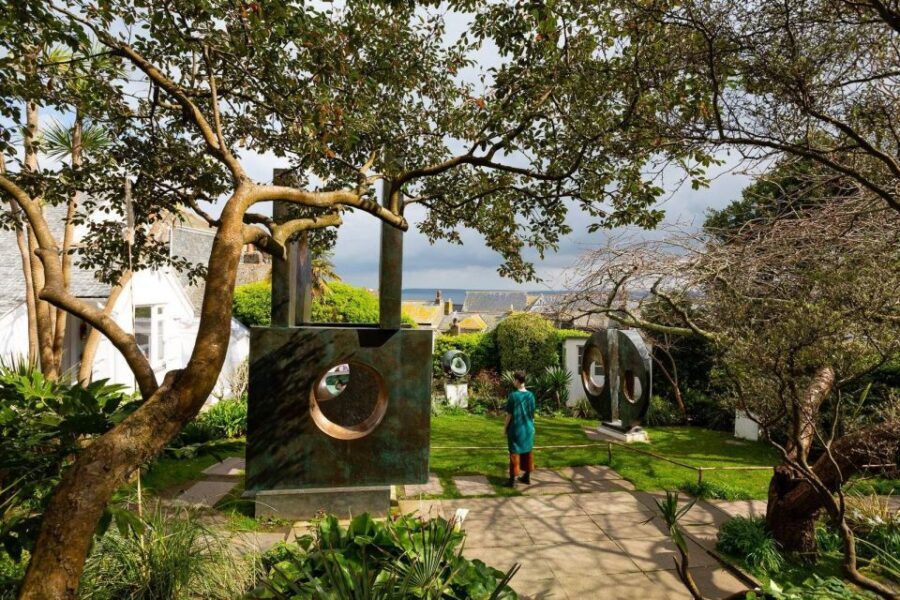
- A home + museum + garden in one ticket: original rooms upstairs and sculpture outdoors, both tied to Hepworth’s life and work.
- Sub-tropical garden that’s part of the artwork: you’re not just walking past statues; you’re moving through designed planting.
- Archive displays before you enter the rooms: start downstairs so the upstairs works have context.
- Large-scale works outdoors: the garden section is where the space starts talking back to the art.
- Small site, no on-site refreshments: you’ll want to plan meals and water around the visit.
Entering the admission area: photos, artefacts, and your first clues
Your visit starts right where it should: at the admission area. You’ll see archive, chronological photos, and career artefacts that build a sense of how Hepworth moved through ideas over time. It’s not just a waiting room. It’s your pre-game. If you take a few minutes here, the upstairs rooms land with more meaning.
I like this approach because you’re guided into the story before you’re asked to look closely. Modern art can feel abstract in the strictest sense—hard to read at a glance. The displays help you notice patterns in how her shapes and materials relate back to her practice.
There’s also a practical angle. Since the site is kept close to how it was when she lived and worked there, it’s not designed like a giant museum complex. The admission area helps you get your bearings fast, so you don’t feel like you’re wandering in an art maze.
You can also read our reviews of more museum experiences in St Ives

Upstairs in Hepworth’s former living area: see the works with the room behind them
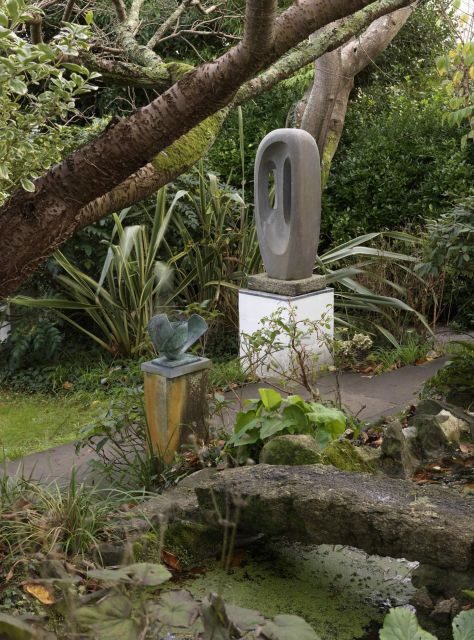
Next, you head upstairs to the museum section, where selected works are displayed in the artist’s former living area. That setting matters more than it sounds. Looking at sculpture and drawing in the kind of domestic space where someone lived changes the tone of the work. It feels less like a display case and more like a study you’re borrowing for an hour.
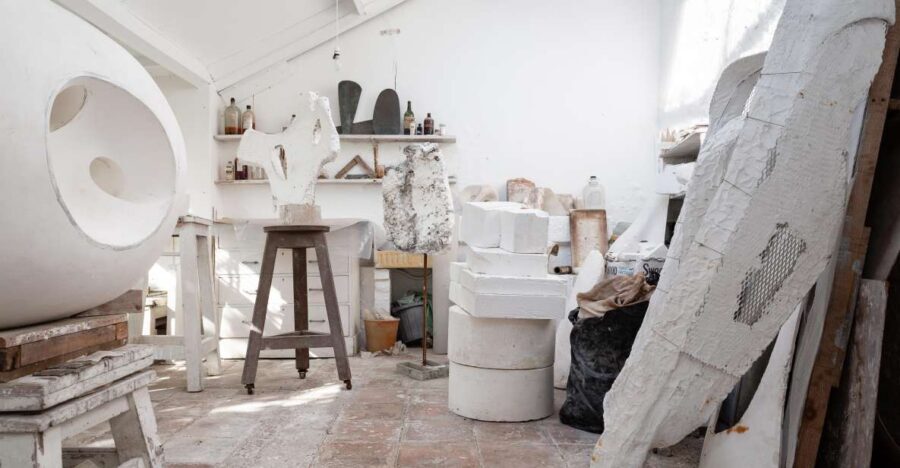
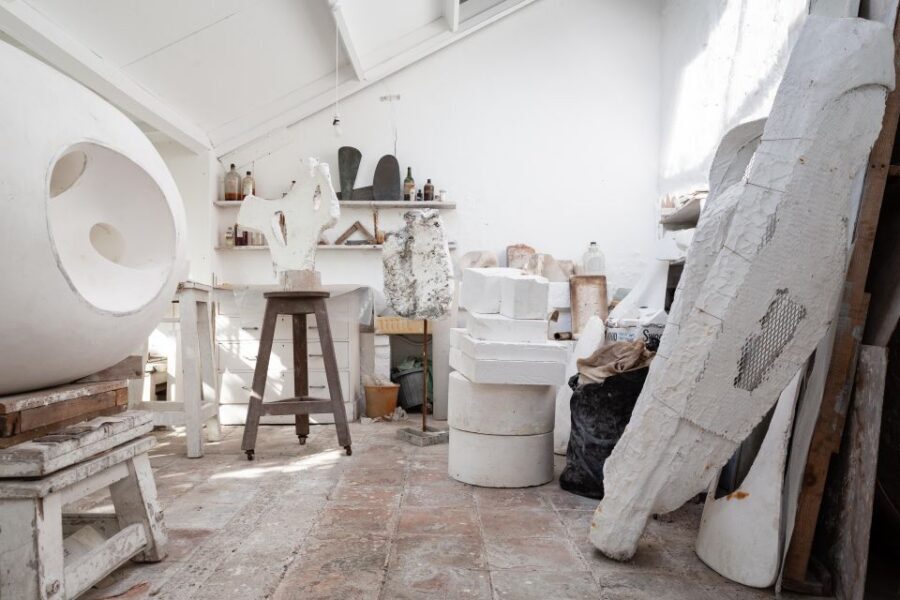
Inside, you’ll see a mix that makes the visit feel well-rounded: abstract sculptures, plus paintings and drawings. There are also views of work studios, which gives you a peek at the practical side of the artmaking process. Even if you’re not a “technical art” person, the studio views help you understand that these works didn’t appear fully formed. They came out of decisions—shapes, tools, experiments, and revisions.
One of the best things here is that you learn more than just formal details. Information presented on site includes context about Barbara Hepworth and Ben Nicholson, which adds an extra layer if you’re interested in modern art networks and shared artistic ideas. The point isn’t to memorize names; it’s to see that this isn’t isolated genius in a vacuum. It’s part of a wider conversation.
Possible drawback in this section: because the house rooms are limited in size, the museum portion can feel compact. You’ll get a lot, but it’s not the kind of place where you can spread out for hours.
Outdoors in the sculpture garden: sub-tropical planting with room to breathe
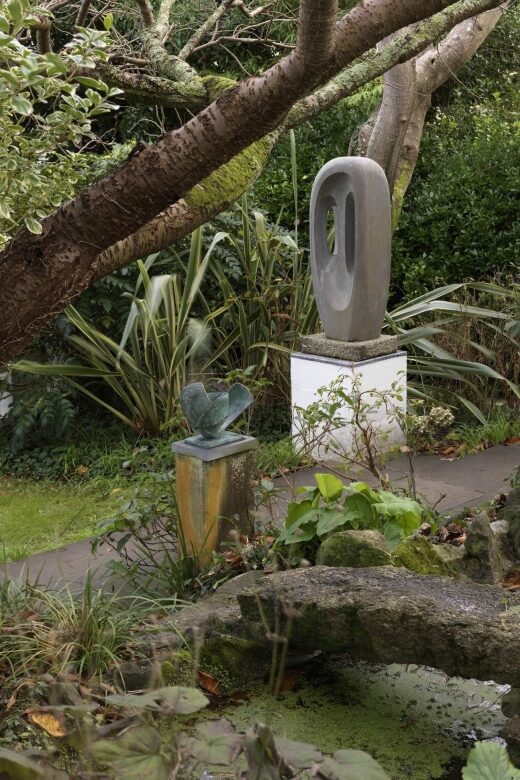
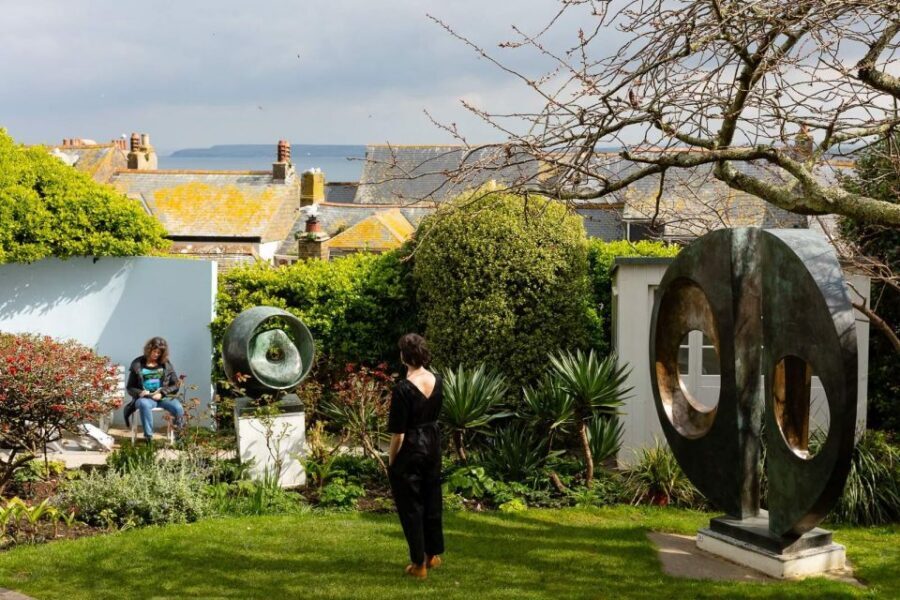
Then you go outside, and the experience changes tempo. The sculpture garden is where you’ll see a further selection of works—this time larger-scale pieces—set among a beautiful sub-tropical garden. This is the “slow walk” part of the visit, even though it still moves at a museum pace.
The planting isn’t random. It helps frame sculpture from different angles, so you catch shifts in light and perspective as you move. I liked how the garden design gives you natural pause points—moments when a sculpture reads one way from one path and another way from a parallel walkway. That makes the outside section feel more like moving through a conversation than checking off statues.
This is also the section garden lovers often remember. The planting complements the sculptures, so you don’t end up choosing between enjoying art and enjoying plants. You get both in the same loop.
One more thoughtful point: the site is largely unchanged since Hepworth lived and worked there. That matters outdoors because it keeps the scale and placement of the works from feeling “museum-made” after the fact. It feels lived-in, like the sculptures are in the place they were meant to occupy.
Why the experience feels special: the site hasn’t been rebuilt for you
A key detail that makes this visit work is that the site is kept as close to how it originally was when Hepworth lived and worked there. That’s not just a branding line. It affects what you notice while you’re walking: sightlines, room feel, and how the garden space flows.
I found that the lack of heavy renovation creates a sense of continuity. You’re not looking at a showhouse version of an artist’s life. You’re seeing an environment that still reads as a working place, even after it’s become a museum.
Also, because the visit is limited to a small group (up to 9), you’re less likely to get steamrolled by a crowd. In a small, historic setting, that can make a huge difference. You can stop at a sculpture without feeling like you’re holding up a conga line.
Is it worth the $13 price? Value for modern art lovers (and plant people)
At about $13 per person, this is the kind of ticket that feels fair because you’re getting multiple parts that connect: home/garden access, archive context, indoor works, and larger sculpture outdoors. You’re not paying for a single highlight and hoping the rest holds up.
What makes it strong value is the internal logic of the visit. Start with the story, move into the rooms, then go back out where the art expands into space. If you love modern art that’s tied to real process and real place, you’ll likely feel you spent your time well.
The main “value trade-off” is the absence of a café and the smaller size of the overall site. If you’re the type who likes to linger for long breaks with snacks, you might end up planning your day more carefully than you would at a larger museum. But if you’re happy to treat the garden and rooms as the main event, the price-to-time ratio looks good.

Practical tips: timing, what you can and can’t bring, and photo rules
You’re looking at a one-day, self-paced experience that still feels like a designed route. With a smaller property, your best move is to arrive ready to walk a bit and spend your attention where you’re most interested.
Here are the practical points that matter most on site:
- No food or drinks allowed, and there’s no café/refreshment facilities. Plan your meal timing before you go. If you tend to get snacky mid-visit, build in a stop elsewhere.
- There’s only one toilet on site, so it’s worth using it earlier rather than later.
- Touching exhibits is not allowed, so be ready to enjoy from a respectful distance.
- Photography rules are strict: flash photography isn’t allowed, and professional cameras are not permitted. Tripods are also not permitted. If you want steady shots, check what you can do with a standard handheld camera.
- The site doesn’t allow weapons or sharp objects, oversize luggage, drones, or pets (assistance dogs are allowed). Also, mobility scooters aren’t allowed, so plan your movement accordingly.
If you care about smooth access, note the wheelchair setup. Wheelchair access is available via a side street entrance by arrangement ahead of your visit. And if you’re traveling with extra gear, keep luggage minimal, since oversized bags aren’t part of the experience.
Who should book this Barbara Hepworth Museum & Sculpture Garden?
This is a great match if you like modern art that feels grounded in place. You’ll enjoy it most if you’re curious about how an artist’s working environment shapes what you see—especially with the archive context, studio views, and the house-and-garden layout all connected.
It also suits you if you like gardens but don’t want to treat plants as a separate hobby. The sub-tropical setting isn’t just pretty. It’s part of how the sculptures register.
Where it may not be your best fit:
- If you want a big, all-day museum with lots of cafés and extra activities, this site is more compact.
- If you need frequent breaks with snacks or drinks on site, you’ll have to plan around the no-food/no-drink rule.
- If you rely on mobility scooters, the site doesn’t allow them.
Should you book this visit?
I’d book it if you’re spending time in South West England and you want a focused, art-and-place experience in a small footprint. For the price, you get story context first, then works in Hepworth’s former living area, then larger sculpture in a garden designed to support what you’re seeing. It’s the kind of stop that feels calm, thoughtful, and rewarding without demanding an entire day.
Skip it only if your trip style is built around long café breaks, big museum crowds, or you need gear-heavy logistics (since the site has strict rules and limited facilities). If you’re okay planning your food and keeping your camera use simple, this is a visit that’s easy to recommend.
FAQ
How long does the Barbara Hepworth Museum & Sculpture Garden visit take?
The experience is valid for 1 day. The typical visit is short and focused because the site is relatively small, with time split between the admission area, upstairs museum rooms, and the outdoor sculpture garden.
How much is the ticket?
The price is listed as about $13 per person.
Is there a café or places to buy food and drinks on site?
No. The site has no café or refreshment facilities, and food and drinks are not allowed on site.
Is the site wheelchair accessible?
Yes, wheelchair access is available via a side street entrance by arrangement ahead of your visit.
Are pets allowed?
Pets are not allowed. Assistance dogs are allowed.
Are drones or tripods allowed?
Drones are not allowed. Tripods are also not permitted.
Can I take photos?
Flash photography is not allowed, and professional cameras are not permitted. Keep your setup simple with handheld photography.
Is there a refund if plans change?
You can cancel up to 24 hours in advance for a full refund.