REVIEW · DUBLIN
Belfast and Giant’s Causeway in Italian or Spanish
Book on GetYourGuide →Operated by Irlanda Tours · Bookable on GetYourGuide
If you like sea cliffs, this day delivers. You’ll pair the Giant’s Causeway legends and sea-side basalt formations with a focused look at Belfast’s political past in one smooth arc from Dublin. It’s a lot of moving parts, but the mix is genuinely interesting: geology up close, then history you can see on walls, clocks, and monuments.
What I really like here is the structure: you get dedicated time at the UNESCO-listed causeway, then you’re shown major Belfast landmarks before heading out on your own. One possible drawback: the total time in Belfast is tight, so if you want to go deep at specific indoor stops, you may wish you had an extra hour or two.
In This Review
- Key things to know before you go
- Why this Belfast plus Giant’s Causeway day works
- Getting from Dublin: timing, breaks, and the “comfort math”
- Giant’s Causeway: 1.5 hours for legend, basalt columns, and sea air
- Belfast on the ground: murals, the Peace Wall area, and civic icons
- How to use your Belfast free time wisely
- The bus experience: what to expect on the way back
- Language comfort: Italian or Spanish guide, and how it shapes the whole day
- What you pay (about $93) and what you actually get
- Who should book this tour
- Should you book this Belfast + Giant’s Causeway tour?
- FAQ
- Is this tour offered in Italian or Spanish?
- How long is the tour?
- What time do I have at Giant’s Causeway?
- Does the tour include the Carrick-a-Rede rope bridge?
- Do I need a passport?
- What currency is used in Northern Ireland?
Key things to know before you go
- 1.5 hours at Giant’s Causeway gives you time for the main sea-side walk, not just a quick photo stop
- Spanish or Italian live guide means the political context is explained in your language
- Belfast highlights are guided first, then you get free time to choose what fits your interests
- No Carrick-a-Rede rope bridge is included, so plan your expectations around that
- Longest bus stretch is about 2 hours 15 minutes, so pack comfort items and plan for fatigue
- Luggage or large bags aren’t allowed, which affects how you travel with day gear
Why this Belfast plus Giant’s Causeway day works
This is the kind of Northern Ireland day trip that makes sense if you want variety without the hassle of changing hotels or stitching together multiple tours. You start with one of the UK’s most famous natural sites—Giant’s Causeway, famous for its basalt columns and the stories people tell about how it formed. Then you shift to Belfast, where the past is still visible, not in dusty textbooks but in murals, memorials, and the layout of key civic spots.
The best part is that the tour doesn’t treat Belfast like a generic city stop. It’s framed around the political story—what has changed, what remains, and how you can read the city’s identity in the places you’re shown. You’ll also get a practical rhythm: travel, a short break, a concentrated nature window, then a city block with guided context followed by self-exploration.
If your priorities are nature and context at the same time, this pairing fits. If you’re mainly chasing museums or a super slow city day, you’ll feel the time pressure.
You can also read our reviews of more tours and experiences in Dublin.

Getting from Dublin: timing, breaks, and the “comfort math”
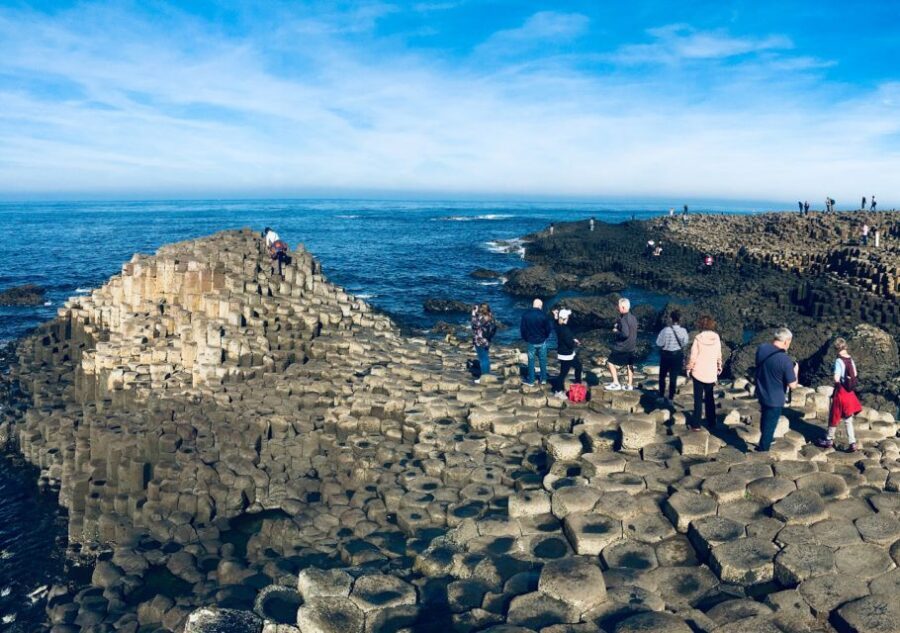
The day is built around a punctual start from Dublin. You meet outside Hotel Riu Plaza The Gresham on O’Connell Street Upper. From there, you’re on a coach straight north with a couple of scheduled breaks that keep the long route from feeling nonstop.
Here’s the practical pacing: there’s a coach ride early, then a local café break (about 20 minutes). After that, you continue toward the north coast. Later you’ll return with another long stretch of bus time, and Belfast isn’t just a walking tour—there’s also a scenic drive.
The “comfort math” matters because it’s a 12-hour tour overall, with the longest bus ride lasting about 2 hours 15 minutes. If you’re sensitive to sitting, bring a layer and something small to make the ride easier (a neck pillow, a light snack you can eat later, or just the right jacket). And because there’s no food included, you’ll want to be mentally ready to rely on your own choices during breaks or in Belfast.
Two more logistics points that are easy to overlook:
- You don’t need a passport for this.
- You won’t have a chance to haul big bags—luggage or large bags aren’t allowed—so pack like it’s a day hike, not a mini-vacation.
Giant’s Causeway: 1.5 hours for legend, basalt columns, and sea air
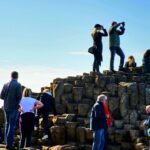
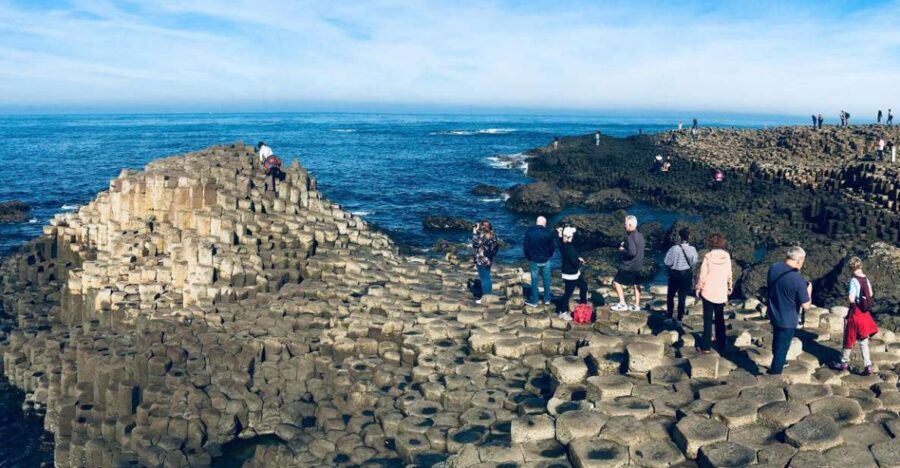
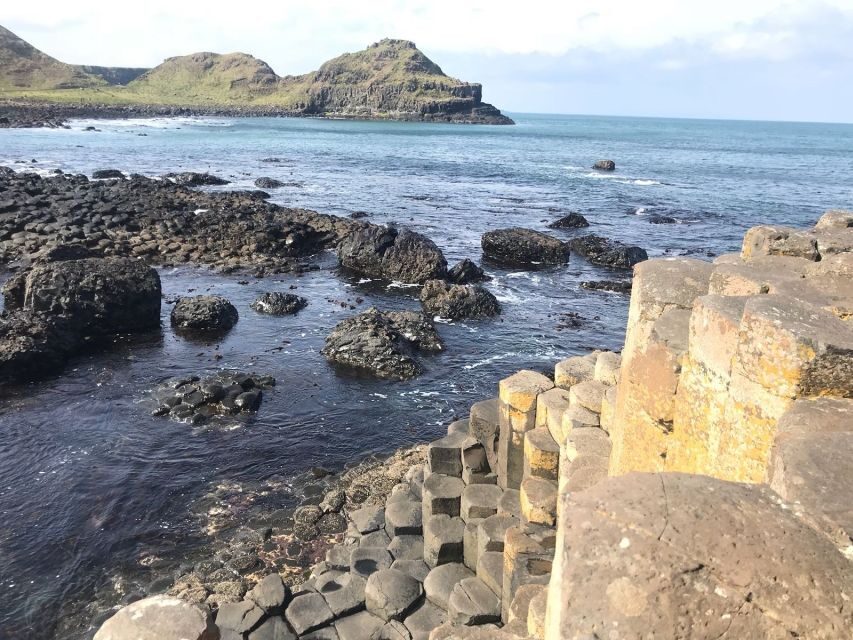
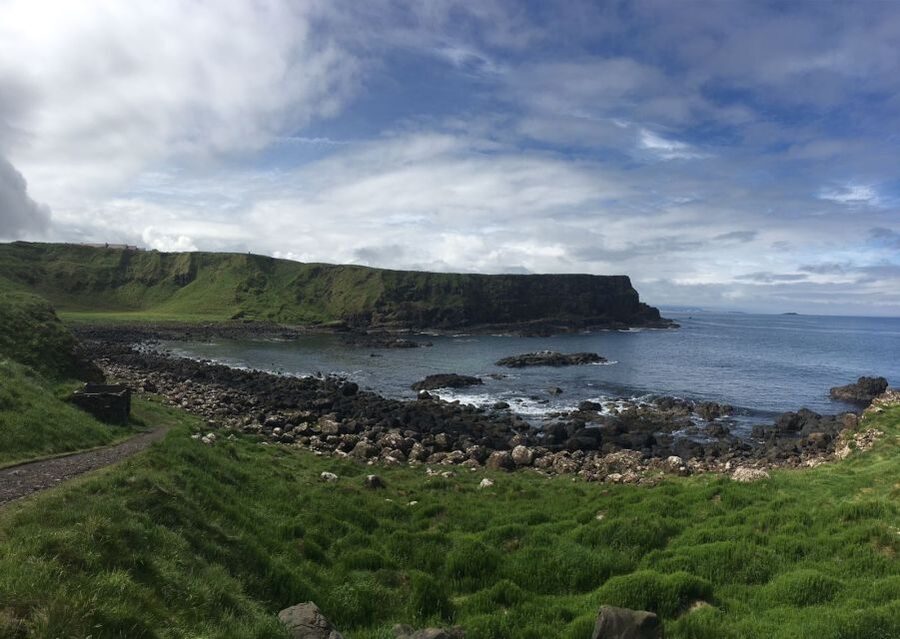
This is the headline act. You’ll arrive at Giant’s Causeway National Park and get about 1.5 hours to walk and explore on your own, with the guide explaining the myths and why this area is a UNESCO World Heritage Site.
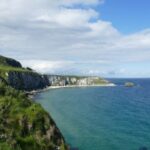
Even if you know the basics, this is the kind of place where the details pull you in. The basalt columns are striking in person—especially by the sea, where wind and salt make the whole scene feel less like a landmark and more like a living coast. Expect your camera to work overtime. But don’t just take photos: use the time to actually walk the paths and take in how the formations shift from one viewpoint to another.
What the guide adds (and what you should listen for) is the storytelling layer. The causeway isn’t just geology here; it’s folklore that helped people understand the landscape long before science had the answers. When you hear the legend explained, it makes the whole place feel more personal—even if you’re not a mythology person.
A couple of expectations to set:
- This tour does not include the Carrick-a-Rede rope bridge. If you’ve got rope-bridge dreams, this isn’t the day for that stop.
- You’ll want comfortable shoes and rain gear. Even when the day looks fine from Dublin, coastal weather can turn fast.
Belfast on the ground: murals, the Peace Wall area, and civic icons
After the causeway, you head to Belfast. The tour includes a scenic drive (around 40 minutes) and then a guided pass through major sights tied to the city’s political identity.
You’ll see key elements such as:
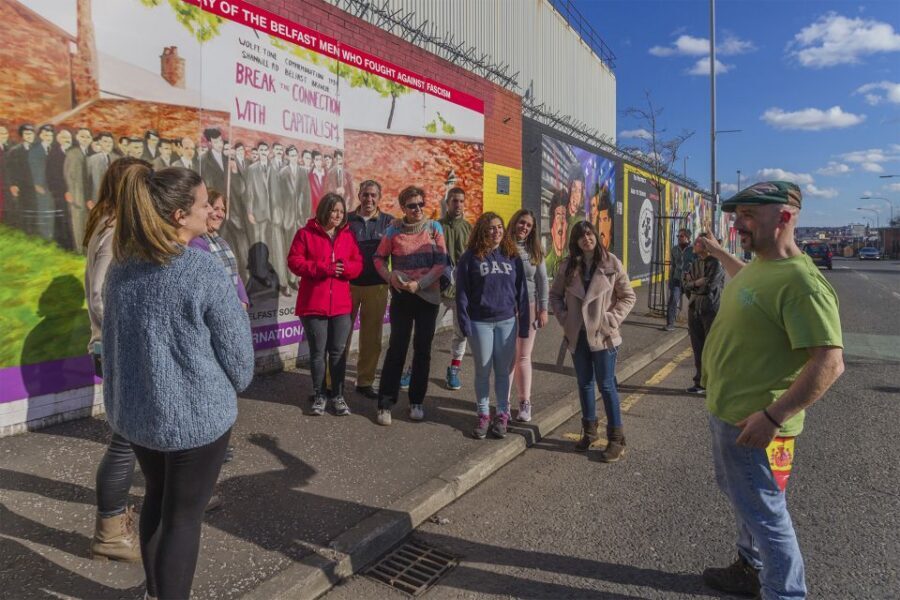
- political murals
- the Peace Wall
- the Albert Clock Tower
- prison area(s) referenced on the route
- City Hall
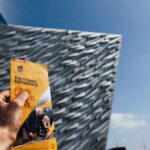
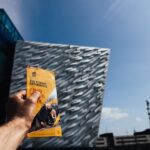
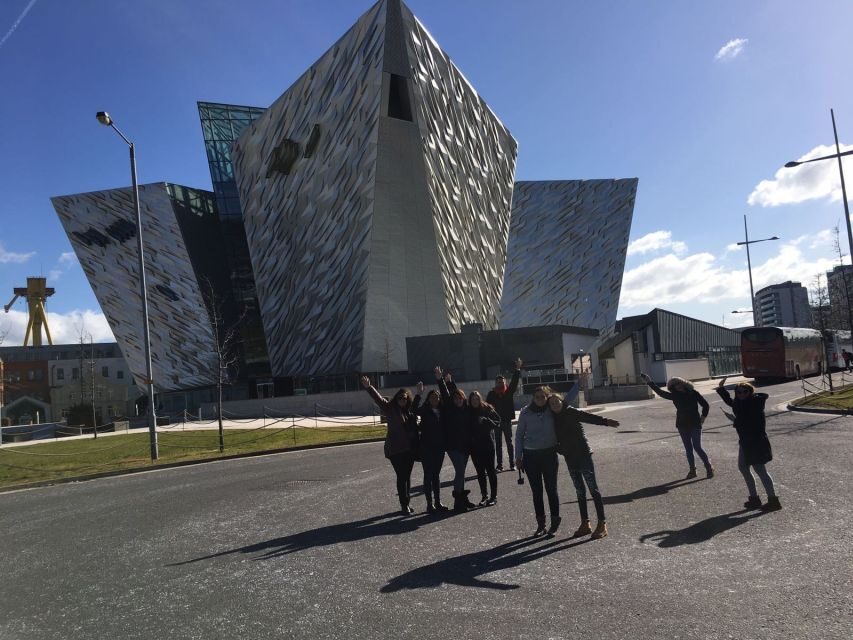
- the Titanic Museum area
- and other notable stops along the way
This part works best when you treat it like more than sightseeing. In Belfast, context helps. Murals aren’t just street art here; they often function like messages, warnings, memory boards, and identity markers. Seeing them with a guide’s explanation makes them readable, even if you don’t have deep background in the Troubles.
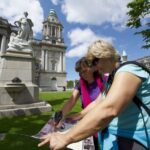
You’re also shown civic landmarks, and that’s important. The City Hall area, clocks, and formal buildings help you understand how Belfast expresses itself publicly. It’s not only about conflict; it’s also about how people built institutions and claimed space.
One balancing note: the guided portion gives you a foundation, but you’re still responsible for your own choices during free time. So if there’s one neighborhood or museum you really care about, decide before you’re dropped off and don’t rely on second-guessing while the clock is ticking.
How to use your Belfast free time wisely
You get about 1.5 hours of break/free time after the guided sightseeing. That’s the part that can make or break the day for you.
Here’s what you can do with that time:
- If you’re mainly after atmosphere and photos, use it for a slow walk to absorb the murals and street details at ground level.
- If you want a specific indoor stop, you’ll need a plan. The tour shows you major sites such as the Titanic Museum, but the time window is short, so going from one place to another requires discipline.
- If your goal is understanding, don’t only chase the most famous murals. Look for the small signals too: memorial-style plaques, street-level messages, and how different sections of the city feel separated.
A reality check: this day can feel rushed in Belfast. The guide’s role is to set the story, but the time in the city is still limited. If you’re the type who likes to spend an hour in one museum and take it slowly, this might leave you wishing for more time. It’s the classic trade-off of a long day tour: you get breadth, not depth.
Also, keep your expectations on guide interaction. In this kind of route, the guide may handle logistics in addition to interpretation. That can work great when everything clicks—but if you end up with a guide style that doesn’t match your pace, it can make the experience feel less supportive. What you can control is your attitude: come prepared to be flexible and focus on the sights and the story over perfect service moments.



The bus experience: what to expect on the way back
This tour is largely a two-part day: nature first, then Belfast. The bus is the connector, and it can feel long—especially on the way back when you’ve already spent energy walking at the coast.
One thing that can help: use the time on the coach for the practical payoff. Read your notes, review what you saw at the causeway, and then reframe Belfast as a set of “visible history” stops rather than just buildings and murals. If you do that, even a long ride won’t feel wasted.
Some vehicles offer Wi‑Fi, but you shouldn’t count on being able to use it. Plan as if you’ll be offline unless you confirm otherwise in the moment.
And because you’ll be moving on a fixed schedule, make sure you return to the meeting point on time at every stop. The tour departs punctually from Dublin and from successive stops. When a day is tight, punctual is not optional—it’s the difference between seeing everything and feeling like you missed it.
Language comfort: Italian or Spanish guide, and how it shapes the whole day
One strong point for many people is the language option: your live guide speaks Spanish or Italian, not just English. That matters here because Belfast’s political past can be easy to misunderstand if the explanation is rushed or generic.
With a language-matched guide, you’re more likely to catch the “why” behind what you see:
- why murals appear where they do
- what certain memorial-style elements represent
- how the city’s identity formed over time
If you’ve ever felt stuck on tours where you can follow the route but not the meaning, this is one of those itineraries where understanding changes everything.
Tip: if you’re the kind of traveler who reads signage slowly, do it during free time. For the guided parts, try to listen first, then look. It’s a better rhythm than trying to do everything at once.
What you pay (about $93) and what you actually get
At around $93 per person, the value comes from the fact that you’re buying three things at once:
- coordinated day-long transportation from Dublin,
- a live guide in your language,
- a guided introduction to both major stops rather than a “go-at-your-own-pace” system.
You’re not paying for entrance tickets to add-on attractions here, because food isn’t included and the itinerary doesn’t cover Carrick-a-Rede. But you are paying for time planning: the day is structured so you reach Giant’s Causeway and Belfast without having to organize public transport, rental cars, or multiple tour bookings.
Where the value can feel less strong is if you’re a museum-first visitor or you really want more time in Belfast. With only about 1.5 hours for free time, you might end up spending that time deciding rather than exploring. That doesn’t make the tour bad—it just means you should match your expectations to the format.
Who should book this tour
This is a great fit if you:
- love nature walks with famous views and a clear time window
- want a readable introduction to Belfast’s political landscape through landmarks and murals
- follow cultural references like Game of Thrones and enjoy connecting media to real places
- prefer a guided explanation in Italian or Spanish
It’s less ideal if you:
- want a long, unhurried Belfast day with multiple indoor museums
- specifically want Carrick-a-Rede rope bridge included
- travel with large luggage (since big bags aren’t allowed)
Should you book this Belfast + Giant’s Causeway tour?
If your ideal day is one big natural highlight plus a second act of historical context, I think it’s a solid booking. The causeway visit is the anchor, and the guided Belfast framing helps you see more meaning than you’d get from wandering randomly.
I would book it if you’re flexible about pace and okay with short free time in the city. I would hesitate if you know you want to spend significant time inside museums or you’re specifically hunting the rope bridge. In that case, you’ll likely feel constrained by the tight schedule and the fixed sightseeing rhythm.
If you do book, go in with the right mindset: comfortable shoes, rain gear, light day packing, and a plan for how you want to use that 1.5 hours in Belfast.
FAQ
Is this tour offered in Italian or Spanish?
Yes. The tour includes a live speaking guide in either Italian or Spanish.
How long is the tour?
The total duration is about 12 hours.
What time do I have at Giant’s Causeway?
You get about 1.5 hours to visit, have free time, and walk at Giant’s Causeway.
Does the tour include the Carrick-a-Rede rope bridge?
No. The tour does not include the Carrick-a-Rede rope bridge.
Do I need a passport?
No passport is needed for this tour.
What currency is used in Northern Ireland?
Northern Ireland uses pound sterling. Your guide will tell you where you can pay with euros.
If you’d like, tell me your travel month and your language (Italian or Spanish), and I’ll suggest a simple plan for the Belfast free time so you don’t waste those 90 minutes.