REVIEW · LONDON
Burnings, Butchery & Black Death: London’s Bloody Past
Book on GetYourGuide →Operated by Historic London Tours · Bookable on GetYourGuide
Smithfield still feels like a crime scene. This tour threads slaughter sites to Black Death disposal in the 1300s, then layers in medieval executions and Dickens-era misery in a tight, two-mile walk. I love how the guide makes the history feel practical and specific to the streets you’re standing on, and I love the mix of facts with dark humour that keeps the mood from getting too heavy. The main drawback: the themes are grim and graphic, so it’s not the pick-me-up kind of outing.
What makes it work is the pacing and the small group. You stay close to the center of the story, and the tour runs about two hours with a group limited to fifteen, so you’re not just shuffled along. I also like that churches are part of the route, with entry possible when there aren’t services.
One more thing to know: it’s not suitable for children under 13. If your group includes younger kids, you’ll want to choose a gentler walk instead.
In This Review
- Key highlights you’ll remember
- A 2-hour, 2-mile walk with a tight, story-first pace
- Smithfield Market: the streets where slaughter and plague met
- Barbican Station to Charterhouse Square: starting the thousand-year timeline
- Smithfield Market and the slaughteryard-to-slum shift you can track on foot
- St John’s Gate and Cloth Fair: where the story turns darker
- St Bartholomew the Great and the Wallace Memorial: execution stories with real-world tone
- St Bartholomew’s Hospital and Pye Corner’s Golden Boy: memory after the worst
- Worth $26? The value of a small-group, church-inclusive story walk
- Should you book this Smithfield history tour?
- FAQ
- Where does the tour start?
- How long is the tour and how far do you walk?
- How many people are on the tour?
- What’s the price per person?
- Does the tour include church entry?
- Is this tour suitable for children?
- What language is the tour guide?
Key highlights you’ll remember
Smithfield as the core setting for both animal and human slaughter for centuries
Black Death corpse disposal explained with the scale of the 1300s problem
Medieval executions covered in a clear, street-level way
Dickens’s Oliver Twist connection through how Smithfield became a notorious slum
A small group (15 max) that keeps the experience personal
Humour with bite that makes dark stories easier to handle
A 2-hour, 2-mile walk with a tight, story-first pace
This is a short walk that doesn’t waste time. You’re moving roughly two miles total, and the whole thing lands around two hours, which is ideal when you want real London atmosphere without burning your day. Expect quick stops and short explanations rather than long museum-style lectures.
The small group size matters. With a max of fifteen people, you get more chances to ask questions and actually hear the guide clearly. In the past, people have praised the guide as entertaining and fluent, with timing that keeps energy steady for the full run.
You’ll also be walking through a part of London where history isn’t behind glass. You’re in the open air, in the real streets, so the tour works best when you’re curious and willing to look a little longer at ordinary-looking corners. If you like your sightseeing to feel like a lived-in place rather than a list of stops, this fits.
Two practical notes before you go:
- Wear comfy shoes. Two miles is short, but the route is still a city walk.
- If you’re sensitive to death-related topics, go in with eyes open. This tour doesn’t shy away from the subject matter.
You can also read our reviews of more tours and experiences in London.


Smithfield Market: the streets where slaughter and plague met
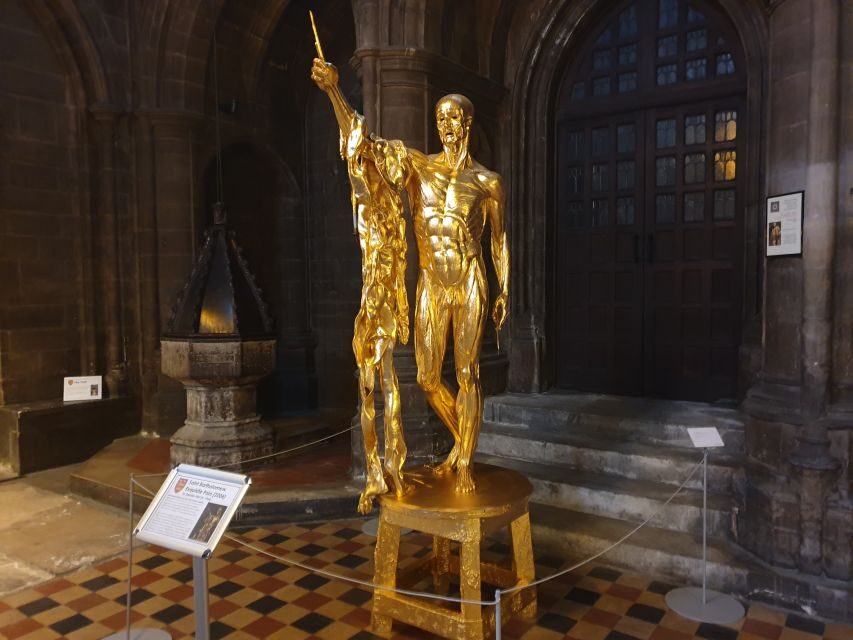
The anchor of the whole experience is Smithfield. The tour focuses on how Smithfield was, for centuries, the site of both animal and human slaughter. That detail changes how you see the area. You’re not just watching history from far away. You’re learning why this specific patch of London became a key stage for the city’s harshest realities.
Then comes the Black Death story. You’ll learn how London disposed of tens of thousands of corpses in the 1300s. That’s a staggering number, and the point of the tour is to show what it means in everyday terms: a city overwhelmed, improvising solutions, and living with consequences for a long time.
After that, the tour shifts to medieval execution methods. You’ll hear how punishment was displayed publicly and why it mattered to the people watching. This is one of those topics where you don’t need gore to understand the message. The guide’s job here is to make the facts legible and tied to the location, not just dumped as trivia.
Finally, you get the Dickens link. Smithfield didn’t just fade into the past; it became a notorious slum, and Dickens used it as the setting for Oliver Twist. That matters because it shows continuity. London’s struggles didn’t start and stop with the Middle Ages. The city’s darker corners kept finding their way into stories.
Barbican Station to Charterhouse Square: starting the thousand-year timeline
The tour begins just outside Barbican Station on Aldersgate Street. Your guide will be standing near the exit with a Historic London Tours sign, so you can spot them fast. This is a good start point if you like getting your bearings early and heading into the story right away.
The first stop is Charterhouse Square, where you’ll get a quick guided intro before you head deeper into the Smithfield area. This is where the guide usually frames what you’re about to see: not a single era, but a long stretch of London’s evolution—kings, body snatchers, Charles Dickens, an eighteenth-century ghost, and William Wallace all show up in the storytelling.
What I like about this opener is that it keeps you oriented. Even if you don’t know London’s medieval geography, the guide helps you understand why these locations became important and how they connect. The tour is walking the city like a timeline, not like a random sequence of landmarks.
If you’re the kind of person who gets lost when tours jump around, you’ll probably appreciate this setup. It gives you a mental map before you’re surrounded by half-remembered names from schoolbooks and novels.
Smithfield Market and the slaughteryard-to-slum shift you can track on foot
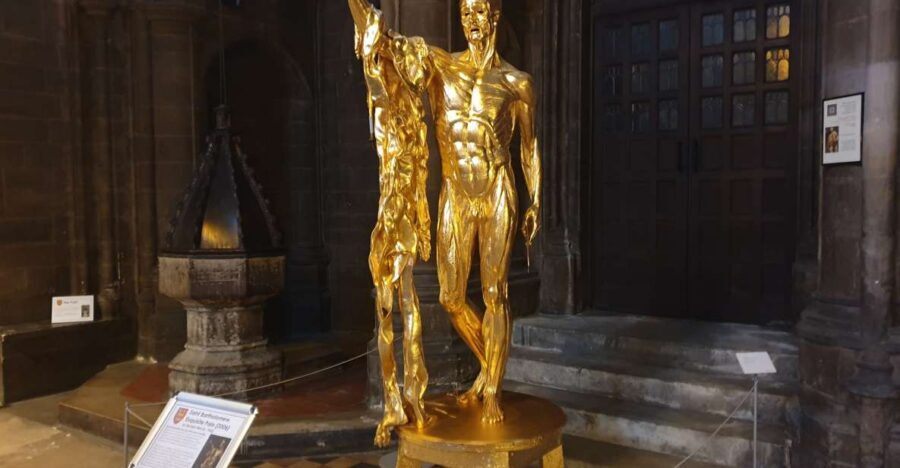
Next up is Smithfield Market. This stop is the emotional and thematic center. The guide’s focus is the long-running reality of Smithfield as both an animal and human slaughter site, and that detail is the thread that ties the plague story to the execution stories.
You’ll also hear how London coped with the Black Death at scale—again, those tens of thousands of corpses in the 1300s. Even if you’ve read the phrase Black Death before, the tour makes the scale feel grounded. It’s not just a name for a pandemic; it becomes a logistical and moral crisis that shaped the city.
Then you continue through the broader market area with London Central Markets (Smithfield Market). This part of the experience is useful because it bridges past and present. You’re standing near a place that still functions as a market, even though the original purpose was far harsher. That contrast helps the grim stories land with more clarity, because you’re comparing what’s there now to what used to happen here.
One small drawback to keep in mind: since this tour sticks to a compact route, you’re not going to get deep time in one single location. You’ll get a lot of “why this place mattered” rather than hours of “how every building looks today.” If you want slow-paced, architecture-nerd details, you might want a different kind of London tour. If you want street-level history that moves, this one is efficient.
St John’s Gate and Cloth Fair: where the story turns darker
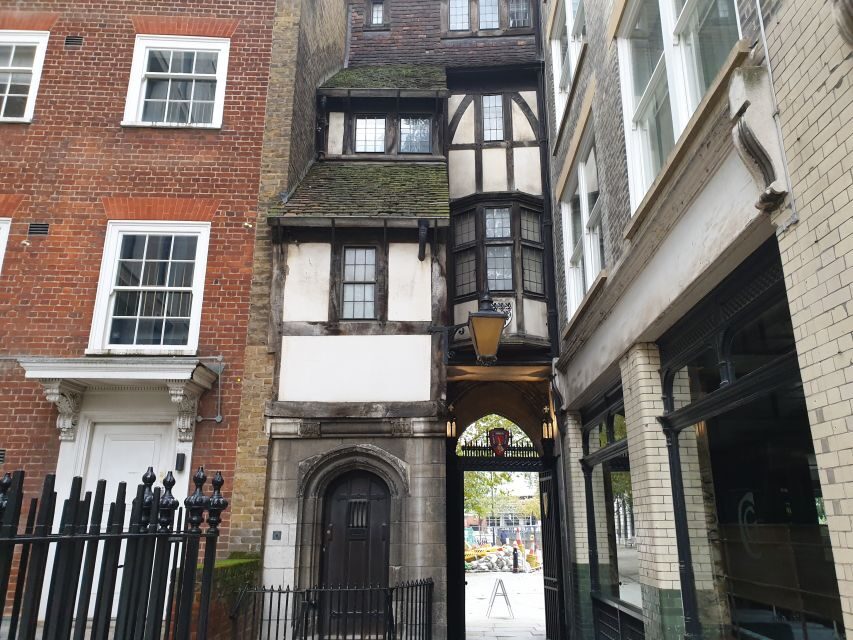
After Smithfield, the route brings you to St John’s Gate. This stop is short, but it’s placed on purpose. The guide uses moments like this to transition from large-scale events (plague, slaughter) to the human messier side: the fear, the rumours, and the characters that got pulled into the city’s dark corners.
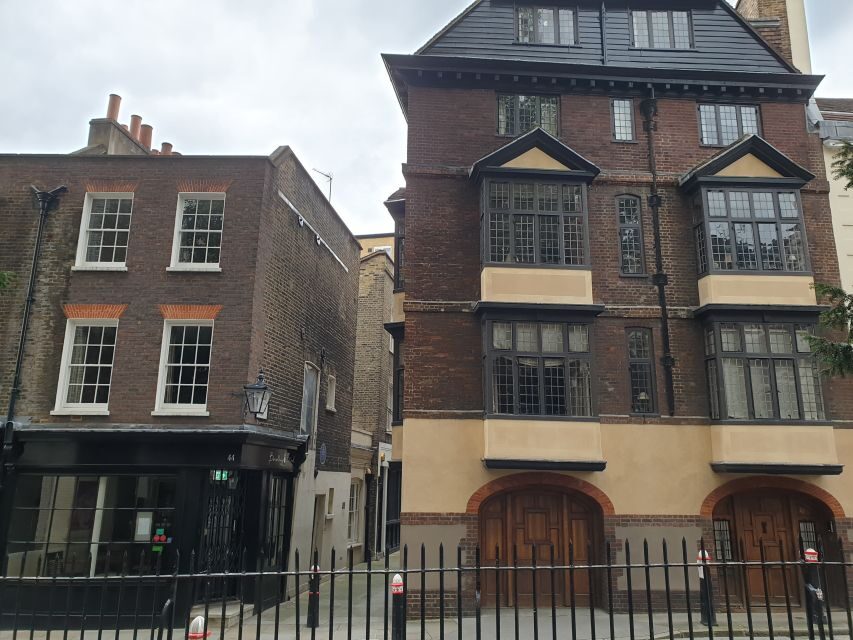
From there, you go to Cloth Fair. The tour uses this setting to widen the view from the most brutal events to the broader street life around them. Even though the subject remains grim, the goal is to show that London wasn’t just punishment and death. It was also ordinary movement—people going about work, trade, and survival—while the city’s worst moments unfolded nearby.
If you enjoy history that includes characters and stories, this is where the guide’s style really matters. People have mentioned humour and myth-mixing alongside facts, and you’ll feel that blend most when the tour moves from specific events into the legends and narrative hooks that made those events stick.
Also, this is where you may hear the guide bring in elements like body snatchers and the eighteenth-century ghost. You’re not supposed to treat those as museum labels. They work as story tools—ways of keeping you thinking about what it felt like to live in a city where death was common and boundaries blurred.




St Bartholomew the Great and the Wallace Memorial: execution stories with real-world tone
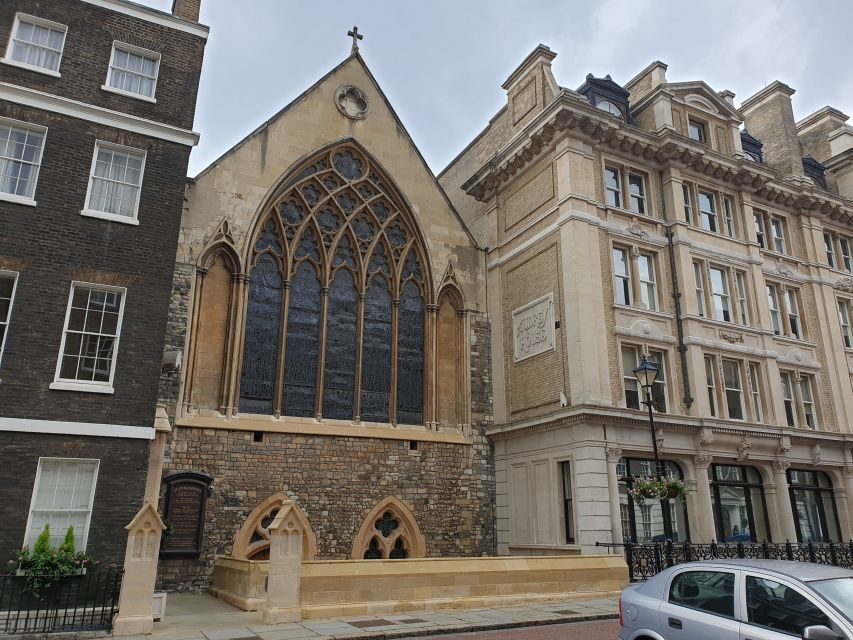
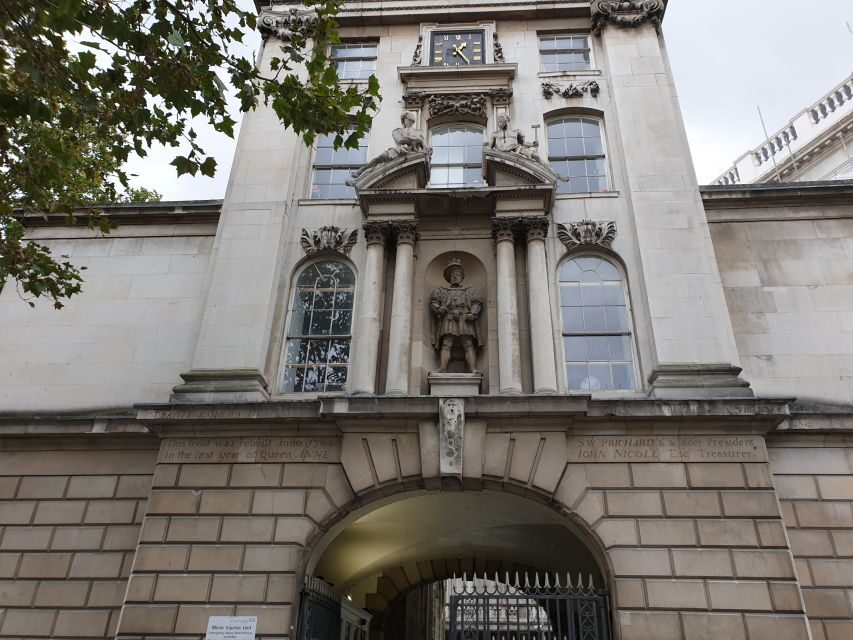
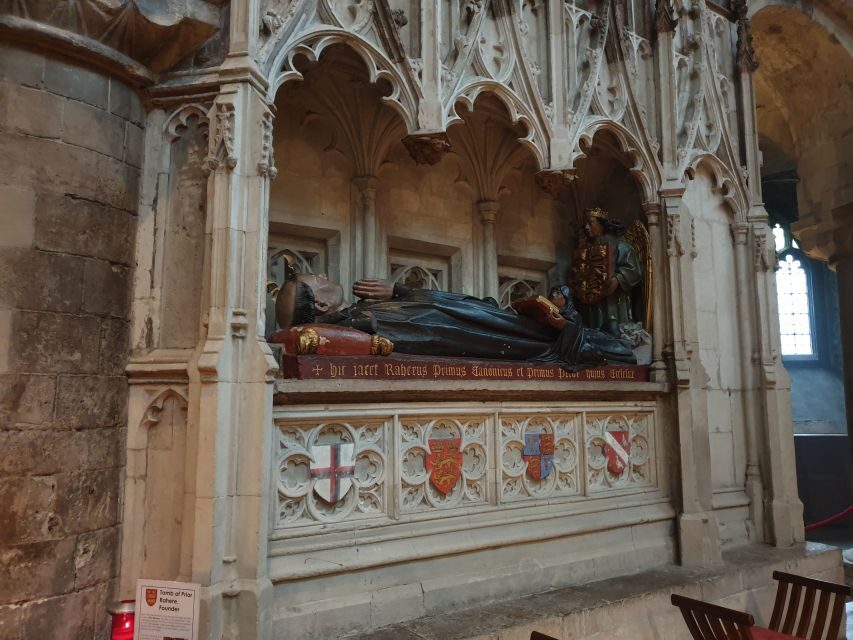
Next is St Bartholomew the Great, a church stop that can offer entry (when there aren’t services in progress). Church settings change the mood instantly. You’re not just learning about medieval violence; you’re learning in a place that still carries spiritual and architectural weight today.
This part of the tour also connects to punishment. You’ll hear about execution methods used in the Middle Ages, but the guide’s approach is the difference-maker. The emphasis is on clarity and context, not shock value. That’s important because the material is inherently uncomfortable; you want understanding more than spectacle.
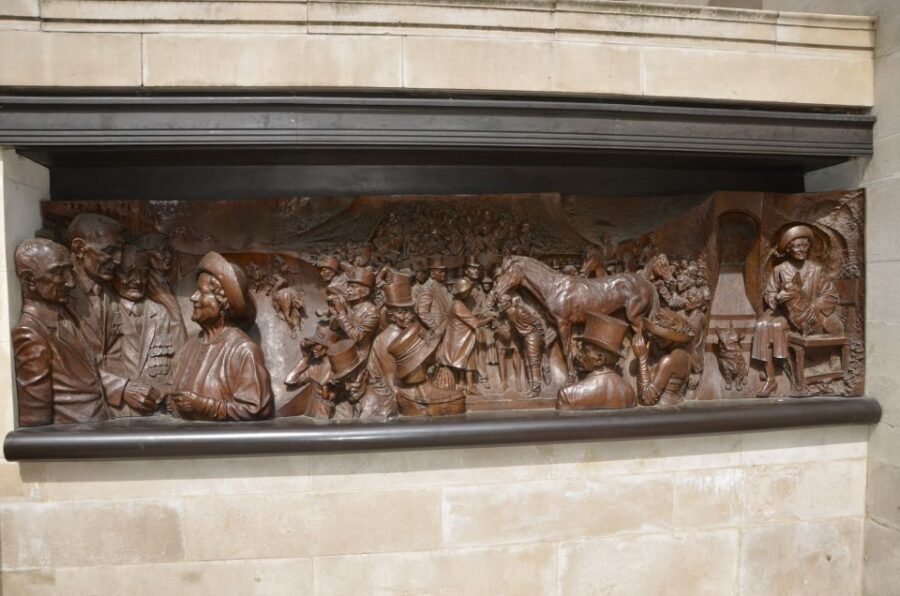
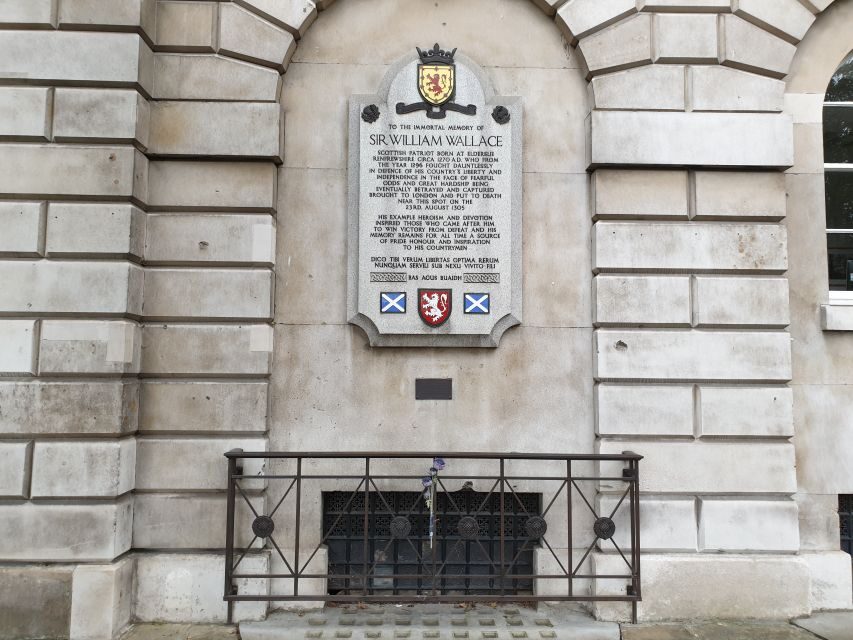
Then you reach the Sir William Wallace Memorial, and yes, you get the Braveheart connection. The tour plays with the contrast between movie fame and the brutal reality of execution. You’ll hear the point in a slightly sarcastic, human way—William Wallace as the guy people remember for shouting Freeeedoooommmm! while the reality of the process is far harsher than the cinematic moment.
This is one of the best stops for people who like historical characters. Instead of treating Wallace as a name on a timeline, the guide puts him into the city’s physical story, so he becomes part of the landscape you’re walking through.
If you’re the type who likes to ask questions, this is also a good moment. People have praised the guide for encouraging questions and handling group dynamics well, including being attentive to older visitors. That’s the kind of leadership you want on a tour with dark themes.
St Bartholomew’s Hospital and Pye Corner’s Golden Boy: memory after the worst
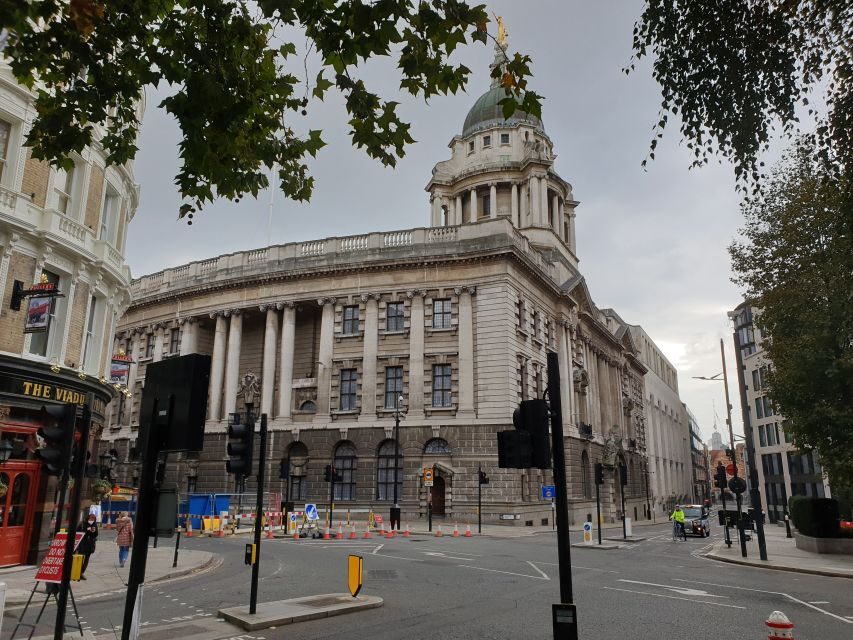
The route then goes to St Bartholomew’s Hospital. As with the other church-related stop(s), the tour includes church entry where possible, depending on services. Even if you only get a quick look, it gives the story an important emotional counterweight: after plague, suffering, and punishment, there’s still the question of care and survival in the city.
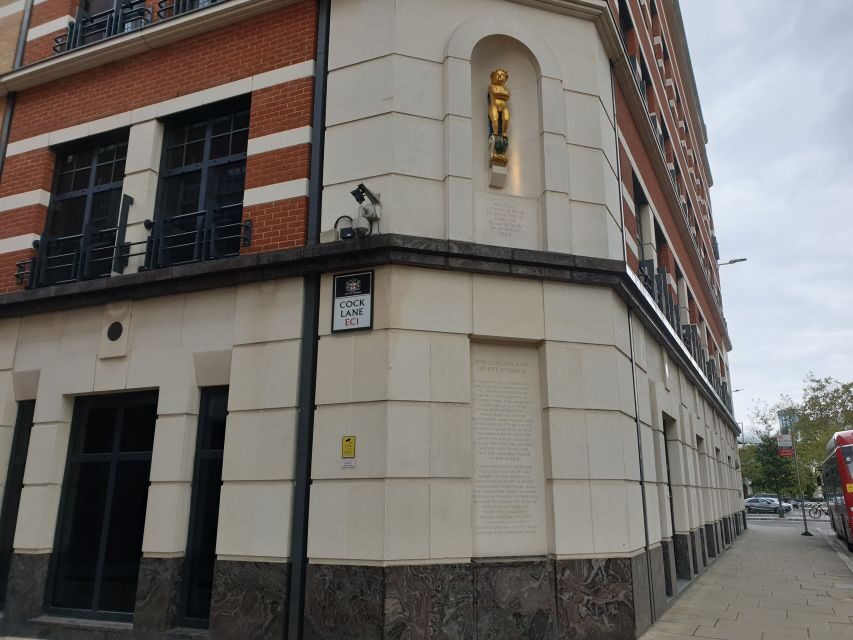
From there, you’ll stop at the Golden Boy of Pye Corner. This is a memorable contrast point. The tour has been about slaughter, plague disposal, executions, and slum decline. This small street-marker moment acts like a breather—still part of the story, but a reminder that cities keep their legends and symbols even when the realities are brutal.
Finally, the tour rounds through Ely Place to finish. You end at Ely Place, and the whole walk is designed to take you from Barbican toward the area near Farringdon. That ending location is handy because it makes it easier to move on with your day without backtracking across town.
By the time you’re walking out, you’ll have absorbed something more useful than gore. You’ll understand how Smithfield became infamous, why death kept shaping London’s streets, and how later writers like Charles Dickens turned that reality into story.
Worth $26? The value of a small-group, church-inclusive story walk
At $26 per person for about two hours, the price is fair for what you get—especially because the tour limits tickets to fifteen people. That small-group rule isn’t just marketing. It changes your experience: you hear the guide better, you can ask questions, and you’re less likely to feel like an extra in a marching line.
You’re also paying for interpretation, not just locations. The big theme areas—Smithfield’s slaughteryard role, the Black Death corpse disposal in the 1300s, medieval execution methods, and the later slum imagery used by Dickens in Oliver Twist—are the kind of topics that can be confusing without a guide stitching them together.
And there’s a practical perk: entry to churches is included when services aren’t in progress. That turns a normal walking tour into something slightly more immersive, because you’re not just seeing exteriors.
If you’re comparing costs, think of it like this: you’re buying two hours of guided storytelling in one compact area, with the city’s history built into the route. For many visitors, that’s more cost-effective than piecing together multiple museum tickets and then still missing the connective tissue.
If you want a super light, funny walk with minimal darkness, this isn’t it. But if you want a focused London story that’s built around real places, the value feels solid.
Should you book this Smithfield history tour?
Book it if you:
- want street-level London history in only two hours
- like guided tours where the guide is fun and readable, with humour mixed into serious topics
- are okay with graphic historical themes and want them explained clearly
- want church stops and a small group with time to ask questions
Skip it if you need a gentle, family-friendly outing. It’s also not suitable for children under 13.
My final take: this is one of those tours that makes London’s famous literary and historical names feel connected to geography. You’ll leave with a new way of looking at Smithfield, not just a list of dates.
FAQ
Where does the tour start?
Meet just outside Barbican Station on Aldersgate Street. The guide will be standing by the exit with an Historic London Tours sign.
How long is the tour and how far do you walk?
The tour lasts about 2 hours and covers roughly 2 miles total.
How many people are on the tour?
Ticket sales are limited to fifteen attendees to keep the experience enjoyable.
What’s the price per person?
The price is listed as $26 per person.
Does the tour include church entry?
Yes, entry to churches is included, but it depends on whether there are services in progress.
Is this tour suitable for children?
No. It is not suitable for children under 13.
What language is the tour guide?
The tour guide provides the tour in English.