REVIEW · LONDON
London: British Museum Private Guided Tour
Book on GetYourGuide →Operated by Iconic London Taxi Tours · Bookable on GetYourGuide
Two hours, eight million objects, one smart guide. The British Museum can feel like a maze, but this private tour gives you a tight route through major hits like the Rosetta Stone and the Great Court, plus the stories behind them. I love how the guide makes time feel usable, and I like that you can ask questions instead of just speed-reading plaques. One thing to consider: 2 hours is enough for highlights, not enough to do the whole museum justice.
You meet at the Edward VII entrance on Montague Place, and you’ll get a message beforehand with what to look for. From there, you get a private guide by Iconic London Taxi Tours and a focused walkthrough of key objects tied to Ancient Egypt, Greece, the Pacific, Rome and beyond, including Viking-era pieces and Anglo-Saxon treasure. If you came hoping for a slow, wandery museum day, this isn’t that.
Also, the museum rules matter. No flash photography, and you can’t bring luggage or large bags or backpacks. If you’re the type who packs a lot for London, plan for a lighter load so you don’t lose time at the start.
In This Review
- Key highlights I’d prioritize
- Starting at the Edward VII entrance on Montague Place
- Great Court: the moment you understand the museum’s scale
- The big showstoppers in your 2-hour route
- Rosetta Stone: the “how we read” object
- Parthenon Marbles: art, politics, and power in stone
- Easter Island’s Hoa Hakananai’a: remote origin, global journey
- Lewis Chessmen: Viking-era craft you can relate to
- Sutton Hoo ship burial: royal wealth and world-changing discovery
- How the British Empire story connects to the museum’s collection
- What the museum’s 8 million objects means for your expectations
- Price and value: $263 for up to 8 people
- Practical tips so your tour stays smooth
- Who this private British Museum tour fits best
- Should you book this British Museum private guided tour?
- FAQ
- How long is the British Museum private guided tour?
- How much does the tour cost?
- Where do we meet the guide?
- What famous objects will we see?
- Is the tour private or shared?
- What’s included in the tour price?
- Are there restrictions on photos and bags?
- What should I bring?
- Is the tour wheelchair accessible and what language is it in?
Key highlights I’d prioritize
- Rosetta Stone focus so you understand why it mattered for deciphering hieroglyphs
- Great Court orientation in the largest covered square in Europe, so you get your bearings fast
- Parthenon Marbles context with a human story behind the sculptures
- Easter Island Hoa Hakananai’a with explanation of how such a remote object ends up here
- Lewis Chessmen and Sutton Hoo that connect art, daily life, and royal power across centuries
- A real Q&A-friendly guide in a private setting (so questions don’t get lost in crowds)
Starting at the Edward VII entrance on Montague Place
I like that the meeting point is specific and practical. You’ll meet at the rear entrance for the British Museum in Montague Place, at the Edward VII entrance. Before you go, the guide contacts you via WhatsApp or message with confirmation and a description to help you spot them. That cuts down the usual London scramble.
Comfort is the first “value” decision you’ll make. Wear comfortable shoes. This is a guided tour through a museum, so your feet do most of the work. The museum also has clear restrictions: no flash photography, and no luggage or large bags or backpacks. If you’re thinking, great, I’ll bring my big bag anyway—don’t. It can turn your tour start into extra hassle.
This is a private group experience for up to 8 people. That matters because museum guides can either recite or actually teach. In this setup, you’re more likely to get back-and-forth answers and follow-up explanations instead of being rushed through.
You can also read our reviews of more guided tours in London



Great Court: the moment you understand the museum’s scale
Right away, you’re in the orbit of the Great Court, described as the largest covered square in Europe. Even if you’ve seen photos, it’s one of those spaces that makes you stop and think: wow, this place was built to hold an entire universe of objects.
I love this kind of start because it’s functional. The British Museum can overwhelm you if you head straight into galleries without orientation. The Great Court works like a “hub” where your guide can set expectations: what time periods you’re focusing on, which stories you’ll connect, and why some objects matter more than others in how we understand world history.
You’ll also get a sense of how the museum handles research and public display. The tour info notes the original British Museum Reading Room was a key research area in the past. That’s a small detail, but it points to something important: this isn’t just a showpiece museum. It’s a place that has long mixed scholarship with public access.
If you’re someone who likes architecture as much as artifacts, Great Court alone is worth showing up early in your museum plan. If you hate crowds and you want quiet, go in with realistic expectations: the British Museum can receive up to 6 million visitors each year.
The big showstoppers in your 2-hour route
This tour is built around iconic objects, and the trick is learning to see them as stories, not just famous items behind glass. Over the 2 hours, you’ll focus on the Rosetta Stone, the Parthenon Marbles, the Easter Island statue (Hoa Hakananai’a), the Lewis Chessmen, and the Sutton Hoo ship burial—plus other highlights.
Here’s how each one helps you connect ideas across time:
Rosetta Stone: the “how we read” object
The Rosetta Stone is your starting point for understanding Ancient Egypt beyond mummies and tombs. The key idea you’ll take away is that it helped unlock the reading of hieroglyphs. That turns the object from a trophy artifact into a practical breakthrough.
I also like that the guide ties it into the wider museum story: objects don’t just get collected; they get discovered, studied, and then reinterpreted as knowledge grows.
Parthenon Marbles: art, politics, and power in stone
The Parthenon Marbles are famous for a reason—these sculptures from Ancient Greece are some of the most recognizable symbols of classical art. On this tour, you’re not just looking. You’re learning how these works connect to the broader history of how museums acquire and display world heritage.
This is where you should lean into questions. If you’ve ever wondered why objects from one country end up in another institution, a private guide format is exactly when those questions belong.
You can also read our reviews of more private tours in London





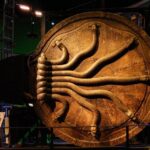
Easter Island’s Hoa Hakananai’a: remote origin, global journey
Hoa Hakananai’a is the Easter Island statue. It’s a striking object because it forces you to think beyond Europe and North Africa and ask how far human history reaches—and how objects travel across the globe.
I like this stop because it changes your mental map. Instead of assuming museums mainly represent “nearby” civilizations, you get a reminder that cultural history is worldwide, even when the physical distance is extreme.
Lewis Chessmen: Viking-era craft you can relate to
The Lewis Chessmen are Viking-era chess pieces from the 12th century. What I like about this artifact is that chess is instantly relatable. It’s easy to picture the social side—games, leisure, and status—without needing a degree in archaeology.
A good guide will help you connect craftsmanship and culture: why these pieces were made the way they were, and why they survive. And yes, even in a packed 2-hour tour, this kind of object can feel like a breather because it’s human-scale.
Sutton Hoo ship burial: royal wealth and world-changing discovery
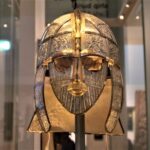
Sutton Hoo is an Anglo-Saxon royal treasure hoard tied to a ship burial. The ship burial angle matters because it shows you how power, ritual, and belief can be built into the physical landscape of a society’s burial practice.
You’re not just seeing gold-toned impressiveness. You’re getting the kind of story that explains how such finds reshape what historians think they know about the past.
How the British Empire story connects to the museum’s collection
One of the tour’s explicit themes is learning about the British Empire and its impact on the museum’s collection. That’s not just a history lecture. It’s how you understand why the British Museum holds what it holds.
When you’re staring at the Rosetta Stone or the Parthenon Marbles, it’s easy to think only about the ancient origins. This tour aims to add the middle layer: how later events shaped collecting, acquisition, and the museum as an institution.
I appreciate this angle because it helps you read the museum more critically. You can still admire the objects while also understanding the systems that moved them. If you want to ask questions about that context, this private format is a good time, since you’re not fighting for attention in a crowd.
What the museum’s 8 million objects means for your expectations
The British Museum collection is listed as 8 million objects spanning thousands of years and covering Ancient Egypt, the Romans, the Saxons, and the Vikings. The museum itself covers two million years of history across six continents. That is huge. Like, “you need a plan” huge.
So here’s the practical truth: a 2-hour highlight tour won’t take you through everything. What it can do is give you a smart starting point—so your next self-guided visit (if you do one) is easier and more satisfying.
If you’re the type who wants a guided path because you don’t know where to go, this tour is a strong way to get your bearings. If you’re the type who likes to obsess over one civilization for hours, you may want more time than 2 hours can offer.
Still, there’s value in a tight tour when you’re trying to balance London’s other priorities.
Price and value: $263 for up to 8 people
Let’s talk money in plain terms. The price is $263 per group up to 8, for a duration of 2 hours. If you fill the group, that’s roughly $33 per person. Even if you don’t fill it, private museum time tends to be expensive compared to solo entry—so the main value is whether you’re splitting costs and whether you’ll actually use the guide.
I think it’s good value when:
- you have multiple people in your party who want the same focus
- you’d rather ask questions than just read labels
- you want the “top hits plus context” route in a short time window
It might be less of a bargain if you’re traveling solo and you only want one or two artifacts explained. In that case, you’d likely do better with cheaper self-guided museum time plus your own reading.
Practical tips so your tour stays smooth
Here are the small things that help your 2 hours stay fun instead of stressful:
- Bring comfortable shoes. Museums are a walking sport.
- Skip bags and anything bulky. Luggage or large bags and backpacks aren’t allowed.
- No flash photography. Plan on relying on your eyes, not your camera flash.
- If you’re unsure where to meet, use the guide message for identification before you head to Montague Place.
- If you’re sensitive to museum noise, know that the British Museum can draw up to 6 million visitors a year, so your quiet moments depend on timing.
Also, at the end of the tour, you should get personalized recommendations on other artifacts to explore, plus advice on local dining options to round out your day. That post-tour guidance is often where the value hides, because it helps you decide what to see next without wasting time wandering.
Who this private British Museum tour fits best
This tour is a strong match if you want:
- a private group experience with a guide you can talk to
- a fast path through the museum’s most famous objects
- context on why major artifacts are here, including the British Empire angle
- a highlight list that includes both famous names and less-obvious stops like Easter Island’s Hoa Hakananai’a and the Lewis Chessmen
It’s also a good option for people who dislike waiting or getting lost. In London, getting turned around costs time you can’t get back.
It’s less ideal if you want a full-day deep museum study where you’d chase down every related object and spend serious time in side galleries. With only 2 hours, you’ll leave wanting more—which isn’t a bad problem, but it’s a real one.
Should you book this British Museum private guided tour?
I’d book this tour if you’re short on time and you want your visit to feel purposeful. The object lineup is excellent, and the private format makes it easier to ask questions instead of just absorbing information at whatever pace the crowd allows. The Great Court start also helps you get oriented so you don’t feel helpless inside the museum.
I would pause before booking if you’re traveling with someone who hates structure, because this is a highlights tour. Also, if you absolutely need to bring a big bag for comfort reasons, the museum restrictions could make your first minutes annoying.
If your goal is top artifacts, smart context, and a guide who can answer your questions, this is a solid use of time in London.
FAQ
How long is the British Museum private guided tour?
The tour lasts 2 hours.
How much does the tour cost?
It costs $263 per group for up to 8 people.
Where do we meet the guide?
You meet at the Edward VII entrance on the rear side of the British Museum in Montague Place, London.
What famous objects will we see?
You’ll view highlights including the Rosetta Stone, the Parthenon Marbles, the Easter Island statue (Hoa Hakananai’a), the Lewis Chessmen, and the Sutton Hoo ship burial, plus other highlights.
Is the tour private or shared?
It’s a private group experience.
What’s included in the tour price?
Included are a private expert guide, exclusive access as stated for the tour, a highlights tour, time with the listed major artifacts, insights into the British Empire and the museum’s creation, and recommendations for other artifacts and local dining options.
Are there restrictions on photos and bags?
Yes. Flash photography is not allowed, and luggage or large bags and backpacks are not allowed.
What should I bring?
Wear comfortable shoes.
Is the tour wheelchair accessible and what language is it in?
The tour is wheelchair accessible, and the live guide speaks English.