REVIEW · BATH
Bath: Guided City Walking Tour with Entry To The Roman Baths
Book on GetYourGuide →Operated by Bath Walking Tours Limited · Bookable on GetYourGuide
Bath tells its Roman story on your feet. This guided walk connects ancient Aquae Sulis to the streets you see today, then hands you an included Roman Baths entry ticket at the end. I also like that you’re set up to move faster with an express security check, which matters when Bath’s top sights get busy.
What I really like most is the way the guide stitches sights into a single picture. You’ll hit the big Bath set-pieces—Royal Crescent, The Circus, Queen Square, Pulteney Bridge, and Bath Abbey—while also hearing how Jane Austen fits into the city and where Bridgerton was filmed.
My only caution is practical: it’s a 2-hour walk in all weather, and Bath’s streets have hills. Bring comfortable shoes and weather gear, and you’ll be happier when the rain shows up.
In This Review
- Key takeaways before you go
- Why Bath feels different once Rome enters the conversation
- Meeting point near Bath Abbey: start where the city’s story concentrates
- How the 2-hour walk fits: the order that keeps you moving
- Royal Crescent and The Circus: Georgian drama with a purpose
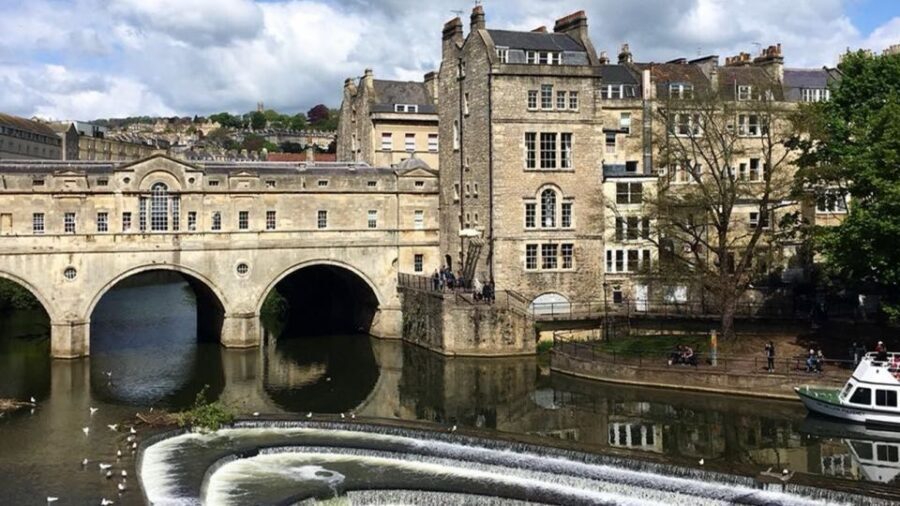
- Pulteney Bridge: the postcard bridge that’s also a story
- Pump Room and Bath Abbey: where social life met serious stone
- Jane Austen and Bridgerton filming spots: modern stories mapped onto real streets
- The Roman Baths at Aquae Sulis: the included entry that turns everything on
- Price and value: is $93 per person worth it?
- Weather, hills, and comfort: how to avoid the usual Bath problems
- What this tour is best for (and who may not love it)
- Should you book this Bath walk with Roman Baths entry?
- FAQ
- How long is the guided walking tour?
- What’s included in the price?
- Where do I meet the guide?
- Is Roman Baths entry included, and when do I go in?
- Does the tour run in bad weather?
- Do I get any help with security lines?
- Can I bring luggage or large bags?
- Is the tour wheelchair accessible and in English?
Key takeaways before you go
- Rome’s influence is the through-line: you’ll learn why Bath looks the way it does, not just what it is.
- Major landmarks in a tight route: Royal Crescent, The Circus, Pulteney Bridge, and Bath Abbey are built into the walk.
- Pop culture with place context: Jane Austen’s Bath and Bridgerton filming locations get explained alongside the architecture.
- You end at the Roman Baths with included entry: it’s the payoff that ties the whole story together.
- Fast entry logistics: you get express security for the Roman Baths.
- Weather-ready planning: the tour runs in all conditions, so pack for rain.
Why Bath feels different once Rome enters the conversation

Bath can look like pure Georgian “pretty,” with facades that seem designed for postcards. This tour gives you a reason for that beauty by starting with Rome’s impact on the area—how a bathing culture became the reason Bath grew into a star city.
A big part of the magic here is the guide’s storytelling style. You’re not just reading stone labels; you’re getting the why behind the sights, from Roman town life through the later centuries that shaped Bath into what you recognize.
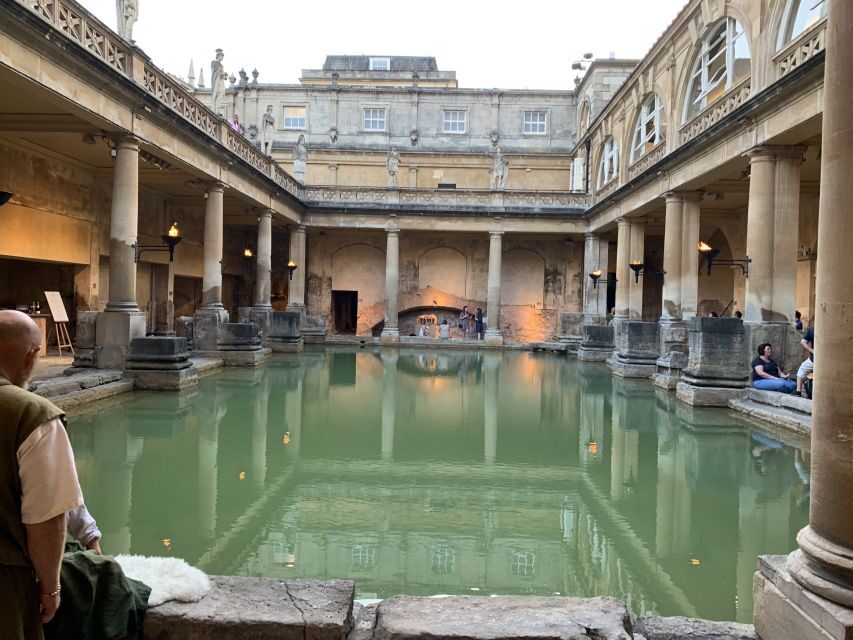
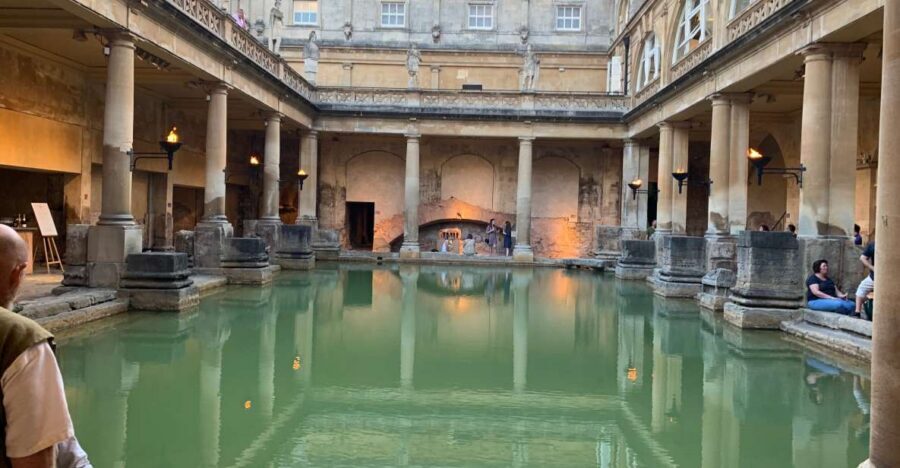
And by the time you reach the Roman Baths, you’re primed to notice details. You’ll understand the place as a complex society—people using the baths, managing status, and building a routine around hot springs at Aquae Sulis.
You can also read our reviews of more walking tours in Bath


Meeting point near Bath Abbey: start where the city’s story concentrates
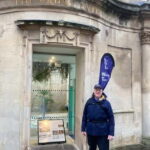
You meet in Abbey Churchyard in front of Bath Abbey and at the entrance area for the Roman Baths. Look for the flag and the board, since getting oriented is half the battle in a city full of tour groups.
This start matters because Bath Abbey sits right in the middle of the story the guide will build. It also keeps the day efficient: you begin near the Abbey, and you end at the Roman Baths without losing your afternoon to transit.
The tour itself runs about 2 hours. After that, your Roman Baths entry happens on a timed slot system, so it’s worth keeping an eye on when your specific walking departure feeds into your entry.
How the 2-hour walk fits: the order that keeps you moving

The pacing is designed like a smart sampler. You start first around major stops—then you get a city walk that doesn’t feel like wandering in circles, because each segment has a point.
Expect the itinerary to move through Bath’s signature sights before the Roman Baths portion. You’ll begin around the Pump Room area and the Royal Crescent/ Circus zone, then continue across key sights including Queen Square and Pulteney Bridge, with Bath Abbey along the way.
You’ll also get time for question-and-answer momentum. Multiple guides have been praised for taking time with questions, speaking clearly, and adjusting to the group—helpful if you want the “tell me one more thing” moment before the Roman Baths.
Finally, the Roman Baths are not tacked on as an afterthought. You go there after the walk, with a ticket included, which gives your visit more meaning than a standalone ticket alone.
Royal Crescent and The Circus: Georgian drama with a purpose
Royal Crescent and The Circus are Bath’s showpieces for a reason. Up close, you can see the engineering and planning behind the curves and symmetry, and you get a feel for why Bath became a wealthy, status-driven place.
I like that the guide uses these buildings to explain how Rome’s influence traveled forward. Bath isn’t “Roman” in the way Rome itself is, but the bathing culture and town planning ideas echoed through time, and that’s the connection you’re meant to walk through.
One practical benefit: these stops help you orient fast. If you’re only in Bath for a day, you leave with a mental map of where the city’s grand streets and views sit, which makes the rest of your self-guided time feel easy instead of confusing.
Pulteney Bridge: the postcard bridge that’s also a story
Pulteney Bridge is the kind of place where you want to look twice. From one angle it’s classic and graceful; from another you start noticing the built-in logic that makes it work visually and socially.
On this tour, the bridge isn’t treated as scenery. The guide uses it to talk about how Bath grew, how people moved, and how architecture supported city life around the springs.
If you like “small details that change your understanding,” this is one of those stops. You’ll leave thinking about how Bath’s design was meant to be experienced—walking, seeing, and being seen.
You can also read our reviews of more guided tours in Bath





Pump Room and Bath Abbey: where social life met serious stone
The Pump Room is Bath’s famous social heart tied directly to the spring culture. Even if you’ve never learned the nuts and bolts of Regency spa life, this stop gives you enough context to see the Pump Room as more than a souvenir stop.
Bath Abbey brings a different tone. It’s older, weightier, and visually distinct from the sweeping curves of the Georgian crescents. The guide connects these places so the city doesn’t feel like disconnected eras stacked on top of each other.
If you’re traveling with teens or anyone who needs a reason to care, this pairing helps. It gives you both the emotional center of Bath—the communal ritual—and the architectural spine that anchors the city’s identity.
Jane Austen and Bridgerton filming spots: modern stories mapped onto real streets
This is where Bath becomes fun in a modern way. The guide walks in Jane Austen’s footsteps, explains her role in the city, and points out where Bridgerton was filmed.
The key value here is context. Instead of treating filming locations like celebrity trivia, you learn how the physical city relates to the characters and the mood those stories draw from.
This part also helps if you’re not a “museum person.” You’re still learning, but you’re doing it while pointing at buildings and corners that feel familiar from screens and book covers.
The Roman Baths at Aquae Sulis: the included entry that turns everything on
The Roman Baths are Bath’s must-see for a reason. When you arrive, the place already makes sense because you’ve heard the city’s Rome connection on the walk.
The included ticket is a real advantage. You don’t have to coordinate extra purchases or waste time figuring out timing while everyone else queues. You also get the express security check, which can reduce the friction that always shows up at the busiest attractions.
Timing works like this: Roman Baths entry after the 11:30 AM tour is approximately 2:30 PM. For the 2:30 PM walking tour, Roman Baths entry is approximately 4:30 PM. That means you should plan to keep the rest of your afternoon flexible enough to follow the slot.
Once inside, give yourself time to slow down. Even with an efficient visit, the Roman Baths are layered—society, engineering, and the meaning of hot springs in daily life. If you enjoy ruins that explain people, not just walls, this is a strong fit.
Price and value: is $93 per person worth it?
At about $93 per person for a 2-hour guided walk plus Roman Baths entry, the value hinges on two things: time and interpretation.
If you planned to do a self-guided Bath walk and then buy Roman Baths tickets separately, you’d spend money in two places and likely spend more time organizing yourself. Here, the guide acts like a shortcut for understanding—turning “what is that building?” into “why was it built” in a single morning/afternoon rhythm.
The other value is the Roman Baths being part of a sequence rather than a random stop. When you understand Aquae Sulis and Bath’s later identity, the Roman Baths stop being just a famous site and start being a place with a human story.
Where the price might feel less attractive is if you already know Bath well. If your plan is mostly photography and you don’t want history commentary, you might get by with self-guided browsing and a Roman Baths ticket alone.
Weather, hills, and comfort: how to avoid the usual Bath problems
This tour operates in all weather. That’s great for planning, but you still need to dress for what Bath can throw at you—wind, drizzle, and slippery stone.
The route includes walking through Bath’s central streets, and the hills are real. Wear comfortable shoes you trust on uneven ground, and bring weather-appropriate clothing so you can stay focused on the guide’s points instead of fighting the elements.
A smart move: pack a rain layer even if the morning looks calm. Bath can shift fast, and the tour schedule doesn’t pause because the sky gets moody.
What this tour is best for (and who may not love it)
This tour is ideal if you want a first-time structure for Bath. You’ll come away with a clear sense of the city’s main sights—Royal Crescent, The Circus, Queen Square, Pulteney Bridge, Bath Abbey—and how they relate to the Roman origin story.
It also fits couples and friends who want a guided day without committing to all-day sightseeing. Two hours is long enough to cover major ground, and the Roman Baths timing then lets you extend the day based on your energy.
Families can do it too, as long as everyone is comfortable walking on hills for the duration. One practical note: large bags and luggage aren’t allowed, so travel light if you can.
If you’re in a wheelchair, it’s listed as wheelchair accessible. I’d still suggest wearing supportive footwear yourself and staying aware of any curb cuts and street textures along the route.
Should you book this Bath walk with Roman Baths entry?
If you’re seeing Bath for the first time and want history that connects instead of facts that scatter, I’d book it. The mix of Bath’s major landmarks, Jane Austen and Bridgerton filming spots, and the included Roman Baths ticket creates a satisfying half-day arc.
Book it especially if you hate spending vacation time figuring out logistics. The express security check helps, the Roman Baths entry is built in, and the guide keeps the pacing tight.
Skip it only if you’re already confident in Bath’s history and prefer a fully self-guided route. If your plan is mostly “wander and photograph,” you might not use the guide commentary enough to justify the price.
FAQ
How long is the guided walking tour?
The walking tour lasts about 2 hours.
What’s included in the price?
You get the guided walking tour, a live English guide, and an entry ticket to visit the Roman Baths.
Where do I meet the guide?
Meet in Abbey Churchyard in front of Bath Abbey and at the entrance to the Roman Baths. Look for the tour flag and board.
Is Roman Baths entry included, and when do I go in?
Yes, entry to the Roman Baths is included after the tour. If you take the 11:30 AM tour, Roman Baths entry is approximately 2:30 PM. If you take the 2:30 PM tour, entry is approximately 4:30 PM.
Does the tour run in bad weather?
The tour operates in all weather conditions, so dress for rain and changing conditions.
Do I get any help with security lines?
Yes. There’s an express security check that helps you skip the line.
Can I bring luggage or large bags?
No. Luggage or large bags are not allowed.
Is the tour wheelchair accessible and in English?
It’s listed as wheelchair accessible, and the live tour guide runs in English.