REVIEW · BATH
Bath: Roman Baths Entry Ticket with Audio Guide
Book on GetYourGuide →Operated by Bath and North East Somerset Council · Bookable on GetYourGuide
Roman Bath steam beats any museum. Step into the Roman Baths with a multilingual audio guide, and follow a route through the Great Bath and museum highlights—then finish with a sip from the mineral water tap.
I like how this visit is built as a clear, labeled self-guided story, so you’re not stuck reading wall text all day. I also love ending at the drinking tap with 43 minerals—a small moment that makes the ancient spa feel real.
One thing to consider: the audio guide is a handheld device, and a few people find holding it uncomfortable over time, so plan for short breaks in quieter spots.
In This Review
- Key takeaways before you go
- Redeeming your Roman Baths ticket and starting the audio route
- Museum galleries: Gorgon’s head, Sulis Minerva, and artifacts that explain daily life
- Great Bath first look: steam, walkways, and why this spot feels unforgettable
- East Baths and the Roman Gym laconicum: heated rooms and ancient recovery
- West Baths plunge pools and the Circular Bath: a changing pace around the site
- Costumed Roman characters: questions, photos, and a quick reality check
- Spa water tasting from the dedicated 43-mineral tap
- Shopping after the baths: souvenirs that match the museum story
- Ticket value and the queue you should plan for
- Timing and crowds: early entry helps a lot
- Practical rules that affect your day (pets, strollers, bags)
- Should you book the Roman Baths entry ticket with audio guide?
- FAQ
- How long is the Roman Baths ticket valid?
- What’s included with the ticket?
- Do I need a separate guided tour?
- What languages are available for the audio guide?
- Can I use the experience if I’m a wheelchair user?
- What’s the latest time I can enter?
- Are pets or strollers allowed?
- Is spa water tasting included, and what’s it like?
- Is the experience small-group or larger group?
Key takeaways before you go
- A 2,000-year route you follow at your own speed with audio stops and clear navigation
- Museum standouts you can’t miss like the Gorgon’s head and the gilt bronze head of Sulis Minerva
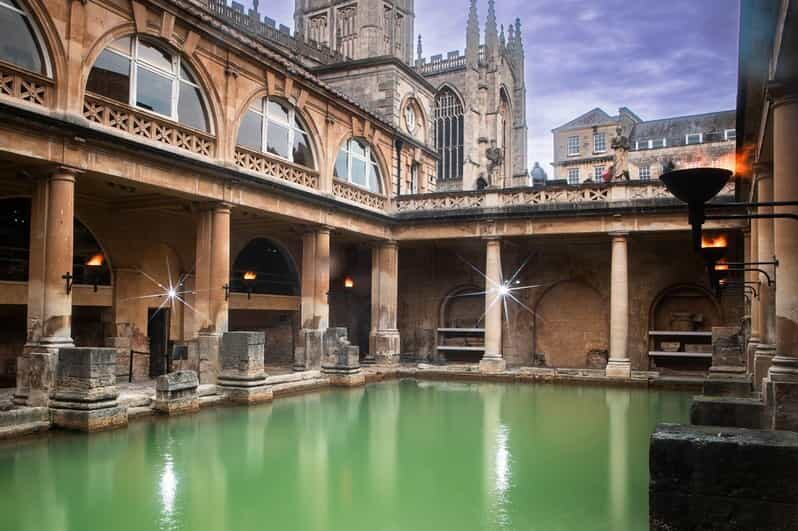
- Great Bath in the round with a walkway, Bath rooftops above, and steam on cooler mornings
- Costumed Roman characters for Q&A and photos, making the ancient setting feel less distant
- Spa water tasting is part of the ticket from the dedicated 43-mineral drinking tap
- Small-group setup (up to 6 participants) plus audio in 12 languages or a handheld BSL video guide
Redeeming your Roman Baths ticket and starting the audio route
This is an entry ticket experience with an included audio guide, so your day is mostly about pacing yourself. You’ll go to the Roman Baths to redeem your voucher, and then you’re set up with the audio content and a timed route you can move through freely. The ticket is valid for one day, and you can choose from available starting times.
Audio is offered in English, Dutch, French, German, Italian, Japanese, Chinese, Korean, Polish, Russian, Portuguese, and Spanish. There’s also a handheld BSL video guide option. If you’re sensitive to noise or prefer a slower, controlled flow, audio makes a huge difference here. You’re not guessing what you’re looking at—you’re guided point by point.
The visit is small-group limited (up to 6 participants), but don’t expect a full talk-by-a-guide tour. The value is in the audio track plus the site layout: lots of labeled areas, plus projected visuals in key rooms that help you picture how Romans used the bathhouses.
Two practical timing notes matter. First, last entry is 1 hour before closing, so don’t plan a late start. Second, popular opening times can fill quickly, so arriving earlier often makes the whole circuit feel calmer.
A few more Bath tours and experiences worth a look


Museum galleries: Gorgon’s head, Sulis Minerva, and artifacts that explain daily life
Your visit starts in the museum area, where you get a guided orientation through the story of Roman Bath’s religious spa. The idea is simple: understand what you’re about to see, then walk right into it. Each audio stop corresponds to museum points, so you can move through at your own pace instead of scanning boards nonstop.
What I think makes this museum section shine is that it connects religion, culture, and everyday life through objects. You get a look at what Roman Britain left behind—things people used, carried, and valued. That turns the Roman Baths from a single big photo-op into a place that explains how people actually lived.
Two museum highlights deserve special attention:
- The Gorgon’s head: a fearsome carving that once adorned the temple pediment and reportedly loomed down from about 15 meters. It’s not just dramatic art; it gives you a sense of how power and protection were visually communicated.
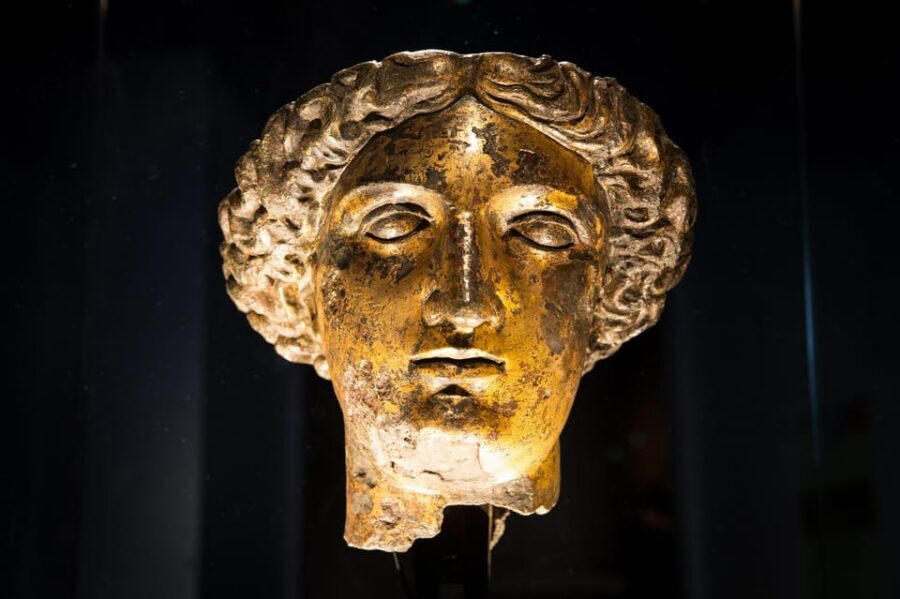
- The gilt bronze head of Sulis Minerva: this crafted face once adorned the cult statue of Sulis Minerva, the goddess linked to the site. Standing in the museum area, you get why this figure mattered enough to be displayed with commanding presence.
If you like museum stops that feel like scenes—not just items behind glass—this part will hold your attention. And if you’re visiting with kids, there’s a children’s version available in the audio content. It’s a nice way to keep younger visitors engaged without forcing them to read everything.
Great Bath first look: steam, walkways, and why this spot feels unforgettable

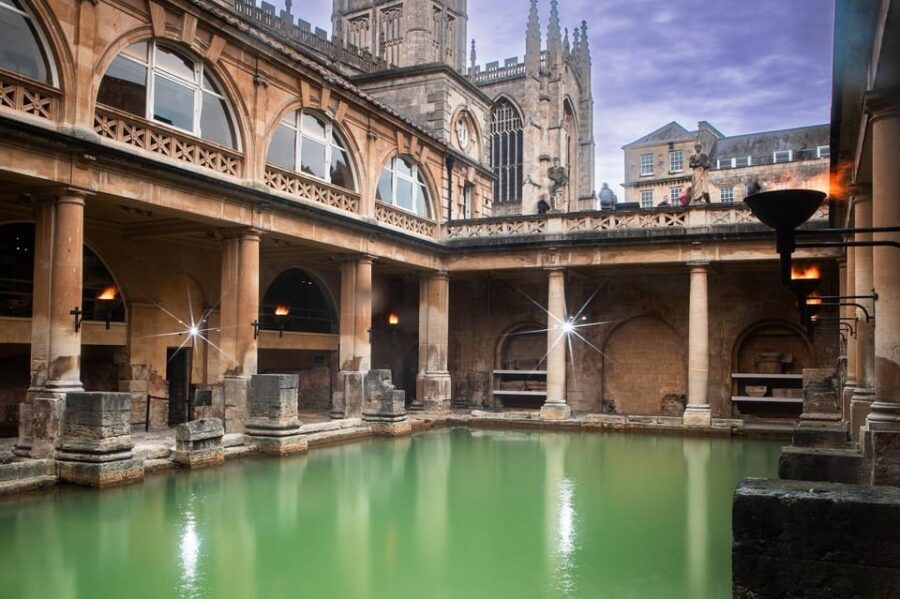
After the museum, you step into the bathing complex, and the Great Bath is the unmistakable centerpiece. This is where the site’s scale and layout click into place. You’ll see a stone walkway surrounding the Great Bath, with Bath’s rooftops and the sky visible above.
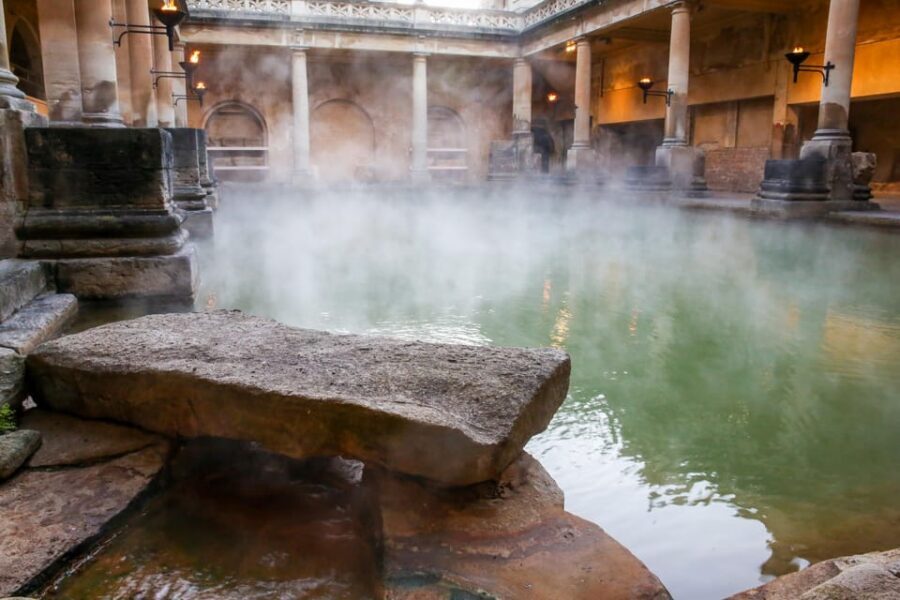
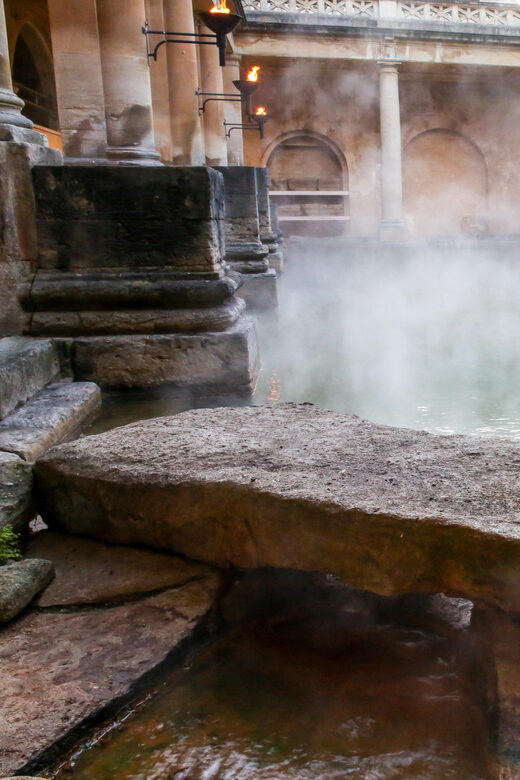
On a cold morning, you can often catch spirals of steam rising from the warm water. Even if you don’t get perfect weather, the mood is still striking—the contrast between an open-air ancient pool and a modern city skyline is part of what makes the Roman Baths so memorable.
What to watch for as you walk the perimeter: the geometry. Romans built these baths with a planned flow of movement, and the walkway helps you understand that. Also, try to slow down at the edges where you can look across the water. It’s the easiest way to grasp why this was both a spa and a sacred space.
One small practical perk: the audio guide helps you interpret what you’re seeing as you stand there. Instead of staring at the same stone and water, you’re constantly reminded what each area was for—religious worship, social bathing, and Roman “wellness” in one place.
East Baths and the Roman Gym laconicum: heated rooms and ancient recovery
Once you leave the Great Bath, the rest of the complex expands in a way that feels like an entire system—not just one pool. The East Baths are where you’ll find heated rooms and massage facilities. This matters because it reinforces the site’s function as a destination for care and comfort, not just sightseeing.
From there, head toward the Roman Gym and the ancient sauna area, often referred to as the laconicum. The word might sound unfamiliar, but the purpose is understandable: warmth therapy and recovery, in a Roman setting designed to do more than cool off or soak.
I like this section because the layout nudges you into different “temperatures” of experience. You’re not only looking at water—you’re thinking about heat, routine, and bodily comfort. Even if you’re not an ancient-history buff, the function-based audio points make it easier to connect the dots.
If you’re visiting with mobility needs, elevators are on site, and the venue is described as 90% accessible to wheelchair users. That doesn’t mean every step is effortless, but it does mean you’re not fully locked out of the main experience.
West Baths plunge pools and the Circular Bath: a changing pace around the site

As you move across the complex, you’ll shift from the East Baths into areas like the West Baths with plunge pools. This change in water experience—soaking versus plunging—helps you see the Romans weren’t doing one-size-fits-all bathing. They had multiple ways to interact with water and heat.
Then there’s the Circular Bath, which adds another visual element to the route. It breaks up the experience and helps you avoid the feeling that you’ve seen everything after the Great Bath. The circular shape is also a useful reminder that the site was engineered for movement and repeated visits.
In a place like this, pacing is everything. The audio guide encourages you to slow down at each stop, and the site’s layout gives you short opportunities to pause and reset your eyes. The whole route is designed to be manageable, but it does cover a lot of ground, so take your time and use seating stops when you need them.
That’s one of the reasons this works so well as a self-guided ticket: you can adjust. Some people will breeze through; others will linger over the museum objects, then come back to compare what they remember against what they’re seeing in the ruins.
You can also read our reviews of more guided tours in Bath






Costumed Roman characters: questions, photos, and a quick reality check
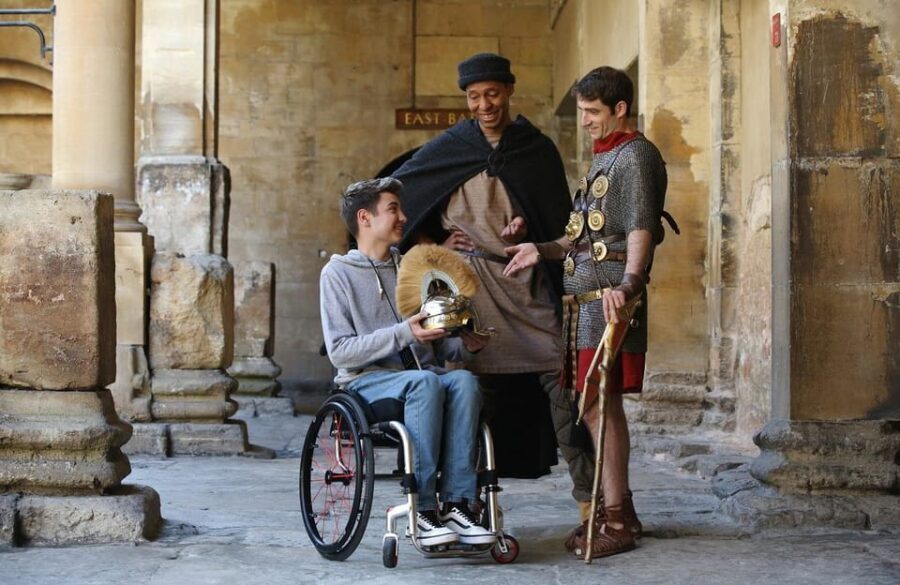
One of the more fun moments is the chance to meet costumed Roman characters as you move around. They’re there to answer questions about life in Roman Britain, and they’ll also pose for photos.
This can be a surprisingly useful add-on, because the audio explains the site, while the character interaction helps translate the human angle. It’s a quick way to turn “what is this?” into “how did people use this?”—especially for families or anyone who learns best through conversation.
The timing for these character moments can vary, but if you see one, it’s worth stopping. You’ll usually get answers that make the surrounding spaces easier to interpret, including why certain areas felt religious, social, or practical.
Spa water tasting from the dedicated 43-mineral tap

The end point you’ll remember is the spa water tasting. You can sample from the dedicated drinking tap, and the water is described as containing 43 minerals. This is part of the ticket, so you’re not left wondering whether it’s worth the time.
Why this is such a good final stop: it’s one of the few ways to touch the original idea of the site. The Romans believed the springs had healing properties, and the modern ritual of tasting connects you to that long tradition. Even if you don’t love the flavor, you’ll at least feel the point of the place.
I also like that this isn’t an added, optional purchase. It’s included with the entry, which keeps your cost-to-experience ratio strong. The tasting moment helps you cap off a walk that’s otherwise made of stone, signage, and audio narration.
If you’re sensitive to long days, this is also a natural place to slow down. Take a minute, sample the water, and then head to the shop if you want a souvenir that actually connects back to the museum items.
Shopping after the baths: souvenirs that match the museum story

The on-site shop sells products inspired by items from the museum. Expect categories like jewellery, prints, books, homeware, games, and bathing products. You’ll also find locally made goods from independent craftsmen, including honey, botanical gin, and handmade soaps.
This is a practical stop if you want gifts that aren’t generic tourist clutter. It’s also helpful if you need a final chance to sit down before you head back into town.
Just know you may not feel like shopping right away. The baths can take real attention, especially if you’re listening carefully to the audio. If you’re feeling spent, do the shop later—come back after you’ve had time to cool down and digest what you saw.
Ticket value and the queue you should plan for
At $30.31 per person, this isn’t the cheapest thing you’ll do in Bath. The good news is it includes three key pieces that add real value: entry to the Roman Baths, an audio guide (12 languages plus BSL video option), and the spa water tasting.
The bigger value win is how you use the audio. The audio guide helps you move without constantly stopping to read boards, and it also makes the complex feel easier to navigate. That matters because the site is more expansive than it looks from the outside.
The main consideration is that it’s self-guided. That can feel like a lot of responsibility if you prefer a live guide to explain everything on the spot. Also, even if you’ve booked ahead, you might still end up in the venue’s queue for entry—so build in a little patience.
If you’re cost-conscious, this is a good pick when you want a flexible visit and you’ll actually use the audio guide. If you’re likely to skim and move fast without listening, you might not feel the value as much.
Timing and crowds: early entry helps a lot
This is one of those places where timing changes your mood. The museum and bath complex can get crowded quickly, especially later in the day. The best advice is simple: go earlier if you can.
An early morning start (one example given was 9:00) often means a calmer route through the museum and a better chance to enjoy the Great Bath without shoulder-to-shoulder pacing. If you’re after steam moments on cold days, early timing also helps your odds.
Also remember: last entry is 1 hour before closing. If you plan to linger through the museum and do a slower circuit around all the baths, start early enough that you don’t feel rushed at the end.
Practical rules that affect your day (pets, strollers, bags)
Before you go, check what you can bring. Pets aren’t allowed. Baby strollers aren’t allowed either. Luggage or large bags aren’t permitted.
If you’re traveling light, you’ll likely be fine. If you arrive with larger items, plan where you’ll store them before your Roman Baths visit so you don’t lose time.
Also, the site is described as 90% accessible for wheelchair users with elevators on site to help access different levels. That’s a big plus for many visitors, but it’s still smart to pace yourself and use seating breaks when you need them.
Should you book the Roman Baths entry ticket with audio guide?
Book it if you want a self-paced way to see one of Bath’s most important sites, and you’ll use the audio guide instead of skimming. This ticket is a strong value because it includes entry, a multilingual audio track, and spa water tasting. The route is designed to make sense as you move, and the museum highlights like the Gorgon’s head and Sulis Minerva’s gilt bronze head give you real context for what you’ll see next.
Skip or rethink if you strongly prefer a live guided talk, or if holding a handheld audio device for long stretches sounds like a problem. If that’s you, plan for breaks and choose timing that reduces crowd stress.
For families, this works well too, since there’s an audio version made for children. For wheelchair users, it’s reassuring that elevators are available and access is described as largely wheelchair-friendly.
FAQ
How long is the Roman Baths ticket valid?
Your entry ticket is valid for one day, and you should check available starting times.
What’s included with the ticket?
It includes entry, an audio guide in 12 languages (or a handheld BSL video guide), and spa water tasting.
Do I need a separate guided tour?
No. This is self-guided, and a guided tour is not included.
What languages are available for the audio guide?
The audio guide is available in English, Dutch, French, German, Italian, Japanese, Chinese, Korean, Polish, Russian, Portuguese, and Spanish.
Can I use the experience if I’m a wheelchair user?
The Roman Baths are described as 90% accessible to wheelchair users, and elevators are on site to help access different levels.
What’s the latest time I can enter?
Last entry is 1 hour before closing time.
Are pets or strollers allowed?
No. Pets and baby strollers are not allowed.
Is spa water tasting included, and what’s it like?
Yes, spa water tasting is included. The drinking tap water contains 43 minerals.
Is the experience small-group or larger group?
It’s limited to a small group, with up to 6 participants.