REVIEW · LONDONDERRY DERRY
Derry: McCrossan’s Public Walking Tour of the Historic City
Book on GetYourGuide →Operated by McCrossan City Tours · Bookable on GetYourGuide
The city walls of Derry do not stay quiet. I love how you walk the 400-year-old walls and I love how the guide ties landmarks to big moments like the Siege of Derry, then brings you back to modern-day politics. The one consideration: the tour is only about an hour, so the pace can feel quick, and on a rainy or windy day (or if you struggle with a thick accent), you’ll want to stay focused.
In This Review
- What I liked most: clear stories and a human guide
- Who should consider this (and who might want something else)
- Key points worth knowing
- Price and time: $11 for an hour of real orientation
- Meeting at 11 Carlisle Road and ending at The Diamond
- Walking the 400-year-old walls: the best way to picture Derry
- Churches inside the walls: why St Columbs Cathedral is a stop
- The Siege of Derry and why it echoes today
- WWII in Derry: a different lens on importance
- Apprentice Boys and marching traditions: living culture, not costumes
- Bogside murals and Fountain views: context for Bloody Sunday
- How the guide keeps a large group together
- Weather, shoes, and what to wear
- Best for: first-timers who want a map and a timeline
- My honest bottom line: should you book?
- FAQ
- How long is the Derry walking tour?
- Where does the tour start?
- Where does the tour end?
- What do I see on the walk?
- Does the tour cover the Siege of Derry and Bloody Sunday?
- Does the tour include World War II information?
- Is the tour wheelchair accessible?
- Is there an option to pay later?
- Is audio recording allowed?
- What should I bring and wear?
What I liked most: clear stories and a human guide
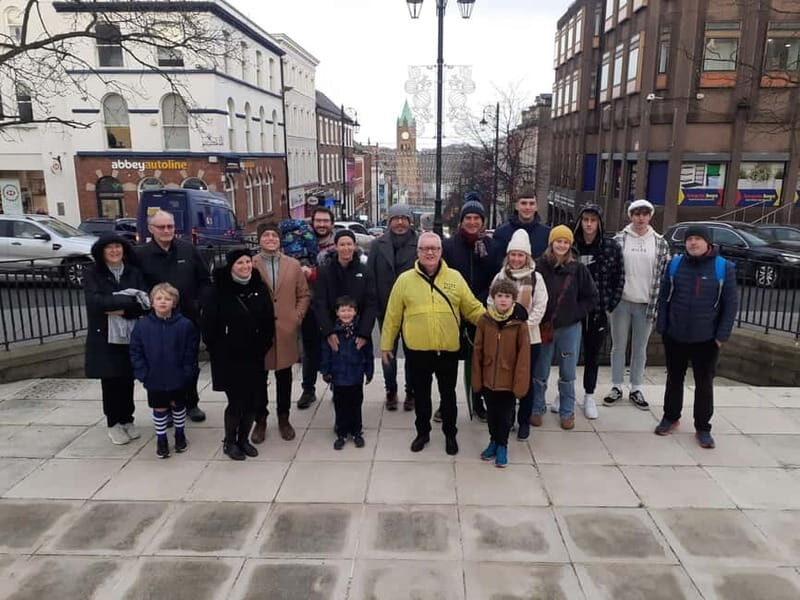
On this tour, the guide matters. I’ve heard from multiple guides by name, including Mickey, Philip, John, Pat Cooley, and Declan, and they all seem to do the same thing well: tell complicated history with warmth, humor, and respect. The best moments are when you’re looking out over the city and the guide explains why places like the Bogside murals exist and what Bloody Sunday means in everyday terms.
Who should consider this (and who might want something else)
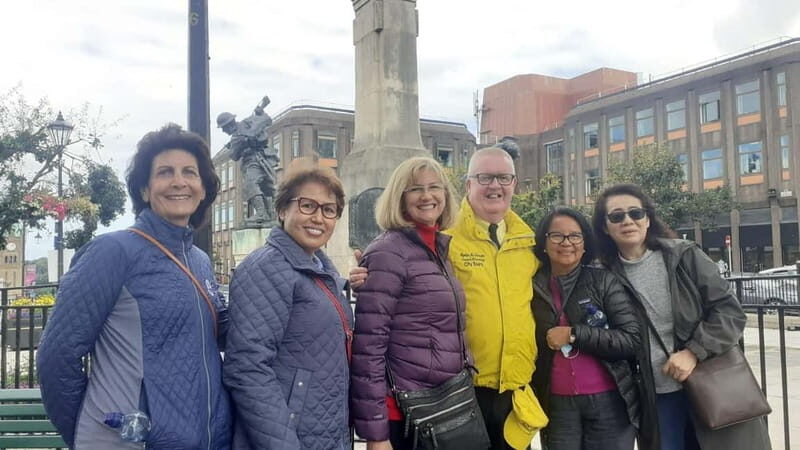
If you want a fast, grounded orientation to Derry/Londonderry—walls, churches, and the key turning points—you’ll like this. If you want a long, slow museum-style experience, this is short on purpose, and you’ll probably want to follow it with a self-guided stop nearby afterward.
You can also read our reviews of more walking tours in Londonderry Derry
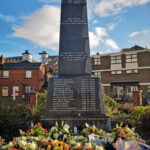
Key points worth knowing
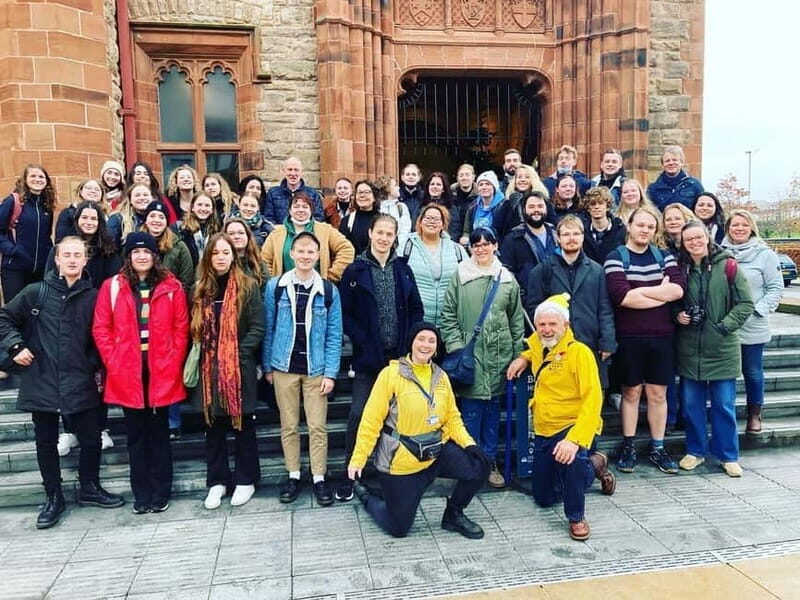
- Walk on the 400-year-old city walls for top views over the walled city and beyond
- St Columbs Cathedral is a major stop, because it’s the oldest building inside the walls
- Siege, Plantation, and Emigration are explained in plain language, not as trivia
- World War II connections help explain why Derry mattered beyond one conflict
- Bogside/Fountain mural viewing gives context for modern political history
- Apprentice Boys and marching traditions bring the story into living culture
Price and time: $11 for an hour of real orientation
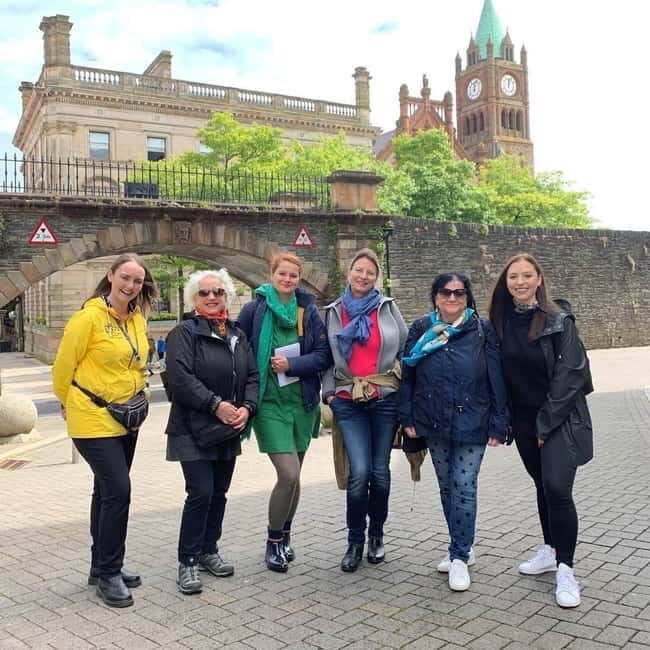
This is a one-hour public walking tour that costs about $11 per person, which is strong value for what you get: a structured walk on the walls plus guided context for the biggest chapters of Derry’s story. In a place like Northern Ireland, where history can feel both personal and politically charged, having someone sort the timeline for you—while staying fair and respectful—saves you a lot of guesswork.
Also, you’re not spending money just to see a view. The route is designed so that the visuals lead to explanations: you look at churches, you walk the boundary walls, and you’re taught what you’re actually looking at.
Time-wise, plan for about an hour in motion. It’s not a sit-down talk. If you’re prone to getting cold or distracted outdoors, wear layers and keep your phone packed away so you can actually follow the guide.
Meeting at 11 Carlisle Road and ending at The Diamond
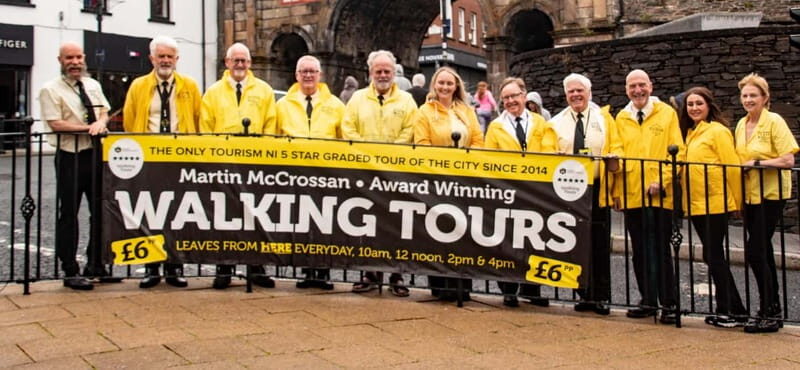
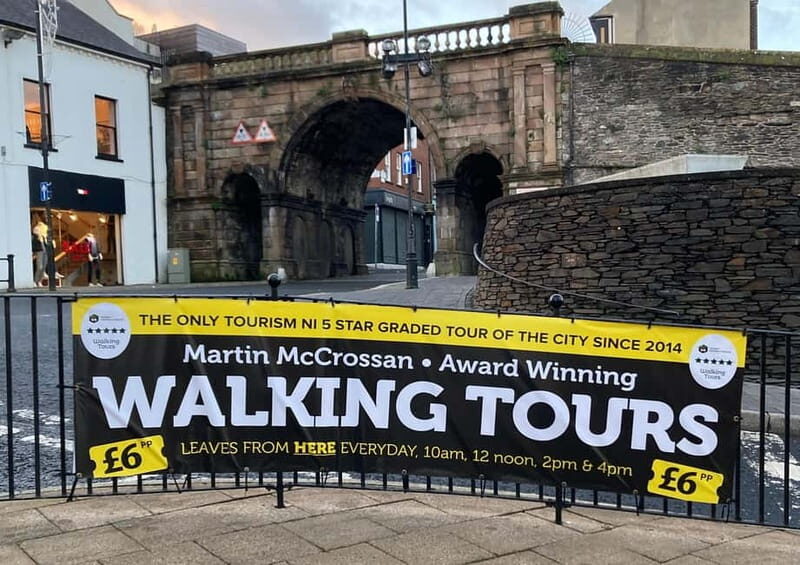
You start outside Level 4 of Foyleside shopping centre, where the tour banner is on the railings. The meeting point is described in a couple ways—some guests arrive using the street address (11 Carlisle Road), others use the banner location. Either way, aim to arrive early. If you show up exactly at the start time, you’re more likely to feel rushed than you should.
At the end, the tour finishes around The Diamond in Londonderry. That matters because you can walk from there to a lot of the city’s central sights without fighting the clock.
Practical tip: if you’re using maps or sat-nav, don’t assume the address pin is perfect. Go by the visible banner on the railings, because that’s how you’ll spot your group quickly.
Walking the 400-year-old walls: the best way to picture Derry
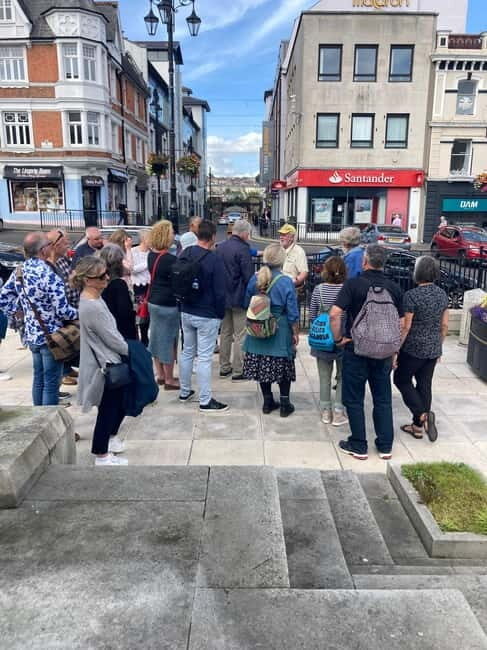
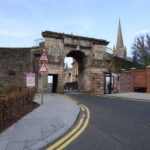
The star of the experience is the walk itself on Derry’s historic 400-year-old walls. This is not just “nice scenery.” The walls are the physical framework for understanding the city’s identity: defense, division, resilience, and later memory.
From the top, you get a sense of how the walled city functions like a world inside a boundary. Even if you’ve never read anything about the Siege of Derry, the walls make the stakes easier to grasp. You can literally see the shape of the place where events unfolded.
And because the tour is timed for one hour, the guide keeps you moving and keeps the story tied to what you can see. That’s one reason it works well for first-time visitors: you come away with a mental map, not just dates.
You can also read our reviews of more city tours in Londonderry Derry



Churches inside the walls: why St Columbs Cathedral is a stop
The tour focuses on key religious landmarks within the walled city. You’ll see stops including St Columbs Cathedral, St Eugene’s Cathedral, St Columba’s Long Tower, St Augustine’s, and First Derry Presbyterian Church.
The standout here is St Columbs Cathedral, because it’s described as the oldest building inside the walled city. That single fact changes how you look at the area. Instead of seeing buildings as separate sights, you start to see them as layers—different periods, different communities, and different priorities, all packed into the same boundary.
What I like about this approach is that you get context without being overwhelmed. The guide doesn’t treat the churches like isolated photographs. They become anchors for explaining how Derry/Londonderry’s population, influence, and tensions shifted over time.
The Siege of Derry and why it echoes today
This tour spends real time on the Siege of Derry, and it does it in a way that connects the past to the present rather than treating it as a sealed chapter. Standing along the walls, you’re set up to understand why the Siege is so central to Derry’s identity.
Expect a guided explanation of how the Siege fits into broader themes like the Plantation and the city’s long-term political and demographic changes. If you want to understand modern political history without getting lost in sources, this “big picture first” structure is very helpful.
One of the most practical things the guide does is connect how people remember. You’re not just learning what happened; you’re learning why certain stories still matter in public life.
WWII in Derry: a different lens on importance
Derry’s role during World War II is included, and that addition is smart. It stops the history from becoming all one-note. Derry mattered during multiple eras, not only during one famous conflict.
This portion also helps you understand why the city has strategic importance in different political climates. Even if WWII details aren’t your main interest, it adds balance and makes the whole picture feel more believable.
Apprentice Boys and marching traditions: living culture, not costumes

Another highlight is hearing about the Apprentice Boys and Derry’s marching traditions. This isn’t presented as random street pageantry. It’s taught as a continuation of how communities signal identity and memory over time.
This part is especially valuable if you’re trying to understand why history here is not only taught in textbooks. When someone explains what traditions represent, you start to notice the meaning behind what you might otherwise treat as just ceremony.
If you’re visiting during marching season, you’ll likely feel even more connected. Even if you’re not, the guide helps you read the culture with less confusion.
Bogside murals and Fountain views: context for Bloody Sunday
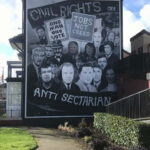
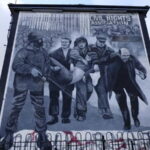
You’ll look over the Bogside and hear about modern political history, including Bloody Sunday. The tour includes viewing murals in the Bogside and Fountain areas, which gives you visual storytelling you can’t easily get from books.
Important note for your expectations: the tour is mainly about the walled city and the viewpoints above. You’ll get strong context from looking out and hearing the story, and the guide explains what those murals are communicating. If you’re hoping to spend lots of time inside museums or walking deeper into the Bogside streets, this one-hour format may just point you in the right direction rather than replace a full visit.
Still, as a first stop, it’s a powerful way to understand why the murals exist and why Bloody Sunday remains central to public memory.
The guide’s tone is a big part of this section. From what I’ve taken in from the guides’ approach, the aim is balance and respect: you learn the facts, but you don’t get pushed into taking sides. That helps you process emotionally loaded material more calmly.
How the guide keeps a large group together
One thing that shows up again and again in the tour experience is group management. The tours run with a live guide, and they handle larger groups in a way that keeps the walk organized.
Still, there are a couple realistic considerations:
- The guide may talk quickly at times, and some accents can make hearing harder.
- If it’s windy or the group is large, you might not catch every detail unless you’re near the front.
If you’re sensitive to audio, position yourself where you have a clear view of the guide and plan to listen like it’s a guided class—no distractions. A few guests also wished for ear pieces, but for an hour-long, low-cost public tour, you should still expect to work a little to hear everything.
Weather, shoes, and what to wear
This is an outdoor walk on top of walls. Dress for the weather and bring comfortable shoes. On a cold or snowy day, you’ll be glad you didn’t plan this in stiff boots or slick soles.
The good news is that the tour is only about an hour, so if you feel miserable in the weather, it’s not going to drag on. The walls are exposed in spots, so even a light drizzle can make things feel colder than you expect.
Best for: first-timers who want a map and a timeline
This tour is ideal if:
- You’re in Derry for a short time and want a high-impact overview
- You want help understanding major events like the Siege of Derry and Bloody Sunday
- You like history that’s tied to places you can see, not just names and dates
- You enjoy walking viewpoints and want a guided order to your sightseeing
It also works well as your “first afternoon” plan. After this, you’ll have an easier time choosing what to read, what museums to visit, and what streets to explore on your own.
My honest bottom line: should you book?
Yes—if you’re the kind of traveler who wants your bearings fast and you’re open to learning how Derry’s walls connect to both historic and modern-day stories. For the price and time, it’s one of the most efficient ways to get meaning out of the city.
Book it if you value:
- Walking the walls with context
- A guide who can keep the material organized and respectful
- A quick route that still covers the big turning points: Siege, Plantation, Emigration, WWII, Bloody Sunday, and the Apprentice Boys
Consider skipping (or pairing with something longer) if you:
- Want a long, in-depth museum-style experience during the same visit
- Know you struggle with hearing fast speech outdoors and don’t like crowds
FAQ
How long is the Derry walking tour?
It runs for about 1 hour.
Where does the tour start?
Meet outside Level 4 of Foyleside shopping centre, at the banner on the railings (tour also uses 11 Carlisle Road as a reference).
Where does the tour end?
It finishes at The Diamond in Londonderry.
What do I see on the walk?
You’ll walk on the city’s historic 400-year-old walls and pass viewpoints linked to places like St Columbs Cathedral, St Eugene’s Cathedral, St Columba’s Long Tower, St Augustine’s, and First Derry Presbyterian Church.
Does the tour cover the Siege of Derry and Bloody Sunday?
Yes. The tour includes history of the Siege of Derry and modern political history, including Bloody Sunday, plus views over the Bogside and mural areas.
Does the tour include World War II information?
Yes. The guide covers Derry’s role during World War II.
Is the tour wheelchair accessible?
Yes, it is listed as wheelchair accessible.
Is there an option to pay later?
Yes. It offers a reserve now & pay later option.
Is audio recording allowed?
No. Audio recording is not allowed.
What should I bring and wear?
Wear comfortable shoes and dress for the weather, since it’s an outdoor walking tour.