REVIEW · LONDONDERRY DERRY
Derry City: The Troubles Bogside Walking Tour.
Book on GetYourGuide →Operated by Derry City:The Troubles Bogside Walking Tour · Bookable on GetYourGuide
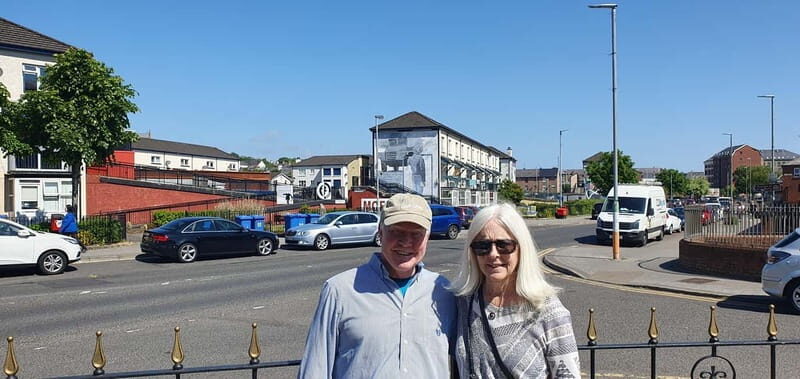
A short walk can hit like a long read. In the Bogside, the Derry City Troubles Bogside Walking Tour turns Bloody Sunday and the wider Troubles into something you can see, hear, and ask questions about on the street. You’ll follow life-size mural scenes that explain what happened and why it mattered, starting (and ending) at the Museum of Free Derry.
What I like most is the human scale: guides such as Noel, John, and Mick Kinsella bring personal perspective alongside the timeline. I also love the practical way the route is built around major landmarks, including the Bloody Sunday site and the world-famous Free Derry Wall photo stop. One consideration: because this area has free exhibits and sometimes free options, it can be easy to show up thinking you’ve booked the free thing—double-check you’re on the ticketed tour you meant to book.
In This Review
- Key moments that make this tour worth your time
- A 90-minute Bogside walk through real, still-recent history
- Start at the Museum of Free Derry, then read the neighborhood like a timeline
- Bloody Sunday on the route: why this stop is hard to skip
- Free Derry Wall: the photo moment that actually has a message
- Bogside murals: life-size storytelling with a guide who can point, explain, and answer
- The Irish peace process: how the tour handles the ending
- Who this tour is best for (and who might want a different style)
- Price and value: what $30 really buys in Derry
- A small heads-up near the Free Derry Museum area
- Should you book the Derry City Troubles Bogside Walking Tour?
- FAQ
- How long is the Derry City Troubles Bogside Walking Tour?
- Where does the tour start and end?
- Is the tour wheelchair accessible?
- What language is the tour guide?
- What will I see during the walk?
- Can I cancel or pay later?
Key moments that make this tour worth your time
- Start and finish at the Museum of Free Derry, so you can connect facts to place
- Bloody Sunday locations on the ground, not just in a book or documentary
- Free Derry Wall photo stop, instantly recognizable and meaning-heavy
- Life-size Bogside murals explained by real people, including guides tied to the area
- A guided timeline: start of the Troubles, Battle of the Bogside, and the Hunger Strikes
- The Irish peace process is part of the story, not an afterthought
A 90-minute Bogside walk through real, still-recent history
If you want history that stays put in your brain, this is the kind of tour that does it. Derry’s Bogside is one of those places where the conflict is not buried in the past. It’s written on walls, referenced in street corners, and explained with the urgency of people who lived through it.
The tour is built for a clear arc. You begin at the Museum of Free Derry, walk into the Bogside mural trail, and end back at the museum again. That loop matters because it helps you move between story and context. You’re not just hunting photos; you’re tracing events across a small, walkable area where people still discuss what happened and what should have followed.
The time window is also right for most visitors: about 1.5 hours. It’s long enough to feel like you went somewhere, but short enough that you can keep the rest of your day flexible.
You can also read our reviews of more walking tours in Londonderry Derry
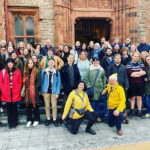
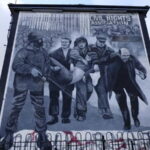
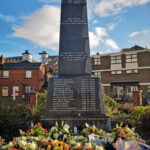
Start at the Museum of Free Derry, then read the neighborhood like a timeline
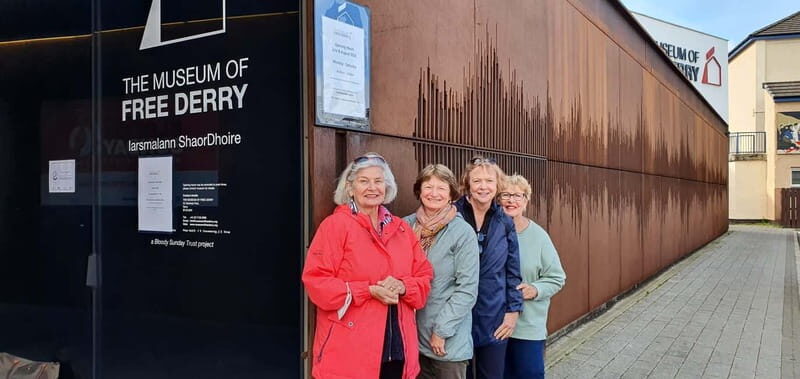
You meet outside the Free Derry Museum in the Bogside. That’s smart. You get oriented immediately in a place designed to hold the story, then you step outside and see how those themes show up in the streets themselves.
I like that the tour doesn’t treat the museum as optional decoration. It’s part of the structure: you get a point of reference before you start walking, and the experience can send you back for more at the end. If you have time, I’d even suggest making the museum your first stop so the murals have names, dates, and context when you’re hearing the guided explanation.
A lot of the emotional weight of the Troubles can make first-time visitors feel lost in detail. Starting with the museum reduces that problem. You’re not trying to decode everything from scratch while your guide is moving you to the next location.
Bloody Sunday on the route: why this stop is hard to skip
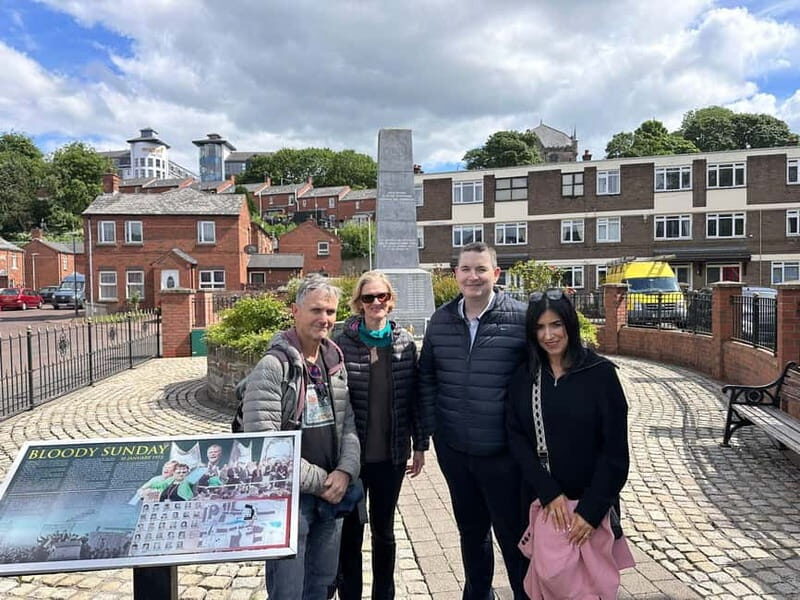
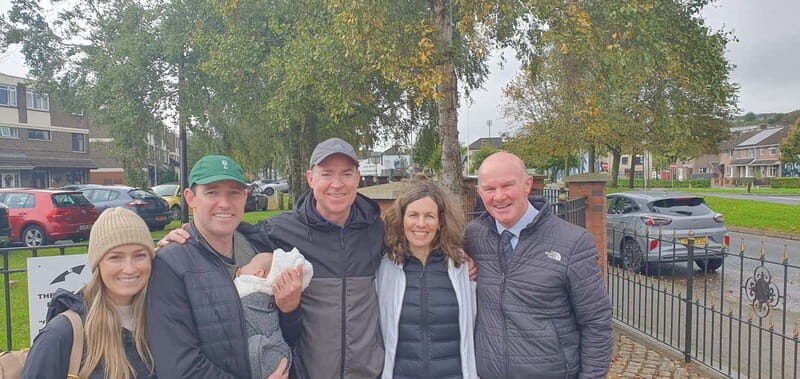
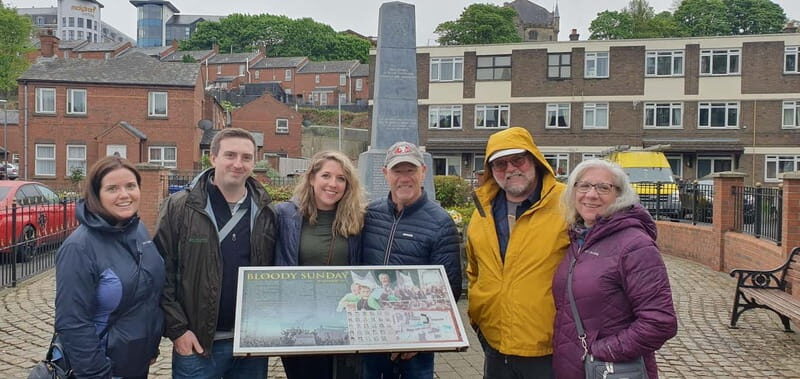
One of the most serious parts of the walk is going to the site associated with the Bloody Sunday massacre. This isn’t framed as distant “history homework.” It’s presented as an event that shaped lives, families, and the long political fight that followed.
What makes this stop especially powerful is the way guides speak from lived experience. In the accounts tied to this tour, guides such as John and Noel have emphasized personal connections to what happened and to what it did to their communities. That doesn’t replace historical record, but it adds something you can’t get from a museum placard: the sense that the impact was immediate and permanent.
Practical tip: wear comfortable shoes and plan to take in the moment without rushing. The route around this area moves, but the theme here asks for a slower mental pace.
Also, be ready for a tour that is candid. One review notes the guide told the truth about what happened on that awful day. Another highlights how the storytelling felt chilling because it came from someone who was there. If you know you’re the kind of person who likes your tours light and scenic, this may feel heavier than you expect.
Free Derry Wall: the photo moment that actually has a message
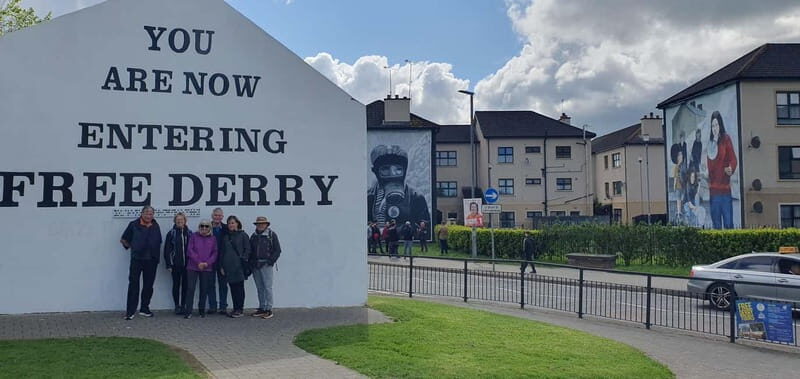
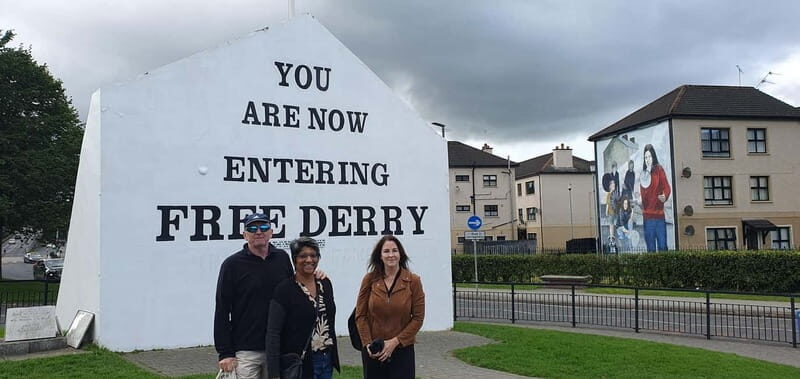
The Free Derry Wall stop is the best-known visual on the walk. You’ll get a chance for your photo there, which is useful if you’re mapping the story through iconic imagery.
But I wouldn’t treat it as a quick selfie stop. The tour frames it as symbolism in plain sight, tied to civil rights and community identity. Even if you’ve seen the wall online before, the guided explanation helps you understand what you’re looking at and why it became world-famous.
This is also where the tour tends to shift from “what happened” to “how people lived with it.” The murals and wall imagery are not just art; they’re community memory built into the landscape.
Bogside murals: life-size storytelling with a guide who can point, explain, and answer
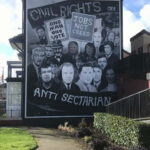
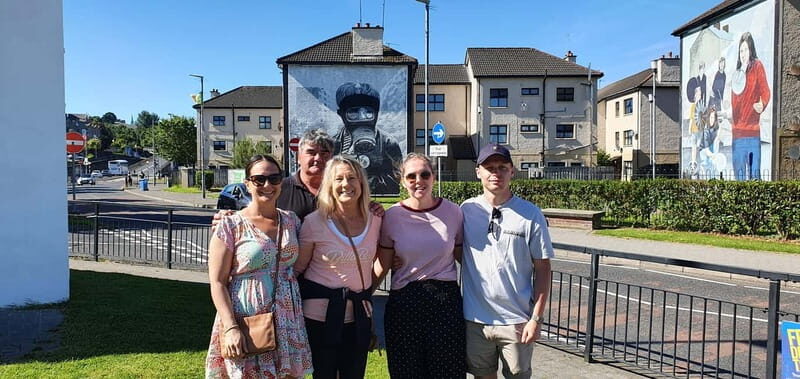
The heart of the experience is the Bogside murals. You’ll explore the life-size mural scenes across the Bogside, and you’ll be guided to the history behind each one. This is where the tour earns its 4.9 rating and consistent five-star comments.
Here’s why murals are such a good teaching tool for a visitor: they keep the story visual while your guide adds the missing links. Dates, causes, and consequences can feel abstract until you see them staged in images at street level. The tour makes that connection work.
You’ll hear about the start of the Troubles, the Battle of the Bogside, and the Irish Hunger Strikes. The point isn’t to cram every detail into your head. The point is to understand that these events weren’t isolated headlines. They formed a chain reaction—political decisions, community responses, and grief that kept changing what came next.
Different guides bring slightly different emphases. For example, Mick Kinsella is mentioned for telling the story of the Battle of the Bogside. Noel is described as both detailed and humorous while still honest. That mix matters because it prevents the tour from becoming one-note trauma. You get clarity without losing the humanity.
Practical tip: keep your phone battery up. You’ll want photos, but also remember you’ll get more out of the stops if you occasionally put the camera away and just watch and listen. The murals are meant to be read.
You can also read our reviews of more city tours in Londonderry Derry


The Irish peace process: how the tour handles the ending
A tour focused on the Troubles can easily stop after the darkest chapter. This one pushes forward into the Irish Peace Process and the idea that a 35-year conflict eventually ended.
That matters because it gives you a fuller picture of why people still talk about justice, reconciliation, and what comes after violence. One of the strongest notes in the supplied guide descriptions is that the storytelling doesn’t end in hopelessness. Even in emotional accounts, guides point toward a future.
Suzanne’s review mentions hope and joy for the future for grandchildren and for Belfast, and that kind of framing shows up in how the tour can leave you changed rather than crushed. You still feel the weight, but you don’t get stuck only in the past.
Who this tour is best for (and who might want a different style)
I think this tour is a great match if you:
- Want place-based history and not just a talk indoors
- Like hearing how real people experienced events, including uncertainty, fear, and political pressure
- Enjoy tours where you can ask questions and get direct answers from guides tied to the area
You might want to think twice if you’re looking for a light, casual walk. The Bloody Sunday stop and the broader Troubles storyline are emotional. Some visitors are specifically drawn to that intensity, but others find it too heavy for a first day in town.
It’s also a good fit for independent travelers who want structure. The route is short and guided, so you’re not left wandering the Bogside guessing what you’re looking at.
Price and value: what $30 really buys in Derry
At $30 per person for about 1.5 hours, you’re paying for more than a walk. You’re paying for:
- A focused route around major sites (so you’re not doing guesswork)
- Explanation tied to the murals and the timeline
- A live guide who can answer questions and connect story to place
- A guided perspective rooted in the community
The best value part is the lived angle. Multiple guides are described as having personal ties to events, which changes the pace of how the story lands. It’s not just “information.” It’s narrative delivered with emotional clarity, and that’s the difference between reading about an event and standing near it while someone explains what they saw and how it felt.
If you’re trying to compare costs, here’s the honest way to look at it: this price buys you time and interpretation. Derry has plenty you can see for free, but you’re unlikely to get the same structured explanation and firsthand perspective anywhere else for the same price.
A small heads-up near the Free Derry Museum area
One practical snag shows up in the experience: this area can look confusing if you’re expecting a ticketed gathering only. A review mentions paying about £22 per person, arriving to what seemed like a free tour situation, with free tours advertised outside the museum.
So, my advice is simple. Right before the start, confirm you’re with the correct tour name and operator. If you see other people assembling nearby, don’t assume they’re yours. Just match the schedule and the group.
Should you book the Derry City Troubles Bogside Walking Tour?
Book it if you want history that connects directly to place, and if you’re open to an emotionally honest storyline. This tour is especially compelling because it focuses on major, recognizable elements—the Bloody Sunday associated site, the Free Derry Wall, and the Bogside murals—while also explaining what those pieces mean in the larger Troubles timeline and the peace process that followed.
Skip it only if you’d rather avoid heavy topics, or if you’re looking for a purely scenic, low-emotion walking tour. In every other case, I’d call it a smart use of time in Derry City.
FAQ
How long is the Derry City Troubles Bogside Walking Tour?
It runs for about 1.5 hours.
Where does the tour start and end?
You meet outside the Free Derry Museum in the Bogside, and the tour ends back at the same place.
Is the tour wheelchair accessible?
Yes, the tour is listed as wheelchair accessible.
What language is the tour guide?
The live tour guide speaks English.
What will I see during the walk?
You’ll visit key areas connected to Bloody Sunday, see the Free Derry Wall (including a photo stop), and explore the Bogside murals that tell the Troubles story, with guidance on the history behind them. The Free Derry Museum is also part of the experience at the end.
Can I cancel or pay later?
Free cancellation is available up to 24 hours in advance for a full refund. You can also reserve now and pay later.