REVIEW · TORQUAY
Torquay: Kents Cavern Prehistoric Cave
Book on GetYourGuide →Operated by Kents Cavern · Bookable on GetYourGuide
A cave tour is time travel. Kents Cavern in Torquay turns a short walk into a trip through 400-million-year-old rock, with guides like James, Liv, and Charlie making the Ice Age feel close and human through clear, funny explanations. You get the wow of stalactites and stalagmites overhead and around you, plus the stop that really hooks history lovers: the Stone Age Zone with some of the earliest tools found in Britain.
I especially like that your ticket isn’t only the underground bit. You also have time for the Woodland Trail, where you can try hands-on activities like shelter building, and a chance for gemstone digging. One drawback to plan around: the cave is not for everyone, since it can feel tight in spots and the tour is not suitable for people with claustrophobia.
What makes this place easy to enjoy even when it’s underground is the steady comfort level—about 14°C—and the mostly flat walking. There are still a few steep gradients, and wheelchair access stops after the first chamber, so it’s worth checking your comfort level before you go.
In This Review
- Key things you’ll notice in Kents Cavern
- Entering the Vestibule Chamber and getting oriented fast
- What’s included: cave tour plus Stone Age Zone and Woodland Trail
- The underground hour: labyrinth routes, stalactites, and Ice Age clues
- Stone Age Zone: earliest tools in Britain and bones of Ice Age animals
- The Woodland Trail: shelter building and Ice Age sculpture spotting
- Price and value: about $22 for a guided 1-hour stop plus more
- Practical tips: what to wear, what to bring, and how long you’ll be inside
- Accessibility and who should skip: claustrophobia, wheelchair limits, and pushchairs
- Families, groups, and the guide factor
- When to go and what else to pair it with
- Should you book Kents Cavern in Torquay?
- FAQ
- How long is the Kents Cavern guided tour?
- Is the tour guided and in English?
- What is included with the ticket?
- Is food included in the price?
- Can I record video during the tour?
- Are pets allowed?
Key things you’ll notice in Kents Cavern
- A guided 1-hour tour that starts in the Vestibule Chamber and keeps moving
- 14°C cave temperature, great if you want a break from changeable weather
- Ice Age storytelling backed by the way stalagmite floors sealed evidence
- Stone Age Zone artifacts, including the earliest tools ever found in Britain
- Victorian excavations that explain how the site was discovered and studied
- Woodland Trail add-ons like shelter building and Ice Age animal sculptures
Entering the Vestibule Chamber and getting oriented fast

Your visit begins with a guide-led route through the caves. After you collect your tour passes from the ticket desk, you’ll enter through the Vestibule Chamber, where conditions feel set for visitors: the cave stays at a constant 14°C. That matters, because you can focus on what’s around you instead of fighting cold or heat.
The walkthrough is built for understanding. As you move through the labyrinth, your guide explains not just what you’re seeing, but how it formed—starting with how the cave developed around 2.5 million years ago and how stalagmite floors eventually sealed evidence of Ice Age occupation. It’s the kind of explanation that makes the geology click without getting technical.
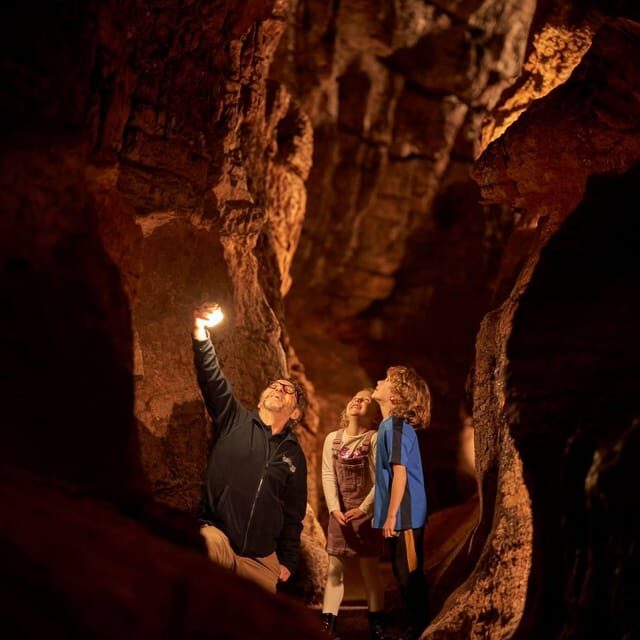
You’ll also notice the guide energy. In one example, James used hands-on moments with light to connect humans to fire. In another, Liv kept a big mixed group (up to 38 people) listening and focused. Charlie’s style was praised too for making the experience feel both fun and memorable. If you like tours where a guide actually manages the room, this format usually works.
You can also read our reviews of more tours and experiences in Torquay.



What’s included: cave tour plus Stone Age Zone and Woodland Trail
This ticket is built like a “small day” in one entry. Along with the guided cave tour, you also get access to the Stone Age Zone and the Woodland Trail. That means you’re not just peering at rock shapes for an hour—you’re connecting those rocks to real human activity, then backing it up with artifacts and hands-on activities.
The Stone Age Zone is where the story shifts from imagination to objects. You’ll see an extensive collection of artefacts and bones from creatures that once roamed inside these ancient walls. You also get the chance for gemstone digging—especially a highlight for children, who can test their own “archaeologist” instincts right on site.
The Woodland Trail rounds out the experience with activities that are more playful than scientific. You can try shelter building, then look for Ice Age animal sculptures built for discovery and photo moments. It’s a nice contrast after the cave’s quiet, dark scale.
And yes, there’s a place to recharge after you’ve done the underground and the trails. The Firestone Kitchen is on site for sweet treats, lunch options, and beverages. Food and drinks aren’t included in the price, but having it right there keeps your day from turning into a scramble.
The underground hour: labyrinth routes, stalactites, and Ice Age clues

Kents Cavern is described as one of Europe’s most important Stone Age sites, and the cave system supports that claim. As you follow your guide, you’re walking a real labyrinth of chambers, with constant attention on two big themes: formation and human time.
First, there’s the visual drama. The caves are decorated with stalactites and stalagmites, and the guide helps you see them as more than decoration. You’ll learn how the stalagmite floors formed and how that process played a role in sealing evidence of Ice Age occupations—turning the cave into a kind of natural archive.
Second, there’s the human story. Your tour is framed around ancient humans using the caves as shelter from extreme weather, making fires, shaping tools, and hunting Ice Age animals. It’s not just a “what used to be here” lecture. The explanations connect actions to the physical space you’re standing in.
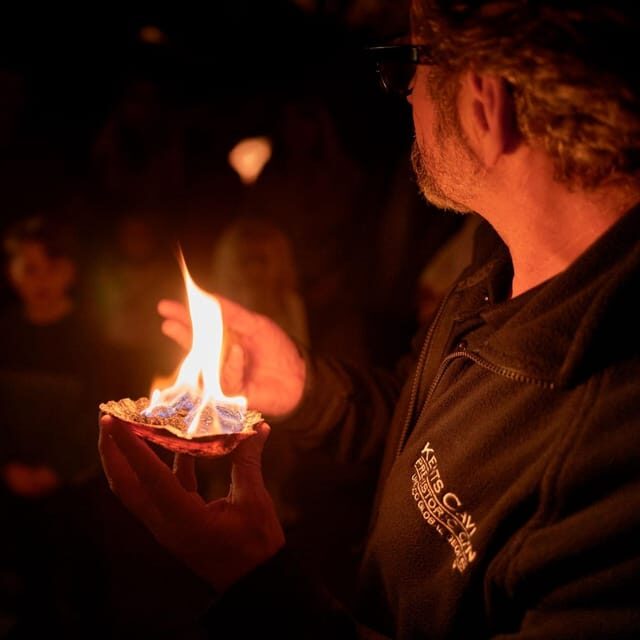
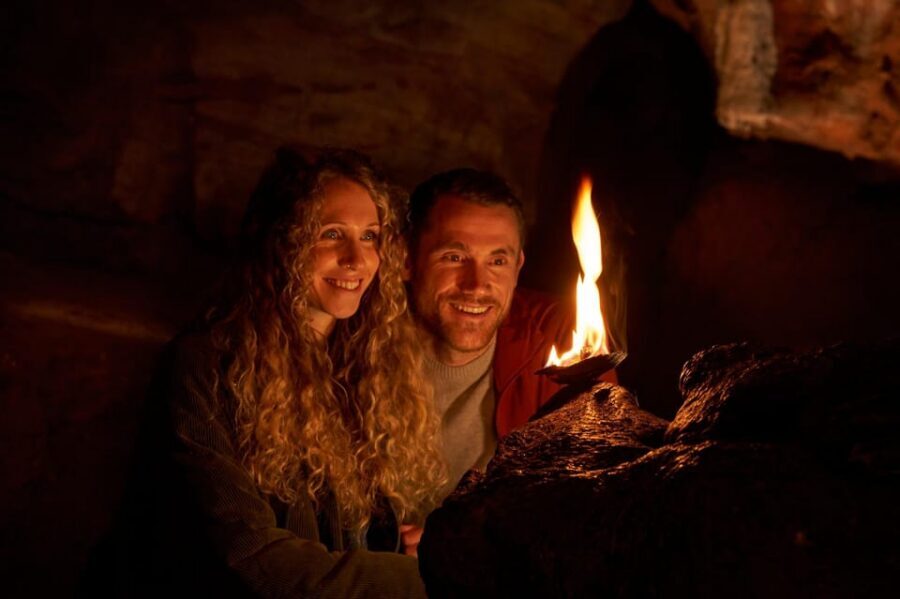
One small but powerful detail you might notice is how the light changes the room. In at least one guided experience, James lit shell candles and used them to show how bright a flame can be without modern lighting. The point wasn’t just spectacle; it connected fire and light to survival in total darkness, where you can’t even see your hand in front of your eyes without light sources.
If you take photos, keep your expectations realistic. A camera is recommended, but video recording isn’t allowed, so you’ll want to plan for still shots rather than filming the whole route.
Stone Age Zone: earliest tools in Britain and bones of Ice Age animals
If the cave gives you the scale, the Stone Age Zone gives you the proof. This is where you stop seeing the cave as an empty space and start viewing it as a lived-in location—one where people made tools and processed what they hunted.
The highlight here is the viewing of artefacts and bones connected to what once moved through this area. The tour is framed around the cave being a key Stone Age site, and the zone is designed to show that in concrete items rather than vague storytelling. It also includes the earliest tools ever found in Britain, which is exactly the kind of detail that makes a cave stop feel worth your time.
You’ll also get context for the site’s discovery and research. Your guide covers Victorian excavations, explaining what was found and why those finds mattered. That turns your visit into more than “old things in a cave”—it becomes a story about how knowledge was uncovered.
For kids, gemstone digging adds a fun learning layer. It’s not the same as finding a real artefact in a trench, but it gives them something tactile to do while you’re watching exhibits and listening.
The Woodland Trail: shelter building and Ice Age sculpture spotting
After the underground part, the Woodland Trail helps the day breathe. You’ll shift from cave geology and archaeology to activities that teach through play. Shelter building is the big hands-on item, and it’s a good fit for families or anyone who likes learning by doing.
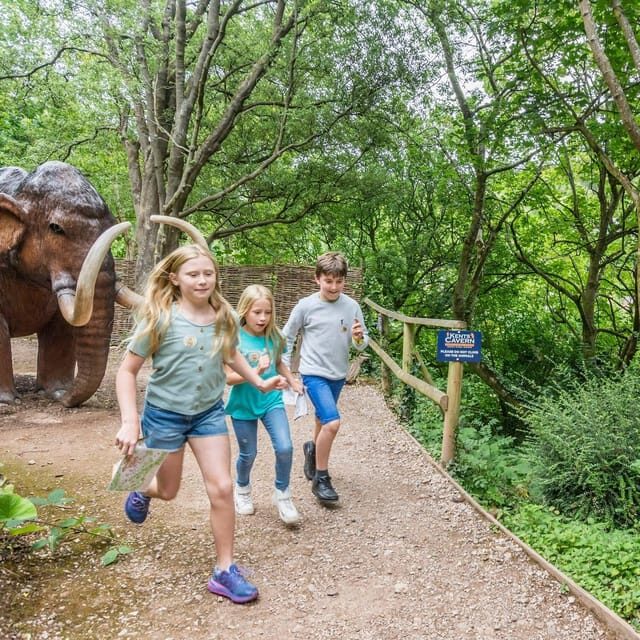
As you walk, you’ll see an array of Ice Age animal sculptures. They’re designed for discovery and photos, so even if you’re not a hardcore animal person, they give you points of focus when your brain is tired from the cave’s dimness.
This is also where the tour feels a little less formal. In a guided cave route, you’re always watching, listening, and moving. On the trail, you get more room to pause, look around, and take pictures without feeling rushed.



Price and value: about $22 for a guided 1-hour stop plus more
At around $22 per person, the value is strongest for the kind of traveler who likes structured time. You’re not just buying entry to a show cave. You’re getting a guided hour underground, plus access to the Stone Age Zone, the Woodland Trail, and gemstone digging.
That combination matters. If you only wanted to see stalactites and stalagmites, you might choose any cave attraction. What makes this one different is that the ticket helps you connect the cave’s formation to human history through guided explanation, then reinforces it with artifacts and hands-on activities above ground.
So I see it as good value if you want a complete story in one visit. If you want total freedom with no guide and no structured stops, you might feel the time limit a bit more.
Practical tips: what to wear, what to bring, and how long you’ll be inside
The cave tour is about 1 hour, and it’s fully guided. For comfort, wear comfortable shoes and bring warm clothing. Even though the cave is steady at 14°C, that’s still cool once you’re standing still in the chambers.
Sensible footwear is the key because the walk isn’t only flat. The overall route is described as relatively easy, with mostly flat concrete surfaces and nine shallow steps. There’s plenty of headroom and you won’t face lots of stooping, which makes a big difference underground.
Still, there are steep spots too. Expect a few gradients up to about 1:4 to 1:5, plus narrow sections. If you’re used to accessibility ramps and smooth floors, plan for a bit more effort than you’d expect from an easy tourist walk.
For photo fans, bring your camera. Video recording isn’t allowed, so you’ll want to capture your favorite chamber views in stills.
Accessibility and who should skip: claustrophobia, wheelchair limits, and pushchairs
This cave experience has clear limits, and you’ll be glad to know them up front. The tour is not suitable for people with claustrophobia. Even if you’re fine in normal buildings, cave spaces can feel mentally different because of narrow sections and the underground setting.
Wheelchair users face a bigger barrier. While the cave walk is described as mostly easy, wheelchairs cannot negotiate past the first chamber. The visitor centre offers a film of the cave tour free of charge, which can be a helpful alternative if you can’t access the full route.
Pushchairs are another consideration. Standard pushchairs can navigate around the cave footpath, but double pushchairs and all-terrain pushchairs are too wide to access the caves. If you’re traveling with a stroller, check what fits your setup before you arrive so you aren’t stuck with a wrong-sized route.
If you’re traveling with pets, note the rules. Pets aren’t allowed, but assistance dogs are welcome as long as they’re under the control of their owners.
Families, groups, and the guide factor
This is a place where the guide can make or break your experience. The cave is fascinating on its own, but the explanations tie together why the cave matters: formation, human behavior, and what sealed evidence can still tell us.
In the feedback, the guides stood out for keeping attention across ages. Liv impressed with the ability to manage a mixed group of 38 people. James was praised for being both knowledgeable and funny, with clear geological information and memorable light-and-fire demonstrations. Charlie was also singled out for delivering an experience that felt exciting as well as informative.
So if you’re traveling with kids, look for that guided focus. It’s one reason this tour scores high with families, because children often need motion, humor, and simple cause-and-effect to stay engaged.
When to go and what else to pair it with
No time-of-day details are provided here, so I’d plan around your overall Torquay and South West England day rather than forcing a specific hour. Since the cave keeps a constant 14°C, you don’t need to worry about weather changing the underground comfort.
If you want the full day feeling, treat Kents Cavern as your anchor. You can do the cave tour, then the Stone Age Zone and Woodland Trail, then finish with lunch or a sweet treat at Firestone Kitchen. That sequencing keeps you from rushing: you start with the biggest wow factor underground, then move to hands-on and on-site exhibits while you’re still in story mode.
Should you book Kents Cavern in Torquay?
Book it if you want a compact, guided experience that connects cave geology with Stone Age human life. The ticket gives you more than a walk through stalactites—it includes the Stone Age Zone, Woodland Trail, and gemstone digging, which makes it feel like a full value bundle for about an hour underground.
Skip it or reconsider if you have claustrophobia or need full wheelchair access, since the cave route can be narrow and wheelchair access doesn’t go past the first chamber. If you’re sensitive to steep gradients or you use mobility supports that need smooth, wide paths, this is worth planning carefully.
If you’re the kind of traveler who likes your history explained clearly and your scenery guided well, this is one of those stops that turns a ticket into a story you can picture afterward.
FAQ
How long is the Kents Cavern guided tour?
The experience lasts about 1 hour. Starting times depend on availability.
Is the tour guided and in English?
Yes. All tours are guided by a live tour guide, and the language offered is English.
What is included with the ticket?
Your ticket includes the guided tour with an expert guide, access to site facilities, entry to the Woodland Trail, access to the Stone Age Zone, and gemstone digging.
Is food included in the price?
No. Food and beverages aren’t included, though there is an on-site cafe called Firestone Kitchen where you can buy sweet treats, lunch options, and drinks.
Can I record video during the tour?
Video recording isn’t allowed. A film of the cave tour is available to watch in the visitor centre free of charge.
Are pets allowed?
Pets aren’t allowed, but assistance dogs are welcome when under the control of their owners.