REVIEW · GLASGOW
Glasgow: The Magnificent and Mysterious History of Glasgow
Book on GetYourGuide →Operated by Historic Walking Tours of Glasgow · Bookable on GetYourGuide
Glasgow tells stories in stone and paint. This guided walking tour threads together architecture and storytelling, from 6th-century origins to the wealth-soaked 19th century that earned Glasgow its Second City of the Empire nickname. I like how the guide brings street-level details to life, with names like Henry and Bruce showing up in recent tour experiences.
My favorite part is the mix of major sights and the smaller stops you would miss alone. You get photo moments at big civic anchors like the City Chambers, then you also step into culture stops such as the Britannia Panopticon and the mural trail artwork that keeps Glasgow feeling present-day.
One real consideration: this is still a walk. You should expect about 2.5 hours on foot (around 4 km for at least one group) in Glasgow’s famously changeable weather, so bring comfortable shoes and rain gear.
In This Review
- Key highlights you’ll feel on the walk
- First Steps: Costa Coffee, George Square, and City Chambers
- Cenotaph to Burns: Monuments that explain Glasgow’s self-image
- Merchant City power: Tobacco Merchant’s House and the wealth behind the streets
- Street art and institutions: City Halls, Tron Theatre, and kinetic culture
- Britannia Panopticon and music hall magic you can still see
- Briggait to Saltmarket: shops, corners, and street-level Glasgow
- Ramshorn Church to Glasgow Cathedral: ending where the timeline feels complete
- Price and pacing: is $18 worth 2.5 hours on foot?
- Who this tour fits best (and who should consider other options)
- Should you book this Glasgow history walk?
- FAQ
- How long is the Glasgow walking tour?
- Where do I meet, and where does the tour end?
- What are the main sights you’ll see?
- Is the tour family-friendly?
- What should I bring, and what can’t I bring?
- What’s the cancellation policy?
Key highlights you’ll feel on the walk
- George Square to Glasgow Cathedral: a clear route with stops that add up to a city story
- Civic monuments and literary legends: City Chambers, the Cenotaph, Walter Scott, and Robert Burns
- Merchant power on the street: buildings tied to traders, work, and the wealth behind modern Glasgow
- Culture stops beyond the obvious: Britannia Panopticon and Sharmanka Kinetic Theatre
- Street art and mural trails: BOW DOWN, HONOUR THE ROOTS and Billy Connolly mural moments
- Finish in stone history: ending at Glasgow Cathedral after Ramshorn Church
First Steps: Costa Coffee, George Square, and City Chambers
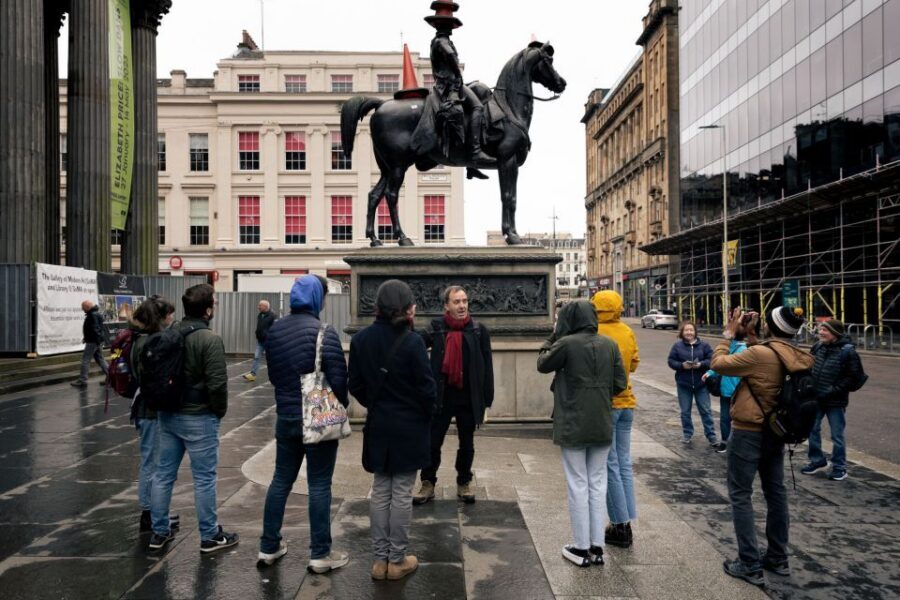
You start just outside Costa Coffee on the north side of George Square. It’s a practical meeting point, easy to find, and it gets you into the heart of the city without wasting time. Within minutes, the tour shifts from modern convenience to civic pride.
The City Chambers stop is your first photo moment and a quick orientation to what Glasgow wanted to look like as it grew. You’ll get context for why Glasgow could flex confidence in public architecture, and why that matters when you later compare Georgian, Victorian, and Edwardian styles across the route.
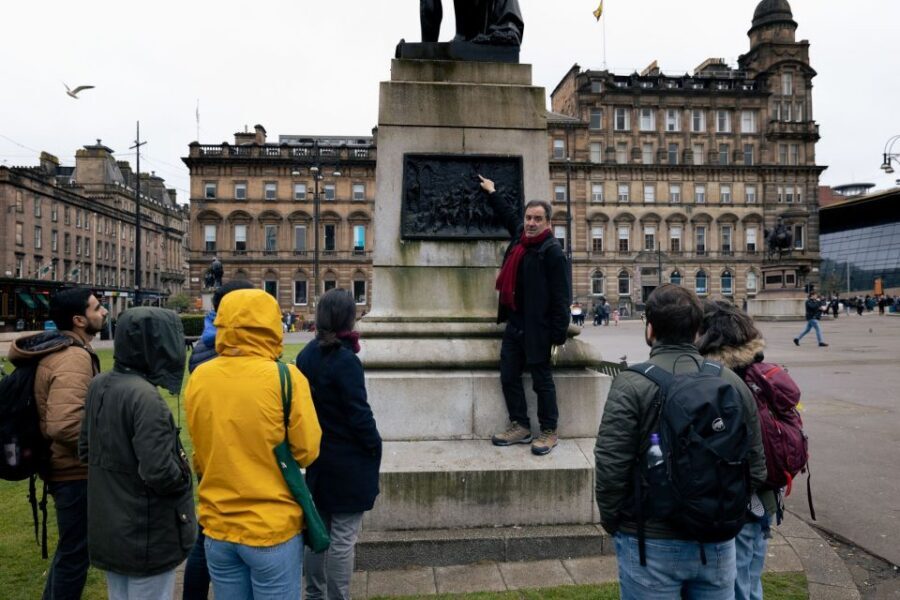
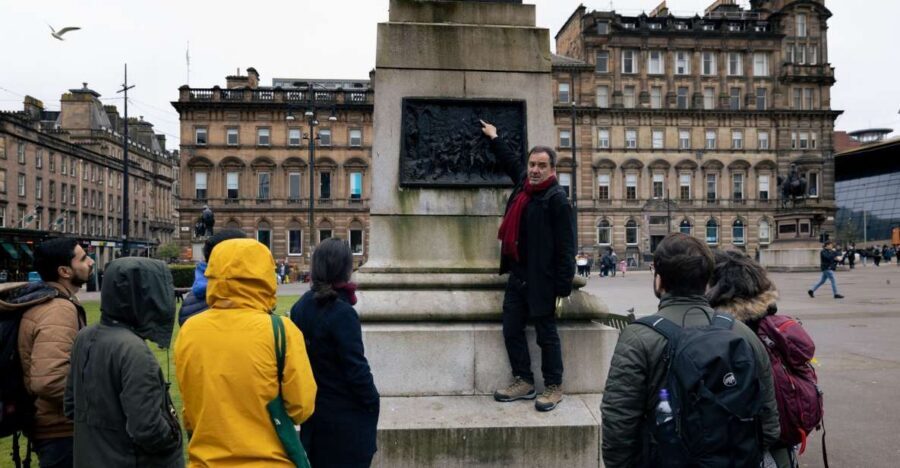
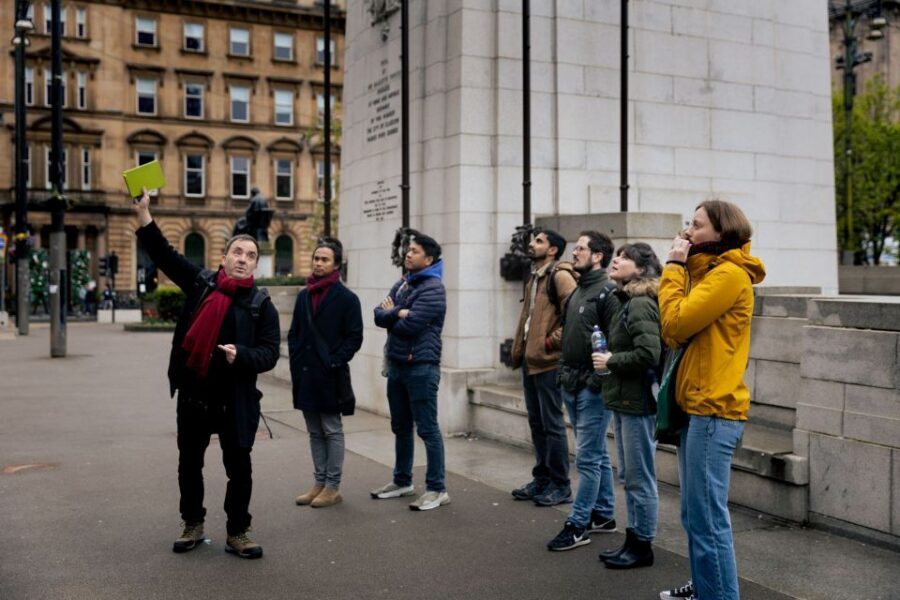
You then head toward the Cenotaph for another short photo stop and guided look. This kind of monument adds a different tone to city history: it’s not just about money and buildings, it’s about loss, remembrance, and how a city tells its own story through stone.
Next comes the Walter Scott Monument. It’s short on time but rich on context, and it helps you understand how Glasgow borrowed cultural prestige as it modernized. From there, you reach the Robert Burns monument, where the city’s literary identity starts to feel less like trivia and more like local branding—Glasgow’s way of claiming big names.
Stop #6 at 155 Queen St and the quick pause near Paesano Pizza keep the walk grounded. You’re not only collecting historic façades; you’re moving through an active street where modern Glasgow still trades, eats, and lives. That rhythm matters because the best walking tours connect past and present without turning the city into a museum.
You can also read our reviews of more historical tours in Glasgow

Cenotaph to Burns: Monuments that explain Glasgow’s self-image
This part of the walk is about identity. You’re seeing how Glasgow put its values on display—through public architecture, monuments, and who it chose to celebrate.
At the Cenotaph, the emphasis is less on grand speeches and more on what monuments do to a city. They mark collective memory, and in a place that has seen rapid change, memory becomes a kind of anchor.
Walter Scott’s monument helps you read the street in a different way. Once you know he’s there, you start noticing the city’s love of cultural authority: writers, artists, and national figures show up again and again as Glasgow grows bolder. The Robert Burns stop reinforces that theme, giving you an easy bridge into later stories about who built the city—and the culture that helped the city grow its reputation.
Even the shorter stops here are worth your attention. The guide uses them to tighten the timeline, so when you reach later Merchant City sites, the “why” behind Glasgow’s rise feels more obvious.
If you’re sensitive to crowds, you’ll appreciate that these stops are short and movement-focused. The tour keeps momentum, so you’re not stuck in one spot for long, and you can still enjoy the details when the group pauses.
Merchant City power: Tobacco Merchant’s House and the wealth behind the streets
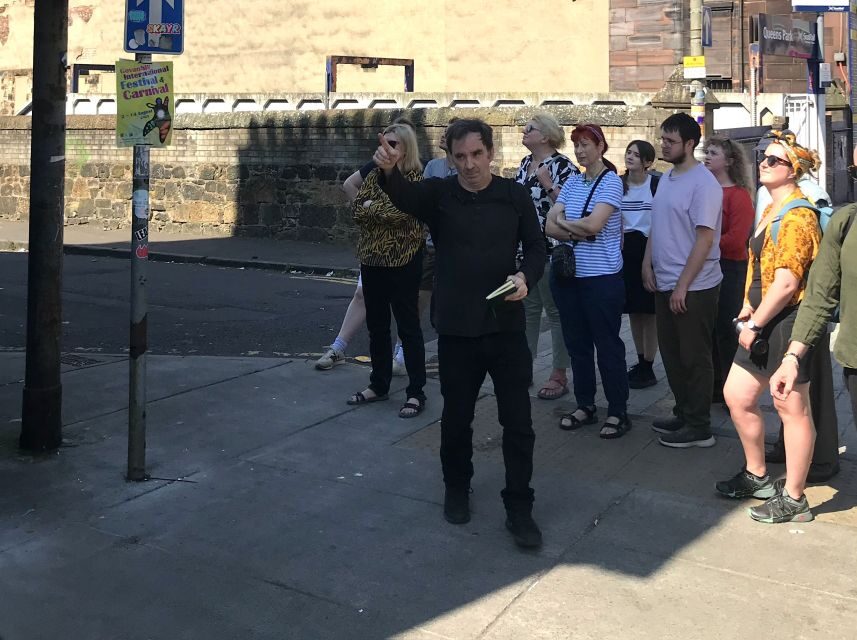
Then the route turns toward the Merchant City, where Glasgow’s money story becomes visible in the built environment. One of the best stops in this zone is the Tobacco Merchant’s House. This is where wealth starts to feel real: Glasgow didn’t just happen. Traders and workers built the infrastructure, and architecture still shows the results.
Virginia Court is a key follow-up. Courtyards and closes like this can look like background streets until someone points out what they meant in daily life—trade, access, and the way people moved through the city when it was more compact and more connected.
You also pause at the Merchant City Inn, which ties the physical city to human habits: eating, lodging, meeting clients, waiting for news. It’s a reminder that the city’s wealth ran on ordinary routines as much as it ran on big decisions.
Jacobean corsetry is an unusual stop name, and that’s the point. Glasgow’s story doesn’t only live in famous buildings. You also learn how smaller, specialist crafts and trades fit into the broader transformation—useful if you like your history grounded in work, not just in royal narratives.
The Old Police Post stop adds texture. When the guide brings in stories about policing and social order, you understand that rapid growth creates friction. It’s not all prosperity and polish; there are always systems needed to keep the city running.
Rab Ha’s Hotel and 1802 @ Hutchesons Hall continue the idea that Glasgow built institutions as it grew. These pauses help you connect the merchant boom to civic and cultural spaces. By the time you hit 1802 @ Hutchesons Hall, you’re no longer just seeing styles. You’re building a mental map of why certain kinds of buildings show up where they do.
Street art and institutions: City Halls, Tron Theatre, and kinetic culture
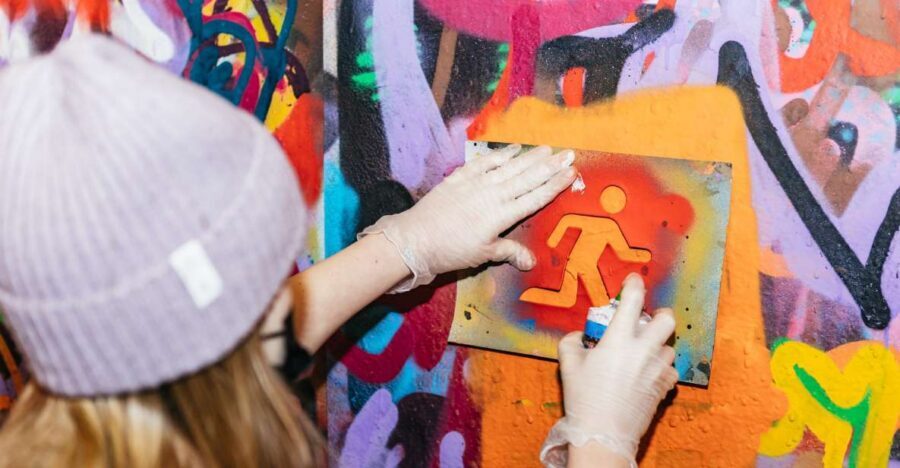
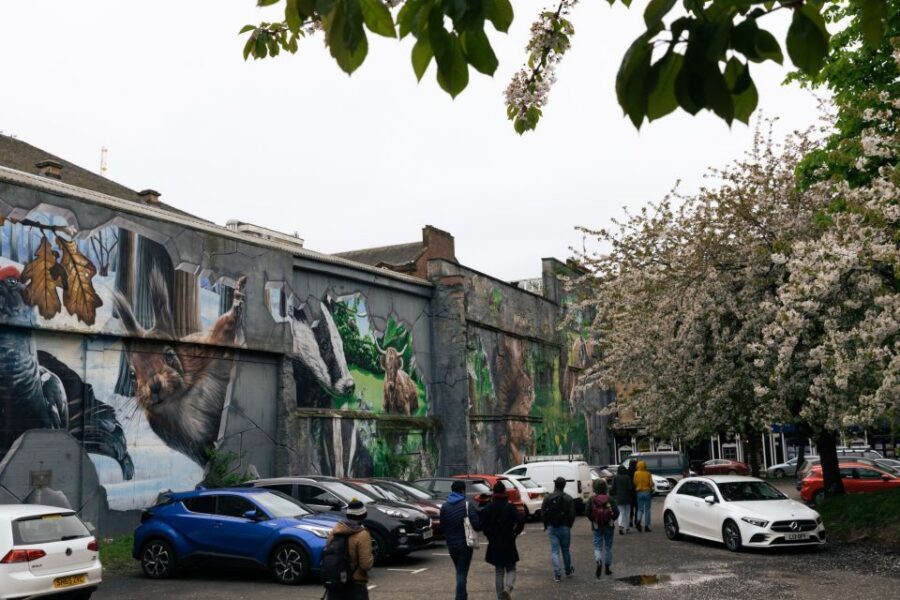
As you move forward, the tour blends heavy history with modern art and performance. The BOW DOWN, HONOUR THE ROOTS (#29 Mural Trail) stop is a clear example: you get a moment to photograph the mural and learn how street art fits into Glasgow’s identity today. It’s not random decoration. It’s part of how Glasgow talks back to its past.
City Halls & Old Fruitmarket bring you back to civic gravity. Old Fruitmarket is especially helpful for understanding Glasgow’s evolution as a commercial hub. These are the kinds of spaces where money changed hands fast, and that speed shapes the look and pace of the streets nearby.
Candleriggs is a short stop, but it matters because it puts you into the merchant street network again. Small street names like this are often where the city’s story hides. With the guide’s framing, you start noticing how the street layout supports the flow of trade.
The Tron Theatre is one of those places that makes you slow down slightly, even when the stop itself is brief. It’s a reminder that performance and public life grew right alongside commerce. In other words: Glasgow’s identity wasn’t only built by merchants; it was built by culture workers too.
Then you reach Sharmanka Kinetic Theatre. This is a modern surprise that keeps the tour from becoming only about soot-and-stone. The focus here is on creativity and movement, and it’s a good contrast point when you’ve been staring at carved façades.
Britannia Panopticon and music hall magic you can still see
One of the most distinctive stops is at the Friends of The Britannia Panopticon Music Hall Trust. The Britannia Panopticon is noted here as the world’s oldest, surviving music hall, and that detail turns this stop into more than a photo opportunity.
This is where the tour’s “mysterious” side shows up. When you learn what a music hall means in a working city—where people gathered for comedy, song, news, and relief—it changes how you view the surrounding streets. Suddenly, the historic center feels like it had a pulse, not just a past.
The tour also includes a mural trail stop for Billy Connolly (#09 Mural Trail). It’s another way the guide connects Glasgow’s big personality to the city walls. It helps if you like humor in your history lesson, because this route keeps finding clever, human connections.
I like how this section balances two Glasgow truths: the city is proud of old institutions, and it keeps reinventing how those institutions get celebrated. You’re not choosing between past and present. You’re watching Glasgow do both.




Briggait to Saltmarket: shops, corners, and street-level Glasgow
You keep rolling through a patchwork of streets where history and daily life overlap. The Briggait stop is a strong one for seeing the city’s creative and commercial layers side by side. It’s the kind of place where you can almost feel different eras coexisting, especially when the guide points out the historical purpose of the area.
Bare Bones Chocolate Ltd is a quick stop that adds a very practical perk: it’s a reminder that you can snack as you learn. Even if you don’t buy anything, the existence of a modern shop in a historically relevant zone makes the city feel reachable.
Saltmarket is another key street stop. With the guide’s framing, it becomes more than a name on a map. It turns into a corridor for understanding how Glasgow moved goods and people, and how those patterns shaped nearby landmarks.
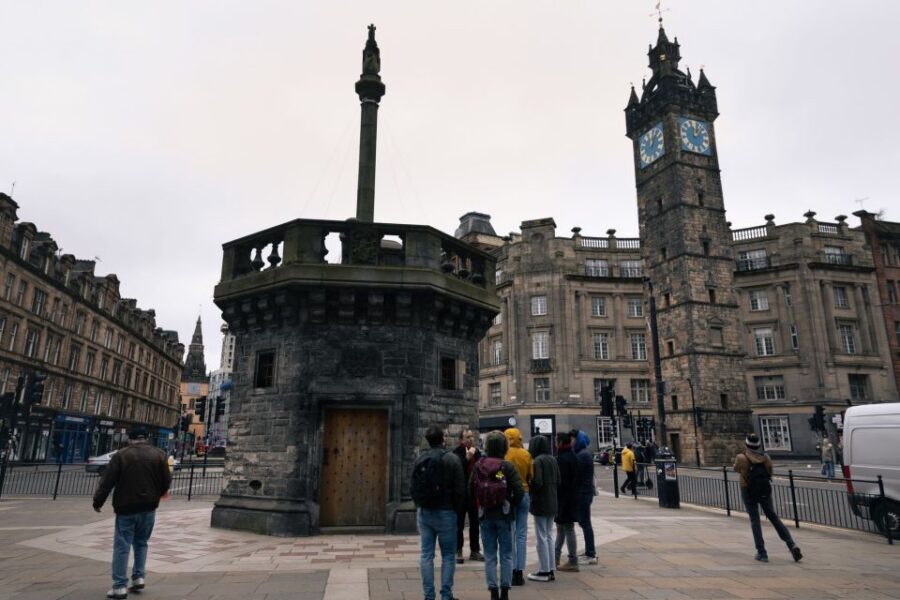
At Mercat Cross, you get a classic marker of civic and market life. It’s the kind of spot that helps you anchor the idea of trade, proclamation, and community gatherings. If you’ve ever wondered why older cities have certain central markers, this helps connect the dots.
High Street and Babbity Bowster continue that same theme, with photo stops that keep you looking up and around. Babbity Bowster is a fun stop because it’s tied to local character and folklore energy, which is exactly the sort of detail you’ll appreciate if you like history with personality.
The Fellow Glasgow Residents mural stop (#28) adds a modern echo. It’s Glasgow speaking through art again, and it helps you understand the city’s creativity as a continuation, not a replacement.
Ramshorn Church to Glasgow Cathedral: ending where the timeline feels complete
The final stretch turns spiritual and architectural. The Ramshorn stop is a guided photo moment that you can use to look for how Glasgow’s religious buildings show the city’s long timeline of change and adaptation.
Then you finish at Glasgow Cathedral. Closing at a major landmark makes sense because it lets everything you learned earlier settle into place. The city’s 6th-century origins, its 19th-century prosperity, and its modern creativity all land better when you end in a place built to last.
One extra story-thread you might hear along the way is Saint Mongo, which came up in guide commentary for at least one group. Even if you don’t know the name ahead of time, it’s a clue that the guide uses faith and early history to explain Glasgow’s identity, not just its architecture.
This ending also gives you an easy plan for what comes next. You’ll be right there at a major site, so it’s simpler to keep exploring on your own afterward—whether you want more churches, more monuments, or just a quiet place to reset after 2.5 hours of walking.
Price and pacing: is $18 worth 2.5 hours on foot?
At $18 per person for a roughly 2.5-hour guided walk, the value is mostly about what you get for the time. You’re not just hopping between two or three sights. You’re getting a guided route with frequent stops, meaning you spend less time guessing and more time understanding.
Most groups walk about 4 km at a comfortable pace, with lots of brief listening and looking breaks. That pacing matters. It keeps the tour from turning into one long shuffle, and it gives you time to absorb small details—building materials, carvings, street geometry, and the way each neighborhood changed.
If you’ve got limited time in Glasgow, this is a smart way to get your bearings fast. City centers can feel like a jumble when you’re on your own. Here, the guide turns streets into a storyline, from medieval hints to Victorian prosperity and onward to today’s creative Glasgow.
The weather is the one variable you can’t control. This is rain or shine, and it’s Glasgow, so bring rain gear. When the sky turns, your plan becomes simple: wear layers, keep your shoes grippy, and trust that the guide keeps the pace steady.
Also note the practical rule: no luggage or large bags. If you’re traveling light, you’ll enjoy this more. If you’ve got a big pack, you’ll likely feel restricted for a walk that spends time in tight lanes and busy areas.
Who this tour fits best (and who should consider other options)
This works best for you if you enjoy walking city centers and learning through real streets. It’s especially good if you like history that includes merchants, traders, workers, and the social systems that came with growth.
You’ll also appreciate the mix of architecture and culture stops. It’s not only Victorian façades. You get monuments, market markers, theatres, kinetic arts, and murals—so the city doesn’t turn into one style and one decade.
It’s not a match if you have mobility challenges, low fitness, or you’re traveling with children under 10. The requirement for a reasonable fitness level is clear because you’re walking for the full 2.5 hours.
Should you book this Glasgow history walk?
Yes, I’d book it if you want a compact way to understand why Glasgow looks the way it does. The strongest reason is the balance: big-name sites like the City Chambers and Glasgow Cathedral sit next to places like the Tobacco Merchant’s House, the Britannia Panopticon, and the mural trail stops that keep the city feeling alive.
If you like stories with humor and human character—guides such as Henry, Bruce, Ben, and James have been highlighted in recent tours—this kind of guided walk is exactly the format that helps the city click. Just show up prepared for weather and shoes, and you’ll get a lot out of the $18.
FAQ
How long is the Glasgow walking tour?
The tour runs for about 2.5 hours. You’ll be walking for the full duration, with stops along the way.
Where do I meet, and where does the tour end?
Meet just outside the main entrance to Costa Coffee, on the north side of George Square. The tour ends at Glasgow Cathedral.
What are the main sights you’ll see?
You’ll see highlights such as Glasgow City Chambers, the Cenotaph, the Walter Scott Monument, the Monument to Robert Burns, the Tobacco Merchant’s House, City Halls & Old Fruitmarket, Tron Theatre, Sharmanka Kinetic Theatre, the Britannia Panopticon, the Ramshorn Church, and more along the route.
Is the tour family-friendly?
It is not suitable for children under 10.
What should I bring, and what can’t I bring?
Bring comfortable shoes and rain gear, plus weather-appropriate clothing. Luggage or large bags are not allowed.
What’s the cancellation policy?
Free cancellation is available up to 24 hours in advance for a full refund. The experience also offers reserve now & pay later.