REVIEW · GLASGOW
Glasgow: City Sightseeing Hop-On Hop-Off Bus Tour
Book on GetYourGuide →Operated by City Sightseeing UK · Bookable on GetYourGuide
Glasgow by bus beats guessing where to go next. This City Sightseeing Red Route gives you hop-on hop-off freedom with panoramic, open-top city views, plus a live guide in season that turns major sights into stories. The big win for me is how it ties together Cathedral, museums, theatres, and riverfront sights without you having to plan every hop. One thing to watch: the open-top format means weather can affect comfort and even how well the audio comes through.
If you want a fast first look at Glasgow, the loop is built for it. You can ride the route, jump off for a museum stop like the Riverside Museum, then hop back on later when you’re ready. The downside is simple: if you only have a couple hours and you’re determined to see everything inside top attractions, you’ll need to choose, not cram.
Key points I’d plan around
- Seasonal live guide (April to September): Live narration runs in season, while the audio guide covers you the rest of the time.
- Efficient timing: The Red Route loop takes about 90 minutes, with buses every 30 minutes.
- Stop density in the right places: Cathedral, Kelvingrove, the University area, and the riverfront are all on your route.
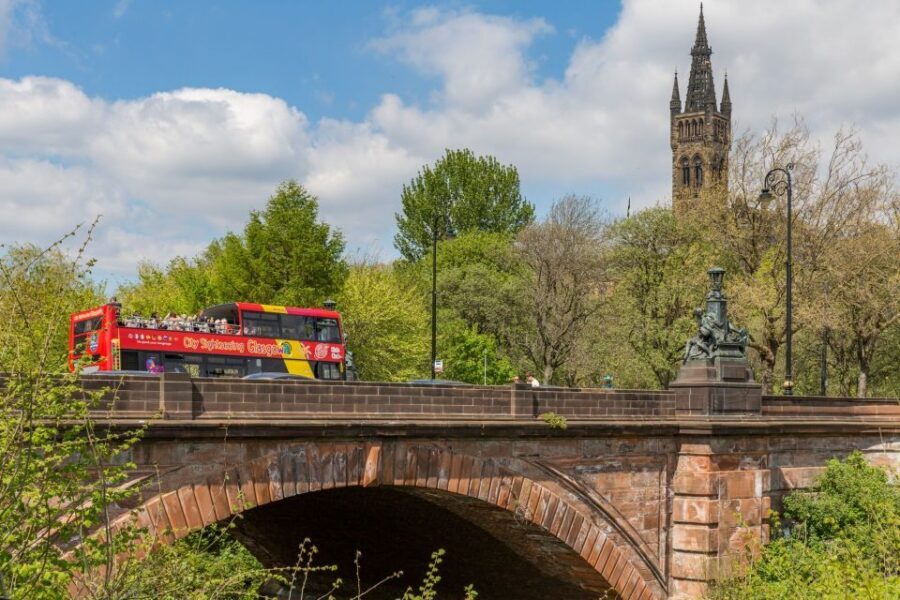
- Panoramic open-top viewing: 360-degree sightlines make it a great way to orient yourself.
- Accessibility included: Wheelchair-accessible buses are part of the deal.
- Practical in real weather: Some days get windy, and that can make headphones harder to hear.
In This Review
- Open-Top Glasgow Views: Why This Red Route Is So Easy to Use
- Price and Value: Does $26 Actually Stretch Far Enough?
- Start Smart: Stop Updates, Timing Windows, and Where You’ll Actually Board
- Red Route Stop by Stop: From George Square to Buchanan Bus Station
- George Square: Your “Okay, I Get It Now” Orientation Point
- Glasgow Cathedral: Gothic Details Without the Planning Headache
- Merchant City and The Barras: City Life and Character Stops
- Glasgow Green and St Enoch Square: Parks, Views, and a Break From Museum Mode
- St Vincent Place and Argyle Street: The City Stretch Between Big Sights
- Clydeside Distillery and the River Run: When Glasgow Feels Like a Story
- Riverside Museum and Old Schoolhouse: Museum Time That Pays Off
- University of Glasgow and Byres Road: A Thoughtful Pause
- Kelvingrove Art Gallery and Museum (and Kelvingrove Park): The Best Museum Stop to Actually Sit With
- Charing Cross, School of Art, RSAMD: Culture Stops Along the Way
- Theatre Royal Glasgow: If You Want Performances in Your Sightseeing
- Buchanan Bus Station: A Convenient Ending Point
- Live Guide vs Audio Guide: How the Commentary Actually Shapes Your Day
- 1-Day vs 2-Day Ticket: What to Do With That Flex
- Weather, Comfort, and Practical Tips for Scottish Days
- Who This Glasgow Red Route Is Best For
- Should You Book This Glasgow Hop-On Hop-Off Tour?
- FAQ
- How long is the Red Route bus tour?
- How often do buses run?
- When is the first and last tour from Stop 1?
- Do you get a live guide, or just audio?
- What languages are included on the audio guide?
- Is the tour wheelchair accessible?
- Are attraction tickets included in the price?
- Are pets or smoking allowed on the bus?
Open-Top Glasgow Views: Why This Red Route Is So Easy to Use
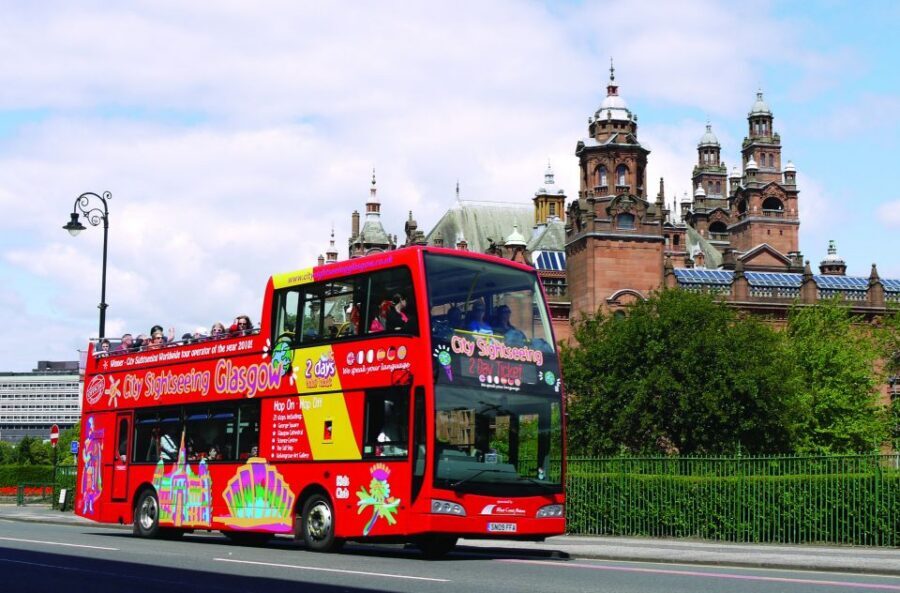
This is the kind of sightseeing that makes sense in Glasgow, because the highlights don’t all sit next to each other. A hop-on hop-off bus lets you cover ground without burning time on multiple bus/train transfers. And because it’s an open-top double-decker, you’re not trapped staring out a window—you’re up high, looking around, getting a real sense of the city’s layout.
What makes the Red Route feel good is the mix of stop types. You get big-ticket landmarks like Glasgow Cathedral. You also get museums and culture spots that are worth lingering at—like the Riverside Museum and Kelvingrove Art Gallery and Museum. Even the theatre area shows up, including Theatre Royal Glasgow, where Scottish Opera and Scottish Ballet perform.
The 360-degree view angle is more than a gimmick. It helps you connect what you saw on the bus with what you’ll later walk to. That matters most on a first visit, when streets and neighborhoods still feel like a blur.
Price and Value: Does $26 Actually Stretch Far Enough?
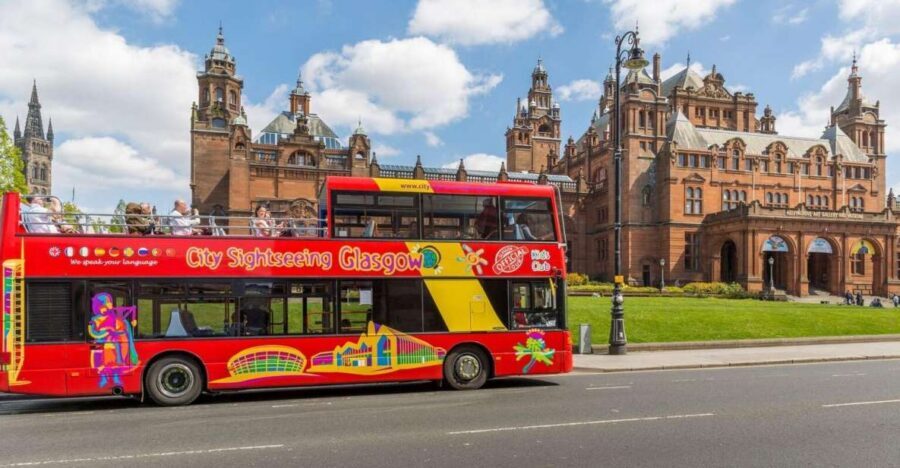
At around $26 per person for a 1–2 day ticket, the math works best when you treat the bus as transportation plus orientation. A single taxi or a cluster of single rides can add up quickly, especially when you’re bouncing between the Cathedral area, the riverfront, and the West End museum zone.
This tour leans into value in a few ways:
- You get 1 or 2 days of flexibility, so you’re not forced into a strict schedule.
- You’re riding a route with major stops rather than random city coverage.
- You get narration—live guide (April–September) and an audio guide with headphones in seven languages.
Also, the duration is practical. The route loop is about 90 minutes, and buses run every 30 minutes. That means you can hop off, see one main stop properly, and still feel on track.
Just be honest with yourself about what’s not included. Attraction tickets and food are on you. If you expect entry prices to be covered, you’ll feel short-changed.
You can also read our reviews of more city tours in Glasgow
Start Smart: Stop Updates, Timing Windows, and Where You’ll Actually Board
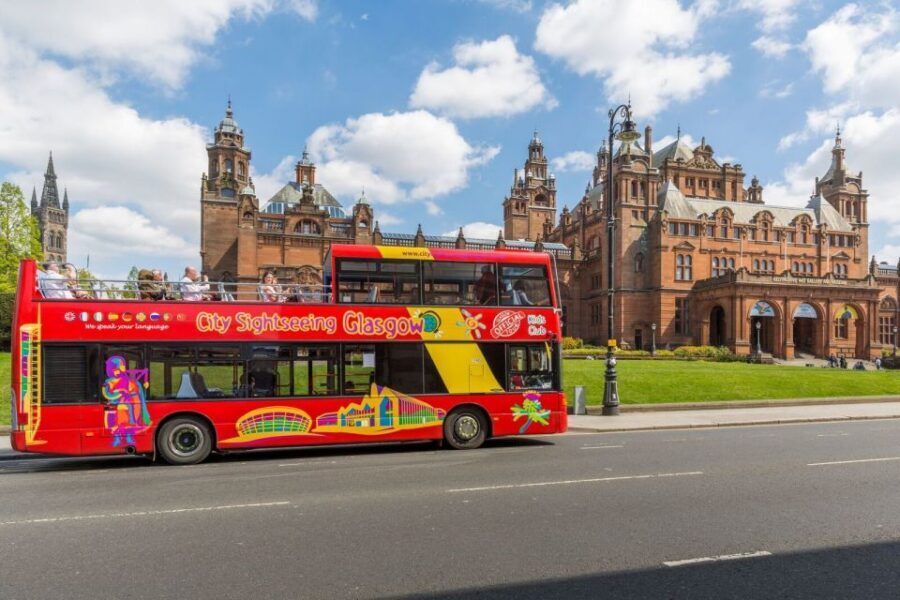
Glasgow is working on and moving parts around, and this tour has a few updated stop locations. Before you go, know this so you don’t waste time circling streets.
Key operating notes to plan around:
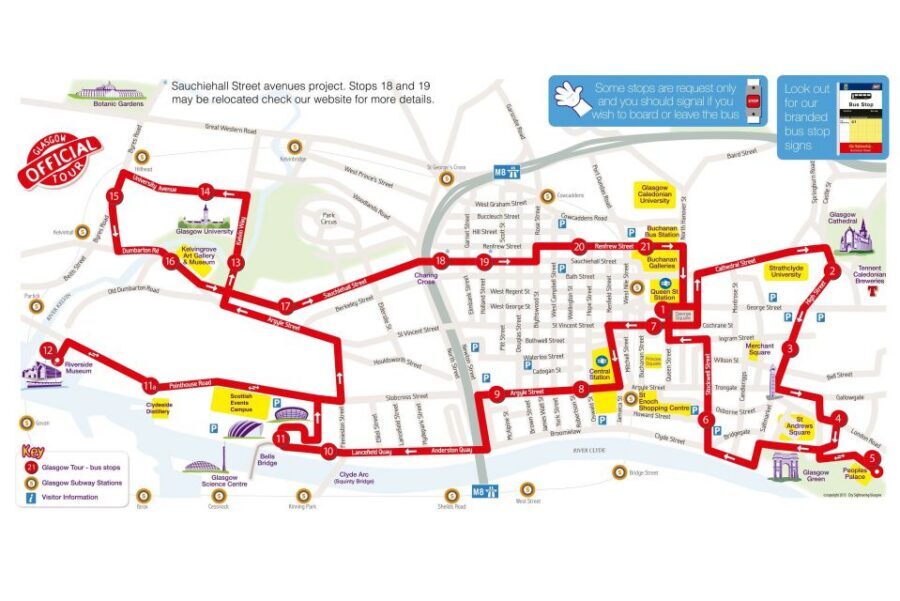
- Stop 1 is on Cathedral Street near the Charles Oakley Building, and it’s mainly pick-up and drop-off.
- Stop 7 is the main starting and ending point on St. Vincent Street (past West Nile Street).
- Tours leaving Stop 7 at 3:30pm, 4pm, and 4:30pm end on Cathedral Street.
- Stop 8 stays on Jamaica Street, outside Lidl.
- Stop 9 is temporarily out of use.
Timing is straightforward but has a window:
- First tour from Stop 1 at 10am
- Last tour from Stop 1 at 4pm
- Each loop takes about 90 minutes
- Buses run every 30 minutes
In real life, I’d still aim to start early. One review noted that beginning around 9am helped with crowd flow, and that’s exactly how you should approach open-top sightseeing: get your best light and a smoother boarding rhythm first.
Red Route Stop by Stop: From George Square to Buchanan Bus Station
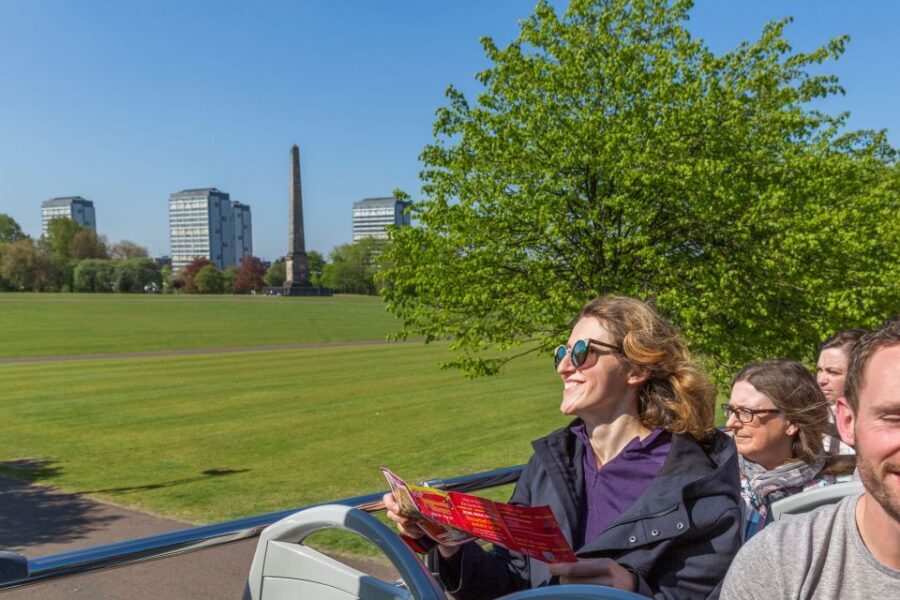
The Red Route is long, but the stops are grouped in a way that helps you build your day. Here’s how I’d think about the route, with what each stop is good for and where you might want to budget extra time.
George Square: Your “Okay, I Get It Now” Orientation Point
George Square is one of the easiest places to start because it’s central and gives you a clean overview of the city’s energy. If you’re coming in fresh, this is a solid first boarding point to settle in and start listening.
If the weather is decent, this is also a good place to grab the upper deck early so you can orient your bearings before the route gets busier later.
Glasgow Cathedral: Gothic Details Without the Planning Headache
Hop off for Glasgow Cathedral, one of Scotland’s major medieval buildings. This stop is a clear “spend real time” moment. You’ll get the history through the guide/audio, but you’ll also want to slow down and look around once you’re there.
A practical note: cathedral areas can feel exposed in wind and rain. Bring a layer even if it looks fine when you board.




Merchant City and The Barras: City Life and Character Stops
Next up, you’re in the Merchant City zone, then heading toward The Barras Market. This part is ideal for people who like street-level Glasgow—shops, buildings, and lively neighborhood energy.
The drawback? These stops can tempt you to jump around quickly. If you want photos, do it, but don’t let wandering steal your time from the museums, which are usually where the big-ticket value sits.
Glasgow Green and St Enoch Square: Parks, Views, and a Break From Museum Mode
Glasgow Green adds a park stop to the mix, which is perfect when you want a breather from indoor attractions. After that, you reach St Enoch Square, a central point where it’s easier to reposition for later hops.
If you’re on a 1-day ticket, these stops are where you choose: quick look-and-photo, or a short sit-down break before the next museum cluster.
St Vincent Place and Argyle Street: The City Stretch Between Big Sights
These stops—St Vincent Place and then along Argyle Street—are part of the glide between major clusters. Think of them as your transit chapters: you board, listen, and watch the city change as you head toward the river and museum areas.
This is also where you’ll feel the real value of a hop-on bus. Without it, you’d be piecing together routes and timing.
Clydeside Distillery and the River Run: When Glasgow Feels Like a Story
The route includes the Clydeside Distillery stop, then moves toward the river and the museum side. This stretch is great if you like Glasgow’s industrial-meets-cultural vibe.
Don’t skip the riverfront planning too lightly. It’s one thing to ride past it. It’s another to step off and take it in at walking speed.
Riverside Museum and Old Schoolhouse: Museum Time That Pays Off
The star here is the Riverside Museum, described as award-winning. This is the kind of stop that can turn a quick sightseeing day into a favorite memory, especially if you like transport history and big, well-designed spaces.
One review was thrilled to catch it when it wasn’t planned. That’s a good sign. If you like to keep your schedule flexible, Riverside is a smart “hop off and decide” option.
University of Glasgow and Byres Road: A Thoughtful Pause
The bus moves past University of Glasgow, then down toward Byres Road. This is where the city’s academic side starts to show. Even if you don’t go into buildings, the area gives you a different Glasgow mood.
If you’re doing a 2-day ticket, consider using this stretch on day two for a calmer pace.
Kelvingrove Art Gallery and Museum (and Kelvingrove Park): The Best Museum Stop to Actually Sit With
Then you’re in the Kelvingrove Art Gallery and Museum zone. This stop is repeatedly singled out as worth it, and it’s easy to see why. The museum is a place you can browse for a long time, and it’s also in a setting that invites a park break.
Kelvingrove Park follows for a reason: it gives you outdoor breathing room so you don’t feel like you spent your whole day in line and in galleries.
If you’re timing this on a 1-day pass, I’d treat Kelvingrove as your main museum anchor. Arrive, see what you can, and don’t try to “win the museum” in one stop.
Charing Cross, School of Art, RSAMD: Culture Stops Along the Way
The route passes through Charing Cross and also includes stops connected to education and the arts, including School of Art and RSAMD. These are good for people who want Glasgow’s creative side without needing a separate plan.
They’re also an easy way to break up the day if you’ve already decided you’ll do one big museum (Kelvingrove or Riverside) and then keep the rest lighter.
Theatre Royal Glasgow: If You Want Performances in Your Sightseeing
The route includes Theatre Royal Glasgow, home to Scottish Opera and Scottish Ballet. Even if you’re not seeing a show that day, this stop works because it gives context to the city’s performance culture.
The drawback is time. Theatre stops are great, but they aren’t a place you can spend hours unless you’re attending a performance. Use it as a quick hop-off for photos and a short look.
Buchanan Bus Station: A Convenient Ending Point
Finally, you end at Buchanan Bus Station. This is useful because it helps you wrap your day without guessing how to get back to central areas.
In a 2-day plan, it’s also a smart place to finish if you’re tired. You’re not committing to an extra transit puzzle.
Live Guide vs Audio Guide: How the Commentary Actually Shapes Your Day
The Red Route includes a live guide April to September (and live guidance until Sunday 19th October, with the Red Route available all year). Outside those windows, you’ll rely on the audio guide in seven languages: Spanish, English, French, German, Italian, Chinese, and Polish.
Here’s how that affects your experience:
- Live guide adds personality and humor, which can make the city feel like it has a voice.
- Audio guide gives consistency and control. You can pause your attention if you’re taking photos.
One real-world consideration: on windy days, audio can be harder to hear. An open-top bus can also amplify outside noise, so I’d plan for a decent rain/wind layer and keep your headphones snug.
Also, there’s a subtle upside to using both. If one loop didn’t tell you everything you wanted, you can do another loop on a different day and catch different details.
1-Day vs 2-Day Ticket: What to Do With That Flex
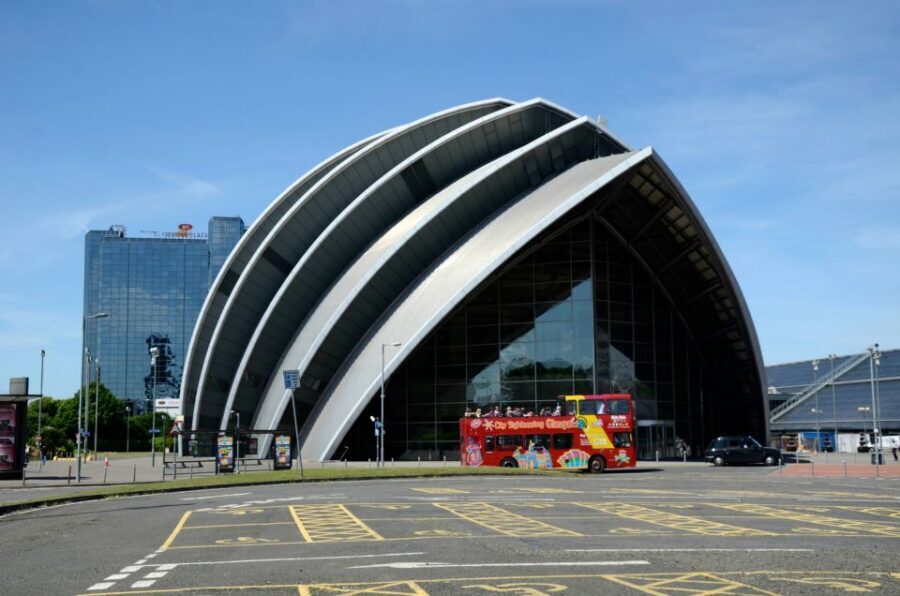
The tour works best when you treat each loop like a chance to pick your next stop. A 90-minute loop doesn’t feel like a full day, which is exactly why it’s useful. You can ride first to learn the geography, then use your second day (or second loop) to focus on what you actually want to see.
A good approach:
- Day 1: Ride the loop once, hop off at your priority landmark (Glasgow Cathedral or Kelvingrove), then use the rest for quick photos and museum browsing.
- Day 2: Focus on the stop you skipped or rushed. For many people, that’s Riverside Museum—because it’s easy to underestimate until you see it.
One smart planning idea from the route logic: attractions are spread out, so using the bus as your connector makes every walking segment shorter and more enjoyable.
Weather, Comfort, and Practical Tips for Scottish Days
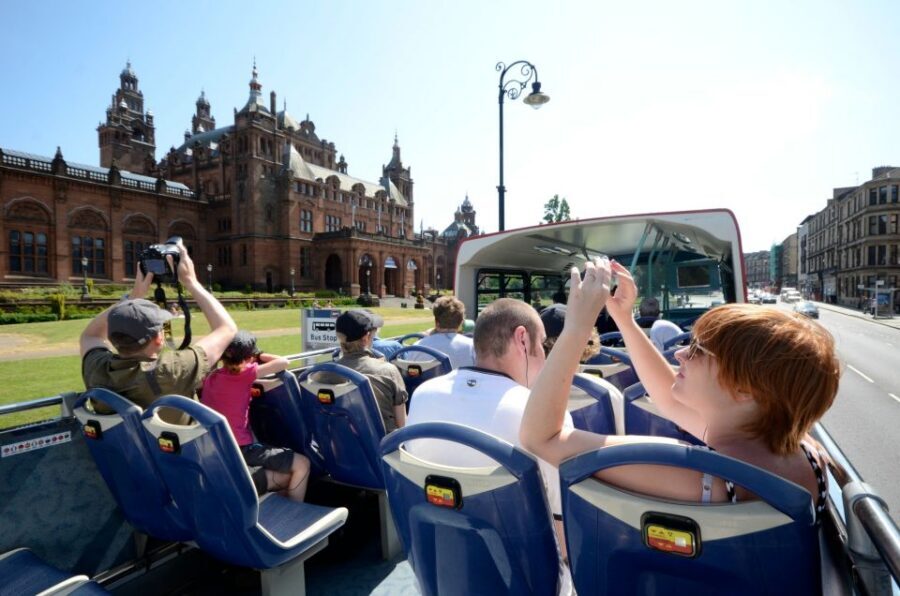
Open-top touring in Glasgow can be great—or it can be a lesson in layers. Reviews mention awful weather and wind, and that matches what you should expect when you’re outside.
My advice:
- Bring a jacket even if you think you won’t need it.
- Wear something you can move in fast. If you feel the rain start, you’ll want to hop off quickly and seek shelter.
- If it’s windy, keep an ear on the headphones and consider sitting where the audio feels clearer.
Comfort also depends on timing. Starting earlier can mean easier boarding and a smoother flow, especially if you’re aiming for upper-deck views.
Who This Glasgow Red Route Is Best For
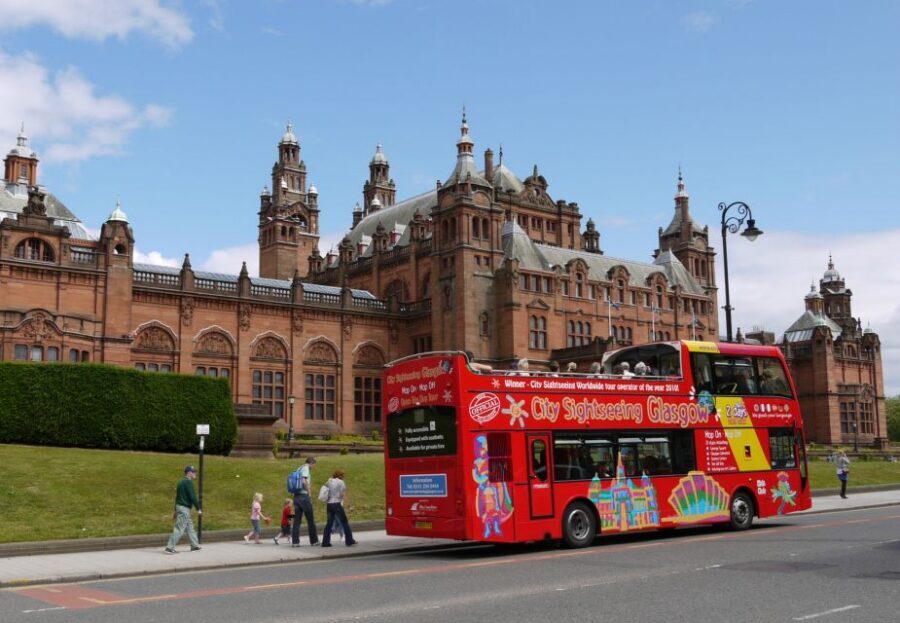
This tour is a strong match for:
- First-time visitors who want an instant city orientation
- People who want to control their pace without a rigid itinerary
- Families with kids or anyone who needs a simple transport backbone between sights
- Anyone visiting museums and landmarks that are too far apart to walk comfortably in one day
It’s also a good fit if you like to collect “I didn’t plan this” moments. Riverside Museum is the classic example, and it’s exactly the kind of stop that can surprise you into loving it.
Should You Book This Glasgow Hop-On Hop-Off Tour?
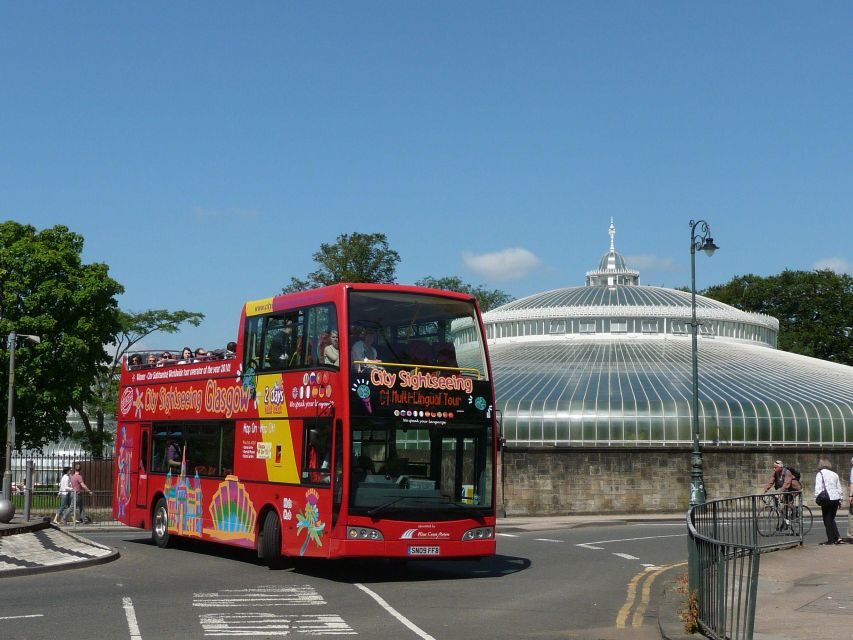
Yes—if you want a low-stress way to cover major sights and build a shortlist for the rest of your trip. The Red Route’s value comes from its tight loop time (90 minutes), frequent service (every 30 minutes), and smart stop coverage across Cathedral, Kelvingrove, the University area, the riverfront, and Theatre Royal.
Book it if:
- You want transportation plus guidance in one ticket
- You’d rather hop off as the day unfolds than follow a fixed schedule
- You’re okay paying for convenience rather than trying to save every pound with complicated routing
Skip it if:
- You only want one specific attraction and nothing else
- You’re the type who enjoys planning every walk route minute-by-minute, because the bus is built for flexibility, not strict efficiency
If you do book, start early, bring layers, and treat the first loop as your map. Then spend your time off the bus where you actually want to slow down.
FAQ
How long is the Red Route bus tour?
The Red Route loop takes about 90 minutes.
How often do buses run?
Buses run every 30 minutes.
When is the first and last tour from Stop 1?
The first tour from Stop 1 is at 10am and the last tour from Stop 1 is at 4pm.
Do you get a live guide, or just audio?
Red Route includes a live guide from April to September, with the live guide available until Sunday 19th October. You also get an audio guide in seven languages with headphones.
What languages are included on the audio guide?
The audio guide languages are Spanish, English, French, German, Italian, Chinese, and Polish.
Is the tour wheelchair accessible?
Yes. The buses are wheelchair accessible.
Are attraction tickets included in the price?
No. Attraction tickets are not included.
Are pets or smoking allowed on the bus?
No. Pets and smoking are not allowed.