REVIEW · BATH
Bath: Guided Walking Tour
Book on GetYourGuide →Operated by PAUL ELLIOTT · Bookable on GetYourGuide
Bath tells its story on your feet. This 2-hour guided walking tour in Somerset focuses on Bath’s big landmarks and the ideas behind them, with a local-style guide named Paul Elliott bringing the eras to life as you move. If you like the feeling of a place clicking into focus fast, this format is made for you.
I especially like how the walk strings together Bath’s timeline: Roman Bath foundations get explained, then you head into the Georgian city planning that shaped what you see today. Another highlight is the mix of famous sights you can actually photograph—Queen Square, the Assembly Rooms, The Circus, and the sweep of the Royal Crescent—without needing to buy a stack of separate tickets.
The main drawback to weigh is that this is a brisk, stop-and-go stroll: it’s not suited to pushchairs or very young kids, and admission to major sites is not included. If you’re expecting a lot of indoor time or barrier-free access, you’ll want to plan differently.
In This Review
- Key highlights worth planning around
- Why this 2-hour Bath walk is such a good use of time
- Start at The Abbey Hotel North Parade, then step into Sally Lunn’s world
- Abbey Green to the Roman Baths explanation: how Prince Bladud fits in
- East Gate, Pulteney Bridge, and the Avon angle you’ll remember
- Climbing toward true Georgian Bath: John Wood and Ralph Allen’s stone
- Queen Square to The Circus to the Royal Crescent: the big wow section
- Downhill to Royal Victoria Park and on to Theatre Royal
- Bath Thermae at the end: finishing with a modern Bath moment
- Price and logistics: is $26 worth it?
- Who should book this tour, and who might not love it
- Should you book Bath: Guided Walking Tour?
- FAQ
- Where does the tour start?
- Where does the tour finish?
- How long is the guided walking tour?
- How much does it cost?
- Is admission to the Roman Baths or other sites included?
- What is included in the tour price?
- What language is the tour guide?
- Is the tour suitable for pushchairs or baby carriages?
- Are pets allowed?
- Is it suitable for wheelchair users or babies?
Key highlights worth planning around
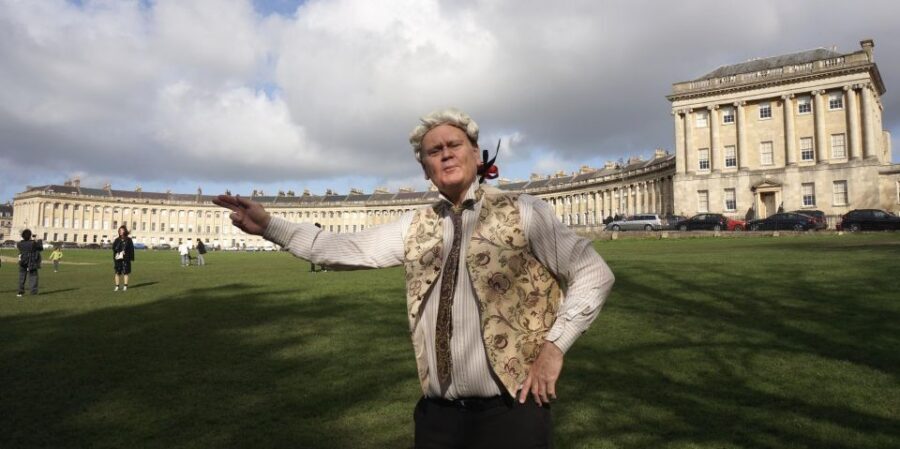
- Paul Elliott’s storytelling keeps the streets from feeling like a random sightseeing checklist
- Abbey Green and Sally Lunn’s area gives you an early taste of old Bath before the Georgian showpiece
- Roman Baths explained from the outside so you get the context without paying admission on the tour
- City walls to the Georgian sector: you walk up to the viewpoint where the planning magic makes sense
- Royal Crescent, Theatre Royal, and Bath Thermae land you with major-picture stops and an easy closing moment
Why this 2-hour Bath walk is such a good use of time
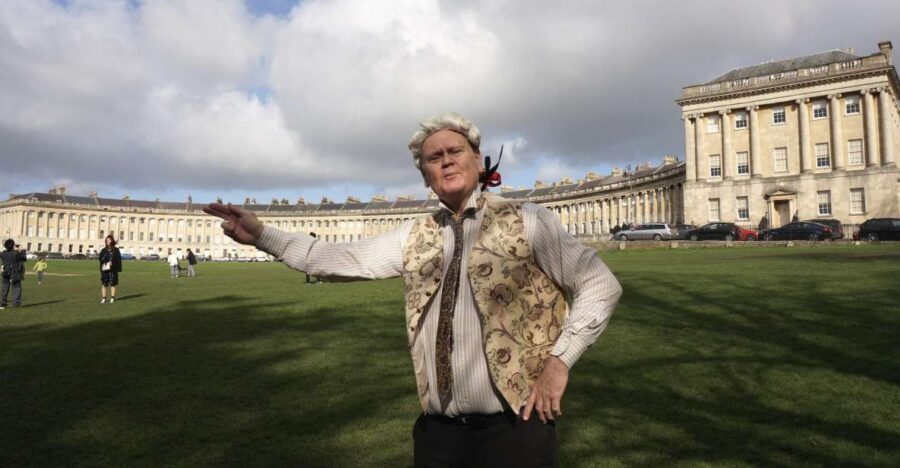
Bath can be overwhelming if you land with a loose plan. This tour works because it’s built for time-saving orientation: you get a sequence of key stops, you learn why each place matters, and you finish with a sense of how the city was designed.
At around $26 per person for a live guide and a full 2 hours walking with lots of stops, the value is in the guidance more than in admissions. If you’re the type who likes learning how a city thinks—why buildings face certain ways, why streets curve, why Bath Abbey sits where it does—this price is easier to justify. You’re paying for someone to connect the dots while you’re still standing in the right spot.
Keep expectations realistic: it’s an easy-length tour, but it’s still a walking tour. You’ll want comfortable shoes and a flexible mindset, because the pace is about covering landmarks in a short window.
You can also read our reviews of more walking tours in Bath


Start at The Abbey Hotel North Parade, then step into Sally Lunn’s world
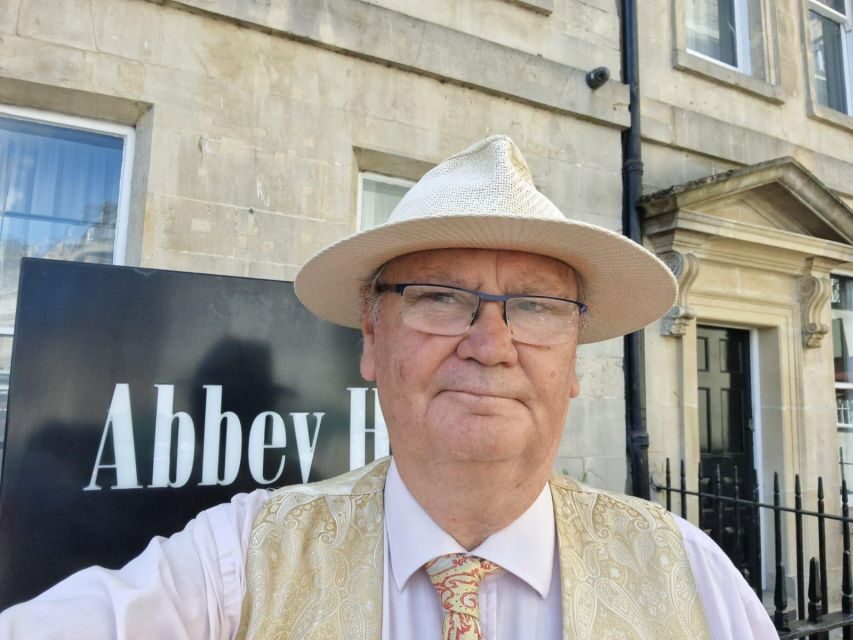
You meet at The Abbey Hotel North Parade (BA1 1LF), then you’re off on foot after a quick hello. From there, the tour starts by getting you grounded in everyday Bath, not just headline monuments.
One of the first stops is Sally Lunn’s, which is famous for being Bath’s oldest house. Even if you don’t go inside, this is one of those places that helps you understand that Bath wasn’t built overnight around the Georgian era. It had people, routines, and surviving buildings long before the grand streets and views.
Right after that, you move through Abbey Green, where the guide points out the old London Plane tree and the site where a monastery once stood. This matters because it shifts the focus from architecture-as-decoration to architecture-as-memory. You start seeing the city as layered: religious life, then civic design, then the Georgian aesthetic we recognize today.
Practical tip: this early section is where you’ll want to listen closely, because it sets up the rest. Once the Georgian streets start appearing, the explanations will feel more satisfying rather than random.
Abbey Green to the Roman Baths explanation: how Prince Bladud fits in
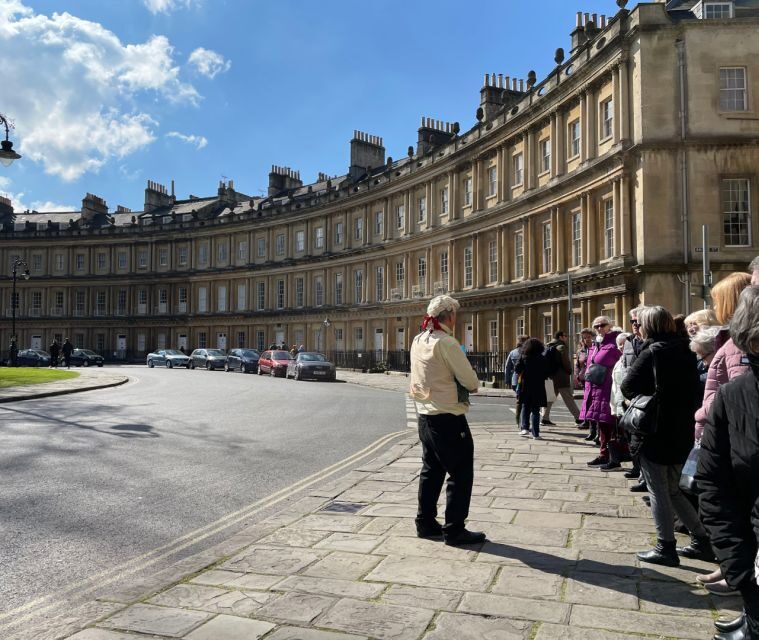
The tour keeps moving, and it does something smart: it covers the Roman Baths context without visiting the attraction. That means you’ll get an overview—what the site is, why it became important, and how Bath’s identity ties back to Roman-era bathing—while still keeping the walking route manageable for a tight two-hour window.
A key story you’ll hear involves the founding of the site during the era of Prince Bladud. Whether you treat the legend as legend or as cultural storytelling, it’s useful because it explains why Bath’s healing-bath identity became the city’s long-running brand.
You’ll also learn about Bath Abbey and previous churches. This is a great pairing with the Abbey Green segment because it ties the religious landscape together. Instead of only pointing at the big abbey building, the guide helps you understand how earlier worship sites led to what’s there now—so the abbey doesn’t feel like a standalone stop.
If you’re tempted to tour inside the Roman Baths afterward, remember: admission isn’t included. The tour gives you the “why,” and you decide if you want the “see it up close” experience later.
East Gate, Pulteney Bridge, and the Avon angle you’ll remember
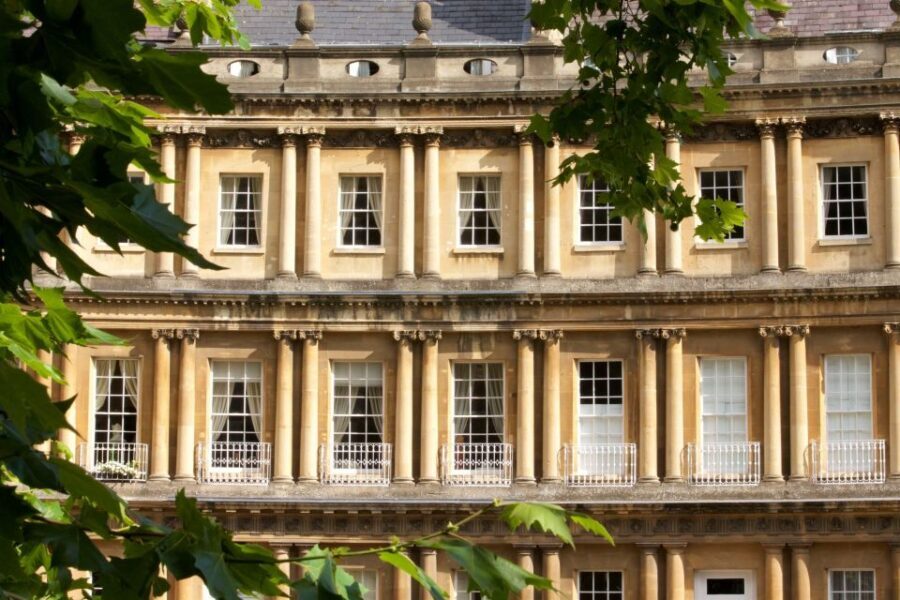
One of the most memorable parts of Bath sightseeing is the way water and city design keep meeting each other. During this tour, you’ll see the original East Gate leading down toward the River Avon, then you’ll connect that idea to the famous Pulteney Bridge.
This segment is worth paying attention to because the East Gate to Avon route isn’t just a view—it’s a story about movement. City edges mattered. The way people entered and reached water shaped what grew where. Once you learn that, Pulteney Bridge looks less like a pretty photo spot and more like a piece of city machinery.
Also, Pulteney Bridge is an ideal checkpoint for photos because you’re standing in a place where Bath’s geometry feels obvious. Even if you’re not photographing seriously, it helps you “lock in” what you’re seeing.
Climbing toward true Georgian Bath: John Wood and Ralph Allen’s stone
After walking through the alleyways, you head toward the top wall of the city to arrive at the real Georgian sector—designed intentionally, not just built because land happened to be available.
This is where the tour’s storytelling turns architectural. The guide brings up John Wood and his vision, and connects it to the use of Ralph Allen’s stone. That detail is more than trivia. It helps you understand why Bath looks the way it does: the city’s character comes from both planning and the building material.
From here, the stops start stacking in the way people come to Bath for. You’ll pass Queen Square, you’ll go by the Jane Austen Centre, and then you’ll reach the Assembly Rooms and The Circus.
- Queen Square works as a quick reset point. It’s a classic Georgian layout that shows order and intention.
- The Assembly Rooms make sense after that, because they connect architecture to the social life Georgian Bath created.
- The Circus is where the geometry becomes the personality. It’s the kind of structure that feels like it was designed to impress, and the context makes it more fun.
If you only have a couple of hours and want the “greatest hits,” this is where the tour earns its keep.
You can also read our reviews of more guided tours in Bath




Queen Square to The Circus to the Royal Crescent: the big wow section
When you get to The Circus and then continue toward the Royal Crescent, the tour becomes a straight run of major-picture icons. And that’s good, because you’re already in the right mindset by then.
The Royal Crescent is the masterpiece everyone recognizes. What I like about having a guide here is that the crescent doesn’t just feel like a landmark; it becomes a design concept. You start noticing how the city’s planning, the street rhythm, and the buildings’ facing align into a single statement.
You’ll also get the sense of why Georgian Bath is so often described as an aesthetic system rather than random buildings. This tour pushes you to see the logic.
One caution: this is the part of the walk where crowds (and photo queues) can make you feel rushed. Since the tour is designed for a maximum achievable easy two-hour stroll, the guide keeps things moving. If you’re the type who wants unlimited time at each view, you may need to come back for longer on another day.
Downhill to Royal Victoria Park and on to Theatre Royal
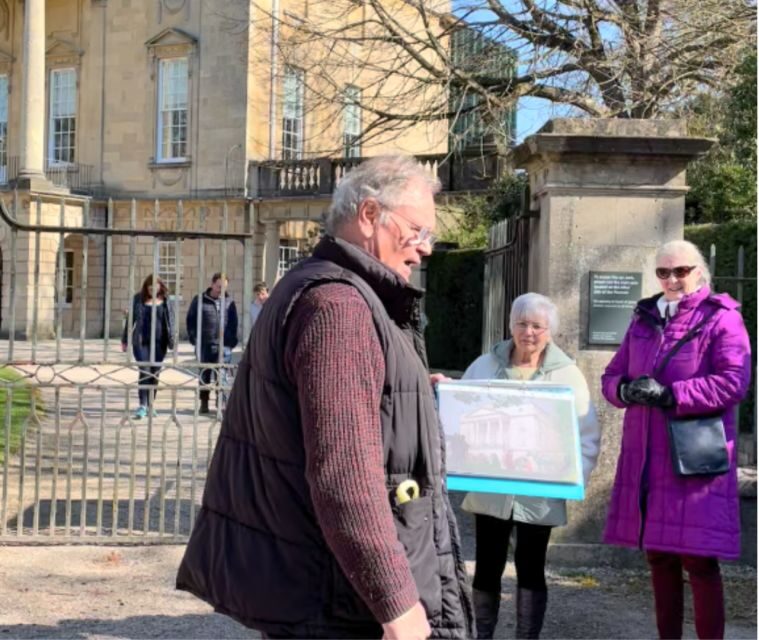
After the Georgian highlights, the walking route shifts down through The Royal Victoria Park. This is a nice change of pace. You’re no longer surrounded only by stone facades and designed squares; you’re getting a more open, breathing-space angle on the city.
Downhill walking also helps you absorb Bath’s layout. You understand where the city’s viewpoints are in relation to where people can rest, stroll, and gather. It’s less about monuments now and more about how Bath feels when the streets loosen up.
Then you reach The Theatre Royal, another iconic Bath stop. This matters because it connects architecture and entertainment—Georgian Bath wasn’t only about social status and bathing. It was also about performance and public life, and theatres were part of that culture.
Bath Thermae at the end: finishing with a modern Bath moment
Your final stop is Bath Thermae, described as the city’s new bathing facility. This is a smart way to close, because it ties the tour back to Bath’s long-running bath identity without pretending the whole story is only ancient.
Since admissions are not included, you may just view the site and snap photos—or you might decide you want to actually experience the baths separately. Either way, it gives you a clean ending: from legend and Roman context, to Georgian design, to a present-day place where the city’s “bath” theme continues.
Photo tip: the ending is ideal for a reflective shot where you can connect earlier Roman-bath explanations with the modern Bath Thermae setting. You’ll likely leave feeling like the city has continuity, not just history.
Price and logistics: is $26 worth it?
For $26 per person for a 2-hour guided walking tour, this price typically makes sense if you fall into one of these groups:
- You want a guided narrative that turns landmarks into meaning
- You’re short on time and want the most important Georgian icons in a single outing
- You’re okay paying for any major admissions separately later, since the tour doesn’t include them
Where the value can drop is if you mainly want indoor museum time or long stops at one building. This tour is built to keep moving, and it’s designed as an easy stroll with many stops, not a slow sit-down experience.
On the practical side, the tour is English-language and guided live. If you’re traveling with kids, pay attention to the restrictions: it’s not suitable for very young children, pushchairs, or baby carriages, and it’s not meant for wheelchair users.
Also, there’s been at least one unhappy account tied to rule enforcement when a family brought a scooter for children. I’d treat this as a signal to travel light and stick closely to what the tour says it can accommodate, especially if you’re traveling with kids.
Who should book this tour, and who might not love it
This guided walk is a strong match for adults, couples, and groups who want Bath’s highlights with context. It’s also ideal for first-timers who want to get their bearings fast and then explore on their own afterward.
You might want to skip it (or plan a different format) if any of these fit you:
- You need wheelchair-friendly access
- You’re relying on pushchairs, baby carriages, or strollers
- You’re traveling with babies or very young children
- You want a long indoor visit at the major attractions
If you do book, the best approach is simple: come with good walking shoes, a little curiosity about how Bath evolved, and the expectation that some famous places will be explained from the outside. That style is exactly what keeps the tour to a comfortable 2 hours.
Should you book Bath: Guided Walking Tour?
If you’re trying to understand Bath in a short time—especially the Georgian plan and how it links back to earlier layers—this tour is an efficient, story-led way to do it. The guide’s delivery (Paul Elliott is repeatedly praised for clear explanations and practical tips) is the main draw, and the route hits the places that most people travel to see.
If you have mobility constraints or you’re traveling with gear like pushchairs and baby carriages, don’t force it. Also, if you’re traveling with kids, follow the equipment rules closely so everyone has a smoother experience.
Overall: book it if you want an informed walking route through the core sights, and plan separate ticket time if you later decide you want to go inside the attractions.
FAQ
Where does the tour start?
It starts at The Abbey Hotel North Parade, BA1 1LF.
Where does the tour finish?
The tour finishes at Hot Bath St, Bath BA1 1SJ.
How long is the guided walking tour?
The duration is 2 hours.
How much does it cost?
The price is $26 per person.
Is admission to the Roman Baths or other sites included?
No. The tour does not include admission costs, and you would need to visit separately.
What is included in the tour price?
You get a live guide and the walking tour.
What language is the tour guide?
The tour guide offers English-language commentary.
Is the tour suitable for pushchairs or baby carriages?
No. It is not suitable for pushchairs or very young children, and baby carriages are not allowed.
Are pets allowed?
Pets are not allowed (assistance dogs are allowed).
Is it suitable for wheelchair users or babies?
It is not suitable for wheelchair users, and it’s not suitable for babies under 1 year.