REVIEW · WALES
Tour of Conwy Castle Pick up from Holyhead & Entrance Included
Book on Viator →Bookable on Viator
Conwy feels small, but the stories hit hard—especially when you get portable receivers and a private guided tour that keeps every stop clear and personal. You’ll see the town through its oldest, smallest castle buildings, then move into the medieval streets, the Quay, and the real-world engineering of the suspension bridges.
One thing to plan for: it’s about moderate walking on uneven ground, and lunch isn’t included, so you’ll want snacks or a plan for afterward.
In This Review
- Key highlights at a glance
- Holyhead pickup and a 6-hour private pace
- Castell Conwy: where the oldest feel meets the guide’s clarity
- Conwy Town Walls and medieval streets: short stops with real payoff
- Plas Mawr: an Elizabethan house that turns the volume down
- Conwy Quay: fishing boats, tides, and the waterfront you can feel
- Conwy Suspension Bridge: the estuary engineering story
- Church of St Mary & All Saints: graveyard stories that stay respectful
- Menai Suspension Bridge and the tide effect near Telford’s landmark
- Llanfairpwllgwyngyll: the long-name photo moment
- Guide matters: Amanda’s style and how it keeps you engaged
- Price and value: what $412.28 per person buys you
- What to bring and how to time your day
- Should you book this Conwy tour?
- FAQ
- How long is the Conwy tour?
- Where does the tour start and end?
- Is admission to Castell Conwy included?
- What other sites are part of the route?
- Is lunch included?
- Do I get help hearing the guide?
- Is the tour private?
- What language is the tour in?
- Does the tour use a mobile ticket?
- Is the tour suitable for moderate walking?
- Are service animals allowed?
Key highlights at a glance
- Portable receivers help you catch every word without craning your neck
- Castell Conwy includes admission plus a private guide at the world heritage site
- Conwy Quay is a great spot to learn tides, fishing boats, and waterfront history
- Conwy Suspension Bridge and the estuary tunnel and bridges get explained in plain terms
- Menai Strait and Telford’s bridge are worth seeing even if you hate tours
- St Mary & All Saints graveyard adds the human stories behind the stone
Holyhead pickup and a 6-hour private pace
This is the kind of tour that works well when you want one focused morning or afternoon in North Wales, not a slow scatter across town. You start in Holyhead and return there, which is a big deal if you’re basing yourself on the coast and want minimal stress. The total time is about 6 hours, and because it’s private, you’re not stuck matching your speed to strangers who move like they’re on a factory line.
The best practical part is that your guide controls the rhythm. With a private format, it’s easier to pause, take photos, or spend an extra few minutes where your group’s curiosity is strongest. That flexibility shows up in how the tour is described by repeat fans: the guide can shift the pace for different interests and different energy levels, including families with teens.
Logistically, you should know the walking is on the light-to-moderate side. The route includes several town-side strolls and a few shorter stops. You’ll be fine with moderate physical fitness, but skip this if you’re counting on fully flat surfaces and lots of long seats.
You can also read our reviews of more tours and experiences in Wales.

Castell Conwy: where the oldest feel meets the guide’s clarity
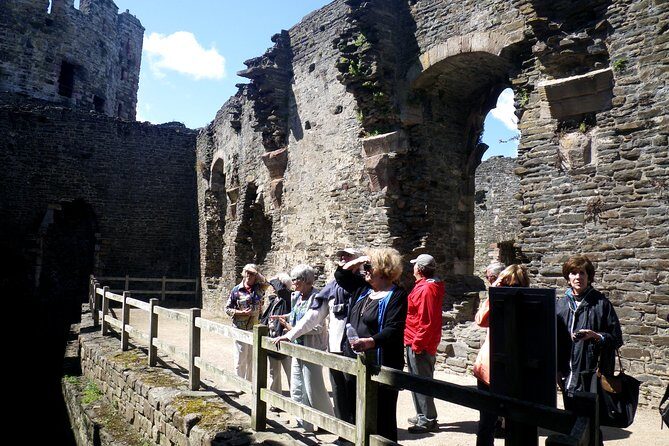
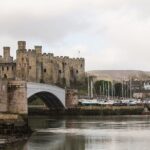
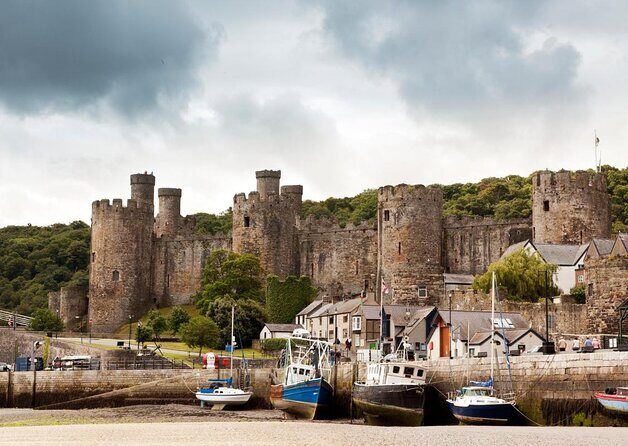
The day’s anchor is Castell Conwy, and it gets treated like the main event. You don’t just stand at walls and take pictures; you get admission plus a private guided tour at this world heritage site. That means you’re getting the why behind what you’re seeing—defense lines, layout choices, and how the castle relates to the town around it.
What I love about this stop is that Conwy’s castle buildings are said to be both the oldest and the smallest. That combination makes the explanations feel tight and easy to follow. You don’t need a day-long plan to understand the big picture. Instead, the guide can point to specific features and connect them to the bigger story of why medieval rulers built like they did.
There’s also a very real learning payoff here. One of the strongest themes from people who’ve booked this tour is how well the guide helps you understand how castles worked defensively. Once you grasp that framework—where forces are expected to come from, what walls are meant to protect, and how access is controlled—you start seeing the logic of other Welsh and UK castles too, even on your own after the tour.
Potential drawback: this is the longest single stop at about an hour, so if you’re expecting a relaxed wander where you only see the highlights, you may want to mentally shift gears. The value is in the guided structure, not in free time.
Conwy Town Walls and medieval streets: short stops with real payoff
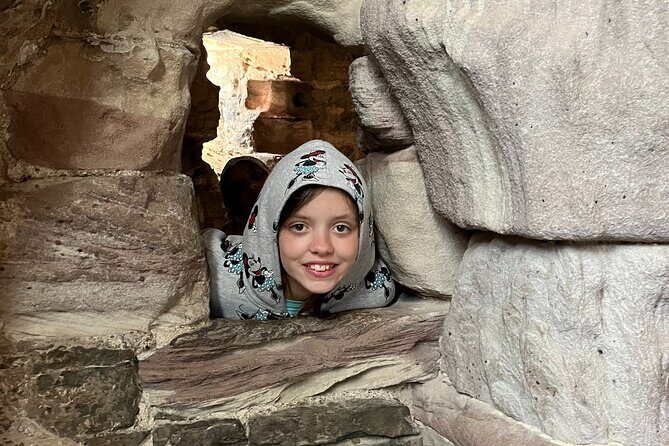
After Castell Conwy, you move into Conwy Town Walls for about 20 minutes. This portion is built for orientation. You get to walk the medieval streets of the walled town and hear stories about the people who lived there.
In practical terms, this is where you start to understand how the castle and town operate together. A castle doesn’t exist in a vacuum. Walls, gates, and street patterns tell you where day-to-day movement happened and what got controlled. In a short window, your guide can connect those dots without turning it into a lecture marathon.
The biggest watch-out is time. Twenty minutes means you won’t cover every street you might want to cover on your own later. So consider this a map-and-mindset stop: you’re meant to leave with enough understanding to choose what you want to revisit.
Plas Mawr: an Elizabethan house that turns the volume down
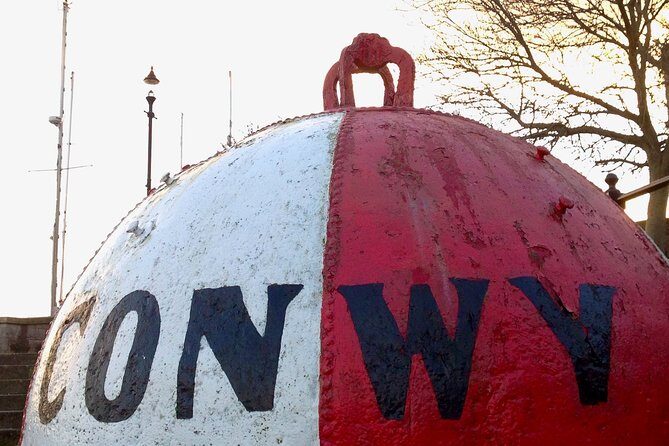
You’ll also see Plas Mawr, described as the finest Elizabethan town house in Britain. The stop is short at about 10 minutes, and admission isn’t included. So treat this as a quick hit: you’re there for perspective, not for a full museum-style visit.
Why it matters anyway: when you pair Plas Mawr with the castle and the walled town, you start to see Conwy through multiple centuries. Medieval defense gives way to domestic life and status. Even if you don’t go inside, a guide-led explanation helps you spot what makes an Elizabethan home feel different from what you expect from a defensive site.
If you want more from Plas Mawr, plan to return later on your own or be prepared to pay admission separately if you decide the house is calling you back.
Conwy Quay: fishing boats, tides, and the waterfront you can feel
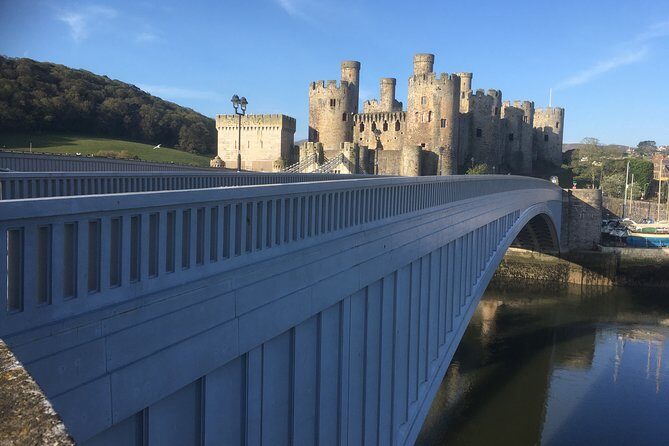
Next up is Conwy Quay, a 15-minute stroll that adds a softer, more human layer. This is where you learn about tides, fishing boats, and the waterfront buildings. Even in a short time, the guide can make the shoreline feel alive by explaining how the area worked day to day.
This stop is excellent for two reasons. First, it breaks up the heavier history stops with something visual and immediate. Second, it helps you understand why the town’s layout matters. When the tides and working boats are part of the story, you stop thinking of the Quay as scenery and start thinking of it as a system.
If you’re picky about photo time, this is where you’ll appreciate the pace control. People who’ve done the tour emphasize that the guide makes room for taking photos rather than rushing past every view.


Conwy Suspension Bridge: the estuary engineering story
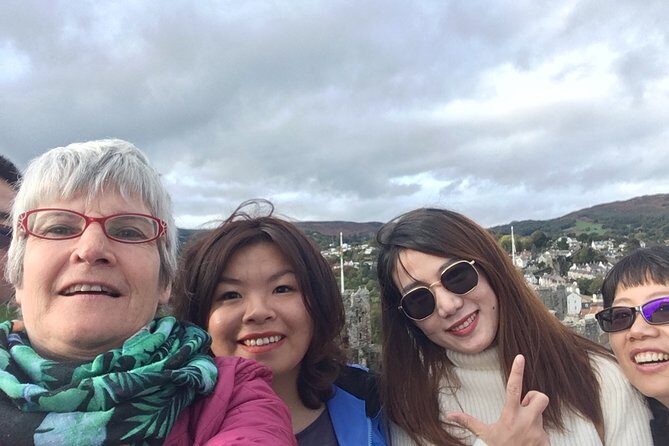
Then you’ll see the Conwy Suspension Bridge area for about 10 minutes. Here the talk centers on the bridges and the estuary, including mention of a tunnel as part of the wider crossing story. The point isn’t just that bridges look impressive. Your guide’s job is to connect the engineering choices to the geography and the needs of travel and trade.
Suspension bridges can easily turn into a generic postcard stop. This one isn’t. When your guide connects the bridge’s existence to how the area is crossed and managed, it becomes more than a photo. You start understanding why this region needed these kinds of solutions.
Practical tip: you’ll likely do a bit of photo stopping here, so wear shoes that handle wind and uneven edges near waterfront viewpoints.
Church of St Mary & All Saints: graveyard stories that stay respectful
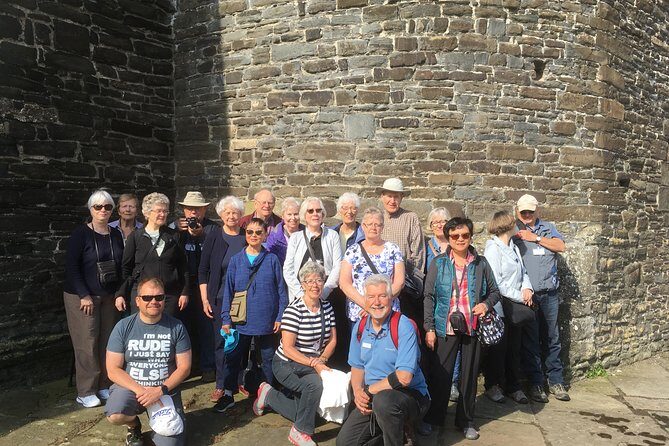
You’ll visit St Mary & All Saints for about 5 minutes, including a stroll through the graveyard with stories of the occupants. Short stop, but it gives the day a needed emotional balance.
This is one of those segments where good guiding matters more than time. The goal isn’t shock value or sensational details. Instead, you’re meant to get a sense of how real people lived, died, and shaped the community. Even if you’re not normally into cemeteries, a careful guide can make it feel like history with names attached.
If you’re sensitive to memorial spaces, you’ll be glad the stop is short. You’ll also likely appreciate that it’s guided rather than just dropped in front of you.
Menai Suspension Bridge and the tide effect near Telford’s landmark
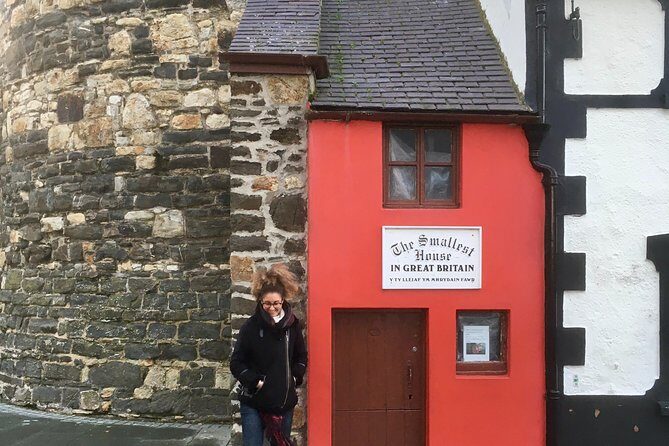
Another photo-and-explanation stop follows: Menai Suspension Bridge for about 5 minutes. You’ll learn about the Menai Strait and see the kind of energy that comes from fast-moving tides, with a mention of Telford’s famous suspension bridge.
Even though the time is brief, this is often the moment where people go quiet and just watch. Big water movement does that. The guide’s role is to give you context so you’re not just photographing waves. You’ll come away understanding why the area is known for tidal rush and how the bridge fits the geography.
This is also where the tour gives you variety. You’ve gone from castle defense to Elizabethan domestic life to working Quay life to major engineering. That mix is a big part of why the experience is described as engaging for different ages.
Llanfairpwllgwyngyll: the long-name photo moment
You’ll end with a photo stop in Llanfairpwllgwyngyll, plus time at the station known for the longest place name. The stop is about 10 minutes.
This is the lighter, almost playful capstone. It’s the part of the tour where you can stop worrying about dense history and just enjoy the quick cultural moment. If you’ve ever heard the name in other contexts, this is where it becomes real and you can take that classic photo with context—not just because it’s long, but because it’s part of the place’s identity.
Guide matters: Amanda’s style and how it keeps you engaged
The reviews point hard to one thing: the guide makes the difference. Amanda is named directly in multiple five-star notes, and what people praise isn’t just facts—it’s how she teaches.
Two patterns show up again and again:
- She’s informative and friendly, with guidance that feels easy to listen to
- She’s flexible, tailoring the walk to what your group wants and how long you want to linger
That tailoring is especially important because the tour includes both ticketed and free segments. If your group is more interested in the castle, you’ll want to spend the most time where your guide can explain the structure and the defenses. If your group is more drawn to the waterfront, you’ll want the guide to slow down around the Quay and tides. Amanda’s style, based on the feedback, is to ask questions and adjust rather than stick to a rigid script.
Another small but memorable detail: one review mentions a Welsh language lesson. Even if you only catch a few phrases, that kind of addition can make the day feel more connected to the place and not just like a sightseeing checklist.
Price and value: what $412.28 per person buys you
The price is $412.28 per person for about 6 hours. That’s not a bargain-basement deal, so the key question is value: what’s included, and what would cost extra if you toured on your own?
Here’s what you get that adds real weight:
- Private transportation from Holyhead and back
- A guide for the full experience
- Entry to sites, including Castell Conwy admission (where the bulk of the ticketed value sits)
Other stops are free entries, like town walls, Quay areas, bridge viewpoints, and the church grounds. Plas Mawr is mentioned as not included, so you may decide later whether you want to pay for interior access.
Lunch isn’t included, so you’ll need to budget for food separately. But consider the trade: you’re paying for time efficiency and guided context, not convenience dining.
If you’re comparing this to piecing it together yourself, you’re paying for two things: transportation plus interpretation. If you care about understanding what you’re seeing—defense logic at the castle, why the bridges are where they are, and what tides mean to the Quay—this kind of guided structure can be the difference between visiting and learning.
What to bring and how to time your day
Because the tour runs for about six hours and includes multiple outdoor elements, plan like it’s a walking day.
Bring:
- Comfortable shoes for uneven edges and waterfront paths
- A light layer for wind near bridges and the water
- Your camera, but also some patience for brief pauses during photo moments
- A small snack or plan for when hunger hits, since lunch isn’t included
If you’re traveling with kids or teens, this tour is built for attention. The guide’s flexibility and clear explanations are specifically praised for keeping younger people engaged. That doesn’t mean it’s a theme park, but it does mean your group won’t feel stuck in a single slow history mode.
Should you book this Conwy tour?
I’d book it if you want a concentrated, guided way to understand Conwy beyond the obvious photos. The castle stop with admission, the town-wall context, and the bridge engineering explanation make this one of those days where you leave with a mental picture that actually holds together.
I’d think twice if:
- You hate walking on uneven ground
- You want long free time in museums without a guide
- You need lunch included or you don’t want to plan food separately
- You’d rather DIY every stop
If your goal is high-quality interpretation in a single day—castle defenses, Quay tides, and suspension bridge context—this is a strong bet.
FAQ
How long is the Conwy tour?
It runs for about 6 hours.
Where does the tour start and end?
It starts at Holyhead LL65 1DJ, UK and ends back at the same meeting point.
Is admission to Castell Conwy included?
Yes. Admission and a private guided tour of Castell Conwy are included.
What other sites are part of the route?
You’ll also visit Conwy Town Walls, Plas Mawr (not included), Conwy Quay, Conwy Suspension Bridge, Church of St Mary & All Saints, Menai Suspension Bridge, and a photo stop at Llanfairpwllgwyngyll.
Is lunch included?
No. Lunch isn’t included.
Do I get help hearing the guide?
Yes. Portable receivers are available to make it easier to hear the commentary.
Is the tour private?
Yes. It’s a private tour/activity, and only your group will participate.
What language is the tour in?
The tour is offered in English.
Does the tour use a mobile ticket?
Yes. A mobile ticket is included.
Is the tour suitable for moderate walking?
The tour is described as suitable for travelers with moderate physical fitness.
Are service animals allowed?
Yes, service animals are allowed.