REVIEW · RICHMOND UK
Paddleboard Experience on the beautiful Thames at Richmond
Book on GetYourGuide →Operated by Paddle Richmond · Bookable on GetYourGuide
The Thames feels like London’s secret workout. A two-hour stand up paddleboard class at Richmond turns the river into your personal practice lane. I love that it’s small-group coaching in a setting that’s genuinely beautiful, with one of the safest stretches of water right near the city. I also love that you learn real paddleboarding skills fast, starting on land and then getting out on the river. One thing to consider: you’ll need enough flexibility to get from kneeling to standing.
What makes this experience work is the coach-led approach and the way you build confidence step by step. In at least one session, the instructor named Nigel mixed practical technique with easy river stories, which helped the whole mood stay calm instead of tense. You’ll finish knowing how to paddle and how to check behind you without panicking—an early fear for many new boarders.
The session also has a clear “teach, then go” flow. You start with a safety briefing and riverbank practice near Richmond Bridge, then paddle based on wind and tide. That means the exact route and distance aren’t fixed, so you should expect a little variability in where you end up.
In This Review
- Key Points You’ll Care About
- Starting From Richmond Bridge: the 15-Minute Skills Setup
- Choosing Your Direction: Upstream to Eel Pie and Teddington or Downstream to Kew
- What The Thames Feels Like on a SUP: Quiet Water, Birdlife, and Control
- Equipment, Storage, and Footwear Notes for a Two-Hour Session
- Who This Class Fits Best (and Who Should Think Twice)
- Price and Value of $87.55 for 2 Hours with Coaching
- Practical Tips to Get the Most From Your Paddle
- Should You Book This SUP Class on the Thames at Richmond?
- FAQ
- Do I need to be a proficient swimmer?
- How long is the paddleboard experience?
- What equipment is included?
- Where will we paddle on the Thames?
- What should I wear, and do I need a wetsuit?
- Is this suitable for beginners?
- Is it accessible for people with mobility impairments?
Key Points You’ll Care About
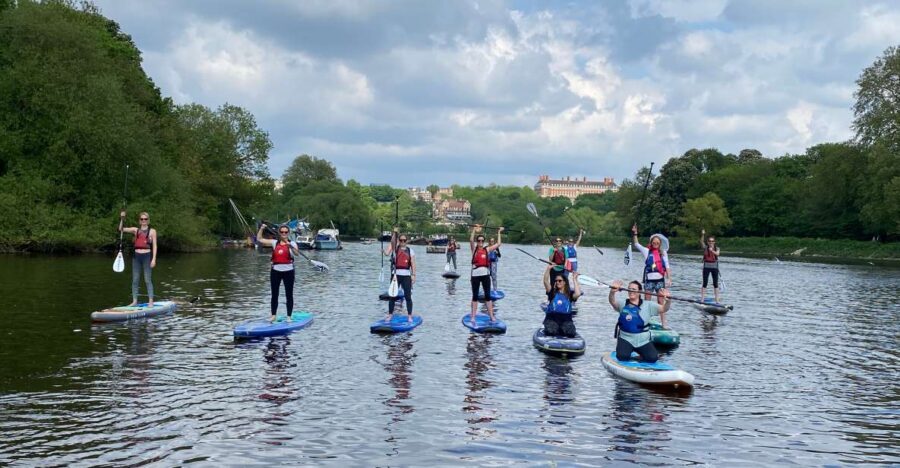
- Small-group SUP coaching that fits complete beginners through experienced paddlers
- Safety-first briefing plus on-land training before you hit the water
- Tide-dependent route: upstream toward Eel Pie Island and Teddington, or downstream toward Kew and Chiswick
- Gear included (board, paddle, and buoyancy aid), plus a lockable storage space for bags
- Usually barefoot on the board, with options like water shoes if you prefer
- A coach who helps you get balanced so you can paddle and turn back with less stress
Starting From Richmond Bridge: the 15-Minute Skills Setup
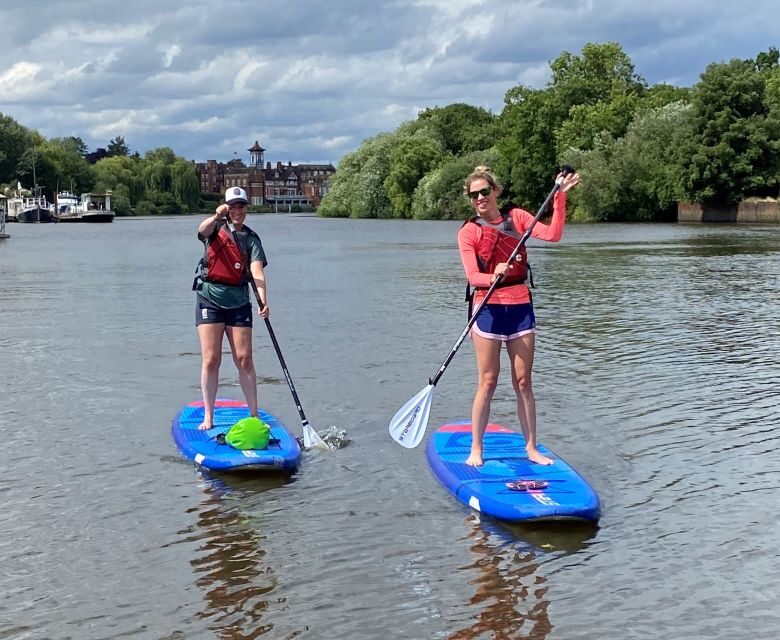
Your session starts on the riverbank near Richmond Bridge. The first chunk of time is a safety briefing plus land-based training, usually about 15–20 minutes depending on how many people are in your group. This matters more than you might think. SUP looks simple until your feet slide and the water moves. Getting the basics on shore first helps you avoid “trial by chaos” out on the river.
During the land practice, you’ll go over how the board feels, how to manage your stance, and what to do if you lose balance. You don’t need to be a strong swimmer, but you should be comfortable with falling into the water while wearing a buoyancy aid. That comfort piece is key: this is learning, not a passive scenic cruise.
You’ll also do some first movement drills that connect directly to what you’ll need on the board—especially the transition from kneeling to standing. If you have limited flexibility, that’s the main physical hurdle to check before you book.
And yes, you’ll likely start out on the “clothes you came in” plan. You’re asked to arrive wearing what you’ll paddle in (think shorts/leggings and a T-shirt or fleece). If you show up in jeans, you’re basically choosing suffering.
You can also read our reviews of more tours and experiences in Richmond Uk.


Choosing Your Direction: Upstream to Eel Pie and Teddington or Downstream to Kew
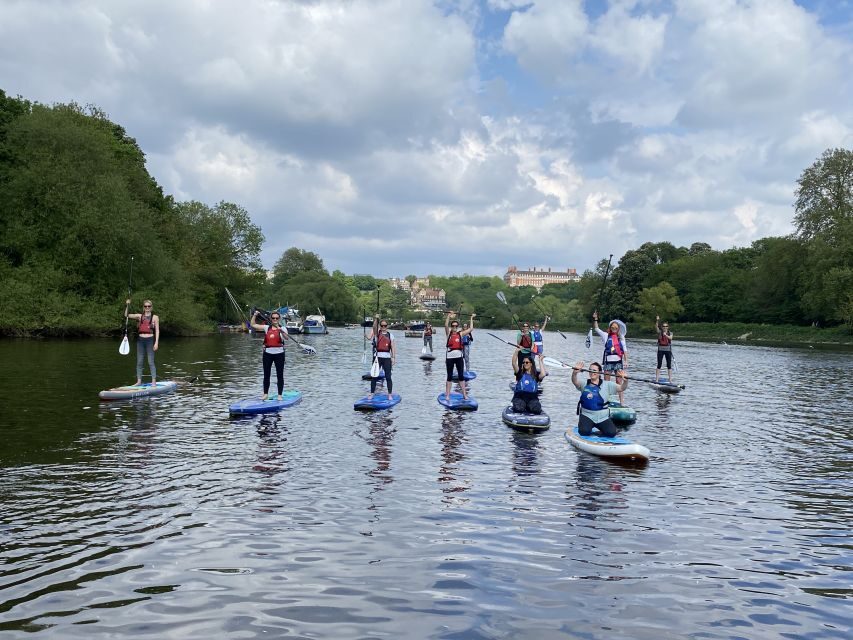
Once you’re ready, you head onto the Thames. The direction depends on tide and conditions on the day. You’ll either paddle:
- Upstream toward spots like Eel Pie Island and Teddington, or
- Downstream toward Richmond Lock, Isleworth, Kew Gardens, and Chiswick
Here’s what I like about this setup: it keeps the session flexible so the coach can match the water conditions to your learning needs. The distance covered can also vary with wind and tide, so don’t go in expecting a perfectly identical route every time. Instead, focus on the skill progress and the river experience.
If you’re a beginner, the idea of “safe and beautiful stretches” matters, because you want water that’s calm enough to learn without fighting constant chaos. If you’re more experienced, the tide-based route can still be a plus since you’re likely to experience different paddling rhythms over the two hours.
What The Thames Feels Like on a SUP: Quiet Water, Birdlife, and Control
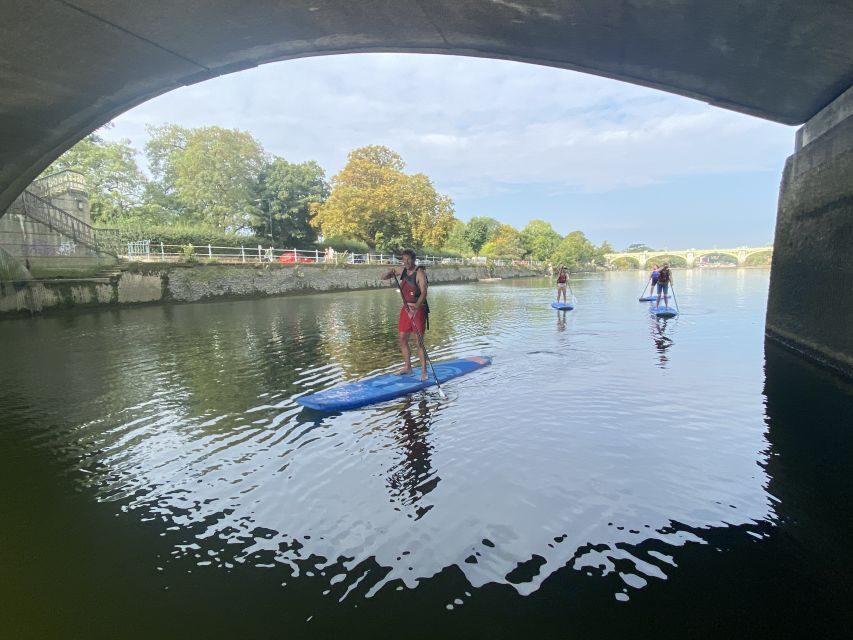
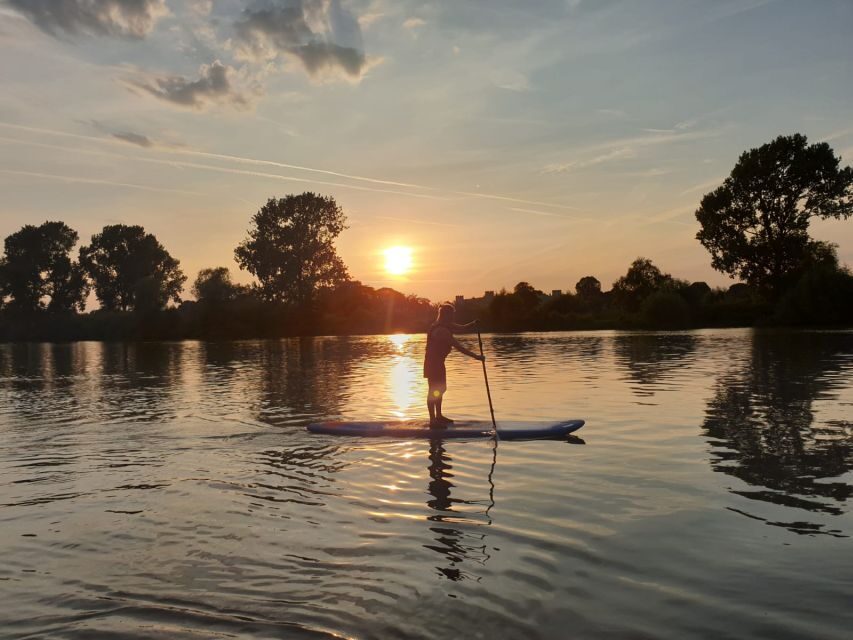
SUP on a busy canal can be stressful. On this stretch of the Thames, the feel is different. One of the strongest impressions from a coach-led session here is how quiet the river can be as you paddle. Birds show up, too. In a session with Nigel, the combination of birdlife and the calm water made it feel surreal to be paddling in London while still getting that “out on the river” mood.
Technique is also taught in a way that sticks. Early on, the big goal is control: how you hold the paddle, how you balance, and how you respond when the board shifts. Then you start linking moves so you can actually maneuver, not just stay upright.
One skill that often feels intimidating at the beginning is the idea of turning your body and checking what’s behind you. That’s a real part of river confidence because you need awareness, not just forward motion. In Nigel’s coaching, that fear got addressed directly—so you leave able to look back and keep your balance. That kind of practical coaching is what turns a “new sport” session into a “real ability” session.
Finally, two hours is the right length. Long enough for learning to sink in. Short enough that you don’t get worn out before you can improve. You’re not just drifting through a demo—you’re actually practicing.
Equipment, Storage, and Footwear Notes for a Two-Hour Session
This class includes all the equipment. You get the paddleboard, paddle, and buoyancy aid. That’s a big value point because SUP gear can be pricey to rent or buy. The only real prep on your side is what you wear and how you stay comfortable during practice.
You also get help with the practical stuff. There’s safe lockable storage for your bags and valuables. That’s the kind of detail that makes the experience feel smoother. You’re not balancing a tote bag while trying to settle on a board.
Footwear is flexible. You usually paddle barefoot on these sessions, but you can wear water shoes, flip flops, sandals, or trainers if that suits you better. If you’re worried about grip or sensitive feet, water shoes are often the most “just do it” option—secure, quick to manage, and less slippery than many sandals.
For weather, plan for change. Bring weather-appropriate clothing. If it’s sunny, pack a hat and sun cream. In colder months (November–March), wearing a wetsuit is advisable. Wetsuits can be available if requested in advance, or you can bring your own. If you paddle in cold weather, bring extra layers, a towel, and a change of clothes so you can reset afterward.
If you want to protect your phone and any valuables, bring a small dry bag and/or a waterproof pouch—especially handy if you’re wearing lighter clothing and don’t have pockets you trust.
Who This Class Fits Best (and Who Should Think Twice)
This experience is built for a wide range of paddlers. It’s perfect for complete beginners who want instruction, and it also works for experts who want more coaching and a structured way to practice.
But it’s not a one-size-fits-all sport. Two things to check:
First, flexibility and mobility. You need the ability to get from kneeling to standing as part of learning to paddleboard. If that movement is difficult, your session might feel frustrating rather than fun.
Second, swimming ability and comfort. You do not need to be a proficient swimmer, but you should be comfortable with falling into the water while wearing the buoyancy aid. That’s normal learning. If the idea of getting wet freaks you out, consider whether you’re ready for a hands-on lesson.
Accessibility-wise, it’s not suitable for people with mobility impairments, based on the experience details provided.
Who will love this most? People who want a structured introduction to a new sport without spending time hunting gear or figuring out how to start. Also, anyone who likes river scenery and wants it with coaching, not just sightseeing.
Price and Value of $87.55 for 2 Hours with Coaching
The price is listed as $87.55 per person, with a 2-hour duration. On its face, that might sound like a lot—until you look at what you actually get.
You’re paying for:
- A full 2-hour coached session (not a quick “try it once” thing)
- A small-group format with a fully qualified coach
- A safety briefing and on-water learning time
- All equipment included (board, paddle, buoyancy aid)
So the value isn’t just the board rental. It’s the fact that you’re learning technique with support. SUP is one of those sports where a tiny mistake in stance or paddling can make the whole session feel harder than it should. Good coaching helps you correct early, meaning you spend more time improving and less time wobbling.
You also get a couple of booking-style perks. There’s free cancellation up to 24 hours in advance and a reserve now, pay later option to keep plans flexible. If you’re scheduling a London trip around weather, that flexibility can matter.
Bottom line: for a beginner-friendly SUP class with gear and qualified instruction on a safe, scenic stretch of the Thames, the price feels fair for what’s included.
Practical Tips to Get the Most From Your Paddle
If you want your session to feel smooth, here are the choices that pay off:
Arrive wearing your paddle clothes already. You’ll waste less time changing and you’ll start the lesson in the right headspace.
Bring a towel and a change of clothes, even if the weather looks okay. On the Thames, conditions can shift, and you’ll likely end up damp.
Keep your phone protected. A waterproof pouch or dry bag is a simple way to avoid stress. You’ll want to focus on balancing, not on guarding your camera.
If you’re unsure about wetsuits in colder months, ask ahead (or plan to request one). In November–March, the advice is clear: wearing a wetsuit is advisable, and they can be available if requested in advance.
Finally, approach the session with a learning mindset. The best coaches don’t treat your first wobble as a failure. They treat it as part of the process. That’s how you end up feeling confident enough to do things like turning back and checking your surroundings.
Should You Book This SUP Class on the Thames at Richmond?
I think you should book it if you want three things: real instruction, a scenic London river setting, and a low-guesswork way to try stand up paddleboarding. The small-group structure and safety-first start make it a smart pick for beginners, while the practical coaching can still sharpen experienced paddlers.
You might skip it if you can’t comfortably kneel-to-stand, or if the idea of falling into the water—even with buoyancy aid—would put you on edge. Also, it isn’t listed for mobility impairments.
If you’re deciding between a “look at the river” day and an active day, this hits a great balance. You get the Thames view and you learn skills you can use again later.
FAQ
Do I need to be a proficient swimmer?
No. You do not need to be a proficient swimmer, but you should be comfortable with falling into the water while wearing a buoyancy aid.
How long is the paddleboard experience?
The duration is 2 hours. Starting times can vary, so it’s best to check availability for the schedule.
What equipment is included?
All equipment is included: the paddleboard, paddle, and buoyancy aid. You just need to turn up wearing outdoor sports clothing.
Where will we paddle on the Thames?
You’ll paddle on a safe, beautiful stretch of the Thames near Richmond. Depending on the tide, you’ll go either upstream toward areas like Eel Pie Island and Teddington or downstream toward Richmond Lock, Isleworth, Kew Gardens, and Chiswick. The exact distance varies with wind and tide.
What should I wear, and do I need a wetsuit?
Wear weather-appropriate clothing. You’ll often paddle barefoot, but you can wear water shoes, flip flops, sandals, or trainers if you prefer. In colder months (November–March), a wetsuit is advisable; you can request one in advance or bring your own.
Is this suitable for beginners?
Yes. It’s designed for everyone from complete beginners to experts, with safety briefing and land-based training before you get on the water.
Is it accessible for people with mobility impairments?
No. The experience is not suitable for people with mobility impairments.