REVIEW · CANTERBURY
Canterbury: Private Guided Walking Tour with Official Guide
Book on GetYourGuide →Operated by Canterbury Tourist Guides Ltd · Bookable on GetYourGuide
Canterbury feels like a living set when you walk it. This private, 1.5-hour stroll turns street corners into plot points, led by an accredited Green Badge guide who brings the city down to street level.
I especially like the way the guide ties sights to names you already know, plus the practical pacing of a private group. One possible drawback: many stretches of pavement are narrow and uneven, and access around the Cathedral Precincts can change at short notice.
In This Review
- Key highlights you’ll actually feel on your walk
- Why a private 90-minute walk is the smart way to do Canterbury
- Meeting at Buttermarket: the easiest starting point in town
- Butchery Lane and Mercery Lane: quick photo stops with real street meaning
- The Precincts: where Canterbury Cathedral becomes more than a postcard
- Quirky Canterbury stops: Crooked House, Old Weavers House, and the ducking stool
- The King’s Mile: medieval route lines and modern city views
- The Marlowe Theatre area and High Street: ending with the modern layer
- Thomas Becket, Chaucer, and royal visits—how the guide turns names into places
- Customizing your pace: slow walk, kid-friendly stories, or your favorite topic
- Price and what you really get for $202 per group
- Practical notes before you go
- Who this tour fits best
- Should you book this Canterbury private guided walking tour?
- FAQ
- How long is the Canterbury private guided walking tour?
- Where do I meet the guide, and how will I recognize them?
- Does the tour include entry inside Canterbury Cathedral?
- What languages are the guides available in?
- Is the tour wheelchair accessible?
- Is video recording allowed during the tour?
Key highlights you’ll actually feel on your walk

- Official Green Badge guide: Accredited guides with local context, not a script read at speed.
- Cathedral Precincts included: You get the grounds access, plus views outside the Cathedral rather than paying for extra entry.
- The pilgrim route atmosphere: Buttermarket and the lanes feel built for walking, with medieval details at every turn.
- Stories you can connect to the buildings: Thomas Becket, Chaucer’s pilgrims, and royal visits land better when you see the street.
- Quirky Canterbury details in your route: The Crooked House, Old Weavers House, the ducking stool, and Eastbridge Hospital show up naturally.
- Tailored to your group: If you want a slower pace or have a specific interest (literature, architecture, gardens), you can set the tone ahead of time.
Why a private 90-minute walk is the smart way to do Canterbury
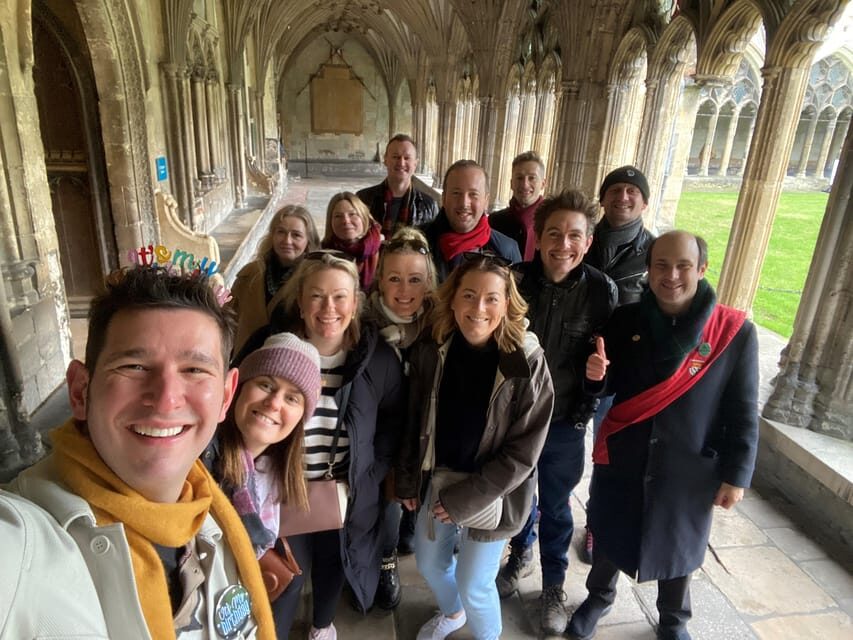
Canterbury is one of those places where a map looks simple, but the meaning hides in the details. A short, guided walk solves that problem. In about 1.5 hours, you cover the central lanes and key landmarks without feeling like you’re sprinting from one ticket line to the next.
I like that it’s private. You can ask real questions, and the guide can shift the pace if you have kids, slower walkers, or just want more time at the places you care about. And because the guide is officially accredited, you’re not stuck with random facts—you get context you can reuse later when you’re back in your hotel sorting out dates and people.
You can also read our reviews of more walking tours in Canterbury


Meeting at Buttermarket: the easiest starting point in town
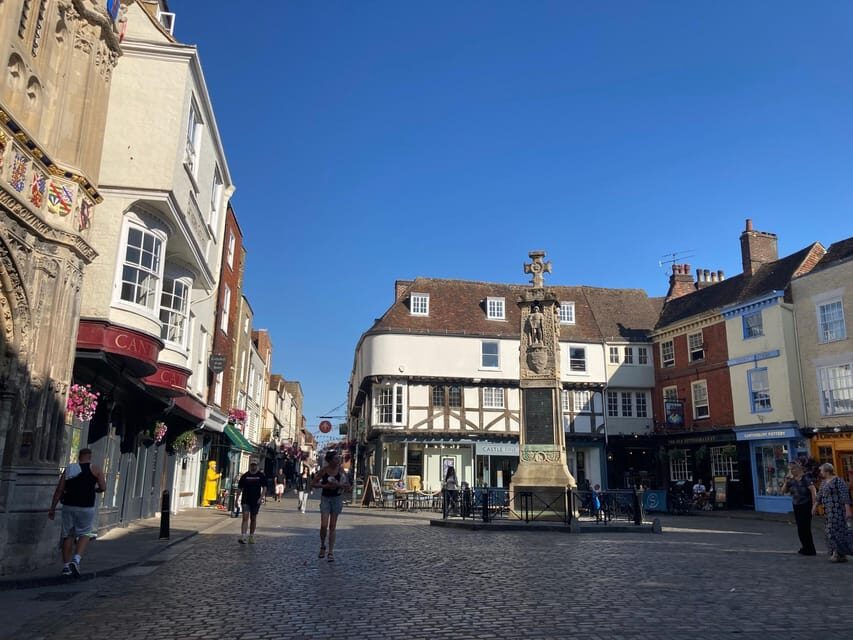
You begin at Buttermarket, a spot that immediately sets the right mood. It’s historically connected to pilgrim inns, and it also connects you to the Cathedral area through the imposing Christchurch Gate entrance.
Your guide meets you there wearing a bright red sash, and you’ll show your booking on arrival. This is the kind of meeting point that saves your first minutes. You don’t waste time hunting for a “tour office” or trying to guess which landmark is the right one.
Butchery Lane and Mercery Lane: quick photo stops with real street meaning
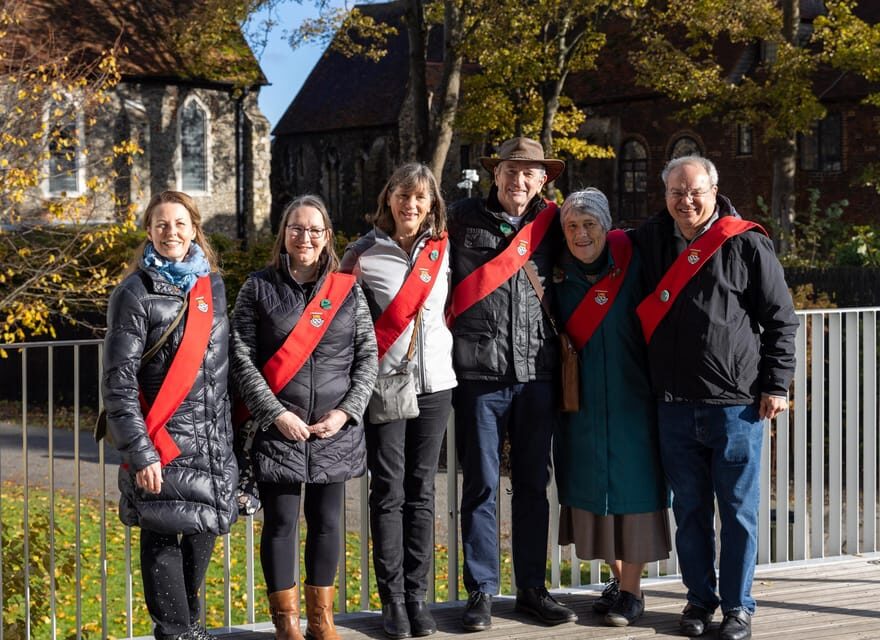
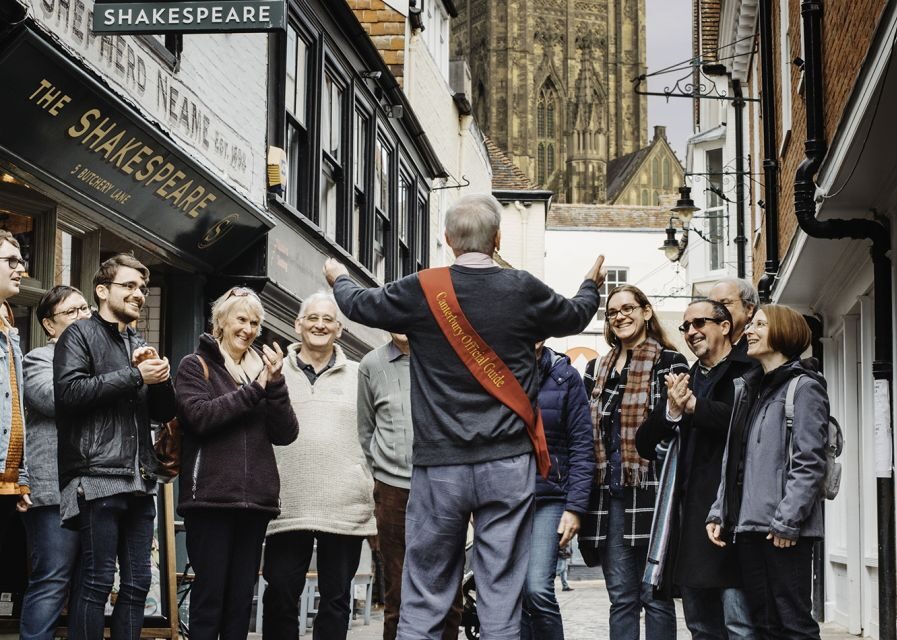
After Buttermarket, the route slips into the smaller lanes that make Canterbury feel like Canterbury. Two short photo-stop moments—Butchery Lane and Mercery Lane—help you orient fast. These lanes are narrow, cobbled, and full of building character, so seeing them with commentary matters more than you might expect.
Why photo stops help: they give you a chance to get an establishing shot, then the guide uses what you’re seeing to explain what made this city tick. In a place with centuries layered on centuries, that’s how you start to connect the dots.
The Precincts: where Canterbury Cathedral becomes more than a postcard
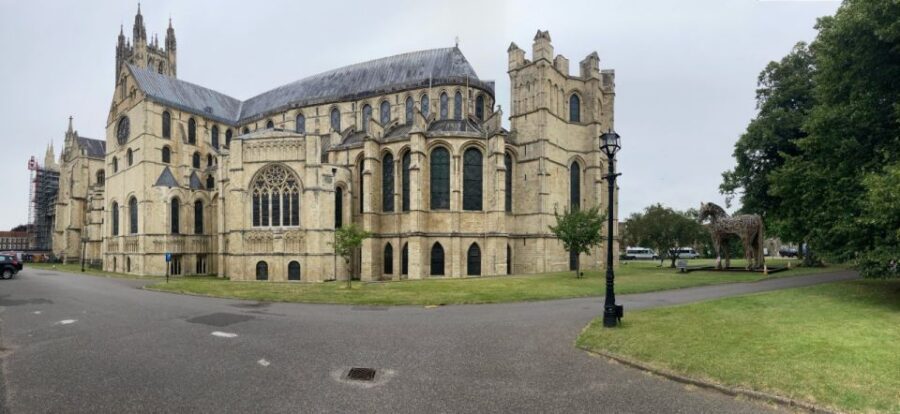
The tour’s biggest draw is access to the Cathedral Precincts. This isn’t just a quick glance from outside. You’ll get time in the grounds area, with your guide pointing out how the Cathedral connects to medieval life—pilgrims, power, and all the stories that made this city famous.
Expect to hear key threads:
- Thomas Becket’s murder and why it changed Canterbury’s fortunes
- Chaucer’s pilgrims, and how literature and real travel started feeding each other
- Royal visits, which helps explain why the Cathedral mattered politically, not just spiritually
You also get a look around the outside of Canterbury Cathedral, plus the ruins of parts of the old monastery and/or cloisters (what you see can depend on current access). This is one of those places where “seeing it” turns into “understanding it” because the guide shows you where history sits in the stonework and layout.
Practical note: access can shift at short notice, so your guide may adjust what you can see inside the precincts.
Quirky Canterbury stops: Crooked House, Old Weavers House, and the ducking stool
One of the joys of a good walking guide is that you don’t just get famous monuments—you get the odd little details that make a city feel lived-in. Here, you’ll likely spot places such as:
- The Crooked House
- The Old Weavers House
- The infamous ducking stool
- Eastbridge Hospital, associated with hospitality for pilgrims since 1190
These stops matter because they explain what regular people experienced. The ducking stool isn’t just an oddity—it’s a reminder that public order and entertainment often shared the same spaces. And Eastbridge Hospital ties right back to the pilgrim theme: visitors didn’t arrive and leave in a day. They needed beds, food, and care—especially when travel was hard.
You can also read our reviews of more guided tours in Canterbury


The King’s Mile: medieval route lines and modern city views
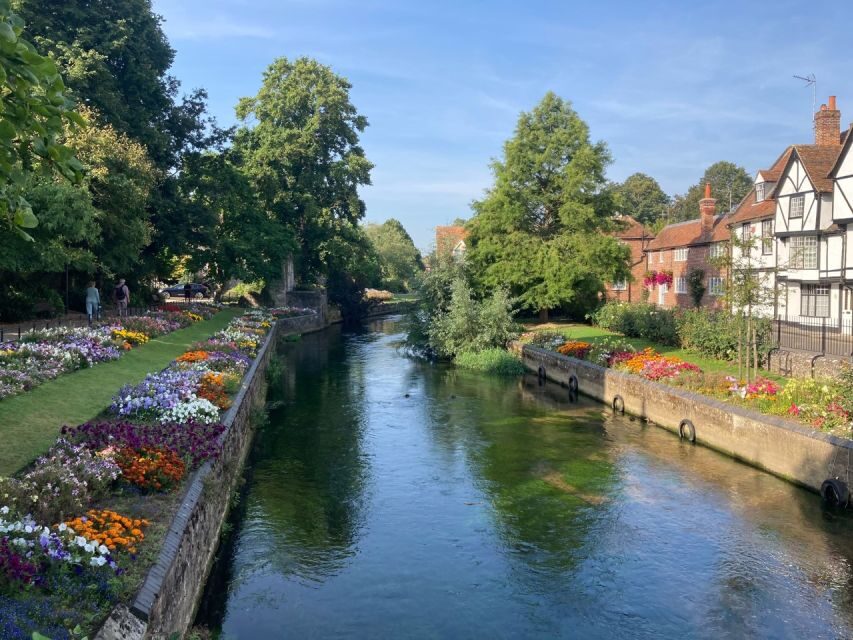
You then move toward the King’s Mile, a stretch that gives you a different angle on Canterbury—less about isolated landmarks and more about the route itself. There’s a photo stop here, but the bigger value is what your guide points out: how the medieval lanes and timber-framed buildings line up with views toward the Cathedral.
This is a good moment to slow down mentally. The guide helps you see how Canterbury evolved—what survived, what changed, and what new buildings added to the city’s identity without erasing the past.
If you’re the type who likes structure—street layout, buildings, how neighborhoods formed—this portion tends to click. Even if you’re not, it’s the section where the city starts to feel navigable on your own later.
The Marlowe Theatre area and High Street: ending with the modern layer
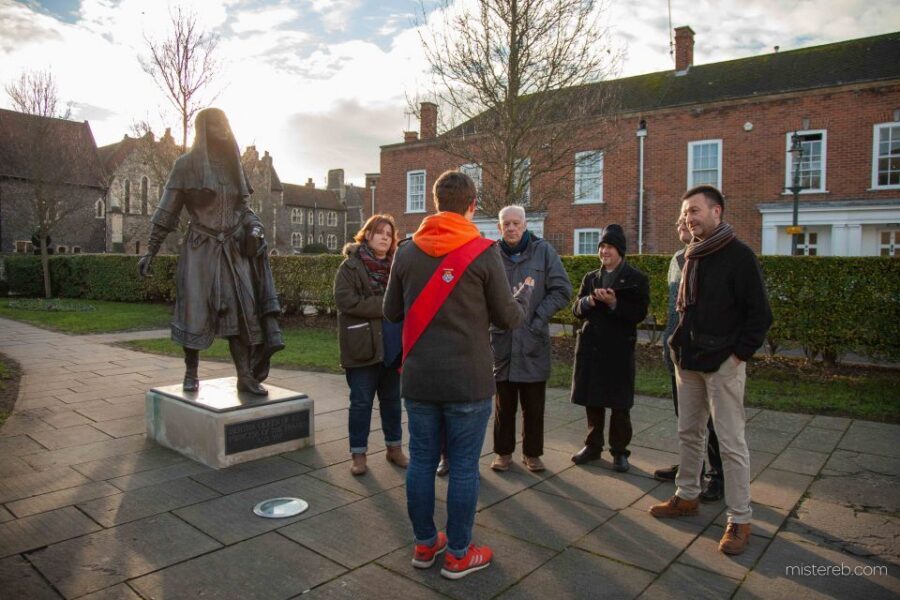
The walk continues toward The Marlowe Theatre, including a photo stop and commentary around the building area. You’ll also hear about a local feature there: a moving statue connected to the theatre.
Then you finish up at High Street. The timing matters: ending on a main street keeps the experience practical. You get an easy exit point for finding coffee, lunch, or hopping into your next plan without having to backtrack through the tightest lanes.
Thomas Becket, Chaucer, and royal visits—how the guide turns names into places
The best part of this kind of walk is that it changes how you process Canterbury’s big names. You’re not hearing a list of famous people and dates. You’re watching the guide connect those names to the streets that carried pilgrims, the institutions that held power, and the buildings that still show the city’s medieval footprint.
This is where the guide’s style really shows. In past tours, guides such as Karen (German-speaking) and Pauline (French-speaking) have been praised for making the stories land clearly and even adapting the tone for younger audiences. Another guide, Lenny, stood out for keeping the energy high even on cold, blustery weather—exactly the kind of guide you want when the weather tries to steal your attention.
If you’re visiting specifically for literature, Canterbury is a strong match. If you’re into architecture, the timber-framed buildings and lane geometry give you something to look at while your guide connects it to the people who walked these routes long before you arrived.
Customizing your pace: slow walk, kid-friendly stories, or your favorite topic
You can set the tone beforehand. The guide will tailor the tour if you tell them what you care about—architecture, gardens, literature, or even a request for a slower pace.
This customization is what makes a private tour feel worth it, not just “a small group version” of a standard city walk. If you’re traveling with young kids, you’ll likely appreciate the flexibility to pause, explain simply, and keep moving without rushing. If you’re a detail person, you can ask for deeper explanations around particular sights.
Price and what you really get for $202 per group
At $202 per group (up to 10) for a 1.5-hour private walk, the value depends on who you are traveling with.
- If you’re traveling as a couple or a small family, it can still be good value because you’re paying for an official guide and a tailored route, not a shared-audio experience.
- If you’re a group of up to 10, the cost spreads in a way that can feel more like a “guided city immersion” than a pricey add-on.
- The inclusion of Cathedral Precincts grounds is meaningful. It’s one of those areas that makes the walk feel focused, because the tour is built around the Cathedral story rather than stopping at the gate and calling it done.
What you’re not paying for here is entrance to major attractions or entry inside Canterbury Cathedral. If you want interior Cathedral time, you may need separate plans.
Practical notes before you go
A few things to know so the walk stays enjoyable:
- Expect narrow, uneven pavements. There are no steps or hills on the route, but the ground can still feel a bit rough.
- The route can vary with each guide, and Cathedral Precinct access may change at short notice.
- It runs in all weather, including the cold and windy days Canterbury is famous for.
- Video recording isn’t allowed, so plan on photos and your phone for normal pictures.
Late arrivals can also lead to the tour being shortened or canceled, so give yourself a cushion.
Who this tour fits best
This is a great fit if you want:
- A private, guide-led way to connect history to the actual street layout
- A short trip that still feels substantial
- Cathedral-focused storytelling without spending your time buying multiple tickets
- A flexible pace for families
It’s also ideal if you’re visiting for the first time and want a guided framework to help you explore on your own afterward. Once you’ve walked the lanes and heard the stories attached to the places, the city feels less like a blur.
Should you book this Canterbury private guided walking tour?
If your priority is getting more than a quick photo run—especially with Cathedral Precincts access and a guide who can tailor the route—yes, I’d book it. It’s short, efficient, and built around the stories that make Canterbury famous, not just the landmarks.
Skip it only if you specifically want lots of time inside the Cathedral itself, or if you hate uneven cobbled streets. For most people, the payoff is the way the guide turns Canterbury into a walkable narrative you can actually remember.
FAQ
How long is the Canterbury private guided walking tour?
The tour lasts 1.5 hours.
Where do I meet the guide, and how will I recognize them?
Meet at Buttermarket. Your guide will be wearing a bright red sash, and you should show your booking on arrival.
Does the tour include entry inside Canterbury Cathedral?
No. The tour includes access to the Cathedral Precincts (grounds), but entrance inside Canterbury Cathedral is not included.
What languages are the guides available in?
The live guide is available in German, French, and English.
Is the tour wheelchair accessible?
Yes. The tour is listed as wheelchair accessible, though you’ll still be walking on narrow and uneven pavements.
Is video recording allowed during the tour?
No. Video recording is not allowed.