REVIEW · CANTERBURY
Canterbury Cathedral: Entry Ticket with Audio Guide
Book on GetYourGuide →Operated by Canterbury Cathedral · Bookable on GetYourGuide
Canterbury Cathedral makes time feel breakable. With a ticket and audio handset, you can walk through 1,400 years of rebuilding, faith, and art at your own pace. I especially like how the sound guide turns a huge space into a clear route, instead of leaving you to wander and hope.
Two stand-out reasons I’m glad I booked: you get commentary that helps you see what you’re looking at, and the cathedral itself is packed with major sights like the stained glass and cloisters. The one drawback to keep in mind is that wayfinding isn’t perfect once you’re inside, so you’ll want to pay attention to the guide’s segment cues and your bearings.
In This Review
- Key Highlights to Know Before You Go
- Canterbury Cathedral: Why This Site Matters So Much
- Your Audio Guide Setup: Getting Oriented Fast
- The Main Church Experience: High Ceilings and the Stories Behind Them
- Stained Glass: Some of the Oldest Windows You’ll Ever See
- Chapter House: A Ceiling Worth Your Neck Muscles
- Great Cloister: Medieval Quiet That Feels Real
- Medieval Layers After the 1174 Fire: What Rebuilding Looks Like
- Gardens and Exhibitions: Don’t Skip the Outside Parts
- How Long Should You Plan? (Hint: Build in Extra Time)
- Price and Value: What $31 Gets You
- Practical Tips That Make the Day Smoother
- Should You Book This Canterbury Cathedral Audio Ticket?
- FAQ
- What’s included with the Canterbury Cathedral entry ticket?
- What languages is the audio guide available in?
- Where do I pick up the handset and headphones?
- Is Canterbury Cathedral wheelchair accessible?
- Are photos or video allowed?
- Are pets allowed?
Key Highlights to Know Before You Go

- Handset audio guide turns the cathedral into a guided story you control at your pace
- Stained glass includes some of the oldest windows in the world, and the audio helps you spot the significance
- Chapter House access puts you under one of the most detailed ceilings on the site
- Great Cloister atmosphere is the kind of medieval stillness you feel in your chest
- Gardens + exhibitions add variety beyond the church interior, so your visit doesn’t feel one-note
Canterbury Cathedral: Why This Site Matters So Much
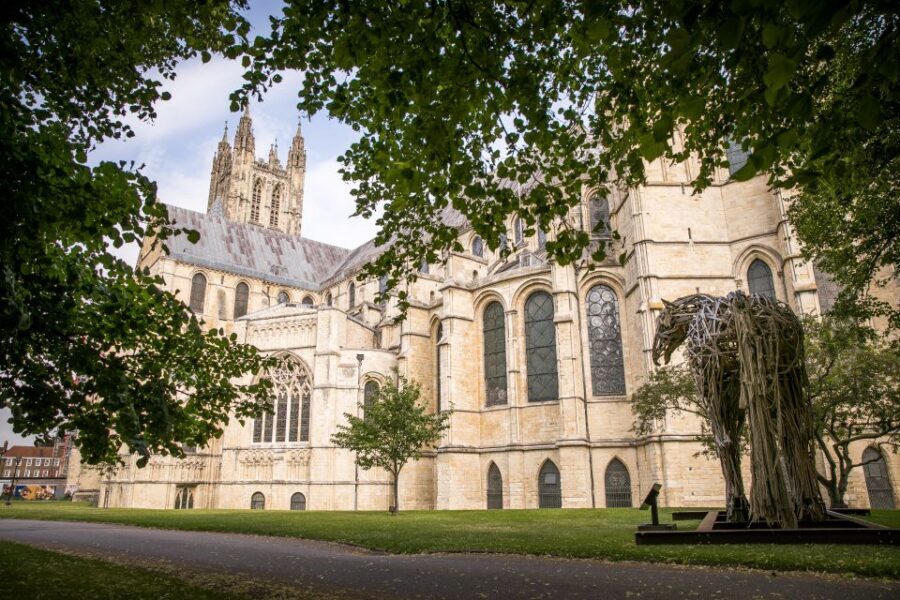
Canterbury Cathedral sits at the emotional center of England’s Christian story. This is the mother church of the worldwide Anglican Communion and the seat of the Archbishop of Canterbury, so you’re not just looking at old stone—you’re visiting a place that has shaped beliefs, politics, and pilgrimage for centuries.
The big reason the visit feels worthwhile is the sheer “layer cake” of the building. You’re seeing centuries of building and rebuilding, with medieval styles layered over earlier foundations. And if you enjoy history, the story background is built into the space: in 597 A.D., Pope Gregory the Great sent a monk named Augustine to England, and Augustine established his seat (cathedra) and monastery here. Later, when miracles were said to happen around the site, Canterbury became one of Europe’s key pilgrimage centers—famous too through the cultural hit of Geoffrey Chaucer’s Canterbury Tales. You walk in expecting a cathedral; you leave feeling you’ve walked through a long-running national chapter.
You can also read our reviews of more tours and experiences in Canterbury.



Your Audio Guide Setup: Getting Oriented Fast
You’ll start by presenting your voucher at Canterbury Cathedral. A staff desk hands you the handset and headphones, and this is where the experience really becomes your own. The audio guide is available in English, German, French, and Japanese, and the design is clearly meant for independent walking: you listen, then you decide how long to linger.
Here’s how to avoid the most common frustration: don’t treat the cathedral like a single straight-line route. The building is huge, and the museum areas and precincts feel like separate worlds. Use the audio guide’s segment structure as your pacing system. Take the breaks seriously. When the commentary shifts focus—windows, royals, monks, martyrs, a particular space—pause and look up or around. That’s when the cathedral stops being scenery and starts being legible.
One practical note: several people found the tour a bit harder to follow because corresponding reference points inside aren’t always obvious. If you’re even slightly direction-faint, this is your heads-up to move slowly at first. Get your route plan in your mind early, then let the audio guide do the navigation work.
The Main Church Experience: High Ceilings and the Stories Behind Them
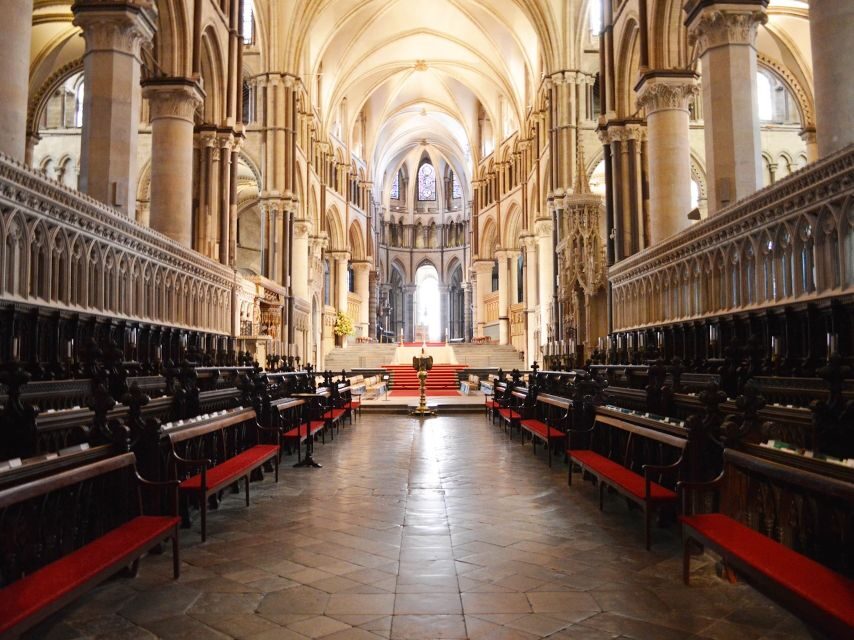
Once you’re inside the cathedral itself, the audio guide helps you connect what you see to what it meant. With the handset in your hand and headphones on, you’ll hear stories tied to the place—royals, monks, and martyrs—while you stand under the high ceilings and take in the scale.
This is where I think the ticket’s value really shows. If you came without audio, you could still admire the architecture, sure. But without context, a cathedral like this can feel like “beautiful, big, old.” The audio guide gives you hooks so your eyes know where to go. The best moments tend to be the ones where the guide points out what to look for, then you look—and suddenly the details match the story in your ears.
Also, be aware that some areas can close at short notice. That won’t usually ruin the day, but it does mean flexibility helps. If you see a doorway that’s shut, don’t get stuck. Let the audio move you on to the next space.
Stained Glass: Some of the Oldest Windows You’ll Ever See

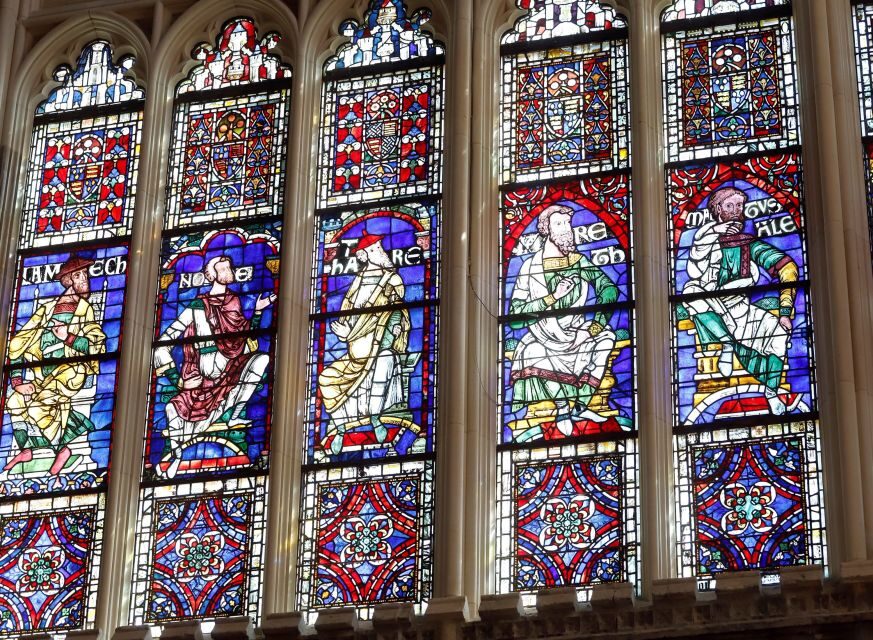
Canterbury Cathedral is famous for its stained glass, including windows described as among the oldest in the world. If you care about art history, this is one of the most satisfying parts of the visit because colored glass isn’t just decoration here—it’s a storytelling tool across centuries.
With the audio guide running, you’re more likely to notice patterns, themes, and the way the light changes the interior mood. The practical trick: don’t rush straight past the windows while you’re still orienting. Give yourself one calm moment where you stop moving and let your eyes adjust. The guide’s narration makes the “why” click, and that’s when the windows start to feel more than pretty color.
Chapter House: A Ceiling Worth Your Neck Muscles

One of the standout inclusions is access to the Chapter House. This is the part of the visit that makes you look up and then keep looking up. The ceiling is especially detailed, and because it’s a contained space, you can slow down without feeling like you’re blocking anyone.
What makes this inclusion smart is pacing. The main cathedral interior is huge and atmospheric. Then Chapter House gives you a focused moment—almost like a pause button—so you can take in craftsmanship at close range. If you’re the type who likes architecture but gets overwhelmed by “too much to see,” this stop helps you recharge and re-center your attention.
You can also read our reviews of more guided tours in Canterbury


Great Cloister: Medieval Quiet That Feels Real

Next is the Great Cloister, described as atmospheric and linked to centuries of monastic walking. Even if you don’t have a religious background, the cloister works as a mood machine. The space is set up for slow movement, and it’s easy to feel how the rhythm of daily life shaped the building’s use over time.
This is also a good place to enjoy the audio guide without distraction. You can turn slightly, look at stonework, then look back at your path. The narration adds depth to the stillness—suddenly the cloister isn’t just pretty, it’s functional history.
If you’re visiting with someone who wants photos, note the constraints: commercial photography is not permitted, and in the crypt there’s no photography or video recording at any time. In the rest of the cathedral, follow any posted instructions on what’s allowed.
Medieval Layers After the 1174 Fire: What Rebuilding Looks Like

A key turning point in Canterbury’s story is the fire in 1174, after which parts of the cathedral were rebuilt in the Perpendicular Gothic style. Hearing this while you walk helps you understand that you’re not seeing a single “moment.” You’re seeing survival, damage, and then creative rebuilding.
This matters for your visit because it changes how you interpret details. Instead of thinking of the cathedral as a static object, you start seeing it as evidence. Evidence of style changes across the medieval period, and evidence of how communities repeatedly returned to rebuild what mattered. If that kind of thinking clicks for you, the audio guide becomes more than entertainment—it becomes your lens.
Gardens and Exhibitions: Don’t Skip the Outside Parts
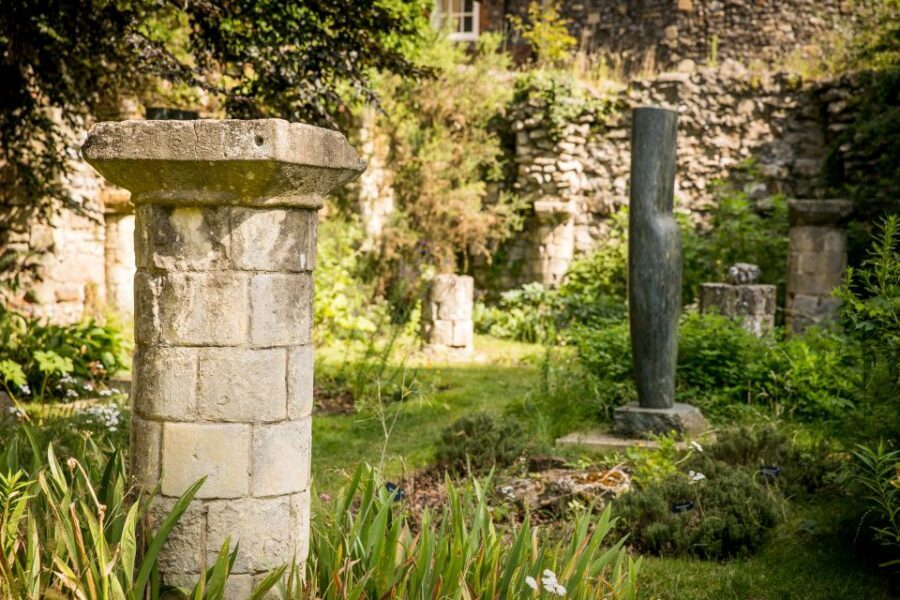
Your ticket includes access to three public gardens, including a reimagining of a medieval Herbarium. This is one of those inclusions that feels small on paper but adds a lot to the day in real life. Indoors, the cathedral is about stone, light, and sound. Outdoors, you get open air, changing views, and an easier pace.
The gardens also help if you’re doing this in the middle of a sightseeing-heavy itinerary. They offer a breather when your brain is tired of “look up, read, process.” Spend time here without rushing. If the audio guide mentions specific viewpoints, use that as permission to slow down rather than chase the next room.
You can also visit up to three exhibitions around the site. That’s a flexible bonus because it adds context and variety beyond the core architecture. Since you don’t know exactly what you’ll want to see, you’ll get the most from this if you treat exhibitions as optional chapters, not chores. If one display holds your attention, stay. If it doesn’t, move on.
How Long Should You Plan? (Hint: Build in Extra Time)
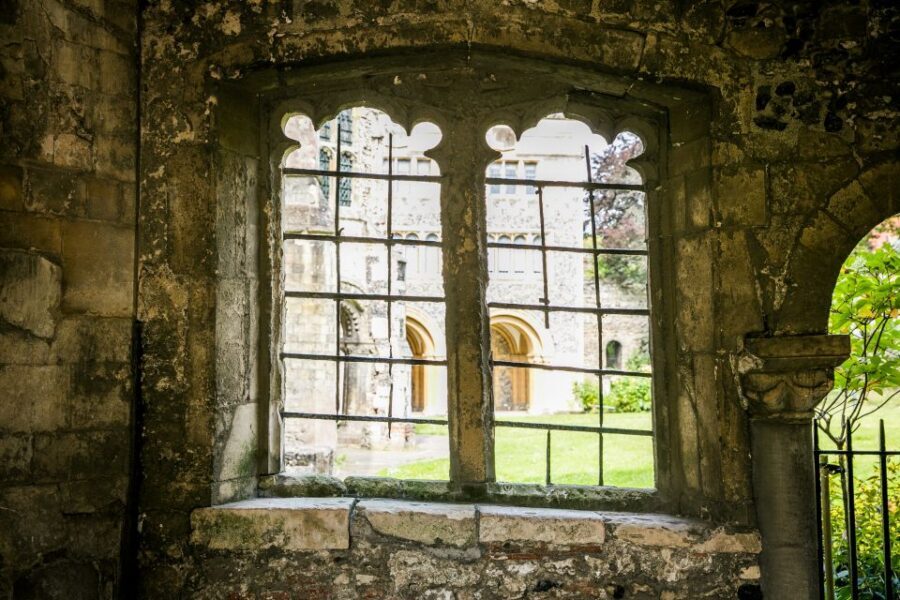
The experience is easy to do at a comfortable pace because the audio guide lets you roam without a strict group schedule. Many visitors report spending about two hours inside and out, and it’s also common to go longer if the building keeps pulling you back in.
If you want my practical timing suggestion: plan for roughly 2 to 3 hours. That usually gives you enough time to take the highlights calmly—main cathedral, stained glass moments, Chapter House, Great Cloister, plus at least one garden stop and whatever exhibitions are most appealing. If you’re a slow walker or you like to read details, add more time. A cathedral visit is not the place to try to win a stopwatch contest.
Price and Value: What $31 Gets You
At around $31 per person, the value isn’t just “entry to a historic site.” You’re also paying for a handset audio guide with headphones, and access to key spaces like the Chapter House, the Great Cloister, the gardens, and up to three exhibitions.
For me, the value comes down to control. Paying for audio guidance is worth it in places where you’d otherwise struggle to connect details to meaning. Canterbury is too big to “guess” effectively. The audio guide helps you make sense of what you’re seeing, and that reduces the risk of leaving feeling like you only admired the surface.
If you’re visiting with someone who doesn’t naturally love church history, audio still helps. It turns the visit into a set of short stories that can keep both of you engaged without needing a live guide.
Practical Tips That Make the Day Smoother
Before you go, know the site isn’t built for speed. Floors can be uneven, some entryways have stone steps, and lighting levels in museum spaces may vary. There are wheelchair access routes, but it’s smart to expect some areas may be physically challenging.
A few other rules to keep your day stress-free:
- No food and drinks, and no luggage or large bags
- Smoking isn’t allowed
- Pets aren’t allowed (assistance dogs are allowed)
- Random bag searches can happen at entry to the cathedral and precincts
- No weapons or sharp objects
- No skateboards, scooters, skates, or fireworks
If you hate juggling stuff, travel light. It will speed up your entry and reduce the chance you’re forced into stressful back-and-forth.
Should You Book This Canterbury Cathedral Audio Ticket?
Yes, if you want a cathedral visit where the details actually make sense. The mix of audio handset guidance plus access to the Chapter House, Great Cloister, gardens, and exhibitions makes this a solid all-in-one choice—especially if you don’t want to rely on luck while navigating a complex site.
I’d skip it only if you already have your own expert plan and don’t need audio context, or if you’re the rare visitor who dislikes listening through a museum/cathedral day. Otherwise, Canterbury is exactly the kind of place where audio turns a beautiful building into a story you can follow.
If you book, arrive ready to go slow for the best scenes: stained glass, the Chapter House ceiling, and the cloister walk. Those are the moments where you’ll feel the 1,400 years most clearly.
FAQ
What’s included with the Canterbury Cathedral entry ticket?
Your ticket includes entry to Canterbury Cathedral, a handset with headphones for the audio guide, and access to key areas such as the Chapter House, the Great Cloister, three public gardens, and up to three exhibitions.
What languages is the audio guide available in?
The audio guide is available in English, French, German, and Japanese.
Where do I pick up the handset and headphones?
Present your voucher at Canterbury Cathedral. You’ll be directed to the desk to receive your media guide sets and headsets.
Is Canterbury Cathedral wheelchair accessible?
Yes, the experience is listed as wheelchair accessible.
Are photos or video allowed?
Commercial photography is not permitted. No photography or video recording is permitted at any time in the crypt.
Are pets allowed?
Pets are not allowed, but assistance dogs are allowed.