REVIEW · LONDON
Changing of the Guard at Buckingham Palace
Book on GetYourGuide →Operated by A2B tours · Bookable on GetYourGuide
Crowds fade when you have a plan. This Changing of the Guard tour feels less like lining up and more like following a live script, with an expert guide keeping you in the right places at the right moments. I like how you get front-row viewing and guided photo stops, plus the ceremony unfolds at more than one royal site.
One thing to plan for: it’s a steady walking experience paced to match the Guards, so you’ll want comfortable shoes and a moderate fitness level. In hot weather, standing in shade can be limited, and it’s not set up for wheelchair users or people with mobility impairments.
In This Review
- Key highlights you’ll feel on the day
- A smarter way to enjoy the Changing of the Guard
- Meeting at the Duchy of Cornwall: your easiest win
- Buckingham Palace: the main photo stop, with real context
- Clarence House and The Mall: where the route becomes part of the show
- St James’s Palace: the second palace effect
- What the guide actually teaches (and why it matters)
- Crowds and timing: how this tour helps you beat the worst of it
- Walking comfort, luggage rules, and fitness reality
- Price and value: is $26 a good deal for 2 hours?
- Who should book this tour
- Should you book the Royal Changing of the Guard tour?
- FAQ
- How long is the Changing of the Guard tour?
- Where do I meet the guide?
- Which palaces are included in the route?
- Is the tour accessible for wheelchair users or people with mobility impairments?
- What should I wear or bring?
- Is it available in English, and can I cancel?
Key highlights you’ll feel on the day
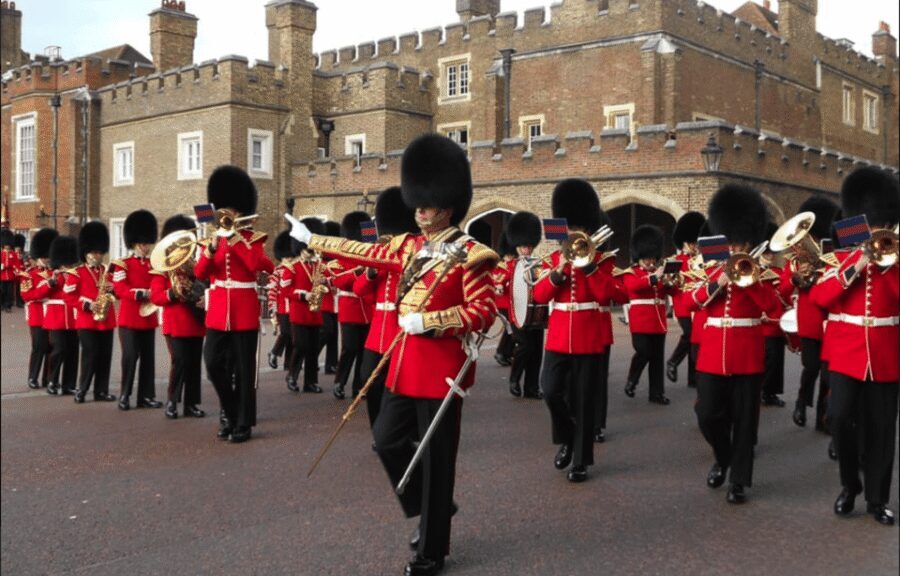
- Two-palace viewing so you see the ceremony’s rhythm more than once
- Expert guide timing to help you beat the worst crowd surges
- Photography-focused placement for cameras and phones
- History in plain English on uniforms, regiments, and the King’s Guard
- Guided march moments as you follow the Guards toward Buckingham Palace
- Band and ritual details explained so you know what you’re hearing and seeing
A smarter way to enjoy the Changing of the Guard
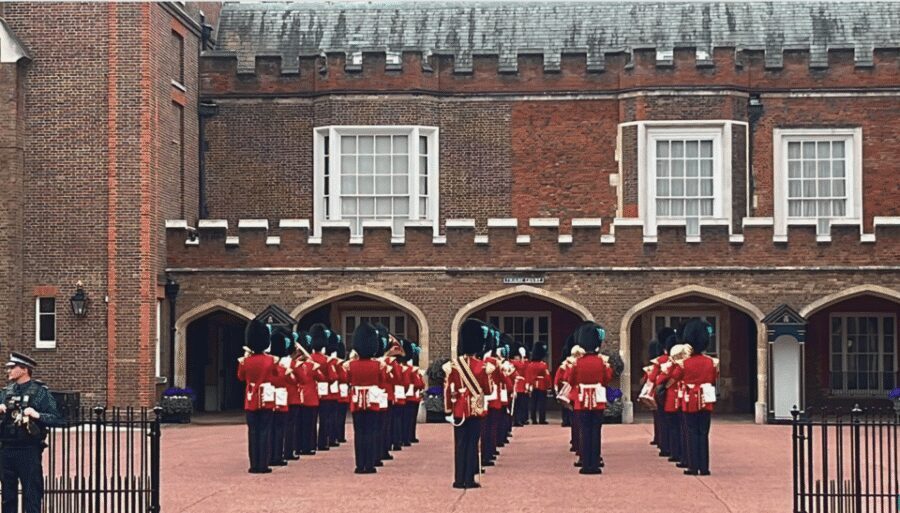
The Changing of the Guard can be the kind of London moment that looks simple from a distance. Then you get close and realize it’s part marching show, part precision choreography, and part crowd management puzzle. This tour tackles the puzzle for you with an expert guide and a route built around where the ceremony flows.
What I like most is that the tour isn’t just standing and hoping for a good view. You’re directed to key photo spots, and the guide keeps you moving so you catch the important stages without burning hours. With a 2-hour duration, you get a full hit of ceremony plus context, without turning your day into a queue.
And because you visit two royal palaces, the day feels richer than the classic single-location plan. You’re not just watching one act; you’re seeing how the ritual connects across settings.
You can also read our reviews of more tours and experiences in London.


Meeting at the Duchy of Cornwall: your easiest win
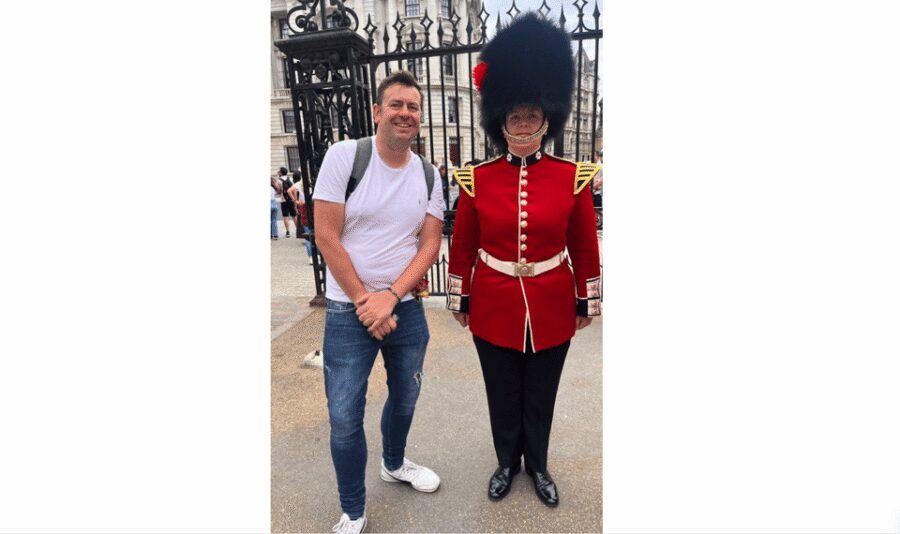
The tour meets at the Duchy of Cornwall Office, a Grade II listed building directly opposite Buckingham Palace. It sits on the corner of Buckingham Gate—look for the large white building with steps to the front door and columns marked 10.
For Google Maps, use SW1E 6LB. If you’re using the Underground, the closest options are St. James’s Park (about a 9-minute walk) and Victoria (about a 10-minute walk). Give yourself a little buffer for the final approach, because this area gets busy even before the official start.
Bring a calm, early mindset. When you’re on time, the guide can place you properly. When you’re late, you may get stuck behind taller people and lose that clean line-of-sight that makes photos look sharp.
Buckingham Palace: the main photo stop, with real context
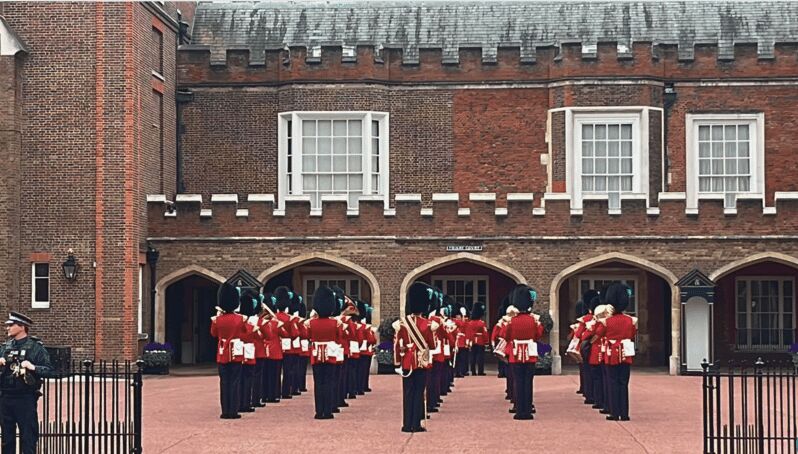
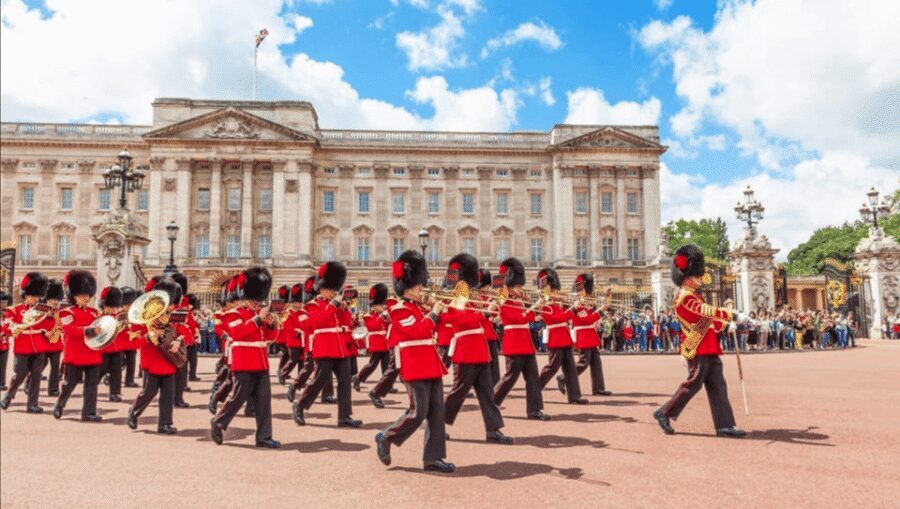
The first royal stop is Buckingham Palace for about 30 minutes, with a guided walk-through and a photo pause. This is where the crowd gravity is strongest, so timing matters. The tour is designed to help you arrive when you’ll have a better chance of seeing the ceremony unfold clearly.
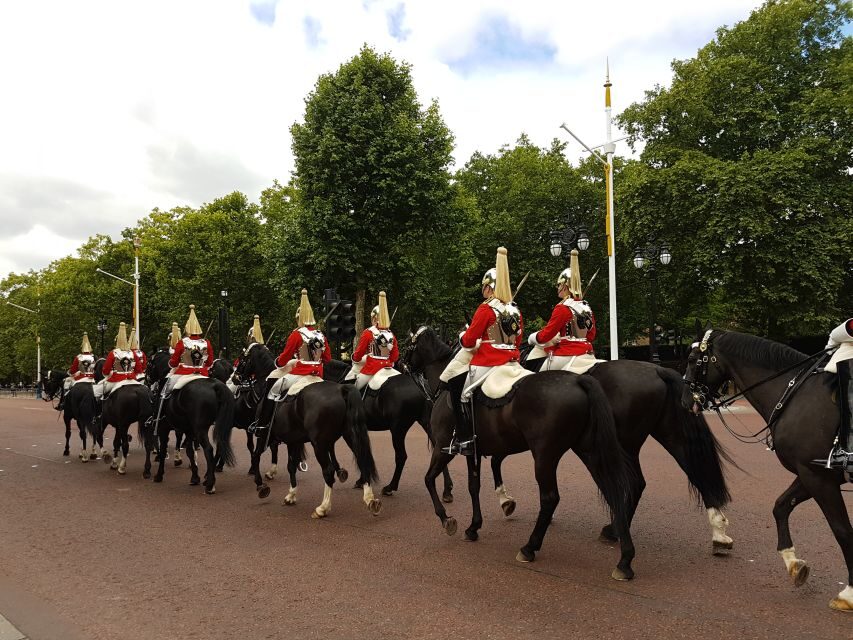
This is also where the tour’s story beats really start to click. You’ll hear about the origins of the Guards’ famous uniform, why certain details matter, and how the regiments can be recognized by what you notice at a glance. That simple skill changes the whole experience, because you stop thinking of it as costumes and start reading it as uniforms with meaning.
You’ll also get guidance on what to watch for—especially during the moments when the Guards move into position. If you care about photos, this part is where you’ll benefit most from being guided. The goal isn’t just to take a picture; it’s to take one where the details are readable on your screen.
Clarence House and The Mall: where the route becomes part of the show
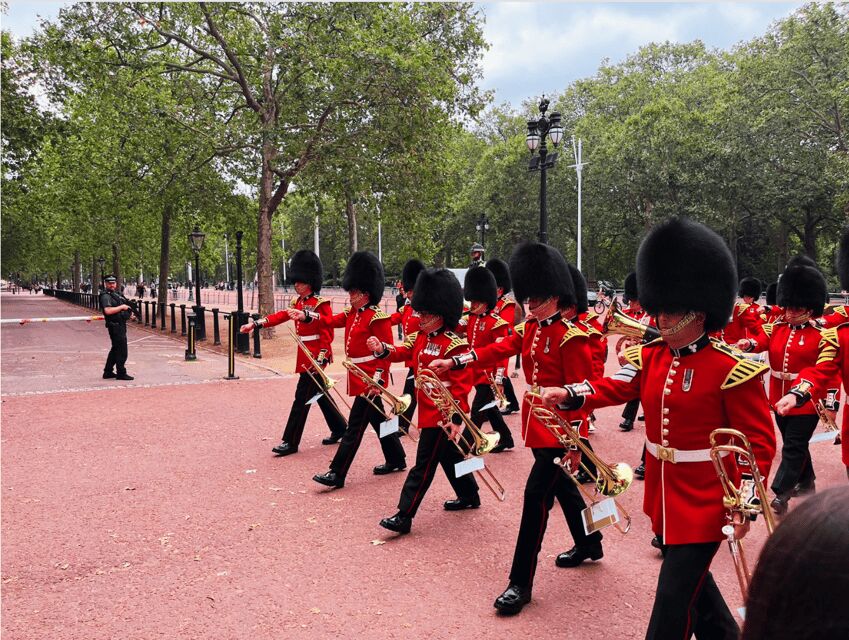
After Buckingham Palace, the tour includes a stop at Clarence House for about 30 minutes. Then you continue to The Mall for another 30 minutes of photo stops and guided sightseeing with walks.
These segments are sometimes treated like filler on other plans. Here, they matter because they help you catch different angles and keep your “view puzzle” from collapsing into one flat shot. Since the ceremony involves movement, having multiple vantage points means you’re more likely to get both the full-body marching moments and the tighter details.
The tour also keeps you tuned in for what’s happening beyond the Guards themselves. You may hear the band play songs you wouldn’t expect in this setting, and the guide helps explain why those musical moments fit the tradition. That turns the experience from visual-only into something you can actually follow.
If you’re traveling with kids, this is another good section. You’re not stuck watching one thing in one direction for the whole time. You’ll have short resets—photo pause, explanation, then another moment to watch.
St James’s Palace: the second palace effect
The final royal stop is St James’s Palace, where you’ll spend about 30 minutes and finish the tour there.
This is a big deal for one reason: the Changing of the Guard feels more complete when you see how the ritual repeats across royal spaces. The tour doesn’t just toss in another landmark. It uses the second palace as a second chapter—another set of viewing moments, another angle, and another chance to spot the Guards in motion.
The tour also ties back to movement, since it’s built around following the Guards as they march down to Buckingham Palace. Even if you’re not always tracking every step at street level, your guide keeps the larger flow clear so you’re not wondering what you missed.
By the end, you should feel like you understood the ceremony, not just watched it. That’s the quiet difference between a “see it quick” plan and a guided experience with structure.



What the guide actually teaches (and why it matters)
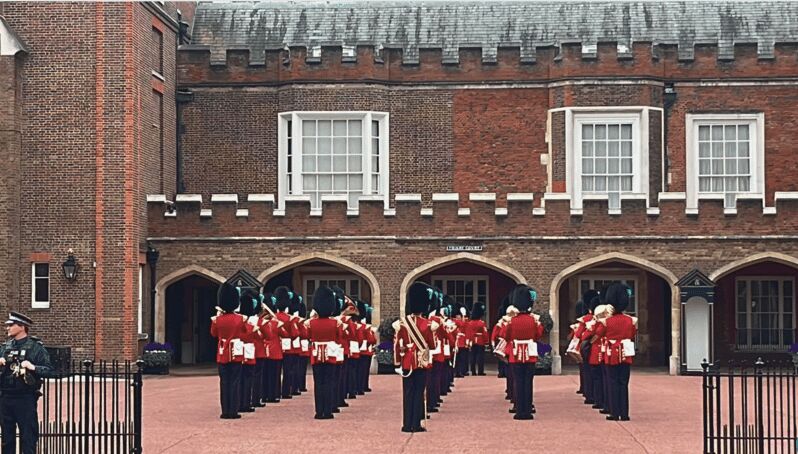
A major value here is the way the guide turns the ceremony into something legible. You’ll hear the history behind the uniform, including what it signals and how the King’s Guard operates as a tradition. You’ll also learn how to identify which regiment you’re looking at just by noticing features.
That might sound like trivia until you’re standing there. Then it becomes practical. Once you can recognize the Guards more confidently, the experience stops being a blur of motion and turns into a set of details you can track.
The guide’s commentary style is another plus. In the real-world experience of this tour, the guide approach tends to be friendly and easy to follow, with explanations that work for adults and kids alike. That matters because the ceremony is happening fast, and you don’t want long stretches where you can’t connect what you see with what you’re hearing.
Crowds and timing: how this tour helps you beat the worst of it
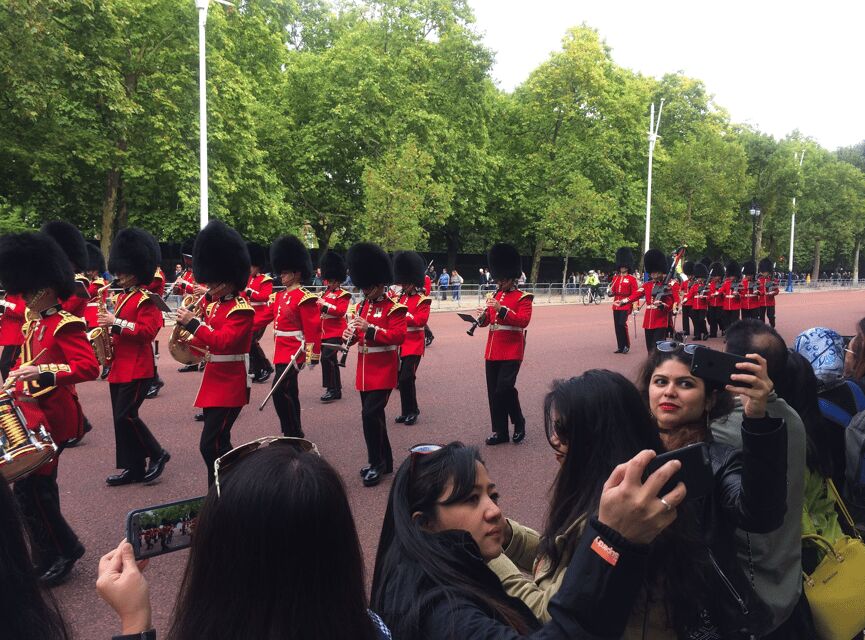
London crowds have a way of turning plans into luck. The guide helps reduce that luck by putting you in right spots at the right times.
You should expect moments when the street feels packed and moments when you suddenly have a clearer view. That’s normal for this area. The tour’s route and timing are built around minimizing the time you spend fighting for space and maximizing the minutes you spend watching the ceremony stages.
This is also why the tour is only two hours. If it were longer, you’d spend too much time waiting around. Instead, it’s paced so you get the key moments without turning your schedule into a full-day mission.
Walking comfort, luggage rules, and fitness reality
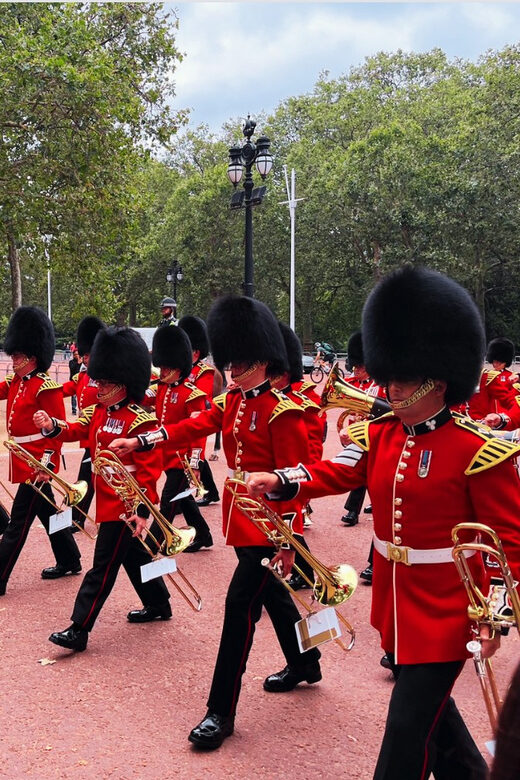
This is a walk-along-the-ceremony kind of tour. It keeps a steady pace so you can match the Guards’ schedule, so moderate fitness is required.
You’ll want comfortable shoes and clothes suited to the weather. In hot weather, standing in shade can be limited, so consider bringing sunglasses and water if conditions call for it.
There are also luggage rules: oversize luggage isn’t allowed, and large bags aren’t suitable. If you’re traveling with more than a small day bag, plan to store the rest before you come.
Finally, the tour isn’t suitable for wheelchair users or people with mobility impairments. If mobility is a concern, you’ll likely be happier with a plan designed for reduced walking.
Price and value: is $26 a good deal for 2 hours?
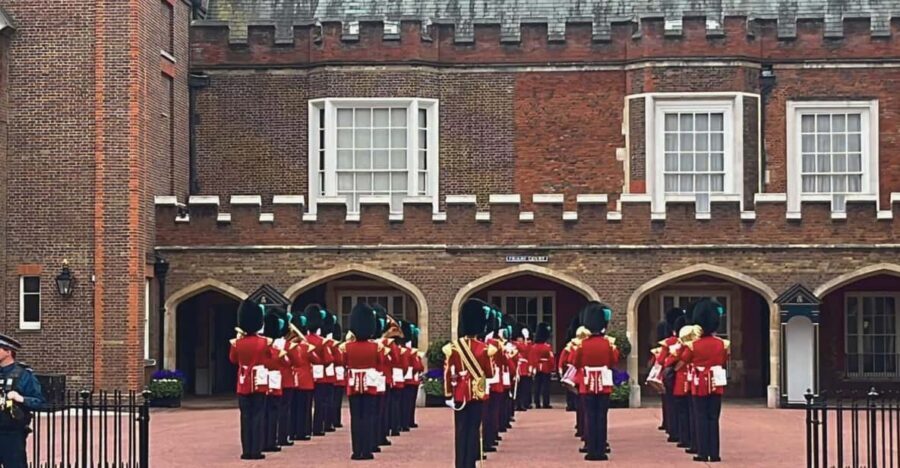
At about $26 per person for roughly two hours, this tour is priced like a focused, experience-first activity rather than a sightseeing bus ride. The value comes from three places:
- You’re paying for expert timing in a high-crowd zone
- You’re paying for view placement so your photos come out better
- You’re paying for ceremony context, so you don’t just see movement—you understand it
If you try to do this alone, you’ll likely spend more time figuring out where to stand and when. That adds up quickly, especially if you’re visiting on a short schedule. Even if you still end up with crowds around you, the guide helps you use your time in the minutes that actually matter.
Who should book this tour
This one fits best if you want the ceremony experience but prefer not to treat it like a waiting game.
You’ll likely enjoy it if:
- you’re seeing London for the first time and want a structured take on a classic sight
- you care about getting good photos without hours of trial and error
- you want historical context in a format that’s easy to follow while you stand outside
- you’re traveling with kids and want explanations that keep everyone engaged
You might skip it if you’re dealing with mobility limits, or if you’re the type who enjoys total flexibility and doesn’t want to follow a planned route.
Should you book the Royal Changing of the Guard tour?
I’d book this tour if you want the safest path to a clear view, plus actual understanding of what you’re watching. The route hitting both Buckingham Palace and St James’s Palace gives you more chances for good sightlines and helps the day feel like a full ceremony lesson, not a single snapshot.
Hold off if walking at a steady pace is a problem for you, or if you’re determined to do a totally self-guided photo hunt with no guide. For most people, though, the combination of photo-focused timing, two-palace coverage, and ceremony explanations makes the price feel fair for what you get.
FAQ
How long is the Changing of the Guard tour?
The tour lasts about 2 hours.
Where do I meet the guide?
Meet at the Duchy of Cornwall Office, opposite Buckingham Palace, on the corner of Buckingham Gate. Look for the large white building with steps and columns marked 10. You can use SW1E 6LB in Google Maps.
Which palaces are included in the route?
You visit Buckingham Palace, Clarence House, and St James’s Palace, with time along The Mall. The tour includes viewing the guard change at two royal palaces.
Is the tour accessible for wheelchair users or people with mobility impairments?
No. The tour is not suitable for wheelchair users or people with mobility impairments.
What should I wear or bring?
Wear comfortable shoes and comfortable clothes. The tour involves walking at a steady pace.
Is it available in English, and can I cancel?
Yes, the live guide speaks English. Free cancellation is available up to 24 hours in advance for a full refund. You can also reserve and pay later.