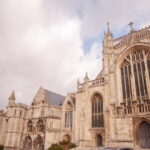
REVIEW · GLOUCESTER
Gloucester Cathedral: Crypt Tour
Book on GetYourGuide →Operated by Gloucester Cathedral · Bookable on GetYourGuide
A cathedral, but underground. That’s what makes the Gloucester Cathedral Crypt Tour so striking: you get about 25 minutes in the cool, dim undercroft where the story of the building reaches back toward the earliest phases. I love the atmosphere shift the moment you step down the worn stone steps, and I love that you can actually see surviving Saxon remnants. The main thing to plan for is practical: there’s no place to leave bags, and you’ll be moving on stone steps in sensible footwear.
Your guide starts at the Welcome Desk inside the Cathedral, leads you down from the South Transept, and the tour finishes back at the same meeting point. It’s a live, English-language guided experience, built for people who like their sightseeing with real context, not just dates on a sign.
In This Review
- Key things I’d watch for
- Entering Gloucester Cathedral Crypt Tour: what the 25 minutes really gives you
- From the South Transept to the steps below: the atmosphere shift you can feel
- Romanesque undercroft and surviving Saxon fabric: what you’re actually looking at
- St Oswald and pilgrimage: the spiritual role of the crypt space
- The reflective chamber and planning your next 1–2 hours above ground
- Who should book the Gloucester Cathedral Crypt Tour, and who might not
- Should you book this Gloucester Cathedral Crypt Tour?
- FAQ
- How long is the Gloucester Cathedral Crypt Tour?
- Where do I check in for the tour?
- What languages are the tours offered in?
- Are there any restrictions on bags during the crypt tour?
- Can children attend?
- Is it possible to cancel in advance?
Key things I’d watch for
- South Transept descent: the tour begins with a noticeable temperature and sound change as you go below ground.
- Romanesque feel: thick pillars and rounded arches make the crypt feel solid, not decorative.
- The oldest layers: you’ll be shown remains connected to the building’s earliest Norman-era work (and earlier Saxon fabric).
- St Oswald pilgrimage links: the guide explains how this underground space connected to devotion and prayer.
- Worship and burial function: you learn how people used the crypt for resting and private prayer in earlier centuries.
- A reflective ending point: the tour concludes in a chamber designed for you to take in the space and its weight of time.
Entering Gloucester Cathedral Crypt Tour: what the 25 minutes really gives you
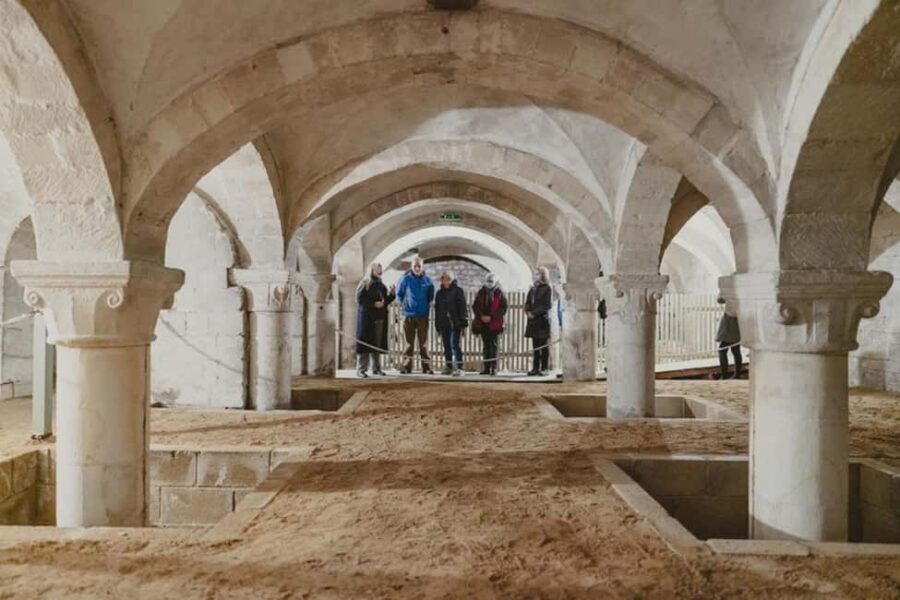
The crypt tour is short on purpose. Twenty-five minutes doesn’t sound like much until you’re standing in that low, dim space and realize how much the guide packs into a compact route. This is one of those places where the building does part of the explaining for you. The air feels cooler, the lighting is quieter, and your ears catch up to the change, even if the people around you stay normal-volume.
What makes the experience hit so well is the way it reframes the Cathedral. Above ground, Gloucester Cathedral can feel like a grand set piece. Down here, the focus shifts to function: supporting massive structures, housing sacred spaces, and carrying the human side of history through worship and burial. I like that the tour doesn’t treat the crypt like a museum basement. It’s presented as a living part of the Cathedral’s story, with real architectural logic.
You should also know what kind of pacing to expect. This isn’t a long wander. It’s a guided walk with stops and explanations, so if you enjoy reading quietly on your own, you may want to reserve extra time afterward on the main floor. The crypt experience is meant to be heard, not just looked at.
One practical note: the tour is guided, and it includes entry to the Cathedral. It’s also clearly aimed at people who can handle stone steps and dim, atmospheric lighting. If you’re traveling with limited energy that day, this short guided segment is actually a good fit, but you’ll still want comfortable footwear and minimal stuff.
You can also read our reviews of more tours and experiences in Gloucester.
From the South Transept to the steps below: the atmosphere shift you can feel
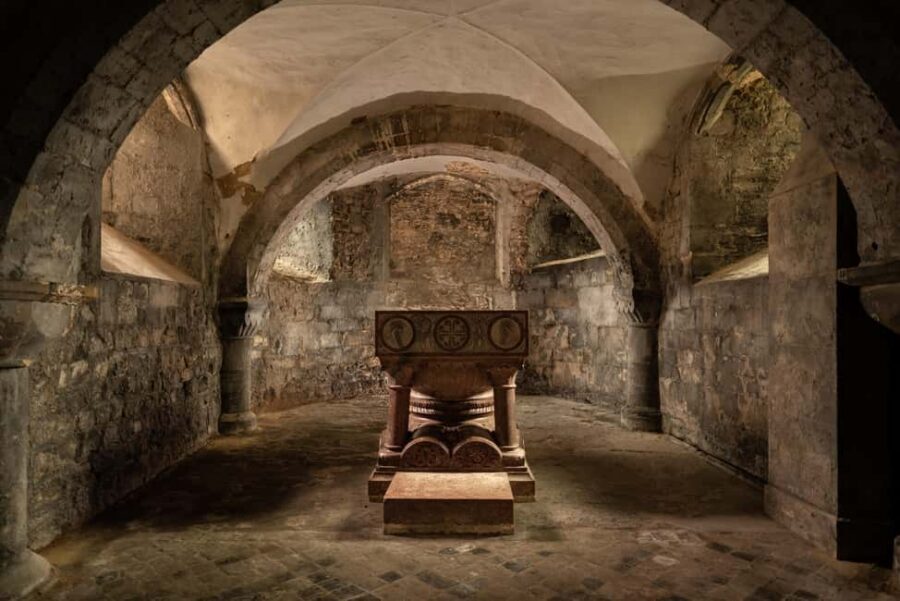
The route starts in the Cathedral itself, then moves you to the South Transept. That detail matters, because you’re not just going “downstairs.” You’re transitioning between two different Cathedral worlds: the daylight, public spaces above, and the older, protected level below.
The descent begins with worn stone steps. As you go down, the noise level drops and the light changes from bright and open to dim and focused. That’s not just sensory theatre. In places like this, the architecture and the underground setting create a kind of natural quiet that makes the explanations land better. I found that easier to accept than trying to concentrate in a loud, crowded building.
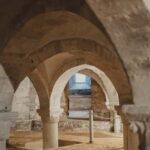
Inside the subterranean level, you’re met by Romanesque structure: thick pillars and rounded arches. The shapes are simple, heavy, and made to last. This isn’t the kind of stonework that tries to dazzle you. It tries to hold weight. And the guide uses that reality to teach you what medieval builders were solving for when they created this space as part of the Cathedral complex.
That’s also why the tour is so atmospheric even without dramatic effects. The lighting is sparse, and the shadows fall across the stone surfaces in a way that makes the space feel older than the rest of the building. If you like buildings that feel “worked,” not just decorated, you’ll appreciate what you see right away.
The other thing to watch for is pace on the steps. They’re worn, and the crypt is cool and dim, so moving carefully is smart. Sensible footwear isn’t optional here in the real-world sense, not because anyone says so, but because it’s simply the right way to enjoy the tour.
Romanesque undercroft and surviving Saxon fabric: what you’re actually looking at
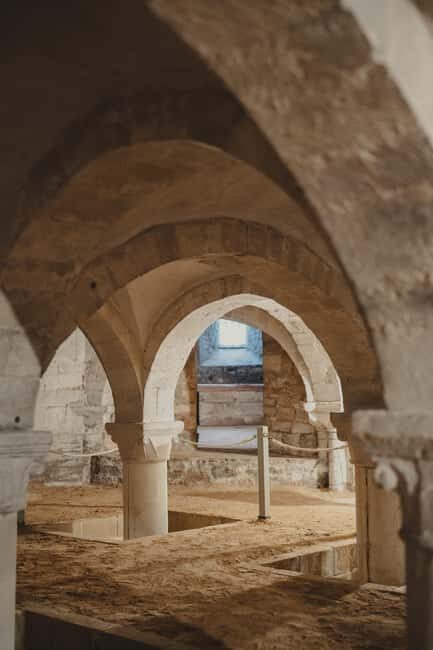
Once you’re down in the crypt, the guide brings you into the architecture’s logic. The construction is described as dating back to the 11th century, and it’s tied to the original Norman church work. That means the crypt isn’t a later add-on meant to create an extra attraction. It’s part of the Cathedral’s bones, shaped to support what sits above, including the choir and presbytery area.
One of the most satisfying parts of the tour is how it connects construction to atmosphere. Thick stone pillars and rounded arches read as functional first. But function becomes meaning over time. Medieval worship spaces often used solid, weighty forms to make faith feel grounded. In the crypt, that interpretation makes sense fast because you can physically sense the heaviness and stability of the room.
Then comes the highlight many people hope for: remnants of the earlier Saxon church. These are described as preserved within the crypt, and they give you a tangible link to what came before the Norman-era building. Instead of treating history like a neat timeline, the tour encourages you to see continuity and overlap. You’re not only looking at one era; you’re seeing how the Cathedral’s story layers over centuries.
If you’re a “please don’t just tell me dates” kind of visitor, this is a good match. The guide frames why the crypt exists and what it was designed to do: support a massive structure above and create an appropriate sacred space below. When you understand that, you stop looking at the crypt as a separate attraction and start seeing it as the Cathedral’s foundation made visible.
Also, pay attention to how the guide points out elements that feel older than the surrounding construction. Even without being able to interpret every stone type yourself, the tour helps you notice what makes the Saxon remnants special inside a Norman setting.
St Oswald and pilgrimage: the spiritual role of the crypt space
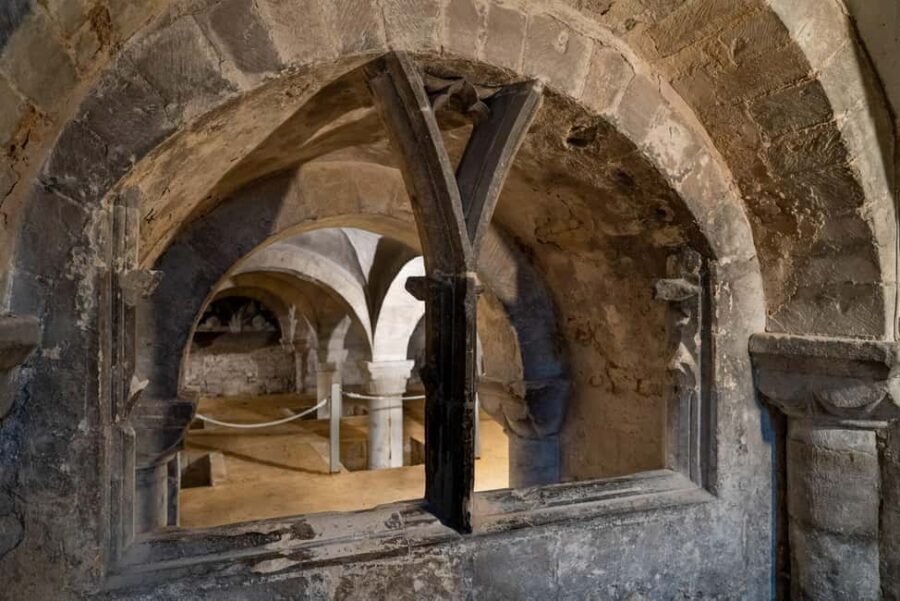
It’s easy to see a crypt as simply “old stones.” The tour does more than that by explaining the crypt’s role as a place of burial and worship. In the early days of the Cathedral, this space would have supported private prayer and resting places for important figures.
Then the guide adds the pilgrimage layer. The crypt is tied to the shrine of St Oswald, a saint whose relics were once housed within the Cathedral. The tour explains that pilgrims would have descended into the crypt to pray at the shrine, seeking spiritual aid and healing. Even if you’re not visiting for religious reasons, this part changes how you feel about the room. You start imagining movement in the past: people coming down these steps, lowering their voices, and seeking comfort in a place designed for reverence.
The physical setting supports the idea. Low ceilings and heavy pillars create a sense of closeness to something beyond everyday life. That’s not just poetic. It’s the kind of design that makes you instinctively slow down. You notice it in your body, not just your mind.
You’ll also hear about why this mattered when the Cathedral was younger. A shrine connected to relics isn’t a casual feature. It made the crypt a destination, and it turned the underground space into a meaningful route inside a larger sacred complex.
If you’re interested in England’s medieval spiritual life, this is one of the more coherent, story-driven sections of a Cathedral visit. It’s also a reminder that the crypt’s importance wasn’t only architectural. It was social, devotional, and personal.
The reflective chamber and planning your next 1–2 hours above ground
The tour ends in a reflective chamber. That ending matters because it gives you a moment to absorb what you’ve just learned. After walking through stone, function, and worship connections, you get a pause that’s basically designed to let the space settle in your head. You won’t feel rushed out.
Once you’re back above ground, it’s worth continuing at a slower pace, because the Cathedral has other high points that pair well with the crypt experience. From what I’ve seen people do with their time there, many combine the crypt tour with a look at key monuments and viewpoint areas.
For example, you might spot the tomb of Edward II above ground, and if you’re using the Cathedral’s easy-to-use viewer system, you can identify him in the east window next to St Edmund. Also, if you like oddball details, Gloucester Cathedral has historic graffiti that can be fun to track. There’s even a small, low-cost leaflet guide mentioned as helpful for a focused visit length.
If you’re trying to keep your plan efficient, here’s a sensible approach: treat the crypt tour as the “why this building exists” portion, then spend the next chunk of time on the “how the Cathedral tells its story” portion above ground. The crypt sets the emotional context; the rest of the building gives you the visuals.
One more timing note: the crypt tour itself is about 25 minutes, but that doesn’t include your overall Cathedral visit time. If your schedule is tight, you’ll still want buffer minutes. Stone steps and the guided pace can take a bit longer than you’d guess at the start.
Who should book the Gloucester Cathedral Crypt Tour, and who might not
This tour is a great fit if you like:
- architecture that explains its purpose (supporting the building above, not just looking pretty),
- guided storytelling that connects physical spaces to worship and pilgrimage,
- short experiences with a clear start and finish.
It also suits people who enjoy being in a quieter, moodier environment. The crypt is dim and cool, and that makes the experience feel distinct from the rest of the Cathedral.
On the other hand, it may be less ideal if:
- you’re traveling with a lot of bulky items (there’s no facility to leave bags, so you’ll need to keep belongings on your person),
- you struggle with stone steps (the route includes worn steps down to the crypt),
- you want long free-roam time underground (this is a guided 25-minute route, not a self-paced wandering session).
If you’re coming with kids, the rule is clear: any child 16 and under must be accompanied by an adult over 18. That’s not just paperwork. It affects who can comfortably experience the tour together.
Also, if you’re only interested in the most famous above-ground features, you might consider whether spending 25 minutes below ground fits your priorities. But if you want the Cathedral to make sense as a whole, the crypt is often the piece that clicks everything into place.
Should you book this Gloucester Cathedral Crypt Tour?
Yes, you should book it if you want the Cathedral’s story from the ground up—literally. The value here comes from three things: a guided explanation that connects architecture to the people who used the space, the chance to see surviving Saxon remnants inside the crypt, and the atmosphere shift that makes the history feel physical rather than abstract.
Book it especially if you like compact tours that don’t feel rushed. You get a meaningful chunk of 1,000-year perspective in under half an hour, and then you can use the rest of your time above ground with better understanding.
Skip or reconsider only if you have concerns about stone steps, carrying a bag, or wanting free time rather than a structured guided route. For everyone else, this is one of the most memorable parts of the Gloucester Cathedral experience because it shows you the Cathedral’s earliest working layers and explains why they mattered.
FAQ
How long is the Gloucester Cathedral Crypt Tour?
The tour lasts about 25 minutes. Starting times vary, so you’ll want to check availability when you book.
Where do I check in for the tour?
Check in with the staff at the Welcome Desk inside Gloucester Cathedral.
What languages are the tours offered in?
The guided tour is available in English.
Are there any restrictions on bags during the crypt tour?
There is no facility to leave bags. You’ll need to keep your belongings to a minimum and keep them on your person.
Can children attend?
Yes, but any child 16 and under must be accompanied by an adult over 18.
Is it possible to cancel in advance?
Free cancellation is offered up to 24 hours in advance for a full refund.