REVIEW · LONDON
London: Entrance Ticket to the Cutty Sark
Book on GetYourGuide →Operated by Royal Museums Greenwich · Bookable on GetYourGuide
A ship can be a time machine, especially this one. The Cutty Sark lets you explore a real 19th-century tea clipper with two things I really love: stepping onto the main deck with the towering masts overhead, and taking in that unforgettable view while walking right under the copper hull. One thing to plan for: part of the experience is outdoors on decks, so cold wind or rain can turn your visit into a lot more layering than you expected.
You’re visiting the ship inside the Royal Museums Greenwich complex in Greenwich, where a major conservation project has kept the original wooden planks and iron frame in remarkable condition. Your entrance ticket gives you full access to the museum experience, including the sailors’ quarters and the chance to take the helm at the wheel, plus a multilingual downloadable interactive guide and audio content in multiple languages. If you’re short on time, I’d still block a solid chunk, because once you start moving deck to deck, the place keeps pulling you along.
In This Review
- Key things to know before you go
- Cutty Sark in Greenwich: what you are stepping into
- What your entrance ticket includes once you board
- Standing over the copper hull: the conservation story you can literally see
- Deck by deck: what you’ll notice from the main deck to lower spaces
- Taking the helm: why the wheel moment matters
- Audio guide and interactive play: turning information into something you remember
- Timing your visit: how weather and crowds really change things
- Pairing Cutty Sark with a Greenwich day (and keeping it realistic)
- Wheelchair access and who this ship fits best
- Price and value: what $26 buys you in London terms
- Should you book the Cutty Sark entrance ticket?
- FAQ
- Where is the meeting point for the Cutty Sark entrance ticket?
- How much does the ticket cost?
- How long is the experience valid for?
- What’s included with the entrance ticket?
- What audio guide languages are available?
- Is it wheelchair accessible?
- Is it free for children?
Key things to know before you go
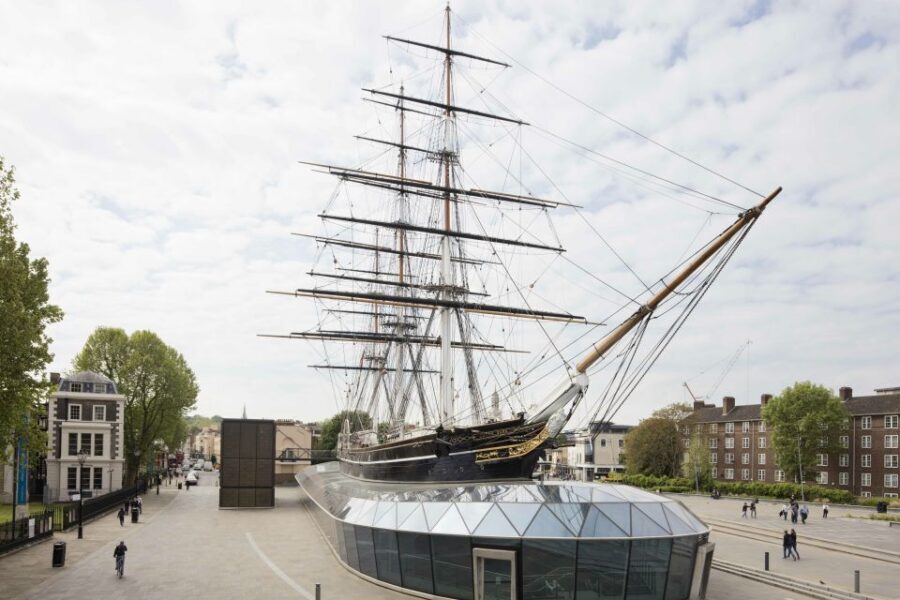
- Walking under the raised hull: You can see the ship from beneath, thanks to conservation that lifted her over 3 meters.
- Steer the wheel: The helm area makes the ship feel less like a model and more like a working craft.
- Main deck masts up close: The scale hits fast when you look upward and then turn your eyes toward the rigging.
- Sailors’ quarters and furnished spaces: The exhibits include areas set up to show how crew lived aboard.
- Interactive moments for kids: There are hands-on activities like drawing a letter and trading-winds navigation style play.
- Audio guide in many languages: English plus French, German, Spanish, Chinese, Portuguese, Italian, Korean.
Cutty Sark in Greenwich: what you are stepping into

The Cutty Sark is not just a pretty old ship. She’s the sole surviving tea clipper, built for the China tea trade and launched in 1869, when speed and seamanship were everything. Today she’s part of Royal Museums Greenwich, so you’re not only seeing a boat—you’re walking into a whole maritime museum setting in one of London’s most historic river towns.
What makes it special is how real the ship feels under your feet. The original wooden planks and iron frames have been carefully conserved, which means you’re not studying a replica. Even if you know nothing about clipper ships, you’ll feel the engineering choices in the way the hull lines and structure present themselves as you move around.
A few more London tours and experiences worth a look



What your entrance ticket includes once you board
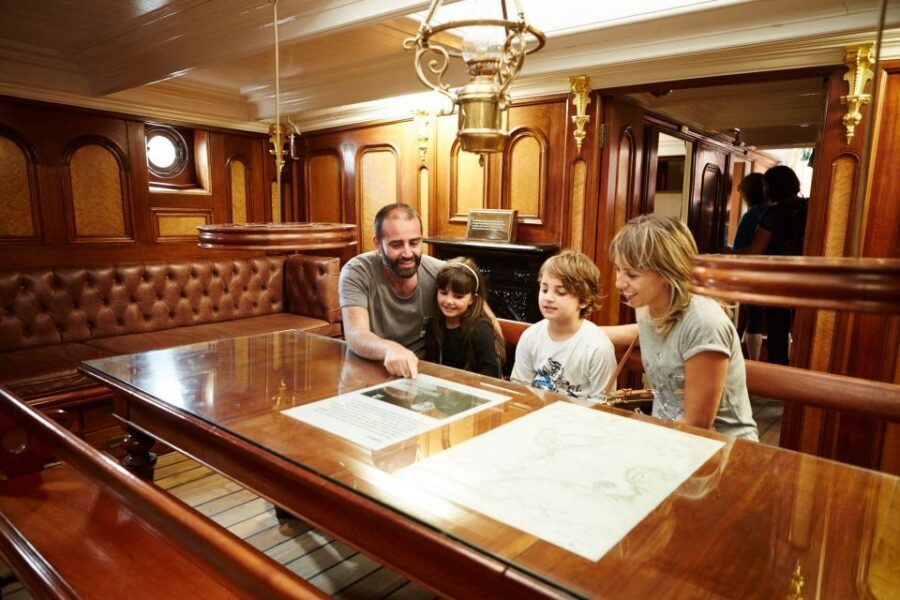
Your ticket is designed for self-paced exploring, with content that helps you connect what you see to how life aboard worked. You get entrance to the Cutty Sark experience, and you’ll also have a multilingual downloadable interactive guide plus an audio guide available in multiple languages.
On the ship, the big moments are physical. You’ll move from deck-level views—where the masts and rigging dominate your sense of scale—to interior exhibits that explain how crew quarters and ship spaces functioned. And yes, you can take your turn at the wheel area, which is the kind of thing that makes even adults start talking like they’re about to sail away.
Standing over the copper hull: the conservation story you can literally see

One of the smartest parts of this museum is that conservation isn’t hidden away. A long, ambitious project raised the ship over 3 meters from the ground, so visitors can walk underneath and study her shape from below. That change turns conservation work into part of the experience, not just a behind-the-scenes footnote.
When you go under the hull, you get an angle that most people never see—lines, curves, and the sheer underside scale of a sailing ship. It’s also a reminder that keeping an artifact alive is constant work. The Cutty Sark looks gleaming and confident, but the museum experience is built on decades of effort to conserve timber and iron, so your awe has a practical backbone.
Deck by deck: what you’ll notice from the main deck to lower spaces

Start on the main deck mindset: look up first. The towering masts make instant sense only when you’re standing where the height matters. You’ll be able to marvel at the sail rig scale and, if you want, spend time orienting yourself—where the ship’s geometry pulls your eyes and how the deck layout helps you imagine tasks underway.
Then go inside the story. The ship’s layout includes places set up to show sailors’ quarters, and you can get a feel for the human scale of life at sea. Some parts can feel dim compared with the deck views, but that’s part of the point: it helps you remember these were working spaces, not photo backdrops.
A few exhibits also bring in “work life” details. In particular, I love that the experience includes rooms and areas set up like the Victorian onboard spaces people mention—think bunks, the galley, and a carpenters workshop kind of vibe. Those details help the ship feel lived in, even though you’re walking through a museum.
Taking the helm: why the wheel moment matters
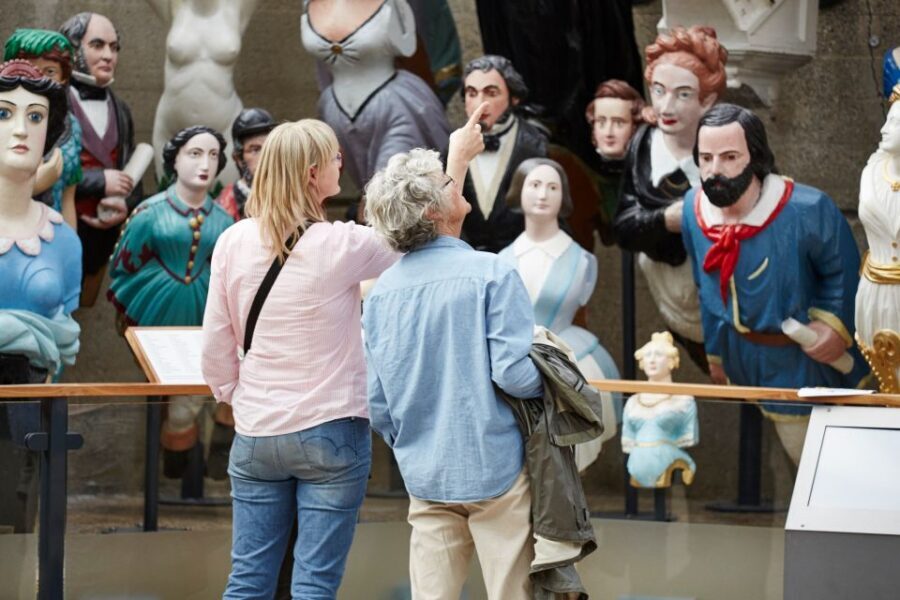
Plenty of attractions let you pose. This one asks you to pause. Standing at the ship’s wheel helps you imagine steering decisions, not just the romance of sails. Even if you don’t know the ship’s technical vocabulary, you’ll understand the idea instantly: you’re at a command spot, with the rest of the ship arranged around that role.
It also helps kids and adults in different ways. Kids tend to treat it like a game that’s attached to a real ship. Adults usually appreciate the grounding effect—suddenly it’s harder to think of the Cutty Sark as static history, because you’re using a key piece of the ship’s story.



Audio guide and interactive play: turning information into something you remember

This is one of those museum visits where the audio guide actually earns its keep. You can use it in English, French, German, Spanish, Chinese, Portuguese, Italian, and Korean, so it’s practical if you’re traveling as a group with mixed language needs. It also pairs well with the many information boards, which help you interpret what you’re seeing without trapping you in one long explanation.
I also like how the experience includes interactive elements that fit younger visitors. If you’re visiting with children, you may spot hands-on activities like drawing a letter to send home and posting it onboard, plus a type of trade-winds navigation play. Those are simple ideas, but they change the mood of the visit from passive watching to active doing.
Even for adults, the downloadable interactive guide helps you move faster between “what am I looking at” moments. You don’t have to keep guessing where to focus next.
Timing your visit: how weather and crowds really change things

Most of what makes the Cutty Sark memorable happens on decks, so weather matters. When it’s clear and calm, the masts and open space can feel like a real voyage day. When it’s cold, windy, or wet, you’ll want warm layers and a plan for shorter outdoor bursts between indoor exhibits.
Crowds matter too. One of the best tips I can offer is simple: arrive earlier rather than later if your schedule allows. People have found the experience much more relaxed when they get there early, which makes sense—once you’re not fighting foot traffic, you can actually look up, move slowly, and take in the underside view without rushing.
Pairing Cutty Sark with a Greenwich day (and keeping it realistic)

The Cutty Sark sits inside Royal Museums Greenwich, which makes it an easy anchor for a broader day around the river. If you like building a full “maritime London” morning, you can pair the ship with nearby Greenwich sights and even a Thames cruise. People also mention adding the Greenwich Observatory to create a strong block of history and science in one area.
If you’re planning a short visit—half-day or morning—this works well because it gives you big visual moments quickly: main deck masts, the helm, and that famous walk-under hull view. Just don’t pack your day so tightly that you feel rushed. This is the kind of attraction where you’ll keep slowing down for photos and for reading.
Wheelchair access and who this ship fits best
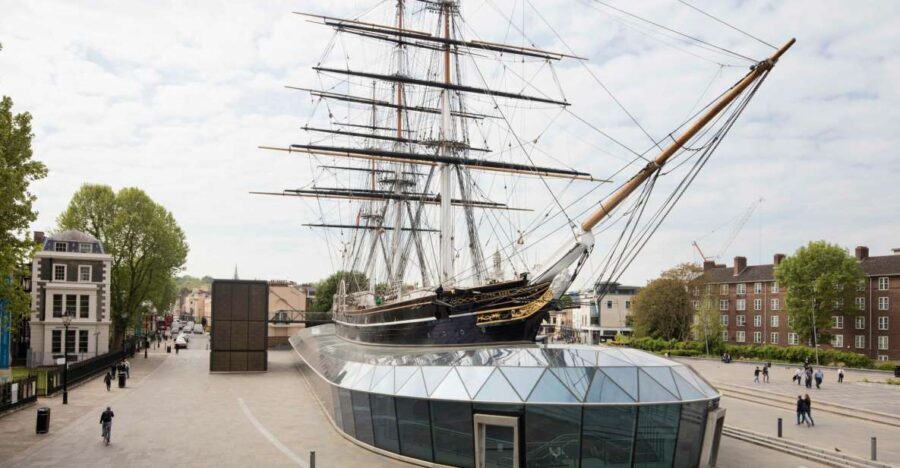
The experience is wheelchair accessible, which matters for a historic ship where uneven surfaces are common. If you use a wheelchair, it’s smart to plan around your comfort level moving through both deck and exhibit spaces, since part of the visit is outdoors.
In terms of who will enjoy it most: if you like ships, sailing, design, maritime trade, or just the sheer engineering of old metal and timber, you’re going to have a great time. If you’re visiting with kids, the structure of decks plus interactive moments can hold attention for the right stretch of time—especially when they can steer and try the onboard activities.
Price and value: what $26 buys you in London terms
At about $26 per person for a 1-day entrance ticket, this can be strong value for London. You’re getting access to a major museum experience built around a single, world-class artifact: the Cutty Sark tea clipper. The value isn’t just the ship itself—it’s that the museum uses the conservation raised-hull design to give you perspectives you can’t replicate elsewhere.
Also, the included audio and multilingual interactive support reduce friction. You spend less time lost in guesswork, and more time figuring out what you’re looking at. For a ship museum, that matters a lot, because the details can be deep even when the experience stays friendly and self-paced.
Should you book the Cutty Sark entrance ticket?
Yes—if you want a London attraction that feels concrete and real, not just a building full of screens. The walking-under-hull view and the chance to stand at the wheel give you moments you’ll remember long after you leave Greenwich. And if you’re traveling with family, the interactive bits help keep the visit from turning into a slow lecture.
You might skip or reconsider if your group hates outdoor deck time, because parts of the experience happen outside and weather can be a factor. But for most people—especially anyone with even a small interest in sailing or 19th-century trade—this is one of those tickets that delivers both wonder and understanding without being overly complicated.
FAQ
Where is the meeting point for the Cutty Sark entrance ticket?
The meeting point is at Cutty Sark, King William Walk, Greenwich, London SE10 9HT.
How much does the ticket cost?
The price listed is $26 per person.
How long is the experience valid for?
The ticket is valid for 1 day. You’ll want to check available starting times.
What’s included with the entrance ticket?
Your ticket includes entrance to the Cutty Sark and a multilingual downloadable interactive guide. An audio guide is also included.
What audio guide languages are available?
The audio guide is available in English, French, German, Spanish, Chinese, Portuguese, Italian, and Korean.
Is it wheelchair accessible?
Yes, the experience is wheelchair accessible.
Is it free for children?
Children under 5 are free.