REVIEW · NEWCASTLE UPON TYNE
Newcastle: City Highlights Walking Tour
Book on GetYourGuide →Operated by Martin Stait North East England Tour Gui · Bookable on GetYourGuide
Newcastle rewards slow walking, especially with a story-minded guide. I like the way this tour stitches Blackfriars Friary into the city’s later chapters, and I also love the sweep of the seven River Tyne bridges as you move from streets to skyline. One thing to plan around: the route includes going down 200 steps to the riverside, so it’s not a fit for mobility impairments.
You’ll keep it easy with a small group capped at 10 and an English live guide, and the tour runs rain or shine. Bring rain gear, because this is still a walking tour—no hiding in museums when the weather turns.
In This Review
- Key highlights to look for
- Finding Your Bearings: Ever Changing Sculpture to Tilleys Bar
- Blackfriars Friary and the Town Wall: Medieval Newcastle in Plain Sight
- Chinatown, Chinese Arch, and the Small Stops That Add Texture
- Eldon Square to Grainger Town: One Monument, Two Eras, Many Details
- St Nicholas Cathedral and the Castle: Anglican Calm and Fortress Energy
- River Tyne Descent: Seven Bridges, High Bridge, and Charles I
- Markets and Theatres: Bigg Market, Theatre Royal, and a Few Story Stops
- Stephenson Quarter, the Station, and the Litt and Phil: Mining to Electricity
- The Guildhall, Besse Surtees House, and the City’s Public Face
- Sage Gateshead, The Baltic, and the Redeveloped Riverside Walk
- How Much It Costs and Why It Feels Fair for 3 Hours
- Who Should Book, and Who Should Skip
- Should You Book This Newcastle City Highlights Walking Tour?
- FAQ
- How long is the Newcastle City Highlights Walking Tour?
- Where do I meet the tour guide?
- Is the tour guided and what language is it in?
- What are the main highlights during the walk?
- How much walking is involved, and are there stairs?
- Does the tour run in bad weather?
- Is food or drink included?
Key highlights to look for
- Blackfriars Friary origins in 1239 with Dominican Friars context that makes the area click
- Eldon Square to Earl Grey Monument paired with Grainger Town’s architectural personality
- Chinatown’s Chinese Arch and the quick stops that connect culture and city layout
- Seven bridges photo moments plus the built-in riverside descent of about 200 steps
- Stephenson Quarter and the Litt and Phil tied to Newcastle’s electricity development story
- Sage Gateshead and The Baltic showing how the riverside was redeveloped for modern culture
Finding Your Bearings: Ever Changing Sculpture to Tilleys Bar
The tour starts at the Ever Changing Sculpture on Westgate Road, right opposite Tilleys Bar. That’s a smart setup. You’re at a landmark you can spot again later, and you’re also close to the city’s older street grid, so the walking feels logical instead of random.
I like that the first minutes are spent getting you ready—quick safety notes and an easy warm-up pace—because the route isn’t a flat stroll. You’ll be covering a lot of ground for 3 hours, and having the group settle in helps you enjoy it rather than just survive it.
From the start, you’re in “city highlights” mode: you’ll be looking up at facades, down at street-level details, and across the river when you’re finally set up for the big views.
You can also read our reviews of more walking tours in Newcastle Upon Tyne


Blackfriars Friary and the Town Wall: Medieval Newcastle in Plain Sight
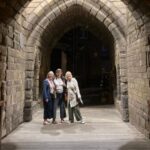
The Blackfriars Friary stop is where the past stops being abstract. You get to see this part of town through the lens of the Dominican Friars, occupied here in 1239. It’s one of those details that makes you rethink what you’re standing on—this wasn’t just a backdrop, it was a working religious community tied to the medieval city.
Blackfriars also connects well to the town wall idea listed on the tour highlights. Even if the wall fragments you notice are short, the guide’s framing helps you understand why Newcastle grew the way it did. You start noticing defensive thinking in the city’s choices: where things are built, how the river shaped movement, and why certain routes became important.
This is also a good stop for photos, but more importantly it’s a good stop for orientation. After Blackfriars, the rest of the walk feels like it’s flowing from a believable story instead of a checklist.
Chinatown, Chinese Arch, and the Small Stops That Add Texture
Newcastle’s Chinatown isn’t just a single photo spot—it works best when it’s placed in the wider city pattern. Here, you’ll pass through Chinatown with its Chinese Arch, and the tour helps you slow down for what that gateway represents: how migration and trade shape a city center.
You’ll also run into quick “texture stops” that are easy to miss on your own, like St Andrews Church and views around St James Park. Those aren’t long museum-style visits. Instead, they give you just enough context to understand what you’re seeing and why it matters where it’s located.
If you like walking tours that feel human-sized, Chinatown is a win. It’s colorful, compact, and it breaks up the heavier civic architecture coming up next.
Eldon Square to Grainger Town: One Monument, Two Eras, Many Details
Eldon Square is where the tour shifts toward grandeur. It’s a central space, and the guide uses it to connect you to the lifetime of John Scott, Lord Chanceller—a specific anchor that helps you remember the area as more than a pretty square.
Right after that comes the Earl Grey Monument, tied to Charles Earl Grey. This kind of pairing works because you’re not just reading plaques. You’re walking between focal points that the city itself built to signal power, public identity, and influence.
Then you move through Grainger Town, with stops that highlight the city’s planned elegance. Central Arcade and Grainger Market give you two different flavors of “old Newcastle that still works today.” The Arcade is about design and pedestrian flow, while the Market is about daily life and the business heartbeat that keeps historic areas relevant.
This is a great section of the tour if you want to see how Newcastle balances recognition and reinvention. You’re in the center, but the guide keeps pointing out why these spots became natural meeting points.
St Nicholas Cathedral and the Castle: Anglican Calm and Fortress Energy
The Cathedral Church of St Nicholas is one of the city’s most important landmarks, and the tour keeps the stop short enough to stay efficient but focused enough to matter. You’ll look up and around, and the guide’s framing gives the building a city role, not just a landmark role.
From there, you head toward the Castle. This is a different kind of mood: the cathedral gives you structure and civic gravity, while the castle area pulls your attention toward defense, authority, and the way the city protected itself against change and conflict.
If you’re the type who likes your walking tours to feel like a movie timeline—medieval foundations, civic growth, then power and industry—this stretch is where it starts to make emotional sense.
You can also read our reviews of more city tours in Newcastle Upon Tyne

River Tyne Descent: Seven Bridges, High Bridge, and Charles I
This tour includes a key physical moment: you’ll go down 200 steps to reach the riverside. That matters, even if the views are worth it. Wear shoes with grip, keep an eye on footing if it’s wet, and treat the stairs like part of the experience instead of a chore you resent.
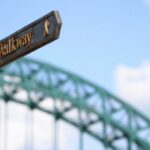
Once you’re down, the River Tyne photo stop gives you a payoff that feels bigger than the effort. You’re set up for the tour’s centerpiece: the seven bridges crossing the river. Seeing them as a group helps you understand how Newcastle’s river isn’t a barrier—it’s a connector that shaped where people could live, trade, and build.
The route also calls out High Bridge and its links with Charles I. That’s the kind of detail that makes a bridge feel like a historical object, not just infrastructure. The guide keeps you thinking about timelines: when the bridge mattered, who it served, and how the city’s changes altered the river’s meaning.
Markets and Theatres: Bigg Market, Theatre Royal, and a Few Story Stops
Back on streets and into civic centers, the walk moves through places like Bigg Market. The tour highlights its link to the Blaydon Races, which is enough to spark curiosity about local identity and how entertainment becomes part of city memory.
You’ll also spend time near the Theatre Royal, including a view of the Theatre Royal. It’s a nice shift from stone-and-statues mode. Here you’re reminded that a historic center isn’t stuck in the past. It’s still built for events, crowds, and performance—just with different pacing than you might expect.
A detail I appreciated in the guide style is how stories get sprinkled into these stops. In particular, the guide connects markets and city life with personal anecdotes, including a family-style story about a Bristolian man marrying a Geordie lass. Those little human threads are what make a “highlights” walk feel like it’s about people, not just buildings.
Stephenson Quarter, the Station, and the Litt and Phil: Mining to Electricity
This part is built for your curiosity. The tour brings you into the Stephenson Quarter and the area around the Station, then toward the Mining Institute and the Litt and Phil.
The standout concept here is how the guide ties these spots to the development of electricity. You can feel the logic without needing a technical lecture: mining wealth and experimentation shaped cities, and Newcastle’s institutions helped support that change. The tour keeps it grounded in place, not theory.
If you’ve ever felt that industrial history can be dry, this is the antidote. The guide’s approach helps you see why people invested in electricity and why a city’s next step often comes from its last big industry.
Even when you only get a short look at each stop, you leave with a clearer mental map of how Newcastle went from heavy work to modern power.
The Guildhall, Besse Surtees House, and the City’s Public Face
As the tour continues, you’ll pass by civic architecture like the guildhall and Besse Surtees House. These aren’t just decorative stops. They help you understand how Newcastle presented itself—through governance, administration, and public-facing buildings built to last.
I like this stretch because it turns the walk from “what to see” into “how to read the city.” Once you notice the style language—who built it, what it was for, how it relates to the streets around it—the rest of the route starts snapping into focus.
It’s also a helpful transition before the final riverside redevelopment area, because you’ve already been shown the city’s formal side.
Sage Gateshead, The Baltic, and the Redeveloped Riverside Walk
The last leg of the tour leans into modern Newcastle, especially along the redeveloped riverfront. The highlights include the Sage Gateshead, The Baltic, and the artwork involved in the riverside regeneration.
This is where the seven bridges turn into something more than scenery. You’re walking in an area that has been reshaped so culture can take center stage. The big lesson here is that redevelopment didn’t erase the river’s importance—it reframed it. You still get city-wide views and movement, but now you also get a creative destination feel.
The photo opportunities feel natural here. You’re at the point in the walk where your eyes are ready for bigger compositions: buildings across the water, bridges leading the line of sight, and public art that adds personality at street level.
How Much It Costs and Why It Feels Fair for 3 Hours
The tour costs about $40 per person for 3 hours, capped at 10 participants with a live English guide. For that price, you’re paying for three things: guided storytelling, route efficiency through central areas, and a structured way to cover a lot of major landmarks without needing a plan of your own.
If you tried to do this alone, you’d likely spend time bouncing between points, guessing at the best order, and missing the connections the guide draws—like Blackfriars Friary’s 1239 context or the electricity development story linked to places such as the Litt and Phil. The value is in the way the walk makes the city readable.
One fair warning: food and drinks aren’t included, so budget for a break on your own terms. The good news is you do get a break scheduled at Grainger Market, and the rest of the pacing feels built for steady walking rather than sprinting.
Who Should Book, and Who Should Skip
I think this tour is ideal if you:
- want a high-coverage city walk in one afternoon window
- enjoy guides who explain how sites connect, not just what they look like
- like mixing civic landmarks with river views and modern cultural stops
Skip it if you:
- need a route without steep stairs, since it includes 200 steps going down to the riverside
- prefer fully accessible options or mostly flat walking
Also, bring rain gear. The tour runs rain or shine, and you’ll feel it in the steps and ground conditions near the river.
Should You Book This Newcastle City Highlights Walking Tour?
If you want the Newcastle version of getting your bearings fast—without rushing—you should book this. The biggest reason is the guide style: Martin Stait’s approach is engaging, and he makes the city feel personal through stories and connections, including well-placed anecdotes that make markets and landmarks stick in your mind.
Just go in with the right expectations. This is a walking tour with stairs, and it’s designed for small-group pacing rather than comfort stops every few minutes. If you can handle that, you’ll come away with a much clearer picture of Newcastle—from Blackfriars to Chinatown, from St Nicholas Cathedral to the Castle, and right through the bridges and redeveloped riverside.
FAQ
How long is the Newcastle City Highlights Walking Tour?
It lasts about 3 hours.
Where do I meet the tour guide?
You meet at the Ever Changing Sculpture on Westgate Road, opposite Tilleys Bar.
Is the tour guided and what language is it in?
Yes. It’s led by a live guide in English.
What are the main highlights during the walk?
Key stops include Blackfriars Friary, Chinatown, Eldon Square, the Earl Grey Monument and Grainger Town, St Nicholas Cathedral, and the riverside with the seven bridges, plus areas such as Sage Gateshead and The Baltic.
How much walking is involved, and are there stairs?
You should expect a fair amount of walking, and the tour includes going down 200 steps to reach the riverside.
Does the tour run in bad weather?
Yes. The tour takes place rain or shine, so bring rain gear.
Is food or drink included?
No. Food and drinks are not included, so plan to buy your own.