REVIEW · PENZANCE
Penzance: Land’s End Boat Tour with Wildlife Guides
Book on GetYourGuide →Operated by Coast Boat Trips · Bookable on GetYourGuide
Land’s End from a RIB feels like freedom. You get a wildlife guide with marine know-how, and you ride past Cornish icons like the Minack Theatre. Best of all, the crew often lines up sightings of seals and dolphins, even when conditions change. The one catch is weather: it can be cold and occasionally choppy.
This is a tight 2-hour loop that moves fast—out past Porthcurno and fishing villages, then farther offshore for that classic “where the ocean meets the coast” wildlife potential, before returning via St Michael’s Mount. I like that the guiding style is practical too: clear safety briefings, quick lookouts, and route adjustments when the sea or visibility calls for it.
And yes, the boat ride can feel like an adventure (in a good way). You’ll get life jackets and waterproof gear if you need it, but you should still bring a jacket and dress in layers, because even a sunny Cornwall day can turn brisk out on the water.
In This Review
- Key highlights you’ll feel right away
- Penzance to Land’s End: a short trip with big “wow” potential
- Where you meet, what you wear, and why it matters
- Minack Theatre, Porthcurno Beach, and fishing villages from the sea
- Longship Lighthouse and the offshore shelf for dolphins, tuna, and more
- The return sweep past St Michael’s Mount and how the guide keeps it moving
- Comfort, safety, and what to expect when the sea turns bumpy
- Wildlife odds: what you can hope to see (and what you can’t control)
- Price and value for a 2-hour, guided RIB adventure
- Who should book this, and who should skip it
- Should you book the Penzance to Land’s End wildlife RIB tour?
- FAQ
- How long is the boat tour?
- Where do I meet for the Penzance departure?
- What’s included in the ticket price?
- What should I bring?
- What language is the guide in?
- What wildlife might I see?
- What is the cancellation policy?
- Is this tour suitable for everyone?
Key highlights you’ll feel right away
- Marine wildlife guiding: experts on sea life and habitats, not just scenic narration
- Land’s End, the way it’s meant to be seen: cliffs and the tip of mainland Britain from a RIB
- Minack Theatre and Porthcurno views: famous spots you can only appreciate properly from the sea
- Longship Lighthouse and offshore shelf hunting: a deliberate push outward for wildlife chances
- Speed with safety: fast, fun rides paired with life jackets and strong crew control
Penzance to Land’s End: a short trip with big “wow” potential
The best part of this tour is how efficiently it packs atmosphere and wildlife into just two hours. You start in Penzance, then quickly shift from harbour life to the rugged drama of Cornwall’s far southwest. From the RIB, the coastline doesn’t look like postcards. It looks close, real, and a bit wild.
I also like that the focus stays grounded. The day isn’t just about ticking off Land’s End. The crew’s main job is to help you spot marine wildlife and understand what you’re seeing, whether that’s a seal basking on rocks or birds circling above cliffs.
One reason the trip earns such strong ratings for transport is that the ride is genuinely managed well. You get speed and bouncing waves without feeling out of control. Several people note the boat can get rough at times when it goes farther out, which is what you should expect in this part of the Atlantic-facing coast. Still, the crew’s calm approach seems to be a big part of why it works.
This is also the kind of tour where weather matters. If visibility is poor or the sea is too wild to hunt efficiently, wildlife sightings can drop. The trade-off is that you still get an unforgettable sweep of cliffs and headlands from a view most people never get.
You can also read our reviews of more boat tours in Penzance
Where you meet, what you wear, and why it matters
You’ll meet at Penzance Harbour’s long-stay car park (paid parking). From there, follow the boatyard fence at the back of the car park to the left. You’ll spot the Penzance Sailing Club building behind the boatyard. Walk past it along Albert Pier, then look for a white branded truck and an orange flag on the left-hand side of the pier.
In practice, this matters because timing is everything on a boat. You don’t want to be late, or you’ll feel rushed before you even step aboard. Once you’re lined up, you’ll get safety equipment including life jackets, plus waterproof jackets and trousers if needed.
What to bring is simple: bring a jacket. The operator’s own note is clear—dress warm with layers, even on a sunny day—because the breeze over open water can make “warm” feel like “frozen.” If you tend to run cold, pack extra layers for your core and hands.
One more detail I’d keep in mind: this isn’t a gentle sightseeing cruise. It’s a RIB ride with seats designed for speed, including that forward “jockey” style that people mention as part of the fun. That’s great if you like motion. If you have back issues, this likely won’t suit you.
Minack Theatre, Porthcurno Beach, and fishing villages from the sea
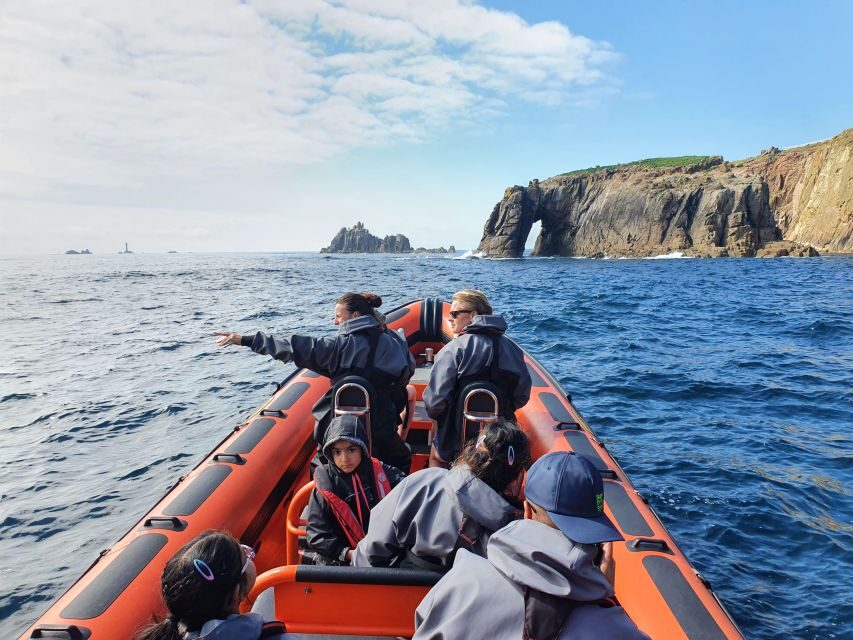
The outward stretch is where the scenery grabs you by the collar. You head toward Land’s End while passing some of Cornwall’s most recognizable sights from the water.
First up is the Minack Theatre area. Even if you’ve never been to a performance there, the place has a dramatic setting—built into the rock face, facing the sea. From a boat, you don’t just see the coastline. You see the theatre’s relationship to cliffs, waves, and scale.
Next comes Porthcurno Beach. Up close, beaches like this feel different from shore. From sea level, you get a better sense of how the shape of the coast funnels wind and swell. It’s also a nice reminder that Cornwall’s “pretty” coast is also a working coastline, with changing conditions and serious weather.
Between these famous points, you also glide past idyllic fishing villages—the kind of place where you’d normally be hiking or driving. From the sea, you’re reading the coast as a system: harbours, rocks, cliffs, and the routes boats actually use. Several people mention that guides share not only wildlife details, but also stories tied to the area—harbours, lights, and the history around the coast.
The only drawback in this section is one you can’t fix with clothing: if the sea is rough, the beauty comes with more motion. Still, that same motion is part of why the tour feels like an adventure instead of a slow cruise.
Longship Lighthouse and the offshore shelf for dolphins, tuna, and more
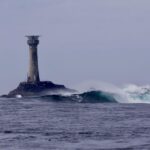
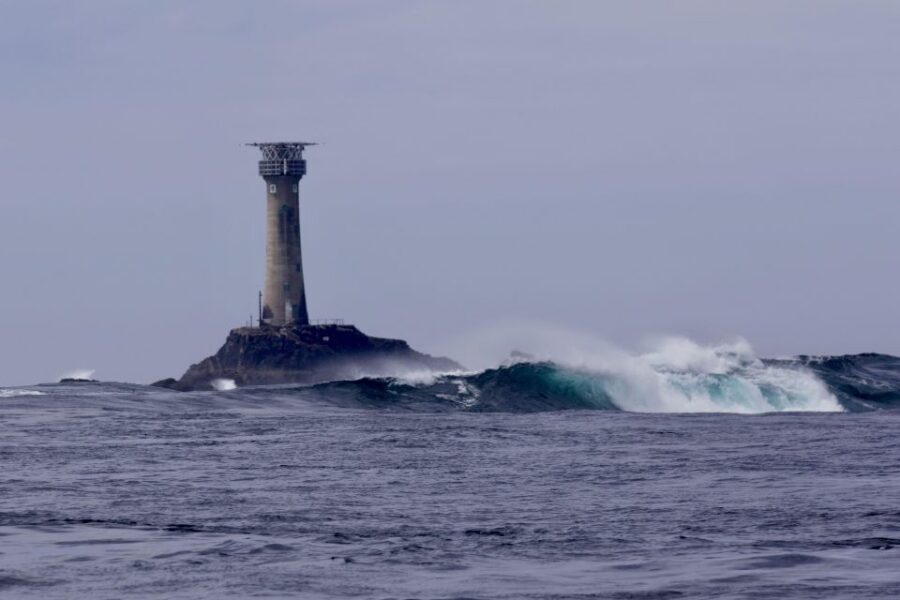
Once you reach the Land’s End tip, you pass the historic Longship Lighthouse—a strong landmark because it marks the transition from “coast hugging” to “outward hunting.” Land’s End is the kind of place where currents and seabirds tell you life is around, even when you can’t spot it instantly.
Then the crew ventures out to an offshore shelf, where the ocean depths meet the coast. This is the operational heart of the tour. It’s not random. It’s a targeted move aimed at increasing your odds of seeing dolphins and other marine life.
What you might spot varies, because wild animals don’t follow calendars. But the patterns in the sightings are encouraging:
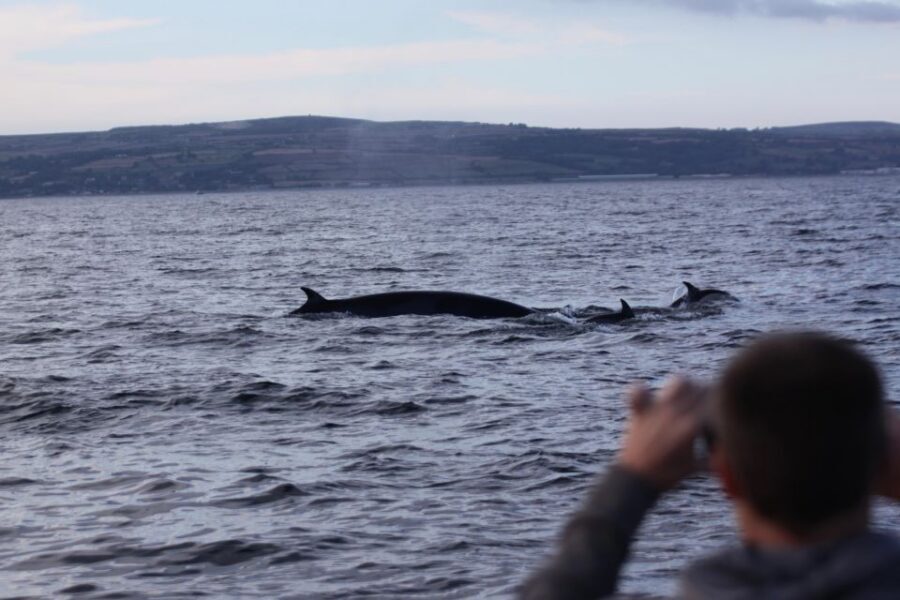
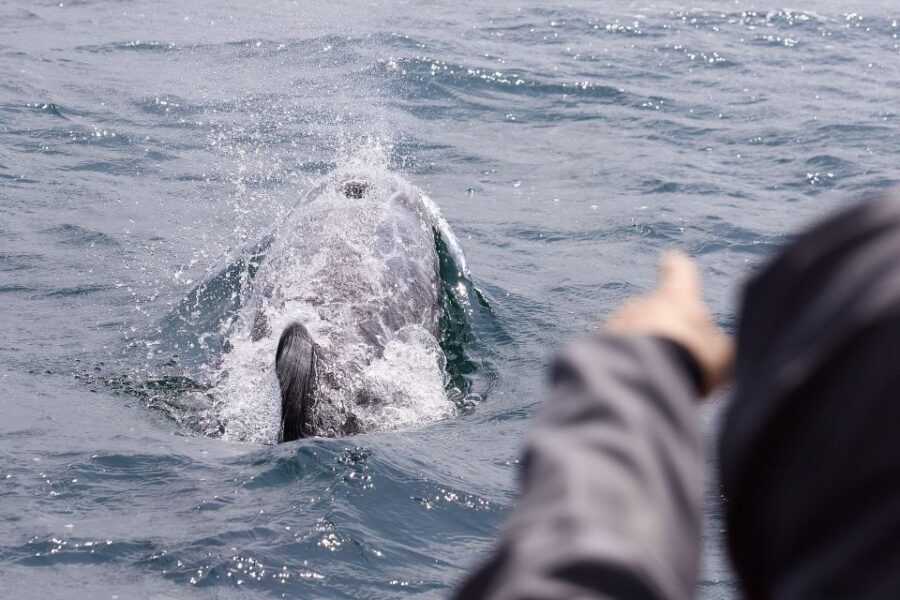
- Dolphins and porpoises have been seen close to the boat on some days
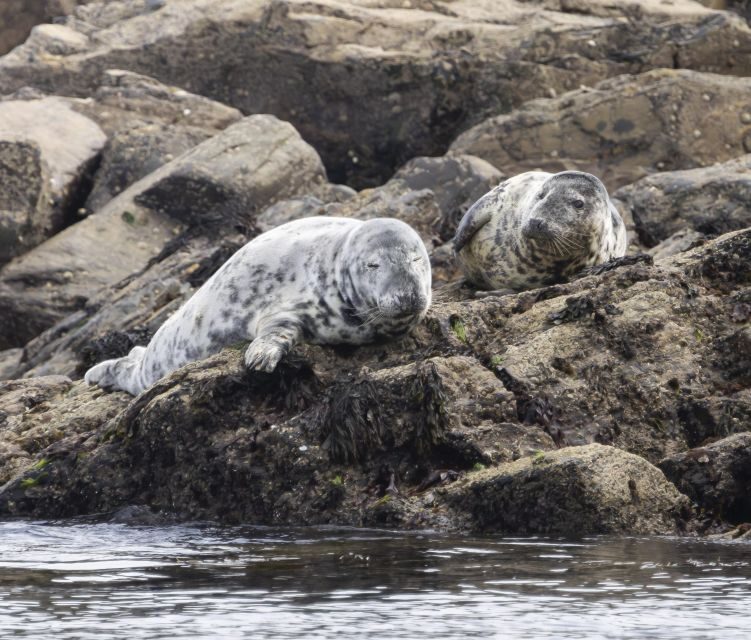
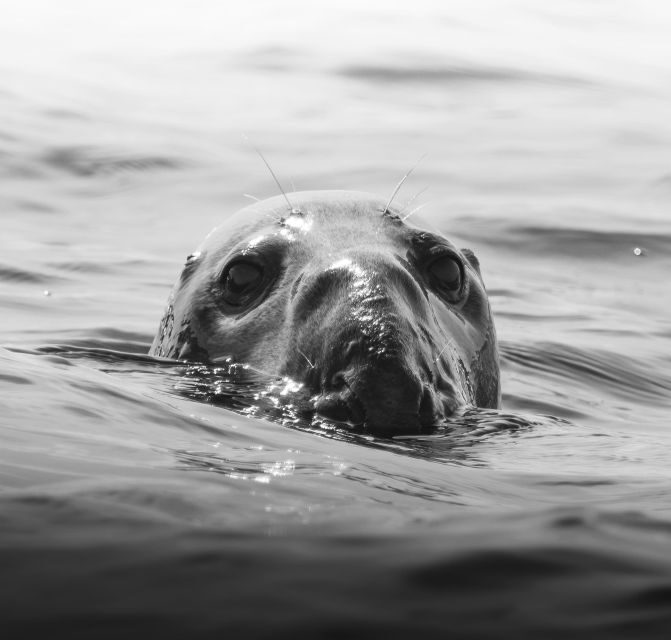
- Grey seals and other seal sightings happen often when conditions are right
- Bluefin tuna shows up on certain outings, sometimes spectacularly
- Birds can be part of the action too—people report things like peregrine falcons, gannets, and other coastal seabirds
One review even calls out large tuna, up to around three meters, jumping at the surface. Even if you don’t see that scale, the point is that the guide team is actively scanning and repositioning.
If dolphins don’t appear on your trip, don’t assume it’s because the crew didn’t try. Some departures see seals and tuna but miss dolphins due to conditions. The most consistent theme is effort: guides do their best to get you to places where wildlife frequently appears, while keeping a safe approach.
The return sweep past St Michael’s Mount and how the guide keeps it moving
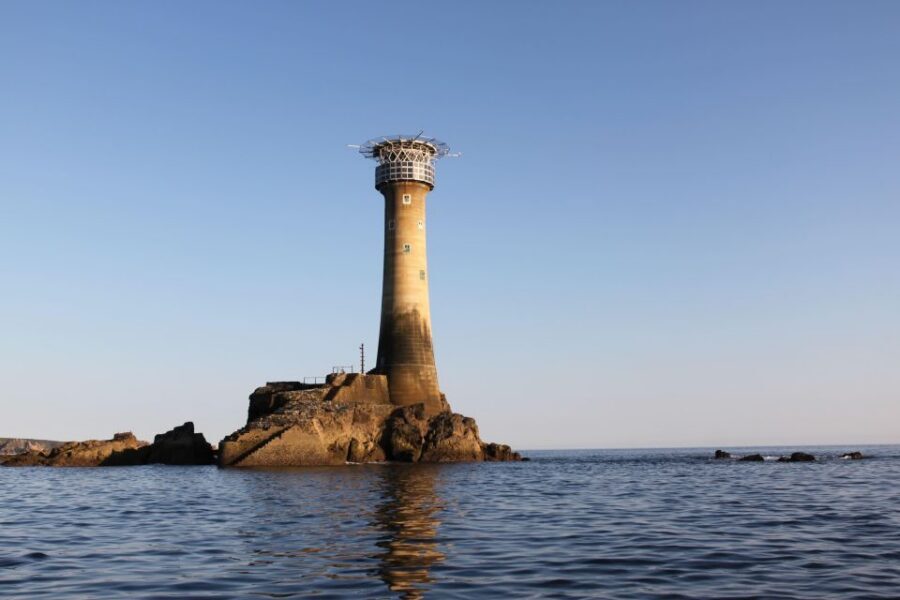
Heading back, you don’t just turn around and repeat the same route. You get another perspective as you cruise toward the return line, including a pass by St Michael’s Mount.
That return segment can be surprisingly satisfying because it lets you compare what you saw on the way out. The coastline looks different when you’re moving along it under shifting angles and light. It’s also a chance to keep your “sea eye” open—people report seeing birds and marine mammals during the return as well.
What helps here is the tour’s pace. Two hours means you get a quick hit of everything: scenery, landmarks, and scanning time. Multiple people comment that the crew explains where you’re going and what to look for. Names that come up in that role include Daisy, Sophia, and Zach, with Zac also mentioned as crew support. Skipper Jack appears in several notes as well, described as skilled and confident with both safety and local context.
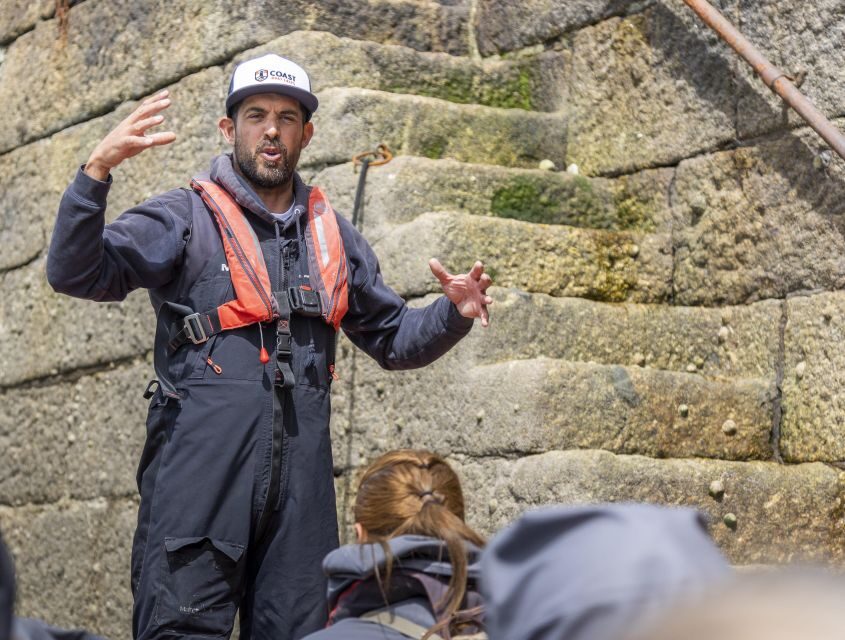
One thing I appreciate about operators like this is how they handle the “learning” part without turning it into a lecture. You’re not stuck listening while animals slip away. You get short, useful explanations timed to what you’re actually seeing—then the boat keeps moving toward the next best chance.
A few more Penzance tours and experiences worth a look
Comfort, safety, and what to expect when the sea turns bumpy
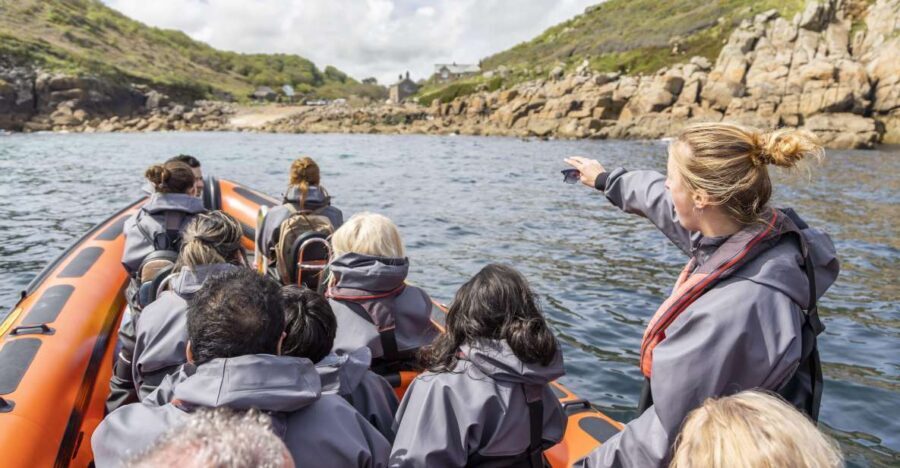
This is where you should go into it with the right mindset. A RIB can be thrilling. Some people specifically mention the ride getting bumpy farther out to sea, and they also say it still felt safe and well managed.
You’ll feel the boat move, especially if you’re seated in those quick, angled spots designed for speed. But the payoff is visibility: from a fast RIB, you’re scanning a wide swath of water and rock platforms rather than watching through a window.
You’ll also get safety equipment, and the crew’s approach matters. Several notes emphasize reassurance and safety awareness. People mention that the guides help those who aren’t used to being on the water settle in fast. That’s important if you get motion sickness or anxiety with boats.
Dress strategy is your biggest lever for comfort:
- wear layers
- bring a jacket
- use the waterproof gear offered if it’s needed for your clothes and comfort
And if you fall into any “not suitable” categories, take it seriously. The tour is listed as not suitable for pregnant women, people with back problems, and wheelchair users. That’s consistent with what you’d expect from an active boat ride with moving deck areas and seating that isn’t designed for mobility access.
Wildlife odds: what you can hope to see (and what you can’t control)
Let’s be honest: wildlife spotting is a luck-plus-skills game. You can do everything right and still have a quieter day. Weather can shut down the best sightings, and sometimes dolphins simply don’t come close.
But the sighting list here is strong enough to justify the trip if you care about sea life. Based on the details you have, you should keep your eyes open for:
- Seals, including grey seals on rocks
- Dolphins, including common dolphins and dolphins seen close to the boat
- Porpoises, including sightings described alongside the boat
- Bluefin tuna, sometimes with impressive surface activity
- Minke whales on at least one outing
- Coastal birds like peregrine falcons, gannets, and other seabirds
- Even smaller “bonus” finds like a rare bird noted on a foggy trip
Also worth noting: when wildlife is spotted, people mention the crew takes care to give animals space. That matters because it keeps your experience ethical, and it reduces the chaos that can happen when boats crowd a location.
If you really want dolphins, pick a day when the sea looks manageable and visibility seems decent. Even then, be flexible in your expectations. A trip with seals, tuna, and lots of bird life can still feel like a win, especially when a guide explains what each species is doing and why it’s in that area.
Price and value for a 2-hour, guided RIB adventure
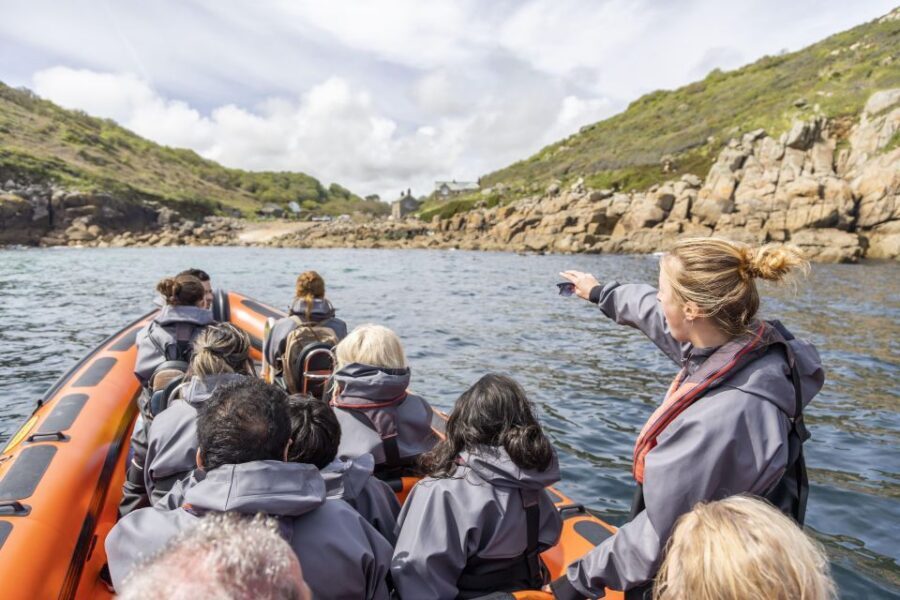
At $83 per person for two hours, the value is mostly about what you’re paying for beyond the boat ride. You’re buying:
- a wildlife specialist guide focused on local marine life
- boat time that reaches the Land’s End area and pushes out toward the offshore shelf
- safety equipment like life jackets
- waterproof clothing if needed
- and the crew’s navigation choices, which can matter for wildlife odds
For a trip this short, what you don’t want is long downtime. This experience avoids that. It keeps the schedule moving: Penzance out to Land’s End, then a targeted offshore stretch, then back with another coastal sweep.
The other value factor is how strongly the experience scores on transportation comfort. The tour data includes a highly-rated transport score, with 97% of reviewers giving a perfect score. That suggests the operator isn’t just running boats; they’re running them in a way that feels controlled to most people.
If you’re budgeting, consider what else you could do in Cornwall for two hours. This is the kind of ticket where you’re not just paying for a view. You’re paying for expert help translating the coast into living patterns—and you’re doing it from sea level at speed.
Who should book this, and who should skip it
This tour makes the most sense if you:
- want active sea wildlife viewing, not just a scenic drive
- like learning in real time while you’re actually on the water
- enjoy fast rides and can handle some motion
- care about local coastal history and how harbours, lighthouses, and theatres fit into the marine world
You should probably skip it if you:
- are pregnant
- have back problems
- use a wheelchair
And if you’re the kind of person who hates cold wind, you’ll still need to show up prepared. Cornwall’s coast can be sunny and still feel freezing once you’re moving across open water.
Should you book the Penzance to Land’s End wildlife RIB tour?
I’d book it if you’re excited by the combo of Cornwall cliffs plus marine wildlife, and you’re okay dressing warm and accepting that animal sightings aren’t guaranteed. The guide team approach—safety-first, fast-paced scanning, and route choices—seems to be the secret sauce that turns a short boat ride into a memorable one.
If you’re only interested in a smooth, slow cruise, or you’re sensitive to motion and cold, look at calmer options instead. But if you want your Land’s End time to feel like an adventure with a purpose, this one is a strong choice.
FAQ
How long is the boat tour?
The tour duration is 2 hours.
Where do I meet for the Penzance departure?
Meet at Penzance Harbour’s long-stay car park (paid parking), then follow the boatyard fence to the left, walk along Albert Pier, and look for a white branded truck and an orange flag on the left-hand side.
What’s included in the ticket price?
Included are the boat tour, a wildlife guide, waterproof jackets and trousers if needed, and safety equipment including life jackets.
What should I bring?
Bring a jacket. Dress in warm layers since it can be cold on the boat even on a sunny day.
What language is the guide in?
The live tour guide is English.
What wildlife might I see?
You have the chance to see local marine life such as dolphins, seals, and other wildlife, and the route is designed to look for these offshore. Exact sightings vary by conditions.
What is the cancellation policy?
You can cancel up to 24 hours in advance for a full refund.
Is this tour suitable for everyone?
No. It is not suitable for pregnant women, people with back problems, or wheelchair users.