REVIEW · PLYMOUTH UK
Plymouth: Best of Plymouth Walking Tour
Book on GetYourGuide →Operated by Plymouth Walking Tours · Bookable on GetYourGuide
Plymouth makes sense on foot. This Best of Plymouth Walking Tour threads the working harbor past old streets and ends with Smeaton’s Tower views over Plymouth Sound. It’s a compact walk that helps you place what you’re seeing, without turning your day into a full-on marathon.
What I like most is the way guide Hannah connects places to people and voyages, starting at the Mayflower Steps and moving through streets like New Street and Southside Street. I also love that it’s built for real life: it’s family-friendly and dog friendly, and you can request step-free options when the route gets tricky.
One thing to factor in: parts of the route include cobbles and some moderate inclines, so you’ll want to flag any access needs ahead of time.
In This Review
- Quick reasons to go
- Starting at the Mayflower Steps on Plymouth’s Barbican
- New Street and Elizabethan street: seeing the town before it became a port cliché
- Southside Street: pubs, England’s oldest bakery, and Plymouth Gin Distillery
- The Barbican waterfront: maritime stories plus independent shops and local art links
- The Merchant’s House and St Andrew’s Church: people, power, and the religious quarter
- Plymouth’s 1950s edge and post-war architecture: the town after the big disruptions
- Plymouth Hoe and Tinside Pool: the sea view that makes the whole tour click
- Finishing at Smeaton’s Tower: an iconic landmark without the ticket hassle
- Accessibility and route reality: fun for many, but plan for cobbles and inclines
- Price and value for a 102-minute Plymouth orientation
- Who this walking tour is best for
- Should you book Plymouth: Best of Plymouth Walking Tour?
- FAQ
- How long is the Best of Plymouth Walking Tour?
- Where do I meet the guide?
- Where does the tour end?
- Is the tour wheelchair accessible?
- Are step-free routes available?
- Is the tour dog friendly?
- What language is the guide?
- Is admission to attractions included?
Quick reasons to go
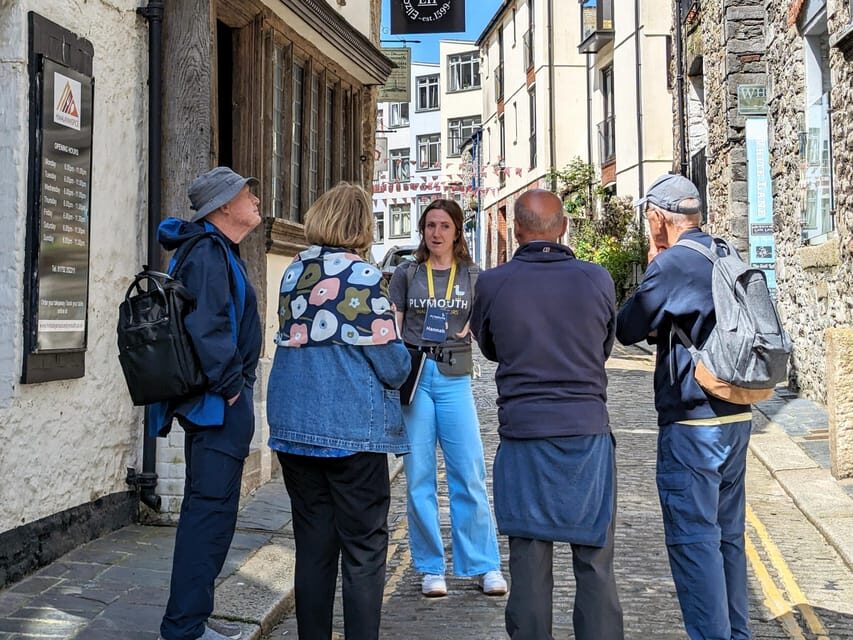
- Hannah as your guide: friendly, engaging, and flexible while keeping the story clear
- Mayflower Steps to the Hoe: you get both Plymouth’s port past and big sea views
- Southside Street stops: classic pub street energy plus landmarks like Plymouth Gin Distillery
- Smeaton’s Tower viewpoints: a satisfying finish without needing extra tickets
- Mobility-scooter friendly planning: step-free routes available if you ask ahead
Starting at the Mayflower Steps on Plymouth’s Barbican
Your tour kicks off back where the story of Plymouth’s most famous voyage begins: the Mayflower Steps Memorial on the Barbican. Meet at the large blue flag opposite the memorial, and you’ll get oriented fast—this tour is designed to help you understand the port town you’re standing in, not just trot from stop to stop.
From the start, the tone is welcoming and easy to follow. That matters here because Plymouth’s old center can feel like a maze if you’re wandering on your own. With a guide, you start to notice patterns: where ships would have influenced street life, where religious sites cluster, and how the town’s shape changed as seafaring and city growth shifted.
The memorial focus is a smart opening. Even if you don’t consider yourself a history person, the Mayflower connection gives you an anchor point. From there, you can follow the threads of departures, arrivals, and the people who lived alongside the harbor.
You can also read our reviews of more tours and experiences in Plymouth Uk.

New Street and Elizabethan street: seeing the town before it became a port cliché

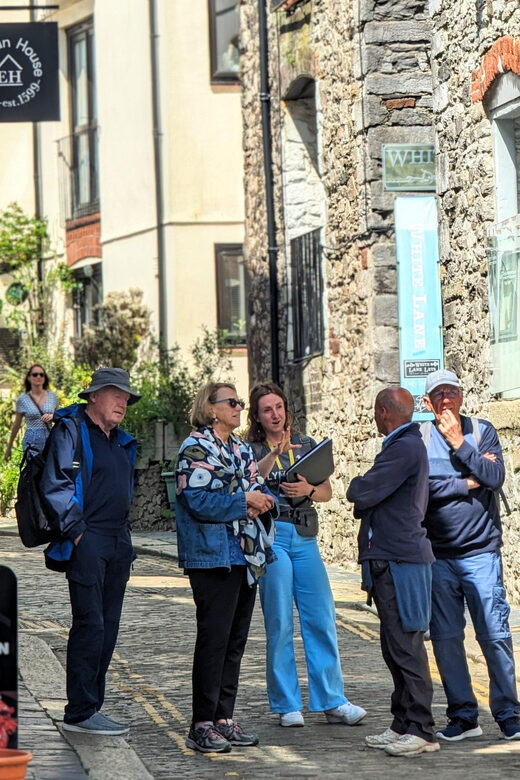
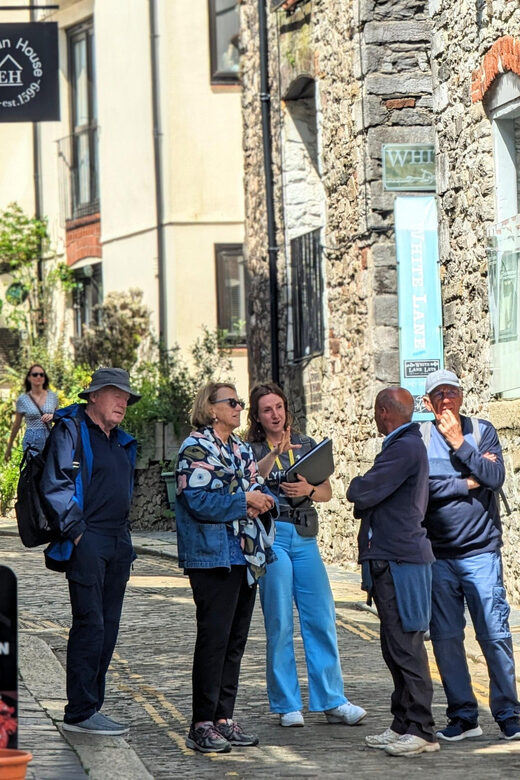
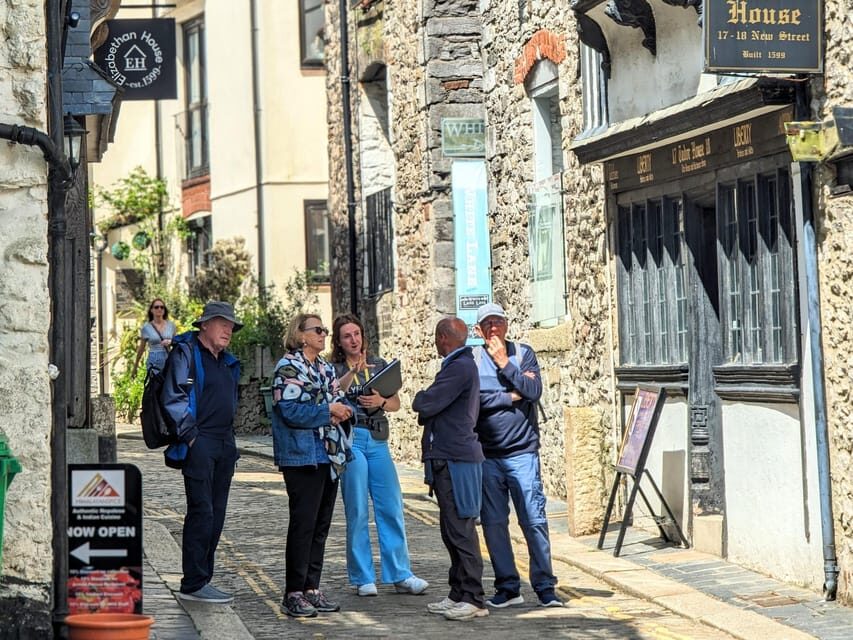
Next up are the streets tied to early modern Plymouth, including New Street, Elizabethan street, and the Elizabethan House. This part works because it’s not just dates and names—it’s about scale and setting. You’ll start to understand why certain buildings and street layouts mattered when travel and trade ran through the waterfront.
A handy way to think about these streets: they’re the “in-between” spaces. They’re not the grand sea view yet, but they show you how Plymouth’s day-to-day life sat close to big events. On a short, 102-minute tour, that’s exactly what you want. You get context without getting bogged down.
If you like walking tours that keep moving (and don’t send you hunting for information afterward), this section delivers. It also helps you spot details later when you return on your own—window lines, street character, and what looks “old” for a reason rather than just because it survived.
Southside Street: pubs, England’s oldest bakery, and Plymouth Gin Distillery
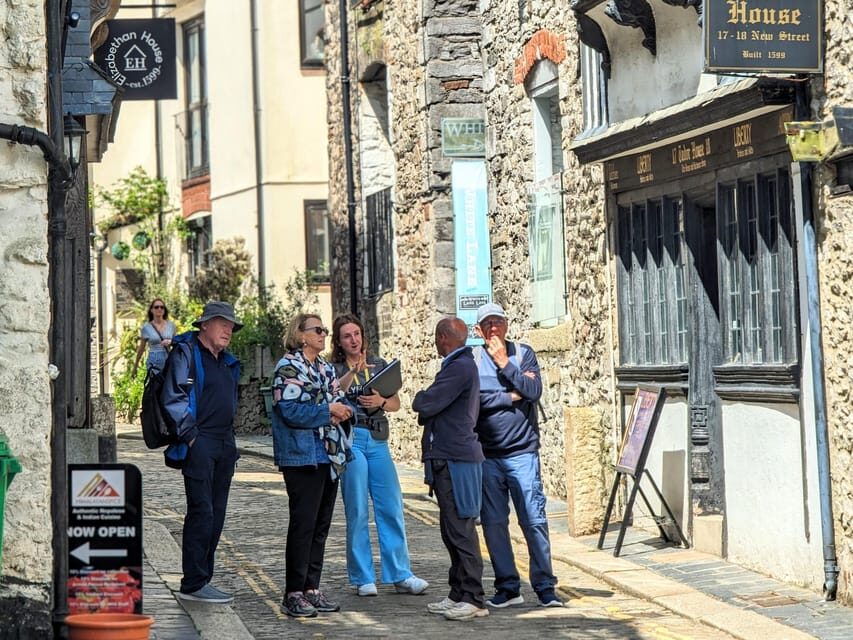
Then you head to Southside Street, an area that mixes history with the kind of places you can actually imagine visiting. The tour highlights iconic pubs, England’s oldest bakery, and the Plymouth Gin Distillery. Even if you skip the tastings later, it’s useful to know these anchors because they shape the neighborhood’s identity.
I like this stop because it translates history into everyday rhythms. A port town isn’t only ships and ceremonies. It’s also food, drink, and meeting points. When you hear why specific places became famous, you’ll likely get a clearer sense of what people did between voyages.
Practical angle: this is a great section to mentally flag where you might want a snack or a drink after the tour finishes. Since the tour loops back to the starting point, you don’t feel forced to stop immediately. You can just store the ideas.
The Barbican waterfront: maritime stories plus independent shops and local art links

You’ll spend time at the Barbican, and this is where the tour shifts from “streets and sites” to “how it feels to be in Plymouth.” You’ll connect the maritime past of the waterfront with what’s happening now—independent shops, coffee shops, and local links to art history.
This blend is valuable if you’re visiting for the first time. Many tours either go full museum mode or full food mode. Here, you get a middle lane: a sense of the port’s role, plus cues for what you can do when the walking ends.
Also, the Barbican setting makes it easier to understand the town’s orientation. Once you’ve had your story points placed, you’ll be more confident choosing where to spend time after. You’ll know what area you’re in and why it matters.
The Merchant’s House and St Andrew’s Church: people, power, and the religious quarter
A standout stop is the Merchant’s House, with connections to some of Plymouth’s more notorious historical characters. This approach makes history feel human. Instead of abstract “trade and industry,” you get intrigue tied to specific places.
Next comes St Andrew’s Church and the surrounding religious quarter. Religious sites in old port towns often reveal patterns of community life—who was present, what institutions held influence, and how beliefs shaped daily routines. Even if you don’t go inside (admission isn’t included), the external context is still helpful for understanding the neighborhood’s role.
One caution: this section is great for story, but it’s also easy to lose track if you’re tired or your group needs a slower pace. The good news is that Hannah is known for being flexible. If your legs (or your kids) need a breather, she can work with the flow.
Plymouth’s 1950s edge and post-war architecture: the town after the big disruptions
You’ll then reach the edge of the 1950s city center, featuring examples of post-war architecture. This might be the most “surprising” segment for people who expected only medieval streets and seaside views.
It’s also one of the most useful. Plymouth didn’t stop at one era, and walking only the oldest blocks can make the city feel frozen in time. Seeing what came next gives you a fuller picture of Plymouth as a living place that rebuilt and rethought itself after major disruption.
If you’re the type who loves modern design, this part will reward you. If you don’t, you’ll still benefit because it explains how the city’s layout and structures reflect changing needs. You’ll walk away understanding Plymouth as a sequence, not a single postcard.
Plymouth Hoe and Tinside Pool: the sea view that makes the whole tour click
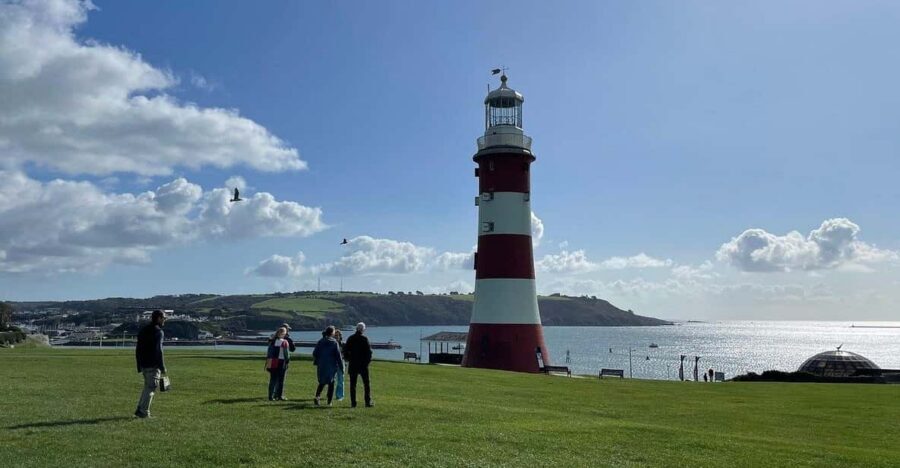
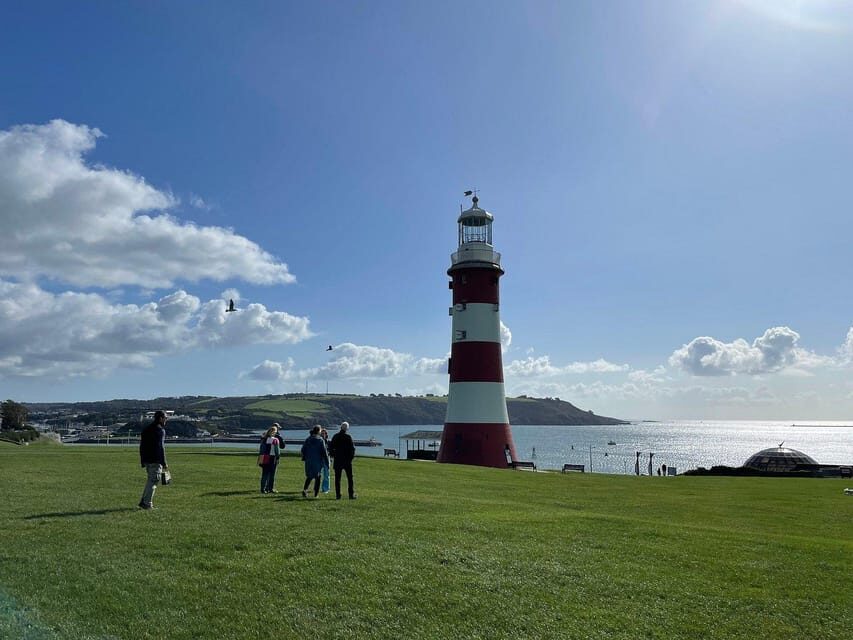
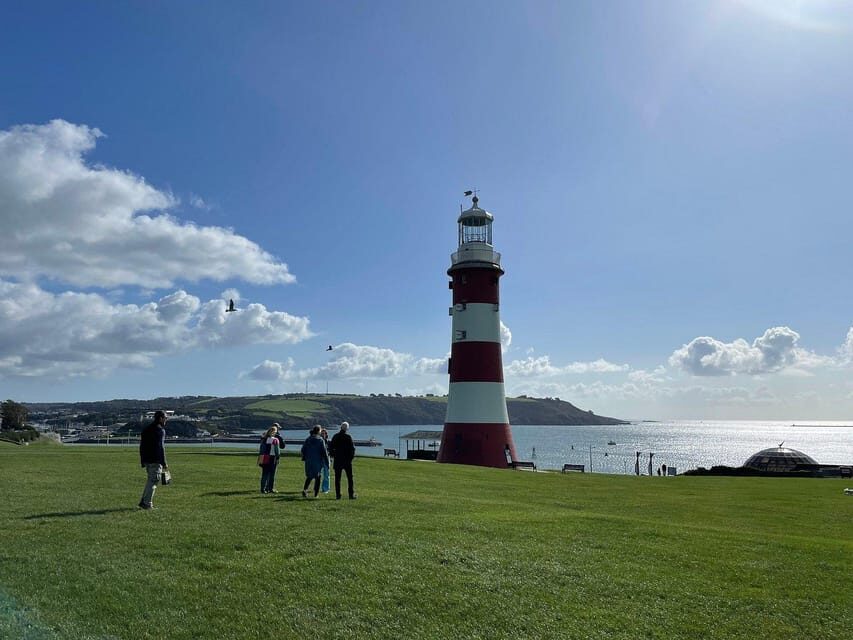
Now you get the payoff: Plymouth Hoe with stunning views over Plymouth Sound, looking toward Cornwall. Along the way, you’ll spot Victorian features like memorials and terraces, plus Tinside Pool.
This is where the tour stops being just informative and becomes memorable. The Hoe is a place where you can feel the geography—why ships mattered, why the harbor was strategic, and why the town grew where it did. It’s also the kind of view you’ll want to linger over, because it’s not only scenic; it helps you interpret everything you just learned.
If you plan to return later for photos, this is your first major marker. Once you understand the perspective from the Hoe, you’ll know where to stand for a better shot of the waterfront.
Finishing at Smeaton’s Tower: an iconic landmark without the ticket hassle
The tour finishes at Smeaton’s Tower, Plymouth’s iconic lighthouse. It’s a strong closing point because it ties the maritime theme together visually. You’ve talked ships, departures, and the port’s role; then you end at a landmark built for navigation and signaling.
Another practical win: this finish gives you a natural endpoint for the rest of your day. You can head into nearby areas for food, sightseeing, or a simple sit-down without needing to line up for extra attractions. Admission fees aren’t included, so it’s smart to treat this walk as the guided overview, then choose any extra stops based on what you’re most curious about.
Because the tour ends back at the meeting point, it also works well if you’re meeting up with someone else later. You know exactly where you’ll be when it’s over.
Accessibility and route reality: fun for many, but plan for cobbles and inclines
The tour is wheelchair accessible, and there are stair-free routes available. You can also request adjustments for accessibility needs, including audio description on the route for people with visual impairment.
Still, here’s the honest part: there are stretches of cobbles and some moderate inclines. If you’re using a mobility scooter, a manual wheelchair, or you’re pushing a stroller, you’ll want to contact the provider with your needs so they can route you appropriately. That advance check is what keeps the experience smooth instead of stressful.
The good news is the tour is built to be adaptable. It’s not a “good luck out there” kind of walk.
Price and value for a 102-minute Plymouth orientation
At $21.22 per person for about 102 minutes, this is priced like a local guided orientation rather than a long-day excursion. You’re paying for a live guide, a structured route, and interpretation of specific stops you’d otherwise miss or misread.
This is also not a ticket-heavy tour. Admission fees to attractions aren’t included, which keeps the cost from surprising you at the end. Instead, you get the guided narrative and then you decide if you want to spend your money on additional entry tickets later.
When it’s priced this way, the value comes down to one thing: do you walk away feeling you understand Plymouth better? Based on the consistently high ratings and praise for guide Hannah, the answer seems to be yes. The tour is short enough to fit into a packed schedule, but it covers enough territory to make you feel oriented when you strike out on your own later.
Who this walking tour is best for
This one fits especially well if you:
- are seeing Plymouth for the first time and want an organized orientation
- like guided storytelling tied to real places
- want something manageable for mixed ages (it’s suitable for the whole family)
- need dog-friendly options for a walk with everyone included
- care about step-free possibilities and can request adjustments
It may feel less ideal if you want a very slow, stop-and-stay picnic style tour. This is more of a steady walk with interpretation, designed to move through neighborhoods efficiently and end at the iconic seafront landmark.
Should you book Plymouth: Best of Plymouth Walking Tour?
I’d book it if you want a focused, 1.5-hour overview that helps you understand Plymouth’s port past and its sea-view present, with a guide who keeps the experience friendly and flexible. The Mayflower start gives you instant context, the Hoe and Smeaton’s Tower give you the payoff, and the route includes practical “where to eat and what to notice” pointers along the way.
I’d think twice only if your group is very sensitive to cobbles or hills and you haven’t yet arranged a step-free route. If you message your access needs ahead of time, it sounds set up to handle that.
FAQ
How long is the Best of Plymouth Walking Tour?
The tour lasts about 102 minutes.
Where do I meet the guide?
Meet at the large blue flag opposite the Mayflower Steps Memorial.
Where does the tour end?
It ends back at the meeting point on the Barbican.
Is the tour wheelchair accessible?
Yes, it’s wheelchair accessible, and stair-free routes are available.
Are step-free routes available?
Yes. If you have access requirements, contact the provider and they will do their best to adjust the offer, including using step-free routes.
Is the tour dog friendly?
Yes, it’s dog friendly.
What language is the guide?
The live guide speaks English.
Is admission to attractions included?
No. Admission fees to attractions aren’t included in the tour price.