REVIEW · PORTSMOUTH
Portsmouth: Old Portsmouth Historical Walking Tour
Book on GetYourGuide →Operated by Historical Walking Tours · Bookable on GetYourGuide
Forget postcards; Old Portsmouth bites back. This 90-minute Old Portsmouth walking tour lays out nearly 900 years of what really went on—dark alleys, surprising stories, and a guide who knows the streets like family.
What I like most is the way it mixes humor and horror without turning scary for the sake of it, so you stay curious instead of just entertained. You also get a steady rhythm: you’re not rushed, and there’s time for questions and photo moments.
One thing to plan for: it’s about 1.5 miles and includes cobblestones and tiny lanes, so comfortable shoes matter. It also isn’t suitable for children under 12.
In This Review
- Key points before you go
- Old Portsmouth in 90 minutes: how the pace really works
- Starting at Landport Gate: getting your bearings fast
- Why Old Portsmouth was so diabolical: demons, humor, and real street context
- Nelson, plaques, and the stories history books skip
- Portsmouth Poll women, pirates, paupers, princes
- Coffee, espionage, and rogues: spotting the city’s hidden connections
- Photo opportunities and questions: what makes the guide’s style work
- Practical tips: shoes, cobbles, and tiny lanes
- Price and value: $16.84 for story you can remember
- Who should book this Old Portsmouth tour (and who might skip)
- Should you book? My honest take
- FAQ
- FAQ
- Where does the Old Portsmouth Historical Walking Tour start?
- How long is the tour?
- How far do you walk?
- Is the tour wheelchair accessible?
- What surfaces should I expect?
- Is it suitable for children?
- What language is the tour guide?
- What is the price per person?
- What is included in the experience?
Key points before you go
- Local guide Samuel: Portsmouth born and bred, and clearly a history teacher at heart.
- A diabolical theme that stays funny: demons, fear, and street gossip woven into real places.
- Nelson gets the twist treatment: you’ll hear what official stories leave out, plus why.
- Portsmouth Poll women and pirates-to-royalty drama: playful name-dropping that turns into actual context.
- Coffee, espionage, and rogues: the tour connects daily life with shady schemes.
- A walk built for questions: gentle pace, photo opportunities, and room to slow down.
Old Portsmouth in 90 minutes: how the pace really works
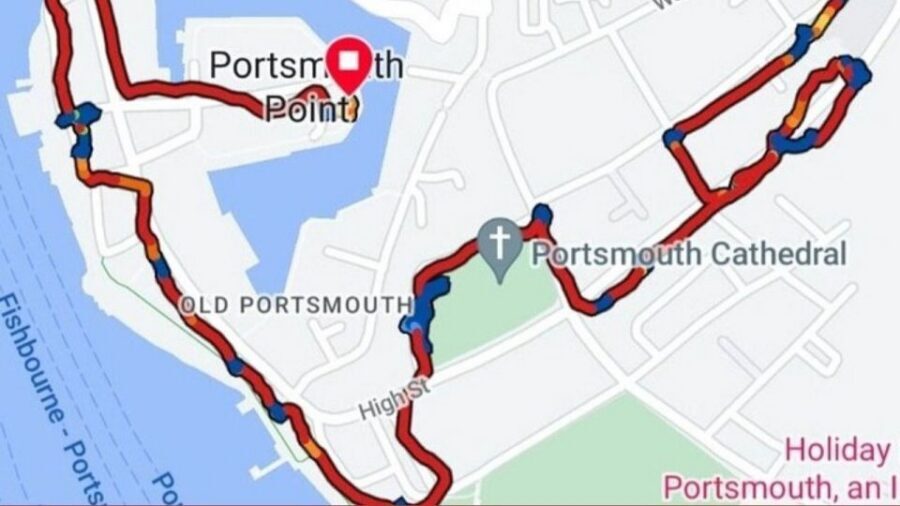
This tour is timed for people who want story without signing up for a full-day ordeal. You’re looking at about 1.5 hours and roughly 1.5 miles, with a route that includes a few tighter lanes. That’s long enough to build momentum and short enough that you’re not dragging your feet when you’ve had your fill of facts.
The pacing is a big deal here. The guide style described is relaxed and fluent, with a gentle walk and frequent opportunities to ask what you’re wondering. That matters because Old Portsmouth can feel like a maze at street level—quick lefts, small openings, and streets that don’t shout their past. A guide who slows down at the right moments helps you connect the history to what you can actually see.
The other practical piece: it’s a walking tour, not a lecture. The best moments come when you’re standing where the story happened and the guide can point out why a street, building, or street corner matters. If you like history you can picture—rather than history you just memorize—this format fits.
You can also read our reviews of more walking tours in Portsmouth



Starting at Landport Gate: getting your bearings fast
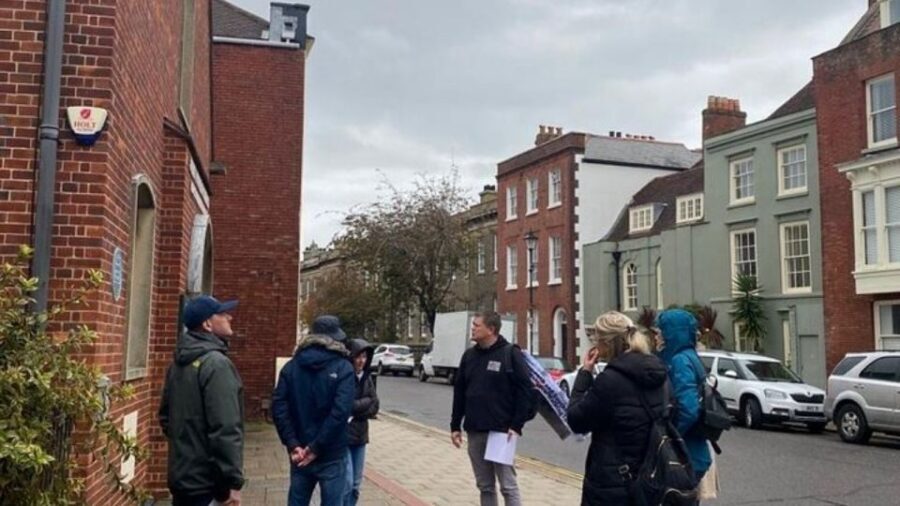
The tour meets at the Landport Gate, directly opposite a bus stop outside Tesco Express, about halfway down St George’s Road in Old Portsmouth. You end back at the same spot, so there’s no stressful scramble at the end.
Starting at a gate is smart for your first-time visit. It gives you a clear edge to the area: you’re not wandering randomly and hoping the past shows up. From that starting point, you get oriented to the way Old Portsmouth feels—tight, old, and built for movement in a world where ports and defenses mattered.
If you’re taking public transport, this location is useful because it’s easy to find and easy to reset after the tour. And if you’re hungry, you’ll be near familiar storefronts when you finish—so you don’t end the walk with the anxiety of where to go next.
Why Old Portsmouth was so diabolical: demons, humor, and real street context
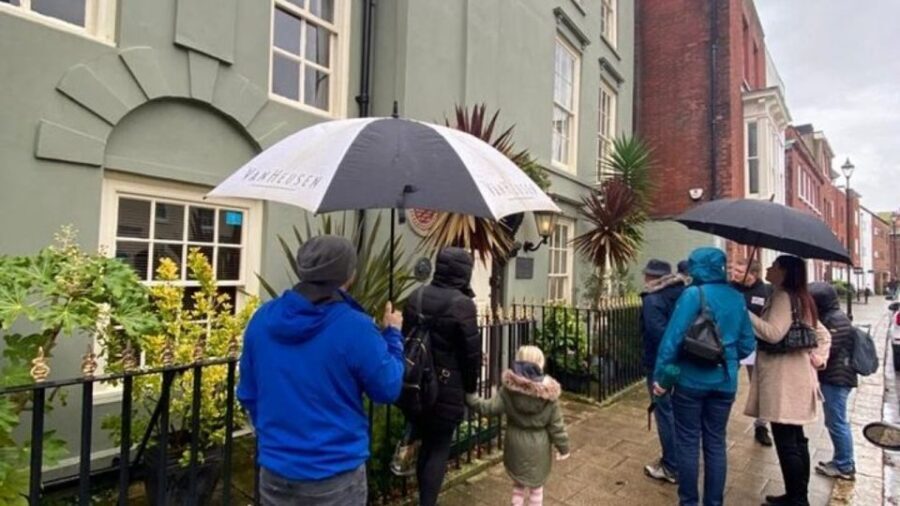
The headline theme isn’t subtle: the tour leans into the area’s dark side, including the idea of an infernal den of demons. But it doesn’t treat that theme like cheap shock. Instead, it uses it as a lens—why certain people, rumors, and events stuck in the local imagination.
What you’ll love here is the balance. The stories come with humor, so the tour feels like local storytelling rather than a haunted-house act. That’s one reason the guide gets repeated praise: the tales are dramatic, but the delivery stays grounded in context, and you’re encouraged to ask questions instead of just absorbing spooky vibes.
This approach also helps you understand Old Portsmouth as a working port and a contested place, not just a set of old buildings. A city like this collects stories: sailors, privateers, officials, criminals, and ordinary folks all crossing paths. When you put that human mix into ancient streets, legends grow. The tour uses the “diabolical” hook to explain why the rumors existed and why they were remembered.
Nelson, plaques, and the stories history books skip

One of the tour’s promised attractions is a truth about Nelson—and the tour namechecks Blue plaques and history books as the kind of sources you can’t fully rely on for the whole story.
Here’s the value for you: plaques are designed for quick public memory. They’re useful, but they’re also selective. A guided walk can compare what’s on the plaque to the messier reality of how people talked, fought, and wrote accounts at the time. That’s where you get new angles—details that explain why a neat public narrative might leave out the parts that make the story feel more complicated.
In practice, this tends to mean you walk past a point of local recognition and then the guide offers the “why.” Why was the image created? Why did certain versions of events win? And what might have been simplified along the way? Even if you don’t consider yourself a history nerd, these questions make the city feel more alive and less like a museum display.
Portsmouth Poll women, pirates, paupers, princes

The tour doesn’t stay stuck in battles and big-name leaders. It leans into characters and social types you’d probably miss if you only skim the obvious landmarks.
You’ll hear about the Portsmouth Poll women and how they connect to the tour’s wider “Pirates, Paupers and Princes” thread. That’s the kind of theme that could sound like trivia until you realize it points to how ports create mixed communities—people of different classes, different motives, and different levels of legitimacy all in the same place.
This section also includes the question of who Jack Nastyface was. The fact that the tour treats a name like that as something you should understand (not just memorize) tells you the guide isn’t aiming for a list of odd names. He’s aiming for street-level interpretation: who might have spread stories like that, why it mattered locally, and how it links back to the city’s reputation.
If you like history that has personality—history that includes the weird, the everyday, and the slightly dangerous—you’ll find this part of the walk especially fun.
You can also read our reviews of more historical tours in Portsmouth

Coffee, espionage, and rogues: spotting the city’s hidden connections
The tour’s description points to how coffee and espionage connect with stories of rogues. Even without turning into a spy thriller, that concept is useful because it reframes the city.
Old Portsmouth wasn’t just ships and soldiers. It was talk. It was meeting places. It was information moving through crowds. Coffee culture (and the spaces where people gathered) naturally becomes part of the story because that’s where rumors travel and deals get discussed.
Espionage fits the same logic. In a port city, who arrives and who leaves matters. Who asks questions matters. What gets noticed matters. A good guide helps you see those “in-between” stories—how a city’s daily rhythms can become part of larger schemes.
The rogues thread ties it together. Instead of thinking of criminals as one-note villains, you’re encouraged to see them as part of how the city functioned: some people wanted profit, some wanted leverage, and some wanted reinvention. It’s a darker view, but it also makes the history feel human.
Photo opportunities and questions: what makes the guide’s style work
This tour is praised for being engaging and easy to follow, and you can feel how much that matters if you’ve ever tried to read a city’s past on your own. Samuel’s style is described as Portsmouth born and bred, with passion for the city’s history and a teacher’s instinct for making the material land.
The practical upside for you:
- You’ll have time for questions instead of being herded forward.
- The pace is described as gentle, with a walk that still feels productive.
- There are lots of photo opportunities, which is great because you’ll be able to capture the street views and then remember what the guide said at that exact corner.
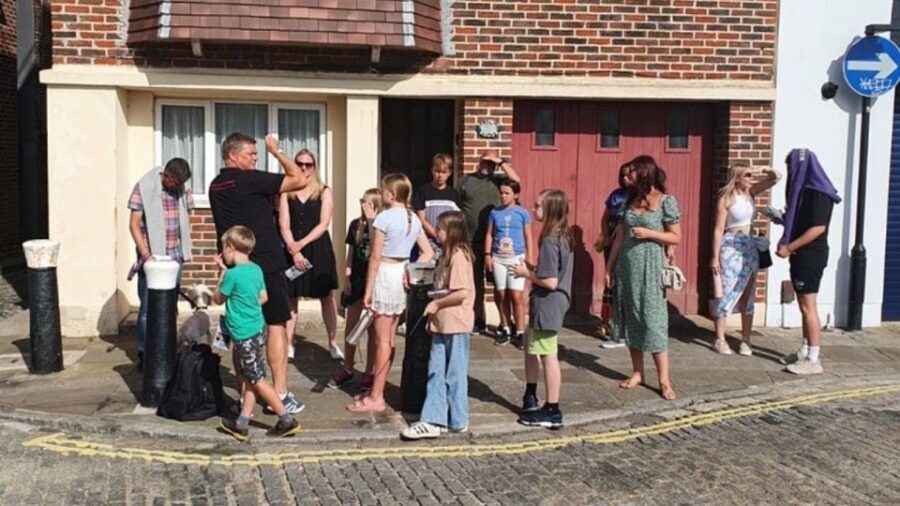
There’s also a useful real-world detail. One experience included weather and traffic chaos at the start, and the guide waited for the group to assemble, staying enthusiastic even after being soaked in rain. He also continued slightly beyond the planned length with agreement. That’s a sign of a tour built around the people in the group, not the stopwatch alone.
Practical tips: shoes, cobbles, and tiny lanes
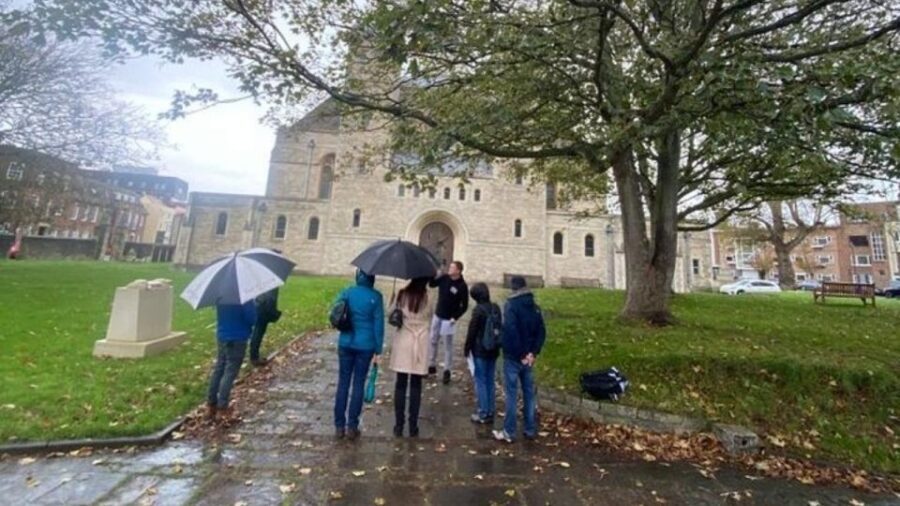
Plan for a classic Old Portsmouth walking surface. You’ll cover about 1.5 miles and there are minor uneven surfaces including cobbles, plus some tiny lanes. That means you should wear shoes you trust on uneven stone, not slippery “city slicker” footwear.
Wheelchair access is listed, so the tour isn’t written off for mobility needs. Still, the presence of cobbles and small lanes means you should think ahead about the route’s feel. If you’re traveling with a mobility device or someone who struggles with uneven ground, it’s worth considering whether a shorter, less cobbled route would suit better—or whether this guide’s approach and the listed wheelchair accessibility will work well for you.
Timing also matters. The tour runs about 90 minutes, so it’s a good anchor activity for an afternoon. If the weather is messy, the stories and the covered breaks at street level may still feel better than you expect, but bring a rain layer just in case. Old Portsmouth’s streets don’t care if you’re having a nice hair day.
If you want flexibility, the tour offers free cancellation up to 24 hours in advance and also a reserve and pay later option. That’s helpful if your day can shift based on tides, weather, or train delays.
Price and value: $16.84 for story you can remember
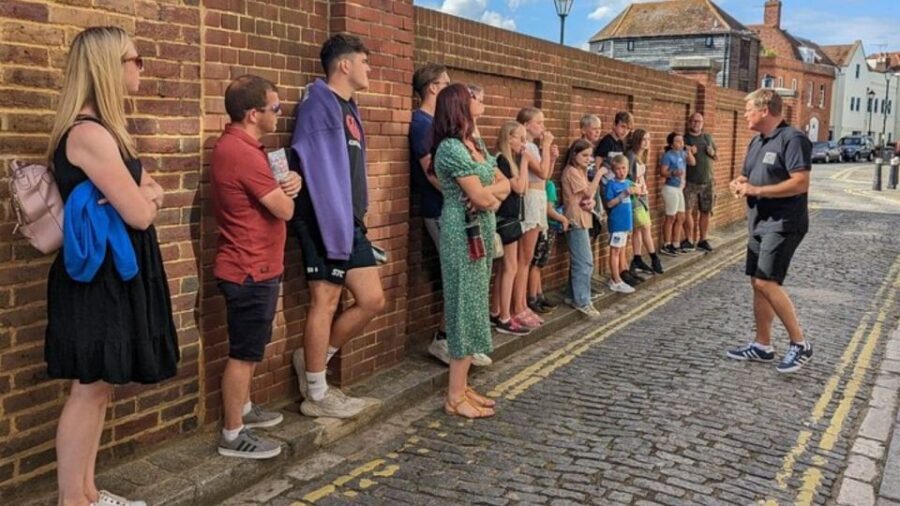
At $16.84 per person for about 1.5 hours, this tour sits in the practical “worth it” category. You’re paying for a local guide, a focused route length, and the kind of narrative structure that helps you retain what you learn.
Value here comes from two things:
- Specific local storytelling. The guide isn’t just reciting broad national history. He’s tied to Portsmouth and brings details like the Portsmouth Poll women, Jack Nastyface, and the Nelson angle that go beyond what you’ll get from a quick stop by a plaque.
- A format that respects your time. A ninety-minute walk with a gentle pace and question time can be the difference between learning something and getting tired halfway through.
Could you read about Old Portsmouth on your own? Sure. But you’d miss the “why” behind the stories, and you’d likely spend that time turning pages instead of walking past the places where the tales happen.
Who should book this Old Portsmouth tour (and who might skip)
This tour is a strong match if you:
- Want a walkable dose of Old Portsmouth without a full day commitment.
- Enjoy history with personality—funny, dark, and dramatic stories delivered clearly.
- Like asking questions and getting answers instead of being shuffled along.
- Are interested in the local version of big names like Nelson, plus the in-between characters like Jack Nastyface.
It may not be ideal if:
- You’re traveling with children under 12, since it isn’t suitable for that age group.
- You need a very smooth, flat surface route because cobbles and tiny lanes are part of the walk.
If you’re a first-timer to Portsmouth, this is a great way to get your bearings fast. If you’re returning, it can still work because the tour focuses on connections and interpretations—why the city became a rumor machine and how those stories survived.
Should you book? My honest take
Book it if you want Old Portsmouth to feel like a place you lived in for a day—street-level, story-driven, and led by Samuel, a Portsmouth local history teacher with a talent for making the city’s darker corners understandable. At $16.84 for about 90 minutes, you’re paying for a compact experience that’s long enough to matter and paced to stay enjoyable.
Skip it if uneven cobbles and tiny lanes would be a deal-breaker for you, or if you’re bringing kids under 12. Otherwise, you’ll likely walk away with the kind of details that make the area click: why it earned its reputation, what Nelson’s story leaves out, and how coffee, espionage, and rogues all fit into the same old streets.
FAQ
FAQ
Where does the Old Portsmouth Historical Walking Tour start?
You meet at the Landport Gate, directly opposite a bus stop outside Tesco Express, about halfway down St George’s Road in Old Portsmouth.
How long is the tour?
The tour lasts about 1.5 hours (approximately 90 minutes).
How far do you walk?
It’s about 1.5 miles.
Is the tour wheelchair accessible?
It is listed as wheelchair accessible, though there are some minor uneven surfaces like cobblestones and some tiny lanes.
What surfaces should I expect?
You can expect some minor uneven surfaces, including cobblestones, plus some tiny lanes.
Is it suitable for children?
It is not suitable for children under 12.
What language is the tour guide?
The tour guide speaks English.
What is the price per person?
The price is listed as $16.84 per person.
What is included in the experience?
It includes the walking tour with a live guide.