REVIEW · LONDON
Roman Ruins to Blitz Bombings: London’s Fiery History
Book on GetYourGuide →Operated by Historic London Tours · Bookable on GetYourGuide
London can feel like one big museum. This 2-hour City of London walk ties Roman Londinium remnants to later power, fire, and war stories you can still see in the street-level stone. It’s built around short, guided stops that keep you moving while the guide turns names on buildings into real scenes.
What I like most is the way the guide paces the information: strong details, but not a nonstop lecture. I also love the fact that you cover heavy hitters like the Tower of London and the Great Fire Monument without needing museum tickets. One thing to consider: it is a lot of stops in a short time, so if you want long, in-depth time at any single site, you’ll need to schedule extra time later.
Key highlights at a glance
- Roman Wall of Londinium: see Roman London in the middle of today’s City
- Tower of London: hear the darker threads, including Anne Boleyn’s ghost story
- Great Fire Monument area: connect the city’s survival to what you’re walking past
- London Stone and the City’s old identity: learn why small markers matter
- Bank of England vault story: a famous city legend about tunneling and security
- Lord Mayor angle via Guildhall: an office with serious staying power
In This Review
- Roman Ruins to Blitz Bombings: what this 2-hour route really does
- Meeting at Tower Hill: easy start, clear first scene
- Roman Wall of Londinium: spotting Rome where you least expect it
- Tower of London: power, violence, and the Anne Boleyn ghost layer
- Saint Dunstan in the East Church Garden: a calmer pause with a purpose
- The Monument to the Great Fire: London’s fireproof lesson
- London Stone and the City’s old identity
- Bank of England vault story: a legend you’ll remember
- Guildhall and the eight-century-old Lord Mayor angle
- St Paul’s Cathedral: Christopher Wren and the post-fire storyline
- Ye Olde Cheshire Cheese: finishing with a real sense of place
- The guide experience: clear, friendly, and funny without derailing
- Price and value: why $26 can work if you hate museum lines
- Logistics that actually affect your comfort
- Who should book this tour
- Should you book Roman Ruins to Blitz Bombings?
- FAQ
- How long is the Roman Ruins to Blitz Bombings walking tour?
- Where does the tour start and where does it end?
- What’s included in the ticket price?
- Are museum entrances included?
- What’s the walking distance?
- What language is the tour guide?
Roman Ruins to Blitz Bombings: what this 2-hour route really does
This tour is designed for people who love history but hate the slow, museum-only approach. You get a city walk that stitches together multiple eras in a tight loop: Roman London, medieval power, the Great Fire aftermath, and later centuries shaped by conflict. The tour’s theme, Roman Ruins to Blitz Bombings, is really about how London keeps rebuilding even after major hits.
The format matters. You’ll cover about 2.5 miles on foot in roughly two hours, with frequent short guide stops. That means you see more locations than you would on a solo wander, but you also don’t get long, quiet time at each spot. I like this style because it keeps momentum, and it helps you build a mental map of the City of London fast.
Meeting at Tower Hill: easy start, clear first scene
You start outside Tower Hill Station. The key is simple: arrive at the exit, then look for your guide holding an Historic London Tours sign at the base of the steps near the sundial.
Why this matters: the beginning of any London walking tour can be chaotic, and this one aims to be clean and organized. Also, since you’re starting at Tower Hill, you’re dropped into the story’s most dramatic geographic area right away. It’s a practical way to get your bearings fast: you’re already near the historical “anchor points” the tour uses later.
You can also read our reviews of more historical tours in London



Roman Wall of Londinium: spotting Rome where you least expect it
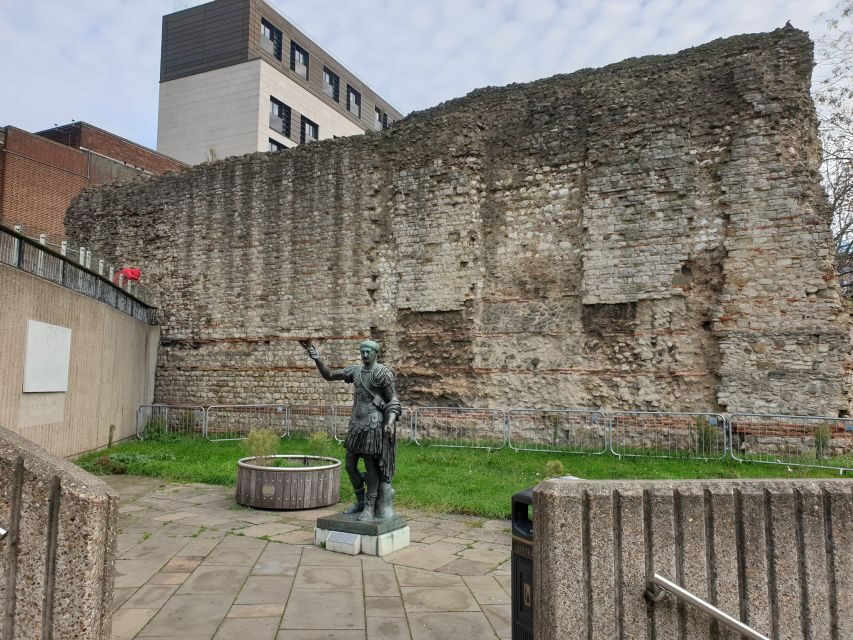
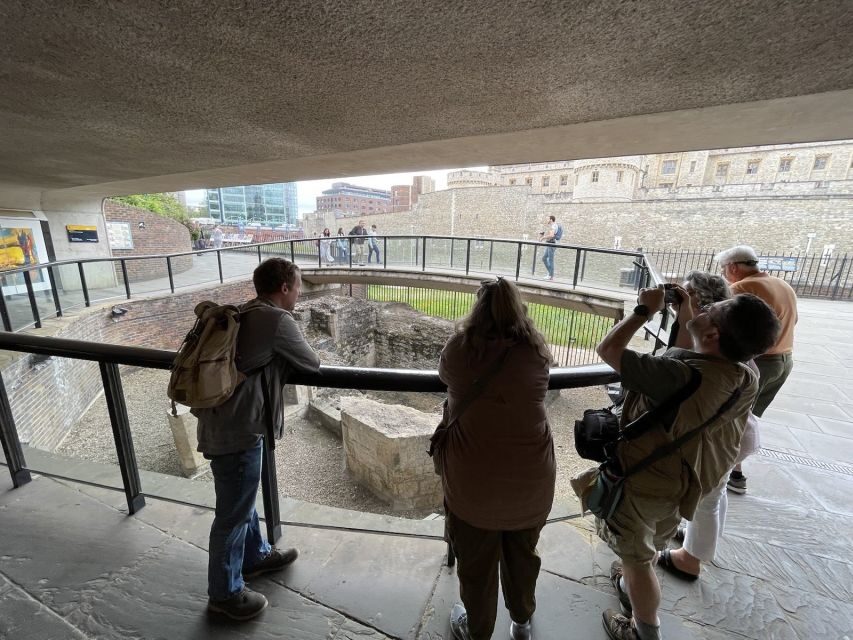
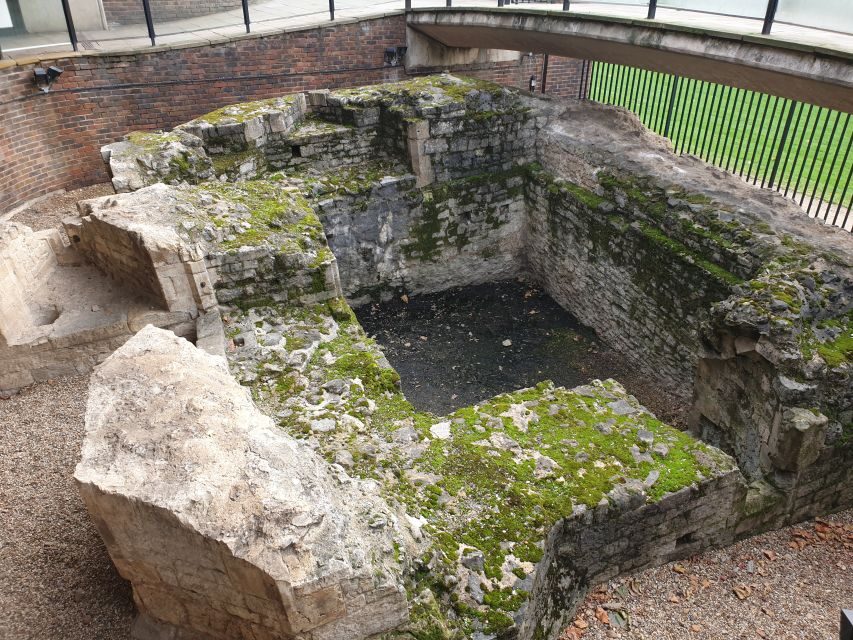
One of the best parts is the Roman stop early on: the Roman Wall of Londinium. Even if you’ve seen Rome-themed displays before, it’s different to stand close to what remains in the modern street setting. The guide’s job here is to help you read the city like evidence—where the Roman layer still peeks through and what it meant for a place that would grow into the heart of the capital.
This is also where the tour’s time-jumping strength shows. You’re not just hearing that Rome existed. You’re being pointed to a specific physical reminder of the city’s founding era, with context connecting it to later London.
Tower of London: power, violence, and the Anne Boleyn ghost layer
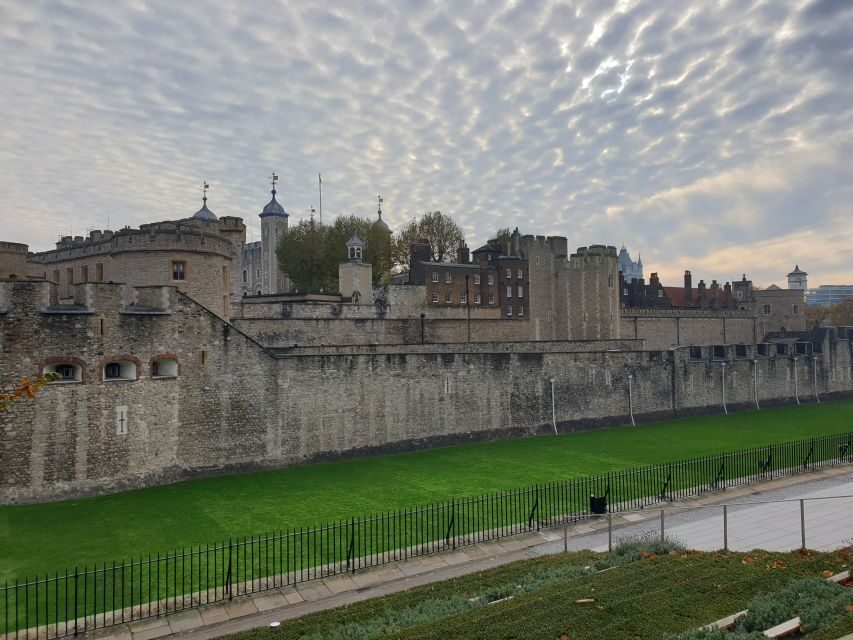
Next comes the Tower of London, and the tour leans into its reputation: a place tied to bloody past and serious political control. The guide doesn’t just list rulers. You’ll hear the human stories that make the Tower feel less like a brochure and more like a pressure cooker.
A standout detail is that you’ll also hear about Anne Boleyn’s ghost as part of the storytelling. That doesn’t mean you should expect spooky theatrics. It’s more like an example of how later generations kept myth and memory stuck to the same walls, long after the original events.
The practical benefit: Tower of London is famous, so you might think you already know it. But a guided walk can help you focus on what to notice in the limited time you have, especially if you don’t want to buy extra tickets just to learn.
Saint Dunstan in the East Church Garden: a calmer pause with a purpose
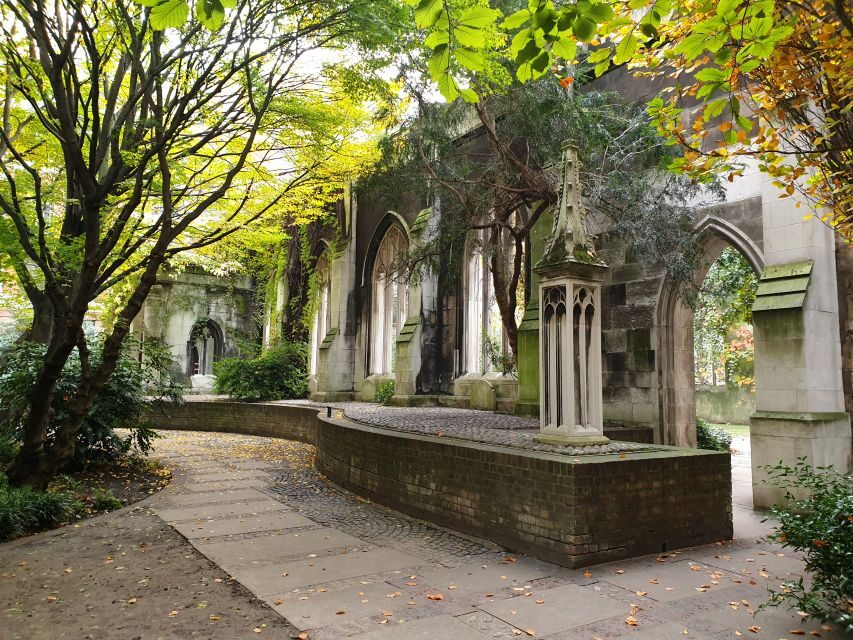
After the Tower’s intensity, there’s a quieter reset at Saint Dunstan in the East Church Garden. This stop works because it gives your brain a breather between big landmark moments. You can regroup, take photos if you want, and let the guide shift from brutal politics to the texture of the city’s longer timeline.
The value here is pacing. This isn’t a stop to sprint past. It’s part of how the tour keeps you from burning out on one subject. Even when you only get a few minutes, the guide usually ties the location back into the broader story you’ve been building.
The Monument to the Great Fire: London’s fireproof lesson
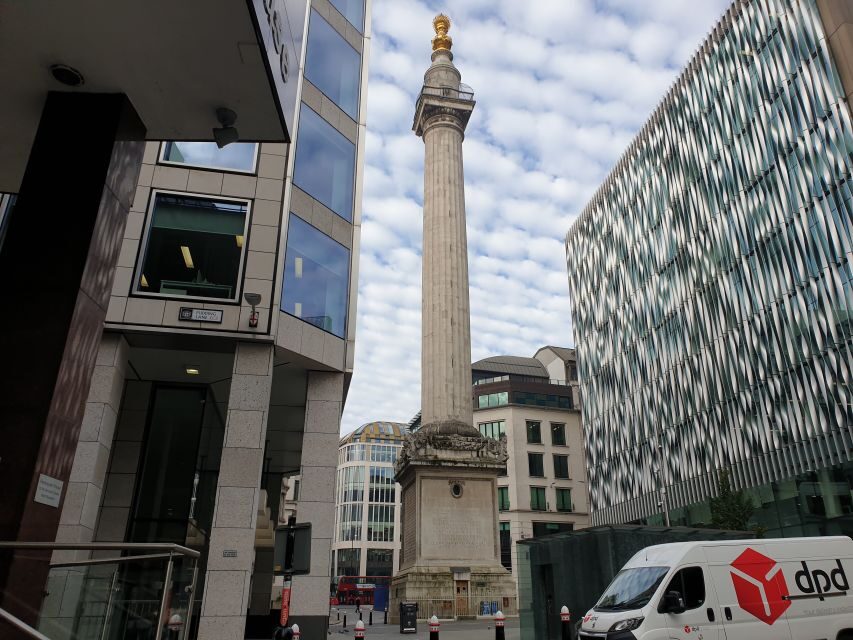
Then you hit the Monument to the Great Fire of London. The tour frames it as one of the moments that shaped how the city survives, rebuilds, and redefines itself. The guide’s job is to connect the aftermath to what you’re walking among now—because the Great Fire wasn’t just a tragedy, it was a turning point in how London changed.
If you’re the type who likes cause and effect, this is a strong segment. Fire hits a city hard, but London’s response is visible. Even without museum entry, you can walk away with a clearer sense of why certain later landmarks exist and why rebuilding mattered so much.





London Stone and the City’s old identity
Next up: London Stone, specifically the remaining part. It’s the kind of object that sounds minor until someone explains why it mattered. Here, the tour treats London Stone as a symbol of continuity—one of those small but powerful anchors that helps you feel the City of London didn’t just grow; it kept insisting on its own identity.
I like that this stop reframes “small things.” In a city with huge monuments, it’s easy to miss the details. A good guide makes you slow down and look at the ground-level evidence.
Bank of England vault story: a legend you’ll remember
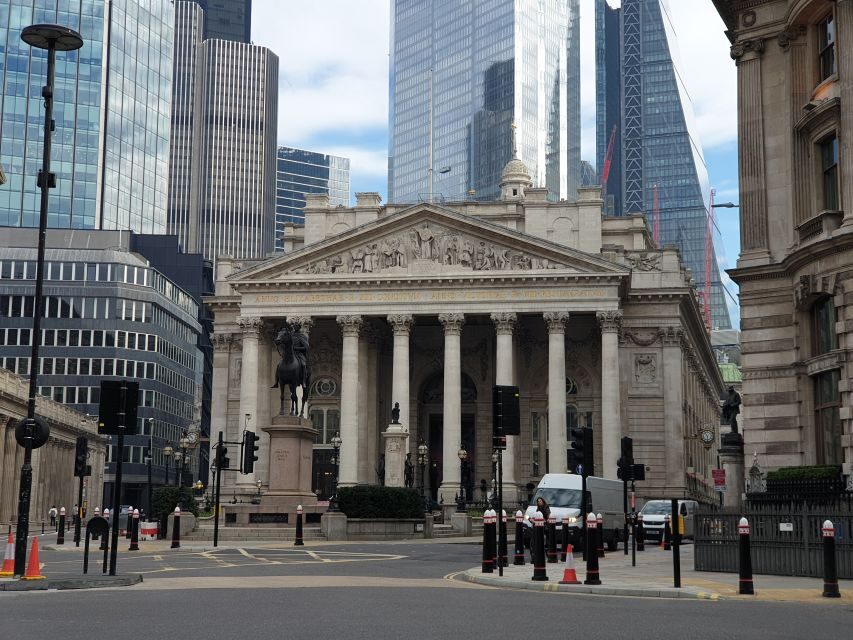
You’ll also get a stop at the Bank of England with a story about the easiest way to tunnel into its vaults. Obviously, you’re not signing up for anything practical. This is a storytelling hook tied to the idea that the City’s money, power, and security have always been the kind of subject that sparks myths and rumors.
What makes it useful is not the trick itself—it’s the way the guide uses it to talk about London’s mindset around protection and control. You leave this part understanding why certain places become symbols of authority, and how that authority attracts both admiration and curiosity.
Guildhall and the eight-century-old Lord Mayor angle
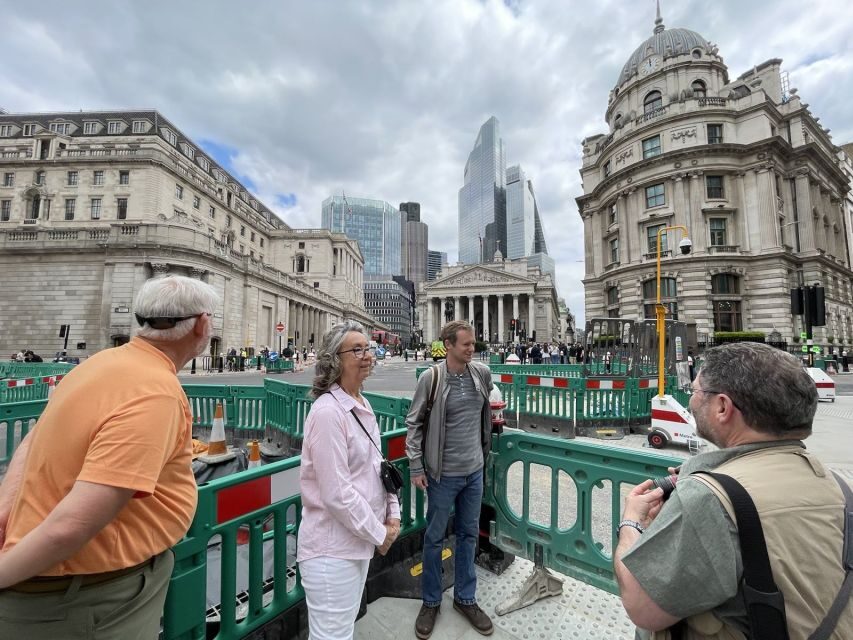
At Guildhall, London, you get to see the civic side of the City. The tour includes the Lord Mayor’s position, described as an eight-century-old office. That timeframe turns the City from a collection of buildings into a system with a long memory.
This is one of the tour’s strengths: it doesn’t only focus on royalty or famous trials. It also points you toward the machinery of governance. The City of London has always been its own kind of world, and the Guildhall stop helps you feel that difference without needing to read a book first.
St Paul’s Cathedral: Christopher Wren and the post-fire storyline
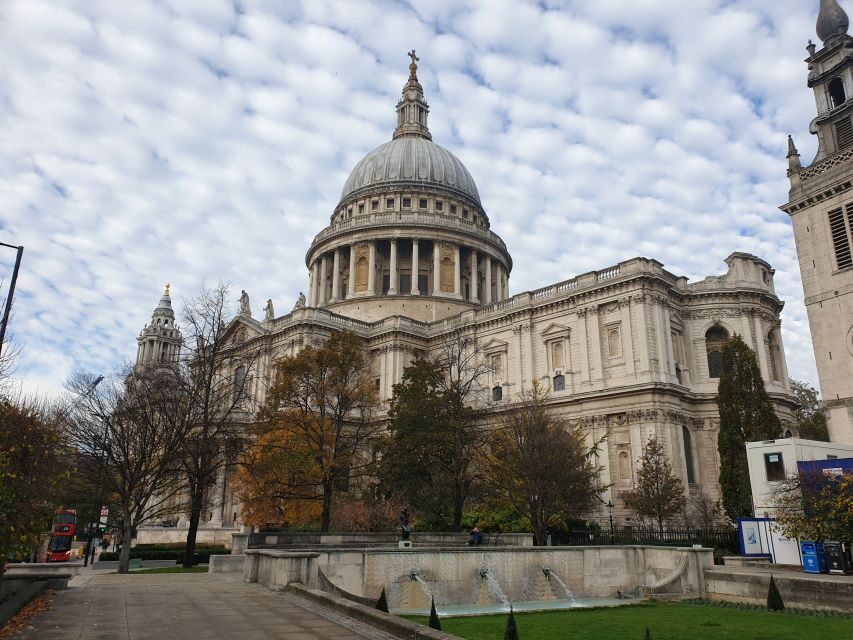
Then comes St Paul’s Cathedral. The tour connects the larger story to major figures, including Christopher Wren, who’s part of the post-fire narrative thread. Even if you’ve walked around St Paul’s before, this segment is more about story timing than architecture trivia.
You’ll likely pick up a sense of why the cathedral fits the tour’s theme of surviving fire and rebuilding. It’s the kind of landmark that can feel overwhelming if you only look outward. With a guide, you start thinking inward: What problem did the city face? What did it decide to do? Why did the solution look the way it did?
Ye Olde Cheshire Cheese: finishing with a real sense of place
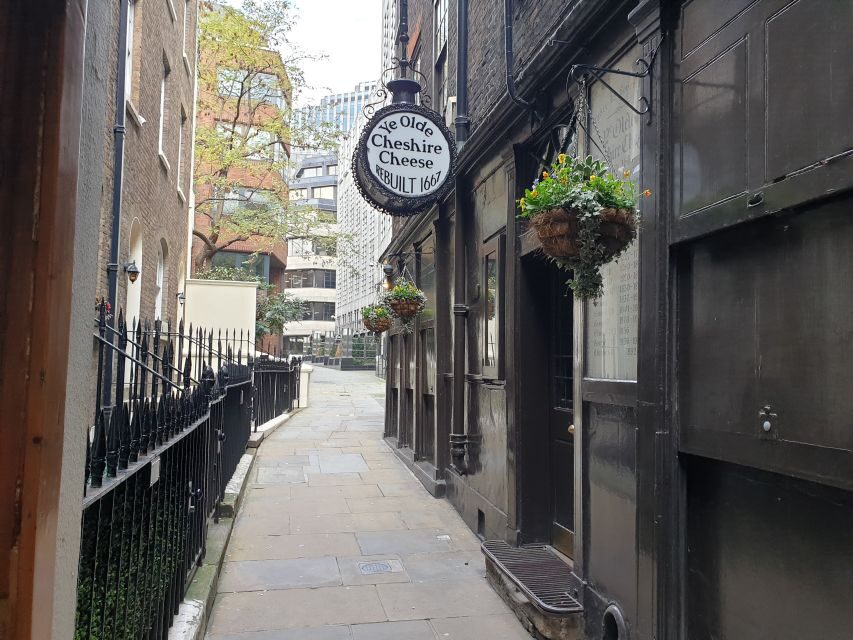
The tour ends at Ye Olde Cheshire Cheese. This is a smart finish because it gives you a natural place to pause and process what you just learned. You’ve spent two hours hopping between eras, and the pub stop acts like a soft landing.
If you’re hungry, grab something, but don’t rush. The best part of finishing at a historic spot is that it makes the story feel physical. You’re not done with the City of London; you’re just stepping from guided storytelling into your own wandering.
The guide experience: clear, friendly, and funny without derailing
The biggest factor behind the high ratings is the guide. People consistently praise the delivery style: strong facts, clear diction, and a sense of humor that doesn’t turn serious history into a joke.
One name that shows up often in the guide feedback is Tom. The comments highlight how he answers questions in a helpful way, keeps the pace from feeling like an overload, and even points people toward a website when a detail is obscure. That matters because a great walking tour isn’t only about the scheduled stops. It’s about what happens when you ask, so you can leave with real clarity.
If your travel style is interactive, you’re in good hands. The guide’s job here is to make the city feel readable, and the reviews suggest they do that with calm confidence.
Price and value: why $26 can work if you hate museum lines
At $26 per person for two hours covering multiple major landmarks, this tour prices itself like a focused city experience rather than a ticket-and-entry day. You also don’t need museum access here—entrance isn’t included, so you’re paying for interpretation, timing, and route efficiency.
You should think of this as paying for three things:
- Route design: you see a lot of key points in limited time.
- Story editing: short stops, but enough context to connect eras.
- Human explanations: the guide’s job is turning stone and street signs into meaning.
Limited group size helps too. With only fifteen attendees, it’s easier to hear the guide and ask questions without constantly fighting noise or crowd pressure. For London, that’s a real value add.
Logistics that actually affect your comfort
This tour is short, but it’s not sedentary. Bring comfortable shoes because you’ll walk about 2.5 miles total. Also, expect outdoor standing time at several stops, so plan for the weather you get.
Another practical note: each landmark segment is brief. The tour is timed to keep things flowing, which is great for learning, but it also means you won’t get a deep museum-level experience on-site. If you’re the type who wants to spend an hour inside one place, treat this as your groundwork tour, then pick one location afterward to explore more slowly.
Language is English, and the walk is designed for a general audience—history lovers, curious first-timers, and people who like a story that moves.
Who should book this tour
I’d point you toward this experience if you want:
- A fast way to understand the City of London as a time layer cake
- Roman-to-modern connections (including the guide’s link between Queen Boudica and Harry Potter lore)
- Dark and dramatic stops like the Tower, plus civic context like the Lord Mayor angle
- A guide style that’s organized, humorous, and responsive
You might skip it if you know you only enjoy history when you can linger in one place for a long time. The tour’s strength is variety and pace, not extended viewing.
Should you book Roman Ruins to Blitz Bombings?
I think it’s a solid booking if you want a meaningful London introduction without the hassle of museum tickets. For $26, you get a well-timed walking route, street-level Roman evidence, major landmarks tied to major events, and a guide approach that aims to answer real questions without dumping too much at once.
If your ideal day is long museum sessions, pick a different plan. If your ideal day is walking, noticing, and learning while the city teaches you, this is a great fit.
FAQ
How long is the Roman Ruins to Blitz Bombings walking tour?
The tour lasts about two hours.
Where does the tour start and where does it end?
It starts outside Tower Hill Station exit, and it ends near Blackfriars Station at Ye Olde Cheshire Cheese.
What’s included in the ticket price?
You get a walking tour with a local guide.
Are museum entrances included?
No. Entrance to museums is not included.
What’s the walking distance?
The total walking distance is about 2.5 miles.
What language is the tour guide?
The live tour guide speaks English.