A forgotten Tube station feels like a time machine. I love how this disused station turns into a living walk-through, with ticket hall details and underground spaces you almost never see. I also like the WWII angle, especially the way guides explain what happened here during the Blitz and why people trusted the underground for safety.
The one thing to think about is comfort. This tour involves lots of walking on uneven ground with low light and staircases, and it is not a good fit if you get anxious in tight spaces.
From start to finish, the mood is part history lesson, part practical sightseeing. Guides like Colin and Cat (and teams such as Emily and Jas, plus Dom and Dom) keep the pace lively and the facts grounded in what you’re actually standing next to.
In This Review
- Key things to know before you go
- Aldwych Station: why this closed Tube stop matters
- Meeting at Surrey Street and the rules that affect your comfort
- Ticket hall magic: original architecture in a place people rarely visit
- The former Piccadilly line terminus: lifts, platforms, and tunnels on foot
- Film and TV spotting: how pop culture lines up with real spaces
- Blitz shelter stories: treasures, safe storage, and firsthand accounts
- The guides set the tone: pace, enthusiasm, and what 75 minutes feels like
- Price and value: is $60 a fair trade for this access?
- Who should book, and who should skip
- Quick booking note you’ll care about (without the fine print chaos)
- Should you book Aldwych Hidden Tube Station Guided Tour?
- FAQ
- How long is the Aldwych hidden Tube station guided tour?
- Where do I meet the guide for the Aldwych tour?
- What is the price of the tour?
- Is the tour guided and in which language?
- What should I bring to the tour?
- What are the main restrictions for what I can bring or wear?
- Is the tour suitable for claustrophobia?
- Is the tour step-free or accessible with a lift?
- Are young children allowed?
- What cancellation options are available?
Key things to know before you go
- Aldwych’s ticket hall is the showpiece: original design details make the station feel frozen in time
- Piccadilly line terminus, explored on foot: you’ll see parts of the underground layout many people never get access to
- Film and TV spotting is built in: movie locations are pointed out as you move through key areas
- WWII stories are central, not an add-on: shelterers’ firsthand accounts give the spaces real weight
- You need sturdy shoes and a head for stairs: low lighting and uneven sections mean go prepared
Aldwych Station: why this closed Tube stop matters
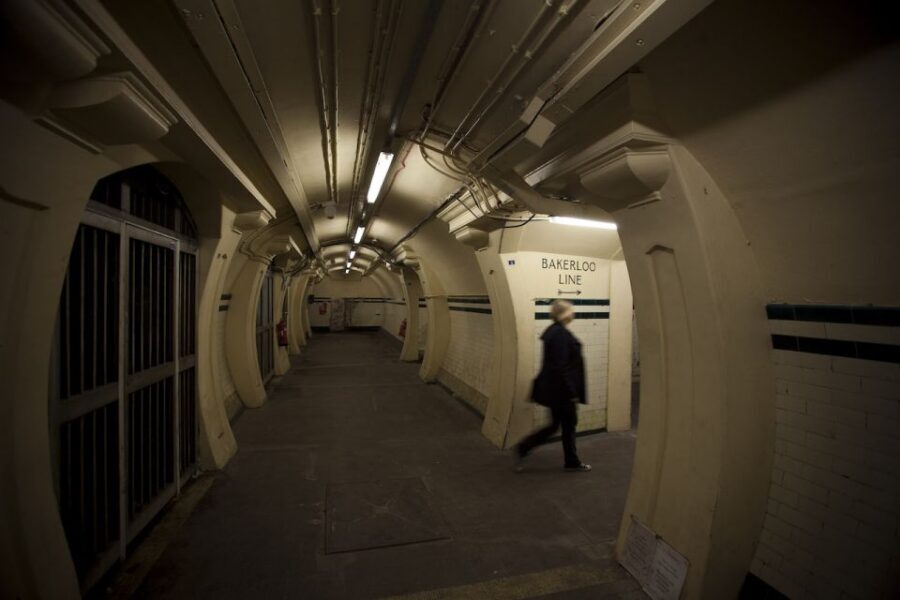
Aldwych was built for heavy use, then quietly faded out. It opened in 1907 and closed in 1994 after nearly a century of service, yet the station still reads like a working piece of London infrastructure. That’s the twist: you’re not just looking at ruins. You’re navigating a designed system—platforms, lifts, corridors, and interconnecting walkways—that once moved people daily.
What makes this tour feel different from a normal history stop is the way the underground environment drives the story. You can’t just read about how cities function during crisis. Here, you see the geometry of refuge: where people would have waited, where staff would have directed movement, and how “safety” was planned into the space.
I also like that the tour treats Aldwych as a transport site first, then adds the human layers. Yes, you’ll hear film and TV references. But you’ll keep circling back to what the station was built for, and how it was used when London got hit hard.
You can also read our reviews of more guided tours in London



Meeting at Surrey Street and the rules that affect your comfort
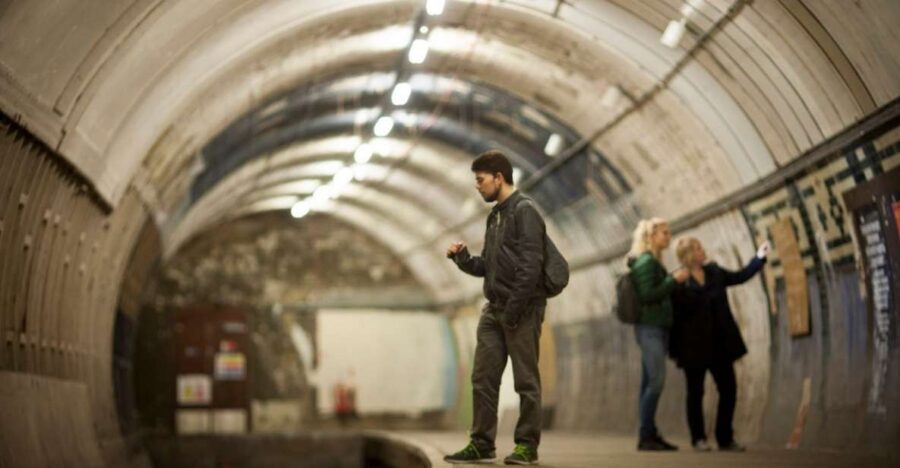
Your tour starts outside the entrance of Aldwych station on Surrey Street. This entrance is different from the one facing the Strand, so don’t rely on your usual Tube instincts. Once you’re there, the main practical goal is simple: dress for uneven ground, stairs, and darker areas.
Before you set off, do three things:
- wear sturdy footwear (no open-toed shoes)
- leave bulky items at home because there’s no cloakroom
- bring your passport or ID card
Also note the limits that can shape who goes comfortably. There’s a maximum of four children aged 10–15 per adult, and children under 10 aren’t suitable. And if you have mobility impairments, this one isn’t step free—there are staircases and no elevator.
If you’re the type who likes to arrive calm and ready, plan to show up a few minutes early. The group will be moving through spaces that aren’t set up like a museum gallery.
Ticket hall magic: original architecture in a place people rarely visit
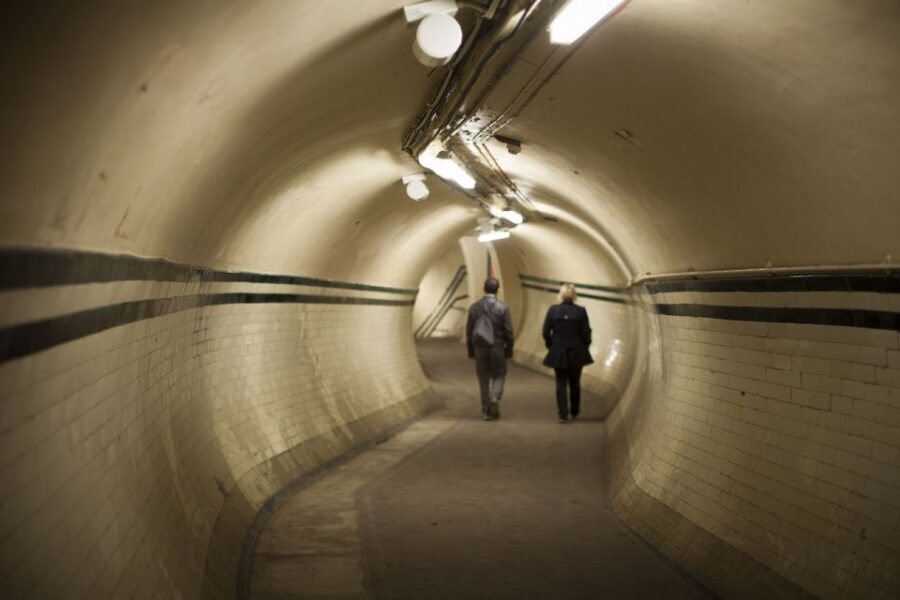
The tour’s first big emotional hit is the abandoned ticket hall. This is where Aldwych shows you its identity. The guide points out the original architectural features, and suddenly you see the station not as a concept but as a real public space—one designed for crowds, movement, and clear wayfinding.
I like that the ticket hall works on two levels. On one hand, it’s visually satisfying: you’re looking at crafted details and long-closed infrastructure. On the other hand, it makes the rest of the underground route make sense. When you understand where people would have bought tickets and gathered, the tunnels and walkways stop feeling random.
There’s also an attention to how the station’s quietness feels today. Aldwych isn’t loud or busy in the way active stations are. That emptiness helps you hear the story. You can focus on what the guide is describing without competing noise.
The former Piccadilly line terminus: lifts, platforms, and tunnels on foot
After the ticket hall, you move into the heart of the station’s earlier role: the former terminus of the Piccadilly line. This part of the tour is about structure. You’ll see the original lifts and understand how the station connected different levels for passengers and staff.
The lifts and platforms matter because they show how a terminus functions. A terminus isn’t just an end point—it’s where circulation changes. People arrive, wait, and then move on. Aldwych’s design shows you those shifts physically, and the tour guides connect what you see to how the system worked during its active years.
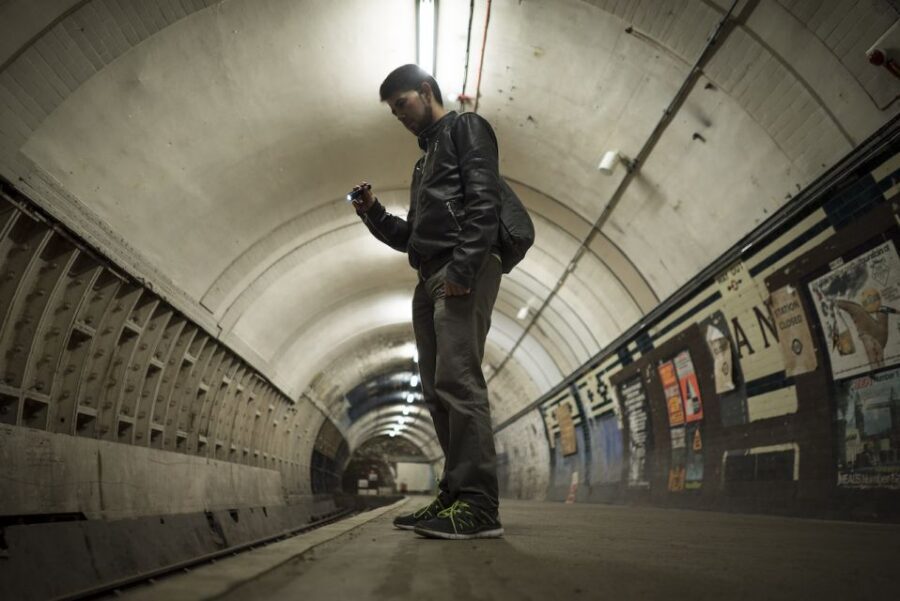
You’ll also walk through abandoned platforms, tunnels, and interconnecting walkways. Some of these sections are seldom seen by the public, which is the practical reason to book. You’re getting access to a “hidden layer” of London Transport history that isn’t available through casual station wandering.
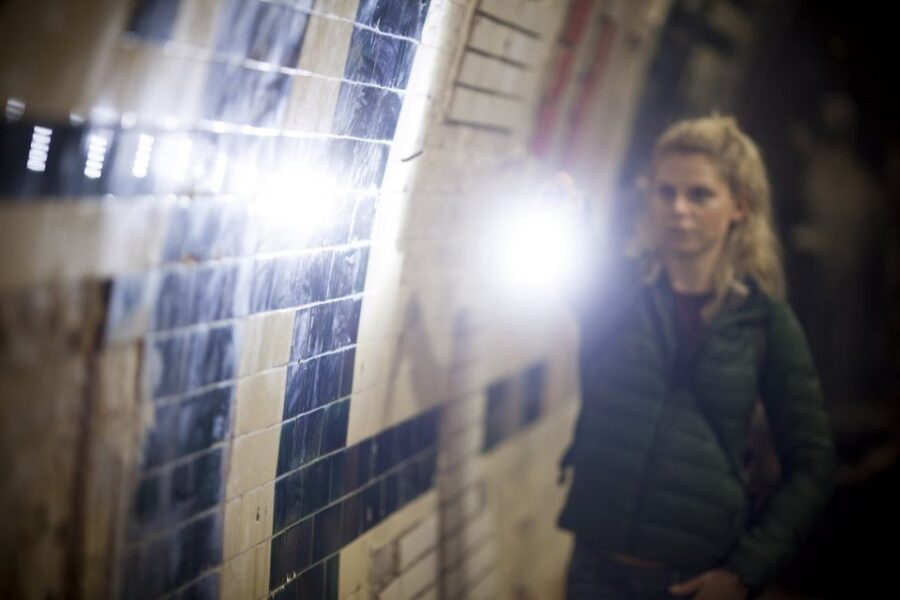
A small reality check: this is still a guided walk underground. There’s low lighting and uneven ground in places, so keep your eyes up and your footing steady.
Film and TV spotting: how pop culture lines up with real spaces
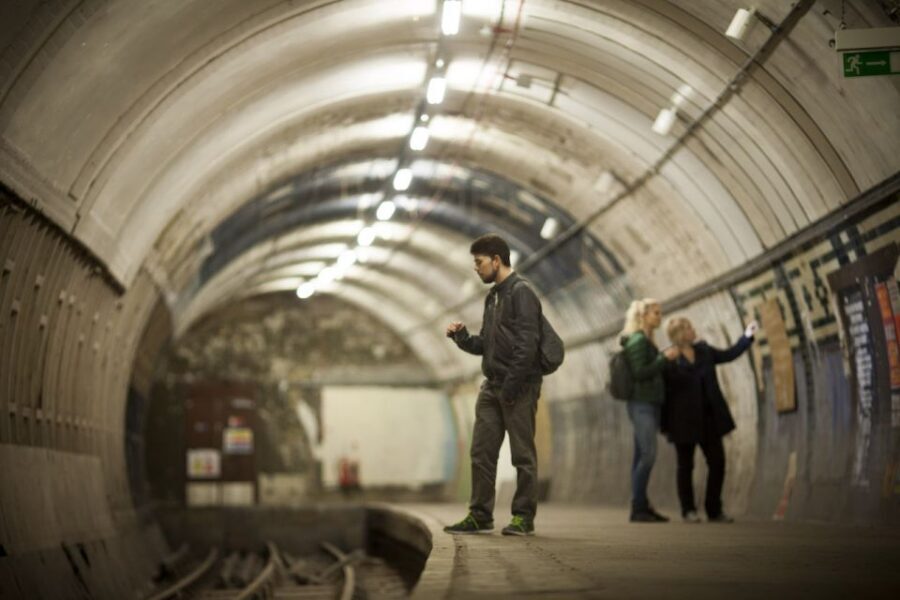
One of the fun surprises is that movie and TV references aren’t random trivia. The guide helps you spot locations as you move through the station, connecting cinematic scenes to physical features in Aldwych.
You’ll hear about famous titles, including Luther: The Fallen Sun. The tour also references other productions filmed in and around Aldwych, such as The ABC Murders (2018), Darkest Hour (2017), Sherlock (2014), and Atonement (2007).
Why I like this part: it gives you a second lens on the spaces. You’re not only thinking about transport engineering. You’re also seeing why filmmakers like Aldwych as a visual stand-in for other eras and moods. The station’s closed-off feel helps it read as a different time period, which is exactly what directors need.
If you’re a casual film watcher, you’ll still enjoy it because it’s anchored in the station itself. If you’re a bigger TV and movie fan, you’ll likely find yourself doing that thing where you point and say, I can totally see the shot they used there.



Blitz shelter stories: treasures, safe storage, and firsthand accounts
This tour’s emotional center is World War II. You’ll learn how Aldwych became part of the wartime story, including its use as a place of refuge during the Blitz. The guide explains how priceless treasures were stored here and how the underground helped people protect what mattered most.
The standout detail is that the tour doesn’t treat the Blitz as a distant textbook event. It includes first-hand accounts from Second World War shelterers. Hearing people talk about what it meant to wait underground changes the atmosphere in the station. Suddenly the corridors don’t feel like abandoned plumbing. They feel like places where real choices were made under pressure.
There’s also a strong sense of time layering. You’re walking through a station built for the pre-war flow of commuters, then hearing how its purpose shifted during bombing and fear. That contrast is what turns “old underground” into a story with consequences.
If you care about London during the war years, you’ll come away with a clearer picture of how shelter wasn’t just a concept. It was an organized, physical environment—and Aldwych was one of London’s unusual options.
The guides set the tone: pace, enthusiasm, and what 75 minutes feels like
This is a 75-minute guided tour, and that length matters. You get time to move through multiple areas—ticket hall, lifts, platforms, tunnels, and walkways—without the tour dragging. It’s long enough to feel like a complete experience, but short enough that you’re not stuck navigating dark spaces for ages.
What stands out is the guide energy. In the experiences I’m drawing from, guides were described as enthusiastic and friendly, and they clearly know how to keep the group moving. Named guide pairs like Colin and Cat, plus teams such as Emily and Jas, and guide duos including Dom and Dom, show how the format can feel both structured and personable.
The biggest practical takeaway is to match the tour pace with your body. Wear comfortable layers, because even when it isn’t cold outside, underground spaces can feel cooler and darker. And remember: there’s no cloakroom, so plan to carry only what you truly need.
Price and value: is $60 a fair trade for this access?
At about $60 per person, the price is not the kind you treat like an impulse snack between museum stops. But you’re not paying just for entry to a building. You’re paying for guided access to a disused Tube station with areas seldom seen by the public, plus historical interpretation from experts connected with London Transport Museum resources.
The value equation looks good if you fit at least one of these:
- You like transport history and want to see how systems worked in real space
- You enjoy WWII stories that feel grounded rather than generic
- You like film location spotting tied to the actual environment
- You want something different from standard sightseeing
It also helps that the tour timing is only 75 minutes. That means you can still do other central London plans the same day if you manage travel time well.
If you’re hoping for a fully accessible, low-walking stroll, this likely won’t feel like value, because the physical setup is a real factor. But if you can handle stairs and uneven ground, the access feels worth the ticket.
Who should book, and who should skip
This tour is best for people who enjoy walking and who don’t mind getting a bit outside their comfort zone. You’ll love it most if you’re:
- a London Underground fan
- curious about WWII shelter stories
- the kind of person who likes spotting details and imagining how crowds moved in another era
You should think twice if:
- you have claustrophobia (the tour isn’t suitable)
- you need step-free access (it isn’t step free, and there’s no elevator)
- you have mobility impairments
- open-toed shoes are your standard footwear (they aren’t allowed)
Also, bring your expectations into line with what the station is today: it’s disused. That means uneven ground and low light are part of the deal, not something the tour can smooth out.
Quick booking note you’ll care about (without the fine print chaos)
You can cancel up to 24 hours in advance for a full refund, and there’s an option to reserve now and pay later. The tour is in English, and you’ll need your passport or ID card. Most of all: double-check you’re using the correct Surrey Street entrance when you arrive.
Should you book Aldwych Hidden Tube Station Guided Tour?
If you want London history that’s physical, specific, and surprisingly emotional, I think this tour is a strong yes. The combination of the abandoned ticket hall, Piccadilly line terminus areas, and WWII firsthand shelter stories gives you variety without feeling like a disconnected checklist.
Skip it only if the movement and underground lighting are dealbreakers for you. If you can handle stairs and uneven ground, you’re in for one of the most unusual “what on earth is this place?” experiences London offers—and the kind you’ll remember long after you’ve moved on to the next stop.
FAQ
How long is the Aldwych hidden Tube station guided tour?
The tour lasts 75 minutes.
Where do I meet the guide for the Aldwych tour?
Meet your guide outside the entrance of Aldwych station on Surrey Street. This entrance is different to the one that is facing the Strand.
What is the price of the tour?
The price is listed as $60 per person.
Is the tour guided and in which language?
Yes. It’s a live guided tour in English.
What should I bring to the tour?
Bring a passport or ID card.
What are the main restrictions for what I can bring or wear?
Open-toed shoes are not allowed. Food and drinks are not allowed. Luggage or large bags are not allowed. There is no cloakroom.
Is the tour suitable for claustrophobia?
No. The tour involves low lighting and tight underground areas, so it is not suitable for guests with claustrophobia.
Is the tour step-free or accessible with a lift?
No. The tour is not step free and includes walking up and down staircases. There is no elevator.
Are young children allowed?
Children under 10 are not suitable. There is a maximum of four children aged 10–15 per adult.
What cancellation options are available?
Free cancellation is available up to 24 hours in advance for a full refund.