
REVIEW · BRIGHTON
Brighton: Royal Pavilion Admission Ticket
Book on GetYourGuide →Operated by Royal Pavilion Brighton · Bookable on GetYourGuide
A palace that looks foreign, right in Brighton. This Royal Pavilion experience is fascinating because the interiors are restored to the 1823 design, with the kind of color and pattern you can’t fake. I also love how the rooms feel like you’re watching history happen, even down to the staff explanations, but plan for one snag: there’s no passenger lift, so stairs matter.
I like that the ticket lets you roam beyond just the palace rooms. You’ll move through the preserved spaces and First World War history, then step out at the Royal Pavilion Garden entrance so it feels like a full site visit, not a quick stop. The main consideration is you’ll want comfy shoes and patience—this is a “see a lot” venue.
The Pavilion’s story gets even better when you connect the dots between design and use over time. You’ll see famous highlights like Queen Victoria’s bedroom, and the knowledgeable stewards (one guest even thanked Pav by name) help make the details click as you go. It’s also tied to John Nash’s completion work, which gives the whole place a clear timeline instead of just visual surprise.
In This Review
- Quick hits
- Entering the Royal Pavilion: where your visit really starts
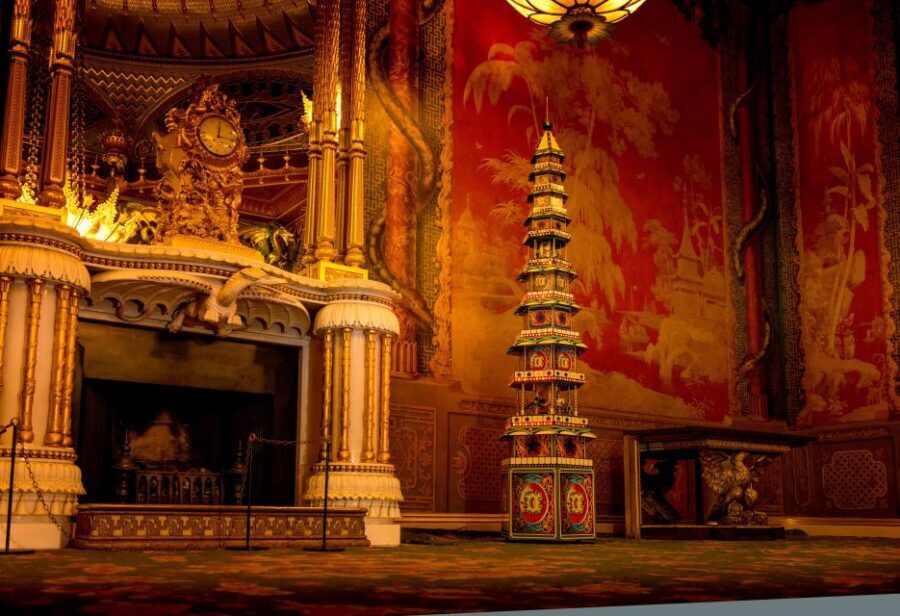
- Chinese-inspired interiors restored to 1823 (and why it’s so memorable)
- Ground floor highlights: banqueting room, music room, restored saloon, and the kitchen
- Upstairs rooms like Queen Victoria’s bedroom (and planning for stairs)
- The Pavilion’s gardens: a calm counterpoint to the interior spectacle
- From palace to First World War hospital for Indian soldiers
- Royal artifacts and the staff explanations that make it all click
- Price and value: what $26 gets you in a day
- Practical rules you should plan for before you arrive
- Who this Royal Pavilion visit suits best
- Best times to go (so you don’t rush the story)
- Should you book the Royal Pavilion Brighton admission ticket?
Quick hits
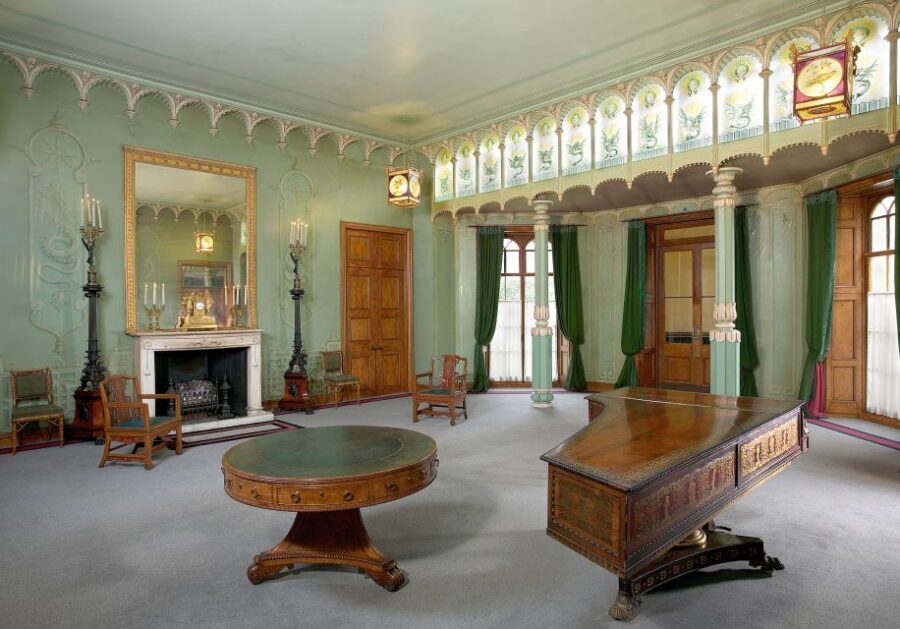
- Chinese-inspired rooms restored to 1823: Expect bold interiors that still look built for attention, not museum dust.
- Guides and stewards in the rooms: Staff talk makes the artifacts and layouts easier to understand.
- Ground-floor rooms with real purpose: Banqueting, music, saloon, and even kitchen work all tell a story.
- Stairs with a plan: No passenger lift, but there’s an AV room option for the first floor view.
- Royal Pavilion beyond royalty: It later functioned as a WWI hospital, including care for Indian soldiers.
Entering the Royal Pavilion: where your visit really starts
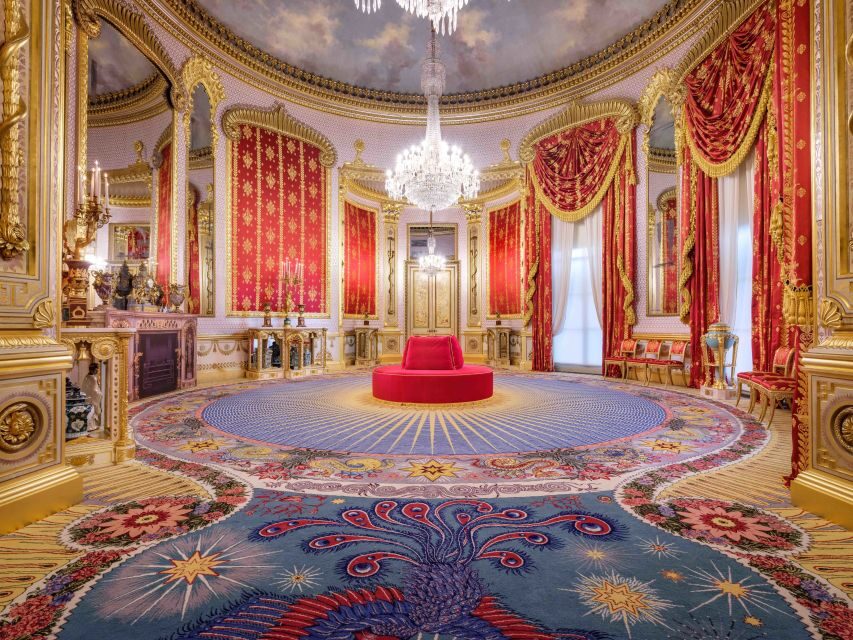
Your day begins at the Royal Pavilion Garden entrance, accessed from Pavilion Buildings, New Road, or Church Street. That matters, because the Pavilion doesn’t feel like an isolated “thing.” It feels like part of a larger setting—palace, grounds, and site history all together.
Once inside, the experience is designed as a route. You’re not meant to wander randomly and guess what you’re looking at. Instead, you’ll be led room to room through preserved spaces, which makes it easier to pick up the building’s logic fast.
This is also one of those sights where your first few minutes shape your entire visit. If you take a minute at the start to notice the style—shape, materials, paint, pattern—you’ll understand why the Pavilion looks so odd-in-a-good-way when you compare it to typical British royal interiors.
A few more Brighton tours and experiences worth a look



Chinese-inspired interiors restored to 1823 (and why it’s so memorable)
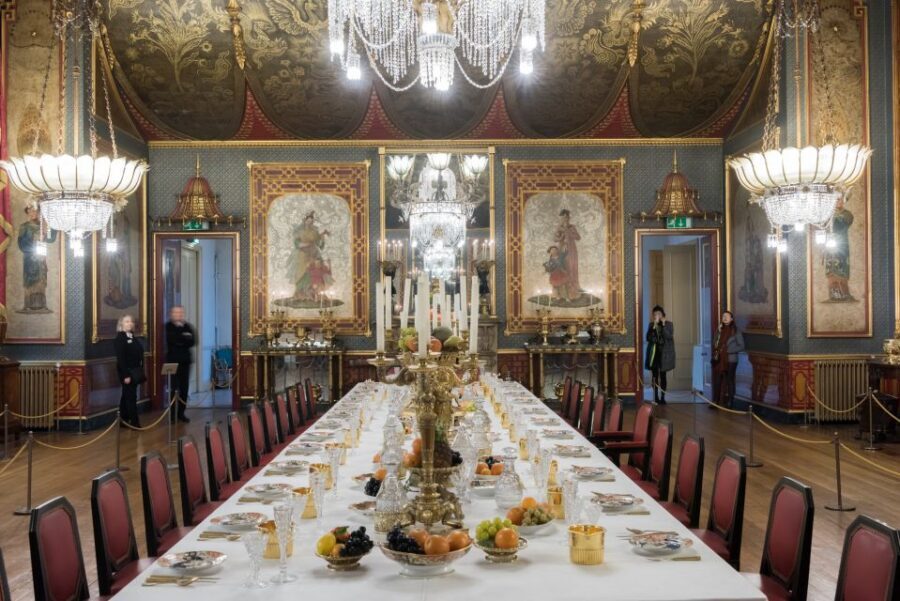
The Pavilion is iconic because it doesn’t behave like a standard European palace. The Chinese-inspired design choices are the headline, but what makes the visit feel special is that the building is presented as it was intended in the 1823 period—not just a “generic” interpretation.
You’ll see how the design works in real space: rooms feel differently based on scale, ceiling height, and decorative emphasis. The effect isn’t subtle. You’ll walk into rooms that look almost theatrical, then realize the theatrical style was part of the royal statement.
One big advantage of this approach is that it changes how you read the place. Instead of thinking, I’m looking at decoration, you start thinking, I’m looking at a deliberate design system. That’s why people come back—because the details reward repeat visits.
And there’s a practical upside for you: the building’s interior storytelling helps you focus. You can treat your visit like a guided visual tour of design trends, then add the human stories afterward.
Ground floor highlights: banqueting room, music room, restored saloon, and the kitchen
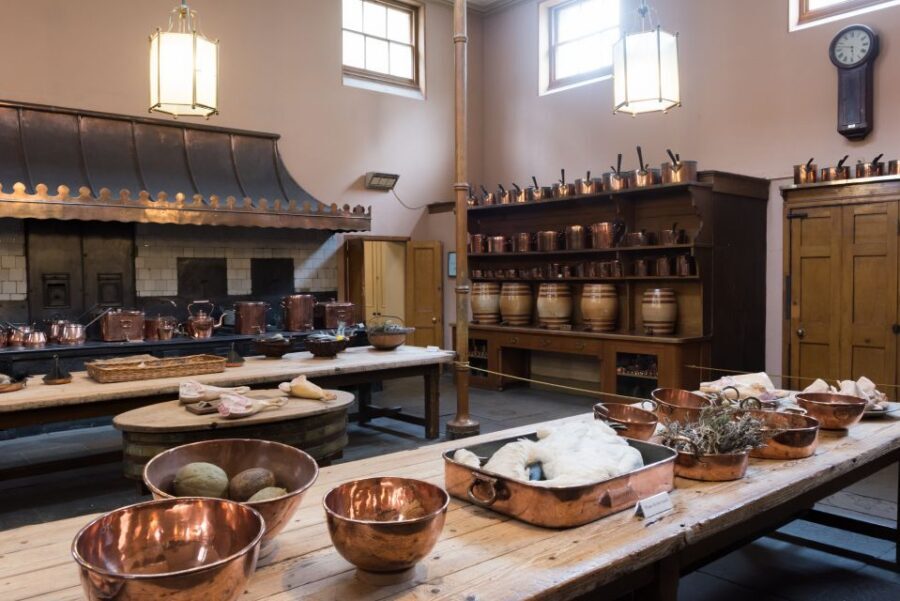
On the ground floor, the Pavilion leans hard into spectacle and function. You’ll pass through rooms used for social life—banqueting and music—along with spaces that show the behind-the-scenes reality of running a major residence.
The banqueting room is one of the places people react to most. It’s where you can feel how events would have worked in the 1820s: who would stand where, how a crowd would look in that setting, and how the room’s layout supports the mood.
Then comes the music room and the saloon. The saloon is described as recently restored, and that restoration effort shows in how crisp and intentional the room’s look feels. If you like interiors, this is the part where your brain starts to map the decorative scheme across the building instead of treating each room like a separate postcard.
I especially love the kitchen stop because it adds a layer many palaces skip. You’re not only seeing royalty in display mode. You’re hearing how staff worked in extreme heat conditions—explained in a way that makes you respect the everyday labor that made the glamorous rooms possible.
If you’re short on time, I’d prioritize the ground floor rooms first. They’re where the emotional impact tends to land fastest.
Upstairs rooms like Queen Victoria’s bedroom (and planning for stairs)
Upstairs is where the Pavilion shifts from public-facing rooms to more intimate, historical snapshots. One standout is Queen Victoria’s bedroom, which gives the building another identity beyond the earlier 1820s royal story.
Here’s your key planning note: there’s no passenger lift in the building. If stairs are a problem, you can still get the first-floor story via an AV room video, which helps visitors who can’t climb access routes.
So you can still have a complete visit even if mobility limits your movement. The trick is to go into it with expectations. You might not see every upper space from every angle, but you won’t feel like you’ve missed the meaning.
Also, allow extra time if you need slower pacing. This isn’t one of those venues where you can rush and still keep the story straight.
The Pavilion’s gardens: a calm counterpoint to the interior spectacle
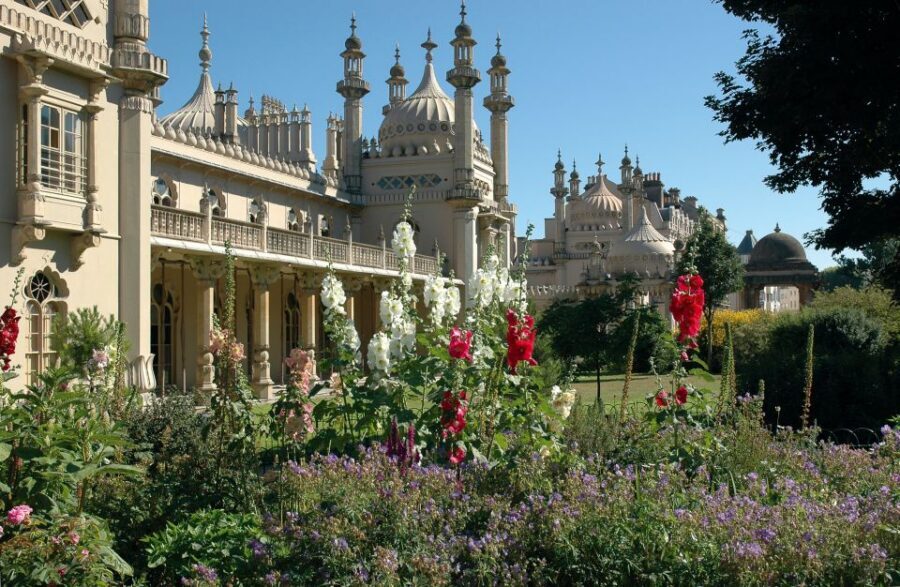
The garden area is more than an entrance photo-op. It’s a visual reset after the bright, detailed interiors, and it helps the Pavilion feel like a living site rather than a single interior set.
A stroll through the landscaped grounds gives you breathing room before you commit to the next set of rooms. Even if the garden isn’t your main focus, it’s a good place to orient yourself and get a sense of scale—how the palace sits within the site.
If you’re traveling in busy periods, the gardens can also help you avoid feeling stuck inside. You’ll get a chance to step away, cool down, and come back with fresh energy.
This is especially useful if you like to read. Garden breaks give your eyes a rest before you return to rooms full of artifacts and color.



From palace to First World War hospital for Indian soldiers
One reason I respect this visit is that it doesn’t treat the Royal Pavilion as a one-era fantasy. The Pavilion served as a civic building and later as a First World War hospital, including the care of Indian soldiers.
That shift is powerful because it changes the tone of the spaces. Rooms that once belonged to court life become part of a much harsher reality. The building becomes a timeline you walk through with your feet.
In a lot of historic sites, the past stops when the tour ends. Here, the building’s later use keeps pulling the story forward. It makes the whole visit feel more honest and more human.
If you care about history that moves beyond kings and queens, this is a major reason to go. You’ll see the Pavilion as a place that adapted to real needs, not just a decorative artifact.
Royal artifacts and the staff explanations that make it all click
The Pavilion experience is partly architecture, but it’s also communication. You’ll encounter lots of royal artifacts, preserved rooms, and interpretive material that helps you connect decoration to function and time period.
What really improves the experience is the presence of informed staff in the rooms. Multiple guests point out that the people working there are friendly, ready with answers, and willing to discuss details—so you’re not stuck reading labels only.
The kitchen example stands out again here. Staff explanations about how heat affected kitchen work make the building feel grounded in practical life rather than just design.
I’d plan to stop and ask one or two questions as you go. Even a short conversation can turn a room from interesting to memorable.
If you like audio support, note that guests have spoken positively about an audio guide. Using it alongside room staff can help you keep track of what you’re seeing while you’re still inside the moment.
Price and value: what $26 gets you in a day
At about $26 per person for a 1-day admission, this ticket looks like good value because you’re paying for access to a full site experience. You’re not just buying entry to one room. You’re getting a guided-style route through preserved spaces, gardens, and major historical layers.
Also, many visitors highlight how reasonably priced the entry feels for the amount of detail you encounter. When a place has strong restoration and clear interpretation, the cost-to-time ratio improves quickly.
The biggest value driver isn’t only the rooms. It’s the combination of:
- high-impact interiors (the Pavilion’s signature look)
- meaningful context (royal and WWI hospital history)
- staff interpretation in the rooms
If you like architecture, interior design, or British history that doesn’t behave like a textbook, this is the kind of ticket that earns its price.
Practical rules you should plan for before you arrive
A few venue rules can trip you up if you show up unprepared. Cameras aren’t allowed inside, so don’t plan on phone photos as part of your souvenir strategy.
Food and drinks aren’t permitted either. If you need a break, use the site’s cafe time where available rather than carrying your own.
Luggage or large bags aren’t allowed, and there’s also a clear rule set around mobility aids. Mobility scooters aren’t allowed inside the building, though manual wheelchairs may be available on request at arrival (and some visitors can view the first floor via AV if stairs are a challenge).
Pets aren’t allowed, but assistance dogs are permitted.
The easiest way to make this smooth is to travel light, wear shoes you trust on stairs, and plan to spend your energy on the rooms rather than managing bags.
Who this Royal Pavilion visit suits best
This admission ticket works especially well if you’re drawn to quirky architecture and design that feels intentionally “elsewhere.” The Pavilion isn’t trying to look like something it’s not. It’s embracing a bold aesthetic, and that makes the rooms memorable fast.
It’s also a strong choice for history lovers because the story spans multiple roles: royal palace roots, civic use, and later WWI hospital operations including Indian soldiers.
If you’re visiting as a family, note the child rule: children under 14 must be accompanied by a person aged over 16. That’s the kind of detail you want to know before you buy.
For accessibility: the building is listed as wheelchair accessible, but remember the no passenger lift reality. If you rely on wheelchairs, you’ll want to be ready for an on-site approach to routing and possible stair avoidance.
For anyone who likes to ask questions: the staff presence is part of the value.
Best times to go (so you don’t rush the story)
I can’t promise quiet times, but you can stack the odds in your favor. Go when you have enough stamina to linger. This is a “slow down and look” place, not a “tick boxes and sprint out” place.
Even when it isn’t crowded, the number of rooms can still make you feel like you’re moving. A quieter time helps you absorb the decor and read what you’re standing in front of.
If you’re the type who enjoys finding details—ceilings, chandeliers, decorative patterns—schedule extra time. That’s how you avoid the classic mistake: walking through fast, then realizing the best parts happened while you were passing them.
Should you book the Royal Pavilion Brighton admission ticket?
Yes, I think you should book—if you want a Brighton attraction that’s both visually dramatic and historically layered. The ticket feels worth it because it combines 1823 restored interiors, staff-led interpretation in the rooms, and a story that includes the Pavilion’s WWI hospital role.
Skip it only if you’re expecting a quiet, photo-friendly museum walk. No cameras inside changes how you experience the visit, and the lack of a passenger lift means you’ll need a stair-and-route plan.
If you love interiors, like asking questions, and you want one ticket that covers palace life plus wartime history, the Royal Pavilion is a smart use of a day in Brighton.