REVIEW · ENGLAND
British Motor Museum Entry Ticket in Gaydon
Book on Viator →Operated by British Motor Museum · Bookable on Viator
A museum built for people who love engines. The British Motor Museum in Gaydon is a classic-car day you can do your way, with historic British cars on display across decades and eras. I love that it stays structured and easy to follow, and I also like how staff and volunteers pitch in with answers when you want to go deeper.
The main thing to consider is time. With so many vehicles (and plenty of reading on the walls), you’ll likely want the full 2 to 4 hours to see it without rushing.
In This Review
- Key highlights you’ll care about
- British Motor Museum in Gaydon: what kind of day you’re really booking
- Tickets, timing, and a simple plan that won’t leave you sprinting
- Inside the museum: a guided-feeling tour without an actual tour group
- The Jaguar factor: why this collection pulls people in
- More than static displays: staff help and hands-on moments
- The buildings, layout, and “car fatigue” management
- Café time: eating well without turning your visit into a detour
- Events and special moments you might catch on site
- Who this visit is best for (and who should think twice)
- Value check: is $24.95 worth it?
- The bottom line: should you book British Motor Museum tickets in Gaydon?
- FAQ
- How long does the British Motor Museum entry take?
- What time does the entry start?
- Do I get a mobile ticket?
- Is the museum experience offered in English?
- Are service animals allowed?
- Can I cancel for a full refund?
Key highlights you’ll care about

- World’s largest collection of historic British cars in one visit
- Self-guided exploring with narrative descriptions for context
- Staff and volunteers who help answer questions as you go
- Two buildings and lots of variety, including prototypes and iconic film cars
- Onsite café with hot and cold food, snacks, and desserts
British Motor Museum in Gaydon: what kind of day you’re really booking
If your travel list includes motors, this is one of those places where the ticket price turns into hours of hands-on curiosity. The British Motor Museum is set up for independent exploring: you get admission, you start at the museum, and you work through the collection at your pace.
What makes it especially appealing is the mix of cars plus interpretation. You’re not just looking at shiny objects; you’re learning how British car design evolved and how the industry shaped everyday life. The museum is also known for being visitor-friendly. Staff and volunteers are on site and happy to chat, which matters because classic cars often come with small details you might miss without a prompt.
The setting helps too. Several reviews point out a beautiful complex of buildings with plenty of parking, so you’re not stressed about where to leave the car before you even start.
A few more England tours and experiences worth a look

Tickets, timing, and a simple plan that won’t leave you sprinting
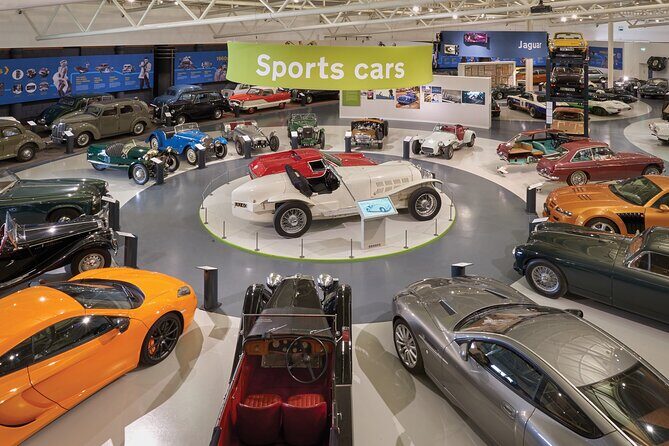
This is an on-the-day, self-guided admission experience. Your start time is 10:00 am, and the visit is typically 2 to 4 hours. That range is real life: if you speed-read everything and move quickly, you can do a solid loop. If you stop often, read labels, and take your time in the bigger areas, you’ll naturally fill more of that window.
You get a mobile ticket, and it’s offered in English, which keeps things straightforward. On a practical level, I think booking ahead is the smart move here because it turns your museum time into a sure thing rather than a wait-and-hope situation when you’re already in the area.
Here’s a time-saving approach I recommend:
- Plan to arrive close to 10:00 am so you’re not walking in when you’re already tired.
- Give yourself a “reading budget.” If you try to skim every label, it can feel like the place is endless. If you read selectively—especially the parts tied to prototypes, Jaguar, and major decades—you’ll enjoy it more.
Inside the museum: a guided-feeling tour without an actual tour group
The British Motor Museum experience is essentially one stop, but it’s not one room. You’ll move through the exhibits and see cars arranged in a way that tracks how things changed over time.
A big draw is the scope: the museum highlights the development of British car making through the decades, and you’ll see how cars shifted from early ideas to recognizable production models. That kind of flow is perfect if you like themes—like design trends, engineering improvements, and how changing society created demand for new kinds of vehicles.
The collection is also described as including:
- Iconic Jaguars
- Prototypes and film cars
- A wide range of well-presented vehicles from across eras
One thing I like about museums like this is that they make it easy to focus. If you only care about one brand—say, Jaguar—you can spend time on that section and still feel like you got value. If you love variety, you can bounce between “types” of cars and keep the experience fresh.
The Jaguar factor: why this collection pulls people in
If you’re even mildly interested in British performance brands, you’re going to notice the attention given to Jaguar. Multiple visitors single out the Jaguar collection as a highlight, and there’s a sense that the museum treats it like a “visit within the visit.”
Even when you’re not a hardcore Jaguar person, this section works because it’s tied to broader themes: how British engineering and design show up in real machines, not just brochures. And if you are a fan, the museum gives you room to look long enough to notice the differences between concepts and real-world production.
One practical tip: don’t rush past this area hoping you’ll come back. The museum is the kind of place where you can easily lose 20 to 30 minutes to one well-marked section. Jaguar is one of those spots where that happens naturally.
More than static displays: staff help and hands-on moments
A museum’s cars are only half the story. The other half is whether you feel like you can ask questions—and at the British Motor Museum, that part is strong.
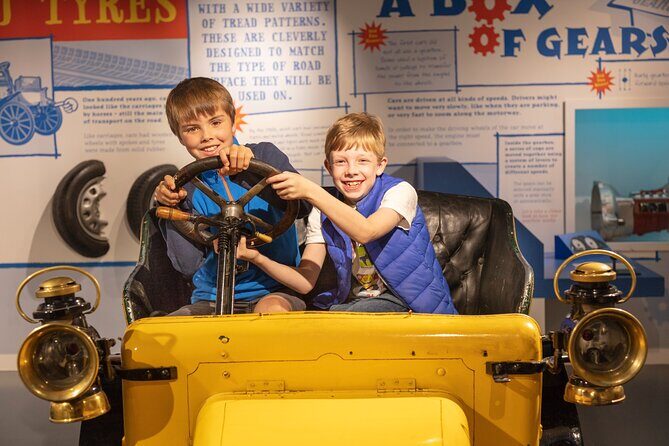
Staff and volunteers are available during your visit, and they’ll help bring cars to life with answers. If you get the chance to join a guided talk, that can add extra energy to the experience. One review highlights a tour led by Jim, who had a strong grasp of the cars’ history and shared amusing anecdotes. Another detail worth knowing: this kind of guided experience may offer a chance to sit in or on some cars, depending on what’s available during your visit.
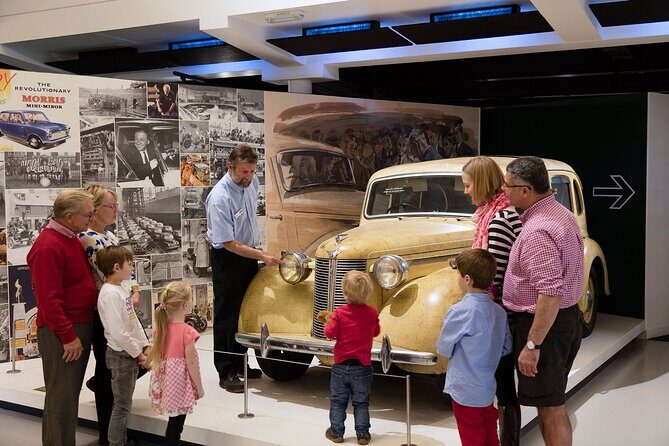
Even if you don’t join a guided element, keep an eye out for people around exhibits. They often act like live caption systems—pointing out small storylines behind a model or explaining what makes a specific prototype different.





The buildings, layout, and “car fatigue” management
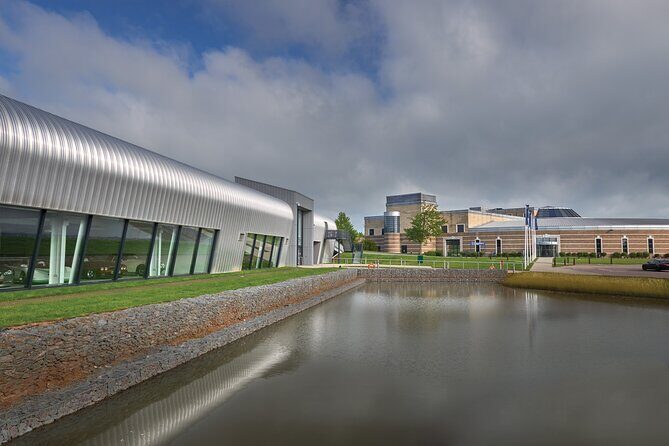
The museum is described as well laid out and easy to work around. People also note that it spans two buildings, which is great because it reduces the feeling that everything is crammed into one giant hall.
That said, “two buildings” can be a blessing and a challenge. The longer you spend, the more you may start to feel like you’re repeating the same visual pattern—car after car after car. The fix is simple:
- Change your focus occasionally. For example: scan quickly for a brand you recognize, then slow down for prototypes or film cars.
- Use the café break strategically. If you walk for too long before taking a pause, you’ll start skipping labels just to keep moving.
The presentation also seems intentionally clean and organized. Reviews mention spacious surroundings and cleanliness at the venue level, which matters because a museum can be great on paper but unpleasant in practice if it feels cramped or messy.
Café time: eating well without turning your visit into a detour
Yes, you’ll want food. The museum has an onsite café serving hot and cold meals and snacks. And from what’s been said, it’s not just a last-resort option.
Several comments praise the café’s quality, with notes like excellent cake and even mention of mince pies. That’s useful for you because a museum visit can turn into a slow burn. If the food is decent, you can plan your stop without stress and keep your energy up for the second half of the collection.
Practical recommendation: if you’re doing the full 2–4 hours, schedule your café break about halfway through. That way you can reset and return to the exhibits with fresh attention rather than trying to keep going when you’re starting to fade.
Events and special moments you might catch on site
One of the best parts of museums that stay active is that occasional events can add color to your day. A review mentions a Morris Minor event happening on the same day as a visit. Another mentions a Jaguar weekend.
So while your ticket gets you entry to the collection, it’s smart to stay flexible. If there’s an event running when you arrive, it can turn a good museum into a more memorable day without adding complicated planning.
Who this visit is best for (and who should think twice)
This is the sweet spot if you’re:
- A car fan who likes British models, engineering, or automotive design
- Someone looking for a museum that feels modern and organized rather than dusty
- Planning a family day where cars are the common interest
It also works well for teens and older kids who enjoy seeing real machines and reading how they evolved. Reviews include a strong “car fanatic” vibe, including visits with a 13-year-old and a 16-year-old who were clearly engaged.
If you’re not really into cars, the museum can still be interesting as a history-of-industry story—but you might enjoy it more if you’re ready to treat it like “design and technology history,” not only like a bunch of vehicles.
Value check: is $24.95 worth it?
At $24.95 per person for a 2 to 4 hour self-guided visit, this is a fair deal when you consider what you’re getting:
- A very large collection focused specifically on historic British cars
- A structure that helps you follow changes over the decades
- Staff and volunteers available to answer questions
- An onsite café option so you can stay longer without scrambling for a meal nearby
It’s also the kind of attraction where the time value is real. If you’re the type who stops to read, compare, and ask questions, you can easily fill a morning or early afternoon. If you’re the type who wants to click through fast, you might feel like you didn’t use the ticket fully. But the displays are described as easy to navigate, so even a quicker visit still tends to feel worthwhile.
The bottom line: should you book British Motor Museum tickets in Gaydon?
I’d book if you want an easy, independent museum day built around British motors. The ticket gives you access to a big, curated-feeling car collection, and the onsite staff help keep it from becoming just a walk-and-forget experience. Add in the café, and you’ve got a complete half-day plan.
I’d also book sooner rather than later if you’re traveling in a group or during a busy time. This is the sort of place where arriving early helps you get the most out of the collections without feeling rushed.
If you’re a car person, this is one of those visits where you leave with questions answered and new ones to chase. If cars aren’t your thing, come with a mindset of technology and design history, and you’ll likely still have a good time.
FAQ
How long does the British Motor Museum entry take?
Most visits take about 2 to 4 hours, depending on how much time you spend reading and looking at the displays.
What time does the entry start?
Start time is listed as 10:00 am.
Do I get a mobile ticket?
Yes. The entry ticket is provided as a mobile ticket.
Is the museum experience offered in English?
Yes, it is offered in English.
Are service animals allowed?
Yes, service animals are allowed.
Can I cancel for a full refund?
Yes, you can cancel for a full refund if you cancel at least 24 hours before the experience start time.