Medieval Lavenham gets personal with audio. This self-guided VoiceMap walking tour threads stories through the village you’ll walk past anyway, with half-timbered street details that are easy to miss when you’re just sightseeing. You control the pace, so you can linger when something catches your eye or move on when you want the next stop.
What I like most is the practical value: you get lifetime access to the English audio and maps, so you can replay it anytime (yes, even on a second trip). And the offline features mean you’re not stuck worrying about spotty signal while you’re on narrow streets.
One thing to keep in mind: this is best for most able-bodied walkers. Pavement can be narrow and some streets are steep, so it may not work for anyone with mobility issues.
In This Review
- Key highlights at a glance
- Why this VoiceMap audio walk works so well in Lavenham
- Starting at Cock Horse Inn: the tour’s naming clue and first direction
- The church stop: history you can spot while you’re walking past
- Lavenham Hall garden area: a calmer moment to regroup
- The Swan stop: a leisurely listen without sprinting
- Lavenham Priory: connecting the spiritual site to the village story
- The De Vere family stop: where big names meet street-level sightseeing
- Lavenham Guildhall (1530) and Corpus Christi: the heavyweight building on the route
- Final stretch to Lavender Cottage: closing the loop near the Market Square
- Value and pricing: why $7.99 can feel surprisingly fair
- What’s included (and what you’ll need to bring)
- Tips to get more out of every stop
- Who should book this self-guided Lavenham tour?
- Should you book the Medieval Lavenham audio tour?
Key highlights at a glance
- Lifetime English access via VoiceMap, so you can revisit on your schedule
- Offline maps and audio for a smooth walk without relying on mobile data
- Stories tied to specific places like the church, Swan, Priory, and Guildhall
- Built-in pacing control: pause, resume, and work through stops in your own rhythm
- Focused on the parts people overlook, including half-timbered building stories
Why this VoiceMap audio walk works so well in Lavenham
Lavenham is the kind of place where you can spend a whole day looking upward, then realize you missed the reason those buildings mattered. This tour helps you connect the dots without turning it into a stiff, clock-driven group event.
It’s also refreshingly flexible. Instead of waiting for a guide to finish one speech before you can move, you can pause the audio right when you want to take a closer look at a façade, a lane, or a doorway. That matters in Lavenham because the most interesting details often live at “walk-past speed” unless you slow down on purpose.
Finally, you’re not just listening to generic narration. The route is built around clear landmarks—places like the church, Lavenham Priory, and the Guildhall—so your attention has a target. You end up with a much stronger mental map of the village.
You can also read our reviews of more guided tours in England
Starting at Cock Horse Inn: the tour’s naming clue and first direction
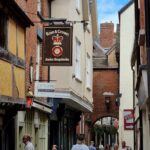
The walk begins just outside Cock Horse Inn at 40 Church St, Lavenham, Sudbury CO10 9SA. The first audio moment is about the story behind the inn’s name. That’s a smart opener because it sets the tone: you’re not treating the village as a pretty backdrop. You’re learning how locals talked, named things, and remembered their past.
From there, the tour immediately starts guiding your feet. It’s not a “go wander and hope” experience. You’ll be told when you’re approaching the next stop, which is handy in a small town where lanes can all start to look similar if you’re relying on memory.
If you like walks where you can get your bearings fast, this is one of those tours.
The church stop: history you can spot while you’re walking past
Next, the route passes by the church, with audio focused on its history. Even if you don’t plan to go inside (tickets or entrances are not included), the narration gives you context for what you’re seeing from the street.
This is where I think audio tours earn their keep. A church building can look “just like a church” until you’re told what to pay attention to—then suddenly small details make sense. You’ll also have a chance to stand back for a moment, take in the setting, and not feel rushed.
Practical tip: keep your volume comfortable. Street noise and wind in open areas can make quiet narration harder to catch, especially if you’re stepping aside to look.
Lavenham Hall garden area: a calmer moment to regroup
The tour then leads you past Lavenham Hall, specifically a picturesque garden area. This pause in the route is valuable because it breaks the walking rhythm. You go from one dense cluster of medieval streets to a calmer, more open-feeling spot where you can slow down, listen, and reset.
If you’re the type who likes to take photos but hates losing the story while your camera warms up, this kind of stop helps. You’re given a moment that feels more like a breath than a checkpoint.
No entrance ticket is included here, so think of it as a look-and-listen stop—time well spent if you enjoy atmosphere.
The Swan stop: a leisurely listen without sprinting
Next, you get a brief stop in front of the Swan, where the audio invites you to learn in a relaxed way. This is a good example of how the tour is designed for real people, not strict tour schedules.
Instead of blasting you with information at high speed, the Swan stop works like an in-town “rest” point. You can stay put long enough to catch the key story points, then continue without that feeling of having to perform.
Also, pub signs, inn names, and local landmarks in England often connect to trade and social life. So even if you’re not stopping for a drink (food and drink aren’t included), you’re still learning why that building matters.
A few more England tours and experiences worth a look

Lavenham Priory: connecting the spiritual site to the village story
After the Swan, the tour passes by Lavenham Priory with audio about its history. Priory sites can feel mysterious in a way that makes you want answers, but you don’t always get them from casual walking.
Here, the narration gives you something concrete to hold onto while you look around. Even if the priory area isn’t what you expected, the audio helps you interpret the place rather than just admire it from a distance.
This stop is also a nice midpoint. By now you’ve heard about the church and local names. Adding the Priory helps expand the story beyond just buildings into how the village functioned around belief, community, and power.
The De Vere family stop: where big names meet street-level sightseeing
The tour continues past the De Vere house, with audio that gives you the chance to understand more about the De Vere family. This is one of the spots I’d tell you to pay extra attention to, because it’s where many “pretty village” visits start to become something you can explain later to friends.
Family names like De Vere aren’t just trivia. They connect to landholding, influence, and why certain buildings ended up where they did. In a town like Lavenham, that context makes it easier to see patterns across different stops instead of treating each one as a random highlight.
If you’re aiming to leave with more than photos, this is the part that helps.
Lavenham Guildhall (1530) and Corpus Christi: the heavyweight building on the route
One of the most specific stops on the walk is Lavenham Guildhall. The audio covers its construction around 1530 and notes it was called the Guildhall of Corpus Christi.
That detail is gold for two reasons. First, it gives you a time anchor. Second, the Corpus Christi name points you toward why guild buildings mattered—religion and civic life often sat close together in towns like this.
This is also a useful “anchor moment” for your memory. A building with a known approximate date helps you build a mental timeline as you finish the walk. If you tend to remember stories better when they’re tied to numbers and names, you’ll appreciate this stop.
Final stretch to Lavender Cottage: closing the loop near the Market Square
The tour ends just outside Lavender Cottage (at 84 Church St, Lavenham, Sudbury CO10 9QT). It’s also near the Market Square, which makes for an easy landing after your walk.
Ending close to where many people go next is convenient. You don’t feel stranded with a long trek back to transportation or the center of town. And because this is self-guided, you can finish feeling satisfied instead of needing to rush to catch a bus.
If you want a natural follow-up, this is the point where you can wander the nearby area on your own, using the route you just learned as your guide.
Value and pricing: why $7.99 can feel surprisingly fair
At $7.99 per person, this tour sits in the “small cost, big payoff” category—especially because you get lifetime access. That’s the key difference between a one-and-done walking tour and something you can repeat.
And you’re not paying extra for entrances along the way. The tour is built around walking and listening, so the “included” experience is the story itself, delivered through the VoiceMap app. You won’t hit the usual frustration of realizing you paid for a tour but still need museum tickets to get the full effect.
Bottom line: if you want a way to understand Lavenham without a pricey guided group session, this is strong value.
What’s included (and what you’ll need to bring)
Included:
- Lifetime access to the audio tour in English
- VoiceMap app for Android and iOS
- Offline access to audio, maps, and geodata
Not included:
- Smartphone and headphones (you’ll need to supply both)
- Transportation
- Food and drink
- Tickets or entrance fees for any places en route
This matters because it changes how you plan. You’re responsible for having your device charged and ready, and for downloading the offline content before you go if your connection is unreliable.
Tips to get more out of every stop
A few small choices make a big difference with audio tours like this:
- Wear headphones you can live with for 40 minutes to 1.5 hours. If you’re constantly adjusting them, you’ll miss narration.
- Plan for slow moments. The audio is built for pausing and resuming, not racing.
- Use the stops as photo cues. When you hear the audio transition, that’s your signal you’re approaching something you’ll want to look at more carefully.
- If you’re aiming for the most “half-timbered building” value, give yourself time to look up and not just straight ahead.
One more practical note from real feedback: some streets are tight and sloped. Take it one step at a time.
Who should book this self-guided Lavenham tour?
This fits best if you:
- Want control over pacing, stops, and time spent on each corner
- Prefer learning through listening while you walk, rather than standing still for a traditional guide
- Like historical context tied to real places—church, Priory, Guildhall, and prominent local family references
- Want a tour you can repeat later, not just use once
It may be less ideal if you need step-free, very wide paths everywhere. The route includes narrow pavement in places and steep streets, and that can be a dealbreaker for mobility needs.
Should you book the Medieval Lavenham audio tour?
If you’re deciding between “look around” and “understand what you’re looking at,” book this. For under $10, the lifetime access plus offline audio turns it into a repeatable Lavenham education, not a short-lived activity.
I’d especially recommend it if you like the idea of moving at your own pace through a medieval town, with clear landmark stops and narration that focuses on the village details most people usually glide past. Just go in knowing you’ll need a smartphone and headphones—and plan for the fact that Lavenham isn’t flat and wide like a museum campus.
If that sounds like your kind of trip, you’ll likely find this is one of the most practical ways to get more meaning out of medieval streets.