REVIEW · TORQUAY
Cockington: Sunset Sketch and Stroll with Sketch Kit
Book on GetYourGuide →Operated by James Murch · Bookable on GetYourGuide
A good sketch starts with the right light. This sunset sketch and stroll at Cockington Court pairs hands-on plein air practice with guided technique, then lets you wander through gardens and viewpoints before you wrap up. I especially love how it teaches you to simplify what you see, and how the sketch kit (notepad, pencil, viewfinder, eraser) gives you a fast way to get started without fuss.
Two things I really liked: I got clear, practical guidance on squinting and using a viewfinder to focus on light and shade, and I enjoyed the setting itself, with variety from arboretum and orchard to lakes, woodland, and even sea views. One thing to consider: it’s an outdoor evening activity, so wear comfy shoes and bring clothing for shifting light and weather.
In This Review
- Key points to look forward to
- Meeting James Murch in Cockington Village
- Your sketch kit: what you get and why it works
- The main technique: light and shade without overthinking
- Strolling Cockington Court: where you’ll sketch and why each stop matters
- Arboretum and orchard: structure and rhythm
- Lakes and woodland: tone changes you can actually see
- Sea views: a final composition challenge
- What happens during the session (and how the coaching feels)
- Plein air sketching: why it’s worth doing at sunset
- Finishing touches: time in the studio and seeing the artwork up close
- Wrap-up at The Drum: a practical way to cap an active evening
- Price and value: is $54 reasonable?
- Who should book this sunset sketch and stroll
- Practical advice so your sketch comes out better
- Should you book Cockington: Sunset Sketch and Stroll with Sketch Kit?
- FAQ
- What is included in the sketch kit?
- Is the sketch kit yours to keep?
- Who guides the experience?
- What techniques will I learn?
- Where do the scenic stops take place?
- Are refreshments included?
- What should I bring?
- What language is the tour in?
- Is it suitable for children and mobility needs?
- Where do I meet the guide?
Key points to look forward to
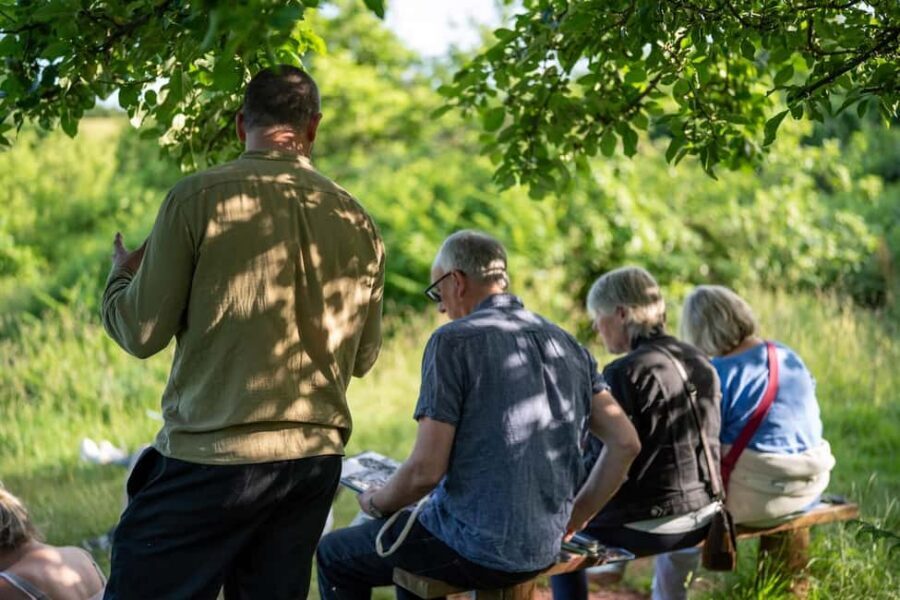
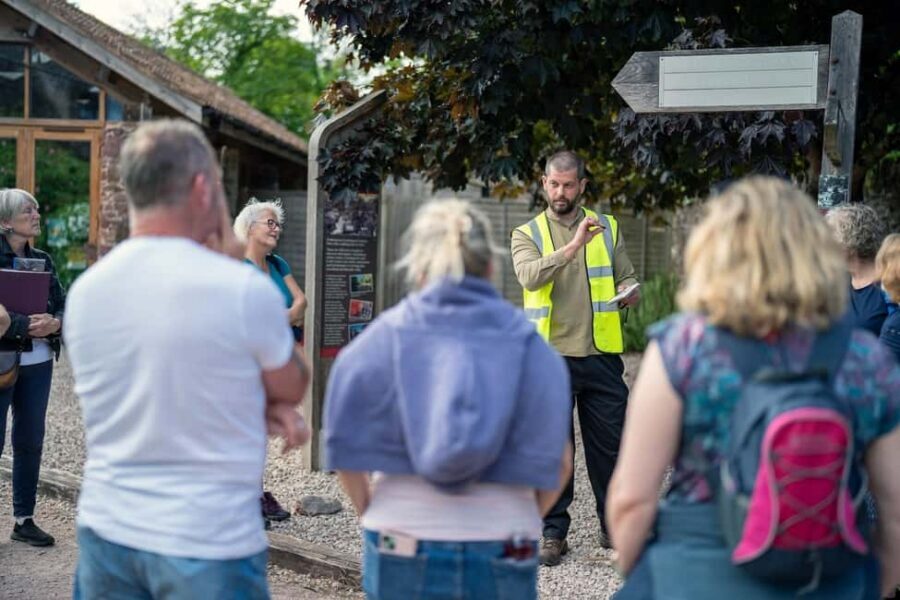
- Meet the guide, James Murch, at Cockington Village under the archway in a yellow fluorescent jacket
- Bring your own eye-trainer: you’ll use a viewfinder and squinting to simplify the scene fast
- A starter kit you keep with everything you need to sketch on the move
- Multiple scenic stops at Cockington Court across arboretum, orchard, lakes, woodland, and sea views
- End with a well-earned pint at The Drum in Cockington Village
Meeting James Murch in Cockington Village
The experience begins in Cockington Village, right under an archway. Your guide, James Murch, will be easy to spot because he’s wearing a yellow fluorescent jacket. If you’re the type who likes to arrive early and get oriented, do it. Cockington is compact, but you’ll feel more relaxed once you know exactly where to meet.
You’ll use a clear location pin to find the spot: What3Words carbonate.detection.ponies. After that, the tour stays simple: you’ll move together to sketch points, then return back to the meeting point at the end.
This matters more than you might think. A sketch workshop lives or dies on comfort at the start. When you’re not fumbling with bearings, you can spend your energy on learning how to see.
You can also read our reviews of more tours and experiences in Torquay.


Your sketch kit: what you get and why it works
You’ll receive a starter sketch kit at the meeting point. Based on what’s included, it covers the essentials:
- notepad / sketching paper
- pencil
- eraser
- viewfinder
That viewfinder is the key tool here. Instead of trying to draw the whole scene at once, you frame a portion of it, like you’re taking a photo without a camera. When you pair framing with the guide’s method, the scene stops feeling overwhelming.
The tour is aimed at all skill levels, including complete beginners, because the instruction is built around fundamentals you can apply immediately. You’re not expected to produce a masterpiece before you’ve even learned how to place shapes. In fact, the workshop style encourages you to work out what works, then refine it.
One detail I appreciate: the kit is yours to keep. So you’re not just paying for an evening class. You’re leaving with a small kit you can use again on future walks, trips, and rainy days when you still want to sketch.
The main technique: light and shade without overthinking
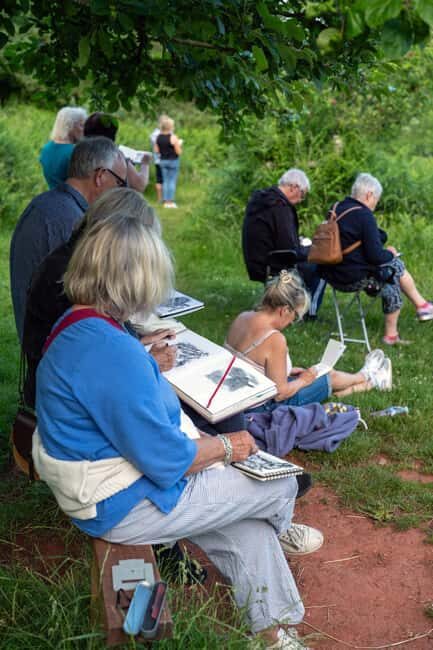
Cockington at sunset is beautiful, but the real focus isn’t just “pretty scenery.” The real lesson is learning how to make your drawing feel dimensional using light and shade.
You’ll practice ways to simplify your view, including:
- squinting to reduce detail
- using the viewfinder to isolate what matters
- focusing on essential shapes and tones
Here’s why this technique is so valuable for you. When you look at a complex building, lake edge, trees, and sky all at once, your brain tends to collect every detail. Your pencil ends up chasing that chaos. Squinting and framing interrupt that pattern. You start seeing big shapes, the darker masses versus lighter highlights, and the overall composition.
In the process, you also get a confidence boost. Even if the light isn’t perfect that evening, you’ll still have a method. One of the best parts of the guidance style is how flexible it is: you’re coached toward what you can observe right now, not what you wished you’d had.
Strolling Cockington Court: where you’ll sketch and why each stop matters
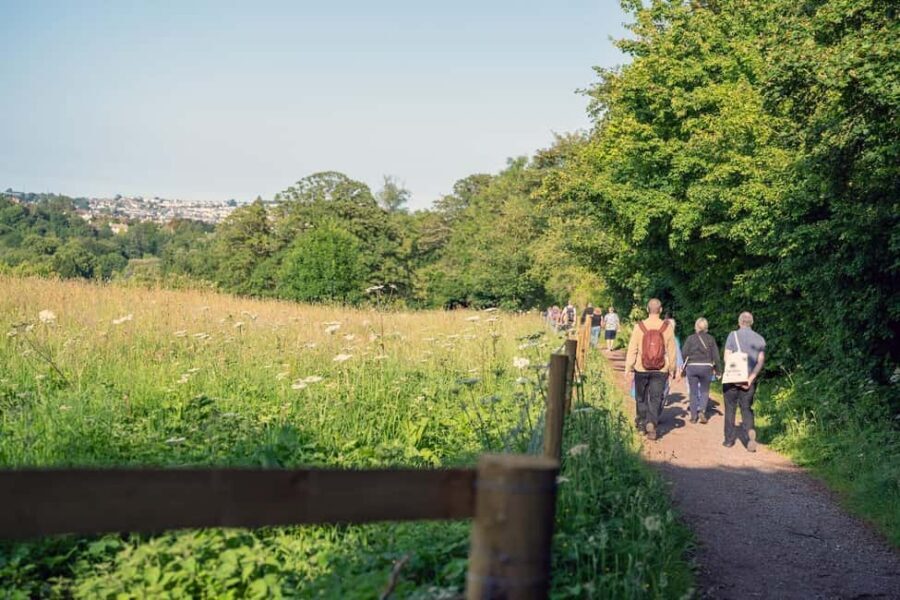
Cockington Court offers a mix of scenery that works really well for learning. You’re not stuck looking at one view for the whole session. Instead, you move through a variety of environments, which is exactly what you want when you’re learning to translate the real world onto paper.
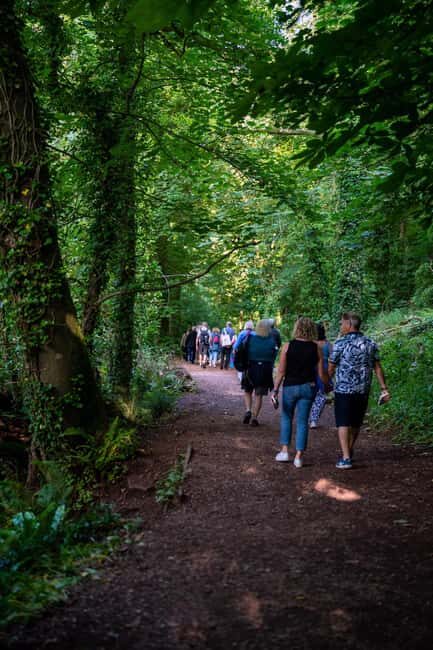
You’ll have stops along a route that takes in:
- an ancient arboretum
- an apple orchard
- lakes
- woodland
- sea views
Each of these sections teaches a different visual skill.
Arboretum and orchard: structure and rhythm
In the arboretum, you’ll have plenty of natural structure—trunks, branches, spacing, and repeated forms. That’s ideal for learning how to suggest depth without drawing every leaf.
The apple orchard adds something different: more open ground and a rhythm of trees. It also tends to encourage wider framing, which helps you practice composition. Instead of tiny details, you’re aiming for a believable layout of masses.


Lakes and woodland: tone changes you can actually see
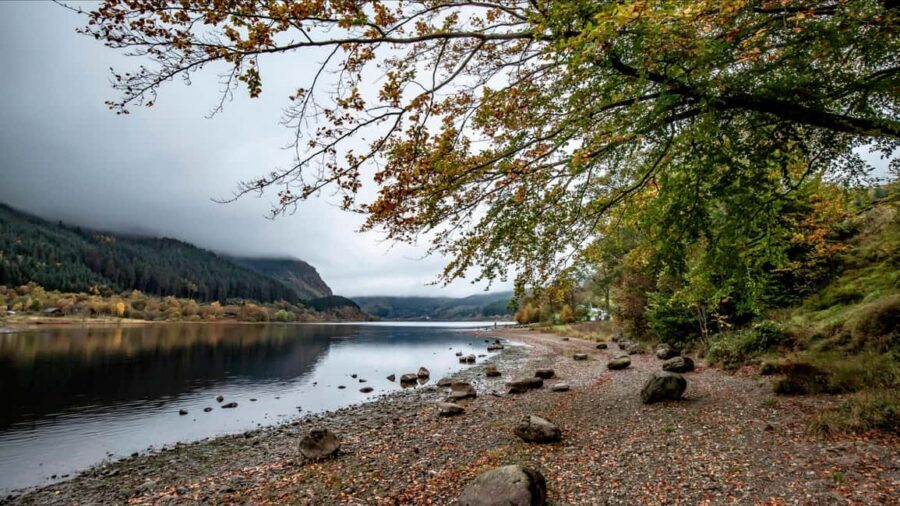
Water is one of the best teachers for light and shade. Lakes tend to show tone shifts clearly—darker edges, brighter reflections, and smooth gradients. You’re training your pencil to handle mid-tones, not just outlines.
Woodland is useful for learning how shadows stack. Trees give you overlapping dark areas, and the spacing between trunks turns into the “negative space” that makes your drawing feel airy. It’s harder than open fields, which is why it’s such a good learning zone.
Sea views: a final composition challenge
Sea views add horizon lines and sky tone changes, which can be a big step up in drawing complexity. But it’s a smart ending point because sunset light makes the contrast more obvious. Even when you simplify the view, you still get that sense of place.
And remember: you’re not drawing everything you see. You’re learning to pick the key elements that communicate what the scene feels like.
What happens during the session (and how the coaching feels)
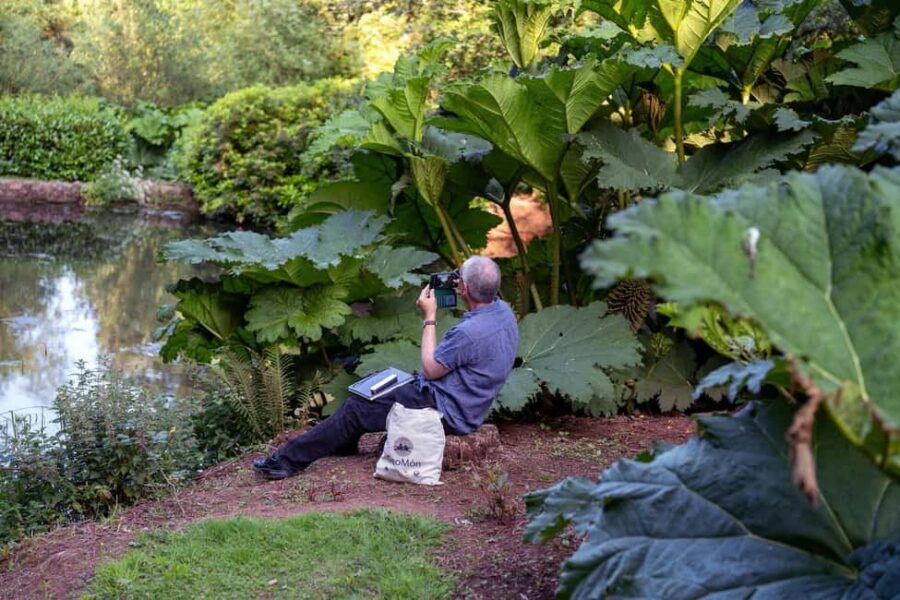
The format stays practical. You meet, get your kit, then begin sketching as you go. The guide offers tips as you work, and you use them immediately rather than waiting until the end.
One of the strongest themes from the experience is that the coaching is tailored to your level. If you’re brand new, you’ll get help breaking the scene into manageable parts. If you’ve sketched before, you still get a method that keeps you focused on values and shape instead of chasing detail.
The guidance also has a friendly, talk-through-the-process vibe. James is described as talkative and easy to be around, and he also shares history about the location. That blend matters because it turns a sketch workshop into a real evening out, not just a homework session.
In one instance, the session is even personal—two people can make it feel uniquely tailored. That’s not always guaranteed, but it’s a reminder that the pace is meant to support the group rather than cram everyone through the same steps.
Plein air sketching: why it’s worth doing at sunset
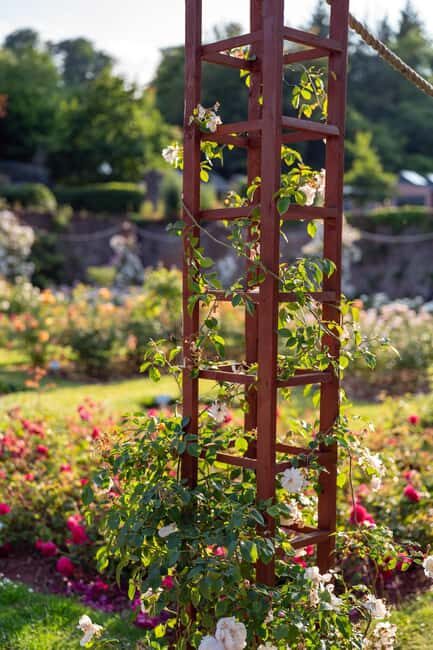
Plein air sketching means you draw outside, in real time. It’s a classic tradition for a reason: it forces your observation to improve. You can’t rely on memory, and you can’t procrastinate detail work. You learn to make quick choices.
Doing it at sunset adds a bonus. The light is changing quickly, which makes your “light and shade” practice feel real. The scene teaches you timing. You learn to capture the feeling before it disappears.
And if the light isn’t ideal, the workshop still works. One account specifically notes that even when lighting conditions were not perfect, the guide redirected the session toward shapes and tones. That’s the difference between a workshop that depends on perfect weather and one that teaches you a method you can use anywhere.
Finishing touches: time in the studio and seeing the artwork up close
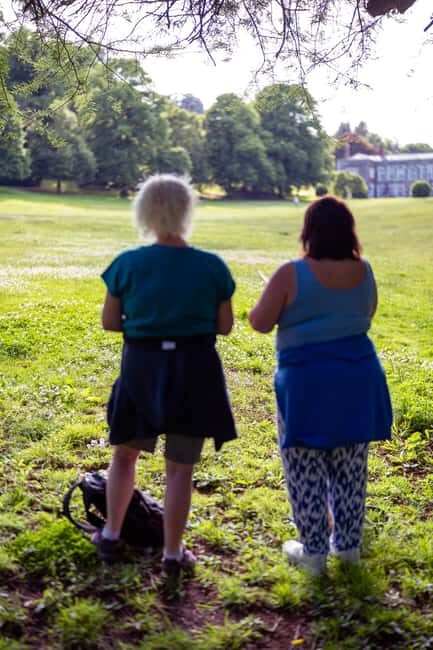
A standout moment in the overall experience is the chance to see James’s artwork at the end of the session. One account highlights time in his studio as a highlight, which makes sense: it gives you a practical “what good looks like” reference point right after you’ve been learning how to see.
This is valuable because it helps you map the technique to outcomes. You’re not just told how to squint or frame. You get to connect those steps to finished results.
If you’re the kind of person who learns better when you can visualize the end result, this part will land well.
Wrap-up at The Drum: a practical way to cap an active evening
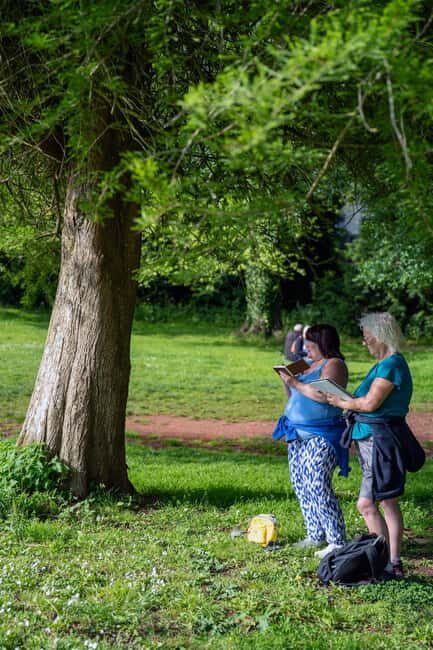
After sketching and walking, you’ll finish with time for a well-earned drink at The Drum, a traditional pub in the heart of Cockington Village.
This is a smart closing move. You’ve been standing, walking, holding a pencil, and focusing your eyes on contrast. A pub stop gives you a natural decompress moment where you can compare sketches, swap notes, and just enjoy the evening without another “task” attached.
One note: refreshments aren’t included, so bring that in as part of your planning. But since the tour includes the kit and guidance, you’re paying for the experience, then using the pub as a bonus atmosphere.
Price and value: is $54 reasonable?
At $54 per person, you’re paying for three things that are often expensive when purchased separately:
- a professional artist’s instruction
- a physical starter sketch kit you keep
- guided time outdoors with scenic stops
In other words, you’re not just buying access to a park. You’re buying teaching and equipment.
Is it a bargain compared to a regular class? It can be, especially because the setting does the heavy lifting. Cockington Court gives you a high-quality teaching environment without you needing to travel far to find “good subjects.”
Is it worth it if you already know how to draw? Yes, if you want a focused refresher on seeing light and shade. The viewfinder and squinting practice can still sharpen your process even when you’re not a beginner.
Who should book this sunset sketch and stroll
This experience fits best if you:
- want a relaxed evening that combines walking and drawing
- like hands-on coaching rather than passive viewing
- enjoy gardens and viewpoints with real variety
- want a simple technique (light/shade, framing, squinting) you can use again later
It’s also great if you’re a beginner who’s tired of feeling judged by complicated art instruction. The workshop’s method is designed to make success possible without needing “talent” first.
It may be less suitable if you need a fully accessible, low-walking route, since it’s not suitable for wheelchair users and it has an age range restriction (not for children under 18, and also not for people over 95).
Practical advice so your sketch comes out better
A few small choices make the experience smoother and your results better.
- Wear comfortable shoes. You’ll be moving between scenic stops.
- Dress for the weather. At sunset, conditions can change fast.
- Bring patience. Your first sketches won’t look like the last one you make that night, and that’s normal.
- Use the viewfinder early, not halfway through. It’s a fast way to turn a complicated scene into a manageable composition.
- If the light shifts, treat it like the point. Sunset sketching is about adapting while you draw.
These are the kinds of habits that make the workshop click. You’ll get more out of James’s guidance if you’re ready to try the technique on the spot.
Should you book Cockington: Sunset Sketch and Stroll with Sketch Kit?
If you want an evening that’s equal parts art lesson and scenic walk, I’d say yes. The strongest selling points are the step-by-step focus on simplifying your view, the included kit you keep, and the way James Murch guides you toward light and shade you can actually see. Finishing with time seeing his artwork and then relaxing at The Drum makes it feel like a full evening, not just an hour of instructions.
Book it if you’re curious, beginner-friendly, and you like learning by doing. Skip it if you need a fully accessible option or you’re looking for a long, formal art history lecture—this is hands-on sketching first, story second.
FAQ
What is included in the sketch kit?
You’ll receive a starter sketch kit that includes a notepad, pencil, viewfinder, and eraser.
Is the sketch kit yours to keep?
Yes. The sketch kit is yours to keep at the end of the tour.
Who guides the experience?
The experience is guided by James Murch.
What techniques will I learn?
You’ll get tips on simplifying your view using methods like squinting and using the viewfinder, with an emphasis on light and shade.
Where do the scenic stops take place?
You’ll sketch at various scenic points around Cockington Court, including areas such as an ancient arboretum, apple orchard, lakes, woodland, and sea views.
Are refreshments included?
No. Refreshments are not included. The tour ends with the option to have a drink at The Drum.
What should I bring?
Wear comfortable shoes and bring weather-appropriate clothing.
What language is the tour in?
The tour is in English.
Is it suitable for children and mobility needs?
It’s not suitable for children under 18 years, and it’s not suitable for wheelchair users. It’s also not suitable for people over 95 years.
Where do I meet the guide?
Meet under the archway to Cockington Village. The guide will be wearing a yellow fluorescent jacket. The What3Words location is carbonate.detection.ponies.