REVIEW · DURHAM UK
Dark Durham Tour
Book on GetYourGuide →Operated by Walkabout Durham · Bookable on GetYourGuide
Durham has a darker rhythm you can feel fast. This tour pairs a local geography teacher guide with Durham’s iconic architecture for stories you won’t find on a normal stroll. The one catch: Durham is hilly, and you’ll hit plenty of steps.
I like how this is built for real walking time, not museum time. You get a focused, 90-minute guided route (about 1.5 hours total) with zero building entry, so you can keep moving while the city’s shapes do the storytelling. Expect the brutal side of social history: coal mining, hidden cemeteries, prisoners, rebellions, and even the sort of miracle-and-ghost talk that makes old stone feel alive.
In This Review
- Key highlights worth your attention
- First, know what this is: a walking tour with teeth
- Where you start: The Man on the Horse in Market Place
- Market Place: coal scars, hidden cemeteries, and social pressure
- Framwellgate Bridge: escaped prisoners and the brutal early Norman period
- Durham Cathedral: saintly miracles and a dungeon beneath
- Palace Green: ghosts, medieval burial grounds, rebellion, and UNESCO views
- Kingsgate: the grim namesake and divisive 20th-century architecture
- Durham Crown Court: a 200-year prison with escapes and executions
- Old Elvet and Elvet Bridge: the oldest pub, gallows-era hanging, and final haunting
- Guide-led storytelling: why the guide makes this tour worth it
- Price and value: why $24 for 1.5 hours can make sense
- Timing tips: how to make the most of an evening walk
- Who should book Dark Durham
- Should you book this tour?
- FAQ
- Where is the meeting point?
- How long is the tour?
- Does the tour go inside any buildings?
- What language is the tour guide?
- How much does it cost?
- Is there a free cancellation option?
- Can I book and pay later?
- How do I find the route if I’m new to Durham?
- Is the walk flat?
Key highlights worth your attention
- A guide who teaches geography and explains how the city works (you’ll hear the why behind the where)
- World-class architecture as your backdrop: cathedral, castle views, and bridges tied to real events
- Rare, darker stories of everyday people from mining to prisons to gallows-era punishment
- No indoor stops so you get a clean evening plan that stays mostly outdoors
- A route that ends under Elvet Bridge with chilling local legends trailing behind
First, know what this is: a walking tour with teeth
Dark Durham is a straight-up evening walk through County Durham’s past. It’s not a history lecture, and it’s not a sightseeing checklist. You’ll get a live guide who ties geography to story: where people moved, where trouble formed, and why Durham’s stone and streets mattered.
The tour also has a clear pacing choice. Since you don’t go inside any buildings, you’re spared the “line up, shuffle, repeat” side of travel. That’s good value for a short 1.5-hour outing, especially if you want something intense but practical.
One more thing I’d plan for: shoes. Multiple stops involve steps and slopes. If you’re even slightly unsure on hills, you’ll feel it here.
You can also read our reviews of more tours and experiences in Durham Uk.
Where you start: The Man on the Horse in Market Place
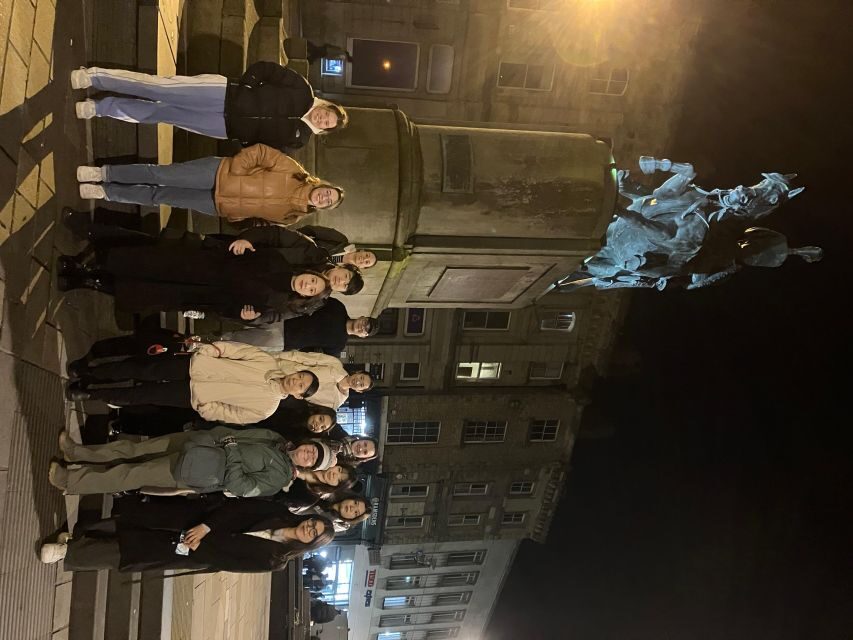
You meet at The Man on the Horse statue in the middle of the Market Place. It’s a handy landmark because Market Place is central and easy to orient from.
I like this kind of meeting point. No taxi trivia, no guessing which side of a street the guide might use. Once you’re gathered, the guide can start quickly and keep the group moving while everyone still has the energy for an active walk.
Market Place: coal scars, hidden cemeteries, and social pressure

The tour starts by taking the Market Place seriously—as a stage for Durham’s harder social side. The talk begins with coal mining and moves into the places people tried to hide or control, including hidden cemeteries.
What I find useful here is the framing. You’ll see everyday Durham structures and realize they came with real consequences: labor, disease, poverty, and the social pressure that built up over time. The Market Place becomes more than a pretty starting square. It’s where the city’s power and survival habits show.
One practical note: if you’re arriving cold or tired from travel, this early section helps you get your bearings. You learn how to read the city before the walk turns more intense.
Framwellgate Bridge: escaped prisoners and the brutal early Norman period
Next comes Framwellgate Bridge, which is a smart choice. Bridges force you to look at the city in layers: streets above, routes below, and the paths people used to escape or pursue.
You’ll hear stories about escaped prisoners, and then the narrative swings back further into the early Norman period—specifically Prince Bishops and the kind of rule that could feel harsh and personal. The guide’s job here is to make those names and eras feel concrete, not like a blur from a textbook.
The drawback? This is where the tour’s tone can feel darker and more direct. If you prefer light storytelling, you might find yourself shifting into a more serious headspace. Still, it’s all anchored to visible points, so it doesn’t feel abstract.
Durham Cathedral: saintly miracles and a dungeon beneath
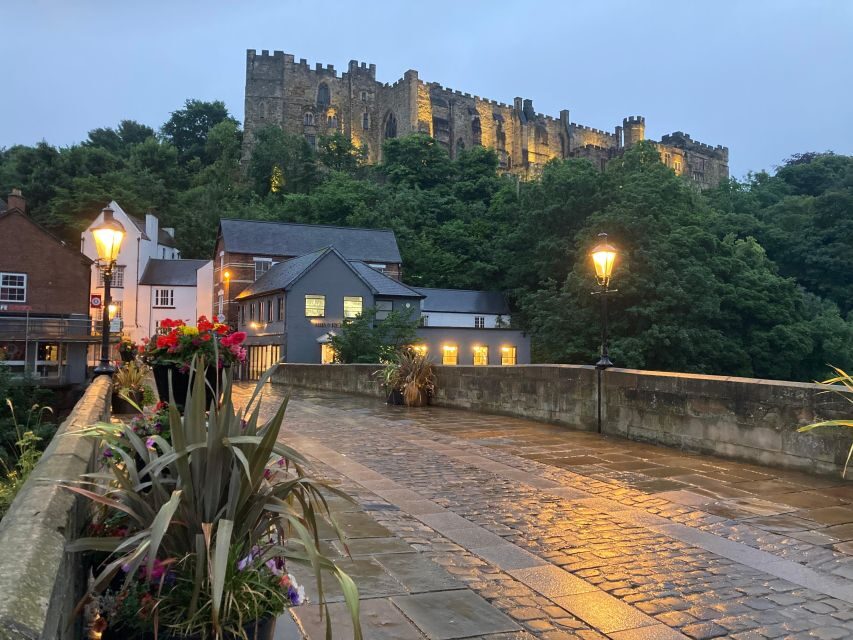
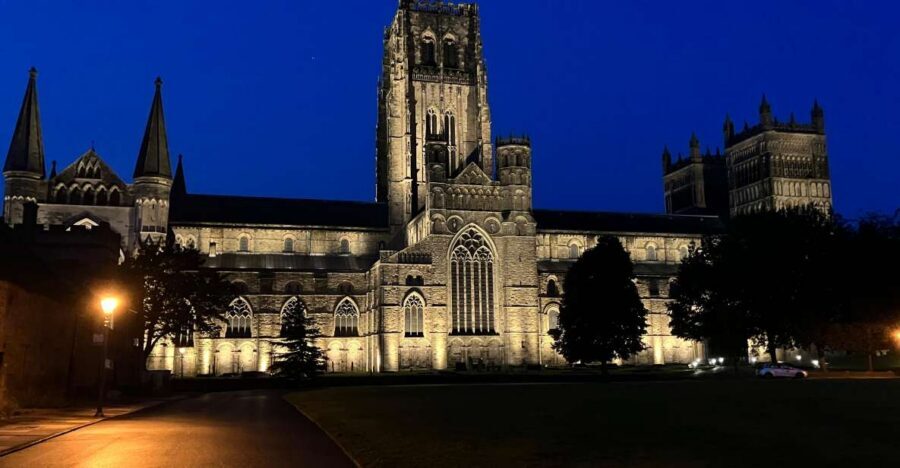
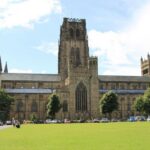
Then you hit Durham Cathedral. Even without entering buildings, you get the cathedral’s full presence—those dramatic lines and heavy stone that make the area feel important in every era.
You’ll learn about saintly miracles, but the really memorable part for most people is the talk about a dungeon beneath the cathedral. That contrast is exactly why this tour works: it refuses to separate sacred from brutal. In old cities, they’re often side-by-side.
Why it matters for you: this stop gives you a mental model of how Durham balanced authority, faith, and punishment. You’ll start noticing how the cathedral area fits into the city’s control system, not just its beauty.

Palace Green: ghosts, medieval burial grounds, rebellion, and UNESCO views
At Palace Green, the tour leans into atmosphere while still staying grounded in places you can see. You’ll hear ghost stories linked to the castle, plus talk of medieval burial grounds, a deadly rebellion, and even modern miracles.
I like how this stop blends “spooky” with “explainable.” Even if you don’t buy the supernatural angle, it still shows how people used locations to make sense of fear and loss. The guide keeps you from turning it into pure folklore by tying it to the built environment.
And then you get the practical reward: magnificent views of Durham’s UNESCO World Heritage castle and cathedral area. So you’re not just walking toward gloom—you’re walking toward one of the most striking sightlines in town.
Kingsgate: the grim namesake and divisive 20th-century architecture
Kingsgate brings the tour into a different kind of contrast. You’ll learn the gruesome story behind this place-name, and you’ll also be looking at divisive 20th-century architecture.
This is a useful moment for anyone who thinks history only lives in the medieval period. Durham didn’t stop being shaped after the old dynasties. The city kept rebuilding, and not everyone agreed on the direction. That’s a major reason architecture stories matter: they’re arguments made in stone.
If you’re the kind of person who likes your tour stops tied to both old and newer Durham, Kingsgate will hit your sweet spot.
Durham Crown Court: a 200-year prison with escapes and executions
Next is Durham Crown Court, tied to a 200-year-old prison. Even from outside, the site carries weight because the guide’s stories focus on what happened to people inside: how prisoners exercised, escaped, and were executed.
This is one of those stops where the tour earns its name. It’s not just a spooky set of legends. You get punishment as a system—how confinement shaped routines and how the rules could be tested.
Practical heads-up: if you’re sensitive to violent themes, you may want to pace yourself. The guide gives context, but it’s still grim.
Old Elvet and Elvet Bridge: the oldest pub, gallows-era hanging, and final haunting
The tour ends with a two-part finish that feels very Durham—old pubs, old bridges, and stories that don’t quite let go.
First is Old Elvet, described as the oldest pub in the city. The guide uses that familiar, human setting to talk about the area’s darker edge, including a hanging from the gallows. It’s a striking choice: you can almost imagine locals mixing a pint with the knowledge of what punishment looked like.
Then comes Elvet Bridge, where the finale takes place beneath it. You’ll hear tragic tales of Durham’s previous occupants, including some stories where people believe certain figures are still around.
If you want a clean emotional “click” at the end of your tour, Elvet Bridge delivers. The city feels larger when you hear how many lives have been under your feet and along these routes.
Guide-led storytelling: why the guide makes this tour worth it
This tour stands or falls on the guide, and it helps that the guide is a geography teacher with four years of tour experience. That matters because geography teaching usually means clear connections: where things are, why they’re there, and how humans used space to survive.
The tone also comes through in how the guide answers questions. People describe Peter as friendly, easy to chat with, and strong at linking the gruesome details to the geography of the city. That combination can turn “dark history” from random shocks into something that makes sense.
One extra practical benefit: Peter is the kind of guide who shares quick local recs. In particular, he’s been mentioned as offering suggestions for bars and restaurants, including bargain pints and local brews—perfect if you want to keep the evening going without a second guessing trip.
Price and value: why $24 for 1.5 hours can make sense
At $24 per person for roughly 90 minutes of guided walking, the value comes from what’s included—and what’s not.
You do not enter buildings, so the cost isn’t tied to ticketed sites or timed entry. Instead, you pay for:
- a live guide
- a tight route through multiple major landmarks
- storytelling that re-reads Durham’s visible architecture through social history
That’s especially good value if you’re visiting on a busy schedule or you want one strong activity without committing half a day. It’s also a smart add-on to cathedral-and-castle sightseeing because it doesn’t duplicate the obvious views; it gives them meaning.
If you’re traveling as a couple or small group, this type of walking tour can be a cost-effective way to get context without getting dragged into a longer, more expensive day.
Timing tips: how to make the most of an evening walk
A tour like this works best when you’re not rushing. Give yourself time to arrive early at the Market Place statue so you can settle. Once the group starts moving, the route becomes a chain of viewpoints and story anchors.
Because Durham is hilly and step-heavy, I’d plan for:
- comfortable, grippy shoes
- a light layer in cooler months
- water if you’re walking in warmer weather
Also, since you don’t enter buildings, don’t plan on this being a weather-proof indoor refuge. If it’s raining hard, you’ll still be walking.
Who should book Dark Durham
This is a great fit if you want:
- story-first sightseeing tied to real places
- a walking tour that doesn’t require museum stamina
- darker social history without going full horror-movie style
It’s less ideal if you:
- dislike steep walks or lots of steps
- prefer tours that stay purely scenic and upbeat
- want deep indoor time in specific venues
If you’re local to Durham, it’s also a fun way to learn city corners you’ve walked past without knowing their meaning.
Should you book this tour?
I think you should book Dark Durham if you like your sightseeing with context and a bit of grit. For $24, you’re getting a structured route that connects coal, faith, prisons, rebellions, and place-names to Durham’s actual architecture—plus the UNESCO views at Palace Green.
If you’re physically up for hills and steps, this is one of the smarter short tours in the area. If you’re not, consider a different tour format where you can stay flatter.
If you want one clear strategy: match this with a normal daytime pass or quick self-guided exploring afterward. Do the walk when you want stories, then use daylight time to see the stone and streets for yourself.
FAQ
Where is the meeting point?
Meet at The Man on the Horse statue in the middle of the Market Place.
How long is the tour?
It’s described as a 90-minute guided walking tour, with a total duration listed as 1.5 hours.
Does the tour go inside any buildings?
No. You do not enter any buildings on the tour.
What language is the tour guide?
The tour is in English.
How much does it cost?
The price is $24 per person.
Is there a free cancellation option?
Yes. You can cancel up to 24 hours in advance for a full refund.
Can I book and pay later?
Yes. There is a reserve now & pay later option mentioned.
How do I find the route if I’m new to Durham?
Start at the Market Place statue at The Man on the Horse, which is described as an easy-to-find meeting point.
Is the walk flat?
Durham is hilly, and there are a lot of steps, so it helps to plan for uphill walking.