REVIEW · LONDON
London: Architecture Tour of Benjamin Franklin House
Book on GetYourGuide →Operated by Benjamin Franklin House · Bookable on GetYourGuide
Benjamin Franklin didn’t just visit London. He lived here for 16 years, and you can still walk his rooms in a Grade I townhouse with Georgian and Victorian details that have survived major change. I love how the tour pairs the building’s story from the 1730s to today’s conservation work with Franklin’s choices—why he came, who he met, and why he left for America in 1776. One thing to plan for: this is a five-storey home with uneven, sloping stairs, so expect a physically active tour even though it’s only about an hour.
Two stops make this stand out for me. First, the chance to hear about Franklin’s rented floor—his experiments, politics, and his eccentric personality—while you’re standing right in the spaces he used. Second, the tour brings in unexpected angles like the Craven Street Bones connection and surgeon Hewson’s anatomy school, which turns a regular history visit into something you remember. The main consideration is that entry and movement inside can feel a bit tight, and the building’s layout doesn’t suit everyone comfortably.
If you like old houses, real characters, and architecture that explains people, this fits well. You’ll get lots of time to ask questions, and the guides do a strong job of making the rooms feel lived-in rather than museum-still.
In This Review
- Key highlights you’ll actually care about
- Knock on 36 Craven Street: getting started smoothly
- A one-hour plan inside a five-storey townhouse (with slopes)
- From the 1730s to the conservation project: architecture with a timeline
- Entering Franklin’s London story: why he came and why he stayed
- Georgian kitchen stop: food, class, and Franklin’s opinions
- Up to the parlor: Margaret Stevenson and the social world of 18th-century London
- The Craven Street Bones moment and Hewson’s Anatomy School
- Franklin’s rented floor: experiments, politics, and an eccentric personality
- The Glass Armonica Room: try playing Franklin’s instrument
- Price and value: what $16 buys you
- Practical do’s and don’ts inside the House
- Who this tour is best for (and who should think twice)
- Should you book Benjamin Franklin House architecture tour?
- FAQ
- How long is the Benjamin Franklin House architecture tour?
- What’s included in the ticket price?
- Where do I meet the guide?
- Can I take photos inside?
- Are children able to visit for free?
- Is the House wheelchair accessible?
- Is audio recording allowed during the tour?
Key highlights you’ll actually care about
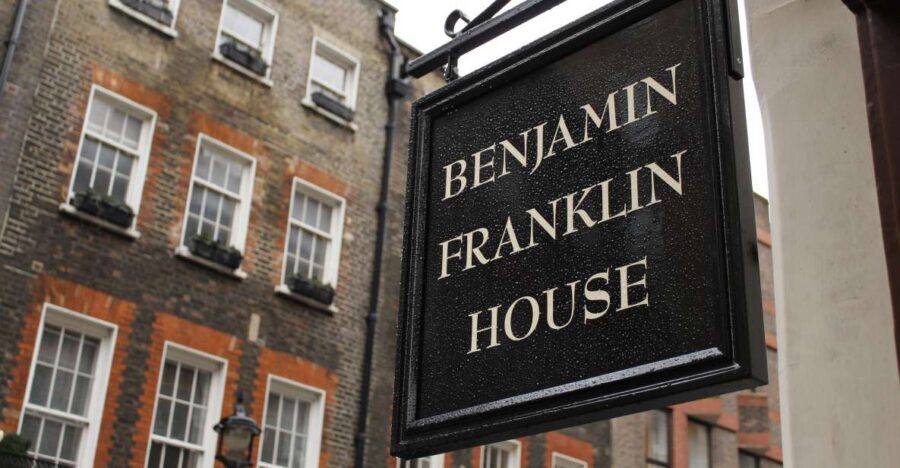
- Franklin’s only remaining home in London, where he lived for 16 years
- Grade I listed townhouse with original Georgian and Victorian features
- Craven Street Bones and surgeon Hewson’s Anatomy School context
- Georgian kitchen scenes that connect food, class, and everyday London life
- Margaret Stevenson’s parlour: Franklin’s London relationships in high style
- The Glass Armonica Room, where you’re invited to try playing a tune
Knock on 36 Craven Street: getting started smoothly
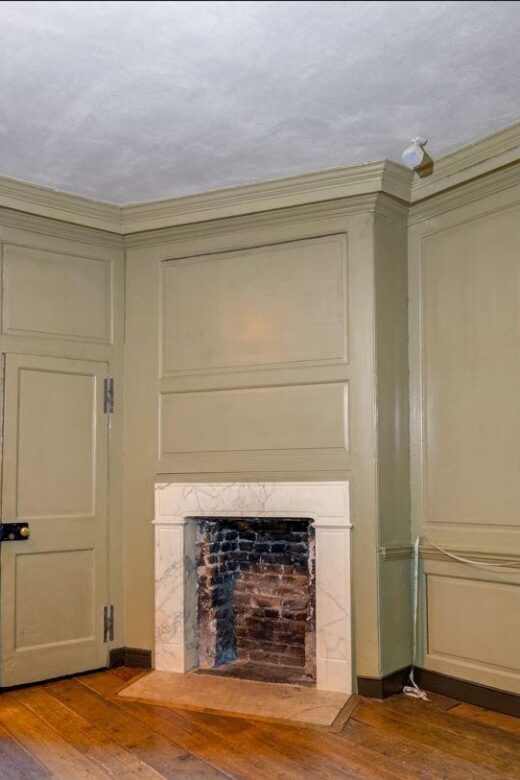
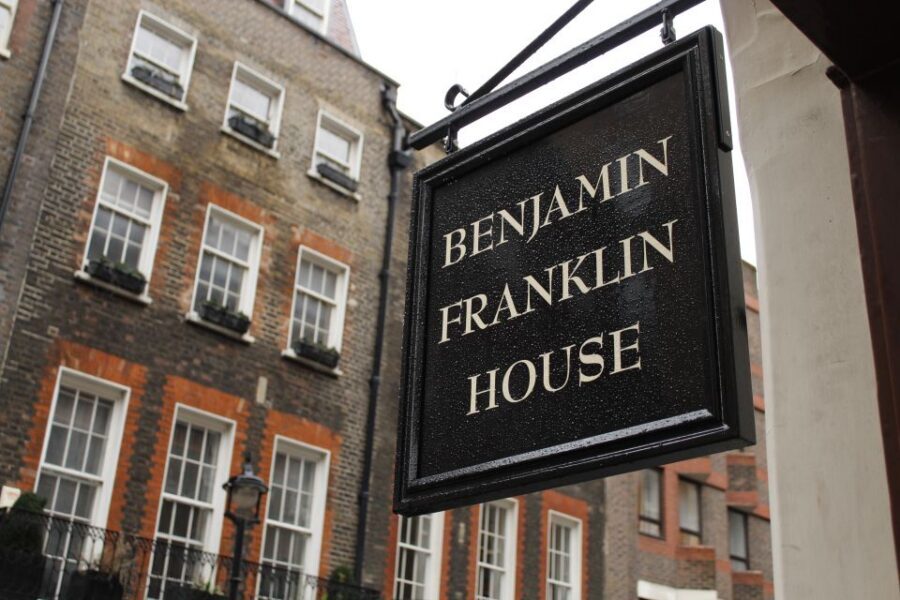
The tour begins at a simple, slightly old-school instruction: knock on the door at 36 Craven Street, just below the Benjamin Franklin House sign. I like this approach because it instantly tells you you’re not wandering a big campus—you’re entering a real townhouse environment.
Once you’re inside, you’ll notice the tone of the place fast. The rooms aren’t generic “look but don’t touch” spaces. You’re meant to look closely, sit when there’s visitor seating, and listen as the guide ties the architecture to Franklin’s life. Tours are about an hour long, and you can take photos as you go—just remember flash photography is not allowed.
If you’re sensitive to delays, keep a little buffer in mind. On a couple of tours, the way people move into the house can interrupt the flow, so arrive ready to adapt and stay patient if there’s a moment of waiting.
You can also read our reviews of more tours and experiences in London.
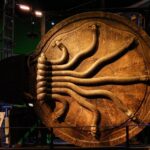


A one-hour plan inside a five-storey townhouse (with slopes)
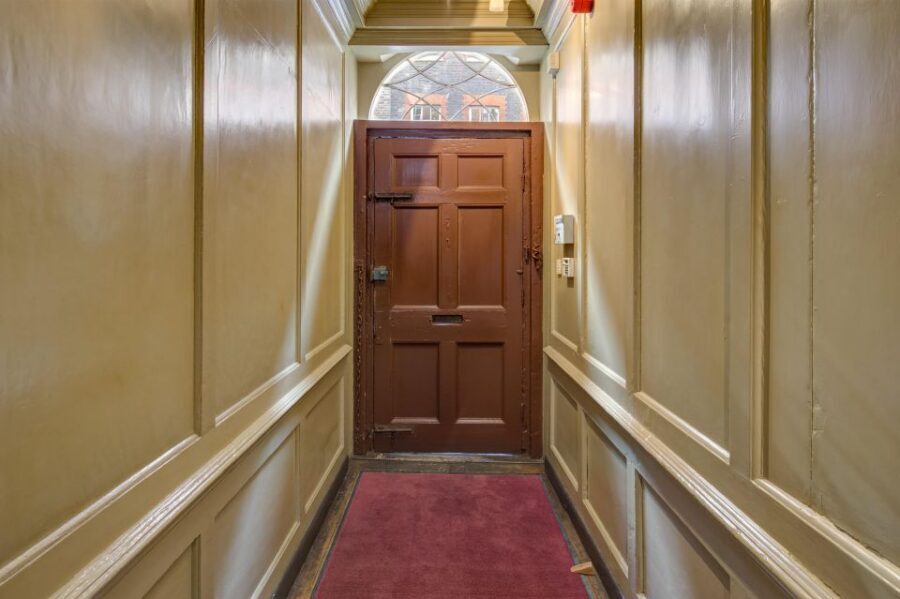
This is a five-storey house, and that detail changes the feel of the tour. There’s a staircase between each floor, and the floors and stairs can be uneven and sloping. The good news is practical: there are handrails on all of the staircases, and there’s visitor seating in the historic rooms so you’re not standing the entire time.
For planning, think “walking tour with stairs,” not “museum stroll.” If your mobility is limited, you’ll want to know the building has no wheelchair access, and restrooms are downstairs in the basement with no accessible restroom. Also, bare feet are not permitted, so wear normal shoes that work on older stair surfaces.
The architecture tour format matters here. By weaving Franklin’s story through each level, the guide keeps you moving and focused instead of letting the building blur into one long set of corridors. That’s one reason the hour feels full rather than rushed.
From the 1730s to the conservation project: architecture with a timeline
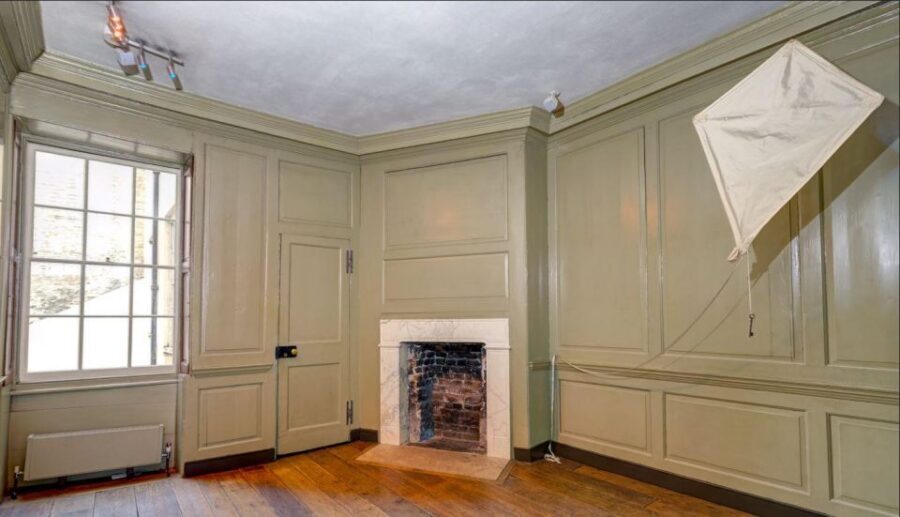
What I found smart is how the tour treats the building like a timeline rather than a static exhibit. You’ll explore how the house evolved from the 1730s onward, and you’ll also hear about the modern conservation work that helped reopen the House in 2006.
This is more than trivia. When you understand what changed over time—additions, uses, preserved features—you start noticing design choices you’d otherwise miss. Grade I listing isn’t just a label. It signals that the original structure and key details matter, and this guide helps you see why.
In the rooms, the Georgian and Victorian features aren’t presented as decoration. They’re presented as evidence: evidence of how people lived, hosted, ate, and debated, and evidence of how Franklin’s London life fit into the physical space around him.
Entering Franklin’s London story: why he came and why he stayed
Franklin’s story in London isn’t framed as a casual stopover. The tour makes it clear he chose London for reasons tied to his work and beliefs, and that he built a London network while renting within the Stevenson household.
You’ll get a sense of who Franklin was—his political beliefs, his actions, and his personality that could feel a little offbeat even by 18th-century standards. The best part is that the guide doesn’t separate “Franklin the thinker” from “Franklin the tenant.” You hear how his ideas and experiments connected to daily life inside the house.
And then, at the emotional center of the tour, you’ll learn about his departure. In 1776, Franklin left London and the Stevenson family when he returned to America to sign the Declaration of Independence, never to return to London. Hearing that while standing inside the rooms he rented for years makes the ending hit harder than a lecture ever will.
Georgian kitchen stop: food, class, and Franklin’s opinions
One of the most enjoyable parts for me is the kitchen segment. The tour doesn’t just say Georgian food existed—it gives you a feel for what was typical and what Franklin thought about the London diet.
This matters because food is a doorway into everyday culture. When a guide talks about meals and appetite, you quickly learn that “history” is often just people dealing with practical choices: what’s available, what’s fashionable, and what’s expected based on status.
So you’re not only learning architecture. You’re learning the rhythm of the household—what people ate, how that reflects the era, and how Franklin viewed it. It turns a townhouse tour into a human-scale story.



Up to the parlor: Margaret Stevenson and the social world of 18th-century London
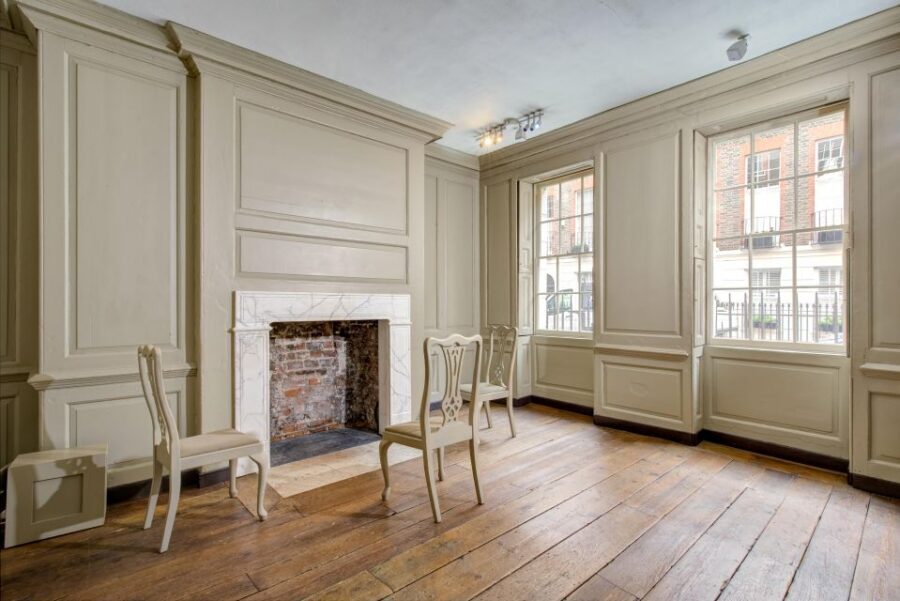
As you head upstairs, the tour shifts from daily life to social life—who mattered, who visited, and how Franklin navigated relationships.
You’ll learn about Margaret Stevenson, a wealthy widow from whom Franklin rented. In her parlour, the guide explains what kind of guests Franklin met and how conversations about current affairs took place in these rooms.
What I like about this stop is that it adds tension and context. Franklin isn’t portrayed as a lone genius drifting through London. He’s embedded in a family setting, working with the realities of the Stevenson household. You also hear about Franklin’s relationship with the Stevenson family and his own family, which helps you see him as someone with complicated ties rather than a one-dimensional hero.
If you enjoy social history—the who, the where, and the politics talked over ordinary furniture—this is a key section.
The Craven Street Bones moment and Hewson’s Anatomy School
Then comes the surprise: Craven Street Bones. This is where the architecture tour widens into a broader education story tied to surgeon Hewson’s anatomy school.
This part is valuable because it shows you Franklin’s London world wasn’t limited to coffeehouse talk and polite visits. It connected to scientific training, anatomy, and the type of learning that reshaped Europe’s understanding of the body.
Even if you’re not a science person, you’ll probably find it memorable because the idea is concrete: the “bones” link creates a mental image, and the guide connects it to the area’s intellectual life. It’s a good example of why architecture tours can feel more meaningful than standard museum routes.
Franklin’s rented floor: experiments, politics, and an eccentric personality
Next, the tour goes to Franklin’s parlour—the floor he rented for 16 years. Here the guide leans into the details: his experiments, his political beliefs and actions, and his eccentric personality.
This stop works because you’re in the space where those traits made sense. The guide helps you connect “what he believed” with “how he lived and worked.” It’s one thing to learn about experiments in general terms. It’s another to hear them discussed while you’re looking at the rooms that would have hosted his focus, his routine, and his social conversations.
If you like questions, this is often where you’ll have plenty of them. The tour includes time at the end for discussion, and the guide’s style encourages you to ask. It’s also where guide names tend to matter—on one tour I heard Ron lead with both enthusiasm and specifics, which helped the room feel active rather than lectured.
The Glass Armonica Room: try playing Franklin’s instrument
The finale shifts gears into something hands-on: the Glass Armonica Room. Here, guests are invited to try their hand at playing a tune on Franklin’s instrument.
Even if you don’t play music, this part is fun because it breaks the expected pattern of history tours. Instead of just listening, you get a moment of participation. It also makes Franklin feel less like a distant figure and more like someone who experimented with ideas and inventions.
One practical note: the rules don’t mention that you’ll be given instrument coaching, so come ready for it to be simple and experiential. Think “try it” rather than “perform it.”
Price and value: what $16 buys you
At about $16 per person for an hour, plus entry to the House, this is solid value for London. You’re paying for more than open doors—you’re paying for a guide who ties the building’s Grade I features to a specific person’s life and to the broader intellectual world around him.
You also get extras that make the price feel fair:
- children under 12 enter for free
- you can take photos
- you can ask questions at the end
On top of that, the small scale helps. It’s not a huge bus-ticket attraction where you rush through stops to beat the clock. This is a townhouse with multiple floors and rooms, so the guide’s pacing really matters—and the tour is short enough to avoid fatigue.
If you’re on a tight schedule, the hour duration is a big plus. If you’re a slower mover, plan for stairs and uneven floors to take slightly more time than you’d expect.
Practical do’s and don’ts inside the House
The House has clear rules, and they’re worth respecting so your visit stays smooth for everyone. Pets are not allowed, though assistance dogs are permitted. Smoking indoors and vaping are not allowed. Flash photography is not permitted.
You also can’t bring audio recording devices, and drinks are not allowed inside. Bare feet aren’t allowed either. It’s a fairly typical set of museum/heritage-house restrictions, but worth noting because it affects what you carry in—especially if you’re used to bringing a water bottle everywhere.
Who this tour is best for (and who should think twice)
This tour is ideal if you:
- love architecture that has a story attached to it
- enjoy historical figures when they’re tied to real spaces
- want a tour that connects science, politics, and daily life
- like short formats—about an hour—rather than long guided days
It may be less ideal if:
- stairs and uneven floors are a challenge for you
- you need wheelchair accessibility (there’s no wheelchair access here)
- you rely on accessible restrooms (restrooms are downstairs in the basement, and there’s no accessible restroom)
Also, if you’re the type who hates being inside older buildings where movement is natural but not perfectly flat, the five-storey layout may feel like a workout. The handrails help, but it’s still a real townhouse with real stairs.
Should you book Benjamin Franklin House architecture tour?
I’d book it if you want a London experience that feels personal and specific. The fact that this is Franklin’s only remaining home in London gives it weight. Add in the Grade I Georgian and Victorian features, plus the Craven Street Bones and Hewson’s anatomy school angle, and you get a tour that’s both educational and oddly human.
Book it with clear expectations: you’re not getting a flat, stroller-friendly museum. You’re getting an hour inside a sloping five-storey townhouse where the guide connects Franklin’s experiments, his political life, and even the music-making moment in the Glass Armonica Room.
If stairs are a problem, skip this one or plan an alternate activity with easier access. But if you’re okay with uneven surfaces and you like your history with doors you can actually see through—this is a smart use of your time.
FAQ
How long is the Benjamin Franklin House architecture tour?
Tours last about one hour.
What’s included in the ticket price?
Your ticket includes entry to Benjamin Franklin House and an hour-long guided tour, with time for questions at the end.
Where do I meet the guide?
Knock on 36 Craven Street door, below the Benjamin Franklin House sign.
Can I take photos inside?
Yes, visitors are welcome and encouraged to take photos. Flash photography is not allowed.
Are children able to visit for free?
Yes. Children under 12 enter for free.
Is the House wheelchair accessible?
No. There is no wheelchair access, and restrooms are downstairs in the basement with no accessible restroom.
Is audio recording allowed during the tour?
No. Audio recording is not allowed.