REVIEW · LONDON
London: British Museum Guided Tour with Free Entrance Ticket
Book on GetYourGuide →Operated by London Tours and Activities · Bookable on GetYourGuide
Two hours later, you’ll see the museum differently. This British Museum guided tour pairs fast-track entry with stories that connect blockbuster artifacts like the Rosetta Stone and Ramses II to the people and powers behind them. My favorite part is that you don’t just look at objects, you get the what-it-means-and-why-it-mattered angle. One possible drawback: the route involves stairs and a lot of walking, and the meeting entrance can shift when crowds are heavy.
You meet your guide at the main entrance after security, then you start right away instead of fighting the busiest lines. The museum is the most visited in the world, so you’ll want to arrive early and check WhatsApp messages in case they route you via Montague Place.
In This Review
- Key highlights at a glance
- Why this British Museum tour works in just two hours
- Fast-track entry and your real start at the main staircase
- Rosetta Stone to Ramses II: the tour’s momentum plan
- Elgin Marbles: seeing a masterpiece with controversy in view
- Assyrian human-headed winged lions and the Aztec double-headed snake
- Moai, Sutton Hoo, and the British finds that change your perspective
- Stonehenge’s Mold Cape and Lewis chessmen for a strong finish
- Guide style and small realities that affect your experience
- Price and value: is $35 per person a good deal?
- Practical tips so you enjoy the museum floor, not your feet
- Who should book this British Museum guided tour
- Should you book this British Museum guided tour?
- FAQ
- Where do I meet the guide?
- How long is the guided tour?
- Does the tour include skip-the-line entry?
- Which languages are offered for the live guide?
- What famous objects will I see?
- Is hotel pickup or drop-off included?
- What should I bring to the tour?
- What are you not allowed to bring or do?
- Is the tour suitable for wheelchair users or people with mobility impairments?
Key highlights at a glance
- Fast-track entry helps you skip long lines and start your tour quickly
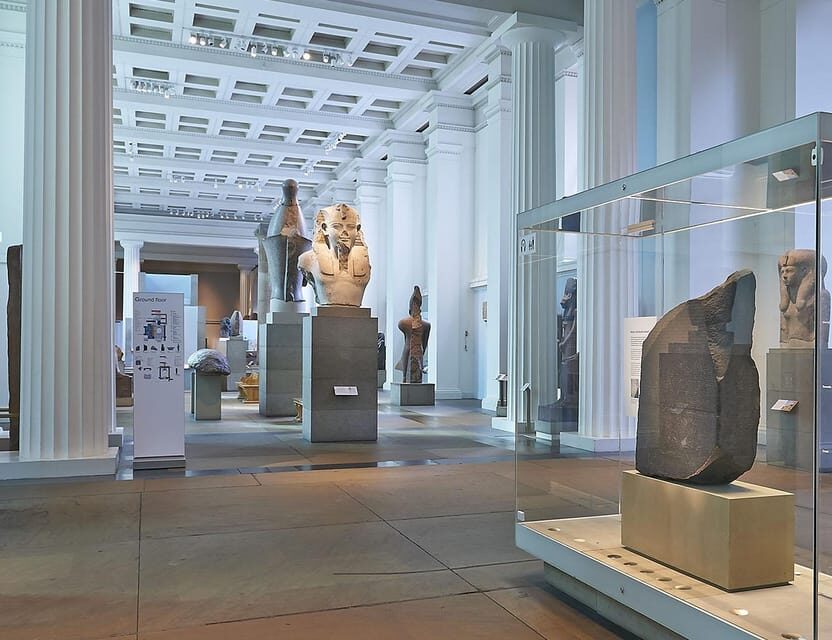
- Rosetta Stone + Ramses II set the tone with two of the museum’s most famous attractions
- Elgin Marbles context includes the well-known controversy around the Parthenon sculptures
- Assyrian winged lions + Aztec double-headed snake bring surprising cultural variety
- British archaeology and Britain-focused finds like Sutton Hoo, the Mold Cape, and Lewis chessmen
- Guided storytelling with multilingual options (English, Spanish, Italian)
Why this British Museum tour works in just two hours
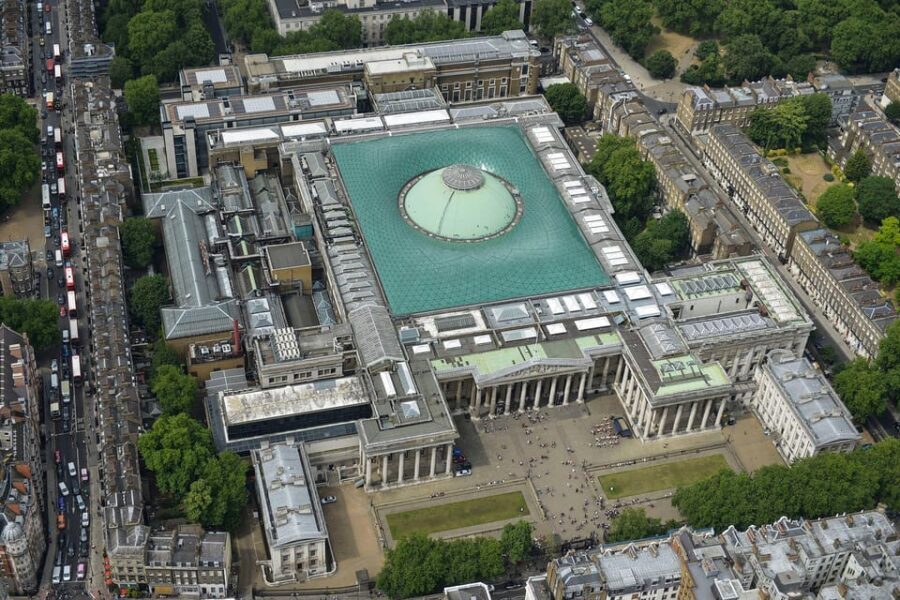
The British Museum can feel like drinking from a firehose. This tour is designed for sanity: you get a guided path through standout objects instead of wandering until your feet file for divorce. In two hours, you cover highlights that most first-timers end up hunting for on their own anyway—just with clearer context and better pacing.
What makes this approach worth it is the mix of “I’ve heard of that” objects and “wait, I didn’t know this existed” surprises. You’ll move from ancient Egypt to Assyria to Aztec art, then swing to British archaeology and medieval finds. That broad spread helps you understand how huge the museum is, without trying to see everything.
The tour also keeps the group moving. You’re not meant to linger alone with headphones and guesswork. Instead, you get a human guide to point out what matters, so your attention actually goes where the museum wants it to go.
A few more London tours and experiences worth a look


Fast-track entry and your real start at the main staircase
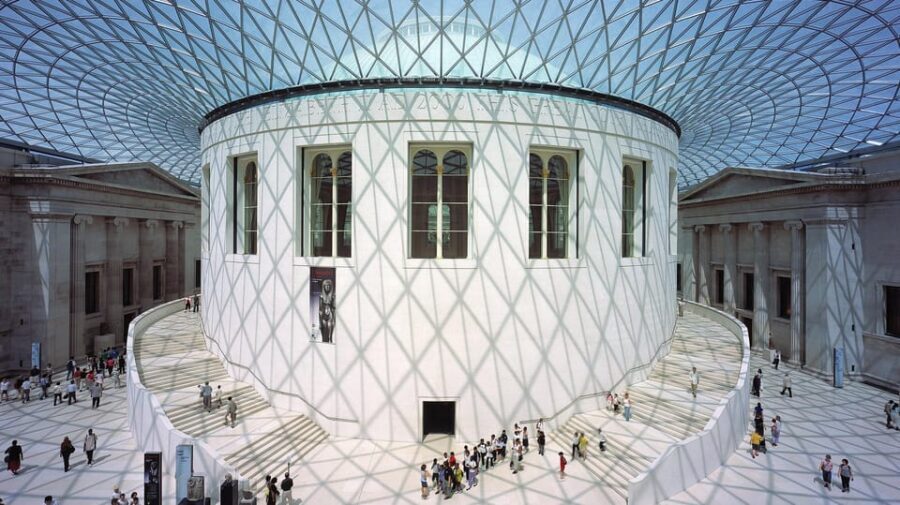
Your day starts at the main entrance after the security check, on the staircase. Arrive at least 15 minutes early so you’re not rushing through bag checks while everyone else is already boarding the tour. The good news: the experience includes fast-track entry, so you’re not stuck waiting just to get inside.
Here’s a practical detail I really like: during busy times, they may change the entrance to Montague Place. That’s why you should check your WhatsApp messages—this isn’t just “nice to do,” it’s how you’ll get the correct meeting spot and routing. Plan to be ready for that possibility and you’ll feel calm instead of annoyed.
Also note two rules that affect your comfort level once you’re in. Flash photography isn’t allowed, and backpacks aren’t allowed. If you’re used to carrying everything with you, pack lighter than you think you’ll need.
Rosetta Stone to Ramses II: the tour’s momentum plan
The first big emotional hit comes from the Rosetta Stone. The tour frames it as the object that helped crack the secrets of ancient Egypt. That matters because the British Museum has plenty of ancient artifacts, but the Rosetta Stone gives visitors a real doorway into why language systems and translation matter.
From there, you’ll see the colossal statue of Ramses II. The tour positions it as the most powerful pharaoh, which gives the statue more than visual impact—it gives it political weight. Even if you don’t know Egyptian history, seeing a ruler represented at this scale makes the message obvious: power wants to be seen from far away.
In a guided format, the value isn’t just that these objects are famous. It’s that your guide keeps you from getting lost in trivia. You’re looking at major symbols of authority and communication, back-to-back, so your brain builds a simple story instead of collecting random facts.
Elgin Marbles: seeing a masterpiece with controversy in view
Next up is a look at the Parthenon sculptures known as the Elgin Marbles from Athens. The tour doesn’t treat them like a neutral set of pretty stones. It specifically flags the controversy around these sculptures, which is exactly how you should approach them.
Why that helps: these debates aren’t academic. They shape what you feel when you stand in front of the artifacts. Do you focus on artistry first? Or do you weigh context, removal, and ownership? A guide makes space for both reactions without turning the tour into an argument.
If you like museums that acknowledge tricky histories instead of smoothing them over, you’ll probably appreciate this stop. You’ll also get better at noticing details, because you know what’s at stake beyond aesthetics.
Assyrian human-headed winged lions and the Aztec double-headed snake
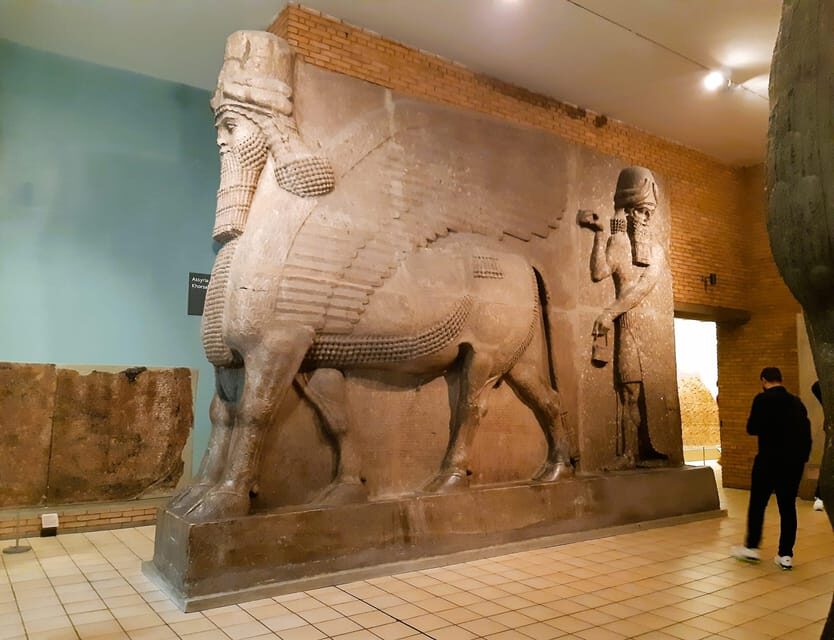
This is where the tour gets fun. You’ll admire the Assyrian human-headed winged lions—an image that’s instantly dramatic, even if you don’t know the exact story behind each figure. The guide’s job here is to explain what you’re looking at so it lands as more than a “cool sculpture.”
Then you’ll switch gears again to something rarer: the Aztec double-headed mosaic snake. The tour describes it as one of the most rare objects in the museum. That’s the kind of detail you can’t easily discover on your own during a self-guided scramble, because rarer objects often aren’t the ones with the biggest crowds around them.
This pairing matters for your museum day because it breaks the monotony of staying in one geographic zone. You leave with a stronger sense of how the museum’s collection jumps across civilizations—without you having to plan the entire route yourself.
You can also read our reviews of more guided tours in London






Moai, Sutton Hoo, and the British finds that change your perspective
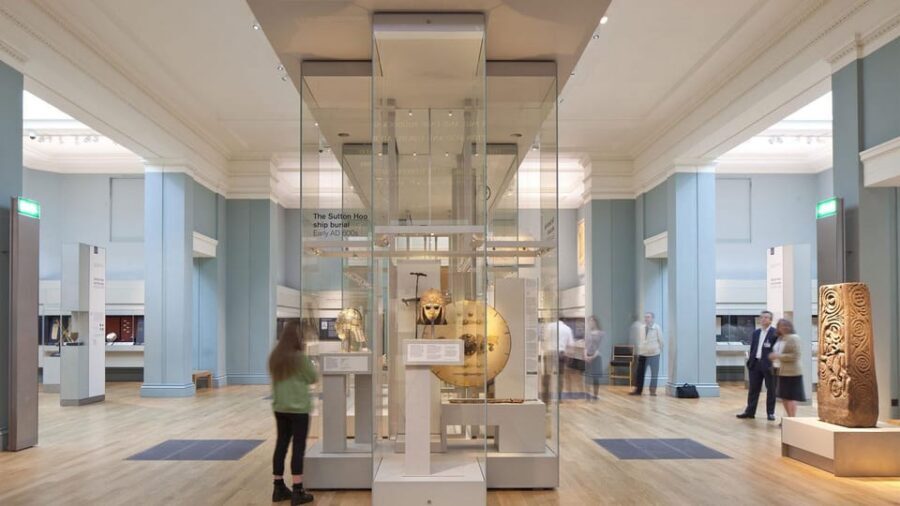
Not every great museum day is about stepping into a different empire. Some of the best moments happen when you realize your own region has major discoveries too.
You’ll see the Moai sculpture from Easter Island. That stop widens the scope again, reminding you that the British Museum’s collection stretches across oceans, not just across nearby regions.
Then comes Sutton Hoo, including the burial ship. The tour highlights it as one of the most spectacular discoveries in British archeology and connects it to Roman Britain. Even if you’ve only heard the name before, this is a chance to understand why Sutton Hoo is treated as a landmark discovery: it’s a massive, tangible link to what people valued and how they lived and died.
Stonehenge’s Mold Cape and Lewis chessmen for a strong finish
The tour doesn’t end with just ancient monuments. It adds smaller, more hands-on-feeling artifacts that make the collection feel human.
You’ll see the Mold Cape from Stonehenge. That pairing is powerful on a guided route because Stonehenge can feel like an image you’ve seen on a postcard. The cape gives you a specific object tied to that larger site, which makes the whole thing feel more real and less distant.
Then you’ll finish with medieval chessmen from the island of Lewis. This is a great closing beat because it shifts you from grand rulers and monumental symbols to something you can imagine people actually using for daily life—competition, entertainment, and skill.
The overall arc works well: you start with blockbuster recognition, then you layer in different cultures, then you land on British and medieval objects that make the museum feel broader than “just ancient stuff.”
Guide style and small realities that affect your experience
The biggest indicator of a good guided tour is whether you leave feeling oriented. In past experiences with this tour, the guide Angel stands out for his storytelling and preparedness. One group shared that he was dealing with a train delay but contacted them and helped them plan while waiting. That kind of communication matters when you’re on a tight schedule.
There’s also a real-world note about group size. If your group is bigger than 8 people, you might not be allowed to enter the way the usual instructions suggest, and you may have to walk to a different entrance area inside the museum. This isn’t a deal-breaker, but it’s one more reason to arrive early and stay flexible.
Also, the tour is offered in English, Spanish, and Italian. If you’re traveling with mixed-language friends, that’s a practical win—you can stay together without everyone silently Googling translation apps in the galleries.
Price and value: is $35 per person a good deal?
At about $35 per person for a 2-hour guided tour, the value comes from what you’re buying: time savings plus an expert guide plus focused access to the museum’s most famous objects.
You’re not paying to wander. You’re paying to skip long lines with fast-track entry and to have someone point out the right objects at the right moment. In a museum this crowded, the time cost of getting in and then trying to design your own route can easily turn into wasted energy. Even a good self-guided plan can fall apart when the galleries are packed.
You’re also getting a set duration, which is ideal if you have limited time in London. Two hours is long enough to make the experience feel coherent, but short enough that you don’t end up exhausted and frustrated by the end.
What you should budget extra for: food and drinks, plus any personal expenses. Hotel pickup and drop-off aren’t included either, so you’ll want to plan your own transit to the museum.
Practical tips so you enjoy the museum floor, not your feet
Bring comfortable shoes. You’ll be on your feet, and the meeting point is on a staircase after security. Add a bottle of water, since the tour is only two hours but the museum crowds can wear you down.
Bring a camera if you want to capture what you see. Just remember flash photography isn’t allowed, so plan for the right settings or use a smartphone without flash.
Leave the backpack at home if you can. Because backpacks aren’t allowed, you’ll want a bag format that fits within the museum’s rules and doesn’t make you stop repeatedly during the day.
And since the meeting entrance can change based on crowds, stay alert for WhatsApp messages right before your time slot. This small step can save you from circling outside or arriving at the wrong internal point.
Who should book this British Museum guided tour
You’ll probably enjoy this tour most if:
- you’re visiting the British Museum for the first time and want a smart highlights route
- you’re short on time and want the Rosetta Stone, Ramses II, and Elgin Marbles without guessing
- you like variety across cultures, including Assyrian, Aztec, and Easter Island objects
- you want context, not just photos and captions
You should think twice if you have mobility limitations. The tour is not suitable for people with mobility impairments or wheelchair users, and the starting point is after security on the staircase.
Should you book this British Museum guided tour?
I’d book it if you want a guided, time-efficient way to see the British Museum’s biggest draws and a few standout objects people often miss when they rush. The fast-track entry is the main reason, because it reduces the biggest annoyance—getting started—and the guide’s role helps you make sense of what you’re seeing.
Skip it if you prefer slow solo wandering, or if you know you’ll need a very flexible pace. This tour is structured and movement-focused, so it’s best when you’re ready to follow the route and listen.
If your goal is to come away with a clearer picture of the museum, especially around famous objects like the Rosetta Stone, Ramses II, and the Elgin Marbles, this is a solid way to spend two hours in London.
FAQ
Where do I meet the guide?
Meet your guide at the main entrance after you go through security, on the staircase. You should arrive at least 15 minutes early, and check your WhatsApp messages because the entrance may change during busy times.
How long is the guided tour?
The tour lasts 2 hours.
Does the tour include skip-the-line entry?
Yes. The experience includes fast-track entry to help you avoid long lines.
Which languages are offered for the live guide?
The live tour guide is available in English, Spanish, and Italian.
What famous objects will I see?
You’ll see the Rosetta Stone, the colossal statue of Ramses II, the Elgin Marbles, Assyrian human-headed winged lions, an Aztec double-headed mosaic snake, the Moai sculpture, the Sutton Hoo burial ship, the Mold Cape from Stonehenge, and medieval Lewis chessmen.
Is hotel pickup or drop-off included?
No. Hotel pickup and drop-off are not included.
What should I bring to the tour?
Bring comfortable shoes, a camera, and water.
What are you not allowed to bring or do?
Flash photography is not allowed, and backpacks are not allowed.
Is the tour suitable for wheelchair users or people with mobility impairments?
No. It is not suitable for people with mobility impairments or wheelchair users.