REVIEW · LONDON
London: Changing of The Guard Tour
Book on GetYourGuide →Operated by Urban Saunters Ltd · Bookable on GetYourGuide
Drums, hats, and royal protocol come at you fast. I love how this tour builds the story as you walk, with best photo stops and uniform symbolism explained in plain English. You’re not just watching a spectacle from far away; you’re learning what each detail is supposed to communicate.
My one heads-up: crowds mean you will not stand at the Buckingham Palace forecourt, so you won’t get that ultra-close, fence-line view you might hope for.
In This Review
- Key moments that make this tour worth it
- Changing of the Guard on foot: the real advantage
- Where to meet: Edward VII statue at Waterloo Place
- The walk from Waterloo Place to Buckingham Palace: what you’ll see
- 1) Starting point: Edward VII statue and Waterloo Place
- 2) The first guided segment and The Mall
- 3) George VI & Queen Elizabeth Memorial: understanding the stakes
- 4) St James’s Palace: photo time plus royal reality
- 5) Clarence House: a quick reset with more views
- 6) St James’s Park: finish the walk with the palace in view
- 7) Finish at Buckingham Palace
- What the guide helps you understand: uniforms, buttons, and gestures
- Photo strategy: how you get better shots without losing the story
- Weather, ceremony changes, and the April 2025 Sunday trial
- Timing and group size: why the pacing feels easy
- Price and value: what $15 buys you
- Who should book (and who should skip)
- Should you book this Changing of the Guard tour?
- FAQ
- Where is the meeting point?
- How do I get there by Tube?
- How long is the tour?
- Is the tour private, or is it a group tour?
- What should I bring?
- Does the tour run in bad weather?
- Will I stand at the forecourt of Buckingham Palace?
- What if the ceremony is canceled?
- Is luggage allowed?
Key moments that make this tour worth it
- Start at Edward VII on Waterloo Place so you begin right where the action funnels through
- Walk the guard route on foot toward Buckingham Palace instead of staying pinned in one spot
- Multiple viewing angles around St James’s area and The Mall for better sightlines
- Uniform and ritual meaning in the details so you can tell regiments and gestures apart
- Guides keep you moving through crowds with clear instructions and smart placement, like Chris, Nathan, and Babs do
Changing of the Guard on foot: the real advantage
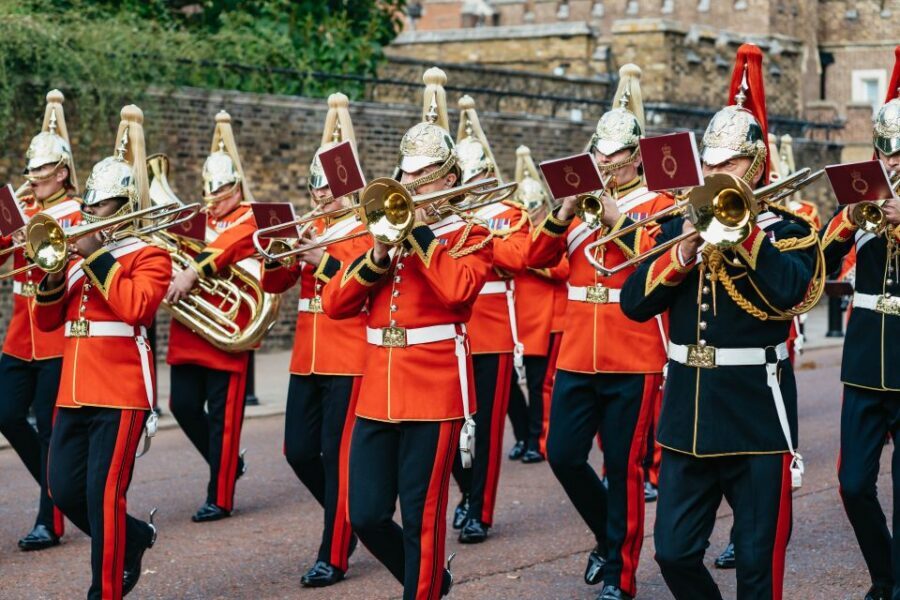
The Changing of the Guard looks simple from a distance. Up close, it’s a moving set of signals—colors, buttons, roles, and timing working together like a script you can actually see.
What makes this format click is the pacing. You follow the guards as they move, then pause at multiple spots where you’re not just hoping for a line of sight. A good guide also helps you read what you’re seeing, so you leave with more than a few photos.
If you like royal pageantry but hate aimless queueing, this tour is a practical swap. You get structure, context, and better positions without needing to arrive hours early.
You can also read our reviews of more tours and experiences in London.


Where to meet: Edward VII statue at Waterloo Place
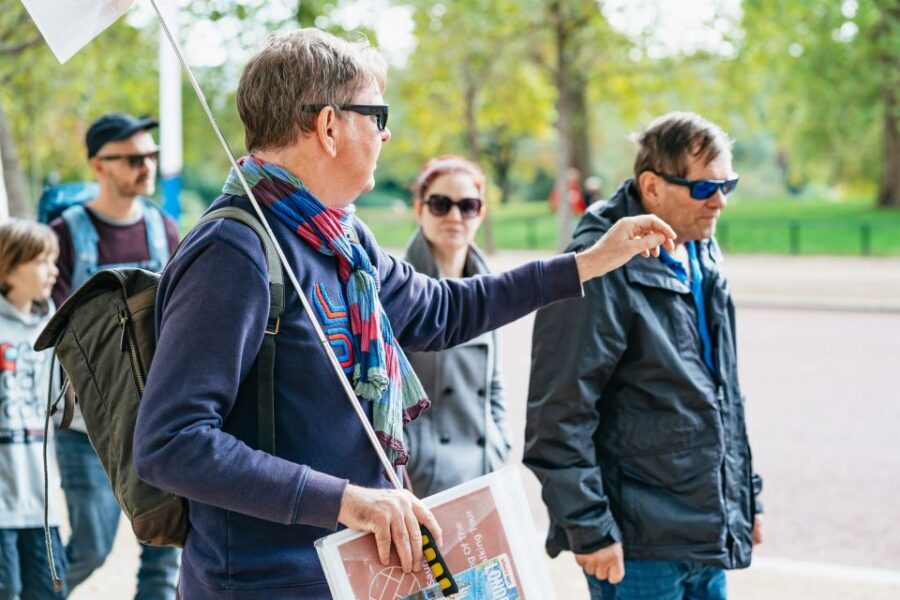
You’ll meet at the equestrian statue of Edward VII on Waterloo Place, right by a sign for Urban Saunters. Look for the man on horseback and that company sign, then match up with your guide’s group.
Getting there by Tube is straightforward if you follow the walking directions exactly. Take the Piccadilly Circus Tube station and exit No. 3 onto Regent Street and then walk south toward St James’s Park. Waterloo Place is at the end of Regent Street, which keeps your navigation simple if you stay headed the right way.
Two small things I’d plan for: comfortable shoes and early attention to where you’re lining up. On ceremony days, the crowd energy builds fast, and you’ll want to be in position from the start.
The walk from Waterloo Place to Buckingham Palace: what you’ll see
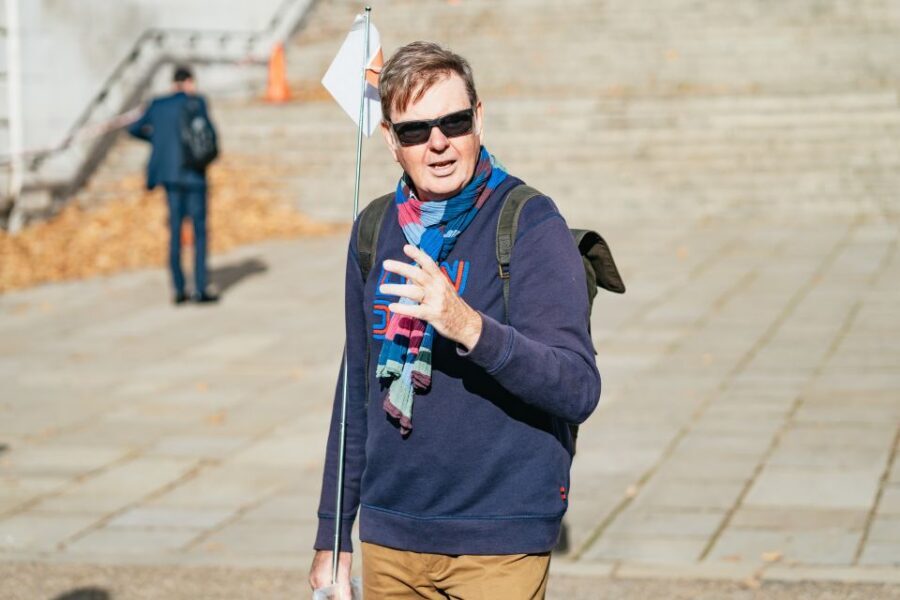
This tour runs about 2 hours, and it uses that time well. You don’t just watch the ceremony; you also learn the surrounding royal geography as you go.
Here’s how the experience unfolds, with what each stretch adds (and what to watch for).
1) Starting point: Edward VII statue and Waterloo Place
The tour begins at the Edward VII equestrian monument. This is a useful first step because it gets you oriented to the parade movement and the layout of the area before the guards really start closing the distance toward Buckingham Palace.
You’ll also get a quick guided start (about 10 minutes) so you know what to look for. If you’ve ever watched the ceremony once and felt like you missed the “why” behind the choreography, this is where the tour fixes that.
2) The first guided segment and The Mall
From there, you move to The Mall, the broad ceremonial route that feels built for pageantry. Expect another short guided stop (around 10 minutes) where your guide sets up what’s next and connects what you’re seeing to the larger tradition.
This part matters because it helps you stop treating the ceremony like random marching. Instead, you start understanding it as a controlled sequence of roles and cues.



3) George VI & Queen Elizabeth Memorial: understanding the stakes
You’ll pause near the George VI & Queen Elizabeth Memorial (another brief guided stop). This is a good moment for context because it ties the ceremony to the wider royal story, not just the uniforms.
Don’t rush past this stop. If you want the tour’s explanations to “stick,” this is where they start feeling less like trivia and more like a way to read the whole scene.
4) St James’s Palace: photo time plus royal reality
Next comes St James’s Palace, with a short photo stop and sightseeing (about 15 minutes). This is one of the best moments to take photos because your guide can direct you toward spots where the moving formation is easier to frame.
A practical tip: use your guide’s positioning advice and treat it as part of the tour. Several guides mentioned in the experience feedback (like Chris, Nathan, and Babs) are praised for steering people to better sightlines than you’d find wandering on your own.
What can be tricky here is crowd density. Even with smart placement, this is London, so you’ll want to stay with your group and listen when your guide says shift left or straighten up.
5) Clarence House: a quick reset with more views
You then reach Clarence House for a shorter photo stop and sightseeing (around 5 minutes). This stop is compact by design, so you get another window for photos and a different angle without eating the tour’s time budget.
If your goal is pictures and clear understanding, this “pause and go” style works well. You’re not stuck waiting through long standstill periods with nothing new to learn.
6) St James’s Park: finish the walk with the palace in view
Finally, you hit St James’s Park for another brief photo stop and sightseeing (about 5 minutes). The timing here helps because you’re getting closer to Buckingham Palace while still having a guide interpret what’s happening.
This is also a good time to check your footing. Stone edges, puddles, and uneven ground can show up around parks and pathways, especially if the weather changes.
7) Finish at Buckingham Palace
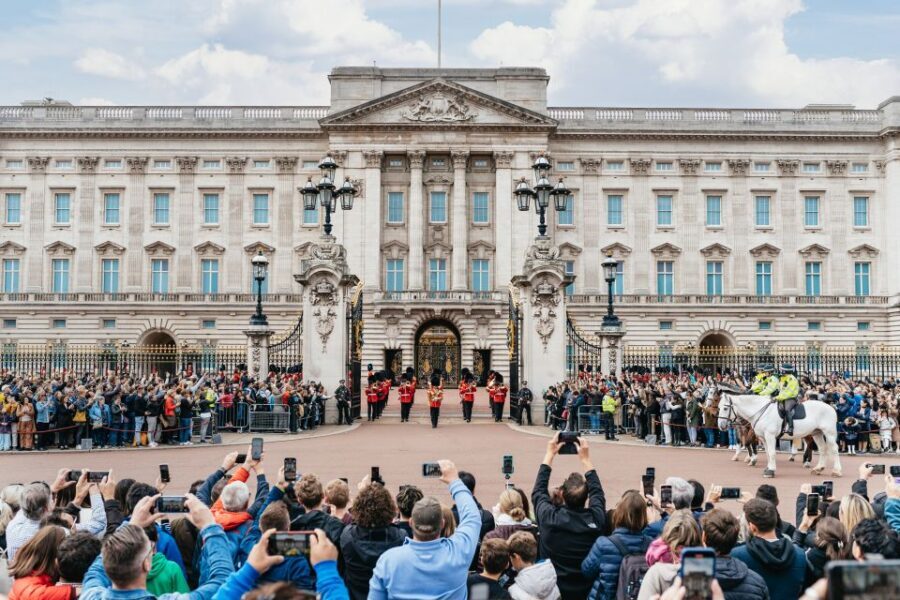
The tour ends at Buckingham Palace. You won’t be inside that inner forecourt view area, but you’ll still reach the place where the whole performance is meant to land.
If you were picturing a perfect, close-up palace-front moment, adjust your expectations. The value here is in the walk, the multiple viewing points, and the explanations that make the ceremony readable.
What the guide helps you understand: uniforms, buttons, and gestures
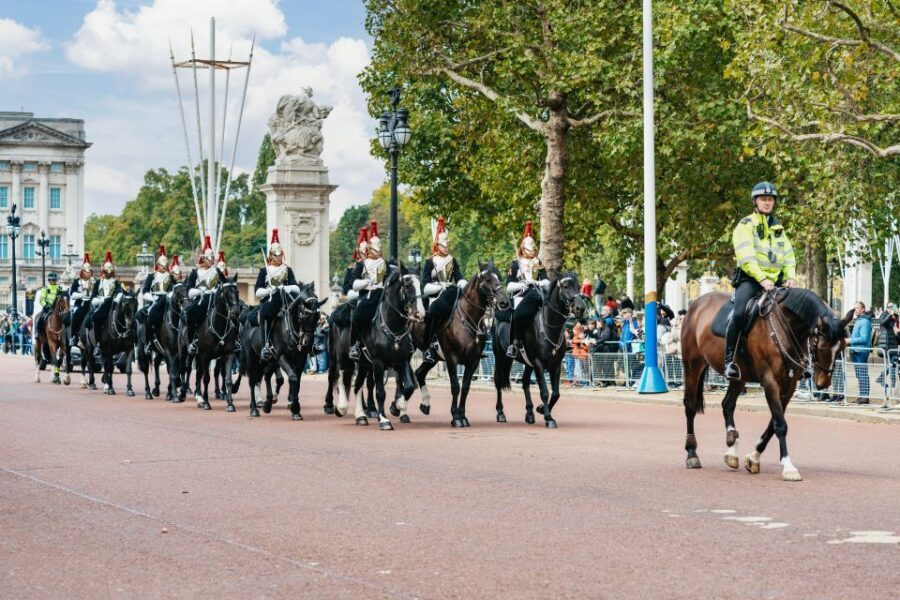
The Changing of the Guard is famous because it’s visual. The real skill is knowing what you’re looking at and why it’s done that way.
A major plus of this tour is that you learn the meaning behind colors, buttons, symbols, and movements. Your guide helps you “sort” the pageantry into something concrete, so you can tell regiments apart and understand the flow of the ritual.
That includes terminology and roles. You’ll hear references that help you separate guards and units—think along the lines of figuring out what makes a Welsh Guards look and act different from other groups, and how a Grenadier fits into the picture.
Guides also tend to bring personality without losing clarity. I’m especially drawn to the ones praised for clear pacing and good volume, like Nathan and Chris, because when the marching gets close, you don’t want to strain to hear the explanation.
Photo strategy: how you get better shots without losing the story
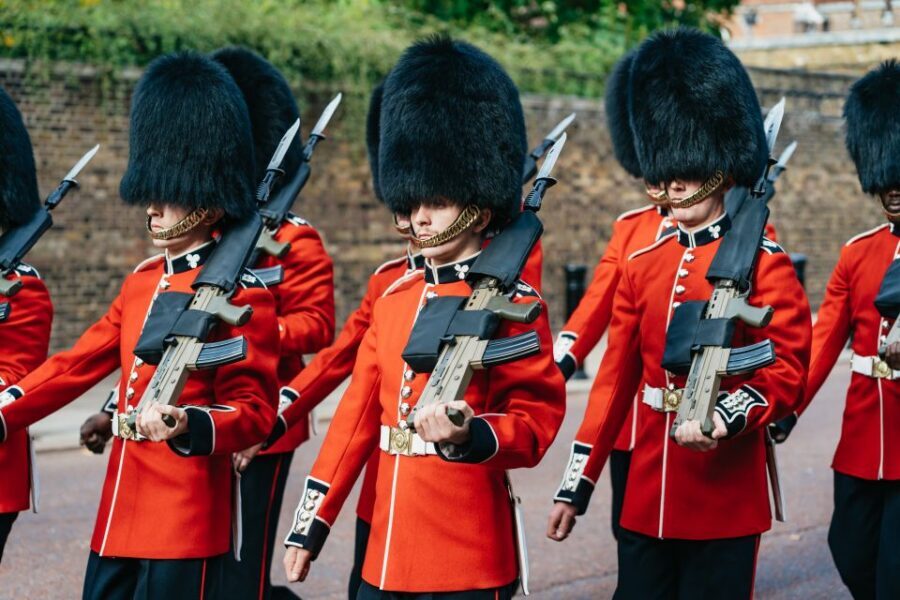
Photo results depend on three things: position, timing, and not panicking when the crowd surges.
This tour is built for that. You’re guided from point to point so you can capture the guards moving through different sections of the route. Instead of one long wait in one spot, you get several chances where your guide has already scouted better angles.
You’ll also benefit from guides who focus on what matters for photos: where the formation passes, where line-of-sight opens briefly, and when to step forward or hold back. Many participants highlighted that the guides do exactly this, including Babs and Jo, with comments about getting prime spots for the guard’s movement phases.
One extra note: on some days, you might see related horse movements as a bonus along the way. Since this isn’t guaranteed in your planning details, treat it as a potential extra rather than the core promise. The core promise is the ceremony and the interpretive walk.
Weather, ceremony changes, and the April 2025 Sunday trial
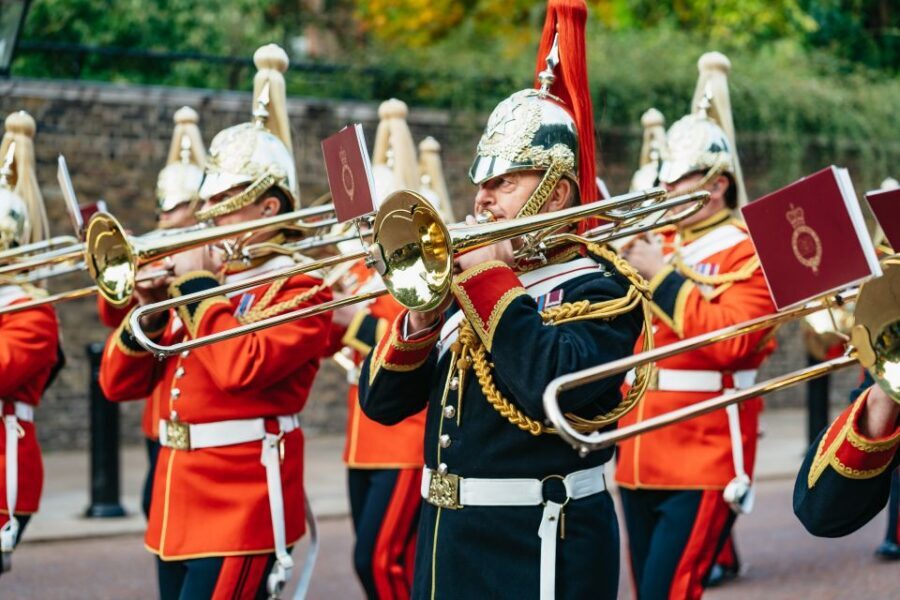
This tour runs rain or shine, so plan for wet pavement and quick changes. Bring an umbrella and water, and dress in comfortable clothes you can layer.
More importantly, the ceremony itself can change. The British Army has discretion to alter or cancel the ceremony, and you won’t get a final word until after 10:30 AM. That means even if you’ve planned your day around the classic version, you should keep a flexible mindset.
Here’s what helps: if the full ceremony is canceled, you can still get a chance to see the guards marching without the music. So you’re not starting from zero if the day shifts.
Also, starting in April 2025 on Sundays, the Army is trying a slightly different version where it’s being called a “Parade” instead of “Change.” Your tour’s walk still follows the same number of guard movements and the same general locations, but the naming and format are being tested. The end date isn’t set yet, so check what’s happening on the day you go.
Timing and group size: why the pacing feels easy
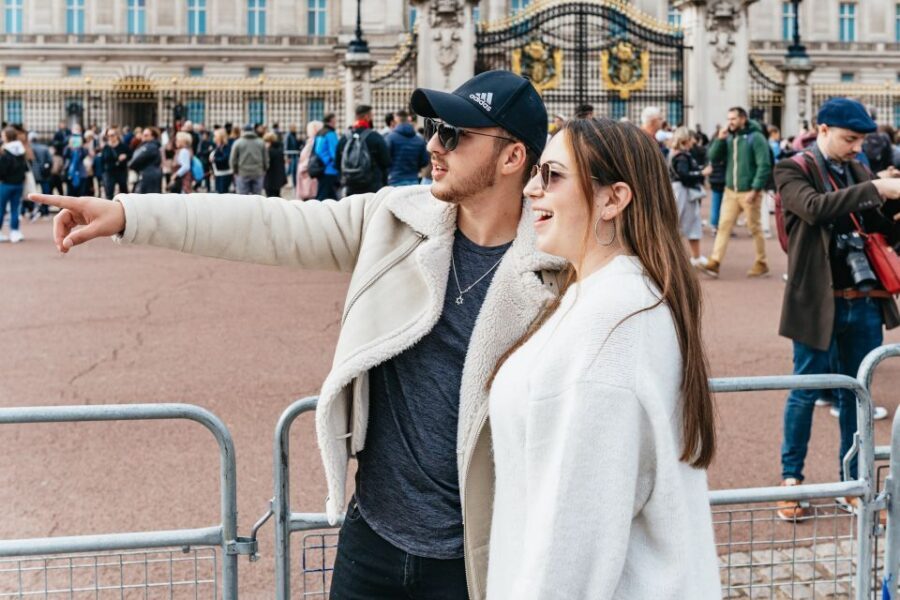
The whole experience is about 2 hours, which is long enough to make it meaningful but short enough to stay relaxed. The structure matters because the guards don’t wait for your photo binge.
You’ll also be with a guide in either a private setup or small group setup, depending on what you book. Small groups usually make it easier to move fast through crowds and easier for the guide to keep everyone oriented.
This is where strong guides earn their keep. Feedback repeatedly points to guides who keep people together in busy areas, speak clearly so everyone hears them, and adjust positioning on the fly. If you’ve ever tried to watch the ceremony without a plan, you know how quickly chaos forms. This tour is designed to prevent that.
If you’re bringing kids, the pace tends to be family-friendly. Multiple guides were praised for making the history and the routine fun enough that younger visitors stayed engaged.
Price and value: what $15 buys you
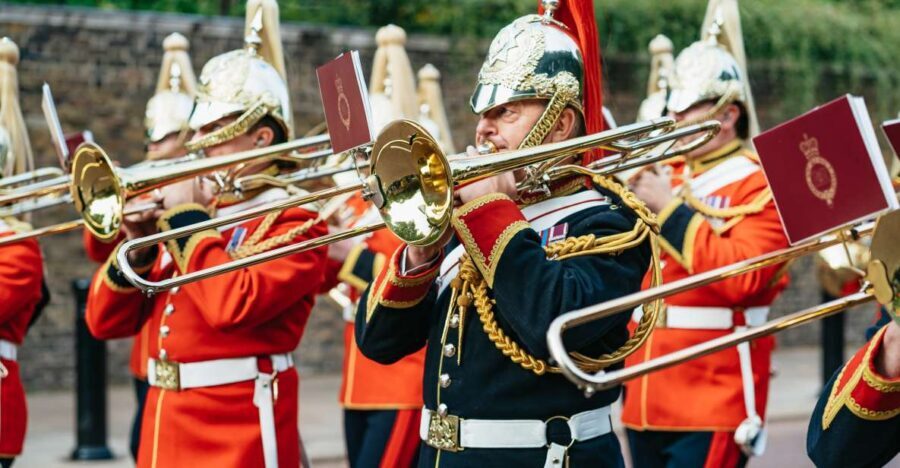
At about $15 per person for roughly 2 hours, the value comes from three things: a live guide, smart ceremony viewing, and the interpretive layer.
A key cost you avoid is the “trial-and-error” time. Watching the ceremony on your own can mean arriving early, searching for a good spot, and still missing the meaning behind what you’re seeing. Here, your guide handles route logic and places you where the ceremony is easier to follow.
You also get more than a one-minute explanation. With short guided stops across the route, your guide connects the ceremony to the surrounding royal landscape and helps you read uniform details and gestures. That turns the day into a mini education without feeling like homework.
One more value angle: the tour is built to reduce wasted waiting. You’ll still be outside with crowds, but the time you spend isn’t random. It’s pointed.
Who should book (and who should skip)
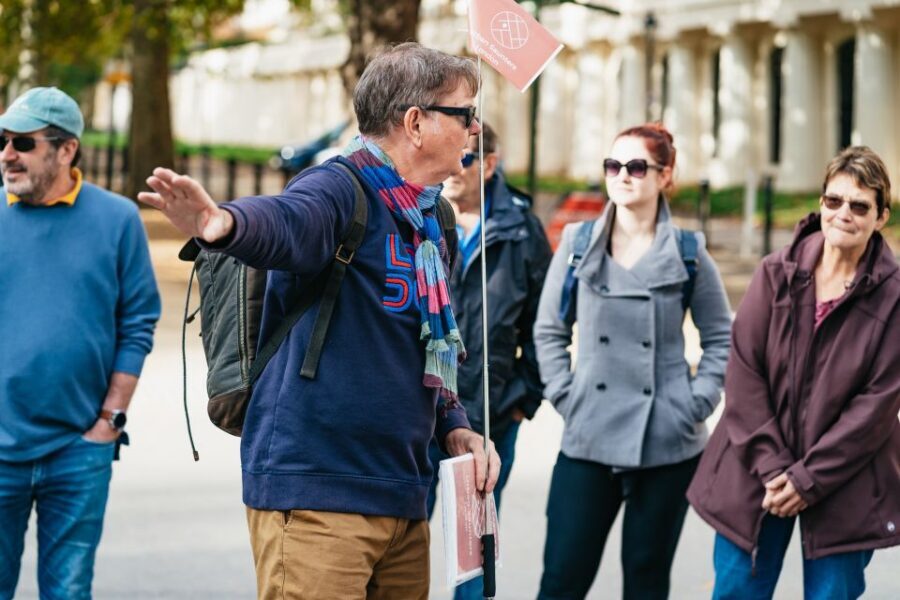
This is a good fit if you want the most British part of London, but with context. It’s also a solid choice if you like walking city neighborhoods and want a reason to be outside rather than hopping between indoor sights.
It’s not a great fit if you have mobility limits or specific health concerns. The tour is not suitable for people with back problems, mobility impairments, heart problems, or respiratory issues. Also note that you’ll be on your feet for the walk and standing for viewing moments.
Luggage is another constraint. No luggage or large bags are allowed, so travel light.
Finally, it’s outdoors, so consider how you handle weather. If rain makes it hard for you to stay comfortable outdoors, pack accordingly.
Should you book this Changing of the Guard tour?
I’d book if you want more than a far-off look. This tour gives you a guided route, better viewing placement, and explanations that make the uniforms and movements feel understandable instead of mysterious.
I’d skip it only if you specifically want the Buckingham Palace forecourt close-up view. This tour doesn’t promise that, and crowds make the forecourt experience limited anyway.
If your plan includes comfortable shoes, a small bag, and a willingness to walk and stand, you’ll get a lot from the time. And if you choose your guide well, the story delivery can turn a photo session into something you actually remember the next day.
FAQ
Where is the meeting point?
Meet your guide by the equestrian statue of Edward VII at Waterloo Place. Look for a sign saying Urban Saunters.
How do I get there by Tube?
Take the Tube to Piccadilly Circus, then take exit 3 onto Regent Street. Walk south down Regent Street toward St James’s Park (do not walk north toward Oxford Street). Waterloo Place is at the end of Regent Street.
How long is the tour?
The tour lasts about 2 hours.
Is the tour private, or is it a group tour?
It can be private or a small group, depending on the option you book.
What should I bring?
Bring comfortable shoes, an umbrella, water, and comfortable clothes.
Does the tour run in bad weather?
Yes, the tour takes place rain or shine.
Will I stand at the forecourt of Buckingham Palace?
No. Due to crowds, you will not stand at the forecourt of Buckingham Palace.
What if the ceremony is canceled?
If the full ceremony is canceled, you may still be able to see the guards marching without the music.
Is luggage allowed?
No. Luggage or large bags are not allowed.