REVIEW · LONDON
London: City, Square Mile & St. Pauls with Local Guide
Book on GetYourGuide →Operated by Tours by Foot · Bookable on GetYourGuide
London starts here, centuries underfoot. The City of London tour is a tight 3-hour walk that jumps from Roman-era remains to major landmarks of modern London, with St Paul’s and the Thames crossings in the mix. I like the way it keeps you moving through recognizable icons and the quieter streets that explain how this place really works, including the difference between London Bridge and Tower Bridge.
What I like most is the local guide energy, plus the chance to connect names, buildings, and events into one walkable story. Another big win for me is the end-of-tour rooftop finish—on Sundays and Mondays you get access to The Garden at 120 for sweeping skyline views.
One possible snag: the rooftop garden visit is short and access can involve a small wait at busy times, so you’ll want to keep your expectations light and your photos quick.
In This Review
- Key highlights you’ll actually feel on your feet
- Why the City of London feels like a different London
- Meeting at Temple: simple logistics that keep the walk smooth
- Temple Bar, then St Clement Danes: boundaries and scars in plain sight
- Royal Courts, Dr Johnson’s House, and the pub stop you’ll remember
- St Bride’s Church and St Paul’s Cathedral: scale you can feel
- Bank of England, Royal Exchange, and the Monument after you learn the money story
- London Bridge versus Tower Bridge: two crossings, one clear explanation
- Tower of London: fortress roles you can picture as you walk
- The Garden at 120 rooftop finish: sweeping views with a short window
- Price and value: is $49 worth a 3-hour City walking tour?
- Who this tour fits best (and who might want a different plan)
- Should you book this City of London and St Paul’s tour?
- FAQ
- How long is the tour?
- Where does the tour meet?
- What’s the price?
- Are tickets to the rooftop garden included?
- Which language is the tour guide?
- Is the tour wheelchair accessible?
- Is gratuity included in the price?
- Is free cancellation available?
Key highlights you’ll actually feel on your feet
- Temple Bar boundary markers that show where the City’s financial and governmental areas begin
- Ye Olde Cheshire Cheese (an old-school, family-friendly pub) plus famous literary names linked to it
- St Paul’s Cathedral as the early-1700s centerpiece, tied to major royal and national moments
- The Great Fire story at the Monument—with context for why London rebuilt the way it did
- London Bridge vs Tower Bridge, explained clearly, with potential drawbridge views in season
- Tower of London as a UNESCO fortress that shifted roles from palace to prison
Why the City of London feels like a different London
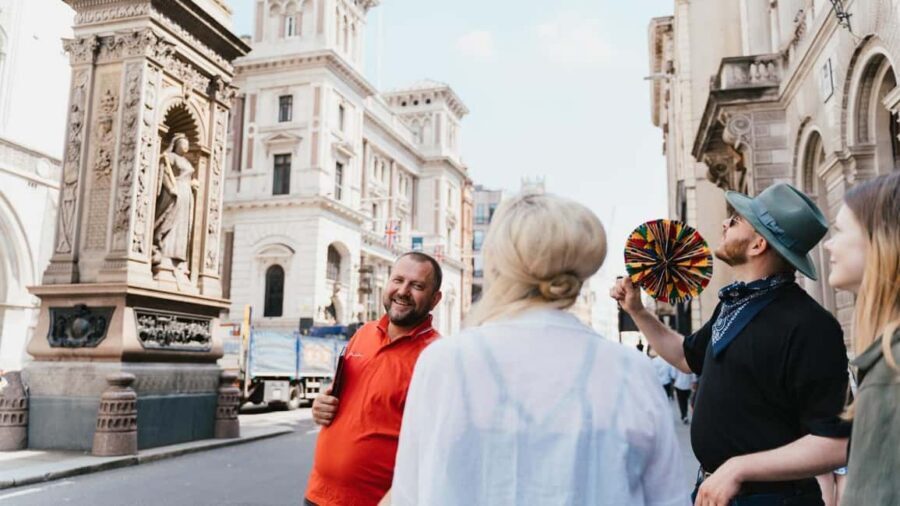
The City of London isn’t just “more old stuff.” It’s a distinct place with its own rules, boundaries, and identity. The tour leans into that right away with the Temple Bar marker, which marks the boundary lines into the City’s fiscal and governmental districts. That little detail is the kind that helps everything click later: why certain buildings matter, why some areas feel business-first, and why the City keeps its own personality.
You also get that time-travel feeling without waiting around for buses. The route is framed as going from a 2,000-year-old City inside the capital all the way toward newer skyline moments. Along the way, the guide points out how modern London sits beside layers of older streets, so you come away seeing connections—not just collecting stamps.
You can also read our reviews of more guided tours in London



Meeting at Temple: simple logistics that keep the walk smooth
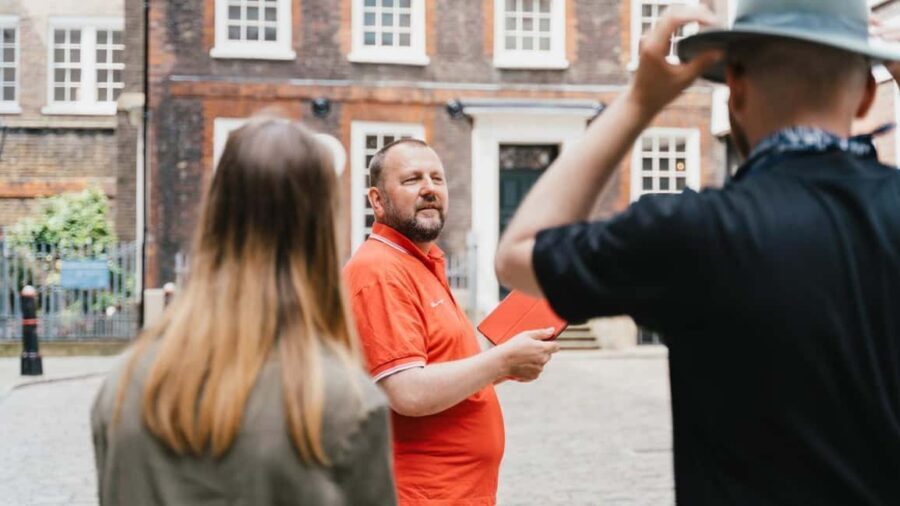
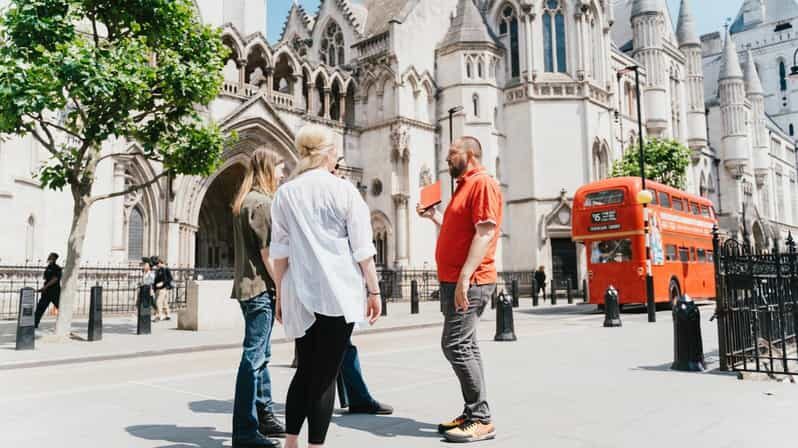
The meet-up point is just outside Temple Underground Station. Your guide will send a photo of themselves so you know who to look for, and they’ll be holding a sign or wearing a Tours by Foot lanyard. That matters more than it sounds. In a city of crowds, it’s a real quality-of-life upgrade when you’re not stuck hunting for the group.
This is also a 3-hour walking experience, so you’ll want to dress for pavement time. Comfortable shoes are the obvious call, but I’ll add one practical note: if it’s a sunny day, bring water. This route concentrates big sights into a short block of hours, and you’ll cover ground.
Group size appears to be kept small. One guest specifically called out a group of six, and that’s the sweet spot for a walking tour: enough people to feel social, but small enough that your guide can answer questions without turning the tour into a lecture hall.
Temple Bar, then St Clement Danes: boundaries and scars in plain sight

The walk starts with a quick orientation around Temple, then moves toward the Royal Courts area. You’re not just seeing buildings; you’re learning how the City is organized.
A standout early stop is St Clement Danes Church. The guide explains that it’s now the official site of worship for the Royal Air Force, and you can see damage from World War II that was left unaltered. That choice—keeping marks of destruction rather than covering them—changes how you look at the building. It becomes a live reminder that London’s history isn’t only celebrations and grand ceremonies.
This is also where the tour’s pacing helps. You’re walking from the logic of borders and institutions into a church that holds a modern story of conflict and memory. It’s the kind of contrast that keeps you paying attention.
Royal Courts, Dr Johnson’s House, and the pub stop you’ll remember
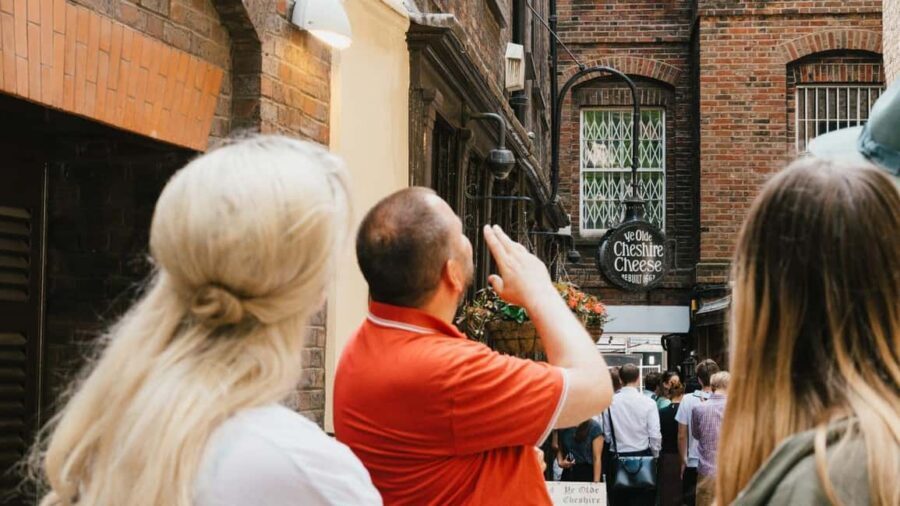
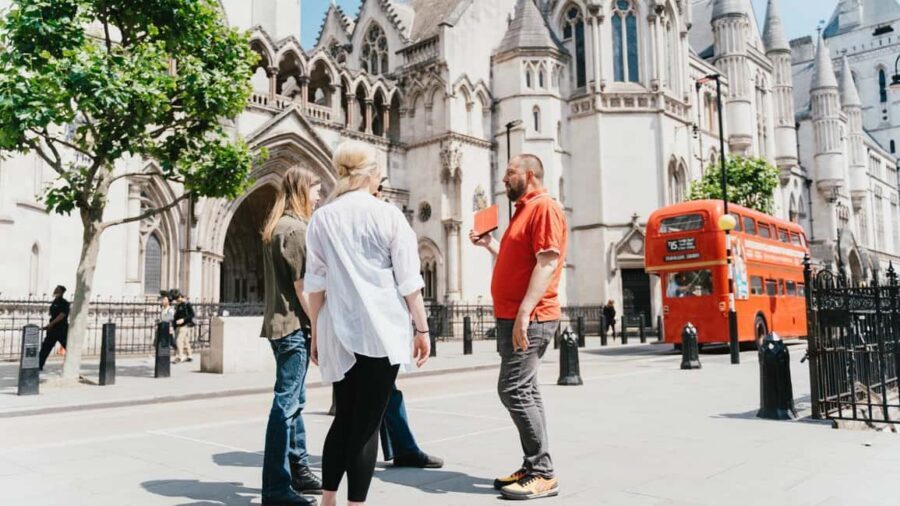
After St Clement Danes, you’ll pass through the legal-and-institution zone near the Royal Courts of Justice. The guide gives context during the stop so it’s not just name-dropping. Even if you’re not into British law, it helps you understand why this area feels official and tightly managed.
Then you hit Dr Johnson’s House, another place where a short guided stop can be more useful than a long self-guided wander. The guide’s job is to point you toward what to notice—street-level cues and the human scale of the City—so you get a sense of the neighborhood rather than just the address.
And then comes the stop that many people talk about most: Ye Olde Cheshire Cheese. It’s described as one of the oldest, best-known, and family-friendly pubs in the City, and it has hosted big names like Dickens, Conan Doyle, and P.G. Wodehouse. Even better, you’re not only there for drinks (though, yes, that’s part of the point). You’re there for the stories tied to a real London room—old wood, old atmosphere, and history you can point at while you listen.
The tour also connects to Bow Bells of St Mary-le-Bow, which adds that unmistakable London sound to the experience. It’s a small detail, but that’s the kind you remember later because it’s sensory, not just visual.
St Bride’s Church and St Paul’s Cathedral: scale you can feel
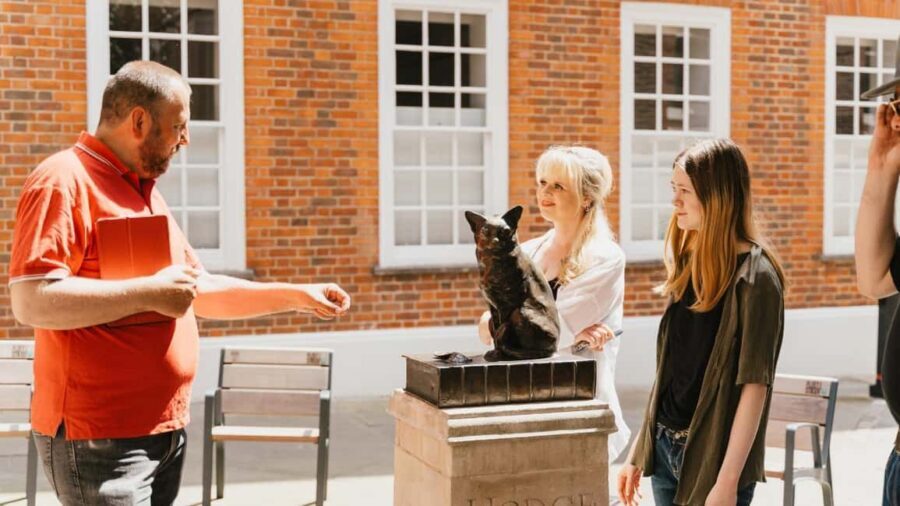
From the pub area, you move into the world of churches and monumental London. St Bride’s Church is a guided stop on the route, and it’s the kind of place that benefits from a guide who can point out what’s unique about the building’s position in the City.
Then you reach the big one: St Paul’s Cathedral. The tour gives you key anchors: it was completed in the early 1700s and has hosted major events, including the funeral of Sir Winston Churchill and the wedding of Prince Charles (now King Charles III) and Lady Diana Spencer. With those facts in mind, St Paul’s stops being just “a great dome.” It becomes a national stage, a building that witnessed major life-and-death moments for the country.
A guided stop here is valuable because the Cathedral is layered. Without context, it’s easy to look up and forget to look around. With the guide, you’re more likely to notice how the City and the Cathedral relate—how the skyline and the street network frame the views and the sense of occasion.
You can also read our reviews of more city tours in London






Bank of England, Royal Exchange, and the Monument after you learn the money story

This route has a smart rhythm: law, literature, religion, then institutions with serious power.
You’ll visit the Bank of England, including time standing near the vaults of the Bank of England, which currently hold 310 tonnes of solid gold. That number is so big it can feel abstract—until you’re standing close to the place where it’s stored. It helps you grasp why the City is the UK’s financial heart, not just a cluster of offices.
Next, you’ll pass by Mansion House, the official residence of the Lord Mayor of London. Even without going deep into palace details, it adds that political layer: this isn’t just commerce; it’s governance at street level.
The Royal Exchange is another guided stop, and it fits the theme perfectly. The guide helps connect these sites so your brain builds a map of roles: who represents the City, where business happens, and why it all matters.
Then comes the emotional turn: the Monument. You’ll hear the story of the Great Fire of London in 1666. The guide explains that the Monument opened to the public in the 1670s and that it’s still possible to visit today. That context matters because the Monument is often seen as a landmark, but it’s also an evidence marker. London’s streets, and even some of its rebuilding logic, make more sense after you understand the fire.
London Bridge versus Tower Bridge: two crossings, one clear explanation
In most London trips, London Bridge and Tower Bridge blur together. This tour fixes that. Your guide focuses on the difference, and you’ll visit London Bridge and Tower Bridge separately, so you don’t end up mixing up shapes and stories.
At London Bridge, you learn that the site has held a crossing over the River Thames since AD 42. The tour also mentions that the medieval bridge was famously known for being “falling down,” and your guide will explain why. That’s a fun example of how engineering problems and city growth meet. It’s also a reminder that London’s famous structures weren’t always smooth or permanent.
Then you move to Tower Bridge, the iconic symbol of the city. The guide explains that it spans the Thames with distinctive towers and bascules and that it’s a draw bridge. You might also get the chance to see it open on one of the summertime afternoon tours, which is the kind of moment that turns a photo stop into a memory.
Along the way, the route can include views where skyscrapers come into the frame too. The tour notes The Shard at 310 meters, described as Western Europe’s tallest building and a dominating feature of the skyline. Even if you don’t go up in it, just understanding how it changes the skyline helps you read London from street level.
Tower of London: fortress roles you can picture as you walk

The final major historical anchor is the Tower of London, a UNESCO World Heritage Site. The guide frames it as one of the oldest buildings in London, founded by William the Conqueror in the 11th century, and used as a royal palace, prison, and treasury.
That sequence of roles is the key. When you hear palace, prison, treasury all tied to one place, the Tower becomes more than a photo op. It starts to feel like a machine for power—where decisions were made, people were held, and valuables were safeguarded. Even if your time inside is limited by the overall 3-hour plan, the guide’s focus helps you walk in with a clearer mental script.
The Garden at 120 rooftop finish: sweeping views with a short window

On Sundays and Mondays only, you finish with The Garden at 120—a rooftop garden with sweeping views over the London skyline. The stop is about 15 minutes, which is short on purpose. It’s enough time to look around, grab a few photos, and re-orient yourself before the city rush pulls you back.
One practical note: there may be a small wait to access the garden at busy times. So plan to move calmly, not with a tight schedule that depends on getting a perfect golden-hour photo at exactly the right minute.
If you’re a first-time London visitor, this rooftop finish often lands well. You’ve just spent the morning learning where institutions sit, where bridges connect, and how older streets survived. From above, you’re basically holding the whole puzzle in your hands.
Price and value: is $49 worth a 3-hour City walking tour?
At $49 per person for a 3-hour guided walk, the value comes from three places:
First, you get a professional local guide who connects sites into a walkable storyline, rather than leaving you to guess what each building means. Second, the tour includes guided stops at a string of major places that people often pay separate admission and ticket time for on other days. Third, on Sunday and Monday, the rooftop garden entrance is included—those views are the kind of payoff that makes the morning feel like more than just a checklist.
What you’ll want to factor in is that you’re not buying private time or a full day of wandering. This is a high-density route. If you hate walking schedules, you might feel rushed. If you enjoy a planned route and good explanations, you’ll likely feel like your time in London got more efficient.
Gratuity isn’t included, so if you like your guide, plan to tip.
Who this tour fits best (and who might want a different plan)
This experience is a good match if you:
- Want St Paul’s and the Tower of London without building your own route
- Like guided context for famous places like the Monument and the Thames bridges
- Prefer a walk that includes smaller stops like Ye Olde Cheshire Cheese and St Clement Danes, not just the biggest name landmarks
- Travel solo and want a human guide to answer questions on the way
It may not fit if you:
- Want a slow, flexible day with no set order
- Need long time at each major sight
- Don’t like short rooftop time windows, especially if your visit falls on a busy day
Should you book this City of London and St Paul’s tour?
I’d book it if you want a concentrated City overview with the main anchors lined up in the right order: City institutions, St Paul’s, the Thames crossings, then the Tower. The rooftop finish on Sundays and Mondays adds a clear reason to choose this specific option over a generic “London highlights” walk.
Skip it if you already plan to spend a lot of time inside major sites on your own, because this tour is built for walking, learning, and moving on—not for deep self-guided museum time.
If your priority is getting your bearings fast, learning why the City is different, and seeing how London’s most famous symbols connect on the ground, this is a solid pick.
FAQ
How long is the tour?
It lasts 3 hours.
Where does the tour meet?
The guide meets you just outside Temple Underground Station.
What’s the price?
The price is listed as $49 per person.
Are tickets to the rooftop garden included?
Yes, but only on Sundays and Mondays, when entrance to The Garden at 120 is included.
Which language is the tour guide?
The tour is in English.
Is the tour wheelchair accessible?
Yes, the tour is marked wheelchair accessible.
Is gratuity included in the price?
No, gratuity is not included.
Is free cancellation available?
Yes, you can cancel up to 24 hours in advance for a full refund.