REVIEW · LONDON
London: East End Instagrammable Street Art & Graffiti Tour
Book on GetYourGuide →Operated by Tours by Foot · Bookable on GetYourGuide
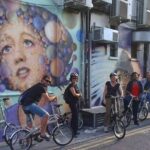
London’s street art feels like a living museum.
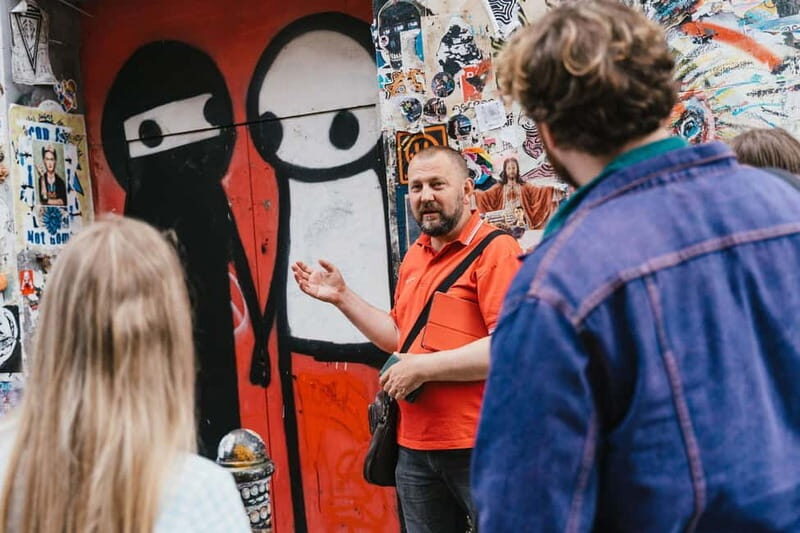
On this East End Instagrammable graffiti tour, I love how the walk mixes world-famous works with very practical photo spots, and I love that you’re not just staring—you’ll learn how to look at street art in layers. The one thing to consider is that you’ll cover ground and squeeze into some narrow streets and yards, so you’ll want comfy shoes and patience for tight corners.
You start in Whitechapel and work your way toward Shoreditch, Brick Lane, and the streets around Liverpool Street. Expect photo stops built around angles, details, and fast-changing walls, plus guided stories that connect the art to the neighborhood.
Guides are a big part of the experience. On tours led by guides like Matt and Margaret, people praise the time spent on photos, the room to move at your pace, and the big-picture context behind the pieces—so you’ll get more than a scavenger hunt.
In This Review
- Key things that make this tour worth your time
- Starting at Whitechapel Gallery and Jack the Ripper street-level context
- Spitalfields Photo Stops: learning how to see, not just snap
- Shoreditch streets and the story behind the Graffiti Wars
- Brick Lane wall walk: Heneage St angles, collaborations, and big details
- Seven Stars Yard and Princelet Street: art that feels risky but stays human
- Dray Walk and broccoli in rainbow colors
- Allens Gardens: when the best photo is time-sensitive
- Rivington Street and the Banksy / Thierry Noir factor
- art’otel London Hoxton and Banksy living inside modern buildings
- Making your own street art: the part that turns photos into memory
- How long you’ll spend and how to pace yourself on a 2-hour walk
- Who should book this street art walk (and who might not)
- Should you book London: East End Instagrammable Street Art & Graffiti Tour?
- FAQ
- How long is the London East End street art and graffiti tour?
- Where do I meet the guide?
- Where does the tour end?
- What areas are included in the route?
- Is the tour guided in English?
- Does the tour run rain or shine?
- Can I make my own street art during the tour?
- Will I see famous graffiti, including Banksy?
- Are there photo opportunities?
- Is it wheelchair accessible?
Key things that make this tour worth your time
- World-famous names in real places: you’ll hunt for works tied to artists like Banksy and Thierry Noir.
- Instagram-ready photo angles: spots are chosen so you can actually frame the art, not just point and hope.
- East End streets, not a brochure: Whitechapel, Spitalfields, Shoreditch, Brick Lane, and nearby lanes.
- Community stories behind the paint: works connected to local identity, like Princelet Street.
- Fast-changing walls: some areas can look different from week to week, so you’ll want your camera ready.
- You leave with your own street art: it’s built into the tour, not just a viewing experience.
Starting at Whitechapel Gallery and Jack the Ripper street-level context
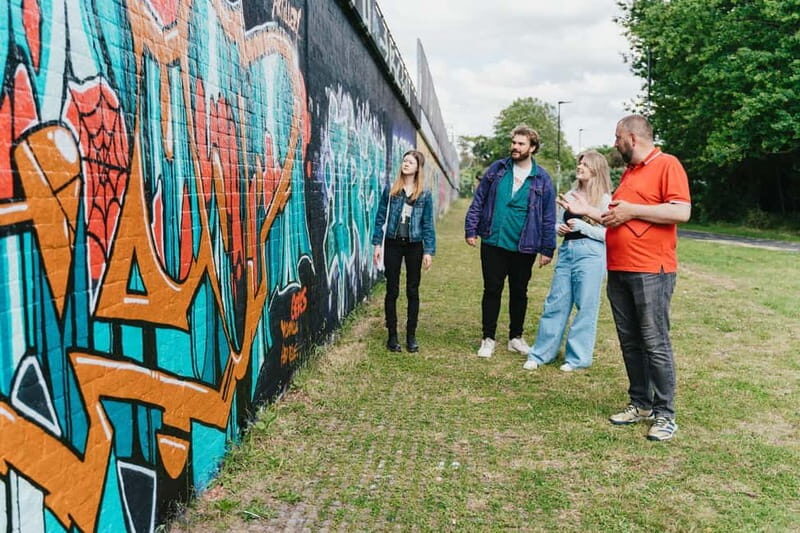
The meeting point is right outside the Whitechapel Gallery on Whitechapel High Street. Even before you start hunting murals, the setting matters: Whitechapel is where London feels raw and real, with history that still shows up in the street-level energy.
The tour also nods to the neighborhood’s darker past—the gallery area is tied to the stories around the Whitechapel Murders and Jack the Ripper. You don’t need to be a history nerd to enjoy this, because the point is to remind you that this district has always been about people, not postcard views.
What I like here is the tone. You’re not asked to treat street art like a fragile art gallery. Instead, it’s presented as something that grew from the streets and still belongs to them. That mindset makes the rest of the walk click.
A few more London tours and experiences worth a look

Spitalfields Photo Stops: learning how to see, not just snap
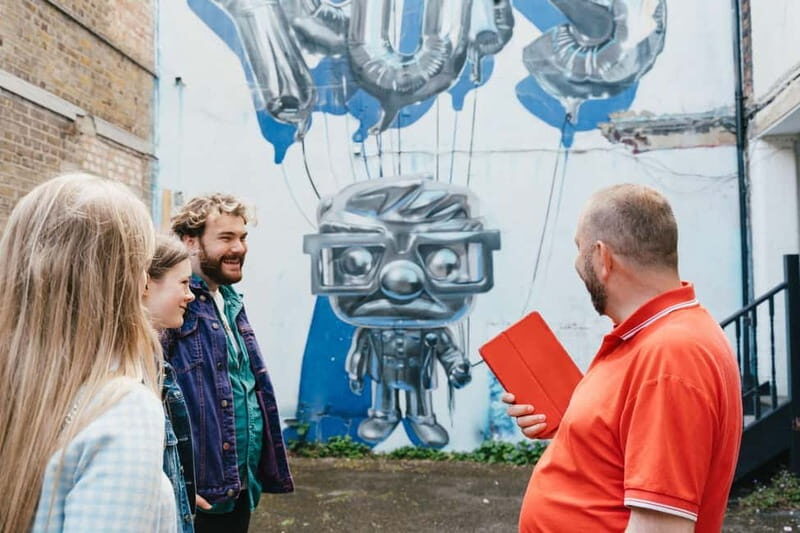
Your next stretch takes you through Spitalfields, with a guided segment and a dedicated photo stop. Spitalfields is close enough to the Shoreditch orbit that you’ll feel the shift fast: more galleries, more texture, more layers of visual culture.
This is where the tour starts training your eyes. Street art isn’t only about what you see straight on. It’s about what you notice when you move—distance, height, how a wall interacts with a doorway, how a mural sits in a row of storefronts.
Practically, plan to take photos steadily rather than rushing. The guides build in time for you to shoot, and that matters with street art because the best shot often requires patience: stepping back, then stepping sideways, then checking the light.
Shoreditch streets and the story behind the Graffiti Wars
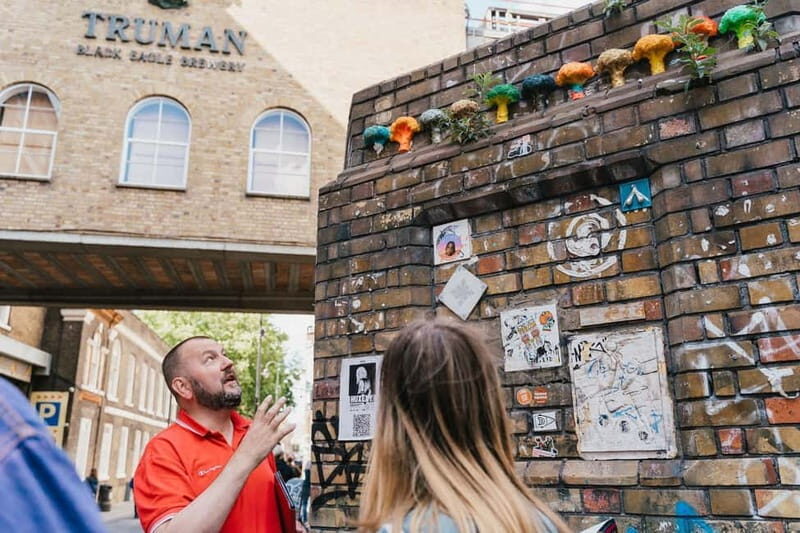
Then you head into Shoreditch, again with guided explanation plus a photo stop. This is the part of London that most people associate with the graffiti boom, but you’ll get a stronger sense of why it took off and why it became a kind of local battle.
The tour includes a closing story about the Graffiti Wars, and the way it’s framed is useful: it helps you understand street art as more than decoration. It’s competition, identity, and risk—sometimes all at once.
If you’re the type who likes to connect art to its social context, Shoreditch is where that pays off. If you’re more of a pure-photo person, this section still helps because you’ll recognize what you’re looking at: names, styles, and the tension between old tags and newer paint.
And yes, it’s the East End—so keep an open mind. One tour report highlighted that a guide helped the group connect with famous Shoreditch names like Gilbert & George, when circumstances allowed. You shouldn’t plan your day around it, but it’s a reminder that locals (and their stories) can be part of what you encounter.
Brick Lane wall walk: Heneage St angles, collaborations, and big details
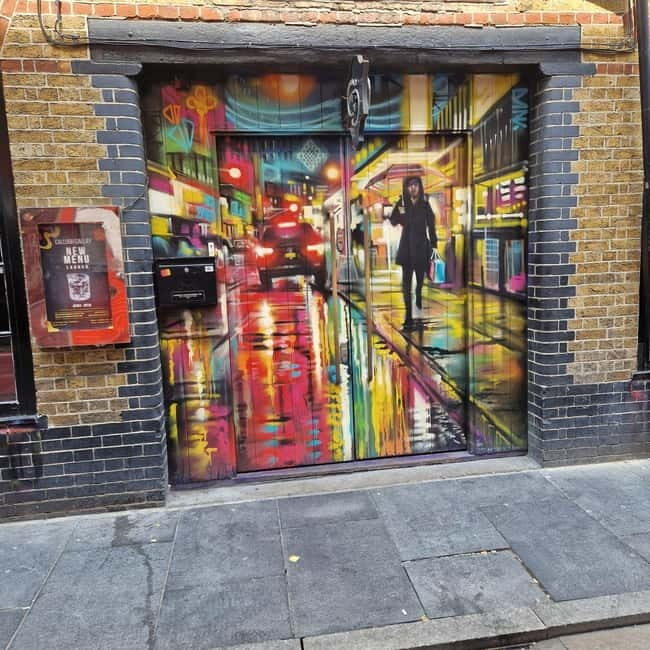
Brick Lane is the heart of the route, and this section earns its reputation. You get guided time and a photo stop, but the bigger value is how many different “types” of street art you’ll see packed into short distances.
This area is where the tour leans hard into the idea that you sometimes need multiple points of view. One highlight is Heneage St, where two huge pieces cover a whole building wall—one associated with Phlegm and his recognizable slim creatures, and another tied to FanakaPan and silver balloon imagery.
Then there are the collage-like moments on Brick Lane itself, where collaborations of two or more artists appear. The point isn’t just that you’ll see famous work—it’s that you’ll understand the mural ecosystem: one layer leads to another, and the wall becomes a logbook of who painted there, when, and what they wanted to say.
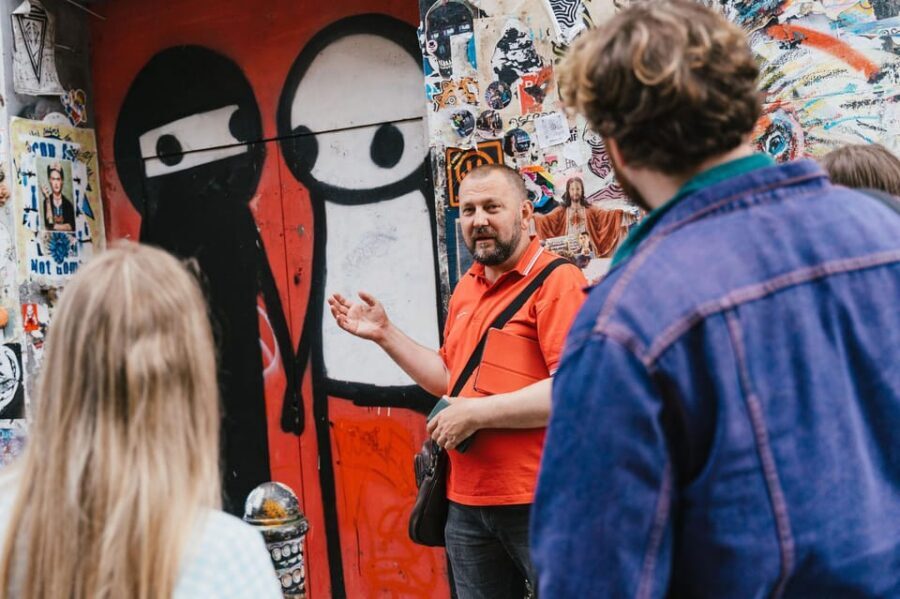
You’ll also hear about pieces that repeat through the neighborhood. For example, Stik’s work on Princelet Street is dedicated to the Muslim community and their long-lasting connection to the area, and the tour notes that it has been defaced and repainted over time. That resilience isn’t abstract—it explains why certain walls feel alive even when the art changes.
Seven Stars Yard and Princelet Street: art that feels risky but stays human
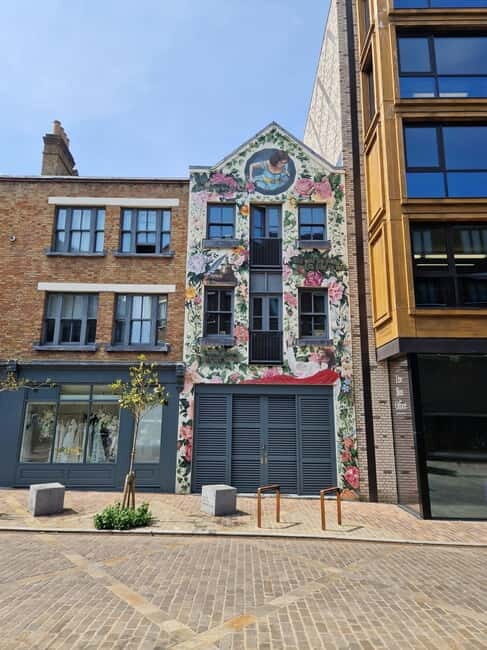
Between major streets, you’ll run into narrower spaces, including a yard described as potentially intimidating—7 Stars Yard. The tour doesn’t promise you’ll love the spookiness, but it helps you understand why yards like this matter: they’re built for quick appearances, close viewing, and the kind of street art that can’t survive in wide-open storefront frontage.
Then you shift to Princelet Street, with a shorter visit that focuses on a specific piece tied to Stik. The story matters because it gives the work a human anchor. Instead of treating the artwork as a random style, you’re pointed toward what it represents locally, and why it keeps getting reworked.
One more note: the tour flags that some works in the area can be defaced and repainted. That’s not a problem to avoid—it’s part of the East End street art reality. It’s how you can tell the neighborhood is still doing the painting, not just watching it happen.



Dray Walk and broccoli in rainbow colors
Next up is Dray Walk, with a short guided stop and photo time. This is where you get one of those instantly recognizable street art motifs: broccoli. Some versions are realistic, while others come in bright, rainbow colors.
The tour also connects the broccoli trend to its origin and mentions that the artist who started it has an associated gallery. Even if you’re not chasing the artist beyond this walk, this is a great example of how street art trends spread: they travel from a single idea to a visible style, and then they become a recognizable neighborhood language.
The practical side is simple: if you like quirky detail, Dray Walk delivers. If you’re trying to learn how to spot these patterns, it also teaches you what to look for—small, repeated symbols that make a wall feel intentional.
Allens Gardens: when the best photo is time-sensitive
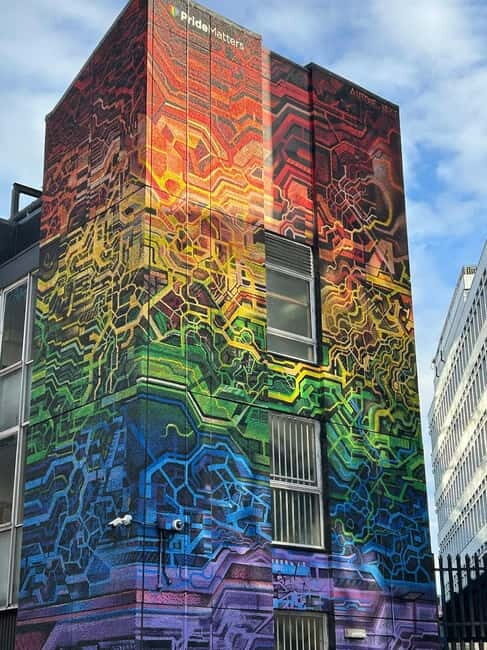
Then you hit Allen Gardens. This part is built around the idea that you should take photos because some graffiti can change quickly. The tour notes that the walls here can get covered or updated, so your best pictures can depend on luck and timing.
This is one of the most useful sections for camera planning. If you only take a single shot and move on, you might miss your chance when the light or framing is perfect. Take a moment to shoot from a couple distances. Watch for layers: the older marks, the newer paint, and the spots where someone tried to cover or redirect the message.
There’s also a quiet benefit here: photographing changing street art trains you to accept imperfection. You stop needing the perfect, museum-grade composition. Instead, you aim for a strong record of what the wall looked like today.
Rivington Street and the Banksy / Thierry Noir factor
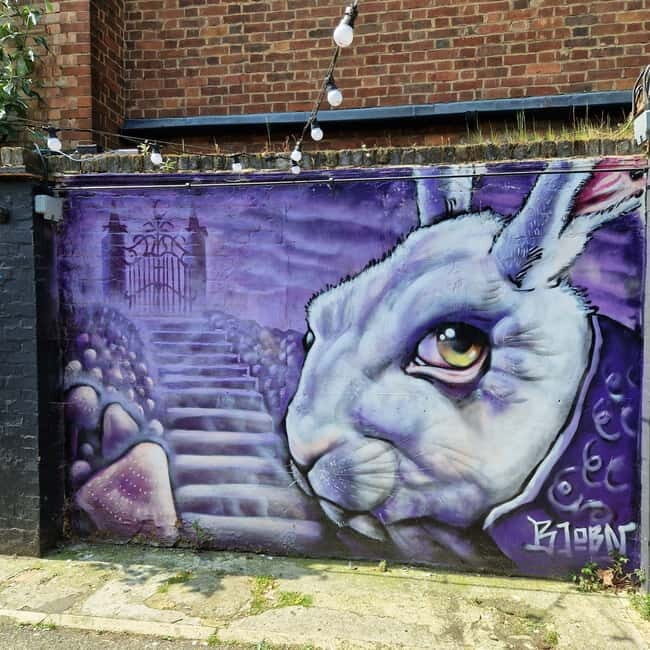
Now the tour turns more secretive and higher-profile. Rivington Street is where you’ll find major street art moments, including a stop tied to Banksy at a secret location and another tied to Thierry Noir.
The tour frames Thierry Noir in a broader way: he’s best known for groundbreaking work connected to the Berlin Wall in the 1980s, but he also left his mark in London streets. That connection helps you see the difference between street art that’s local-only and street art that carries international political or cultural weight.
At this stage, you’ll probably notice a pattern: the best tours don’t treat famous names as trophies. They treat them as clues—clues to how the neighborhood works, how styles migrate, and how political or social messages can live inside bright visual forms.
art’otel London Hoxton and Banksy living inside modern buildings
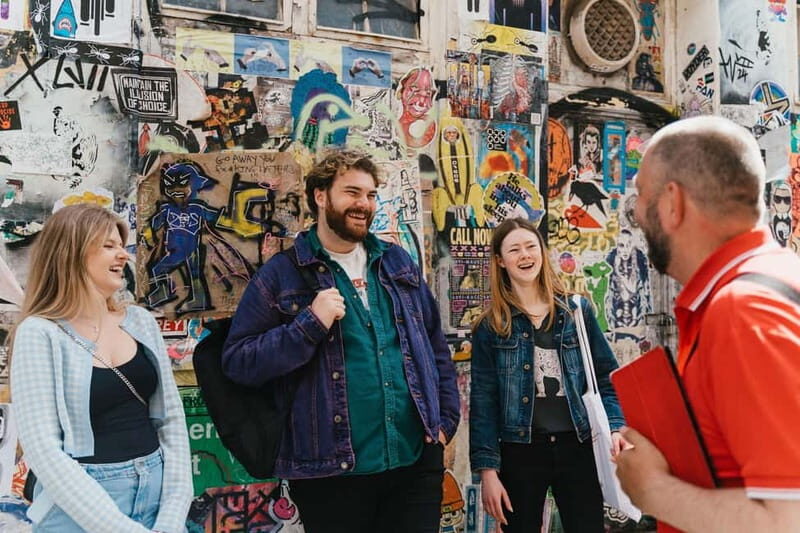
You finish with a photo stop at art’otel London Hoxton, Powered by Radisson Hotels. This stop is tied to Banksy in a practical way: the tour notes that an older Banksy is now part of a newer, fancy hotel setting.
This is a great moment to think about street art’s weird afterlife. A mural can start as “not meant to last,” then later become “part of the building’s identity.” Whether you love that idea or dislike it, seeing the transition in real space is part of what makes the tour feel honest.
From here, you end near Liverpool Street Station (Stop G). The tour also notes that the exact finishing point can shift as the art changes, so don’t be surprised if your route end feels slightly different from what you expect.
Making your own street art: the part that turns photos into memory
The highlight list promises you’ll make your own street art, and that’s not just a gimmick. This is the section that turns the whole walk from “seeing” into “participating.”
Why that matters: graffiti-inspired art has rules that are different from traditional painting. Even basic choices—shape, lettering, color blocks, layering—teach your eye what to notice on the street. Once you’ve tried, you’ll start spotting decisions in the murals you saw earlier: why a tag curves here, why the colors clash there, why a piece was placed at a certain height.
It also changes the tone of the tour. After a couple hours of observing, you get to relax a bit and play. If you’re traveling with kids, it’s a win. If you’re traveling solo, it’s a way to leave with a tangible piece of the East End rather than only camera files.
How long you’ll spend and how to pace yourself on a 2-hour walk
The tour runs for about 2 hours, with small guided segments and short photo stops rather than one long lecture. That pacing is ideal for street art because walls are close together, but each piece needs a moment.
In particular, guides are praised for giving enough time for photos and explanations, and for adjusting to your pace. That’s important in areas like this, where group speed can easily flatten your experience. If you want to slow down for details, this format helps you do it without feeling rude.
Also keep in mind: you’ll be on your feet. The route includes narrow streets and at least one yard that can feel scary at the entrance. You don’t need to be fearless, but you do need to be ready to walk calmly and stick with the group.
Who should book this street art walk (and who might not)
This tour fits best if you want a guided, story-based street art outing rather than a DIY “find murals on your own” day.
It’s a strong choice if:
- You like iconic street art but want context, not just photos.
- You’re traveling with friends who want clear stops and photo opportunities.
- You enjoy urban history and want it connected to the neighborhood.
- You want something interactive, since you’ll make your own street art.
It may be less ideal if:
- You hate crowds or tight alleys and want wide-open sightseeing only.
- You prefer museums and curated interiors over street-level art in changing conditions.
Should you book London: East End Instagrammable Street Art & Graffiti Tour?
Yes, if you’re after an East End day that feels current, visual, and guided. The combination of iconic artists, practical photo angles, neighborhood storytelling, and the chance to create your own piece is what turns this into more than a photo loop.
If you’re on the fence, decide based on your style. If you want street art with clear structure and time to photograph properly, book it. If you’d rather wander freely without explanations or you dislike narrow, gritty streets, you might be happier with self-guided options.
FAQ
How long is the London East End street art and graffiti tour?
The tour lasts about 2 hours.
Where do I meet the guide?
You meet directly outside the Whitechapel Gallery at 80 Whitechapel High Street.
Where does the tour end?
It finishes at Liverpool Street Station (Stop G). The exact finish point can change depending on how the street art changes in the area.
What areas are included in the route?
You’ll cover Spitalfields, Shoreditch, Brick Lane, and nearby streets including stops around Princelet Street, Dray Walk, Allens Gardens, Rivington Street, and art’otel London Hoxton.
Is the tour guided in English?
Yes, the live tour guide speaks English.
Does the tour run rain or shine?
Yes, tours run rain or shine.
Can I make my own street art during the tour?
Yes, the experience includes a chance to make your own street art.
Will I see famous graffiti, including Banksy?
Yes. The tour includes Banksy-related stops and also work by Thierry Noir.
Are there photo opportunities?
Yes. The tour includes Instagrammable photo opportunities and photo stops throughout.
Is it wheelchair accessible?
Yes, the tour is wheelchair accessible.