REVIEW · LONDON
London: Natural History Museum Entry Ticket and Guided Tour
Book on GetYourGuide →Operated by UTG EXPERIENCE · Bookable on GetYourGuide
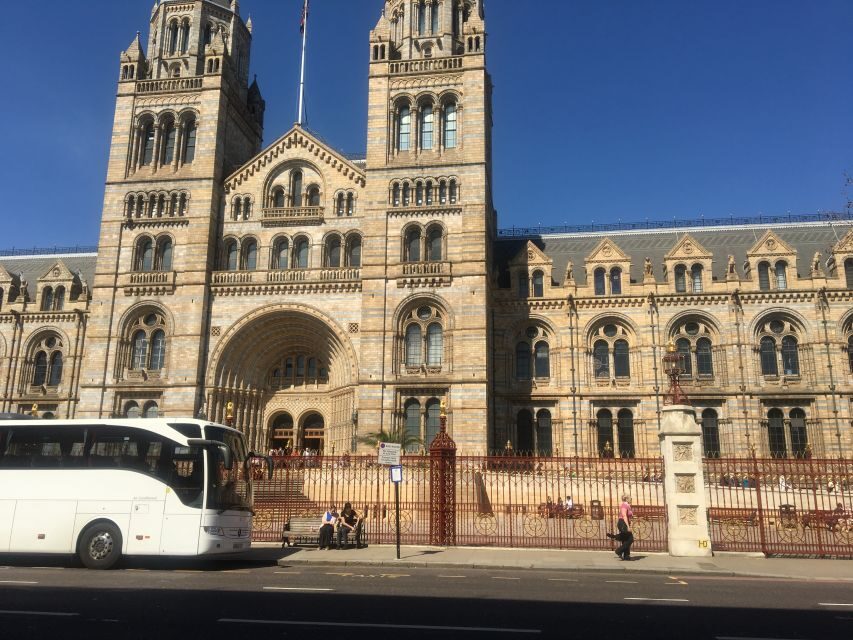
Dinosaurs plus guided shortcuts save serious time. That’s the core magic of this Natural History Museum tour: you’re taken straight into the big, famous galleries, with a guide helping you connect the dots between fossils, Earth science, and living wildlife. Two things I especially liked were the Hintze Hall dinosaur wow-factor and the fact that you’re led through express security so your visit starts moving sooner.
The second highlight for me is the way the tour sets up the Earth story in places like the Volcanoes and Earthquakes Gallery, then brings you back to “life on Earth” in the Evolution gallery. One possible drawback: the whole tour is only 1 hour, so it covers the essentials rather than letting you linger everywhere you’ll want to linger.
In This Review
- Key takeaways before you go
- Why a guided tour is the smart way to see the Natural History Museum
- Getting in fast: South Kensington meeting point and express security
- Central Hall and the dinosaur moment you came for
- Hintze Hall: the blue whale and the fossil scale shock
- Volcanoes and Earthquakes: understanding Earth, not just looking at displays
- Minerals, gems, and evolution: the science thread connecting it all
- Wildlife Garden: a calmer pause with birds, bees, and more
- How much can you actually see in 1 hour?
- Price and value: what $76 buys you in the real world
- Accessibility and comfort: plan for how you’ll move
- Who should book this Natural History Museum guided tour?
- Should you book this tour?
- FAQ
- How long is the guided tour?
- How much does it cost?
- What’s included in the tour price?
- Is there an express option for entering the museum?
- Where do I meet the guide?
- What language is the tour guide?
- Is the tour wheelchair accessible?
- What are the cancellation and payment options?
Key takeaways before you go
- A Paul-style guide who keeps Q&A moving so you’re not just passively walking
- Express security skip helps you spend more time inside the museum’s main halls
- Hintze Hall stops for the 25-meter blue whale and the star fossil displays
- Earth science in one tight loop with Volcanoes and Earthquakes plus “how Earth was made” context
- Headsets included if you need them, which matters in a loud, crowded museum
- Wildlife Garden as a reset with birds, bees, and other animals
Why a guided tour is the smart way to see the Natural History Museum
The Natural History Museum can feel like a choose-your-own-adventure… except the clock is ticking and the crowds don’t care about your plan. This 1-hour guided format is built for people who want the biggest hits without turning the museum into a scavenger hunt.
I like that the guide doesn’t just point at objects. The tour frames what you’re looking at: fossils as evidence, minerals and gems as Earth process, and species displays as a story of change over time. It also helps you notice things you’d probably miss on your own, like the science behind how specimens are preserved and studied.
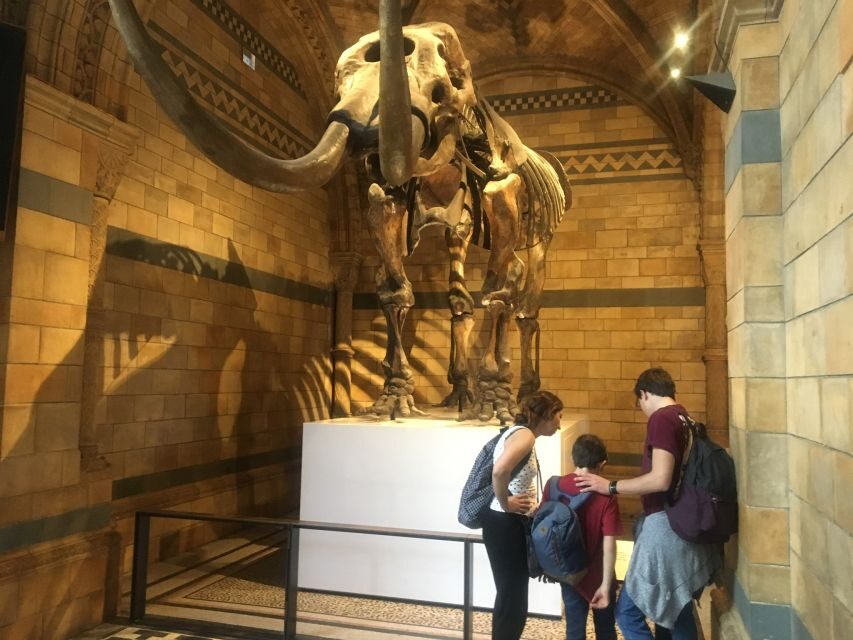
And yes, the “famous exhibits” angle is real. When you walk into the Central Hall, the massive fossil presence hits you fast—then the guide gives it meaning so it doesn’t stay only a visual moment.
A few more London tours and experiences worth a look


Getting in fast: South Kensington meeting point and express security
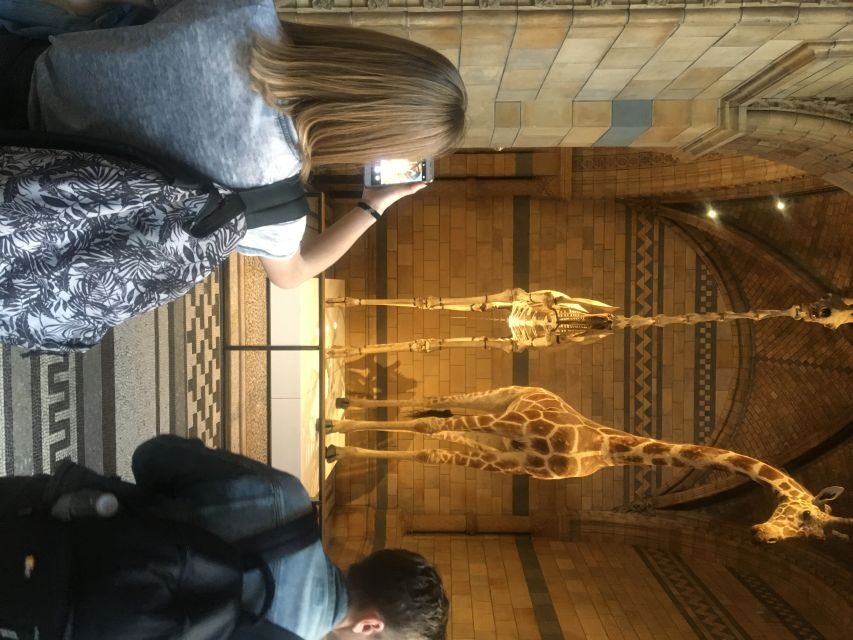
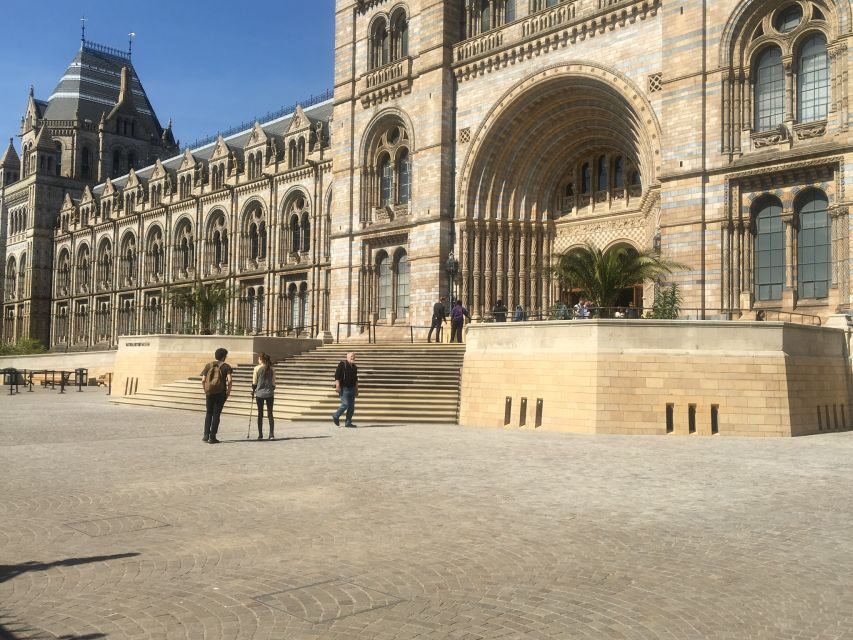
You meet near South Kensington. The directions provided are specific: take the exit labeled Natural History Museum Ismaili Centre Exit, then meet your guide at the metal plate reading The Royal Borough of Kensington and Chelsea, on Exhibition Road SW7.
This matters because it reduces your stress right at the start. I find that with museums this size, the first 15 minutes decide whether you’ll enjoy the rest.
You’ll also go through express security rather than waiting in the standard line. That’s a practical win: more time indoors, less time shuffling under security procedures. The tour also includes a reservation ticket, so you’re not scrambling to organize access once you arrive.
If you’re the type who likes a calm start, this is the sort of tour structure that makes the museum feel manageable.
Central Hall and the dinosaur moment you came for
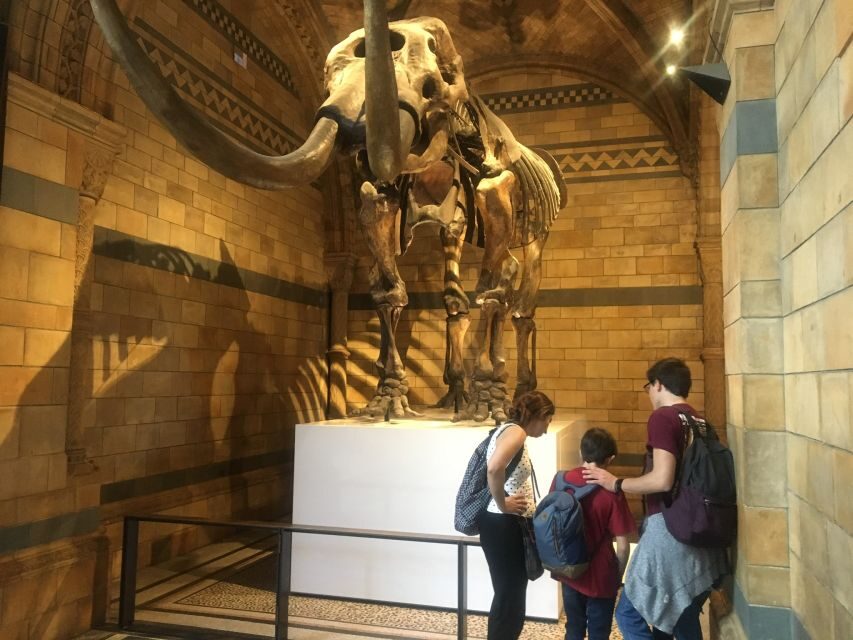
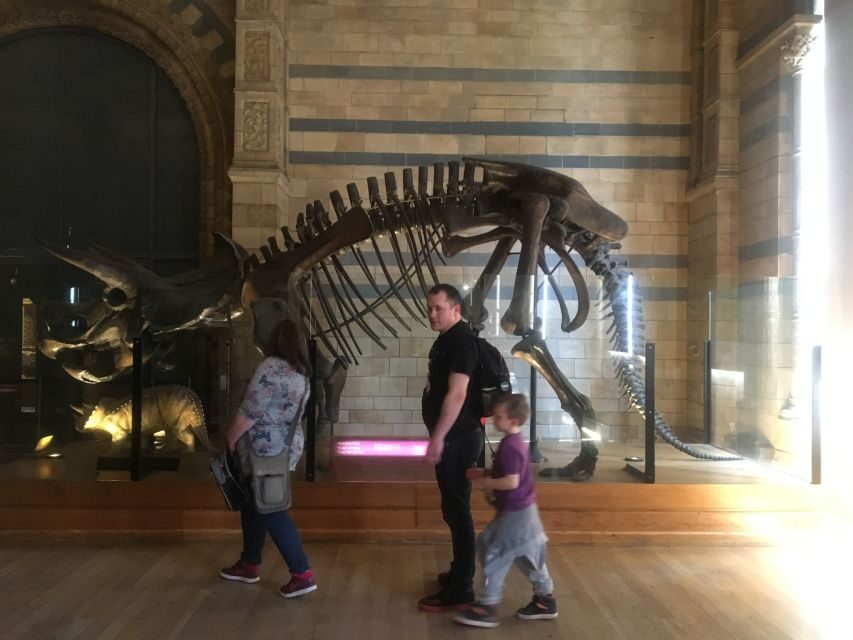
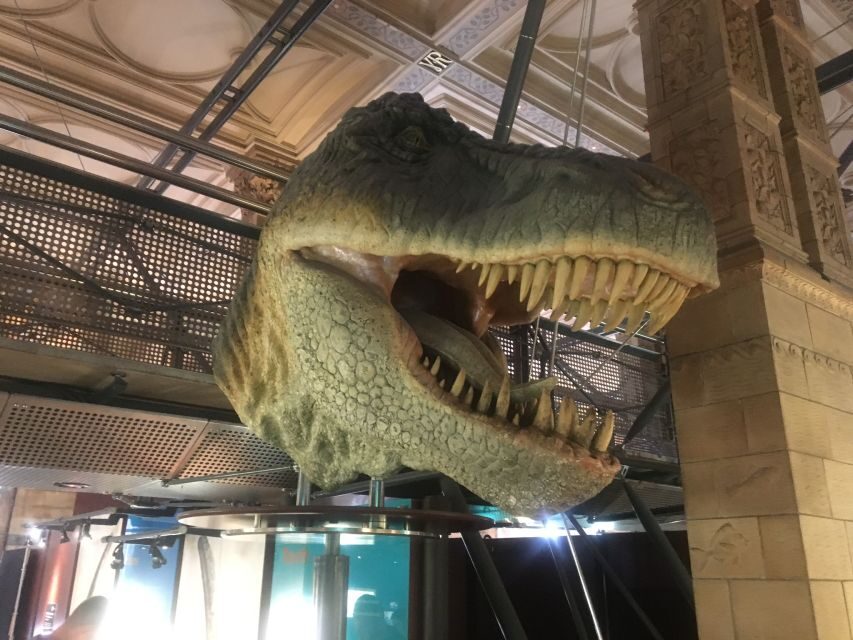
The tour’s Central Hall stop is aimed at the heavyweights. You’ll see the Diplodocus skeleton there, one of the museum’s signature fossils. Even if you know the name from schoolbooks, it’s a different experience to stand under a skeleton that large and let your brain catch up to the scale.
What the guide adds is what turns it from a photo moment into an Earth-history moment. Instead of only hearing what it is, you get a sense of where it fits in the bigger timeline—what fossil evidence tells scientists, and why paleontology isn’t just about finding cool bones.
If you’re visiting with kids, adults, or a mix, this is where you’ll all share the same reaction first, then different levels of curiosity second. Several guides in similar setups can overwhelm you with details; in this format, the goal seems to be covering the essentials while leaving you with clear targets to revisit later.
Hintze Hall: the blue whale and the fossil scale shock
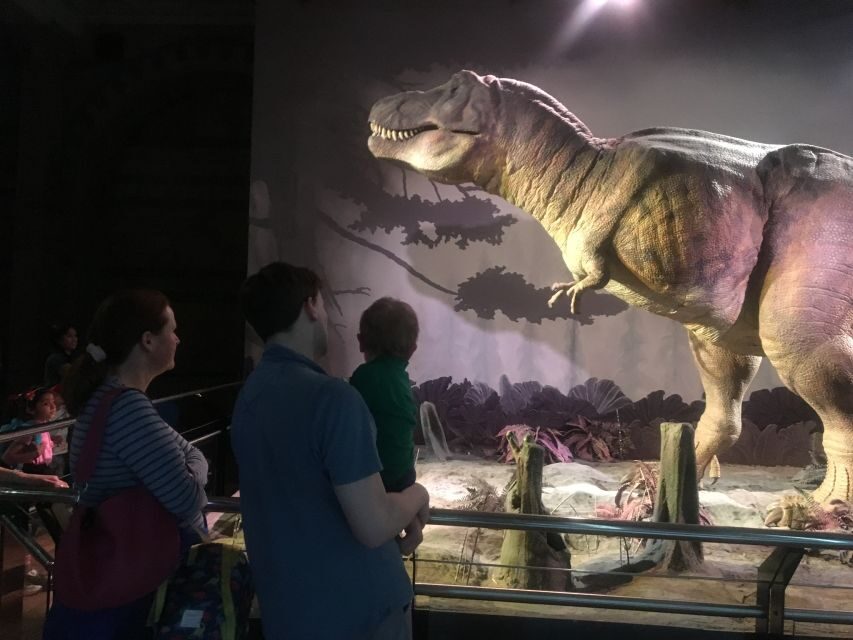
Hintze Hall is the part that turns your expectations up. Here you’ll get the headline fossil stop: a blue whale skeleton that’s about 25 meters (82 feet) long.
Standing in front of something that long does two things. First, it humbles you—your brain isn’t built for that scale. Second, it makes you pay attention, because your body is stuck in the right position to observe.
The guide uses that attention to teach you how museums interpret natural history through specimens. You also pick up hints about what to look for later if you return on your own, which is ideal because a 1-hour tour can’t fit everything.
One practical tip: plan to slow down here even if you’re tempted to keep moving. The whale stop is the kind of exhibit where rushing turns it back into a single snapshot. Let it be a moment.
Volcanoes and Earthquakes: understanding Earth, not just looking at displays
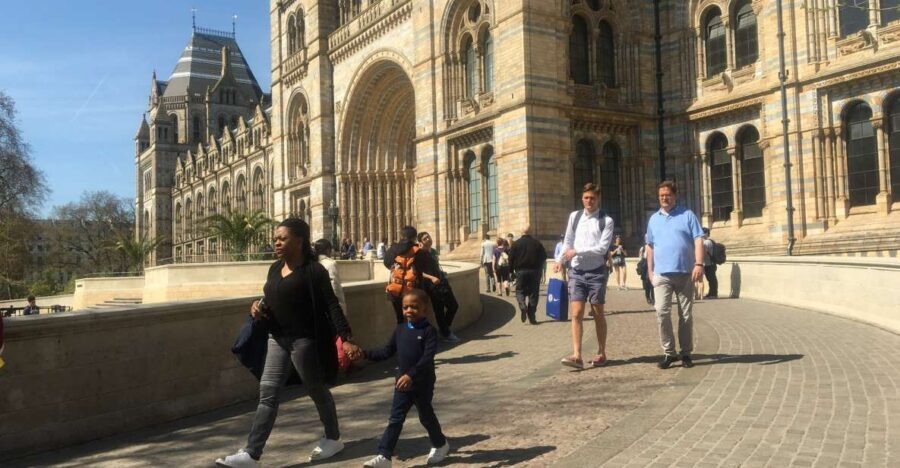
If you only cared about dinosaurs, you’d be fine with a shorter fossil-only visit. But this tour includes the Volcanoes and Earthquakes Gallery, and that’s a strong shift in pace.
This is where the museum stops being just “what lived here” and starts becoming “what happened to the planet itself.” You’ll learn about Earth formation and evolution themes as you explore how landscapes and life change over time.
I like this because it’s a different kind of wow. Dinosaurs hit through scale and familiarity; Earth science hits through cause-and-effect. When you understand the basic forces—how Earth moves, how energy shows up at the surface—you start seeing the museum’s objects as evidence, not decorations.
It’s a good stop if you’re the type who likes explanations tied to real-world processes. It’s also a helpful antidote to the museum fatigue that can set in after too many rooms of similar-looking glass cases.
You can also read our reviews of more guided tours in London





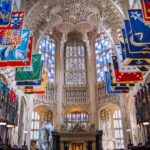
Minerals, gems, and evolution: the science thread connecting it all
After you’ve grounded yourself in Earth processes, the tour brings you toward the museum’s detailed collections: minerals and gems, plus the Evolution gallery.
The minerals/gems section is fascinating because it shows how “pretty” objects have scientific stories behind them. You get to see intricate designs and patterns, then connect those to what Earth is doing under the surface.
From there, the Evolution gallery helps you zoom out. It’s the tour’s reminder that natural history isn’t frozen in time. Species adapt, environments shift, and evidence can be traced across generations. The guide’s job here is to help you keep the thread: fossils and specimens aren’t random; they’re part of a larger narrative about life on Earth.
You’ll also hear about how museum scientists work to preserve and study specimens. That’s one of those details that makes you respect the museum more, because it explains why the displays look the way they do and how knowledge keeps getting improved over time.
Wildlife Garden: a calmer pause with birds, bees, and more
Not every highlight is a skeleton or a lab-themed gallery. The tour includes the Wildlife Garden, which is described as a haven for birds, bees, and other animals.
This stop is smart because it breaks up indoor museum time with something more alive and less glass-case focused. Even if you only catch a few active moments—birds shifting, insects moving through the space—you get a change of texture in your experience.
I like that the tour doesn’t treat nature as only something that happened long ago. Wildlife Garden brings it closer to now, and it matches the Evolution and life-on-Earth themes without repeating the same visuals.
If you’ve been in London long enough to feel like everything is stone and schedules, this is the kind of pause that helps you reset.
How much can you actually see in 1 hour?
One hour is short. That’s not a complaint; it’s the reality of a big museum. The best way to think about this tour is as a guided “master hits” loop: you get the signature objects, you get the science context, and you leave with a map in your head.
In practice, that means you’ll likely move through a sequence of major spaces rather than doing the kind of slow, deep wandering that a self-guided visit allows. The guide covers essentials within the given time, which is exactly what you want if your schedule is tight or you prefer structure.
A helpful consideration from the experience: if you’re visiting with very young kids, the pace may feel too fast. If your group includes toddlers, you might find the guided flow harder to follow than older children who can sit with explanations longer.
Price and value: what $76 buys you in the real world
At $76 per person for a 1-hour guided visit, this isn’t a bargain ticket. But it also isn’t overpriced if you’re comparing it to the cost of time, stress, and trial-and-error.
Here’s the value logic I use:
- You get a guide doing the filtering for you, so you don’t need museum “insider knowledge” to see the big pieces.
- You get a reservation ticket plus express security, which can matter a lot in peak visitor times.
- You get headsets if necessary, which helps you actually hear the guide rather than turning your visit into silent staring.
What you don’t get is also clear. The tour doesn’t include transportation or food and drink. So budget for those separately, especially if you’re planning a longer day around the museum.
If you’re a solo traveler with a strong interest in natural history, you might be tempted to go unguided. But if you want structure and you’d rather learn what you’re looking at, this price can feel fair—because your hour is being “spent” where it counts.
Accessibility and comfort: plan for how you’ll move
The tour is listed as wheelchair accessible, which is a big plus if mobility is a concern.
On the comfort side, the museum itself involves standing and walking. Even with a guide, you’ll be moving through halls that can feel busy. The inclusion of headsets (if you need them) is a useful detail, because it suggests the tour is designed for sound clarity in real museum conditions.
If you use mobility aids, it’s worth arriving a bit early so your meeting point and security transitions don’t feel rushed.
Who should book this Natural History Museum guided tour?
This is a good fit if:
- You want the museum’s biggest, most famous exhibits in a tight schedule
- You like explanations tied to what you’re seeing, not just self-guided wandering
- You’re visiting as an adult group or with school-age kids who can handle museum context
- You’d benefit from someone pointing out what matters most—and what to circle back to later
It’s less ideal if:
- You’re planning to spend most of the day deep-reading exhibits room by room
- Your group needs a slower, more flexible pace than a structured 1-hour route allows
A recurring theme in the guide experience is how friendly and interactive the best guides can be—especially Paul, who appears in multiple bookings. That style tends to work well if you like asking questions and getting answers in plain language.
Should you book this tour?
I’d book it if you want a smart, efficient way into the Natural History Museum’s greatest hits. The combination of express security, a focused 1-hour guide-led route, and the mix of major fossil displays plus Earth science plus Wildlife Garden makes it a practical choice for first-timers—or for anyone who wants to upgrade a museum walk with real explanations.
I wouldn’t book it as your only plan if you’re a museum sprinter with unlimited time. But if your schedule is limited and you want your highlights chosen for you, this tour is a solid bet.
If you do book: wear comfortable shoes, show up at the meeting point with a little buffer, and treat the tour as a springboard. The best outcome is leaving with what to revisit next, not trying to memorize everything in one hour.
FAQ
How long is the guided tour?
The tour lasts 1 hour.
How much does it cost?
The price is listed as $76 per person.
What’s included in the tour price?
You get a guide, a reservation ticket, and headsets to hear the guide if necessary.
Is there an express option for entering the museum?
Yes. The tour includes skip the line through express security.
Where do I meet the guide?
Meet at South Kensington by using the Natural History Museum Ismaili Centre Exit, then meet at the metal plate labeled The Royal Borough of Kensington and Chelsea, on Exhibition Road SW7.
What language is the tour guide?
The tour is English.
Is the tour wheelchair accessible?
Yes, the experience is listed as wheelchair accessible.
What are the cancellation and payment options?
It offers free cancellation up to 24 hours in advance for a full refund, and it also has a reserve now & pay later option (pay nothing today).