REVIEW · LONDON
London: Titanic VR Experience
Book on GetYourGuide →Operated by Eclipso - Immersive Entertainment · Bookable on GetYourGuide
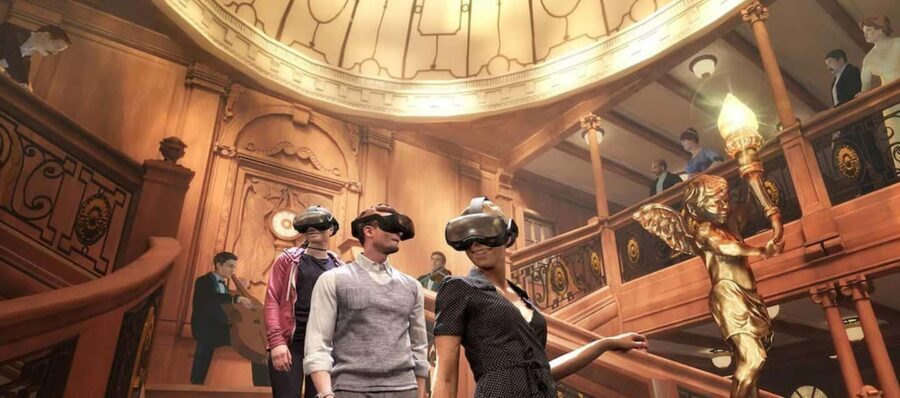
VR makes the Titanic feel uncomfortably real. This London Titanic: Echoes from the Past experience lets you see the ship’s Grand Staircase and key Edwardian moments through a fully VR, guided story. You’re not just watching history on a screen—you’re standing inside it.
I also love the way the show builds a chain from the wreck to the people. You start at the 3,800-metre deep Atlantic remains, then the story shifts into 1912 by recovering lost film reels tied to William Harbeck. The main drawback is simple: it’s not for everyone—this venue isn’t wheelchair accessible, and it’s not suitable for kids under 8 or for people with heart problems.
In This Review
- Key things that make this Titanic VR different
- Titanic VR in London: what the 30 minutes is really like
- Where to go on Camden High Street (and why location matters)
- The Atlantic descent: seeing the wreckage at 3,800 metres down
- William Harbeck’s film reels: the clever bridge to 1912
- The Grand Staircase and the Edwardian spaces you can look at
- The emotional story: dreams, innovation, and loss
- Price check: is $41 worth it for Titanic VR?
- Practical tips so the experience works for you
- Reviews snapshot: what people are praising most
- Should you book Titanic: Echoes from the Past in London?
- FAQ
- Where is the meeting point for Titanic: Echoes from the Past?
- How long is the VR experience?
- Is this a fully VR experience or just a video show?
- What languages are available for the host or greeter?
- What is the minimum height requirement?
- Is the venue wheelchair accessible?
- Is it suitable for young children?
- What’s the cancellation policy?
Key things that make this Titanic VR different
- You tour from your own perspective: the story is designed so you look around at the scenes, not just watch them pass.
- The wreck comes first: you begin with a guided descent to the Titanic’s remains before you go back to 1912.
- William Harbeck’s lost film reels drive the timeline: recovered reels connect the Atlantic wreck to specific onboard locations.
- You visit iconic spaces: the experience highlights the Edwardian luxury you associate with Titanic—especially the Grand Staircase.
- It’s a short, focused session: at 30 minutes, it’s tightly packed rather than stretched into a long show.
Titanic VR in London: what the 30 minutes is really like
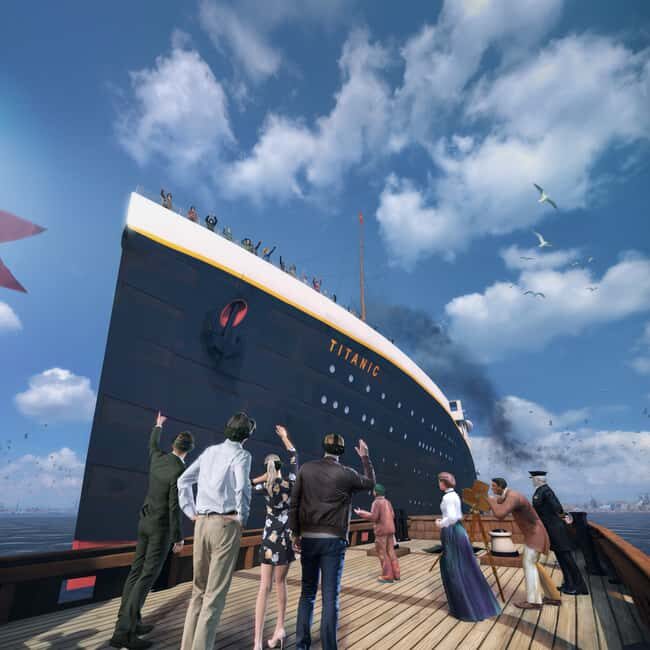
This is one of those experiences where the headline is Titanic, but the real hook is format. In 30 minutes, you get a complete VR journey built around storytelling and historically accurate reconstructions. It’s not a museum-style route. It’s not a documentary you can pause. Instead, you’re led through scenes, and the story keeps steering your attention—where to look, what to notice, and when the mood shifts from awe to grief.
If you enjoy learning while you’re physically “in” a place, this one works well. The big benefit is viewpoint. The experience is designed so your attention goes to the ship’s important moments—like first-class areas and the Grand Staircase—using the kind of scale and space you miss when reading or watching from a distance.
The emotional tone matters too. The story doesn’t treat Titanic like a theme park attraction. It frames the final hours as human experience: ambition, innovation, and then loss. That matters, because Titanic is famous—but you don’t always get the feeling of what it meant for real people until you’re guided through it.
You can also read our reviews of more tours and experiences in London.


Where to go on Camden High Street (and why location matters)
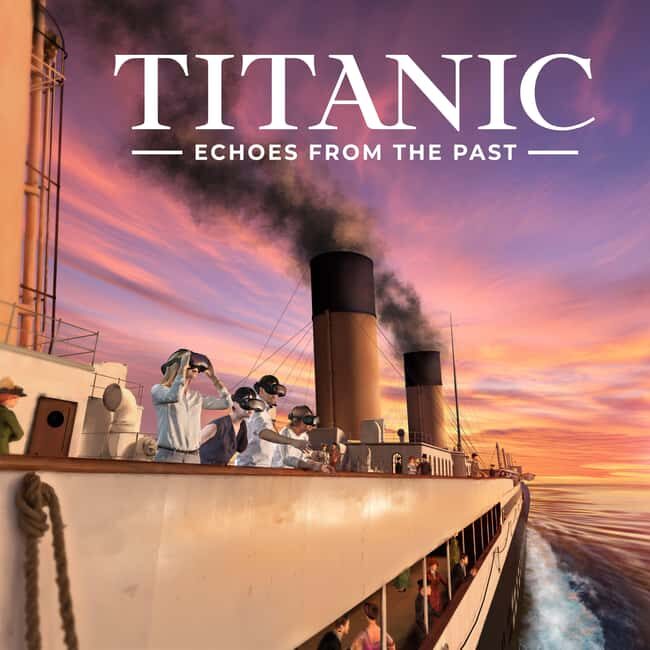
Your meeting point is Eclipso – Immersive Entertainment on Camden High Street, located between JD and Urban Outfitters, nearly opposite the tube station exit. That’s a good setup if you’re already planning a Camden day. You don’t need a special transit plan or a long cab ride. Just build it into your route.
I like that the venue is in a central area. Camden has enough going on that a short, ticketed activity doesn’t feel like a detour. With Titanic VR being 30 minutes, it also pairs nicely with a meal or a walk right after, rather than eating up most of your day.
One small practical note: the venue lists no wheelchair access and a minimum height of 1.10m. So if you’re traveling with anyone who might need accessibility support, you’ll want to double-check before you plan the rest of the day.
The Atlantic descent: seeing the wreckage at 3,800 metres down
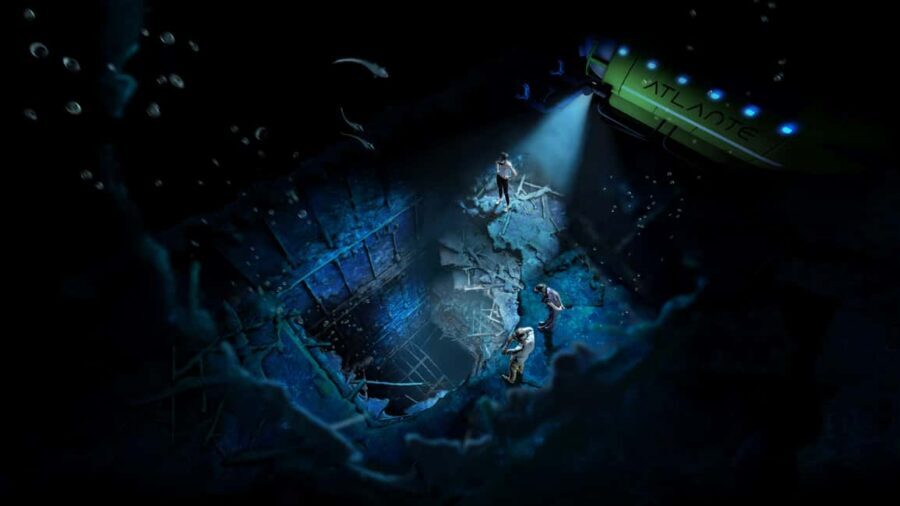
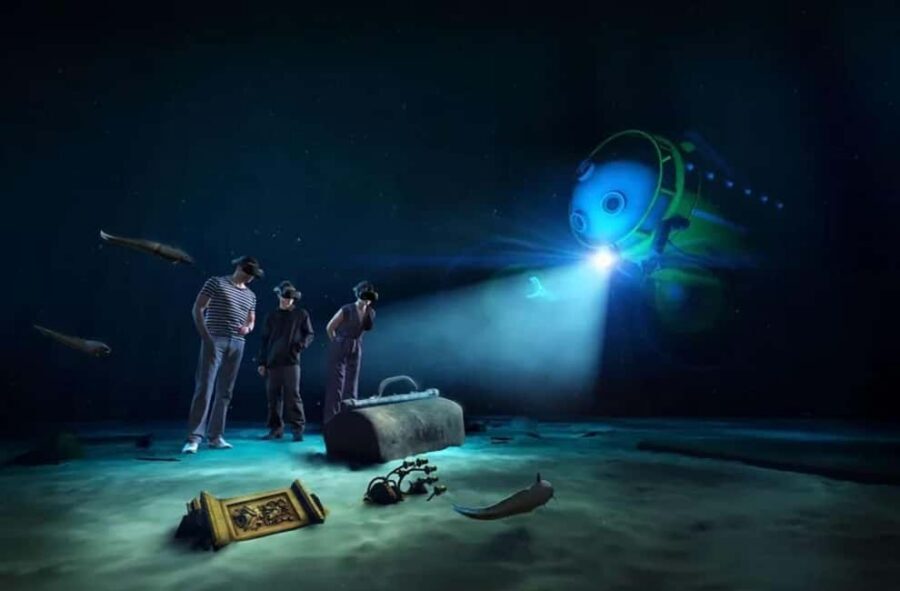
The experience starts in the present day. You’re guided through a virtual descent to about 3,800 metres beneath the Atlantic Ocean, where the Titanic’s remains rest. The narrative point is clear: before you learn about what happened on the ship, you first confront what it became.
What makes this part compelling is the change in scale and mood. Titanic isn’t just a story of ice and ships. It’s a wreck site—twisted steel, haunting detail, and the sense of depth you don’t get from flat photos. VR can’t recreate the ocean pressure or the cold in your bones, but it can create the feeling of being placed in an environment that’s out of reach in real life.
It also sets expectations for the rest of the timeline. Once you’ve seen the remains, the 1912 scenes hit differently. They feel less like history clips and more like a contrast: the same place, seen across time.
William Harbeck’s film reels: the clever bridge to 1912
After the wreck, the story shifts into a very specific type of storytelling device: lost film reels recovered from William Harbeck, Titanic’s official filmmaker who perished on the maiden voyage.
This is one of the smartest parts of the concept. Instead of jumping straight into generic reenactment, the show uses Harbeck’s recovered lens as the reason you’re seeing onboard moments. It gives the scenes a structure—like you’re piecing together history through what was recorded.
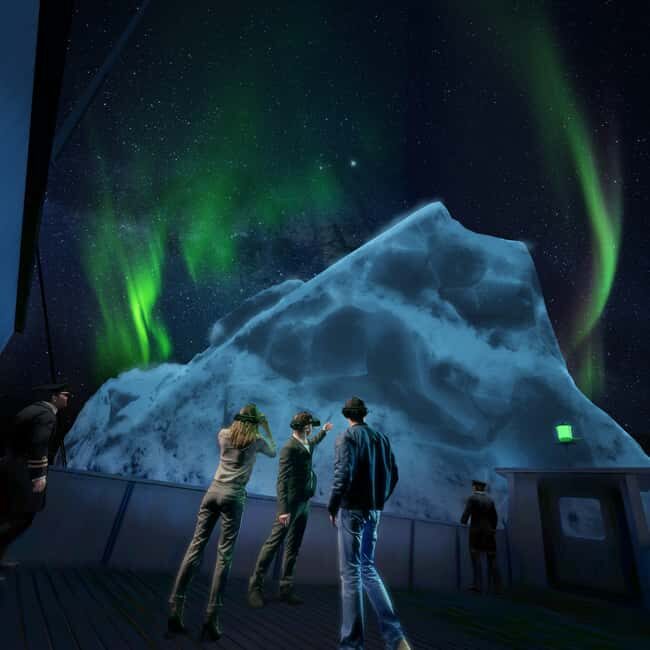
From there, you’re transported back to 1912 and shown key locations aboard the ship. The experience highlights areas such as the engine room and the deck, with multiple iconic spaces built around historically accurate reconstructions. You’re not limited to one or two “postcard” moments. The story is built to move you through different parts of the ship so you get a sense of the whole vessel, not just the famous front-stage areas.
The Grand Staircase and the Edwardian spaces you can look at
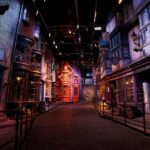
If Titanic has a single visual superstar, it’s the Grand Staircase. This is where the experience leans hard into detail—because the staircase is not just fancy décor. It’s a stage for status, movement, and momentum. In a real ship, people flow through spaces. In VR, you can look and re-look until the layout clicks.
The experience recreates the Grand Staircase in stunning detail and places you in the kind of position where you can take in the design from your own eyes. It also pairs the staircase with other key ship moments, including scenes that reflect the energy of departure day and then the tension of the fateful night.
The show also emphasizes the social contrast of the ship. You get to experience the opulence of first-class areas and stand in scenes alongside passengers from over a century ago. That’s important because Titanic wasn’t just one “classroom” moment. It was thousands of lives in different routines, different spaces, and different worlds within the same hull.
And yes, the experience even includes sensory storytelling cues—like feeling the idea of the ship’s ocean breeze while you’re on a grand boat deck-type space. You’re not going to get real wind and saltwater, but those cues help the scenes land.





The emotional story: dreams, innovation, and loss
The best VR experiences don’t only show objects. They shape your attention. This one tries to shape your attention toward the human weight of what happened.
The narrative centers on more than the sinking. It frames Titanic as a story of dreams and ambition—innovation and new life—and then it brings you to loss. The show explicitly honors those who didn’t return, and it remembers the scale of the tragedy by referencing 2,200 passengers and crew.
That matters because it keeps Titanic from turning into a “how did they mess up?” exercise. It steers the story toward people. You’re meant to feel the pressure growing, not just see the ship’s famous spaces.
The result is that even though it’s a guided VR show, it doesn’t feel like a quick thrill ride. It’s more like a short, well-written time machine that uses historical reconstructions and perspective to make the final hours hit harder.
Price check: is $41 worth it for Titanic VR?
At $41 per person for a 30-minute experience, you should think about value in terms of format and guidance, not just length.
Here’s the practical way I’d judge it:
- You’re paying for a guided, full VR journey, not a self-paced phone video and not a standard museum audio tour.
- You’re getting access to multiple iconic ship spaces and a wreck-to-1912 timeline, including the William Harbeck connection.
- You’re paying for the fact that the experience is designed to make you look around and follow a narrative, which is harder to replicate cheaply with DIY resources.
Is it expensive? London prices can be. But if you like Titanic themes and you enjoy VR as a storytelling tool, the cost can make sense because you get a structured, emotionally toned experience in a short window.
If you dislike VR, get motion sensitivity easily, or prefer to spend hours roaming at your own pace, then $41 for a fixed 30 minutes can feel like a mismatch.
Practical tips so the experience works for you
A few things will help you get more out of the session.
First, go in with the right expectation: this is a fully VR journey with guided storytelling. That means you’ll spend time looking and tracking the narrative rather than sightseeing around a physical space.
Second, plan it like an appointment. Because tickets are limited, don’t treat it as a “maybe we’ll walk in” stop. Pick a time and build your day around it.
Third, bring the basics for comfort. Wear clothing you can move comfortably in, and if you normally wear glasses, make sure you’re comfortable with how you’ll use them in VR. The data doesn’t spell out equipment details, so I can’t promise anything beyond the fact that it’s VR and you’ll be in a headset environment.
Finally, if you’re traveling in a group, check the language options. The host or greeter is listed in Spanish, French, Chinese, and English, so you’ll at least have a real chance of understanding what’s happening and not feeling lost in the story.
Reviews snapshot: what people are praising most
The rating is 4.7 with a small set of top marks. The common thread in the short comments is that people found it amazing. With only a few reviews, you should still trust your own taste. But that pattern lines up with what the format offers: short, guided, story-forward VR that hits the right mix of awe and emotion.
In plain terms: the experience is designed to make the Titanic feel less like trivia and more like a lived event.
Should you book Titanic: Echoes from the Past in London?
I’d book it if you want a Titanic experience that’s more than reading facts and more than standing in a room with posters. You get a structured timeline: wreckage first, then 1912 through William Harbeck’s recovered film reels, plus a standout stop at the Grand Staircase.
I’d skip it if you don’t do well with VR formats, need wheelchair access, or you’re bringing kids under 8. This venue also flags heart problems as a reason it’s not suitable, so be cautious with health considerations.
If you’re visiting London and you like experiences that are time-efficient but memorable, Titanic VR is a strong option. It’s also a good fit for a rainy day or when you want a powerful story without adding hours of walking.
FAQ
Where is the meeting point for Titanic: Echoes from the Past?
You meet at Eclipso – Immersive Entertainment on Camden High Street, between JD and Urban Outfitters, nearly opposite a tube station exit.
How long is the VR experience?
The experience lasts 30 minutes.
Is this a fully VR experience or just a video show?
It’s a fully VR journey, with a guided immersive VR experience.
What languages are available for the host or greeter?
The host or greeter is available in Spanish, French, Chinese, and English.
What is the minimum height requirement?
Guests must be at least 1.10m tall.
Is the venue wheelchair accessible?
No. The venue is not wheelchair accessible, and it’s also listed as not suitable for wheelchair users.
Is it suitable for young children?
It’s not suitable for children under 8 years.
What’s the cancellation policy?
You can cancel up to 24 hours in advance for a full refund.