REVIEW · NEWQUAY
Newquay: 2 hour Surf Experience – For Beginners/Improvers
Book on GetYourGuide →Operated by Escape Surf School · Bookable on GetYourGuide
Cornwall’s surf energy hits fast. This 2-hour Newquay session pairs ex-professional surfers with a clear progression from beach basics to catching waves. I especially like the small group limit of 7, which keeps coaching direct, and I like the teaching method that helps you stand with control. The main drawback to plan around is that lesson times can shift with tides and conditions, so you’ll want flexibility.
The setup is simple: you meet at the sea-facing terrace at Belushi’s Bar and Restaurant, get sorted, then spend about 20 minutes on the beach before you head into the water. After that, it’s coached wave time for your level—either first-lesson fundamentals or improver tweaks to help you paddle better, turn more smoothly, and read what the ocean is doing.
If you’re a non-swimmer or you need mobility support, this one isn’t listed for you, so it’s worth checking before you book.
In This Review
- Key Highlights You’ll Care About
- Entering the Lesson Zone at Belushi’s Sea-Facing Terrace
- What Happens in the First 20 Minutes on the Beach
- Beginner-Friendly Coaching: The Board-Tail Stand Method
- Then It’s Ocean Time: Catch Waves With Hands-On Feedback
- If You’ve Surfed Before: Paddling, Turning, and Reading the Ocean
- The Small-Group Advantage (Max 7) for Real Progress
- Gear, Comfort, and After-Surf Convenience That Add Value
- Timing, Tide Shifts, and Why Flexibility Helps
- Where This Surf Session Fits in Your Cornwall Plan
- Who Should Book This Lesson (and Who Should Skip)
- What People Seem to Love Most About the Session
- Should You Book Escape Surf School’s 2-Hour Beginner/Improver Session?
- FAQ
- How long is the Newquay surf experience?
- What’s included in the price?
- Where do I meet for the lesson?
- Do I need to bring a towel and swimwear?
- Is this lesson only for beginners?
- Are there showers and changing rooms?
- Are surf photos included?
Key Highlights You’ll Care About
- Ex-pro head instructors and hands-on coaching designed for real progress, not just board time
- Beginner method that steadies your stand using the board tail for stability
- Improver coaching in real conditions with focus on paddling, turning, and reading waves
- Small groups (max 7) so you’re not waiting while others figure it out
- Gear + winter warmth included with wetsuit, plus boots/gloves/hood in colder months
- On-site comfort extras like changing rooms, toilets, hot showers, and a water refill station
Entering the Lesson Zone at Belushi’s Sea-Facing Terrace
Your surf session starts on the same premises as Belushi’s Bar and Restaurant, on the sea-facing terrace. That matters more than it sounds. You’re already in the right “surf mode” zone—close to where you’ll gear up and head out—so you lose less time hunting for the right beach point or trying to figure out logistics.
You’ll also see why this setup works for a 2-hour lesson. In a short session, every minute counts. The staff keep you moving from check-in to wetsuit and into the day’s plan without dragging the timeline.
One more practical note: the provider says the start time can vary slightly because the lesson depends on tide times and conditions. That doesn’t mean anything is chaotic. It just means you should treat the booked time as a starting reference, then wait for confirmation after booking.
You can also read our reviews of more tours and experiences in Newquay.


What Happens in the First 20 Minutes on the Beach
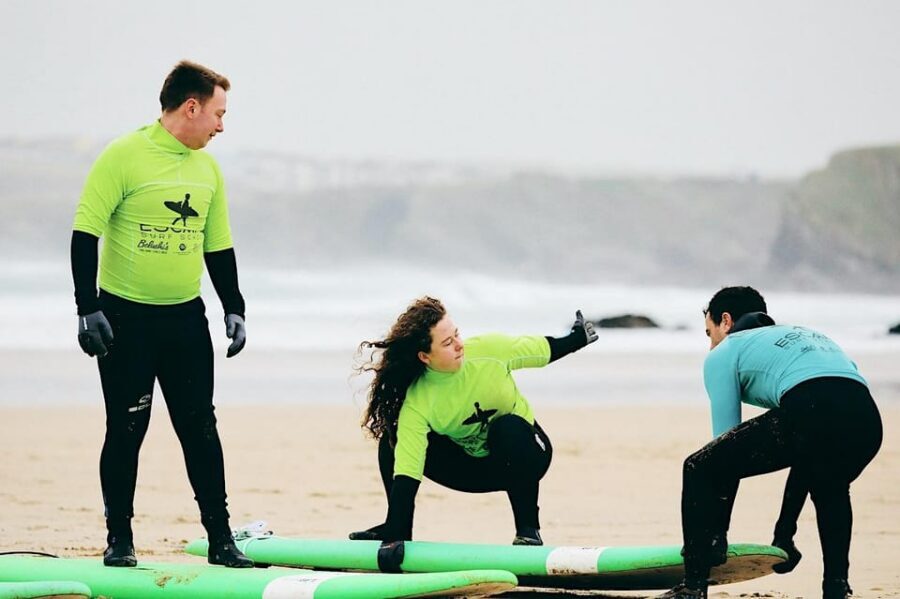
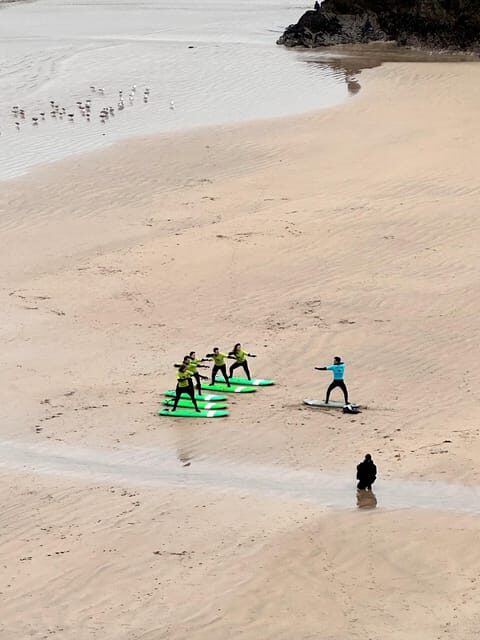
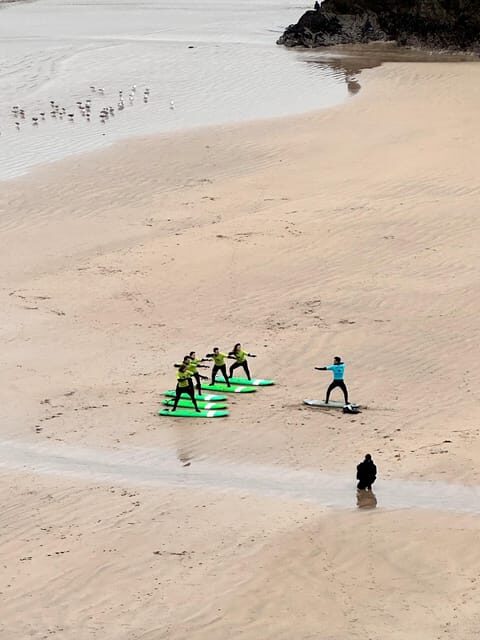
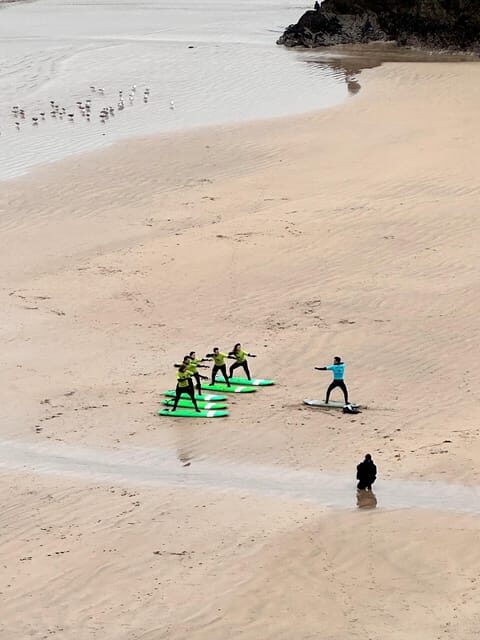
Before you’re anywhere near the surf zone, you get a structured beach briefing—about 20 minutes. This is where the lesson pays off, because they’re not just handing you a board and hoping for the best. You’ll go over the skills and safety basics you need to surf with control.
For first-timers, this beach time typically covers the core “how to do it” points: how to handle your board, how to position yourself, and how to translate the idea of surfing into something physical you can repeat. For improvers, the beach talk is more about refinement—how to improve technique and set up for better wave selection.
And yes, groups get split by ability. That’s a big deal. If you’re brand new, you don’t want your whole session geared toward people who already know how to catch waves. If you’ve surfed a few times, you also don’t want a slow pace. Their ability-based grouping keeps the coaching relevant.
Beginner-Friendly Coaching: The Board-Tail Stand Method
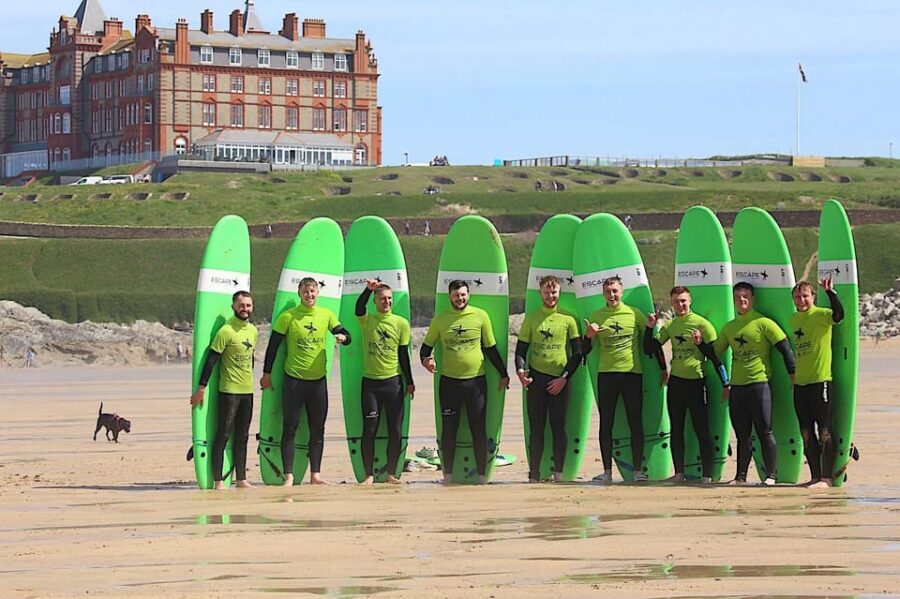
Here’s one of the most distinctive parts of this surf school’s beginner approach. They use an innovative teaching method that involves holding the tail of the board while you get to your feet. In plain terms: you get help stabilizing the board during the stand, then you release so you can experience the ride feeling for yourself.
Why this works: standing up on a surfboard is the hardest part for most beginners because your body is trying to do three things at once—balance, timing, and movement while the ocean keeps changing. By stabilizing the board at the key moment, you get faster feedback. You spend more time practicing the “stand” sequence and less time battling your footing.
You’ll still learn the real mechanics, but the session is built to help you connect what the instructor is saying with what your body is doing. And for a beginner, that’s how you avoid the common trap of going out, falling off repeatedly, and quitting early.
If you’re worried about feeling awkward: this method is designed to make your first real wave moments possible.
Then It’s Ocean Time: Catch Waves With Hands-On Feedback
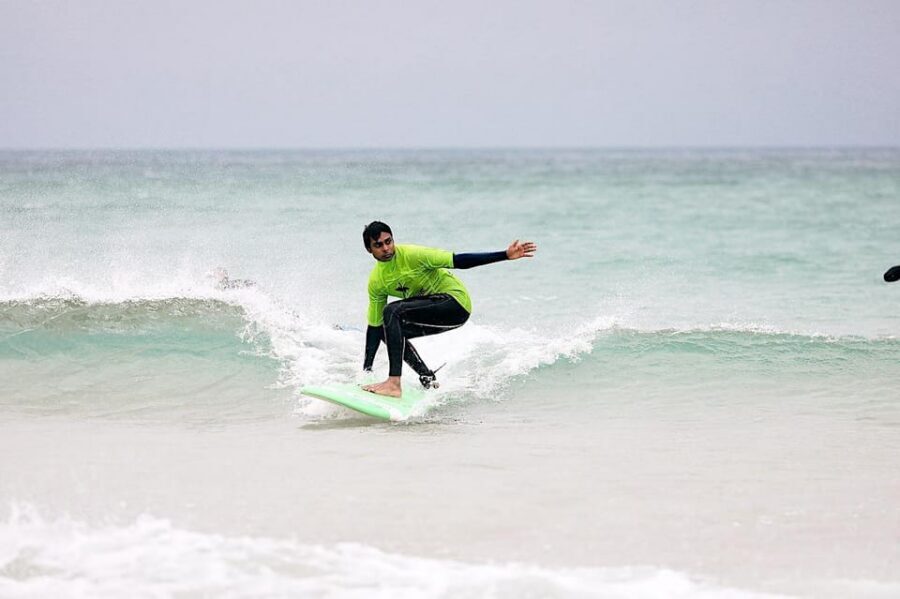
After the beach briefing, the remaining lesson time is spent in the ocean catching waves. This is where small-group coaching matters most. With a group capped at 7 participants, you’re more likely to get specific corrections rather than general advice that fits nobody perfectly.
The surf coaches are in the water with you, and coaching is hands-on in the sense that they guide you on technique and what to focus on next. You’re not left to interpret the ocean alone.
Also, this is a two-hour session, so pacing is built in. You’re not waiting through long breaks. You’re getting a flow of learning, trying, and adjusting.
If You’ve Surfed Before: Paddling, Turning, and Reading the Ocean
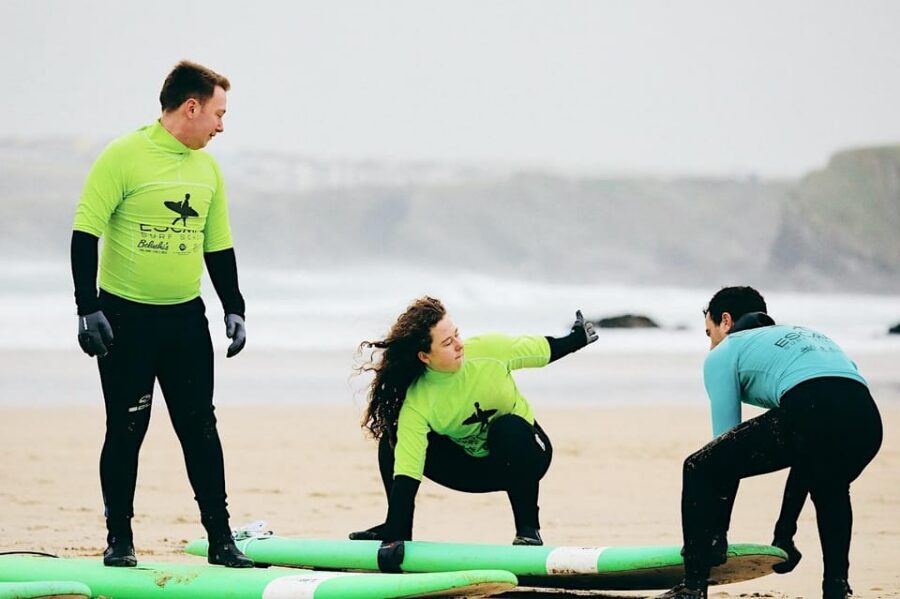
If you’ve surfed a few times already, this isn’t a repeat of beginner basics. You join an improver group and the session shifts toward technique and wave performance.
The lesson description calls out coaching for paddling, turning, and reading the ocean. That’s the trio that usually separates “I stood up once” from “I can ride more than one wave.”
- Better paddling helps you get into position faster and reduces how much you burn out before the set arrives.
- Improved turning is about control—adjusting direction and staying balanced while the wave carries you.
- Learning to read the ocean helps you anticipate where the wave will break and when to commit.
Even if you’re an improver, this style of coaching is still useful because it targets the moments that affect your consistency, not just your ability to stand.

The Small-Group Advantage (Max 7) for Real Progress
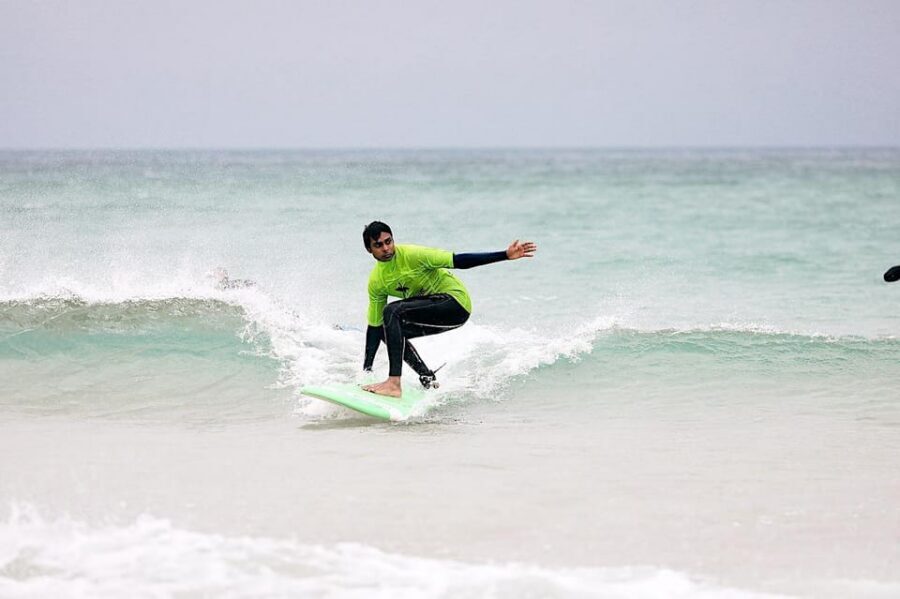
In lessons like this, group size changes everything. At 7 participants max, the instructors can observe your body position and timing closely. That means corrections can happen while it still makes sense in your head.
You can also ask questions without feeling like you’re interrupting the flow. Beach coaching is structured, but the ocean coaching is where you learn fastest because it’s immediate: try, fail, adjust, try again.
That’s why this type of lesson tends to create a satisfying end feeling—more control, more waves caught, and a clearer idea of what to practice next.
Gear, Comfort, and After-Surf Convenience That Add Value
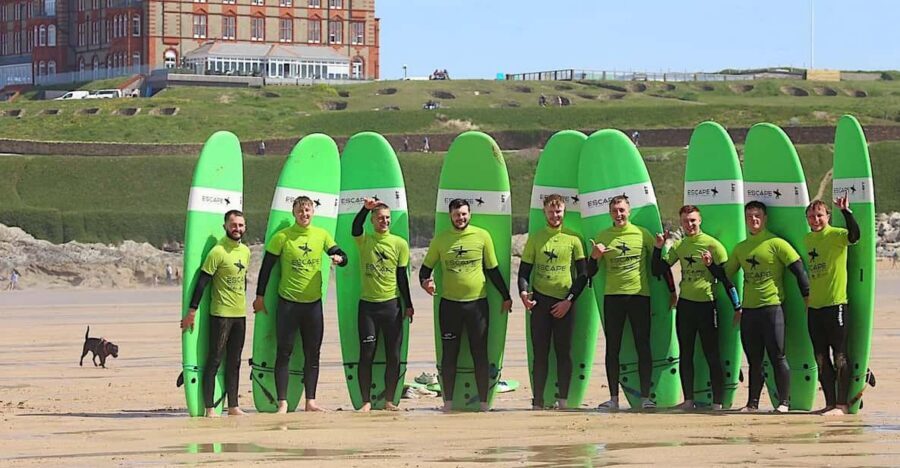
At around $60.61 per person, you’re paying for a guided lesson, not just renting a board. The value is boosted by what’s included.
Included in the lesson:
- surfboard and wetsuit
- winter months include boots, gloves, and a hood
- secure changing rooms with hairdryers and storage
- toilets
- hot showers with eco-friendly shampoo bars
- a water station to refill bottles
- 25% off food at the restaurant on site for surfers
These extras matter more than you might think. Getting cold after a surf session isn’t just uncomfortable—it can end your day fast. Hot showers and a practical way to rinse gear help you keep your energy for exploring Newquay.
The secure changing rooms and storage are also real convenience. Surf days bring sand and wet stuff. If you’re juggling belongings, it’s easy to feel stressed. Here, you can drop items and keep the logistics simple.
Not included:
- photos. There’s a freelance photographer, and photos come with a separate charge.
If you’re photo-minded, ask about the photographer’s process the day of your lesson. If you’re not, you can save the money and just focus on the session.
Timing, Tide Shifts, and Why Flexibility Helps
This lesson lasts 2 hours, but your actual start time can vary because it depends on tide and conditions. They run both morning and afternoon lessons in spring/summer and only one lesson a day in winter months.
Once you book, you’ll get a message to confirm your specific lesson start time because tides can make a difference in wave quality and safety. The practical takeaway: don’t schedule a tight dinner right after. Leave yourself a buffer.
If you’re traveling with a family, timing flexibility can also prevent stress. The lesson is short, so you’ll want the rest of your day to be forgiving.
Where This Surf Session Fits in Your Cornwall Plan
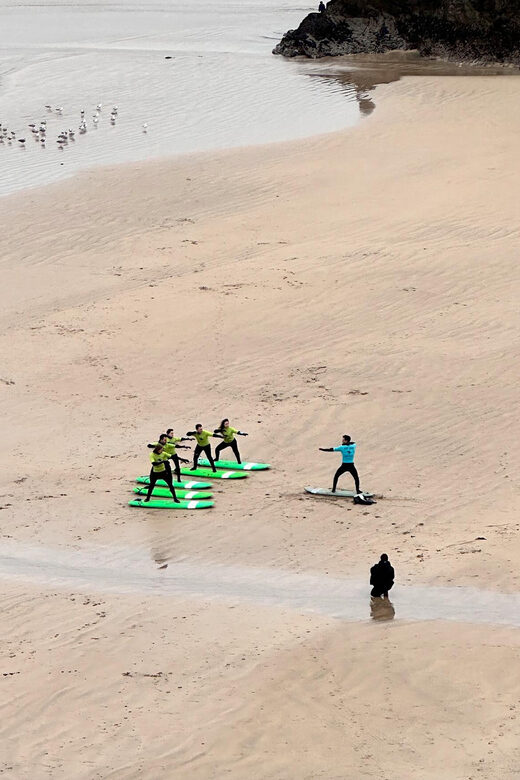
Newquay is built for surf, and this lesson uses that. You’re not traveling across the county for a tiny burst of action. The meeting point is already right at the sea-facing terrace area, which makes the experience feel like part of the coast rather than a far-off activity.
Because the lesson is structured for both beginners and improvers, it also fits mixed skill travel days. You can plan your group’s surf time without needing separate complicated providers for each person’s level.
And if you’re bringing kids, there are kids-only lessons in the holidays for ages 8–13. That’s a strong option for families who want social energy plus real instruction, but you’ll want to time it to holiday periods.
Who Should Book This Lesson (and Who Should Skip)
This experience is a great fit if:
- you’re a beginner and want a guided way to stand and catch waves safely
- you’ve surfed a few times and want technique improvements
- you value hands-on coaching with a small group
- you want gear and after-surf comfort included
Skip it if:
- you’re a non-swimmer (not suitable)
- you need support for mobility impairments (not suitable)
One more thought: if you’re the type who gets discouraged by repeated wipeouts, this lesson’s beginner method and group splitting can help. The structure is designed to move you forward rather than keep you stuck.
What People Seem to Love Most About the Session
The strongest recurring themes are simple: the coaching feels clear, and the session creates a real sense of progress.
One instructor is mentioned by name: Richard, known as Pigeon. People describe him as a friendly instructor who teaches in a way that gets you improving during the same two-hour session. Another big point is the achievement feeling at the end—standing, catching more waves, and getting better with each turn of the wave.
There’s also a family-friendly win. One parent and daughter scenario highlights that by the end of the lesson, the beginner goal was achieved—surfing successfully rather than just watching others.
And the beach setting itself gets praise, with the coastline described as beautiful. That’s not just scenery—it matters because it makes the time feel like a genuine coastal experience, not a rushed activity.
Should You Book Escape Surf School’s 2-Hour Beginner/Improver Session?
Yes—if your goal is to actually get better during a short time.
Book it if you want:
- small-group coaching (max 7)
- included gear and practical comfort (showers, changing rooms, water refill)
- clear progression from beach basics to ocean wave time
- a teaching approach that helps beginners stand sooner using the board-tail method
I’d think twice if you can’t be flexible with tides, or if you’re a non-swimmer / need mobility support, since the activity isn’t listed as suitable.
If you’re on the fence, here’s the simplest way to decide: if you want a surf lesson that’s structured for beginners and still meaningful for improvers, this one is built for that sweet spot.
FAQ
How long is the Newquay surf experience?
It’s a 2-hour lesson. Start times vary based on tides and conditions, so you’ll receive confirmation after booking.
What’s included in the price?
The lesson includes all equipment (surfboard and wetsuit). In winter months, boots, gloves, and a hood are included too.
Where do I meet for the lesson?
You meet at the premises shared with Belushi’s Bar and Restaurant, on the sea-facing terrace. The activity ends back at the same meeting point.
Do I need to bring a towel and swimwear?
Yes. You should bring swimwear and a towel. Sandals are also recommended.
Is this lesson only for beginners?
No. It’s for beginners and improvers. Groups are split by ability, and if you’ve surfed before you join an improver group.
Are there showers and changing rooms?
Yes. There are secure changing rooms with hairdryers and storage, plus toilets and hot showers with eco-friendly shampoo bars.
Are surf photos included?
No. A freelance photographer may take photos, but you’ll pay a separate fee for surf photos.