REVIEW · NEWQUAY
Newquay: Coasteering
Book on GetYourGuide →Operated by Newquay Activity Centre · Bookable on GetYourGuide
A cold wetsuit and warm laughs are a great combo. Newquay coasteering is a hands-on way to explore Cornwall’s coast with big jumps, cave features, and practical skill-building led by instructors like Rosie and Harrison. You’ll get taught how to move safely across wet rock, enter the water correctly, and scramble into sea tunnels.
I especially love how much instruction you get for the actual moves you’ll do—jumping, water entry/exit, and traversing—so you’re not just along for the adrenaline. The small group size (up to 8) also keeps the attention on technique, not crowd control.
One thing to consider: it’s more demanding than people expect, and the shower/changing setup can feel busy since it’s a compact centre with a limited changing room.
In This Review
- Key takeaways before you go
- Newquay coasteering: why 2 hours feels like the right amount
- Safety briefing and gear: what you get before you even reach the coast
- The coast route: caves, jumps, gully crossings, and sea-tunnel scrambling
- Sluices, rapids, and wash troughs: the skills that make you steadier
- Marine wildlife spotting and local coastal know-how
- Gear-up to clean-up: small group coaching plus heated showers
- Equipment included, plus discounts that actually offset the cost
- Who this suits best (and who should skip coasteering)
- Should you book Newquay coasteering?
- FAQ
- What’s included in the coasteering experience?
- How long is the activity?
- What group size is this tour?
- Is food and drink included?
- Is it okay if I don’t want to do every jump or section?
- Who can join, and who can’t?
Key takeaways before you go
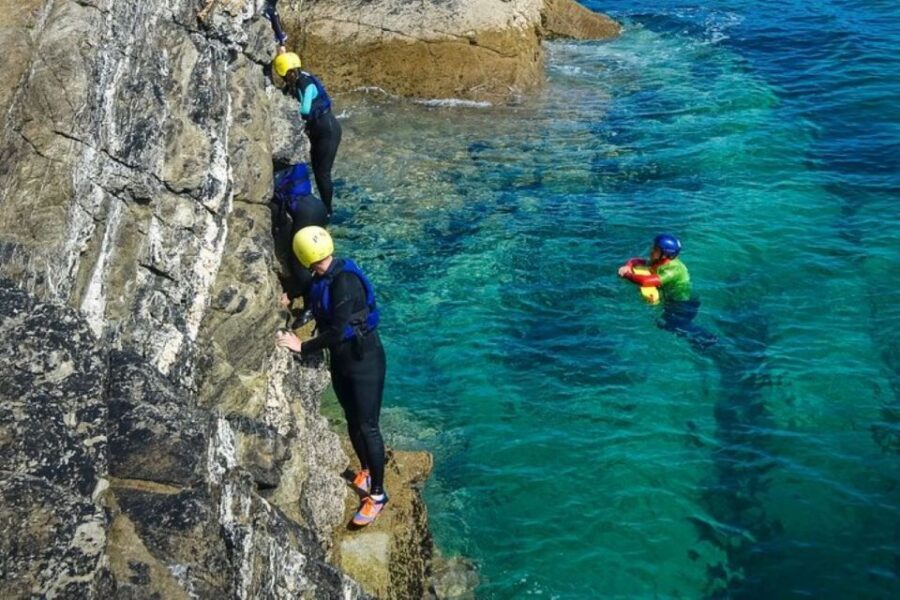
- Equipment is included, with wetsuit, buoyancy aid, and helmet, plus insurance for a more worry-free experience.
- You get taught technique, not just a route—how to scramble, jump, and move across the shoreline safely.
- The route mixes variety: cave features, deep-water jumps, horizontal climbing, sea tunnels, and wet-rock traverses.
- A no-pressure approach exists—if you want to skip a section or a jump, you can.
- Expect marine life and local knowledge, with the team sharing what you’re seeing along the coast.
- Facilities are a plus, including heated changing rooms, hot showers, and male + female toilets.
Newquay coasteering: why 2 hours feels like the right amount
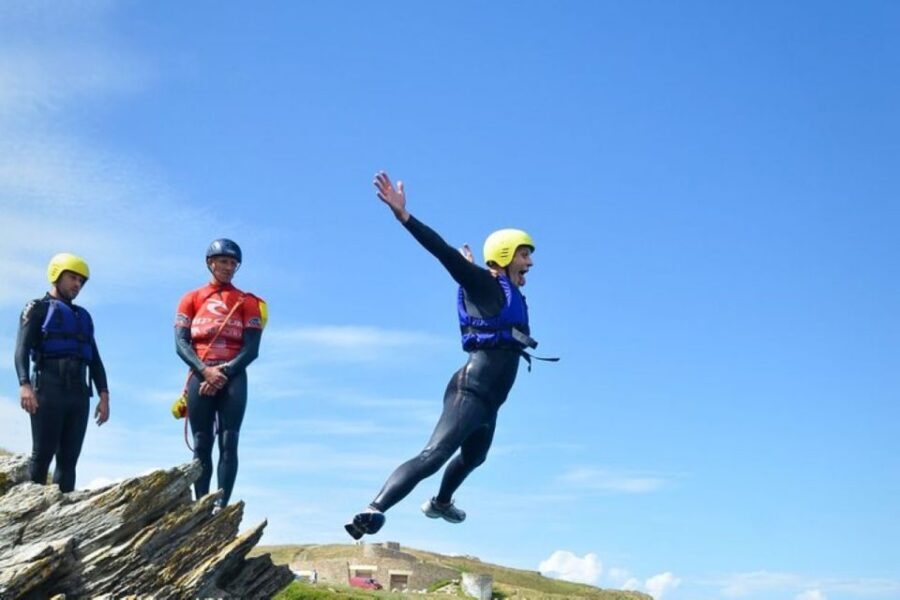
Newquay coasteering is built for people who want real action without a full day of logistics. The duration is 2 hours, which means you’ll get a proper session of jumps, scrambles, and water crossings while keeping the trip tight and manageable. You also check availability for starting times, so you can usually fit it around other Newquay plans.
Small-group limits matter here. With no more than 8 participants, you’re more likely to get direct coaching when you’re figuring out how to move your body on rock slick with sea spray. It also makes the whole thing feel less like a conveyor belt and more like guided outdoor play with safety guardrails.
The vibe is adventure, but it’s not reckless. You’ll be learning how to do specific movements—like water entry/exit and traversing—so the time doesn’t just disappear into chaos.
You can also read our reviews of more tours and experiences in Newquay.


Safety briefing and gear: what you get before you even reach the coast
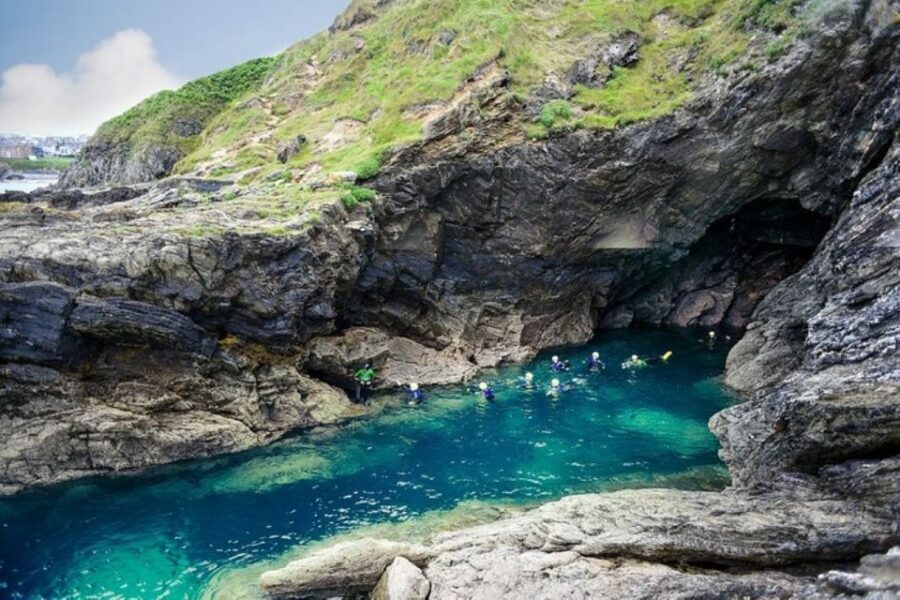
This is the part that makes coasteering feel approachable even when it’s physically challenging. Before anything wild happens, you get a full safety briefing plus a lesson in correct techniques for traversing, jumping, and water entry/exit. That matters because coasteering isn’t just about being brave—it’s about doing the next step correctly.
Your kit is included, and it’s not optional add-on fluff. You’ll receive a wetsuit, buoyancy aid, and helmet, which are the basic layers of protection for cold water, impact risk, and moving in and out of the sea. Insurance is also included with the gear package, so you’re covered for the activity itself rather than scrambling to sort out paperwork last minute.
You’ll also have a lock box for valuables and clothes storage. That single detail is surprisingly practical: it reduces the stress of bringing the wrong stuff and helps you focus on learning the skills you came for.
The coast route: caves, jumps, gully crossings, and sea-tunnel scrambling
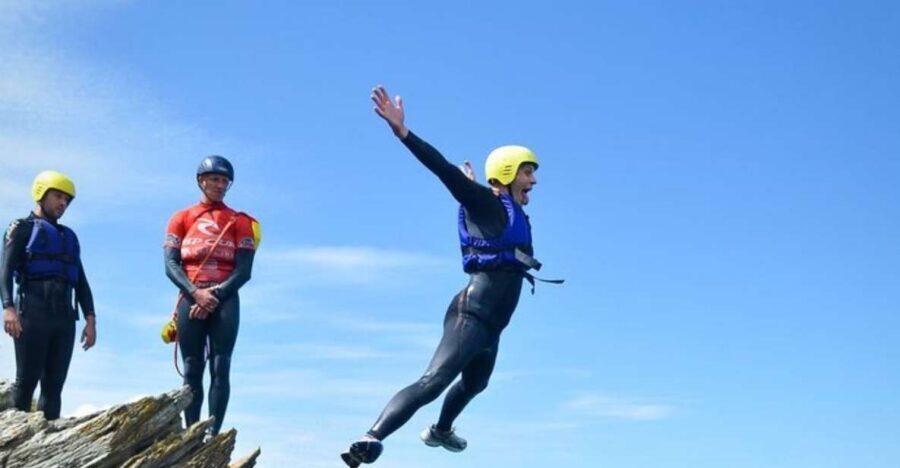
Coasteering in Newquay isn’t one-note. Your route is designed to mix different kinds of movement so you don’t just repeat the same motion over and over.
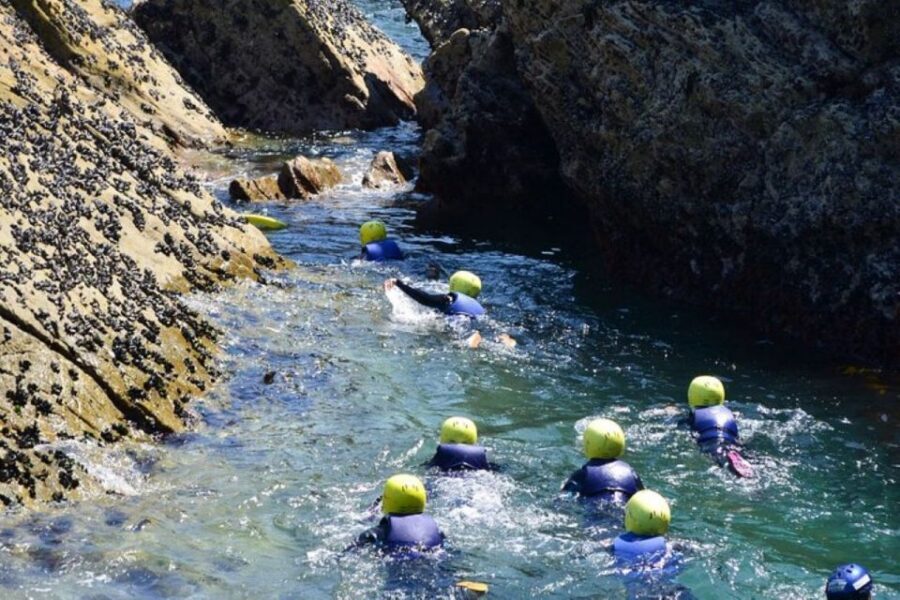
You start by encountering a cave with natural features, where you’ll learn how to handle tight, slippery spaces and move with control. From there, you’ll work up to big jumps into a crystal-clear deep-water gully. Expect the water entry to be part of the skill set you practice, not just the end point.
After the jump(s), you’ll do strenuous but enjoyable traverses—think horizontal climbing—where you move along wet rock and shoreline edges while using the right body position. This is where good coaching pays off. When you know how to place your weight and how to transition between steps, the route starts to feel more like a controlled challenge.
You’ll also tackle sea tunnels. The focus isn’t on speed; it’s on learning how to scramble and move into these spaces without getting hurt. You’ll be taught how to approach the entry/exit steps so you can keep your balance and avoid panicked flailing.
Sluices, rapids, and wash troughs: the skills that make you steadier
A big part of coasteering is water flow—small and big. Your instruction includes how to cross sluices and natural rapids, plus how to handle large gully wash troughs. These aren’t just obstacles; they’re part of what makes the coast feel alive and unpredictable.
What I like about this approach is that you’re not left guessing. You get knowledge of the technique to use where water is moving fast or where waves can pull. That turns the scariest moments into manageable steps, because you know what your body is supposed to do next.
Even if you’re fit, you’ll likely be learning under new conditions: wet rock, uneven footing, and moving water all at once. This is why the coaching matters so much. Good technique reduces wasted effort, and you’ll spend less energy fighting the environment and more energy enjoying the route.
Marine wildlife spotting and local coastal know-how
You’ll encounter marine animals along the route, and the team shares what you’re seeing. In one example, instructors like Rosie and Harrison are the kind of guides who help you notice the coast beyond the adrenaline—spotting animals and explaining what’s going on at sea level while you’re still geared up and moving.
You’ll also hear wildlife and coastal heritage information as you go. You don’t need to be a science nerd for this to land. It’s the practical kind of context: what species you might see, why certain spots feel different, and how the coast changes with tide and weather.
This adds real value because it changes the activity from only a thrill ride to something you can talk about later with specifics.
Gear-up to clean-up: small group coaching plus heated showers
After you’ve been in and out of the water, the post-session comfort matters more than people think. Here you get heated changing rooms and hot showers, plus male + female toilets. There’s also an environment that’s meant to feel low-pressure, which helps if you’re nervous before you start.
The small group setup also helps with the flow of changing and getting back into dry clothes. Still, one consideration is practical: the shower facilities and changing room can feel tight if more people share the same time window. If that’s a concern for you, plan to use the facilities promptly after the session so you’re not waiting around in wet gear.
A nice bonus is the extras for downtime after coasteering. You’ll get a discount card for food and drink at local bars and cafes, which is a helpful way to turn your adrenaline into an actual meal without hunting for cash deals.
Equipment included, plus discounts that actually offset the cost
At about $74 per person for roughly 2 hours, the value depends on what you get included—and you do get a lot for that price.
What’s covered:
- Wetsuit, buoyancy aid, helmet
- Insurance
- Full safety briefing
- Comprehensive technique instruction
- Lock box for valuables and clothes storage
- Wildlife and coastal heritage information
- A 10% discount on further Newquay Activity Centre activities
- Apres coasteer discount card for local food and drink
- 15% off at the Rip Curl store
- Options like a dog sitter if needed (you contact them for details)
That bundle is meaningful. If you were paying separately for a wetsuit, guided instruction, safety gear, and a structured activity, the costs stack up fast. Here, you’re buying a guided experience where the company supplies the gear and the lesson—so you show up ready, not stuck sorting equipment.
Also, the experience includes a no-pressure option. If you’d like to miss a section or a jump, that’s allowed. For many people, that reduces anxiety and helps you still enjoy the parts you’re comfortable with.
Food and drinks are not included, so you’ll want to plan around that. But the local apres discounts make it easier to grab something simple afterward.
Who this suits best (and who should skip coasteering)
This activity is clearly aimed at people who want active outdoor fun and don’t mind getting wet. You should be prepared for strenuous moments and the mental reset that comes with moving on rock near deep water.
It’s not suitable for people with mobility impairments, and it’s also not for children under 8. If you’re within the age range, you’ll still want to be honest with yourself about comfort around cold water, heights, and scrambling.
Best fit:
- You like adrenaline, but you want skill instruction so it feels safer.
- You enjoy learning how to move—jump, scramble, traverse—rather than only watching.
- You want a small-group UK seaside adventure in South West England that doesn’t eat your whole day.
If you hate the idea of getting wet, or if you’re likely to panic at the thought of jumps and uneven footing, this could feel like a rough match even with the no-pressure options. Coasteering can be controlled, but it still requires a willingness to participate.
Should you book Newquay coasteering?
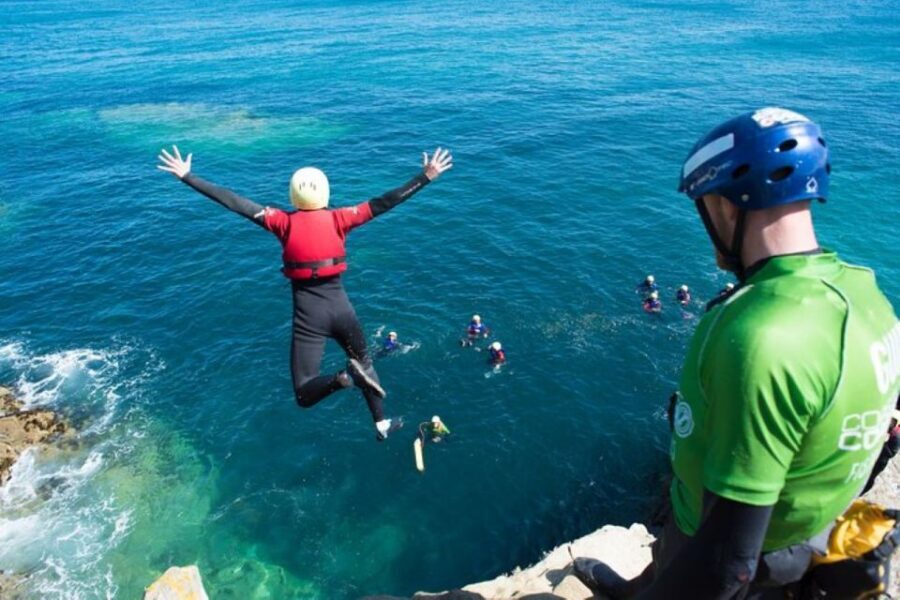
If you want a guided activity that mixes real coastline exploration with training that makes you steadier—then yes, you should seriously consider booking Newquay coasteering. The combination of included safety gear, technique-led instruction, and a small group size is a strong recipe for value and confidence.
I’d especially book if you’re the type who wants to leave with more than photos—someone who wants to understand how to cross wet rock safely, how to enter the water correctly, and how to tackle sea-tunnel scrambling without getting hurt.
If your main goal is a gentle stroll with views, this is probably not the right match. Coasteering is active, and this route includes deep-water jumps, traverses, and water-flow crossings.
FAQ
What’s included in the coasteering experience?
You get industry-leading coasteer instructors, a wetsuit, buoyancy aid, helmet, insurance, a lock box for valuables and clothes storage, heated changing rooms, hot showers, male + female toilets, and a full safety briefing with comprehensive instruction on the correct techniques.
How long is the activity?
The coasteering session lasts 2 hours.
What group size is this tour?
It’s a small group, limited to 8 participants.
Is food and drink included?
No. Food and drinks are not included.
Is it okay if I don’t want to do every jump or section?
Yes. The experience is set up as a no-pressure environment. If you’d like to miss a section or a jump, you can.
Who can join, and who can’t?
It’s not suitable for people with mobility impairments, and it’s not suitable for children under 8 years old. The instruction is in English.