
REVIEW · SOUTHAMPTON
Private Southampton Walking Tour
Book on GetYourGuide →Operated by Travelusion · Bookable on GetYourGuide
Southampton history hits hard when you walk it. This private walking tour strings together the town’s big chapters, from the Middle Ages through the Second World War, using real streets and landmarks you can actually see. You start at the Bargate and cover key sights tied to the port’s story, including the Mayflower and Titanic connections, with a guide ready to shape the route around your interests.
Two things I really like are the way you can set the pace and ask questions as you go, and the lineup of sights you’ll pass along the way. You get a focused tour of city fortifications like the City Walls, then landmarks such as the Tudor House, plus churches and memorials that connect Southampton’s maritime legacy to world events.
One possible drawback: you are committing to a solid 1.5 hours of walking, rain or shine. If you’re not comfortable on your feet for that long, you’ll want to plan around breaks and movement needs early.
In This Review
- Key points worth knowing before you go
- Starting at the Bargate: the perfect way to orient yourself
- Southampton’s City Walls: fortifications that explain the town
- A Tudor House stop: why architecture matters on a short tour
- Churches and local heroes: history beyond the postcards
- The Mayflower memorial: Southampton’s link to big beginnings
- Titanic sites in the city: seeing more than the disaster headline
- From Middle Ages to WWII: the through-line that keeps it coherent
- Who this private Southampton walk is best for
- Price and value: what $31 buys you here
- Weather, shoes, and small logistics that matter
- Guides and storytelling style: what to expect from the people leading you
- Tips for getting the most out of the walk
- Should you book this private Southampton walking tour?
- FAQ
- Where is the meeting point?
- How long is the walking tour?
- Is this tour private?
- What languages are offered?
- Is it wheelchair accessible?
- Is the tour pet-friendly?
- Does the tour include any entry tickets?
- Does it run in bad weather?
- Is there free cancellation?
Key points worth knowing before you go
- Meet at the Bargate lion statue so you can orient fast and start clean.
- Private group means flexibility: your guide can adjust the route to your comfort and questions.
- No entries involved, so you spend time walking and learning instead of queueing.
- Mayflower and Titanic sites are front and center, linking Southampton to major history.
- Mobility friendly and pet friendly, and the walk is generally described as flat and easy to manage.
- Guides speak English and Spanish, so language support is built in.
Starting at the Bargate: the perfect way to orient yourself

If you want to understand Southampton, start with its walls. Your tour meets at the Bargate, specifically by the lion statue, which is a great landmark because it gives you something physical to anchor your brain. Once you’re gathered, the guide sets the tone: this isn’t a checklist tour. It’s a story walk, timed to fit into about 1.5 hours.
The benefit of this start is simple: Southampton’s history is all about defense, trade, and change at the port. The Bargate area puts you close to the older layers of the city, so the rest of your route makes more sense. You’re not just looking at buildings—you’re building a timeline in your head.
The other big win here is that the guide will walk at your pace. That matters more than it sounds. If you like photos, need slower transitions, or want to stop and ask a question, you’re not forced to keep up with a group sprint.
You can also read our reviews of more walking tours in Southampton



Southampton’s City Walls: fortifications that explain the town
Next up, you’ll see the City Walls, and this is where the tour starts to feel extra useful. Walls aren’t just stone; they’re an explanation. They show how Southampton protected itself, controlled movement, and shaped the relationship between town life and the waterfront.
As you walk along, your guide connects the dots between everyday medieval life and later turning points. This is also a spot where you can ask very pointed questions, because the view line and the street layout make it easier to understand what the wall did and why it mattered.
A good walking tour should help you read the city like a map. The City Walls do that. Even if you don’t go inside any historic sites, you’ll leave with a clearer picture of how Southampton evolved.
A Tudor House stop: why architecture matters on a short tour
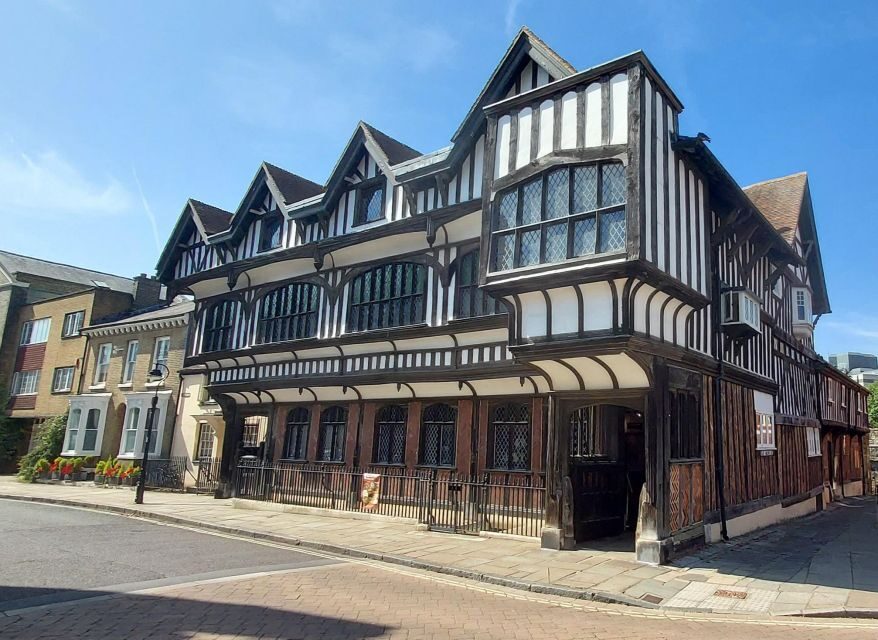
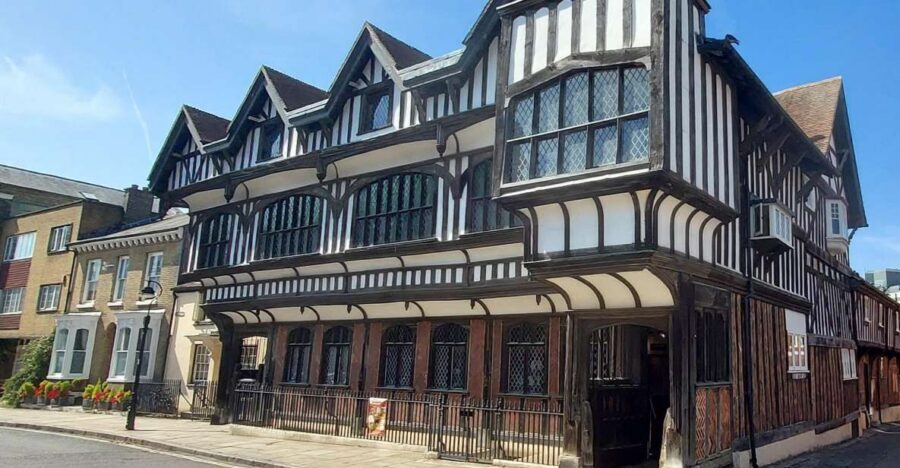
A standout promise of this experience is the famous Tudor House on your route. Tudor-era buildings are a shortcut to understanding the texture of the past—how people lived, how wealth showed up in stone and timber, and how the town kept reinventing itself.
On a tight 1.5-hour tour, it’s smart to include architecture you can recognize and “feel” even from the street. That Tudor stop gives you that. It also gives your guide a chance to explain transitions: how old Southampton didn’t just freeze in time, it kept changing as power, trade, and threats shifted.
If you like history that’s grounded in real neighborhoods, this is one of the spots that makes the tour worth paying for. You’re spending money to avoid the guesswork. Your guide turns the buildings into clues.
Churches and local heroes: history beyond the postcards
This tour isn’t only about famous maritime moments. You’ll also move through areas with different churches, and the guide spends time on local stories—often framed as local heroes rather than distant kings and battles.
That approach is what makes a walk like this feel personal. Churches often mark how a community organized itself, what it valued, and how it remembered events. Even when you’re not going inside, you can pick up a sense of continuity and change.
Here’s a practical note: the tour is described as having no entries involved, but you might still find chances to step inside a church if a door is open. One highlight mentioned is that access can happen even when it’s not usually open to the public. The key idea is that you should treat interior time as a bonus, not the main plan.
What you should count on is the human scale of the stories. Local heroes take history out of the museum box and back onto the street.
The Mayflower memorial: Southampton’s link to big beginnings
Then you hit one of the tour’s anchor themes: Southampton’s connection to the Mayflower. The Mayflower memorial isn’t just a name you’ve heard in passing; it’s a key part of how Southampton fits into the larger story of settlement and emigration.
This is where the guide’s pacing and storytelling style really matter. If your guide is good at timelines—and plenty of guides on this route are praised for turning complex threads into clear sequences—this stop helps you see how a port town becomes a starting point for journeys that echo far beyond England.
It also helps you connect the idea of “local” history to global results. Southampton may not always be the first UK city people name for early settlement history, but your walk makes the argument that it belongs in that conversation.
You can also read our reviews of more private tours in Southampton

Titanic sites in the city: seeing more than the disaster headline
Next comes the part many people expect: sites tied to Titanic history. But the value here isn’t just naming the ship. It’s understanding why Southampton mattered as a departure point and how the town’s identity was bound up with maritime travel and commerce.
Your route includes locations related to the Titanic story, and the guide uses these stops to pull the narrative forward and backward—explaining context around the port and how Southampton’s role changed over time. If you only know Titanic from the movie or the headline, you’ll leave with more of the surrounding geography and the town’s place in the larger era.
You’ll likely also appreciate how this portion meshes with the “turbulent past” promise. The tour doesn’t treat tragedy as a one-off. It frames the Titanic era as one moment in a longer stretch of intense change.
From Middle Ages to WWII: the through-line that keeps it coherent
One of the best aspects of this walking tour is its arc. The experience covers a span from the Middle Ages to the Second World War, and that’s not easy to do in just 1.5 hours without turning it into a blur.
The way the guide handles it (and why so many people rate the tour highly) is by shaping the walking route like a timeline. You’ll get historical facts, but they’re organized around what you’re seeing in the street. That’s what helps the story stick.
If you’re the type who likes to understand how one period leads to the next, this tour will feel efficient. You’re not learning history in isolation; you’re learning it as a chain of causes you can physically follow.
Who this private Southampton walk is best for
This tour is ideal if you want a smart introduction to Southampton without over-planning. Because it’s private, you’re not stuck with a pace that doesn’t suit you, and you can tailor your questions as you go.
It’s especially good for:
- Families and mixed-age groups who want something approachable, not exhausting
- History lovers who like walking city blocks to build mental maps
- Travelers short on time who still want meaningful context for the port city story
- People who want local-feeling guidance, meaning the guide talks like they know the streets, not like they’re reading off a brochure
If you’re traveling with kids, the short duration helps. If you’re a solo traveler, private format means you can steer the talk toward what you care about—fortifications, Tudor streets, maritime chapters, or the WWII link.
Price and value: what $31 buys you here
At $31 per person for about 1.5 hours, the value depends on what you want out of Southampton. This isn’t a ticketed museum day. It’s a guided walk with a live guide, tailored pacing, and a route that covers several major themes you’d otherwise have to research yourself.
You also avoid entry-ticket costs because the tour is described as no entries involved. That matters because it keeps the budget predictable. You’re paying mainly for interpretation: someone to connect the places to the story you’d miss on your own.
The private group format is another value driver. Instead of blending into a big crowd, you get a guide who can adjust the itinerary and keep the experience comfortable.
Overall, if you’re willing to do a half-day walking commitment in small pieces, this pricing feels fair for a guided history orientation.
Weather, shoes, and small logistics that matter
This tour runs rain or shine, except dangerous weather. That’s great for planning, but it also means you should dress for wet or cool conditions even if the forecast looks friendly.
Plan on about 1 hour 30 minutes of walking. Even if the route is described as generally flat and pleasant, it’s still a continuous walking block. Wear comfortable shoes with grip. If you need regular pauses, tell your guide early so the pacing can be adjusted.
Drop-off can be flexible, usually returning you to a central location. So you don’t need to stress about being stranded far from your next stop.
Guides and storytelling style: what to expect from the people leading you
A big reason people rate this tour so well is the guide presence. Names that show up in the experience include James and Michelle, and guides like Lillian/Lilly are also mentioned as passionate and entertaining storytellers. One guide described even has a strong academic angle, which can help when you’re trying to keep a 2,000-year timeline straight.
What you should expect from a guide on this route:
- Clear historical sequencing, so Middle Ages to WWII doesn’t blur together
- A story-first approach, not just facts dumped at speed
- Space for questions and detours that match your interests
- A way of explaining architecture and local landmarks that feels tied to the street
In other words: you’re not just seeing monuments. You’re learning how to read Southampton.
Tips for getting the most out of the walk
A few moves make this tour land even better:
- Arrive a few minutes early at the Bargate lion statue, so you’re ready to start without rushing.
- Before you start, tell the guide what you care most about: fortifications, Mayflower, Titanic, or the WWII link.
- Bring your phone with enough battery for photos, but don’t let the camera slow your understanding. Stop for key shots only.
- If you want extra depth, use your questions. This tour is designed to accommodate your pace and comfort, so ask while you’re still at the relevant street corner.
If you do those things, you’ll walk away with a city you can navigate and a story you can remember.
Should you book this private Southampton walking tour?
Yes—if you want a compact, high-value introduction to Southampton that connects major landmarks without turning it into a museum sprint. The best reason to book is the combination of a well-chosen route (City Walls, Tudor House, churches, Mayflower memorial, Titanic-related sites) plus the private, pace-flexible format.
Skip it only if you know you won’t manage 1.5 hours on foot, rain included. If walking is a problem, you’ll probably find the experience harder than it needs to be.
If you want to understand why Southampton mattered—then and now—this is a practical way to get your bearings fast and leave with real context.
FAQ
Where is the meeting point?
You meet at the Bargate by the lion statue.
How long is the walking tour?
The tour lasts about 1.5 hours.
Is this tour private?
Yes, it’s a private group tour.
What languages are offered?
The live guide offers English and Spanish.
Is it wheelchair accessible?
Yes, the tour is described as wheelchair accessible.
Is the tour pet-friendly?
Yes, the tour is described as pet friendly.
Does the tour include any entry tickets?
No entries are involved in this tour.
Does it run in bad weather?
It runs rain or shine unless the weather is dangerous.
Is there free cancellation?
Yes, you can cancel up to 24 hours in advance for a full refund.