REVIEW · SHREWSBURY
Shrewsbury Prison: Entry Ticket
Book on GetYourGuide →Operated by Shrewsbury Prison Ltd · Bookable on GetYourGuide
A Victorian prison has a way of grabbing your attention. Shrewsbury Prison lets you walk through real prison spaces at your own pace, with sound boxes, information boards, and staged rooms that cover Georgian to modern times. I love how the route takes you from processing areas to wings, then into visits, segregation, and the condemned areas, so the story actually moves. I also like the practical extras: cellfie photo points, a museum, and an on-site restaurant so you can plan a full day without rushing. One drawback to consider is that the experience can feel more like reading displays than doing hands-on interaction, and you may notice the way some eras are staged isn’t always perfectly consistent.
You get a visitor guide and map at the start, then you follow the flow around a large site. Staff are on hand to help if you get turned around, which happens more than you’d think inside big historic layouts. If you want lots of live interpretation and tight storytelling from a guide, you might feel the self-led format is a bit light.
In This Review
- Quick highlights
- Shrewsbury Prison in one day: what to expect from a self-guided ticket
- Entering through the visitor centre: your map, guide, and the first clues
- Reception and processing areas: where the prison story begins
- Two prison wings and nearly 200 cells: scale, structure, and a staged timeline
- Healthcare spaces: how prison medicine fits into the bigger system
- Visits and exercise yards: the daily routines that made a prison work
- Segregation, the executioner’s bedroom, and Albert Pierrepoint
- The condemned man’s cell and execution room: why this section feels different
- Museum, gift shop, and the best photo spots for a full souvenir set
- The on-site restaurant: keep your energy steady
- Price and value: is $20 worth a full day behind the walls?
- Who should book Shrewsbury Prison, and who should reconsider
- Should you book the Shrewsbury Prison Entry Ticket?
- FAQ
- How long does the Shrewsbury Prison Entry Ticket last?
- What does the ticket include?
- Do I get a map or guide when I arrive?
- Is the visit self-guided or guided by a person?
- What parts of the prison can I see?
- Are there photo opportunities during the visit?
- Is there food available on site?
- Is Shrewsbury Prison wheelchair accessible?
- What should I expect to learn during the visit?
- Is there a cancellation option after booking?
Quick highlights

- Sound boxes and information boards that turn corridors into a mini guided story
- Nearly 200 cells across two prison wings, so you can see scale, not just names
- Cellfie photo points, including pillories and height board mugshot-style setups
- Visits, exercise yards, segregation, and the execution-related areas tied to Albert Pierrepoint
- Museum and gift shop on site, plus an all-day restaurant to keep the day comfortable
- Indoor and outdoor exploring, which helps when the weather in Shropshire won’t play nice
Shrewsbury Prison in one day: what to expect from a self-guided ticket

Shrewsbury Prison is designed for a full day that you control. You’re not forced into a rigid group schedule. Instead, you’re given a visitor guide and a map at the start, then you explore at leisure using sound boxes for facts and history, plus supporting boards throughout the site.
This matters because the prison layout is part of the experience. Big spaces and long sightlines can make it feel like you’re inside a working maze, even though the building is decommissioned. If you take your time, the story lands better: you’re not just looking at rooms, you’re moving through the kinds of spaces people were processed through, housed in, treated in, and punished in.
One more practical note: the venue is described as large and suitable for all ages, which usually means there’s room to spread out. That helps if you travel with kids, if you prefer quieter moments, or if you want to pause for photos without being constantly herded.
You can also read our reviews of more tours and experiences in Shrewsbury.


Entering through the visitor centre: your map, guide, and the first clues
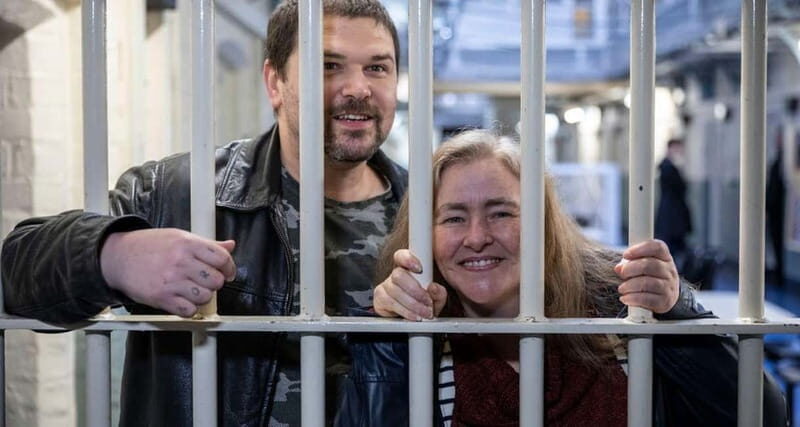
When you arrive, you’ll see a large Welcome to Shrewsbury Prison sign to the left of the main entrance. Go through the large metal gates to the visitor centre, where a customer service assistant will welcome you with a map and other materials to get you started.
I like this setup because it doesn’t dump you straight into the building. You start with enough direction to follow the route and enough context to understand what you’re about to see. The visitor centre is where you’ll pick up activity booklets and your bearings, then move to the starting point.
If you’re the kind of person who hates getting lost in historic sites, arrive with a small plan: use the map first, then decide whether you’ll do a slow walk or a quicker circuit. Some areas are darker because of how they were used historically, so having a clear route prevents accidental backtracking in low-light spaces.
Reception and processing areas: where the prison story begins
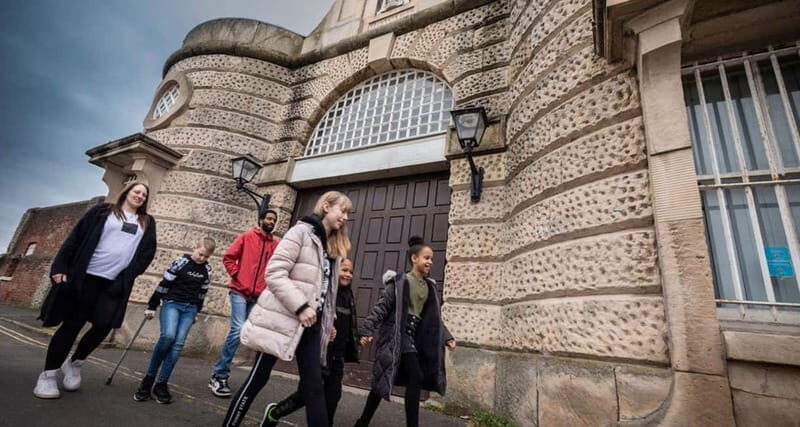
Your visit starts in the places connected to intake and control. The highlights you should look for here are the reception area and the processing spaces where prisoners would have been handled. This is the best section for understanding the prison as a system rather than a collection of eerie cells.
Why it’s valuable: reception gives you a baseline for everything that follows. Once you understand how people were processed, the later wings and restricted spaces make more sense. You’ll also see how the site’s interpretation uses the visitor guide and sound boxes to connect the buildings to the timeline from Georgian-era developments to later periods.
Expect staff to be present and helpful. The visit isn’t meant to be a solo scavenger hunt. If a corridor feels like it could go somewhere else, ask. It’s faster than guessing, and it keeps the visit flowing.
Two prison wings and nearly 200 cells: scale, structure, and a staged timeline

One of the biggest draws is the scale: two prison wings that include nearly 200 cells. Walking through this kind of volume changes the feel of the place. It’s not just one dramatic room. It’s many, arranged in a way that shows how the prison controlled daily life through space.
Across the wings, you’ll encounter cell displays meant to represent different eras, including Georgian to modern day. The idea is that you’ll compare how cells and conditions changed over time. The interpretation relies on signs, guided audio from sound boxes, and information boards.
Here’s the consideration to keep in mind. Some parts may feel like a staged “era set” rather than a perfectly matched timeline, meaning the details you see might not always line up with what the display is telling you. That doesn’t erase the value of seeing so many cells, but it does mean you should treat the experience as historical interpretation, not a flawless documentary.
If you want to get the most from it, slow down at the transitions between sections. Those are where the audio and boards are doing the work. Read a board, listen to the sound box, then look again at the physical cell layout with that context in mind.
Healthcare spaces: how prison medicine fits into the bigger system

From the housing blocks, you move to healthcare. Seeing medical areas helps you understand that prisons weren’t only about confinement and punishment. They were also places where health needs were handled, sometimes in complicated conditions, and the site points you toward that story.
This section works especially well if you like learning how institutions function. Healthcare gives the visit a different emotional tone than execution-related rooms. It reminds you that people lived and suffered in the same walls as daily routines and restrictions.
Practical tip: if you’re visiting with kids, this is often a better place to ask questions because it’s easier to talk about with less graphic subject matter. If you’re visiting as an adult, you’ll likely appreciate the shift from punishment spaces to the “care within confinement” theme.
Visits and exercise yards: the daily routines that made a prison work
Next comes visits and exercise yards, described as the only place within the prison walls where prisoners could meet with people from outside. After that, you walk through two exercise yards where prisoners could go for daily fresh air and movement.
This is one of those sections that lands harder than you expect. It’s not the most dramatic-looking area, but it’s one of the most human. A visit space is where communication happened, even under strict limits. Exercise yards show the daily cycle of confinement, not just the worst-case scenarios.
Look for how the visitor guide and sound boxes connect these areas to routines. The boards don’t just point out rooms. They explain why those rooms existed in the first place. If you rush, you’ll miss that. If you take a moment between yards and read the facts, the building starts telling a coherent story.
Segregation, the executioner’s bedroom, and Albert Pierrepoint

Then you reach segregation—where prisoners would have been isolated from the rest of the prison population. This is followed by the executioner’s bedroom area linked to Albert Pierrepoint, described on site as where he would have slept the night before.
This part of the experience is intentionally heavy. Segregation is about separation and control, and the execution-related room brings in a very specific name in British execution history. Even if you don’t know the details ahead of time, the audio and boards are doing the job of connecting the space to the person and the function.
Two things to watch for:
- How lighting and layout change in these areas, which makes the experience feel darker and more closed in.
- How your route handles transitions. This is where visitors often slow down, because the emotional tone shifts.
If you’re easily uncomfortable with grim themes, it may help to pace yourself here. Don’t stack the most intense stops back-to-back. Take a breath, read the information boards carefully, and move when you feel ready.
The condemned man’s cell and execution room: why this section feels different
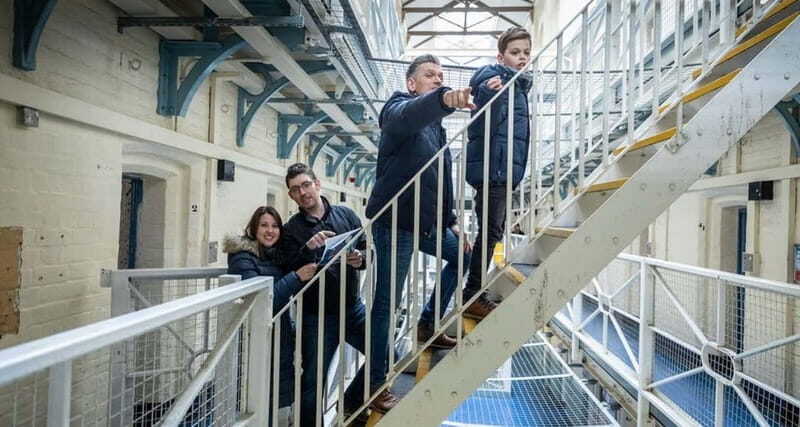
Finally, you reach the condemned man’s cell and the execution-related area. The condemned cell is described as one of the darkest places within the prison due to its previous usage, with the hanging connected to the execution room nearby.
Even if you’re there for history and not horror, this part is meant to hit. The building isn’t pretending. It uses what it was used for, and it leans into that reality through the way it presents the space.
What I’d do if you want to understand this section without feeling overwhelmed: don’t treat it as a quick photo stop. Spend a little time absorbing what’s in the guide and listening to the sound boxes before taking pictures. If you rush, you’ll just see walls. If you slow down, you start seeing how people were held through their final days within a system designed for outcomes.
Museum, gift shop, and the best photo spots for a full souvenir set
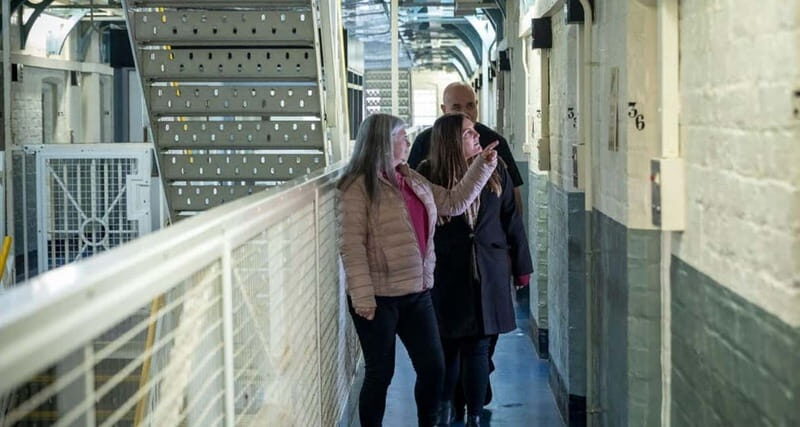
After the cells and the serious rooms, the visit wraps up with a museum and gift shop. This is smart for two reasons. First, it gives you physical artefacts found within the prison walls, which helps you connect the story to real objects. Second, the gift shop makes it easy to turn your day into something you can remember without needing to keep everything in your head.
You’ll also find cellfie points scattered throughout. These include pillories and height board mugshot opportunities. The fun part isn’t that it makes light of history. It’s that it gives you a concrete way to document your route—especially if you’re travelling with kids or you like collecting visual memories.
If you want good photos without stress, plan to use these stops as bookmarks. When you feel like you’ve covered too much darkness, switch gears to a photo point and a quick museum look. It helps your day stay balanced.
The on-site restaurant: keep your energy steady
Shrewsbury Prison has a restaurant open all day every day. This is a real quality-of-life win in a day-trip attraction like this. You don’t have to time your eating around a bus or scramble for lunch outside the site.
You can sample homemade cakes and fresh coffee, or go for a fuller meal. The description includes snacks and bites plus a full sized Lifers Burger. If you want your day to feel like a proper outing, not a series of quick sprints, build in at least a short break here.
My practical advice: if you’re doing the visit in one go, eat before the most intense zones, or at least ensure you’re not rushing through them because you’re hungry. Dark spaces and long corridors take more energy than you expect.
Price and value: is $20 worth a full day behind the walls?
At about $20 per person with a duration of 1 day, this ticket can be good value—especially if you plan to actually use the whole site. The experience isn’t just one room or one corridor. It’s a large venue with multiple stops: reception, wings with nearly 200 cells, healthcare, visits and exercise yards, segregation, executioner-related spaces, and the condemned area—plus a museum and gift shop.
What makes it feel worthwhile is the combination:
- You get self-guided exploration with sound boxes and boards, not just open doors.
- You can spend time outdoors and indoors, depending on the day.
- You also have an on-site place to eat, so you aren’t forced to leave.
The one caution on value is the style of interpretation. Some parts may feel more like museum-style reading than interactive theatre. If that’s exactly what you want, it’s a win. If you’re expecting live guides and hands-on activities everywhere, you may feel the experience is better for history lovers than for people who need constant engagement.
Who should book Shrewsbury Prison, and who should reconsider
This is a strong fit for:
- People who like historic buildings and understanding how places worked.
- Families looking for a long, varied walk with areas that can suit different ages.
- Visitors who enjoy self-led exploring at their own pace, using audio and maps.
You might think twice if:
- You want a tour with lots of interactive roleplay and guided narration at every turn.
- You’re the type who gets frustrated by signage that isn’t perfectly directional. Using the map early helps, but the site’s size can still make you want clearer arrows.
- You prefer displays that are tightly consistent down to every staged detail. Some era displays may feel like they’re approximating changes rather than presenting a spotless, perfectly aligned sequence.
In short: if you’re comfortable reading boards, listening to sound boxes, and walking a lot, you’ll likely have a satisfying day.
Should you book the Shrewsbury Prison Entry Ticket?
If you want a memorable, real-building history visit that doesn’t rush you, I’d book it. The sound boxes, the route from reception to wings to visits to segregation and condemned areas, and the added museum and restaurant turn it into a full-day plan rather than a quick stop.
Just go in with the right expectation. Treat it as self-guided interpretation inside a large prison site. Bring patience for museum-style information boards, and plan to eat on site so you can take your time in the spaces that feel darkest.
If that sounds like your kind of outing, Shrewsbury Prison is a solid buy for a full day in Shropshire.
FAQ
How long does the Shrewsbury Prison Entry Ticket last?
The ticket is valid for 1 day, so you can explore at your own pace within that timeframe.
What does the ticket include?
You can explore a real Victorian prison at your leisure, use cellfie photo points, access the onsite restaurant, and visit the museum with artefacts found within the prison walls.
Do I get a map or guide when I arrive?
Yes. At the visitor centre, you’ll be supplied with a map and visitor materials to help you find your starting point and follow your route.
Is the visit self-guided or guided by a person?
You explore at your leisure using a visitor guide and sound boxes, with staff available to help and answer questions.
What parts of the prison can I see?
You can visit reception, two prison wings with nearly 200 cells, healthcare, visits areas, two exercise yards, segregation, the executioner’s bedroom linked to Albert Pierrepoint, and the condemned man’s cell near the execution room.
Are there photo opportunities during the visit?
Yes. There are cellfie points throughout the site, including pillories and height board mugshot opportunities.
Is there food available on site?
Yes. The restaurant is open all day every day, with options like homemade cakes and fresh coffee, and meals including snacks and bites plus a full sized Lifers Burger.
Is Shrewsbury Prison wheelchair accessible?
Yes, the experience is listed as wheelchair accessible.
What should I expect to learn during the visit?
You’ll learn prison history from the Georgian era to modern day, with facts provided through sound boxes and information boards.
Is there a cancellation option after booking?
Free cancellation is available up to 24 hours in advance for a full refund, and there’s also a reserve now and pay later option.