REVIEW · STIRLING
Stirling Castle: Skip-the-Line Guided Tour in Spanish
Book on GetYourGuide →Operated by Scotland City Tours - Somos Escocia · Bookable on GetYourGuide
History turns you into a silent eavesdropper. In about 1.5 hours, this Skip-the-line Spanish tour gets you into Stirling Castle fast, so you can focus on the people, plots, and power that shaped Scotland.
What I really like is how the guide connects big turning points to what you’re looking at, from the castle’s role in the Scottish Wars of Independence to royal life inside the palace. You also get guided time in the Great Hall, including stories tied to major ceremonies, not just stone-and-tickets facts.
One possible drawback: the castle is huge and deep, and with a tight 90-minute format, you’ll leave still wanting more—so it’s best if you want an efficient orientation with stories rather than a slow, self-guided marathon.
In This Review
- Key highlights to expect
- Meeting point at the Portcullis Hotel and how you’ll start
- Skip-the-line entry: what you gain in 90 minutes
- The siege-and-summit story: what the guide covers on the esplanade
- Inside the Royal Palace: Mary, Queen of Scots and the Renaissance angle
- The Great Hall: feasts, ceremonies, and why 16th-century details matter
- Where Mary was crowned: what to look for while you’re there
- John Damian, the bird-man story, and why legends belong in your visit
- Knights of the Round Table and the King Arthur connection
- Price and value: is $45 fair for this format?
- The guide can make or break it: Fernando and Alejandro as examples
- Weather, comfort, and what you should wear
- Who this Stirling Castle tour is best for
- Should you book this Spanish skip-the-line tour?
- FAQ
- What language is the guided tour in?
- How long is the Stirling Castle guided tour?
- How many people are in the small group?
- Where is the meeting point?
- Is skip-the-line entry included?
- Is the tour wheelchair accessible?
- Are large bags or luggage allowed?
- What should I do if the weather is bad?
- How much should I pay to reserve a spot?
Key highlights to expect
- A small group (up to 10) means you’re not lost in a crowd, and your Spanish guide can pace the story.
- Start on the esplanade with context on origins and sieges, before you step inside.
- Royal Palace focus, including Mary, Queen of Scots, and what visitors often miss when they rush.
- Great Hall scenes, tied to feasts and ceremonies held in the 16th century.
- John Damian’s bird-man story, the quirky legend about trying to fly to France.
- Knights of the Round Table connection, via a claim attributed to English chronicler William of Worcester.
Meeting point at the Portcullis Hotel and how you’ll start
You meet in front of the Portcullis Hotel, and the easiest way to spot the group is to look for the black umbrella. Arrive 15 minutes early so you’re not stressed when the guide gathers everyone and leads you toward the castle.
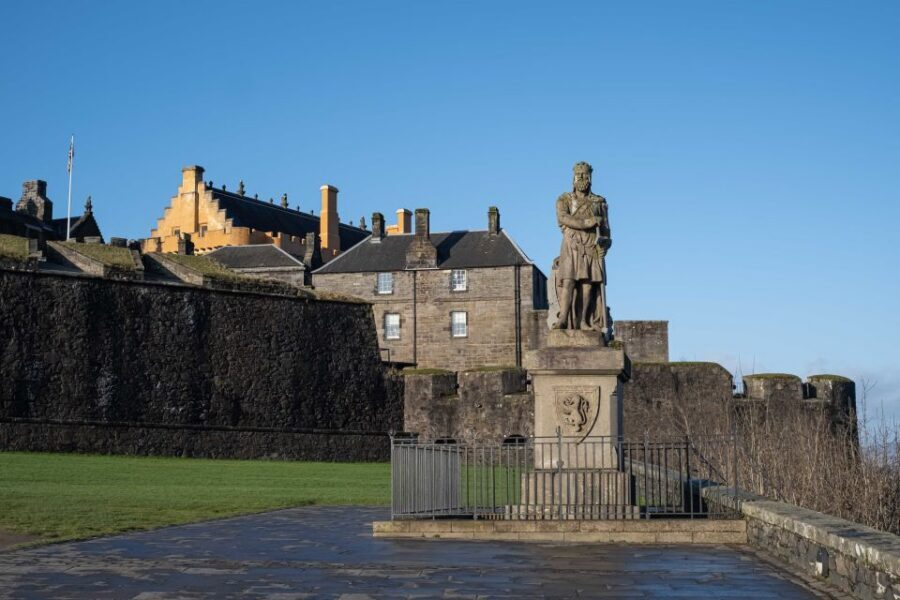
The start matters here. You begin on the castle grounds with the guide talking about where the fortress came from and why it kept getting attacked. That pre-load of context makes the inside parts feel less like random rooms and more like a lived-in machine for power.
You can also read our reviews of more guided tours in Stirling

Skip-the-line entry: what you gain in 90 minutes
The ticket line can eat up a lot of your day at Stirling Castle, so the skip-the-line entrance is the practical win. With only 1.5 hours, every minute counts, and this format is built to keep you moving.
In a small group, you also get a more guided tempo. Instead of staring at signage, you’re listening to a live narrative that points your eyes toward the right details—palace spaces, ceremonial areas, and the story beats that connect Scotland’s wars to royal court life.
The siege-and-summit story: what the guide covers on the esplanade

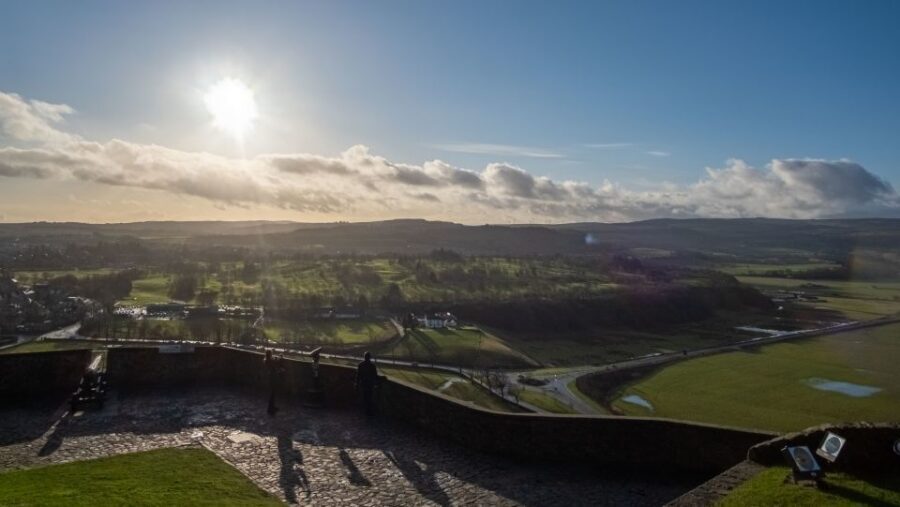
Before you go inside, your Spanish guide sets the stage by explaining how Stirling grew in relation to Scottish history, and how the castle repeatedly became the setting for crucial moments. The emphasis is on sieges and the reasons this stronghold mattered again and again.
This is more than just dates. The tour frames Stirling as a strategic place where conflict and politics met, which helps when you hear names like William Wallace and Robert the Bruce—heroes tied to the 14th-century Scottish Wars of Independence.
It’s also where the mood gets set for the tour’s tone. Expect stories that mix the brutal side of medieval conflict with legend and a hint of spooky fun, since the castle is presented as a place with legends and maybe even some ghostly whispers.
Inside the Royal Palace: Mary, Queen of Scots and the Renaissance angle
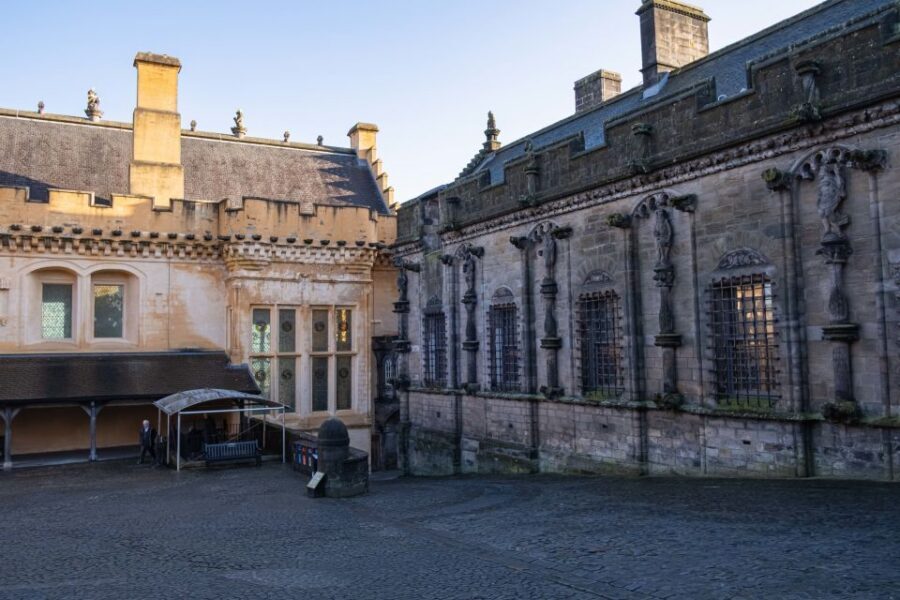
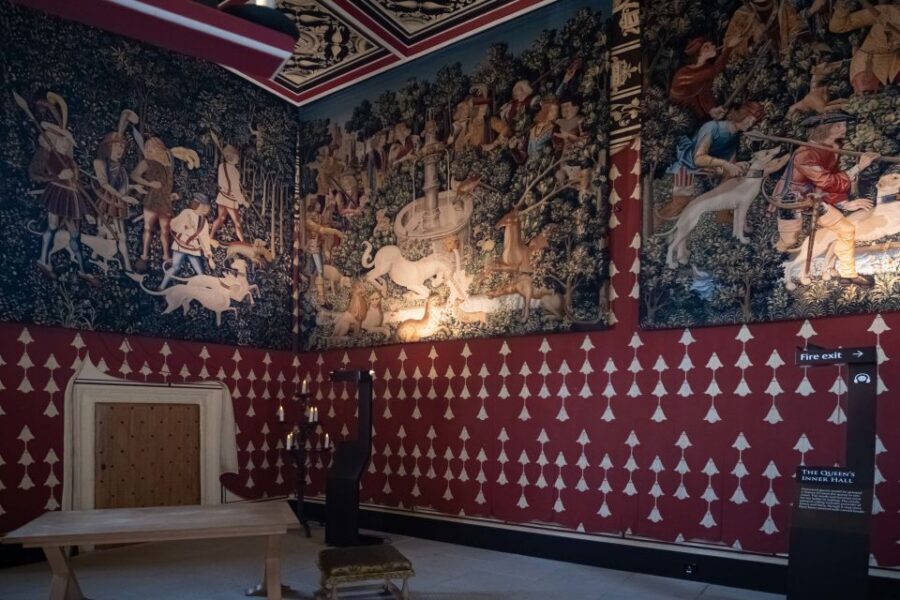
Once you enter, the focus shifts to the royal side of the castle: the royal palace where Mary, Queen of Scots once lived. Even if you’ve only seen her name in textbooks, you’ll get help visualizing court life—who used these spaces, and why royal residence mattered in a fortress.
One highlight you don’t want to miss is the palace’s claim to fame as the first Renaissance palace in Britain. That detail turns Stirling into more than a medieval stronghold; it becomes evidence that Scotland’s rulers were connected to broader European ideas and styles.
This is also where I find the tour becomes most useful for first-timers. If you’ve never visited castles like this before, the guide’s job is to translate the architecture into story: who moved through these rooms, what the palace symbolized, and why it fit Stirling’s political importance.
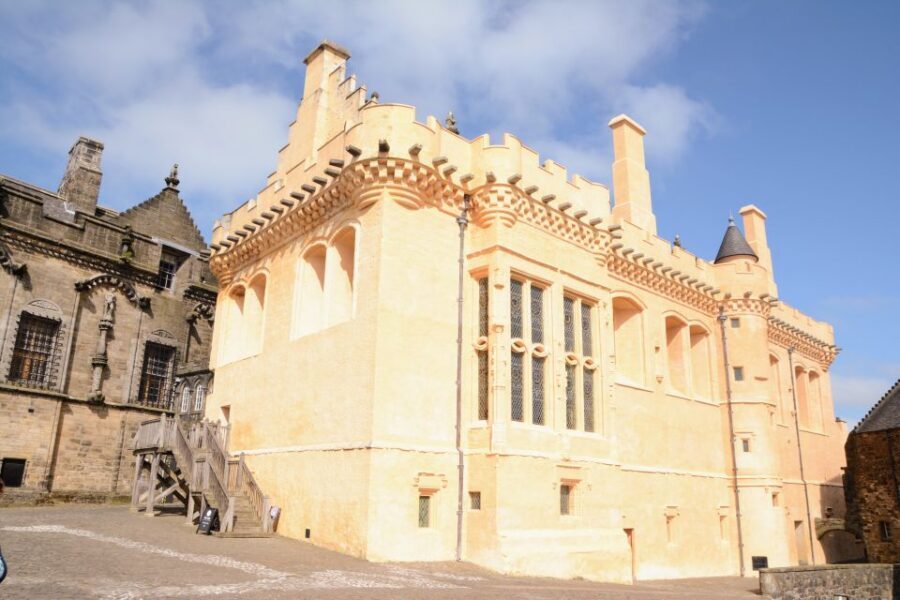
The Great Hall: feasts, ceremonies, and why 16th-century details matter
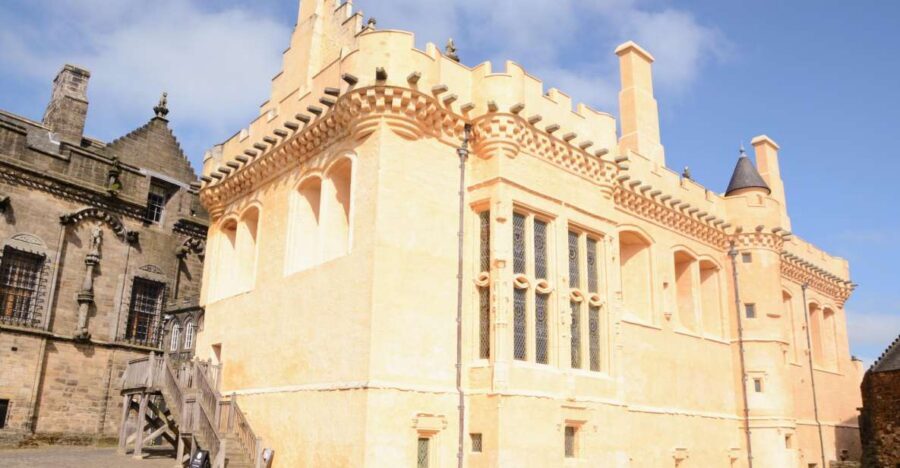
The tour includes time in the Great Hall, described as a major 16th-century space for feasts and celebration. This is the room where the castle stops feeling like pure defense and starts feeling like a stage for status.
A specific story you’ll hear is tied to a major ceremony: celebrations connected to the baptism of the future king of Scotland. That kind of detail matters because it explains what these gatherings meant politically. A feast wasn’t just food—it was messaging, alliance-making, and royal legitimacy in public view.
If you care about how power is performed, you’ll enjoy this portion. And if you don’t usually pay attention to ceremonial spaces, the guide’s framing helps you see why they’re central to understanding the court.






Where Mary was crowned: what to look for while you’re there
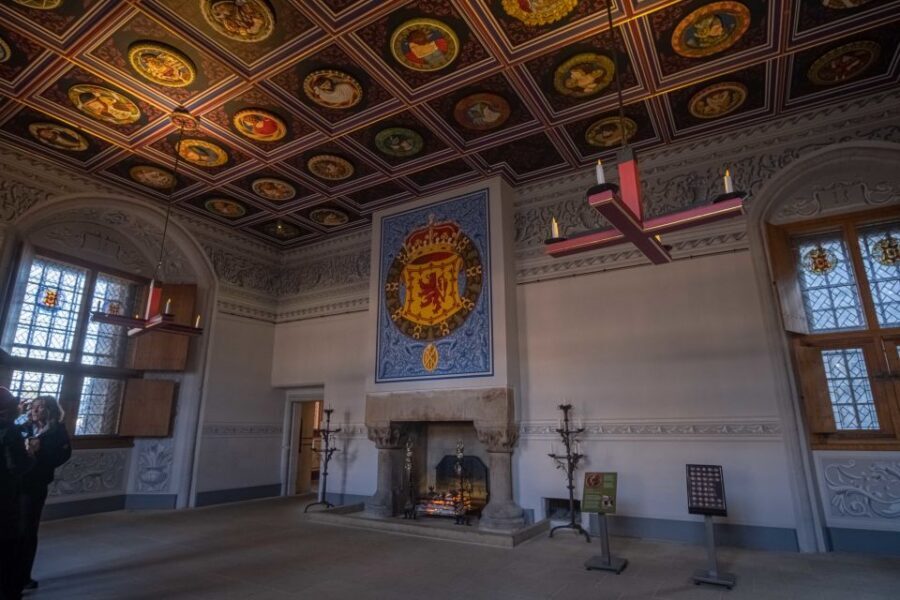
The tour also points you to the place where Mary, Queen of Scots was crowned. You’ll want to keep your eyes on what the guide highlights, because crown-related details can be easy to overlook when you’re walking quickly.
The value here is interpretation. A “coronation location” is only meaningful when you understand the why behind it—how Stirling’s importance made it a fitting stage for royal authority, and how the castle functioned as a center of power beyond battlefields.
John Damian, the bird-man story, and why legends belong in your visit
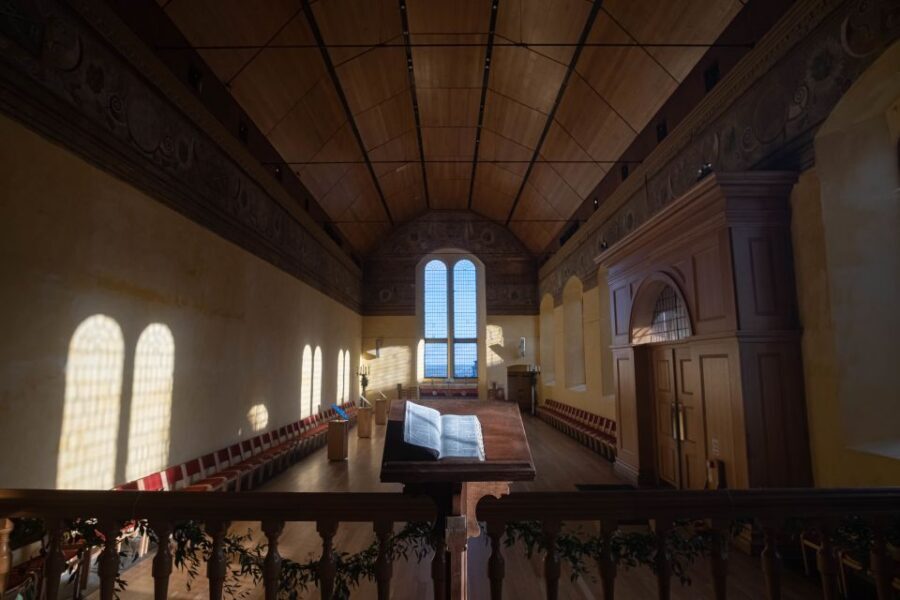
Not every castle tour gives you room for oddballs and legends, but this one does—specifically through John Damian, described as the bird-man of Stirling Castle. The story is that he wanted to fly to France, but a couple of minor inconveniences stopped him from getting too far.
It’s a fun break from political drama, and that balance helps. Legends like this do two things: they show how local memory clings to the walls, and they give your brain a rest so the heavier history lands better afterward.
If you like tours where the guide adds color without losing the plot, this is a good sign. Even the way the tour is described suggests you may get ghost-tinged storytelling alongside the serious chapters of siege and succession.
Knights of the Round Table and the King Arthur connection

Here’s a surprising tangent: an English chronicler, William of Worcester, is identified with the claim that Stirling Castle was the home of the Knights of the Round Table of King Arthur. Whether you treat it as medieval fantasy, interpretation, or a historical rumor, it’s a memorable way to see how legends get attached to real places.
I like these moments because they explain something visitors can miss: castles become cultural magnets. People keep telling stories about them, and over time those stories fold into the identity of the place.
If you’re a fan of Arthurian lore, you’ll probably get a kick out of this. If you’re more strict about historical accuracy, you can still enjoy it as part of the storytelling tradition that makes Stirling feel alive.
Price and value: is $45 fair for this format?
At $45 per person for about 1.5 hours, the value depends on what you want.
You’re paying for three things:
- Skip-the-line entry, which saves time at a high-demand site.
- A live Spanish guide, which adds interpretation you won’t get from a self-guided walk.
- A small group limited to 10, which keeps the experience from turning into a noisy rush.
If you’re short on time or you’d rather not piece together the castle’s major story beats yourself, this price makes sense. If you love slow, detailed museum-style exploring, you might find 90 minutes too tight. In that case, treat this as the story primer that helps your later independent visit feel more meaningful.
The guide can make or break it: Fernando and Alejandro as examples
The quality of narration seems to matter here. One reviewer called out Fernando for historical reenactment-style storytelling, plus jokes and poems that kept the whole group paying attention. Another mentioned Alejandro as charming and clear, with explanations that landed well.
That tells you something practical: this isn’t just a route with facts. The guides are using performance and pacing to make the castle feel like a sequence of events. In a site this big, that kind of storytelling helps you remember what you saw instead of only remembering that you walked through it.
Weather, comfort, and what you should wear
The tour runs in all weather conditions except extreme weather, since the castle can close. The route is adapted to minimize exposure to rain or snow, which is reassuring if your trip has mixed forecasts.
What this means for you: come prepared. Wear shoes that handle stone and damp conditions, and bring a light layer even if the day looks mild. You don’t need to turn the whole day into a camping trip—you just want to stay comfortable during walking and occasional covered routes.
Who this Stirling Castle tour is best for
This tour fits best if you want:
- A fast, guided orientation to one of Scotland’s most important fortresses.
- A mix of medieval war context and royal palace stories.
- The convenience of skip-the-line entry with a small Spanish-speaking group.
- A tour style that includes legends like John Damian and the Arthur connection, not just battle dates.
It might not be ideal if you’re the kind of traveler who insists on long, quiet time in every room. With a guided structure and a set duration, there’s limited room for lingering.
Should you book this Spanish skip-the-line tour?
Yes, if you want maximum story per minute. For many people, Stirling Castle can feel like a lot at once—especially if you don’t already know the Scottish Wars of Independence or Mary Queen of Scots’ place in the court. This tour does the heavy lifting by turning the rooms and halls into a timeline you can follow.
Book it if you appreciate guided storytelling, small groups, and the comfort of not waiting in line. If you’re planning to visit anyway and you want a deeper, slower experience afterward, this can act like your map in human form.
If you’re deciding last-minute: choose this when you’d rather spend your energy listening and looking, not figuring out what matters.
FAQ
What language is the guided tour in?
The tour is conducted in Spanish with a live guide.
How long is the Stirling Castle guided tour?
The duration is 1.5 hours.
How many people are in the small group?
The group is limited to 10 participants.
Where is the meeting point?
The meeting point is in front of the Portcullis Hotel. Look for the black umbrella.
Is skip-the-line entry included?
Yes, the tour includes skip-the-line entrance to Stirling Castle.
Is the tour wheelchair accessible?
Yes, the tour is wheelchair accessible.
Are large bags or luggage allowed?
No, luggage or large bags are not allowed.
What should I do if the weather is bad?
The tour operates in all weather conditions except extreme weather, and the route is adapted to minimize exposure to rain or snow.
How much should I pay to reserve a spot?
The experience is listed as reserve now & pay later, so you can book your spot and pay nothing today.