REVIEW · STIRLING
Stirling: Historical Walking Tour in Spanish
Book on GetYourGuide →Operated by Scotland City Tours - Somos Escocia · Bookable on GetYourGuide
Stirling can feel like a small town with big consequences, and this Spanish walking tour shows you why. I really like the way it connects whoever ruled Stirling to the big story of Scotland’s fight for independence and the city’s key military role. I also love the tight focus on places you can actually see, like the medieval wall and the Church of the Holy Rude, not just abstract dates. The one catch is that you’ll be out walking in normal weather, so slick ground and rain can make the pace a little tougher.
To me, the best part is how efficiently the tour moves through turning points in Stirling’s life: defense, punishment, religion, and public power. Still, it’s not a slow stroll through cafés. You’re walking sections of old streets, including up toward the highest city area, so comfortable shoes matter.
In This Review
- Key Highlights You’ll Care About
- Stirling’s Power Story Starts With Its Fortified Streets
- Spanish Walking Tour Logistics That Keep It Easy
- From Caffe Nero to King Street: The Tour’s First Big Win
- King Street to the Highest Point: Market and Execution Ground
- The Old Jail and Tollbooth: When Justice Looked Like Control
- John Cowane Hospital and the Old Cemetery: Everyday Institutions in the Mix
- Pyramid Star and the Church of the Holy Rude Moment
- Guide Style Makes the Difference: Ara, Lorena, and Pace
- Price and Value: Is $24 for 1.5 Hours Worth It?
- Who This Stirling Walk Is Best For
- Should You Book This Stirling: Historical Walking Tour in Spanish?
- FAQ
- What language is the tour in?
- How long is the Stirling historical walking tour?
- How much does it cost?
- Where do I meet the guide?
- How big is the group?
- Is the tour wheelchair accessible?
- Does the tour include an audio guide?
- Does the tour run in bad weather?
- Is cancellation free?
- What can I expect to see during the walk?
Key Highlights You’ll Care About

- Stirling’s medieval wall and the feel of a fortified city that mattered for centuries
- 14th-century wars of independence: Stirling’s role between Scotland and England
- Britain’s worst 19th-century jail: a grim but important chapter you’ll see firsthand
- Church of the Holy Rude and the coronation link to King James VI
- Stops that mix power and everyday life: Mercat Cross, Tollbooth, Old Cemetery, and more
Stirling’s Power Story Starts With Its Fortified Streets

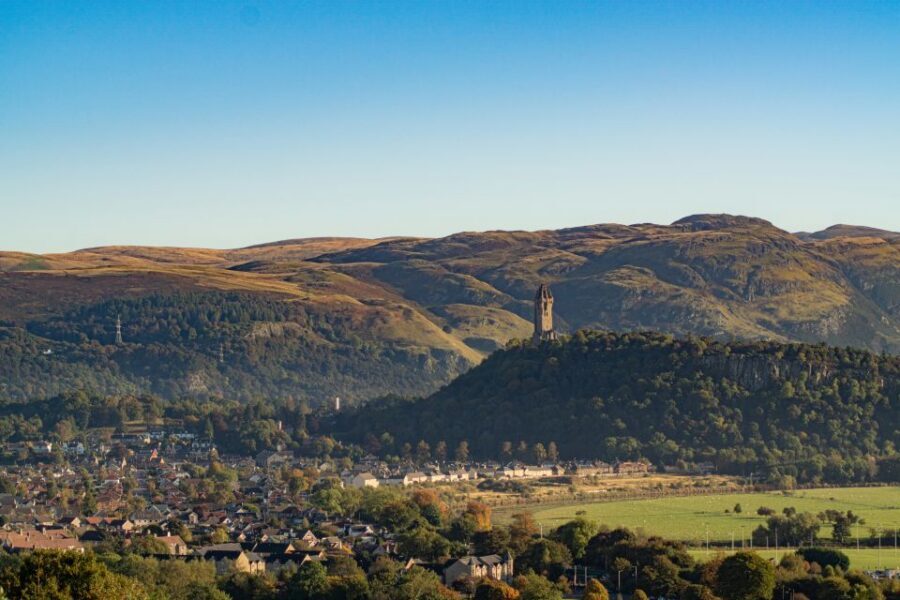
Stirling earned its nickname as a strategic “door” for a reason. If you’re mapping Scotland’s medieval power struggles, Stirling is the place where politics, armies, and control of movement all meet. During the wars of independence in the 14th century, Stirling mattered because it sat at a crossroads that rulers couldn’t ignore.
What makes this tour work is that it doesn’t treat Stirling like a museum town. You’re walking through a real layout of influence. The medieval wall, the central civic spots, and the religious cornerstone aren’t random. They show how decisions were made in public, backed by force when needed, and reinforced through ceremonies and institutions.
And because the tour is time-limited to 1.5 hours, it’s designed for learning fast without turning it into a lecture marathon.
You can also read our reviews of more walking tours in Stirling


Spanish Walking Tour Logistics That Keep It Easy
This is a small group experience, limited to 10 participants, with a live guide speaking Spanish. That matters for two reasons: you get interaction, and the group stays small enough to hear what’s being said when you’re outside.
You’ll meet inside Caffe Nero in Stirling. Aim to arrive 15 minutes early so you can check in without stress. The tour provider is Scotland City Tours (Somos Escocia), and the format is straightforward: local guides lead the walking route, and you follow their pacing from stop to stop.
One important practical note: it runs in all weather except extreme conditions. That means rain gear can be useful, and you’ll want footwear that handles wet pavement and uneven old streets. The route is adjusted to minimize exposure to rain or snow, but you should still expect real walking outdoors.
Also, there’s no audio guide. If you’re relying on English narration, this isn’t the best fit. If you read Spanish well or can follow spoken Spanish comfortably, you’ll get a lot more out of the storytelling.
From Caffe Nero to King Street: The Tour’s First Big Win
You start in the middle of town life: inside Caffe Nero. Then you move onto King Street, which is where the tour begins turning general history into street-level context.
King Street is a smart first stop because it’s practical. Instead of beginning with a single monument and hoping you get the feel of the place, you start with the city’s core walkways. Your guide talks about Stirling’s buildings and connects them to cultural details, including famous poets. That kind of detail is more than trivia. It helps you remember that history isn’t only battles and crowns. It’s also writing, identity, and public culture.
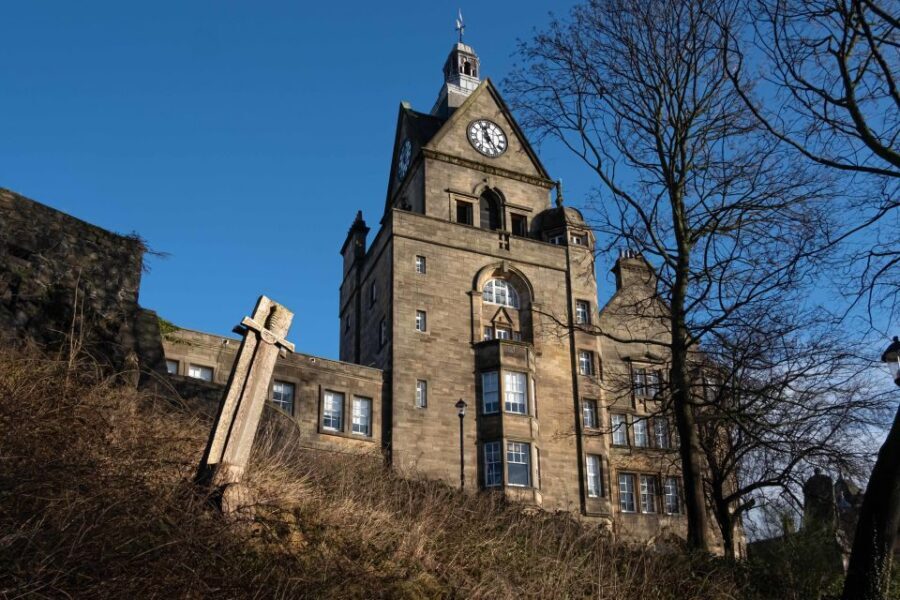
From there, you get the medieval wall elements. Even without technical explanations, you can feel what a fortified city meant: boundaries, defense, and controlled entry. When you look at walls in real space, you understand why strategic towns became so contested.
King Street to the Highest Point: Market and Execution Ground
After you get oriented in the central streets, the tour climbs toward the highest part of Stirling. This section is important, because it’s where the city’s medieval market once operated and where public executions were held.
That’s heavy material, but it’s exactly the kind of reality that brings the medieval story into focus. When you learn that the market and punishment were tied to the same elevated civic space, you start to grasp how public power worked. People didn’t just hear about authority. They watched it in person.
You’ll also encounter Mercat Cross, another civic landmark that reinforces the same idea: this wasn’t a private power structure. It was public. The guide uses stops like Mercat Cross to link the city’s daily flow—trade, announcements, crowds—to the rules that kept society in line.
If you’re someone who likes your history grounded in geography, this is one of the most satisfying parts. You’re learning why the city’s “top” mattered.
The Old Jail and Tollbooth: When Justice Looked Like Control
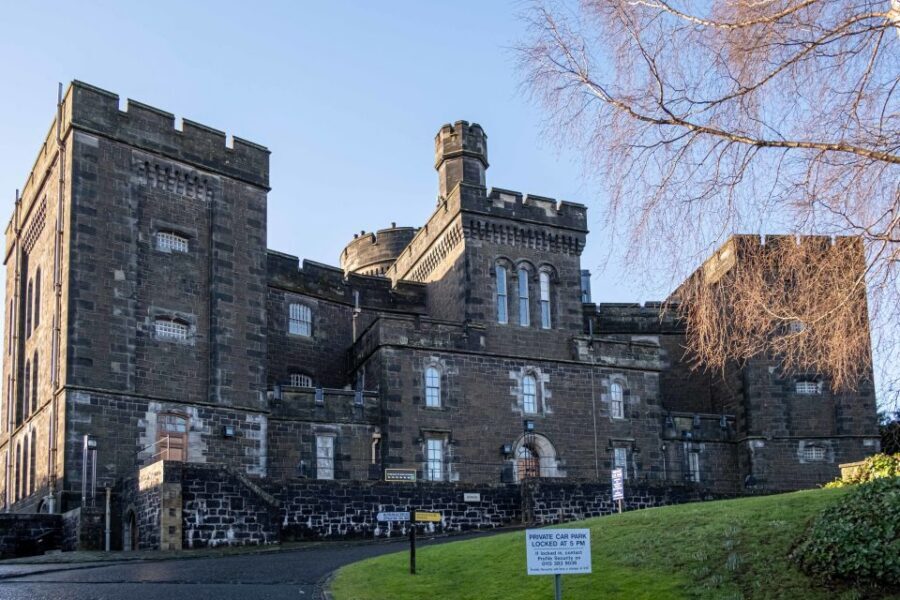
One of the most striking claims tied to Stirling is that in the 19th century it housed Britain’s worst jail. Your tour doesn’t treat this as a generic dark-ages story. It focuses on what made it awful: it was wet, cramped, and packed with prisoners.
You’ll learn how the population included men, women, and children, spanning minor offenders through adults. The range of cases also matters: murderers, people awaiting trial, and debtors were all in the same grim system.
The Old Jail and the Tollbooth are the key stops for this chapter. Even if you’ve read about prisons before, seeing the civic sites connected to punishment makes the system feel more real. You’re not picturing an abstract building. You’re connecting legal authority to the lived experience of incarceration.
A small word of advice: this part of the tour can feel emotionally intense because the story is specific. If you prefer lighter history, you might want to pace yourself and take short breaks while the guide explains the details.





John Cowane Hospital and the Old Cemetery: Everyday Institutions in the Mix
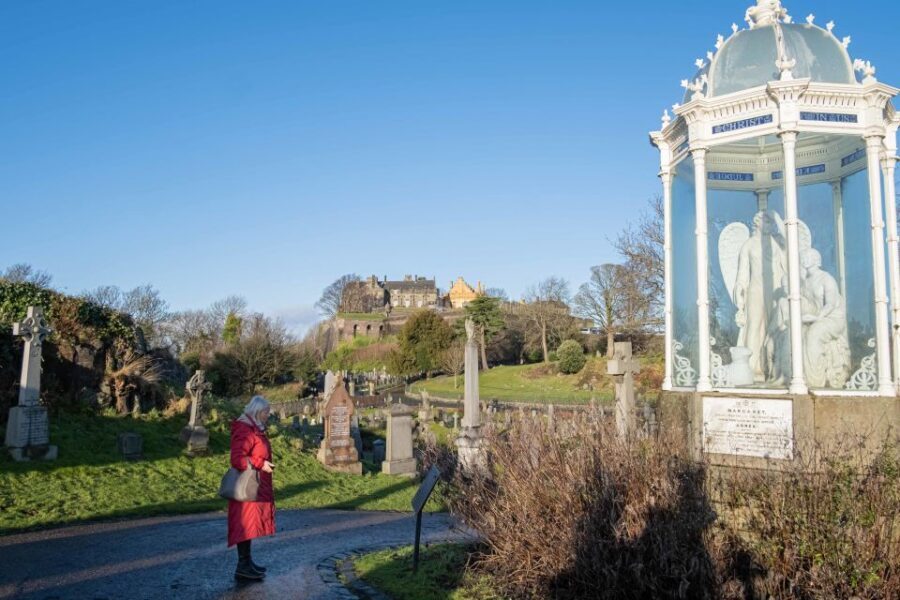
Between the heavier stops, the tour also threads in places like John Cowane Hospital and the Old Cemetery. These stops are valuable because they broaden your sense of Stirling beyond warfare and punishment.
John Cowane Hospital represents charity and care—one of the ways communities organized responsibility when life was difficult. When you see that in the same walking loop as execution sites and prisons, you get a fuller view of how a town functioned. Power existed, justice existed, and so did institutions for support.
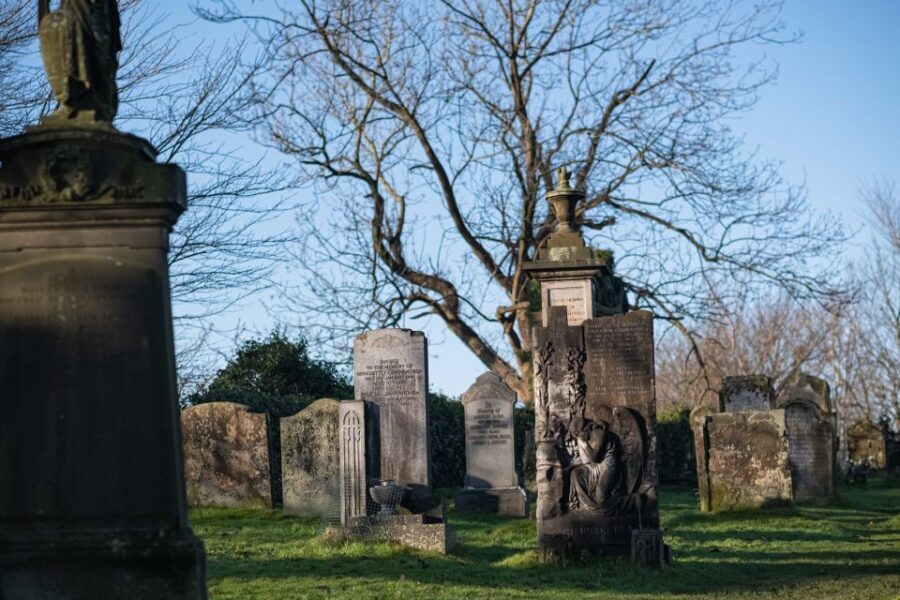
The Old Cemetery adds another layer: memory and mortality. Cemeteries often get treated as quiet background in tours, but they’re part of the city’s public story. When your guide points out the cemetery within the route, it becomes a reminder that Stirling’s historical events weren’t only for rulers. They affected families, generations, and ordinary lives.
This section is a good pace reset. It keeps the tour from turning into nonstop grimness.
Pyramid Star and the Church of the Holy Rude Moment
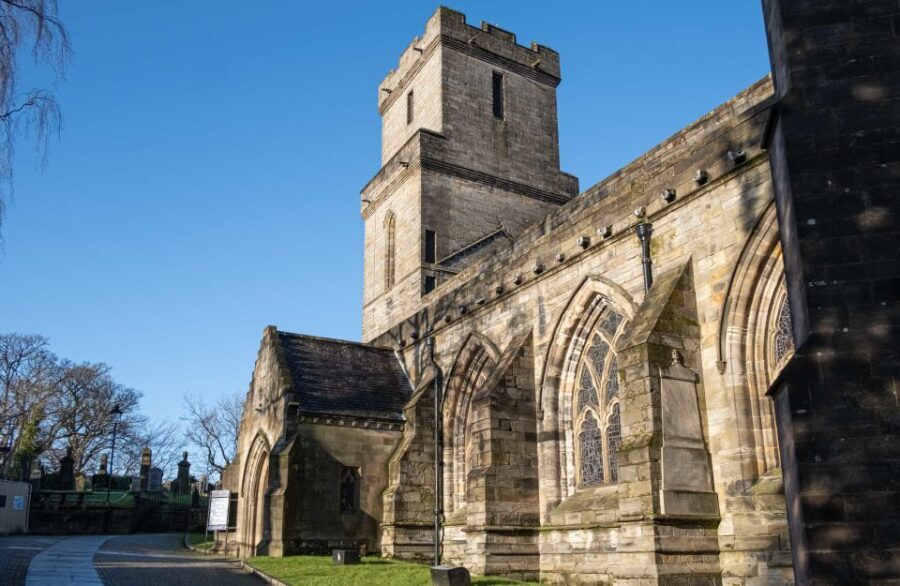
As you move through the final stretch, you’ll encounter Pyramid Star, another landmark that keeps the route from feeling like a straight line of history blocks. Then the main event arrives: the Church of the Holy Rude.
The Holy Rude is the standout for religious and ceremonial history. Your guide connects the church to King James VI’s coronation. James VI was the son of Mary Stuart, and the tour frames the coronation link in a way that connects Scotland’s leadership story to places you can still visit today.
There’s also a major comparison detail your guide shares: Holy Rude, alongside Westminster Abbey, is the only church still in use in Great Britain known to have hosted such events. That matters because it turns the church from a pretty stop into a living piece of national ceremonial memory.
Even if you’re not religious, you’ll likely appreciate this moment. It shows how authority was performed, celebrated, and made official in public spaces that people could recognize.
Guide Style Makes the Difference: Ara, Lorena, and Pace
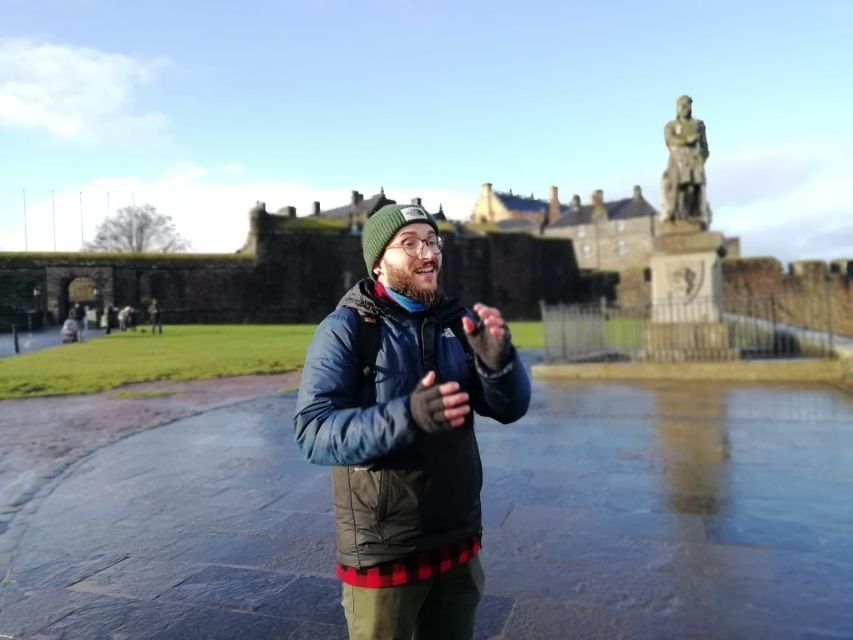
The tour quality lives or dies with the guide’s storytelling. The Spanish guide experience here gets strong praise for being both attentive and fun. Names like Ara and Lorena come up in the style people highlight—guides who know the local context and bring the city to life with anecdotes.
The one practical consideration is pace. A guide speaking quickly can make it harder to follow Spanish details, especially when stopping and starting at multiple sites. If your Spanish is solid but not fluent-speed, consider arriving a little mentally prepared to listen carefully rather than expecting long, slow explanations.
Price and Value: Is $24 for 1.5 Hours Worth It?

At about $24 per person for 1.5 hours, the value is tied to concentration. You’re not paying for a long day of transport. You’re paying for a focused route through major civic and historical sites: medieval walls, King Street, Mercat Cross, Old Jail, Tollbooth, John Cowane Hospital, Old Cemetery, Pyramid Star, and the Holy Rude church.
Small group size (max 10) also helps. In a bigger group, you often hear less and stop less. Here, the guide’s attention stays closer, which is important when the information includes heavy topics like the 19th-century jail population.
One more detail that affects value: there’s no audio guide. That means you get your explanation live, with no optional fallback. If you’re comfortable with Spanish and like learning from people rather than devices, you’ll get your money’s worth.
Who This Stirling Walk Is Best For
This is a strong choice if you fit one or more of these:
- You want a history-heavy Stirling route but only have a short window
- You like walking through multiple eras in a single circuit: medieval defenses, independence-era importance, and 19th-century civic reality
- You speak or understand Spanish well enough to track a live guide
- You appreciate tours that point out both famous landmarks and the less glamorous corners, like punishment sites and civic institutions
It’s also wheelchair accessible, which is a big plus if you need a more manageable walking plan. As always, ask about how the route is handled in bad weather if that’s a concern for you.
Should You Book This Stirling: Historical Walking Tour in Spanish?
Yes, if you want an efficient, story-driven introduction to Stirling that hits the locations that shaped Scotland’s public life. The tour’s main strength is its mix: fortification and strategy, public punishment, and ceremonial religion—all within 1.5 hours.
Don’t book it if Spanish-only narration is a problem for you, or if you strongly prefer minimal outdoor walking. The route happens in real weather, and you’ll be covering ground from street level up toward the city’s higher area.
If you can handle walking in variable conditions and you’re comfortable with Spanish, this is a smart way to understand Stirling fast.
FAQ
What language is the tour in?
The live tour guide speaks Spanish.
How long is the Stirling historical walking tour?
It lasts 1.5 hours.
How much does it cost?
The price is $24 per person.
Where do I meet the guide?
Meet inside the coffee shop Caffe Nero. Staff will be there to check you in.
How big is the group?
The tour is limited to a small group of up to 10 participants.
Is the tour wheelchair accessible?
Yes, the tour is wheelchair accessible.
Does the tour include an audio guide?
No, an audio guide is not included.
Does the tour run in bad weather?
It runs in all weather except extreme conditions, and the route is adapted to minimize exposure to rain or snow.
Is cancellation free?
Free cancellation is available up to 24 hours in advance for a full refund.
What can I expect to see during the walk?
You’ll pass or see highlights such as the medieval wall, King Street, Mercat Cross, the Old Jail, the Tollbooth, the John Cowane Hospital, the Old Cemetery, Pyramid Star, and the Church of the Holy Rude.