REVIEW · TENBY
Tenby: Coasteering Adventure
Book on GetYourGuide →Operated by Tenby Adventure · Bookable on GetYourGuide
Coasteering turns Tenby into your playground. You get sea-cave exploring and optional jumps with a guide who knows how to make the sea feel exciting, not scary. I love that it’s part adventure, part sightseeing, and part wild-swim time, with places most people never see from a footpath. The one downside? This is genuinely physical, and you may feel it for a day or two, especially after lots of rock scrambling.
What makes it work is the human side: the guides are not just set-up-and-go instructors. In the recent experiences I learned from, guides like Marc and Tom kept first-timers moving in a smart way, and Charles brought serious experience with a calm, supportive vibe. You’re also in wetsuit-and-helmet territory from the start, and the focus stays on safety gear and route choices, not showboating.
If you like nature facts while you’re still a little cold and slightly out of breath, this is a great fit. Expect a mix of sea life talk and coastal spot-finding as you go—maybe seals, maybe seaweed, and plenty of time to look closely at what clings to the rocks.
In This Review
- Key things I’d plan around
- Why Coasteering Around Tenby Feels Like a Different Kind of Beach Day
- Lydstep Headland: Where Your Sea Adventure Actually Starts
- The 2.5-Hour Rhythm: What You’ll Do When the Water Calls
- Sea Caves, Secret Pools, and Swim-Throughs (Yes, You’ll Get Wet)
- Safety That Doesn’t Feel Like Drama
- What to Bring: Shoes, Padding, Towels, and the One Rule You Must Follow
- Who This Suits Best: Swimming Ability and Mobility Matter
- Price and Value: Is $81 Worth It for 2.5 Hours at Sea?
- Weather, Swells, and Why Rain Isn’t the Main Problem
- Quick Practical Tips That Make the Day Smoother
- Should You Book Tenby Coasteering With Tenby Adventure?
- FAQ
- What age is coasteering suitable for?
- How long is the session, and how long will I be in the water?
- What gear is provided?
- What shoes should I bring?
- Do I need to be an experienced swimmer?
- What if the weather changes?
- Where do I meet the guide?
Key things I’d plan around
- Sea caves and secret pools you can’t reach from the usual viewpoints
- Optional jumps and swim-throughs so you can choose your comfort level
- A sit-on-top kayak used for the day’s flow, with storage for snacks and spare layers
- Wetsuit, buoyancy aid, and helmet provided so you’re not shopping before you arrive
- Experienced guides with a naturalist edge, plus serious safety training
Why Coasteering Around Tenby Feels Like a Different Kind of Beach Day
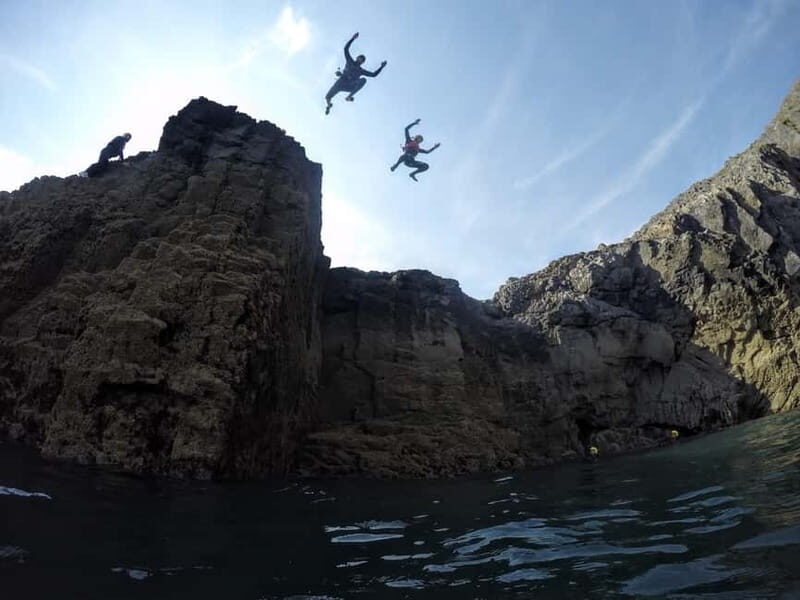
Tenby is famous for its harbour and sandy stretches, but coasteering changes the whole angle. Instead of watching the coast from land, you move along it with the sea at knee-to-waist height—or sometimes higher—using the coastline itself as your route.
What I like most is the balance. This isn’t just about getting wet. You’ll be doing short rock scrambles, exploring nooks and crannies, and checking out features like caves and pools that don’t make it into most postcards. The “jumps” side is there if you want it, but it’s not the only act in the show.
And yes, you’ll be swimming. That’s the point, but it’s paired with guided choices so you’re not just flailing around. If you’re confident in the water and happy to mess about, it feels like a hands-on way to see Pembrokeshire’s rugged coast.
You can also read our reviews of more tours and experiences in Tenby.
Lydstep Headland: Where Your Sea Adventure Actually Starts
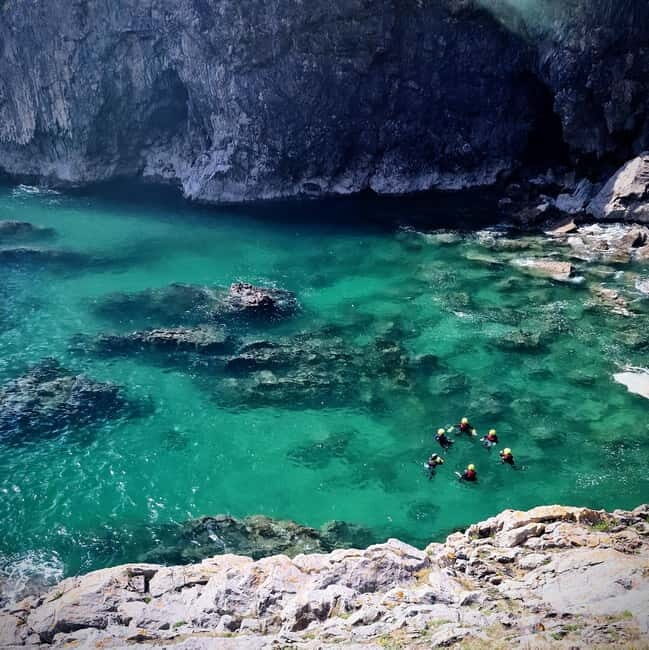
For most of the year, the meet-up happens at Lydstep Headland, about 10 minutes from Tenby. The best practical perk is the location: there’s a free, rarely busy car park around 2 minutes from the start, which makes your morning a lot less stressful.
From Tenby, the directions are fairly straightforward: drive past the Lydstep Holiday Park into Lydstep village, turn left about 75 meters after the Lydstep Tavern, then follow the bumpy lane for roughly 500 meters and turn right after the cottage at the blue parking sign. From the Manorbier/Pembroke direction, the turn is on the right around 170 meters after you enter the village.
If weather pushes things around, you’ll get contacted with the alternative venue instead of being left guessing. That matters because coasteering is weather-linked.
The 2.5-Hour Rhythm: What You’ll Do When the Water Calls
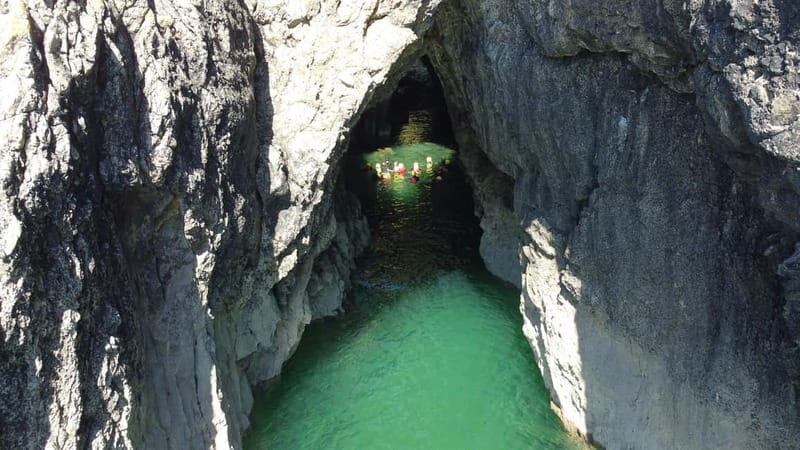
The session is listed at 2.5 hours, and you’ll typically be in the water for about 2 to 2.5 hours. That ratio is important. You’re not paying for a lot of standing around while someone lectures you on safety. You’ll suit up, get a proper brief, then spend most of the time actively moving through the route.
While the exact path can shift with conditions, the day’s flow usually includes:
- some sea-facing warming and technique coaching
- coastal moving time along a guided route
- swimming sections that link pools and caves
- scrambling bits where you’ll use hands and footing
- optional jumps into deeper, clear water
Coasteering can be adventurous or mellow depending on the chosen route and sea state. The key word here is adaptability. If the sea is behaving, you get more of the playful “swirly bits” and cave exploration. If it’s rougher, the guide adjusts so you still get a great experience.
Sea Caves, Secret Pools, and Swim-Throughs (Yes, You’ll Get Wet)
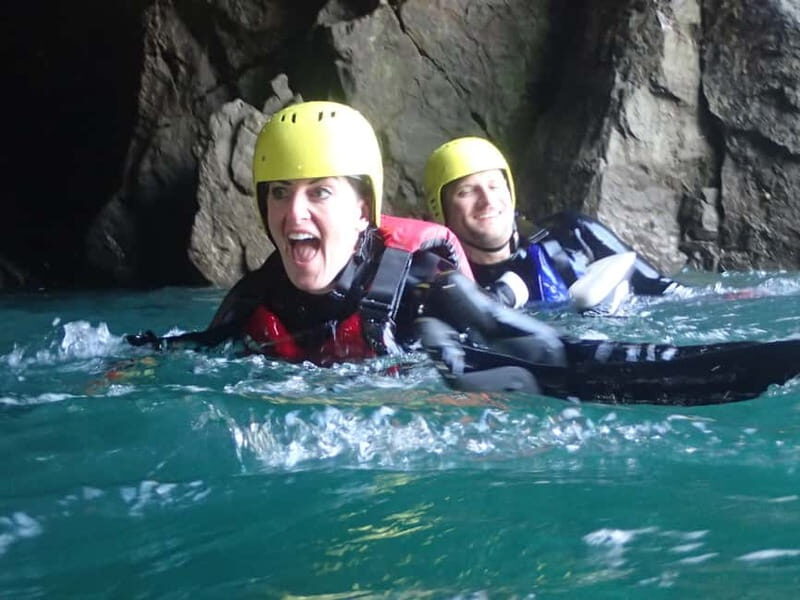
A lot of coasteering descriptions sound the same. This one earns its reputation because the route goals are specific: spectacular caves, secret pools, and “swim-throughs” that change what you notice about the coastline.
Here’s what that means in real life. Caves and pools aren’t just scenery. They create moments where you’re underwater briefly, moving in a guided pattern, then popping out to breathe and spot the next feature. If you like nature and you can handle cold-water shock, these are the moments that feel genuinely different from a typical coastal walk.
You might also encounter wildlife. The guide approach includes naturalist learning—things like sponges and crabs on rock surfaces, birdlife overhead, and seaweed you’ll probably be asked to notice. Seals are possible too. That adds meaning to the route: you’re not just traversing, you’re observing.
Also, the jumping part is framed as optional and generally encouraged only from safe rocky platforms into clear water. Think of it as a chance, not a requirement.
Safety That Doesn’t Feel Like Drama
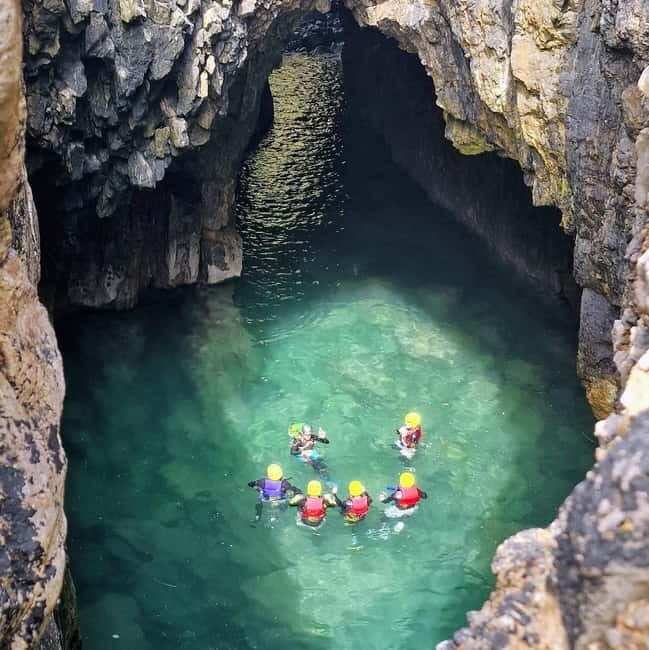
Coasteering has a reputation for being risky, but the whole point of good operators is to make it controlled. This experience leans heavily into safety planning and proper gear.
You’ll be provided with specialist coasteering protection:
- wetsuit
- buoyancy aid
- helmet
And the guide carries safety kit recommended by the National Coasteering Charter. Lead guides are also equipped with satellite locator beacons. That’s the kind of detail that matters because it addresses the big fear people have: what happens if something goes wrong.
The provider also highlights an impressive safety record: training and guidance for over 30,000 people coasteering safely. I like that they don’t treat safety like an afterthought. It’s baked into how routes are led and how equipment is used.
In the real-world feedback I learned from, guides like Rachel and Merv were patient with kids who found the rock scrambling hard. That tells me the safety approach includes pacing and reassurance, not just gear.
What to Bring: Shoes, Padding, Towels, and the One Rule You Must Follow
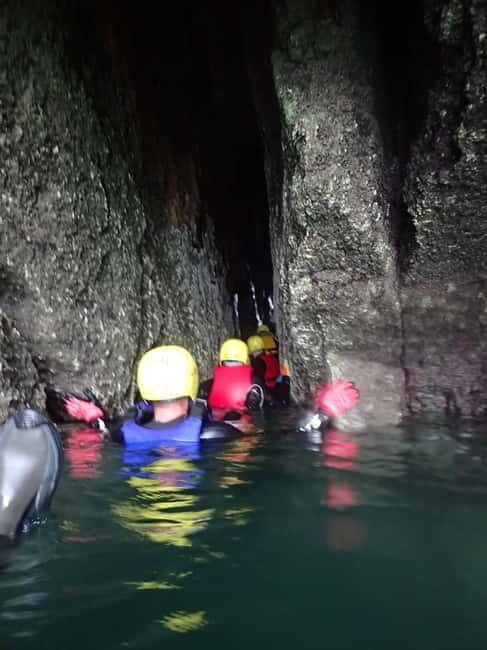
Gear is provided, but your personal prep still matters a lot. The essentials:
- Closed-toe shoes with good grip and thick soles
- a pair of shorts to wear over your wetsuit
- a towel
- a changing robe is useful (changing facilities aren’t always available)
Footwear is the one area I’d obsess over. Old trainers are the absolute best option because they stay secure, have thick soles, and handle slippery rock. Wetsuit boots are okay if they have a decent sole. Beach or reef shoes can work if they’re secure and thick enough. The key warning is simple: you really don’t want to lose a shoe mid-coasteer.
The shorts-over-wetsuit instruction is also practical, not fashion. It adds a little padding and helps protect your wetsuit from rubbing during scrambles. If you’ve ever had a wetsuit snag on rock, you’ll appreciate this.
Cold-water reality tip: plan to towel off quickly and change soon after. Even with wetsuits, you’ll feel the chill if you linger.
Who This Suits Best: Swimming Ability and Mobility Matter
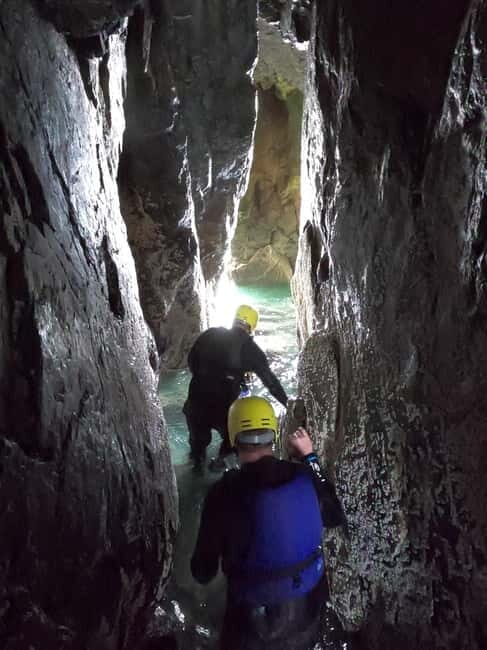
This is suitable for anyone from 8 years old, but only if they can swim and do some light scrambling. If you’re a non-swimmer, it’s not the activity for you.
For swimming confidence, the guidance is clear: a confident 25-meter swim is generally sufficient. That’s a useful benchmark because it avoids the vague “just be comfortable” talk.
You’ll also want reasonable fitness and mobility. Coasteering isn’t a walk—you’re using your legs, bracing with your hands sometimes, and climbing over uneven coastal rock. One of the best parts of the experience is that guides can adapt the route to match your group, but your body still has to do the work.
In the experiences I read, a 9-year-old grandchild who found scrambling challenging was supported with patience by Merv and Rachel. That suggests the guides manage difficulty with care, not just speed.
Price and Value: Is $81 Worth It for 2.5 Hours at Sea?
At around $81 per person for a 2.5-hour half-day, the price can feel like a splurge—until you look at what’s included.
You’re getting:
- an expert guide (and not just a basic “follow me” role)
- wetsuit, buoyancy aid, and helmet
- specialist safety planning and route leadership
- time on the water doing multiple types of coastal play: swimming, scrambling, cave exploring, and optional jumps
If you’ve ever tried to organize anything sea-based yourself, you know the hidden costs stack fast: equipment, transport, safety considerations, and local knowledge. Here, the guide and safety system are the product, and they’re provided in full.
The value also comes from where you go. A standard coastal walk from Tenby gives you nice views, sure. Coasteering gives you access to places along the Pembrokeshire coast that are hard to reach from land paths, like caves and swim-through points.
And for families or mixed-skill groups, guide adaptability can turn a “maybe this will be too much” situation into a successful outing.
Weather, Swells, and Why Rain Isn’t the Main Problem
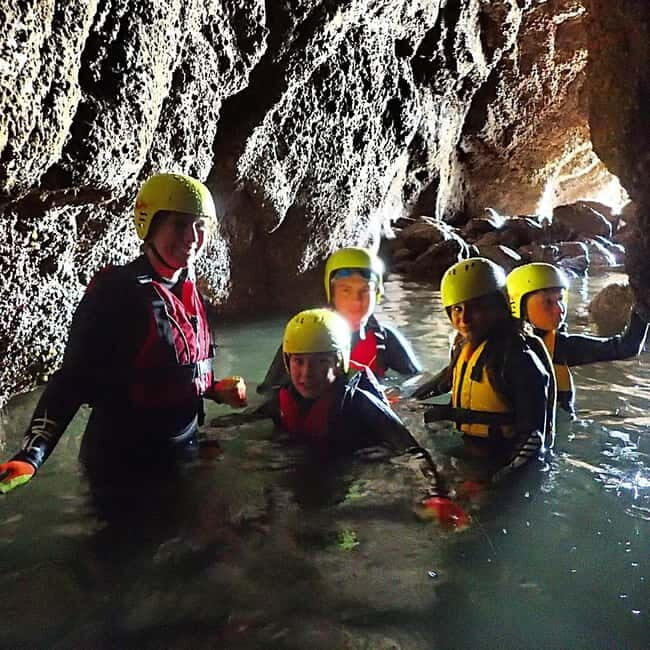
Coasteering is weather-aware. Rain doesn’t affect the activity, but strong winds or large swells can lead to route changes or postponements. That’s important for your expectations: you’re not just booking a time slot; you’re booking a sea-conditioned adventure.
If a session is rescheduled or cancelled and you can’t attend, the provider states you’d get a full refund. In other words, the goal is still to keep you safe and deliver the right route for the sea conditions.
From a planning perspective, I’d bring a flexible mindset. If you’re the type who hates change, consider building in a little buffer into your Tenby day.
Quick Practical Tips That Make the Day Smoother
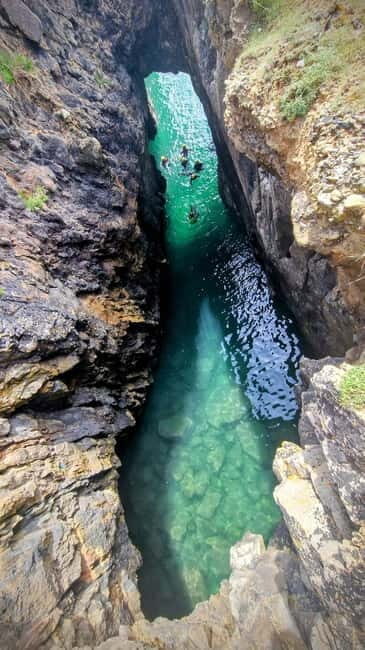
Based on how guides run the experience, a few things help a lot:
- bring proper trainers you’re comfortable getting ruined a bit
- pack a towel and a robe if you can, since changing isn’t always convenient
- put the shorts over the wetsuit before you’re on the rocks
- listen carefully at briefing time; the biggest gains come early
- if you don’t want jumps, that’s okay—coasteering includes more than leap-offs
Also, expect to work a bit. One of the best bits of feedback I saw was that the next-day aches turned into proof you had a real activity, not a short thrill and a photo stop.
Should You Book Tenby Coasteering With Tenby Adventure?
If you want a Tenby experience that’s active, scenic, and genuinely different from the usual seaside routine, I think this is a strong booking. You get expert guiding, real safety structure, and the chance to see sea caves and pools up close—plus the option to scale the jumps and intensity to your comfort.
Book it if you:
- can swim at least 25 meters
- are okay with light scrambling on uneven rock
- like being in the water as part of the plan, not as a surprise
Skip it if you:
- can’t swim
- don’t want a physical challenge
- are hoping for a calm, mostly-on-shore nature walk
If you fit the basics, this is one of those rare Pembrokeshire activities where the coast isn’t just a backdrop. It’s the main stage.
FAQ
What age is coasteering suitable for?
The activity is suitable for anyone from 8 years old, as long as they can swim and do some light scrambling.
How long is the session, and how long will I be in the water?
The session is listed at 2.5 hours, and half-day sessions typically involve being in the water for between 2 and 2.5 hours.
What gear is provided?
You’ll be provided with a specialist coasteering wetsuit, buoyancy aid, and helmet.
What shoes should I bring?
Bring closed-toe shoes. Old trainers are best because they have grip, thick soles, and stay secure. Wetsuit boots are okay if the sole is decent, and beach or reef shoes can work only if they’re secure and have a thick sole.
Do I need to be an experienced swimmer?
You don’t need to be a dolphin, but you should be able to confidently swim 25 meters.
What if the weather changes?
Rain does not affect the activity, but strong winds or large swells might lead to route changes or postponements. If a session is rescheduled or cancelled and you cannot attend, you get a full refund.
Where do I meet the guide?
Most of the year, you meet at Lydstep Headland, about 10 minutes from Tenby, with a free and rarely busy car park near the start.