REVIEW · LONDON
Woolf & Dickens: London Literary Tour & Writing Workshop
Book on GetYourGuide →Operated by JPierson · Bookable on GetYourGuide
One sentence. One bridge view. Then your pen starts moving. This Woolf & Dickens tour turns London’s literary landmarks into short, kind, hands-on writing experiments, guided by Joseph, an award-winning novelist with a PhD in Creative Writing. You get readings, but you also get exercises that make you respond to what’s around you.
I like two things most. First, the prompts are tied to specific places you can actually see and feel, including the view from Waterloo Bridge and the interior of St Mary Le Strand. Second, the workshop atmosphere is welcoming and safe, so you’re not judged for where you are as a writer, from new to experienced.
One consideration: it’s not a passive “listen and look” tour. You’re expected to write during the 1.5 hours, so if your idea of sightseeing is photos only, you may find the pace a bit page-heavy.
In This Review
- Key highlights you’ll notice right away
- Starting at Waterloo Bridge: where the pen work begins
- Woolf at Waterloo Bridge and the biographical sketch you build from sight
- Somerset House: mindful writing that makes the city feel readable
- Aldwych time echoes and why the walk feels like a timeline
- St Mary Le Strand: Eliot, time, and ekphrasis in a real church
- Gladstone and Dickens: truth, politics, and the art of perspective
- Doctor Johnson’s house: language as identity, powered by a dictionary
- Is the $101 price tag worth it for a 1.5-hour workshop?
- Who should book this London writing workshop
- Should you book Woolf & Dickens: London Literary Tour & Writing Workshop?
- FAQ
- How long is the Woolf & Dickens tour?
- What’s included in the price?
- Where do we meet?
- Is the tour private and wheelchair accessible?
- What should I bring?
- Does the workshop work for beginners?
Key highlights you’ll notice right away
- Waterloo Bridge as a Woolf-style writing trigger: you’ll turn the perspective into a biographical sketch in your own voice.
- Somerset House mindful writing: a focused exercise that slows you down enough to notice details.
- T.S. Eliot and time at St Mary Le Strand: you’ll do ekphrasis, meaning writing inspired by what you see.
- Aldwych timeline and church echoes: history and time aren’t just mentioned; they’re built into the structure of the walk.
- Gladstone and Dickens prompts: you’ll reflect on truth and politics while looking at how perspective changes meaning.
- Samuel Johnson’s dictionary at his house: you’ll think about how language, religion, politics, art, and language shape a person.
Starting at Waterloo Bridge: where the pen work begins
The meeting point is at the north end of Waterloo Bridge, by a slope on the right that goes behind Somerset House. This is a smart choice because it gets you oriented quickly: you’re near the water, near the major sights, and you can look out before anyone asks you to write.
The tour runs about 1.5 hours, and it feels intentionally compact. That matters because the exercises are not random busywork. Each one is designed to help you pay attention, then shape that attention into words. If you like city walks but also want a reason to look closely, this format is a good fit.
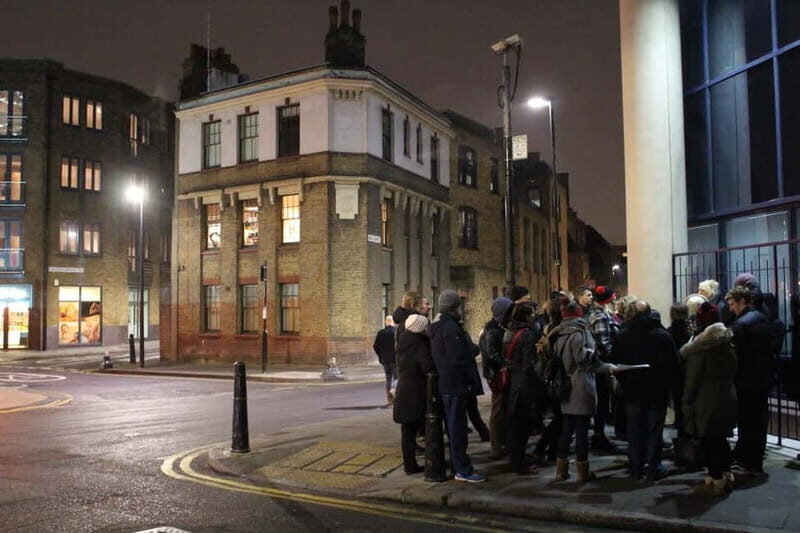
Also, it’s a private group with a live English-speaking guide. That combination usually means you’ll have room to ask questions, and you won’t get lost in a crowd. The guide’s tone is built around kindness and inclusivity, so the prompts are meant to be doable, even if you haven’t written creatively in a while.
A few more London tours and experiences worth a look



Woolf at Waterloo Bridge and the biographical sketch you build from sight
Right away, the tour uses Virginia Woolf to help you practice a specific kind of attention: what changes when you notice the present through the lens of memory. The prompt centers on Woolf’s wistful reflections of the view from Waterloo Bridge—and the activity that follows is a biographical sketch inspired by what you’re seeing.
Here’s why that’s more than a literary name-drop. Woolf’s style often blends past and present, so the exercise pushes you to do the same. You’re not trying to write like Woolf. You’re borrowing her technique: shifting between now and then, letting a single view become a small life-story.
What you’ll likely enjoy is the way the guide frames observation as material. You look, you note, you write. If you’ve ever felt stuck because you didn’t know what to write about, this is one of those setups that gives you an instant subject, without needing to invent a plot.
Practical tip: bring a pen and notebook because you’ll need to write as you go. This is the kind of tour where stopping mid-exercise to hunt for supplies breaks the flow.
Somerset House: mindful writing that makes the city feel readable
After Waterloo Bridge, you head toward Somerset House, and the tour shifts into a more grounded mood. The workshop includes a mindful writing experiment here. That’s a useful contrast to the Woolf-inspired piece because it’s less about literary imitation and more about mental presence.
Mindful writing, in practice, means you slow down your thinking and make space for detail. You’re still doing creative work, but you’re also training yourself to notice: shapes, sounds, movement, the texture of the place. London can be loud and fast. This stop gives you a structured pause.
I like this part because it helps you write even if your first draft voice is rusty. Instead of demanding something polished, it nudges you toward honesty on the page. The guide’s prompts are set up so you can contribute even with limited writing experience.
One more good sign for your expectations: the tour is designed by a writer, not just a sightseeing guide. That shows in how the prompts are paced—attention first, then language.
Aldwych time echoes and why the walk feels like a timeline
As the tour moves, you’ll encounter the theme of time and history again, now grounded in place. The tour mentions a timeline on the walls at Aldwych, and it links that visual structure to T.S. Eliot’s reflections.
This matters because it gives you a method. You’re not only writing about time; you’re being led through time as a physical experience. A timeline is linear, but memory rarely is. That tension—linear markings versus messy lived experience—is exactly the kind of thing good writing experiments chew on.
If you like structure in your learning, this stop will feel satisfying. You’re offered a concrete reference point, so your writing has something stable to anchor to.
If you dislike structure, it can still work, because the prompt is flexible. You’re expected to respond, not comply. The guide’s job is to keep the exercise open enough that you can make it yours.
St Mary Le Strand: Eliot, time, and ekphrasis in a real church
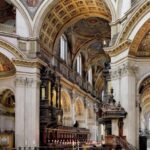
Then you get the most striking writing setting: the church of St Mary Le Strand. Here the tour focuses on T.S. Eliot’s study of time, and it culminates in an ekphrasis exercise.
Ekphrasis is writing inspired by art or imagery—except in this case, the imagery is the church itself: the scale, the interior, the atmosphere. You’re not asked to summarize the building. You’re asked to react to it. That means you’ll produce something more personal than a travel note.
Why this works so well: churches are built to create time. You walk in and your pace changes, your voice changes, your attention changes. Eliot’s subject—time, history, memory—fits that physical experience. The guide essentially turns architecture into language fuel.
There’s also a subtle value here for different writing levels. Novices can focus on sensory impressions and simple associations. More experienced writers can lean into metaphor, voice, and shifts in perspective. The instructions aren’t about performing literacy. They’re about doing the mental move of turning what you see into what you say.
Practical consideration: churches can feel dim and cool. Wear layers if you tend to get chilled.





Gladstone and Dickens: truth, politics, and the art of perspective
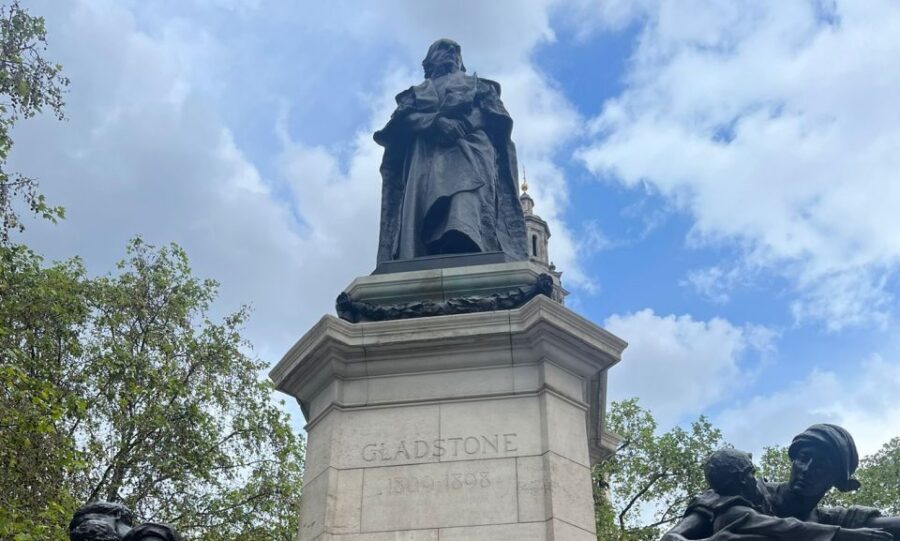
Next comes a prompt built around the tension between public ideas and personal viewpoint. You’ll be guided past a statue of Gladstone, and from there the tour shifts toward truth and politics using Dickens and Samuel Johnson as part of the writing inspiration.
The exercise here is telling: you’ll write a list of facts, blending your personal history with what you’re seeing in the environment. That sounds simple on paper, but it’s actually a smart way to practice nonfiction thinking without pretending you’re a news desk.
Facts sound neutral, but your selection of facts is never neutral. Who you are decides what you notice. Where you stand decides what you interpret. That’s the lesson the tour nudges you toward: politics and truth change with perspective, and your writing can reveal that change instead of hiding it.
For writers, this stop gives you a way to handle argument without writing a speech. For non-writers, it gives you an easy entry point: start with observable details, then connect them to your own life.
And because the guide keeps the tone inclusive, the writing can be honest without becoming heavy. You’re reflecting, not performing.
Doctor Johnson’s house: language as identity, powered by a dictionary
The last major writing stop centers on Doctor Johnson’s house. Here, you read from his dictionary, then consider how structures—religion, politics, art, language—help shape who we become.
This part is valuable even if you think you’re not a “dictionary person.” It’s not about studying lexicography for fun. It’s about realizing that language is one of the main ways ideas enter a person’s mind. A dictionary is also a kind of gatekeeper: it defines words, which means it influences what people think words mean.
Link that to the tour’s earlier themes, and you get a coherent arc. Waterloo Bridge becomes past and present. Eliot brings time into focus. Gladstone and Dickens push politics and truth into the frame. Johnson brings it back to language—the tool you’re holding in your hand.
If you want a writing exercise that ends with meaning, this is it. You leave with a new respect for how the words you choose are never just decoration. They’re identity work.
Is the $101 price tag worth it for a 1.5-hour workshop?
At $101 per person for a 1.5-hour private, guided writing workshop, the value depends on what you want from London.
If your goal is tickets, big sights, and photo stops, this won’t replace a classic tour. You’re paying for guided writing instruction and literary prompt design, not museum entry tickets. And the materials you’re using are mostly your mind plus your pen.
Where it looks like a good deal: you’re getting an award-winning novelist’s craft and PhD-level writing background channeled into short exercises at multiple real locations, with no entry tickets needed. You also get a guided flow you can’t easily DIY, especially the way literary themes connect across stops—Woolf to Eliot to Dickens and Johnson.
In short: if you’ll use the writing prompts and you like doing creative work while sightseeing, you’ll likely feel the price is justified. If you’re hoping for a purely observational walk, consider whether you’d rather pay for a conventional guided tour.
Who should book this London writing workshop
This experience fits best if you:
- enjoy writing (or want to try it) and like structured prompts
- want literary London that uses real locations as writing triggers
- like guided reflection rather than just listening to facts
- prefer a small, inclusive format with a supportive guide
You might skip it if you:
- don’t want to write during the tour
- prefer long explanations and passive sightseeing
- get stressed by timed activities and on-the-spot creative tasks
Should you book Woolf & Dickens: London Literary Tour & Writing Workshop?
Book it if you want London to feed your writing, not just your camera roll. The combination of place-based prompts and a guide who knows how to teach creative work is the core reason this stands out—especially the Waterloo Bridge Woolf sketch, the Eliot-themed ekphrasis at St Mary Le Strand, and the Johnson dictionary stop that turns language into identity.
Don’t book it if you’re only looking for a conventional walk with minimal participation. This tour is built around doing the writing, with your notebook and pen as your key access point.
If you’re the type who likes a little structure, a little literature, and a lot of practical writing on the move, this is an excellent use of 1.5 hours in London.
FAQ
How long is the Woolf & Dickens tour?
It lasts 1.5 hours.
What’s included in the price?
You get a guided tour and writing workshop. No entry tickets are needed.
Where do we meet?
You meet at the north end of Waterloo Bridge, at the slope on the right that goes behind Somerset House.
Is the tour private and wheelchair accessible?
Yes. It’s a private group, and it’s wheelchair accessible.
What should I bring?
Bring a pen, water, and an umbrella just in case. They also ask for internet access and a notebook is implied for writing.
Does the workshop work for beginners?
Yes. It’s designed to suit all levels, from novice to novelist, with prompts that leave room for your own voice.