REVIEW · LONDON
Clapham South: Subterranean Shelter Guided Tour
Book on GetYourGuide →Operated by London Transport Museum · Bookable on GetYourGuide
London under your feet is the real twist.
This guided tour from the London Transport Museum takes you about 30 metres underground into a secret warren of tunnels stretching over a mile, hidden beneath Clapham South station. You’ll see the spaces built for overnight shelter during air raids, then hear how the site was repurposed after the war, including stories connected to the arrival of Windrush passengers.
I particularly like two things here. First, the show-and-tell style: you get two expert guides, including a 1940s ARP Warden role-play, and the whole experience is staged to feel like you’ve stepped into a family’s first night underground. Second, you don’t just look. You handle real WWII torches, sit on original bunk beds turned benches, and read the graffiti left by people who lived through the shelter nights.
One key consideration: this tour is physically and mentally demanding. There’s a lot of walking on uneven ground, low lighting, static escalators, and it’s not suitable for claustrophobia or step-free access needs.
In This Review
- Key things to know before you go
- Getting There: Meeting at Clapham South Without Stress
- Heading 11 Stories Down: The Descent and What Surprises You
- Wartime Spaces Brought to Life: Warden Role-Play, Cabin, and Canteen
- Original Bunks and Hands-On WWII Artefacts
- Graffiti and Voices: Shelterers and Windrush Connections
- After the Raids: Why Repurposing Matters
- Price and Time: Is $51 for 75 Minutes Good Value?
- Who Should Book This Tour, and Who Might Skip
- Should You Book Clapham South: Subterranean Shelter?
- FAQ
- How long is the Clapham South subterranean shelter guided tour?
- How far underground does the tour go?
- Is the tour suitable for children?
- Is the tour step-free or suitable for mobility impairments?
- Are open-toed shoes, food, or drinks allowed?
- Where do I meet and when should I arrive?
Key things to know before you go
- A 75-minute guided story that blends WWII shelter life with post-war Windrush connections
- 30 metres underground and a tunnel walk over a mile long, hidden beneath Clapham South station
- Two guides, including a 1940s ARP Warden role-play to set the scene
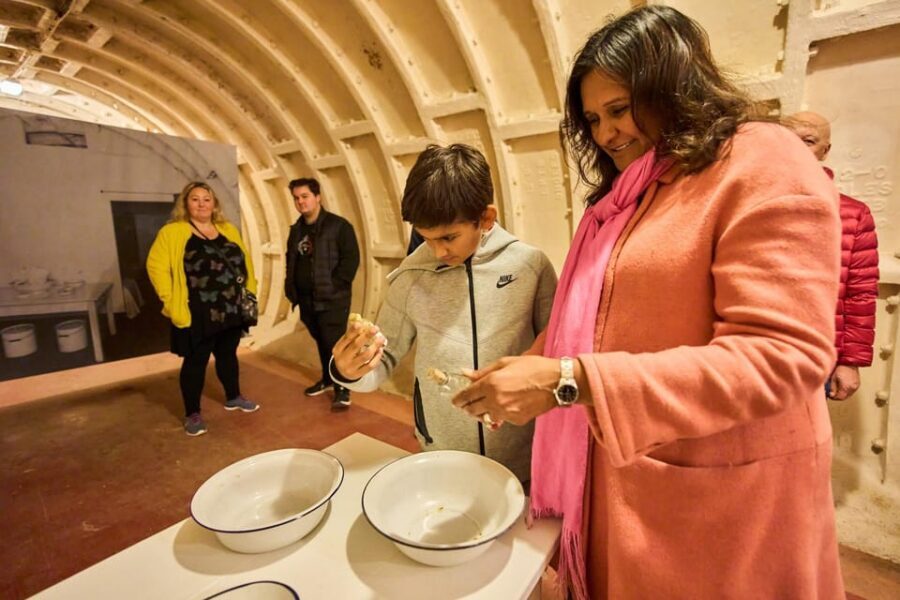
- Hands-on WWII artefacts, including torches, plus time on original bunks
- Graffiti and personal testimony, including accounts tied to HMT Empire Windrush
- Not claustrophobia-friendly due to low light and confined underground spaces
Getting There: Meeting at Clapham South Without Stress
Your tour starts right in South London, with the meeting point set in front of the Marks & Spencer Food Hall on Balham HIII, SW12 9EA. It’s a short walk from the station, and you’ll want to treat it like an appointment: arrive 15 minutes early so you can get oriented and don’t feel rushed before you head down.
Wear comfortable, sturdy shoes. You’ll be on uneven ground in places and moving through low-light areas. Open-toed shoes are not allowed, and the shelter’s underground feel is part of the point, so dress for the weather too. You also can’t bring luggage or large bags, and there’s no cloakroom, so keep it light.
You’ll also need to bring passport or ID. That’s a small ask, but it’s the kind of detail that can derail your day if you forget. Food and drinks aren’t allowed on the tour, so plan to eat before you go and bring a water bottle for before/after if you need it.
You can also read our reviews of more guided tours in London



Heading 11 Stories Down: The Descent and What Surprises You
The most striking part for most people is how quickly the environment turns from London street-level to a wartime underground world. You descend 11 stories underground, and at one point you can feel the rhythm of the modern Tube system above you: Northern line trains pass overhead as you’re walking below ground.
That contrast matters. It’s easy to think of history as fixed and distant. Here, the noise and movement of the present sit right above the sleeping quarters and tunnels built for air raids. It makes the past feel less like a museum display and more like something that used to be in use, right where you stand.
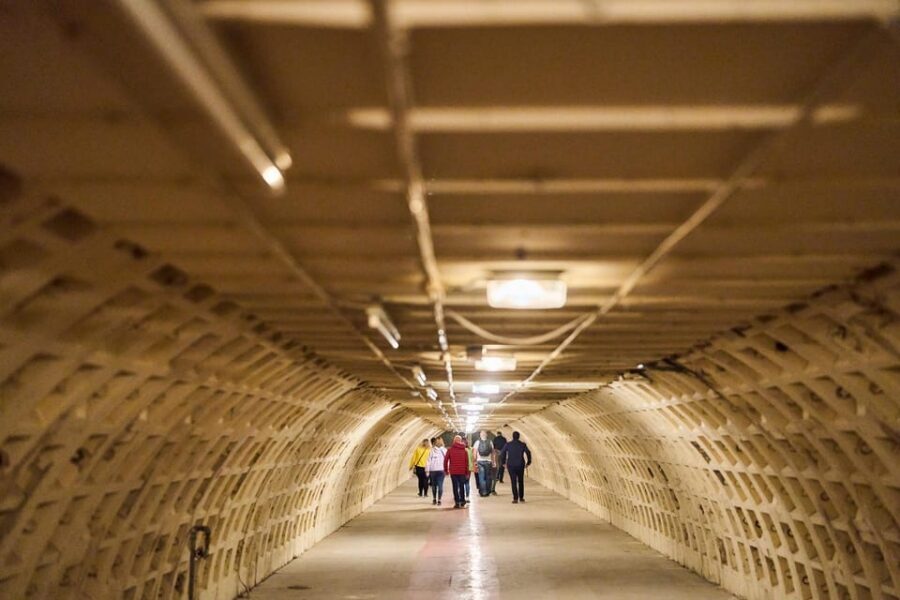
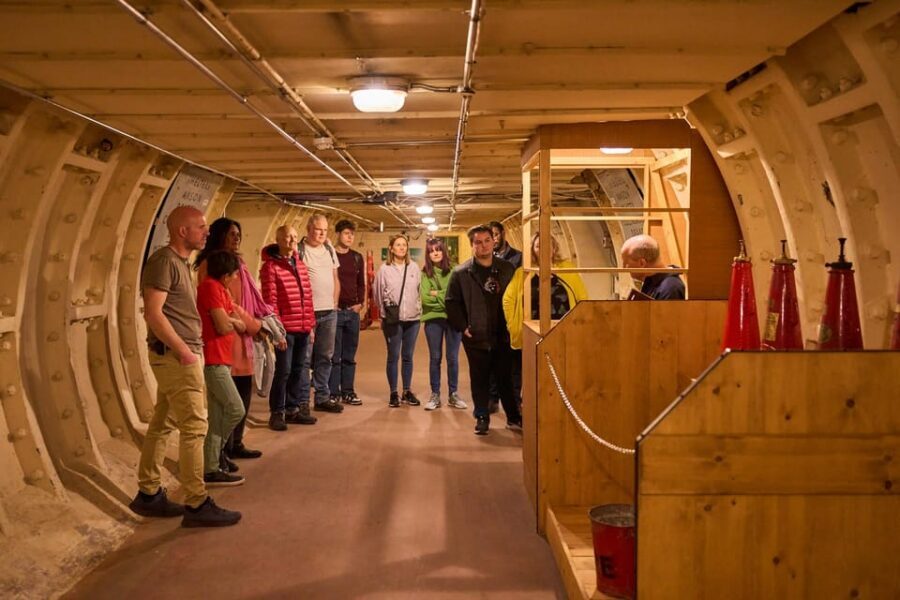
The shelter itself is a maze-like set of tunnels over a mile long. You’ll follow the guide through a route designed to help you understand scale. It’s not a straight hallway tour. It’s more like exploring a warren: turns, branching spaces, and areas that feel cramped because they were built to be that way. For the best experience, keep your attention on how the space is arranged—what’s where, and why certain rooms would matter during a raid.
One practical note: it’s not step-free, and the tour includes walking up and down static escalators. Even if you’re fine with stairs, that adds a different kind of effort. If you’re someone who prefers easy walking, this is still manageable, but you should expect a real underground stroll.
Wartime Spaces Brought to Life: Warden Role-Play, Cabin, and Canteen
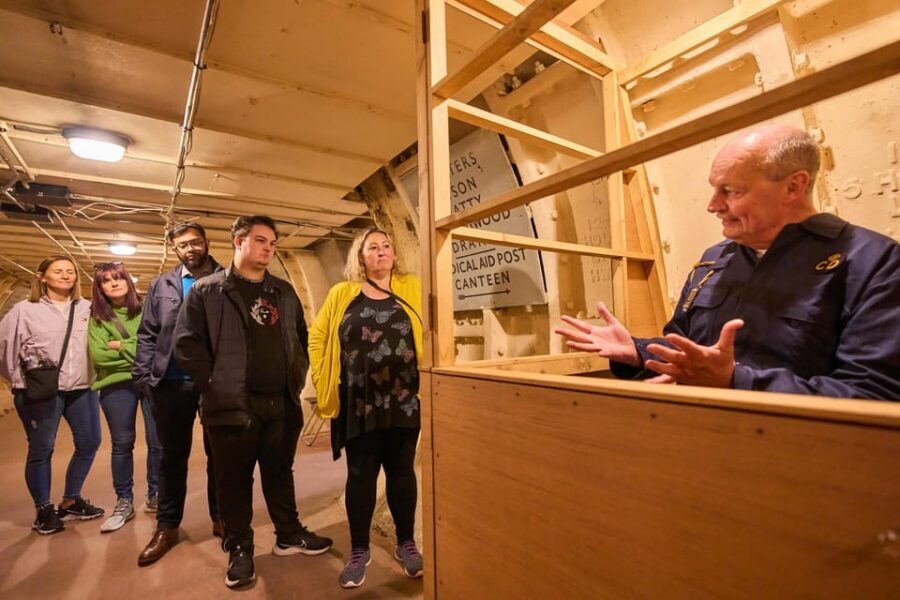
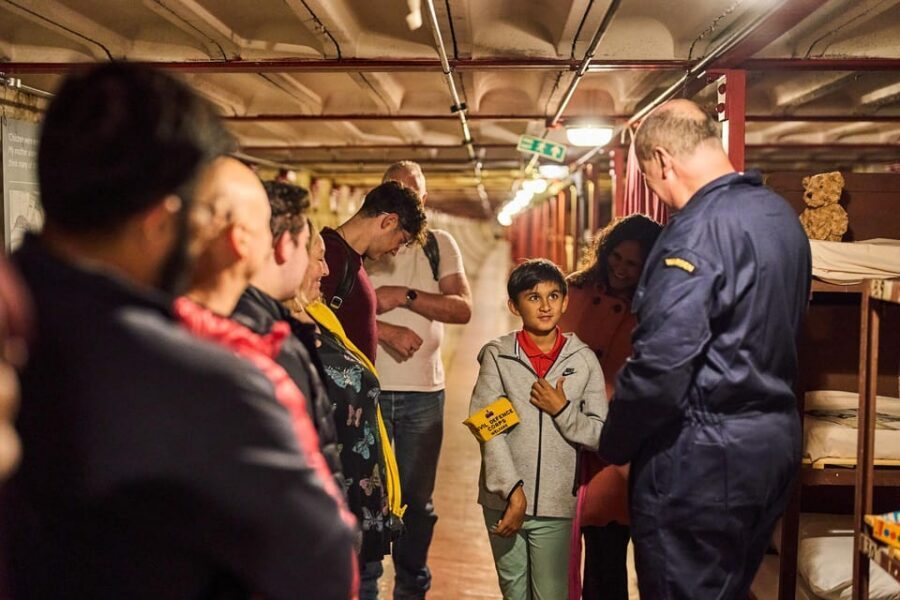
Once you’re down, the tour leans hard into atmosphere. One of your guides performs as a 1940s ARP Warden, and that role-play isn’t just for fun. It helps you picture how instructions would have sounded, how authority worked during raids, and how people handled fear while waiting out the night.
You’ll follow in the footsteps of a South London family spending their first night in the shelter. That structure is clever because it prevents the tour from turning into a list of facts. Instead of memorizing dates, you get a timeline you can feel—arrive, settle, wait, sleep, and wake up in the morning after the air raid has passed.
In the refurbished areas, you’ll see spaces that are recreated to a 1940s state, including the warden’s cabin and the canteen. Those rooms are important because they show the shelter wasn’t only for lying down. It included day-to-day needs during the long, tense hours: guidance, food or drink service, and functional spaces that made overnight shelter possible for thousands.
The guides also connect what you’re seeing to what people had to do back then. The shelter had to serve many people at once, and it had to do it underground. That’s why the tour spends time on layout and everyday facilities, not only on the dramatic parts.
Original Bunks and Hands-On WWII Artefacts
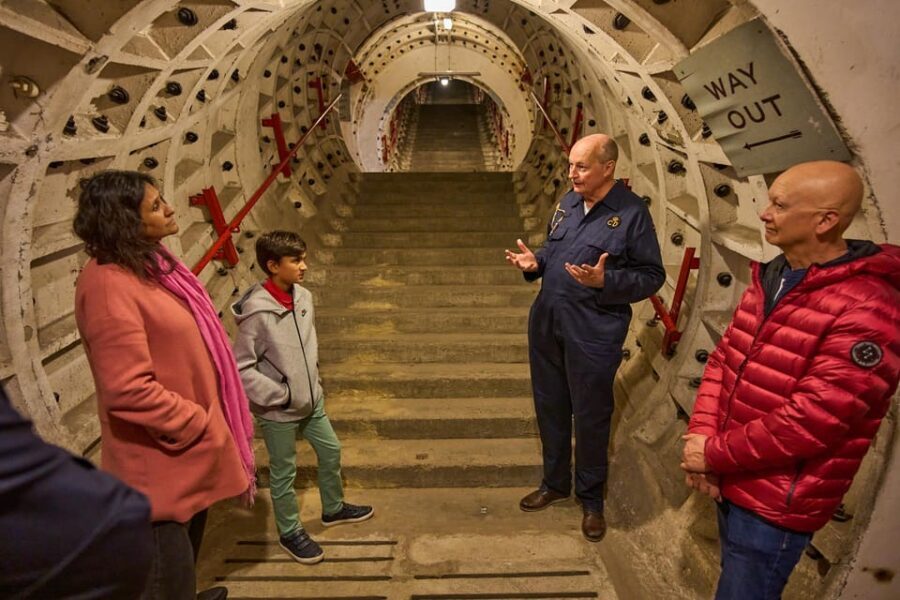
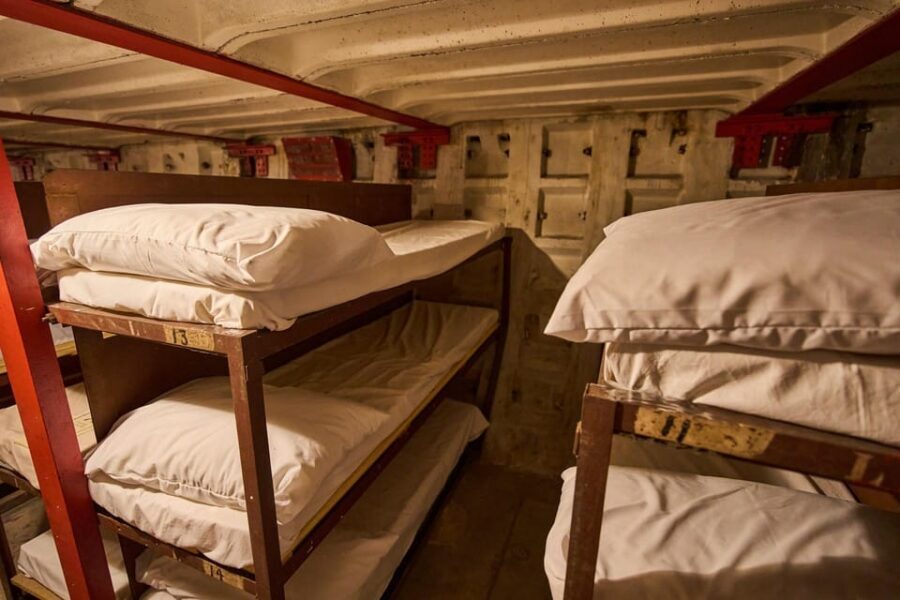
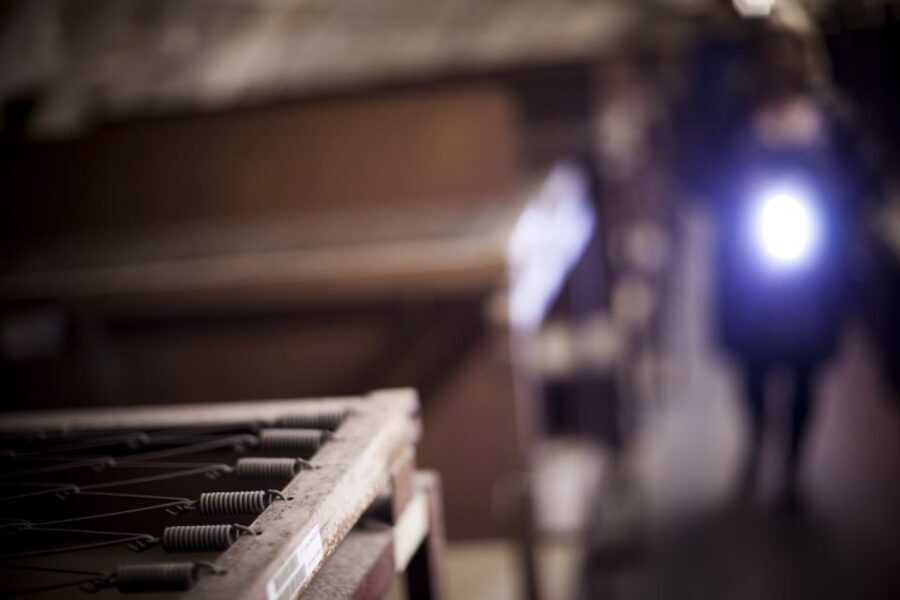
This is the part I think is hardest to replicate in any other format. You get hands-on moments with genuine WWII torches, and you’re invited to sit on the original bunk beds turned benches. For many people, that small action is what makes the scale sink in.
Those bunks were cramped by design. Thousands slept overnight during air raids, and seeing the beds—up close, in context—makes it obvious how limited space would have been. Even when you know the general story of air raids, the feeling of how close everything is changes your understanding.
You’ll also learn what an Anderson shelter looked like (and how it relates to the wider picture of civil defence during WWII). The tour doesn’t treat the Anderson shelter as a random side topic. It uses it to help you understand the broader environment of wartime protection, so the underground space doesn’t feel isolated from what people did above ground.
Then there’s the practical realism of how the guide explains things. When someone is role-playing the warden and pointing out where people would go, it clicks. You stop thinking of it as a “cool wartime site” and start thinking of it as a place with rules, routines, and pressure.
If you’re sensitive to confined spaces, though, take that seriously. This is a living, physical environment, not a wide-open gallery.
Graffiti and Voices: Shelterers and Windrush Connections
One of the most moving elements is the way the tour treats survivors’ and occupants’ voices as part of the story, not as an add-on. You’ll hear personal accounts of Second World War shelterers, and you’ll also hear about life in the giant air raid shelter in a way that helps you understand what people carried into those nights: fear, hope, routine, and the need to keep going.
You’ll also spot historical graffiti left behind by shelter occupants. That’s a detail with weight. It reminds you that people weren’t simply “stored” underground. They marked time, left messages, and tried to make the cramped space feel human. You can see how people coped, even when they couldn’t change the danger outside.
Then the story moves forward into the post-war years. The tour connects the shelter’s use after WWII to the arrival of the first Caribbean migrants to Britain, tied to HMT Empire Windrush. This is a fascinating shift because it shows continuity—London’s infrastructure of protection and survival didn’t vanish after the war. It was repurposed and re-used by different communities in different eras.
You also learn about visitors from the Festival of Britain era. That adds another layer: the shelter site isn’t only a wartime artifact. It’s part of a longer London story about movement, arrival, and what happens when large numbers of people need temporary space.





After the Raids: Why Repurposing Matters
It would be easy for a WWII shelter tour to end at the moment the bombing stopped. Here, it doesn’t. The tour explains how the underground shelter was repurposed in post-war years, and that matters for a simple reason: it changes what you think the site “is.”
This isn’t only a place where people hid. It became a location where people could live after the worst of the war had passed. With the Windrush connection, you’re looking at a London that kept receiving new arrivals and new stories, even in the shadow of older trauma.
I like that the tour doesn’t treat the Windrush element like a separate lesson. It’s integrated into the same location, so you see how one set of underground rooms could mean different things across decades—first safety during raids, then shelter and support for arrivals after the war.
For readers who want a tour that covers more than one era without feeling forced, this approach is a strong fit.
Price and Time: Is $51 for 75 Minutes Good Value?
At $51 per person for a 75-minute guided tour, you’re paying for more than a walk through tunnels. You’re paying for:
- Two guides, one in ARP Warden role-play
- A planned route through a mile of tunnels
- Hands-on WWII artefacts (torches) and interaction with original bunk beds
- Refurbished rooms recreated to 1940s state
- The human layers: personal testimonies, graffiti, and post-war Windrush stories
That’s why the time works. Seventy-five minutes is enough to make the space feel real and to cover the key story beats, without turning into an all-day underground slog. It also means you’re less likely to get numb to the setting. The environment stays vivid.
The tour does come with limits, though. It’s not suitable for children under 10, it’s not for people with mobility impairments, and it’s not a good match for claustrophobia. If you fit those constraints, you’re likely to feel the value quickly because the experience is hands-on and story-led rather than just observational.
If you’re on the fence, think of it like this: you’re not just buying entry. You’re buying guided interpretation of a specific site that’s hard to access and easy to misunderstand on your own.
Who Should Book This Tour, and Who Might Skip
This is ideal for you if you like London history you can physically stand in. It’s also a great pick if you care about how WWII civil defence worked, because you’ll see the spaces people needed and hear how shelterers experienced it.
It also suits you if you enjoy story-driven tours. The warden role-play, the staged family-night narrative, and the mix of WWII plus Windrush-linked post-war accounts help keep your attention. The guides’ passion and organization help too; the pacing feels controlled underground, which isn’t always easy.
Skip it (or at least think carefully) if you:
- have claustrophobia
- need step-free access
- prefer minimal walking and easy surfaces
- get uncomfortable with low lighting and confined spaces
And remember: you’ll be going up and down static escalators. That’s not a “one level” experience.
Should You Book Clapham South: Subterranean Shelter?
If you want a London tour that’s memorable because it’s physical and personal, this one is worth your time. The combination of a mile of tunnels, original bunks, hands-on WWII torches, and the emotional realism of graffiti and personal accounts creates a strong, coherent experience. Add the post-war shift to Empire Windrush connections, and you get a story that feels bigger than one war.
Book it if you’re comfortable walking through uneven, low-lit spaces and you’re open to a serious tone. Don’t book it if confined underground rooms would make you anxious or if mobility access is a concern.
In short: this is one of those rare tours where the setting does half the storytelling for you.
FAQ
How long is the Clapham South subterranean shelter guided tour?
The tour lasts 75 minutes.
How far underground does the tour go?
You descend to explore tunnels located about 30 metres underground (with an 11-story descent described for the experience).
Is the tour suitable for children?
No. It’s not suitable for children under 10.
Is the tour step-free or suitable for mobility impairments?
No. The tour is not suitable for guests with mobility impairments and it is not step free.
Are open-toed shoes, food, or drinks allowed?
Open-toed shoes are not allowed, and food and drinks are also not allowed during the tour.
Where do I meet and when should I arrive?
Meet in front of the Marks & Spencer Food Hall on Balham HIII, SW12 9EA, and arrive 15 minutes before your tour time.